Uncategorized

Museums in Darwin

On two seperate days we visited museums, the first was the Northern Territory Museum and Art Gallery and the second, this was the Darwin Military Museum.

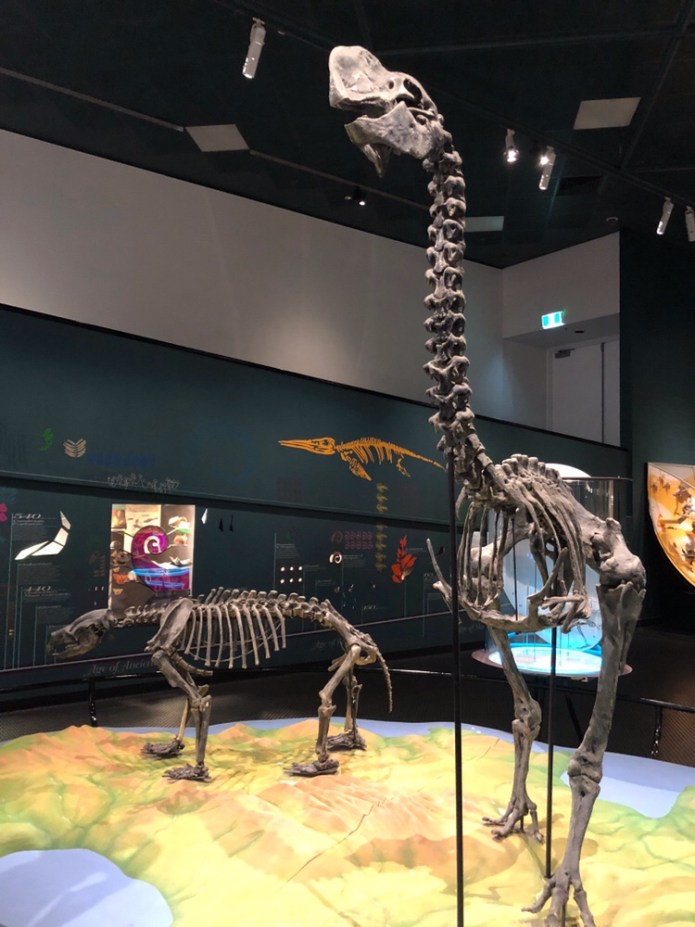
The Northern Territory Museum is perched on a stretch of coast with beautiful views of the water. It is a modern museum with a strong natural history section with many fossils, especially Miocene. In the Miocene (5 to 15million years ago) Australia was a thousand kilometres further south than the present day. The cooler, wetter conditions meant there were year long filled rivers, extensive numbers of all season billabongs and a spectacular series of parallel mountain ranges in central Australia of which Uluru is the remnant. The marsupials of this time included some very large animals such as Sabre tooth marsupial lion, marsupial rhinoceros and diprotodon, an immense wombat. There were many fish in the billabongs and rivers. It was a time of abundance. Many of these fossils are on display at the museum.

There is wonderful display about the foundation of the NT. The Northern Territory was the original Northern Territory of South Australia, that’s why John Mcdouall Stuart was funded by the south Australian government on his six trips to determine the route for the Overland Telegraph. But for every big idea that succeeded many more failed and South Australia was losing interest in its northern half. Hardly any white people, let alone white women came to live in Darwin ( it was called Palmerston then) and the population was made up mainly of Aboriginals and Chinese settlers who were involved in mining, opium dealing and gambling. The new federal government decided this region was going to be taken over by non white races and this was unacceptable. Partly due to racism but perhaps also because they feared the military consequences of having a white minority so far from the southern and eastern states. The federal government paid in todays money about 700 million dollars to take over the Northern Territory. The Feds had big ideas about mining, railroads and farming especially cattle. Not a lot came to pass, the heat, the isolation and the difficulties of transport and communication with local and overseas markets eroded the profitability terminally. A giant meat works collapsed financially after only a few years. The restrictions on drinking included increased prices, gambling was limited. The locals thought that this was a sorry time for the territorian.

There is a fascinating and moving display about the 1974, Cyclone Tracey. This was a small cyclone generated in the Timor sea as hot water laden air and cold currents of water and air met pricing these terrible tropical storms. Small though it was, Tracey was powerful with all its energy concentrated in high velocity winds up to 260km per hour. The lazy Darwin buildings made of light timber and corrugated iron roofs were destroyed but also buildings of brick and mortar like the refurbished town hall were destroyed. Hippies living on a beach were wiped out, washed out to see on giant storm tides. Boats were sunk with crews aboard. Two boats were found years later on the sea floor and it looks as if one was trying to rescue the other.

About 260 people were killed in the Cyclone but unlike Hurricane Katrina, the government sent in support immediately and evacuated 36,000 people in five days.

It was true devastation on an epic scale.

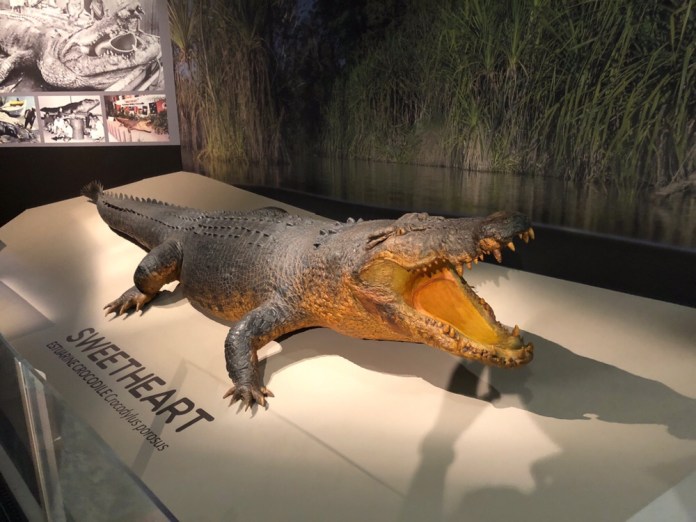
In a passage is ” Sweetheart” a stuffed crocodile 4.6 m long. It was a crocodile that went rogue attacking fisherman on the Alligator River. Enough was enough after one more attack, and it was captured. The plan was to transfer it to a crocodile farm for breeding but unfortunately the sedation was too strong and it suffocated when its palatial folds collapsed thereby blocking its airway.

There are boats in the museum. These are traditional boats used by Indonesian sailors, Tiwi and Melville Island canoes and even some boats used by Vietnamese boat people.

It’s an excellent museum with abundant information about the NT, it’s history, it’s native wild life and its people.

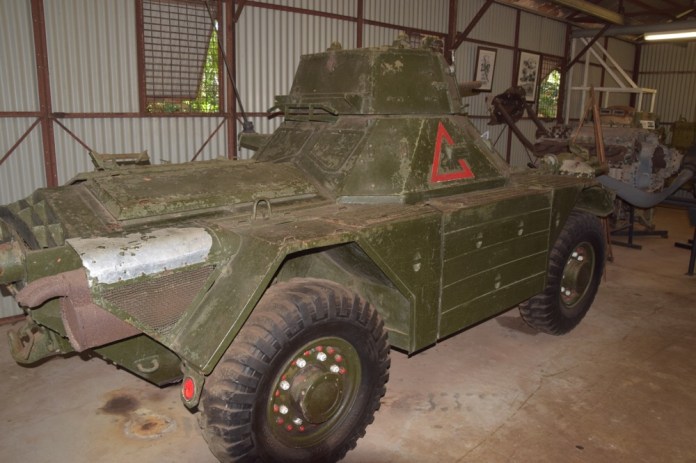
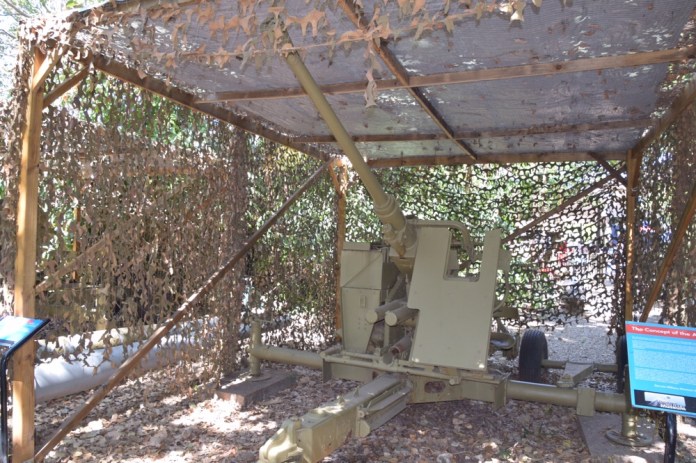
The Darwin Military Museum is on the outskirts of Darwin. It is an excellent display about the military history of Darwin especially informative about the bombing of Darwin in 1941.

The crews manning the defences of Darwin were conscripts and were badly trained, looked down on by the overseas serving troops and were thought to be be lesser men then most other soldiers. Anyway, they fought very bravely over 62 bombing attacks over the Northern Territory. 262 people were killed on the initial attack, many wharf workers were killed as the port facilities were attacked, all the post office staff were killed, nearly all the crew of the USS Peary (90 men) were killed as bombs hit the magazine and blew up the cruiser. Many other ships were sunk or badly damaged. The presentation at the museum included audio recordings of the survivors, it was very moving. The bravery of the chief nurse on the Manunda, a hospital ship that survived the attack then collected as many survivors as they could.

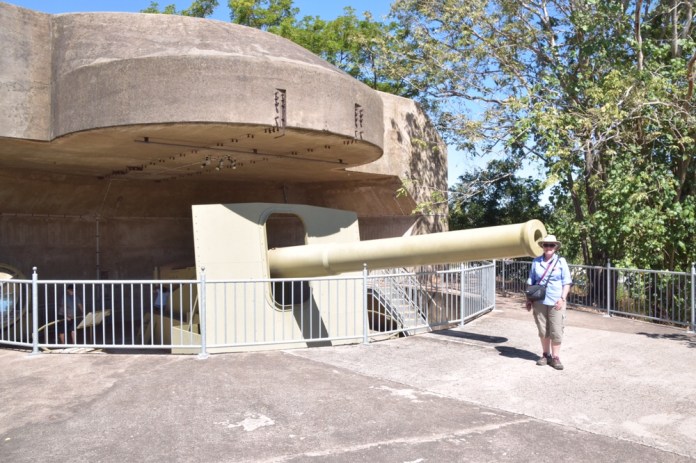
The museum has displays on WW1 and 2, Korean War and the Vietnam war. All well worth seeing. There is also a giant cannon for attacking shipping. Obsolete before it was finished as war took to the air.

Standard
Uncategorized

Sunset cruise Darwin

On Wednesday evening we went to Crustacean for dinner. We had a table overlooking the end of the jetty. The Arafura Sea was calm and grey beneath a smoky sky. Fires and smoke coming from burn offs in west Arnhem Land across Darwin harbour. I had crumbed barramundi and Jennifer scallop Mornay. A very pleasant meal. It feels strange to be dining outside in winter and not wearing a jumper and down jacket. After darkness fell, the cruise boats returned lazily to the dock.

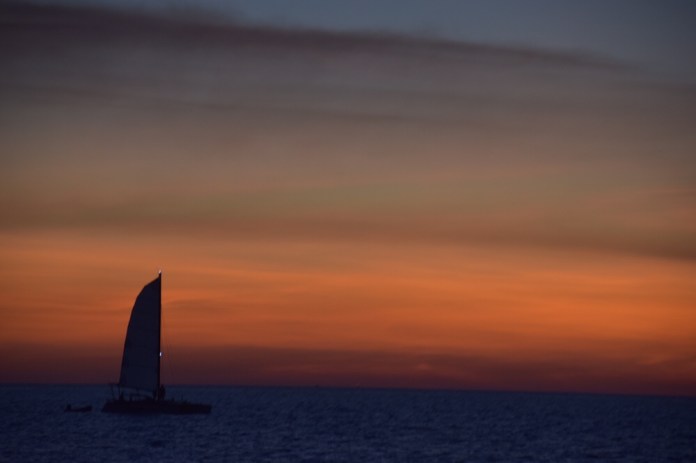
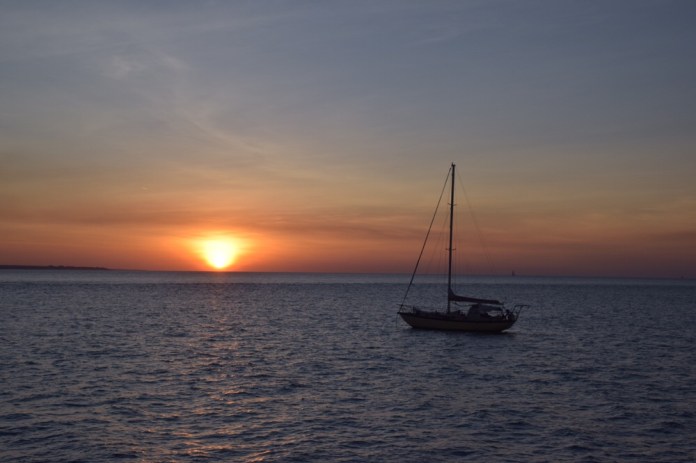
The next evening, we boarded the ” Darwin Cruises” boat. It was a very comfortable trip, as we were conducted to a table for the evening, located on the port corner of the din8ng cabin. The cool breeze from the air conditioners was very welcome after a hot afternoon at our campsite. The boat was far from crowded and this made the trip even more relaxing. Before and between buffet style courses, Jennifer and I took up vantage points on the perimeter deck outside the main cabins and took photographs. There is the parliament building, there is the wild hippy beach where 70 beachcombers vanished when Cyclone Tracey hit, the scattered moored yachts bobbing in the afternoon swell, and the setting sun, the atmosphere aglow from sun light diffracting through smoke and haze, splitting off the blue to leave signature orange and red.

Standard
Travel

Corroboree billabong Trip

We are sitting in the shade of the camper trailer having just returned from a tour with Evan, the guide for Wetland cruises. A delicious cool breeze is fanning around the camping ground. I suppose the outside temperature is about 28 degrees C.

We booked this outing soon after arriving in Darwin. Max and Lyndel had told us about this area when we stayed a few days with them in Katherine. They will be sharing a houseboat with friends, cruising the forty kilometres of waterways over an informal long weekend. We did not have this much time so we decided on the one day trip, from and then return to Darwin.The bus arrived right on time at 9am. On the ninety minute drive to the billabong and the cruise, Evan told us all sorts of interesting things about Darwin, the bush and the billabong. He was a mine of knowledge. Like many people, he works in the”DRY” and travels elsewhere to work during the “WET”. The current weather is mild with sunshine, pleasant breezes and cloudless skies but the climate takes a nose dive even before the wet.The “build up” is over September and October with very high humidity and dry thunderstorms, and then the WET begins. The population of Darwin is about 200,000 over the dry but falls to less than 150,000 over the WET. This is due to tourists and others escaping south to less humid climes.Darwin is a melting pot, with many different people making up its mix of inhabitants. A quarter are Aborigines; local Aborigines and “Long grasses” which is the term for Aborigines arriving from further afield. They used to sleep in the abundant long grass around Darwin but in modern times, they sleep on benches and in public areas. Owing to the abundance of tucker all year round, Arnhem Land, Kakadu and the Darwin area has always carried a large population of Indigenous inhabitants. In the WET, they retreated into the high country and in the following DRY walked north, to feast on bush food and fish.There are lots of Americans and not only well heeled tourists in colourful shirts and Bermuda shorts but well muscled Marines with short military style haircuts. We drove through Humpty Doo and saw the huge radio transmitters used by the defence forces of Australia and the USA to communicate with their forces all over the world. There are barracks along the Stuart Highway for soldiers and RAAF personnel. The locals are pleasant, very much so, but the per capita consumption of alcohol is the highest in Australia. A Darwin stubby is two and a half litres of, according to Evan, a really quite noxious beer.We boarded the large flat boat at Corroboree Billabong after having an introduction to the vagaries of wetland life by visiting an information centre just short of the billabong.There were twenty eight people in the boat but we all had excellent seating and visibility for the cruise.

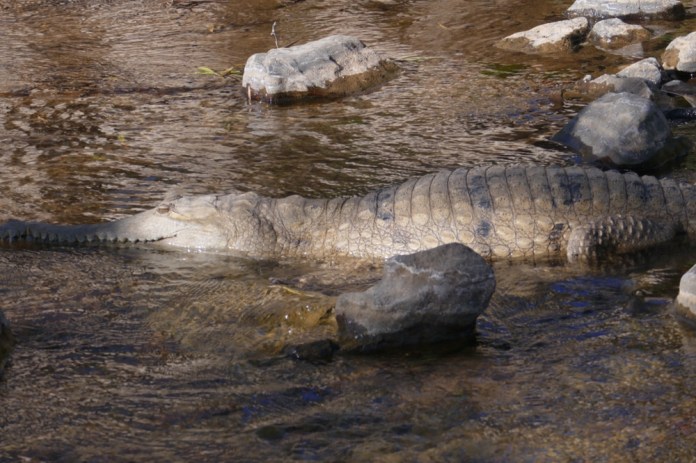
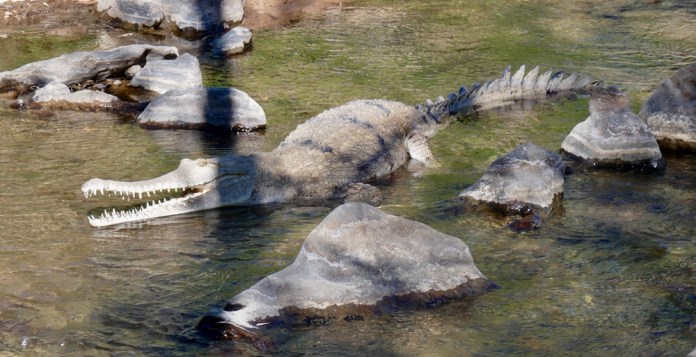
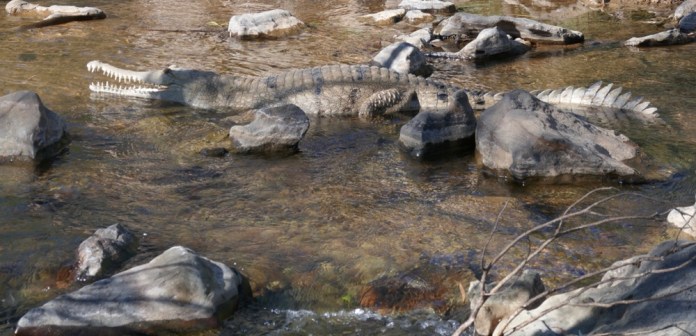
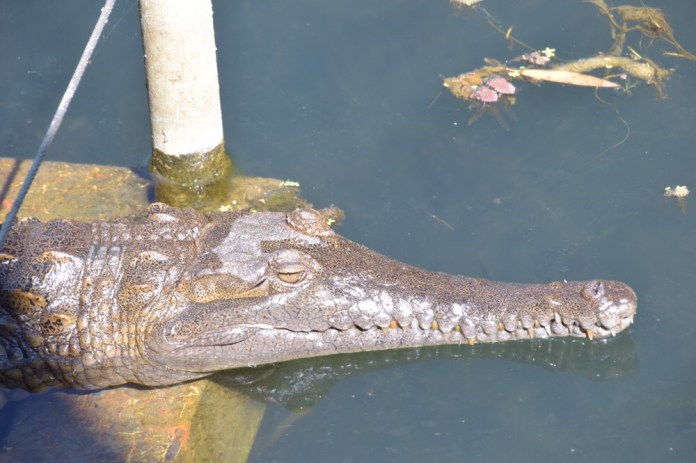
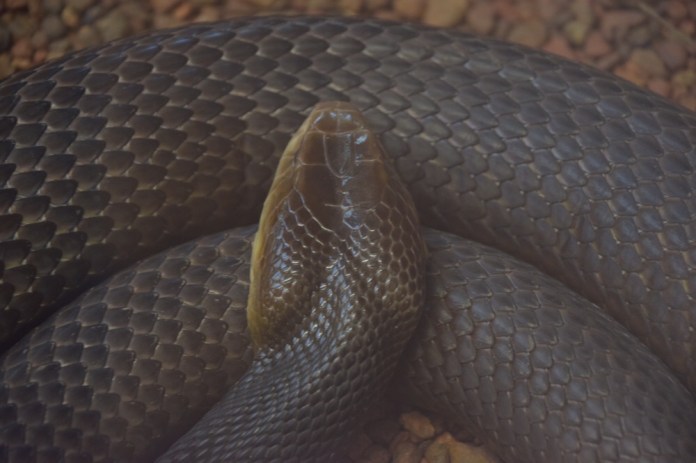
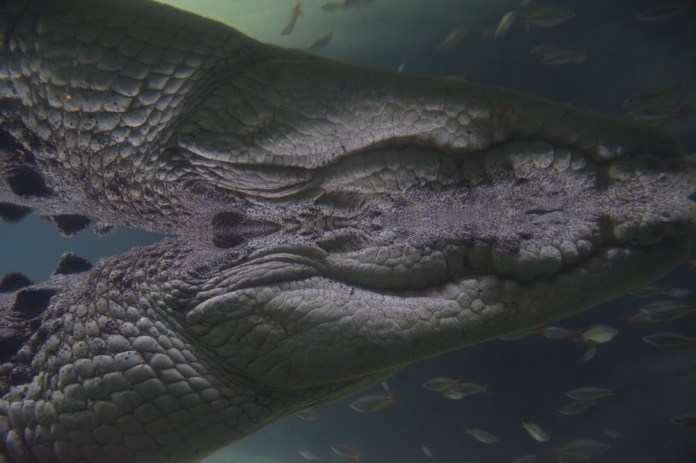
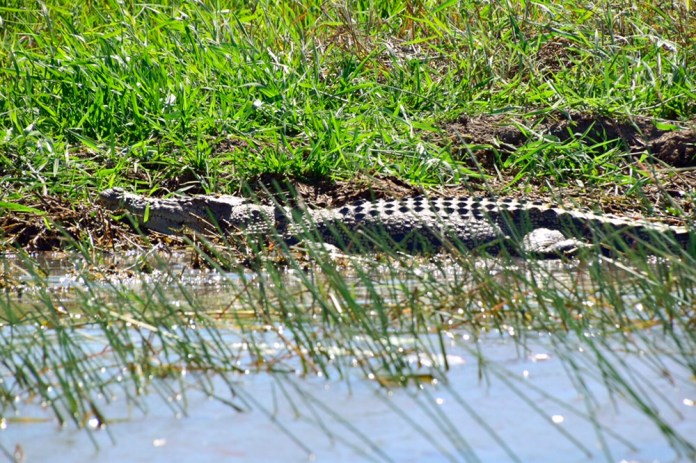
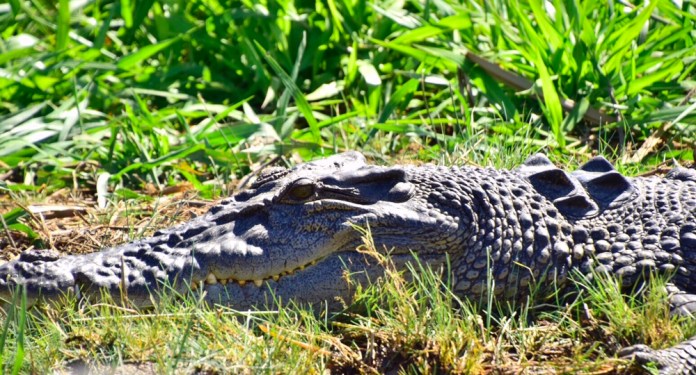
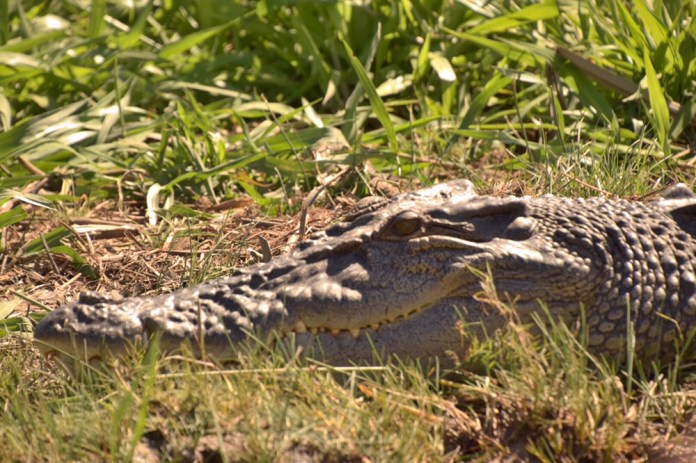
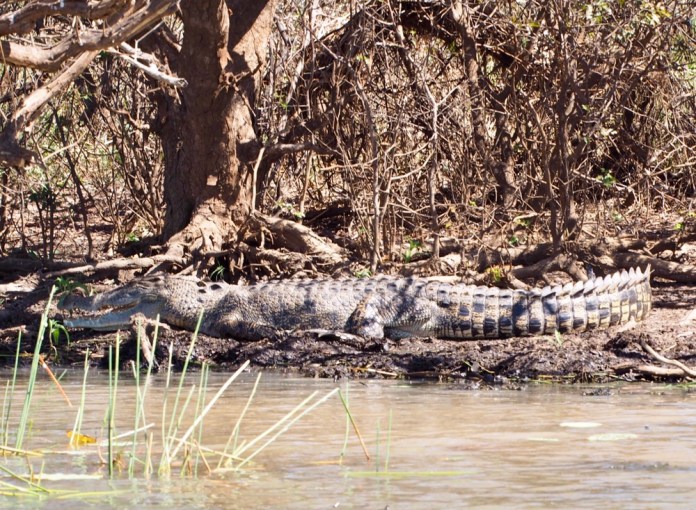
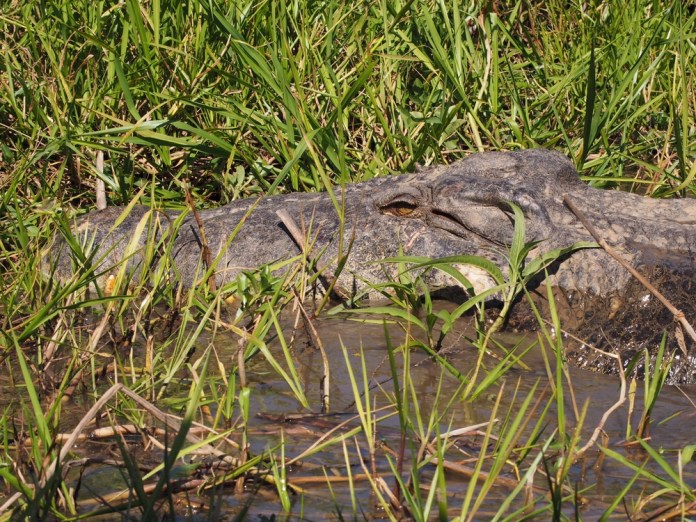
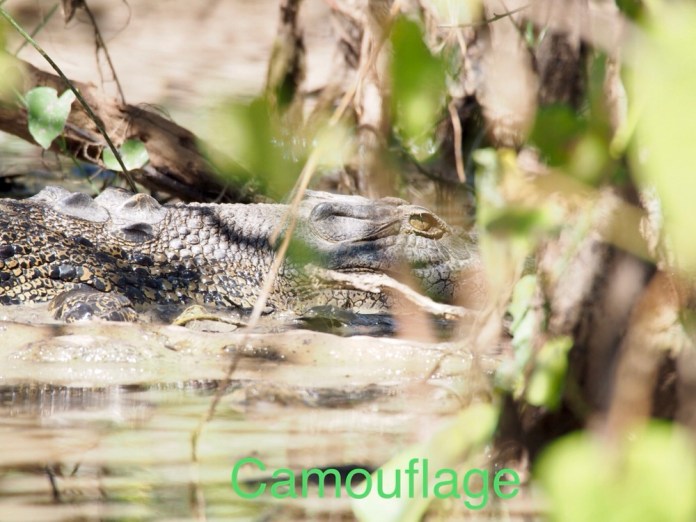
The cruise went for over two and a half hours, and we saw so much interesting wildlife. I’m sure I will forget to mention everything but we saw crocodiles. There are no alligators in Australia despite there being three different Alligator Rivers. There are fresh water crocodiles that hunt fish and are smaller and less aggressive than Salt water or Estuarine crocodiles. Salties as they are called can thrive in any fresh water, open ocean, salty tidal areas and in fact any waterway they can get to. In the early 1970s, the unrestricted shooting of the Salty was banned, and so now there are 150,000 to 300,000 salt water crocodiles. They do kill people, mostly locals who take them for granted. If you are ten meters from a riverbank you are potentially safe, as these crocodiles launch out of the water using their powerful tails, but their legs are puny and they cannot sustain a pursuit over even a short distance. They swiftly build up lactic acid which can produce a fatal acidosis. Read the signs about safety near water and do what it says. A salty can sprint through water at 40 km per hour and produce no turbulence, no sound until it launches out of the water. Guides and tour companies take the threat of these magnificent, if deadly creatures, very seriously indeed and so should you!

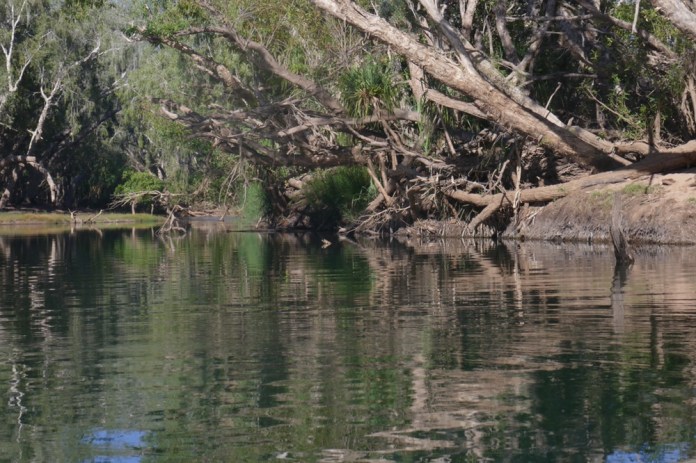
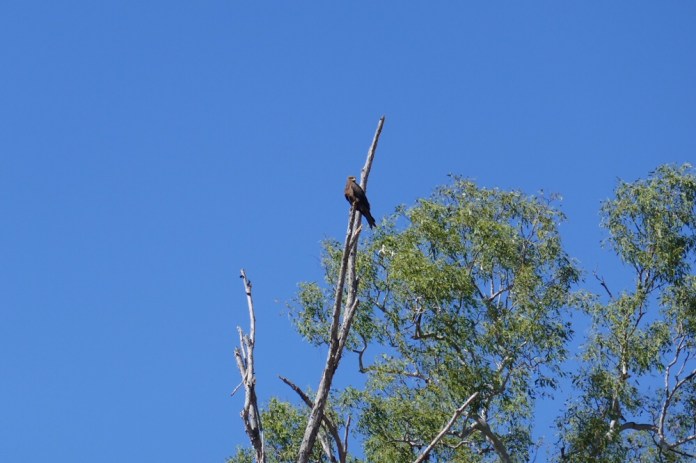
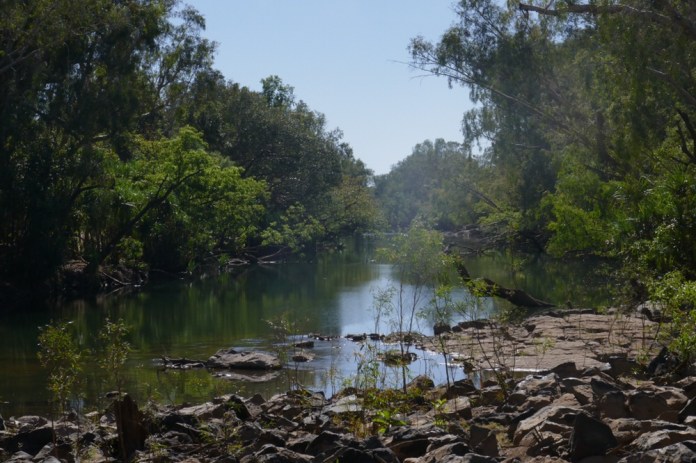
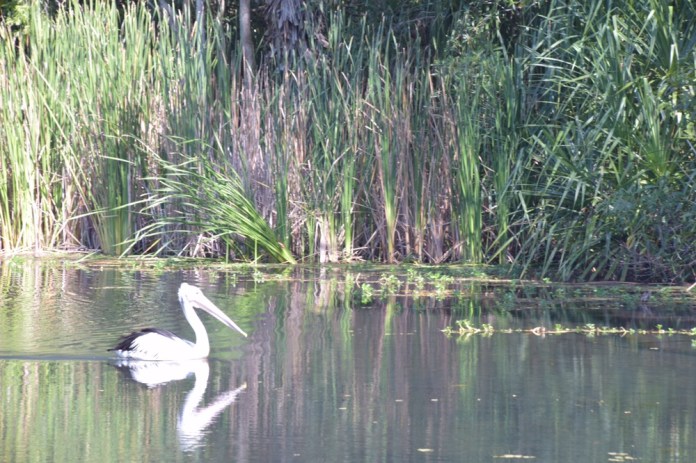
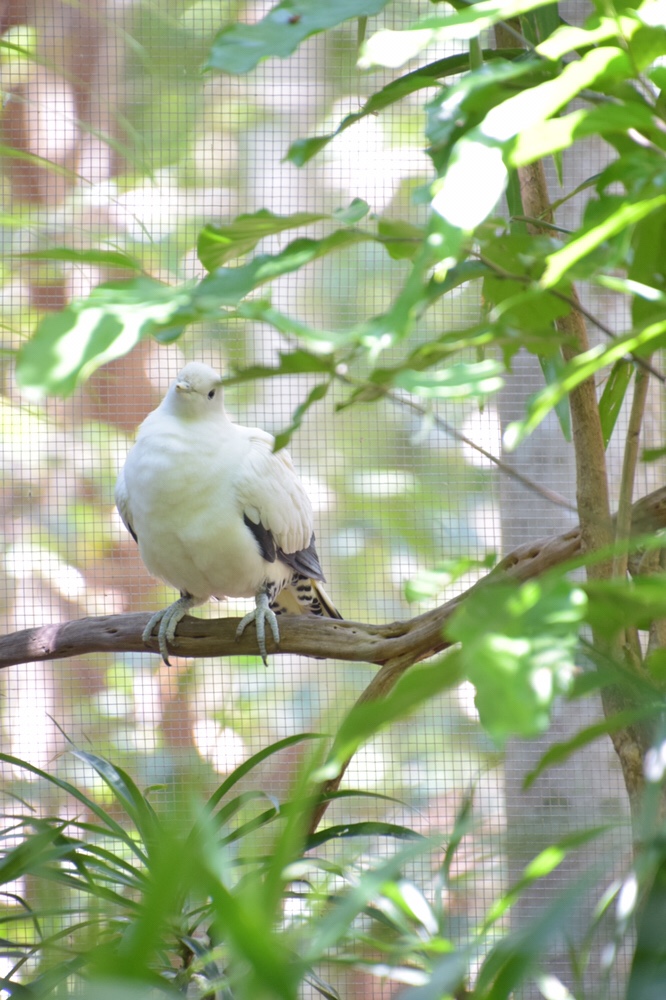
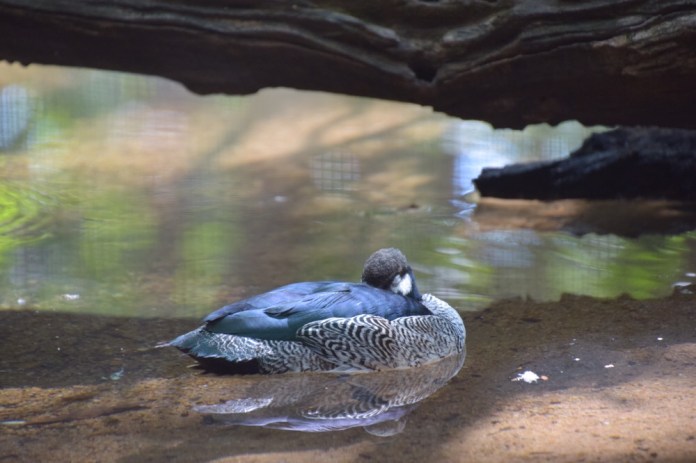
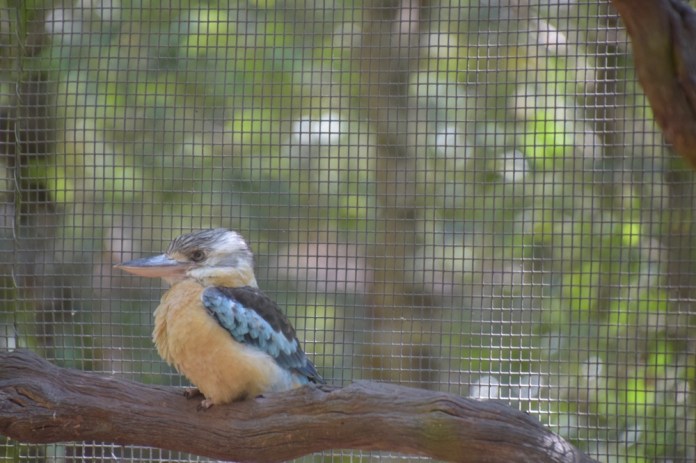
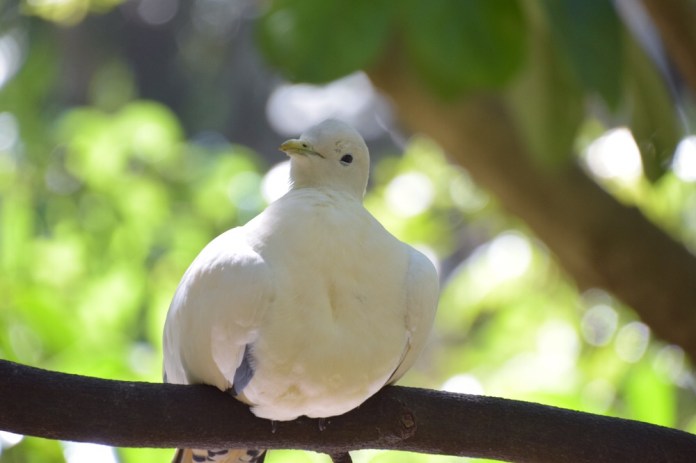
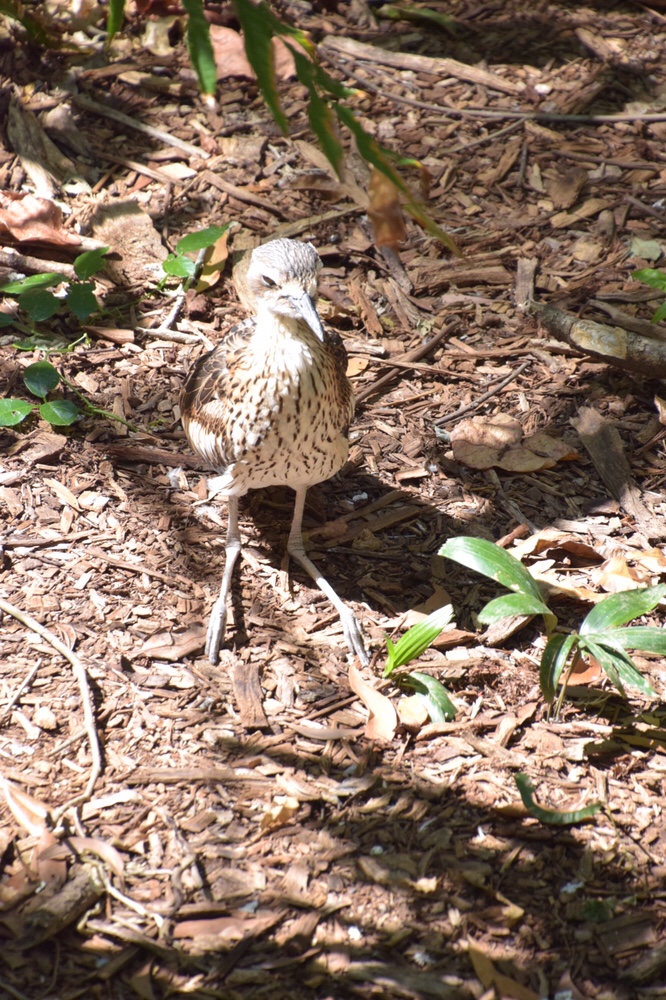
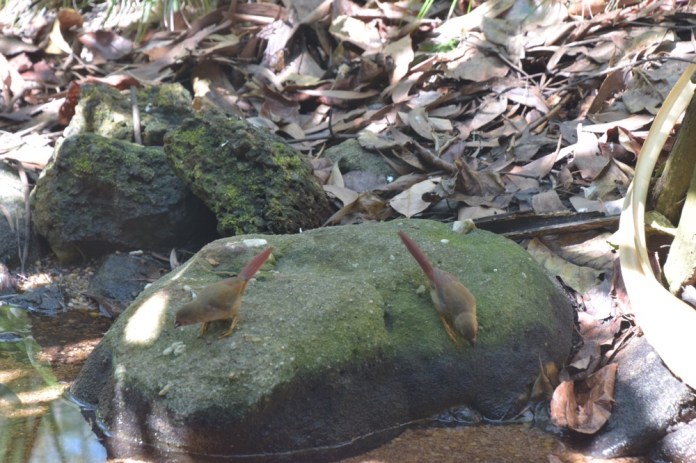
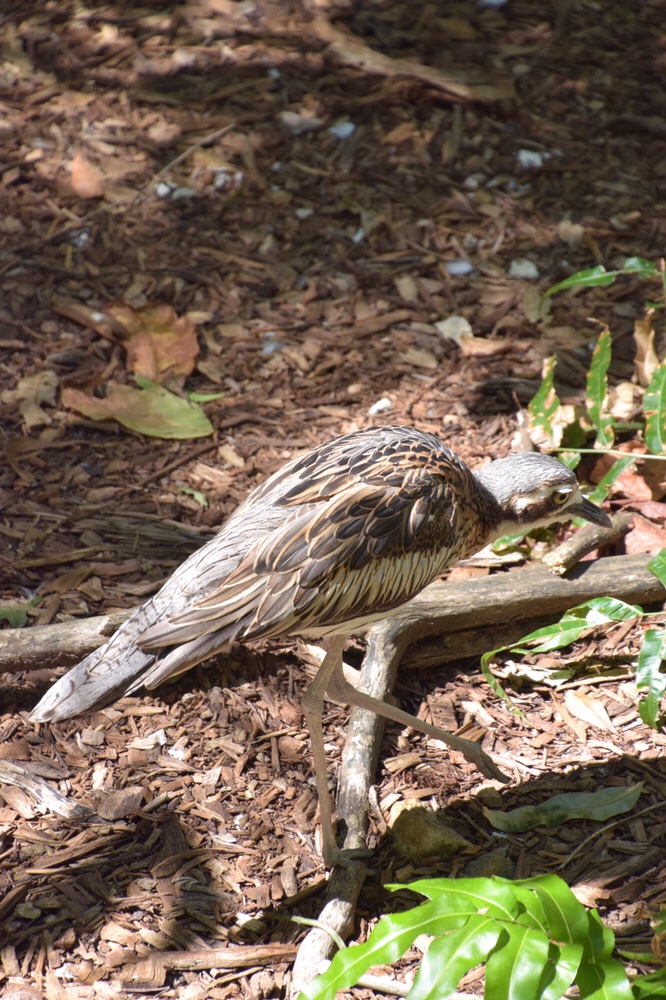
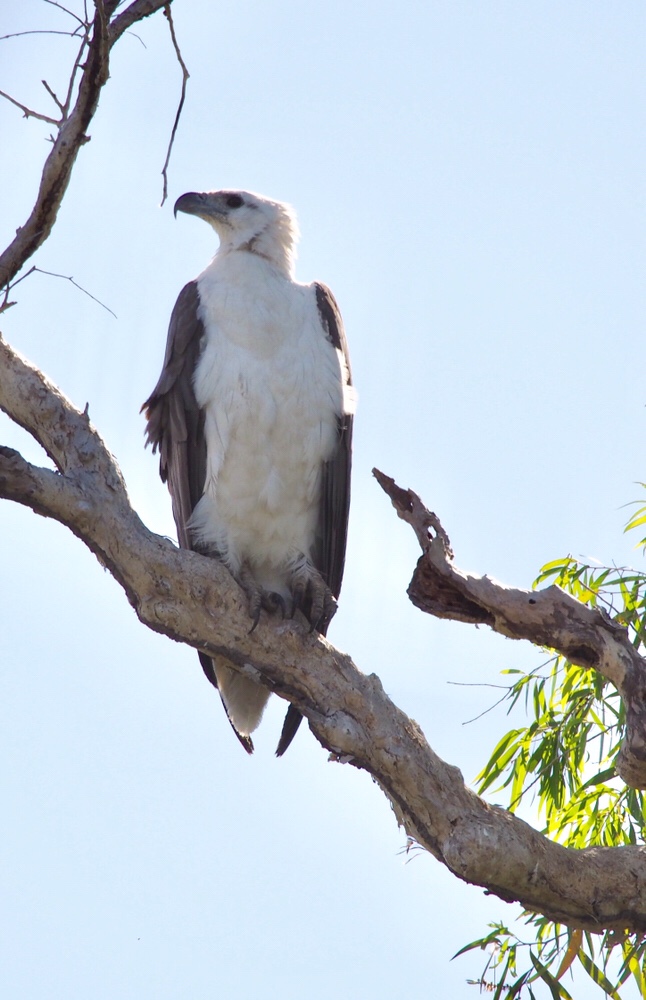
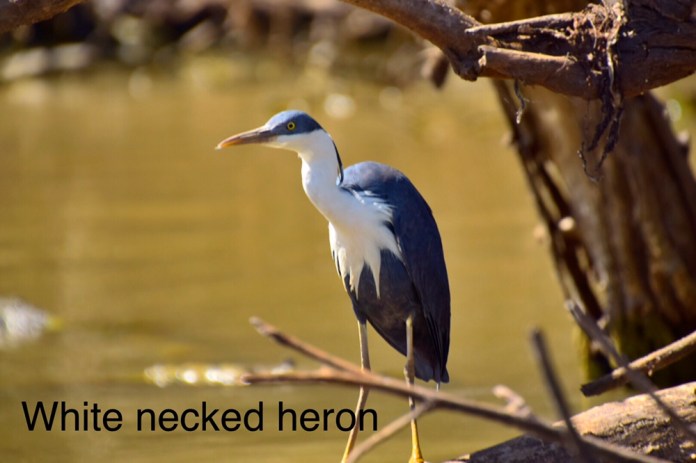
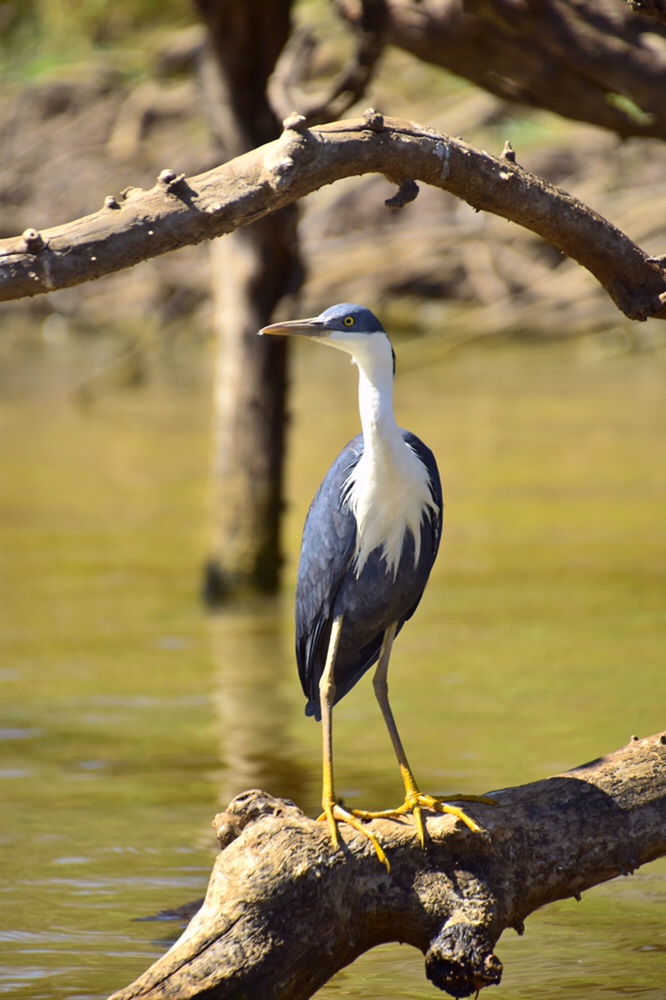
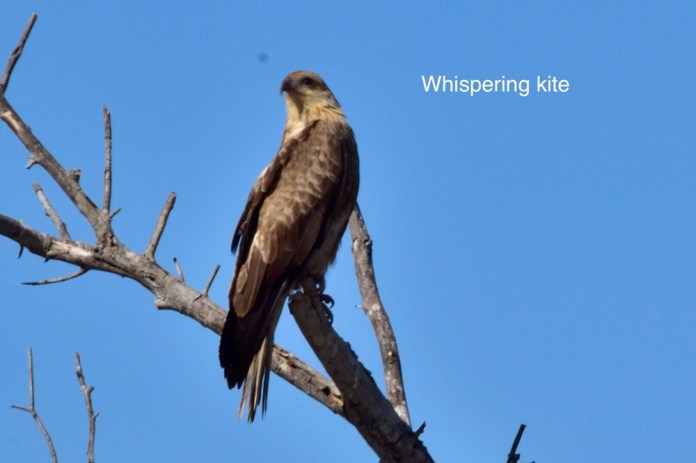
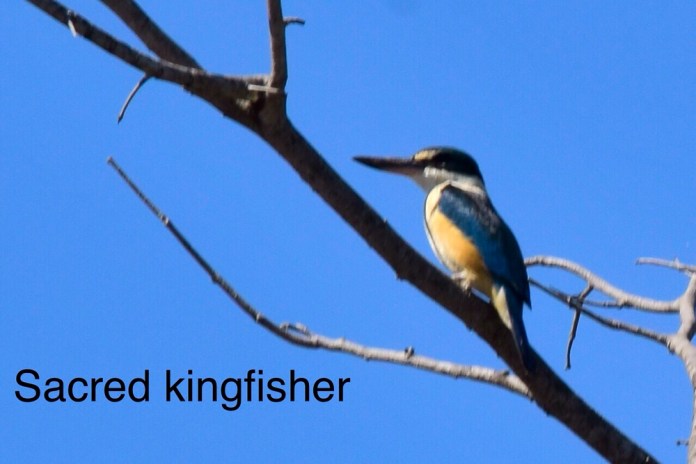
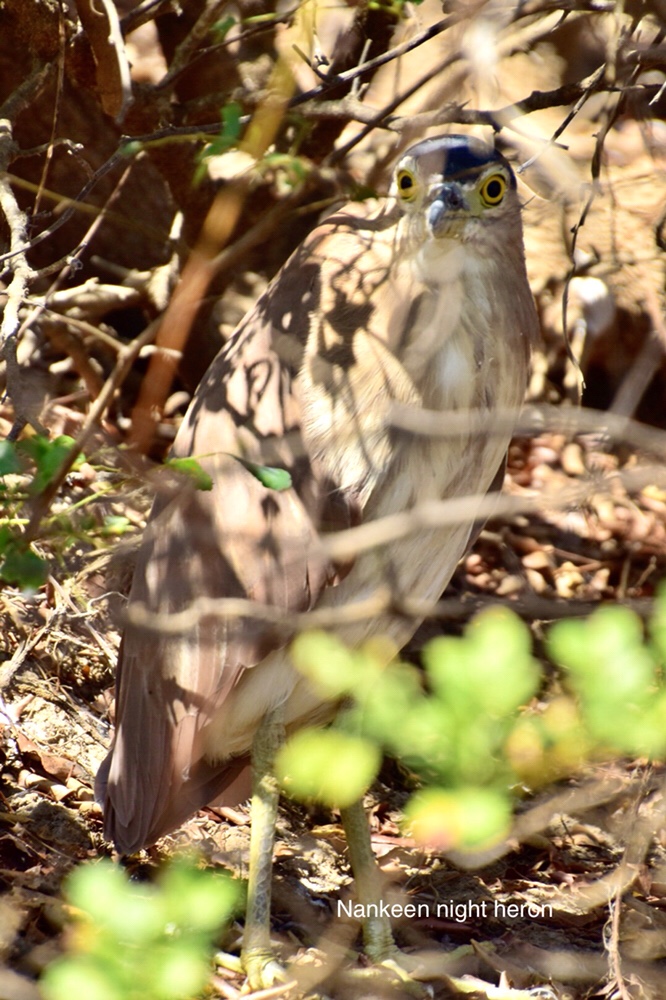
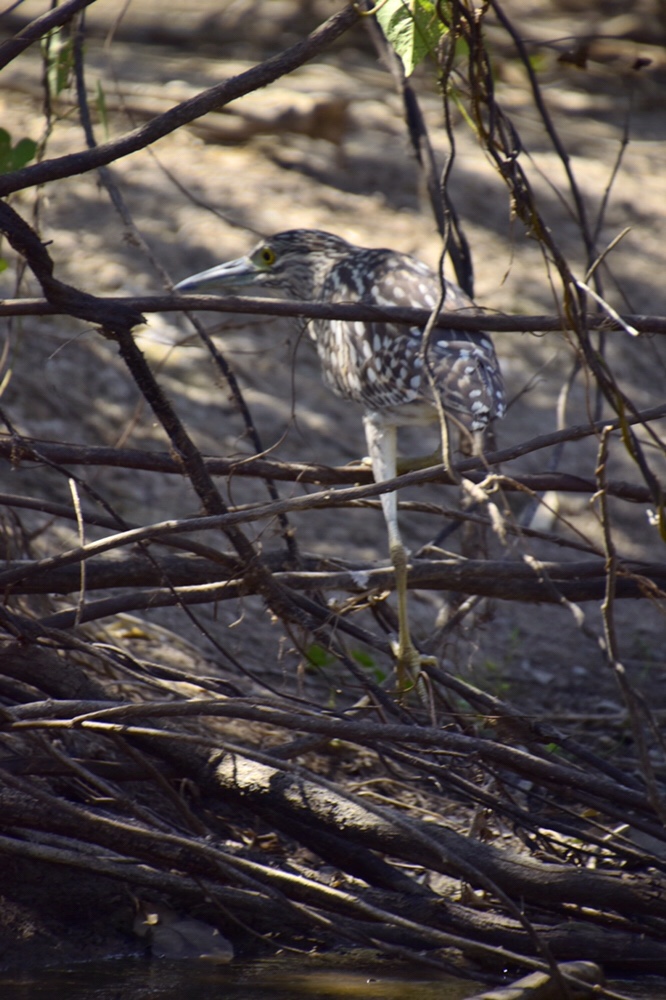
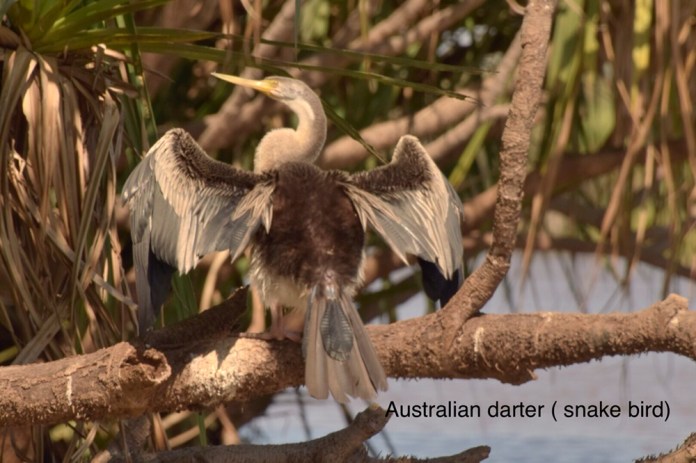
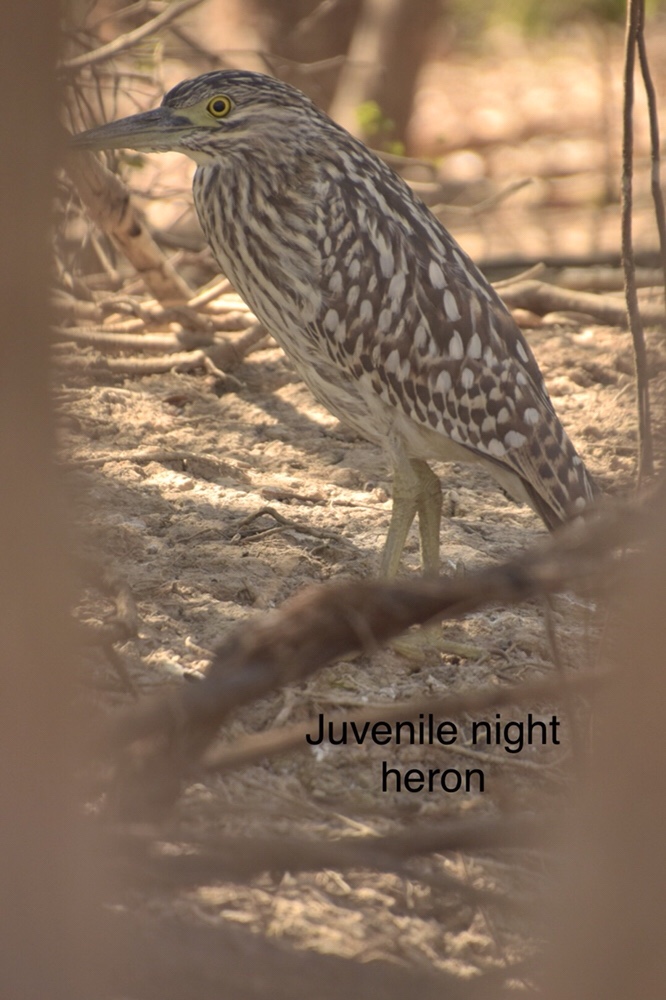
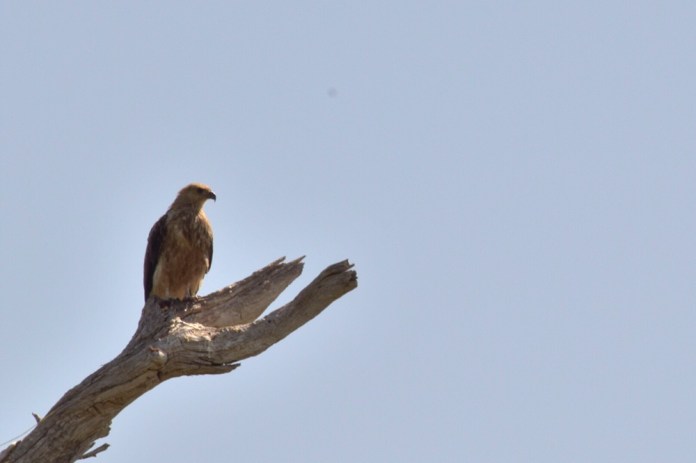
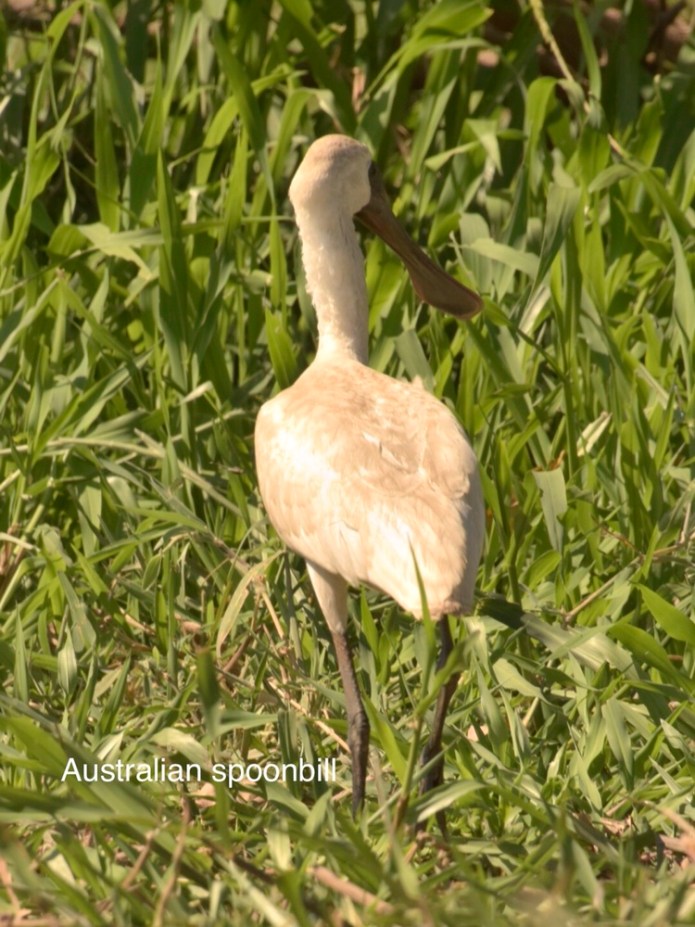
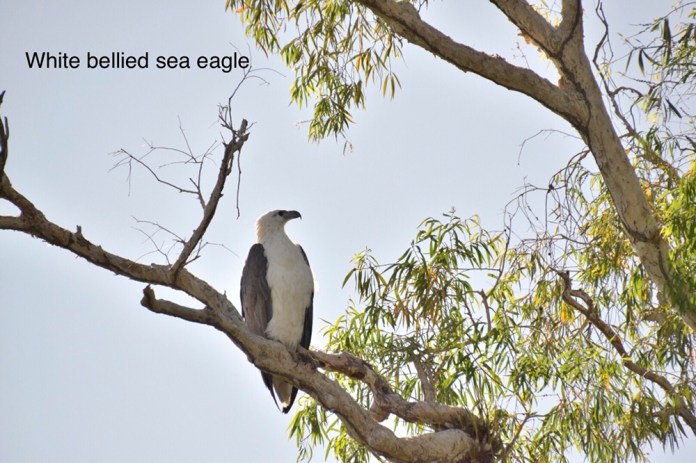
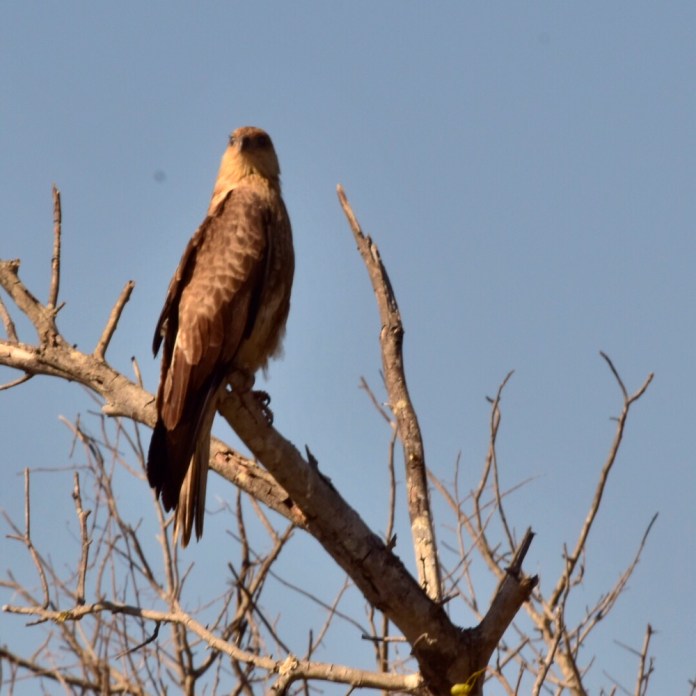
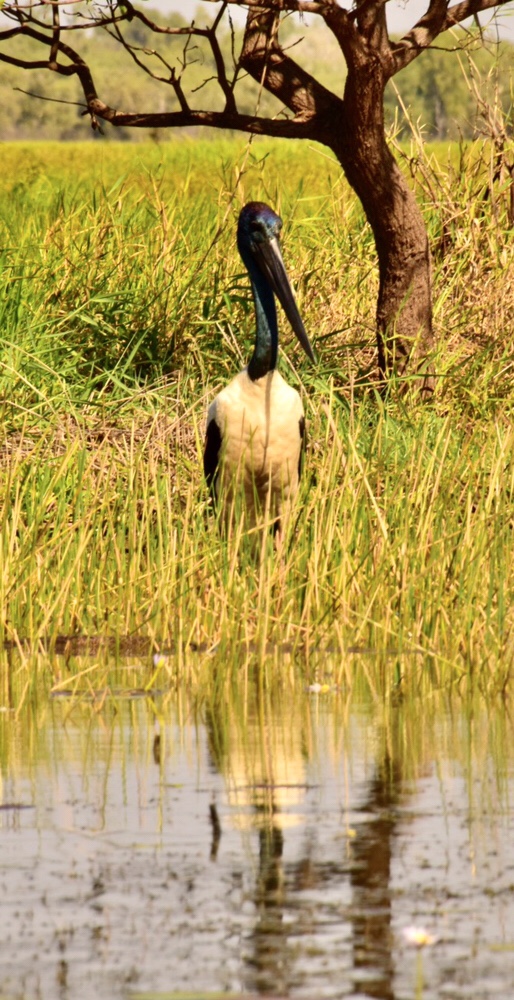
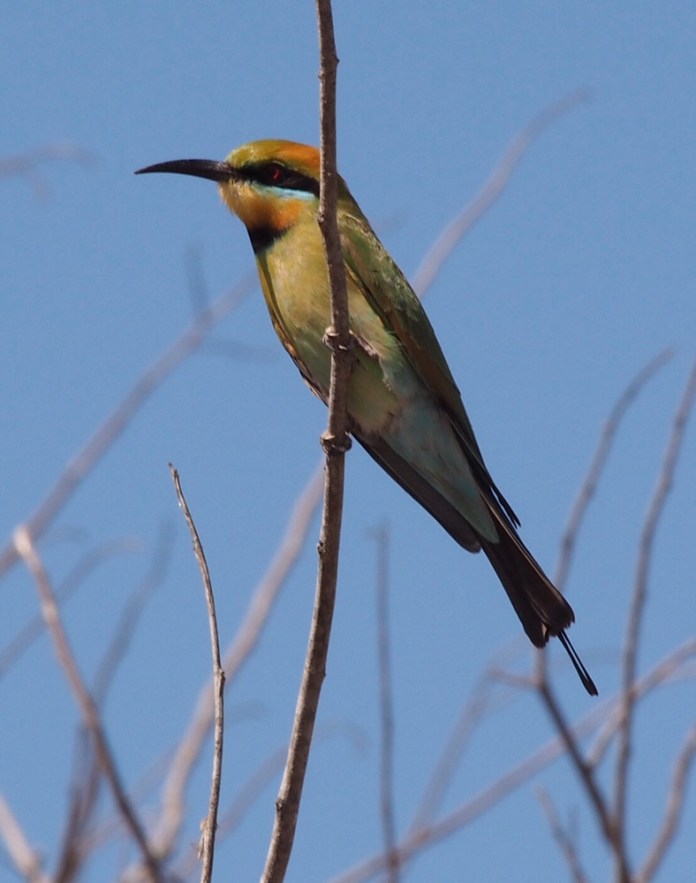
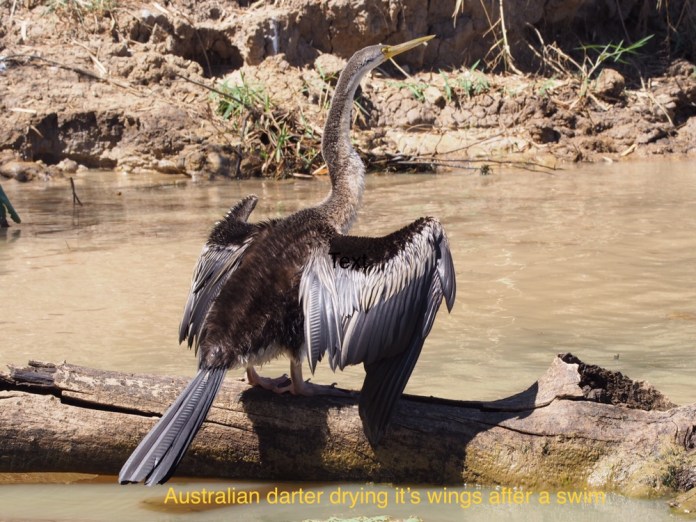
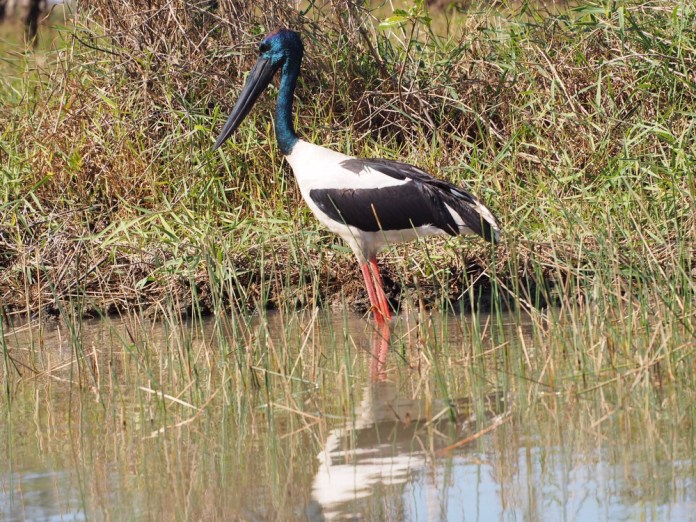
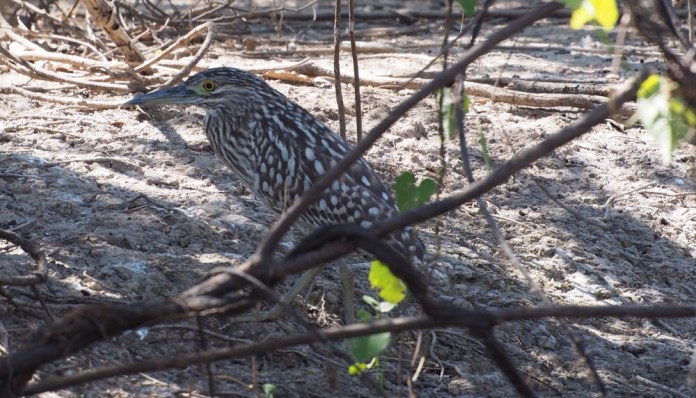
As well as crocodiles, there were lots of birds. And I mean lots. Herons, egrets, Australian darts, spoonbills, sea eagles, night herons, whispering kites, jabiru as well as rainbow bee eaters and azure kingfishers. I had trouble photographing the smaller birds as my lens was not as powerful as Jennifer’s. We heard the breathy calls of the whispering kites. We saw a dogfight between white bellied sea eagles and whispering kites in the airspace above us. The sea eagle can rip the smaller attacking bird in half if it can get the chance. We saw the stately Jabiru, red stalk like legs, purple beak and neck, strutting along the bank. Even the crocodiles avoid messing with a jabiru as it’s long beak can even puncture the tough plating on a crocodiles back. The rainbow bee eaters dig holes in the river bank to nest and in daytime hunt insects over the water. Blue winged kookaburras, build nests in arboreal termite mounds. No one has the faintest idea why this ever arose. The nankeen night heron, sits placidly beneath a shrub; the Buddha of the bush, as it seems to spend the day in silent meditation before its evening spent hunting. Around the waterways are many trees and shrubs. The pandanus provides a habitat for baby fish and other animals especially the barramundi. We saw the tree a called ” Leichhardt tree” named after the ill fated German explorer. Paperbarks provide ample vantage points for eagles and kites.A very large salty took exception to us being near it and it violently twisted out of the water opening it massive jaws before plunging into the muddy water. It was invisible in moments. Its plating preventing any tell tale ripples disturbing the surface. This same plating is protective armour and the basis of its passive solar heating system as crocodiles rely on external heat. Blood vessels flow beneath the plates allowing blood to convey warmth through the whole of the animals body.The time passed too quickly. A wonderful day.

Here are some of Jen’s shots of birds.

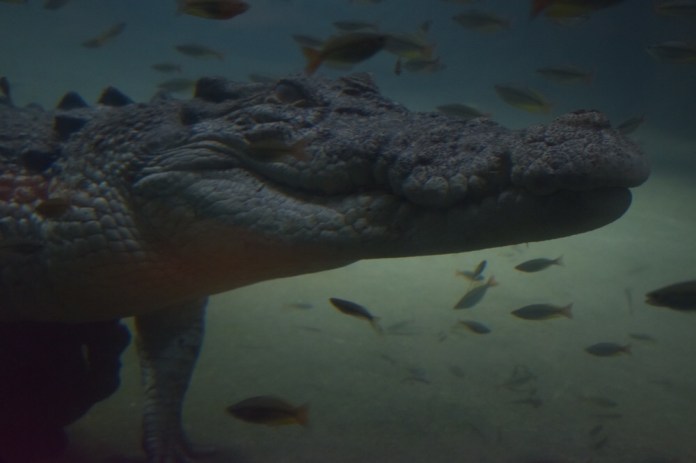
AND CROCODILES!

Standard
Travel

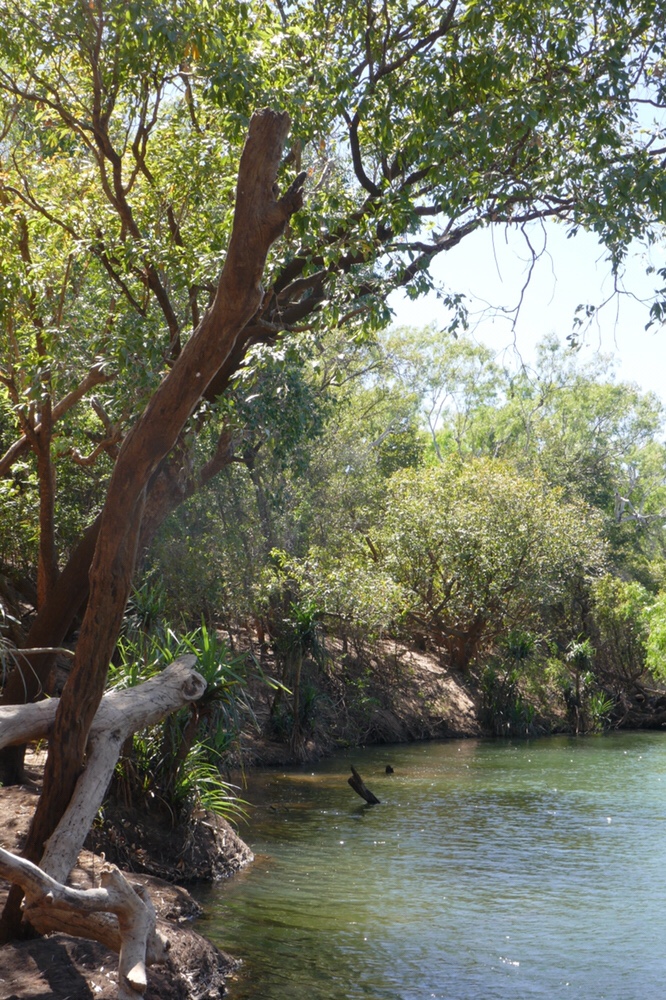
Katherine river canoe trip

It is a beautiful sunny day in Darwin. We have been shopping. Shopping for hiking gear for me, including some long sleeve Craghopper shirts, a new sleeping mat, some washes and antiseptic creams and hand wash. It’s fun shopping for this sort of stuff, I see things I did not realise I actually needed.

Jennifer is talking to Hilary on FaceTime while I am basking in post prandial agreeability.

I have a few spare moments so I had better write down about our splendid trip on the Katherine River.

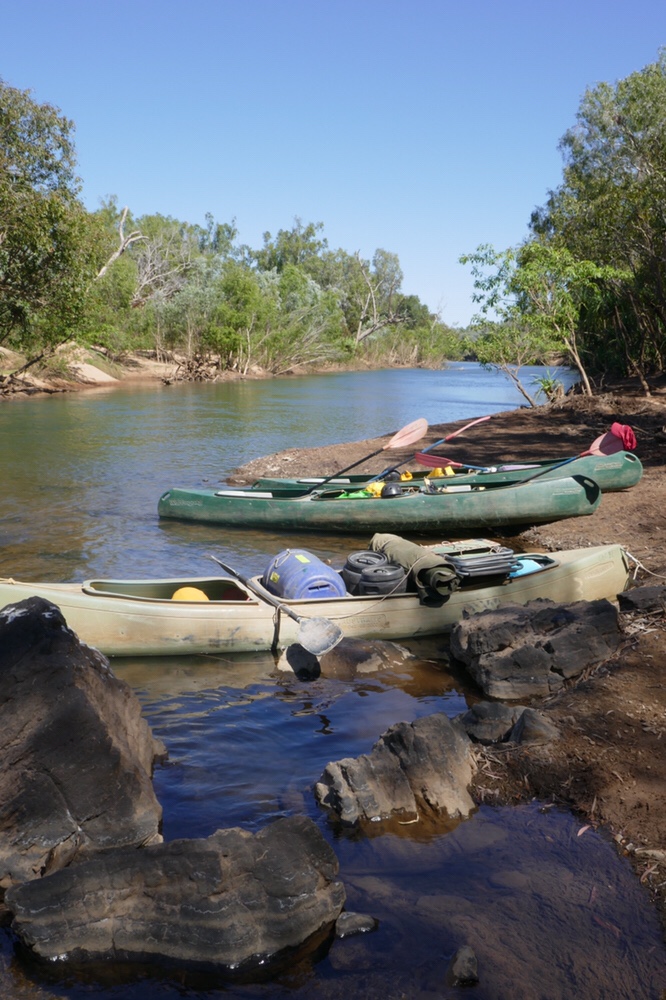
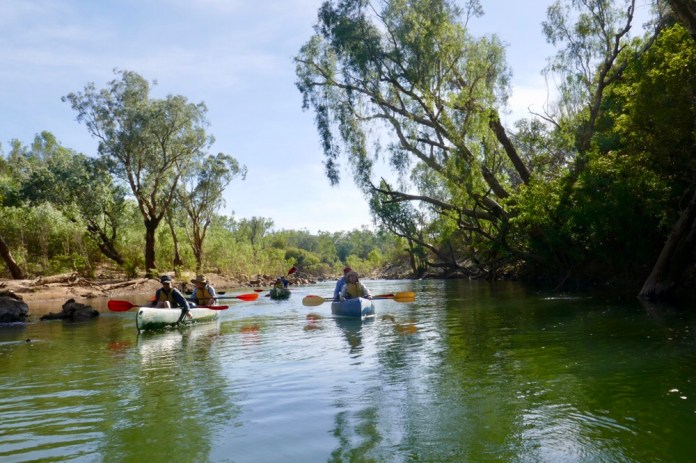
This three day trip is a paddle along some forty kilometres of the Katherine river. We booked through World Expeditions but we actually went with Mick from Gecko canoeing. We got off to a shaky start waiting for pick up. Apparently some issues about WE did not notify them about the pick up. Anyway, Jen sorted out the mess with some frantic phone calls and so soon we were on our way.

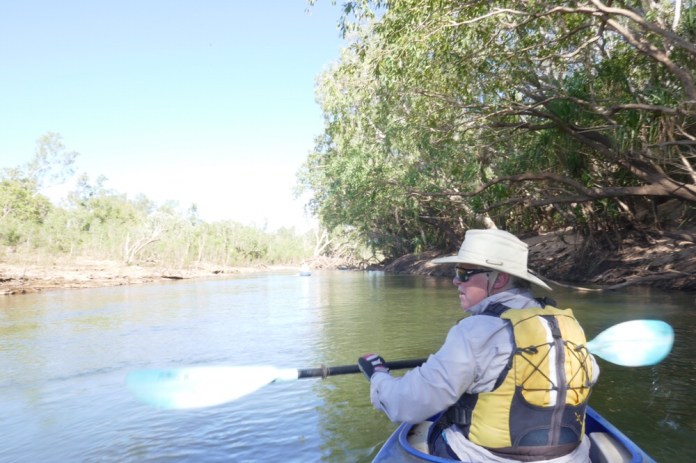
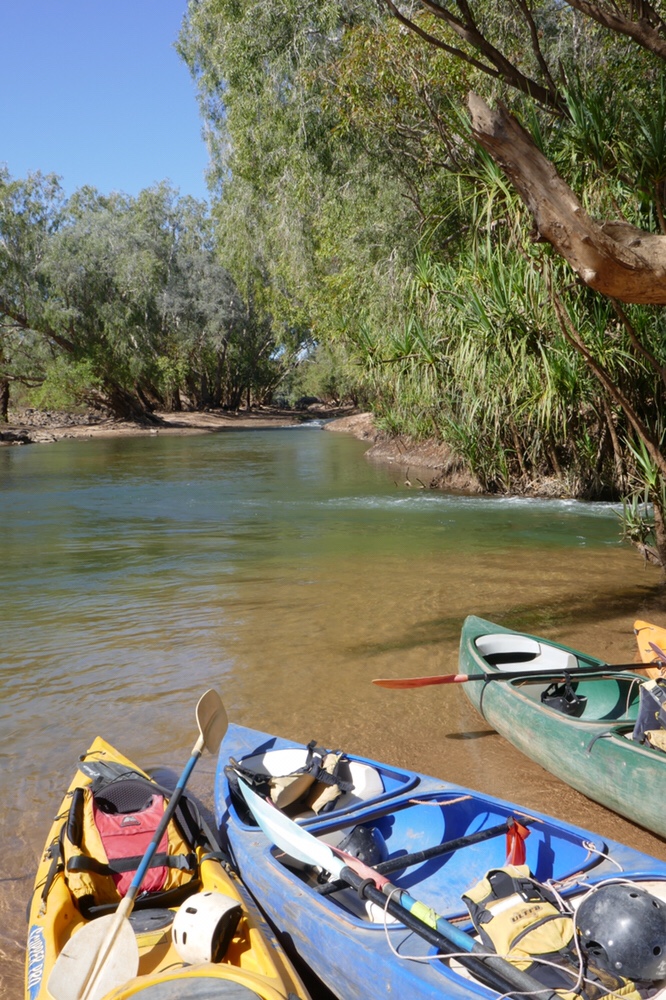
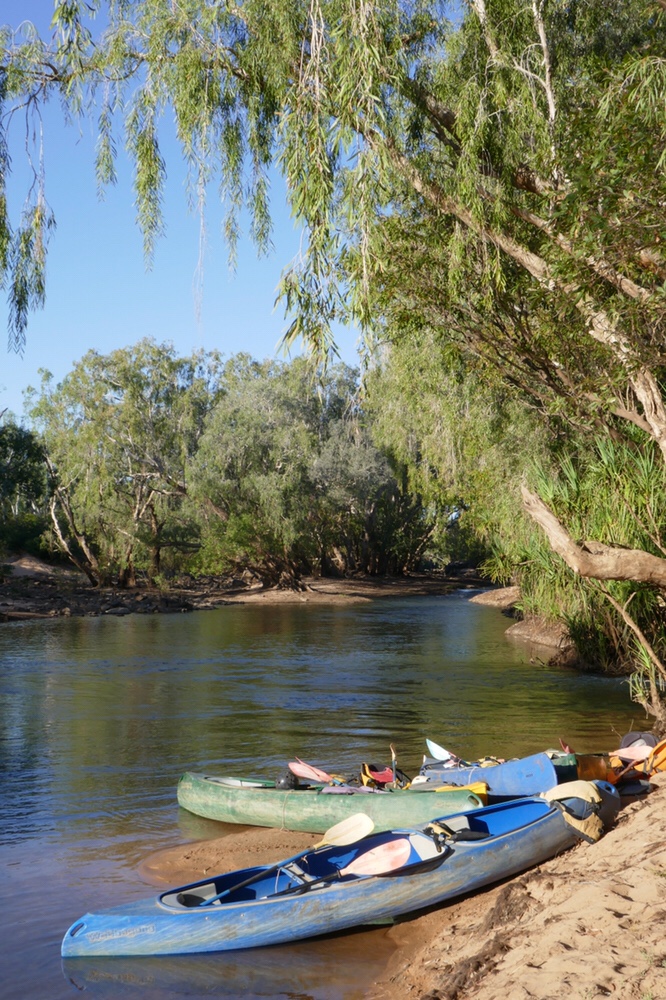
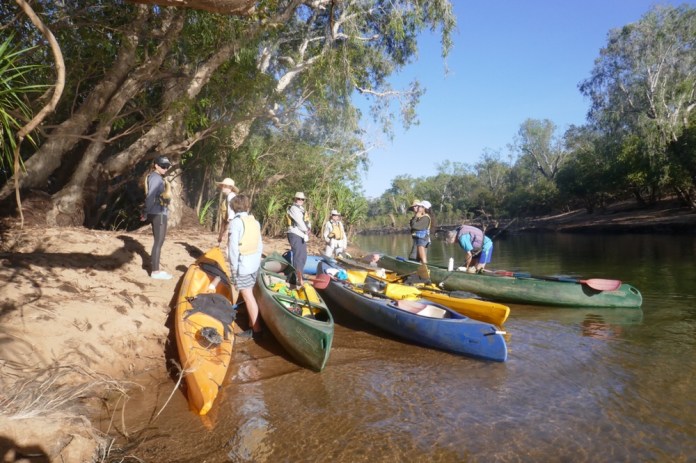
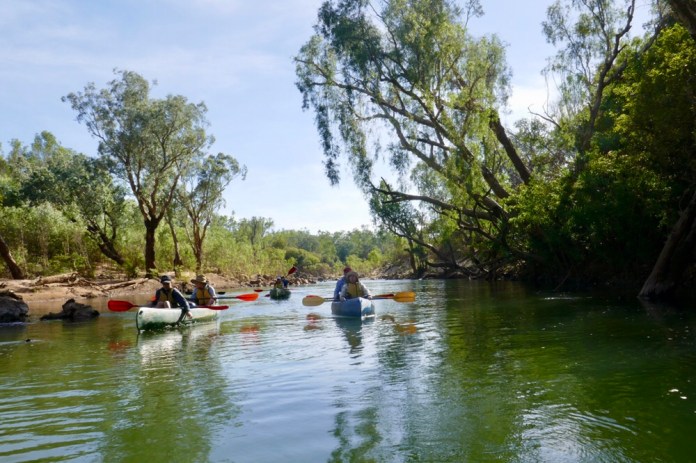
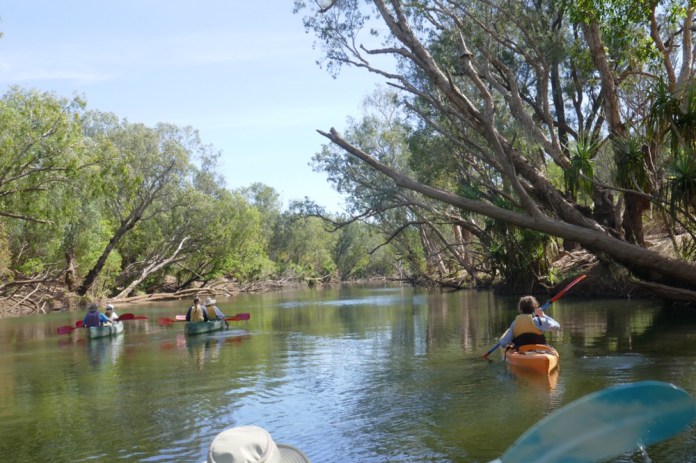
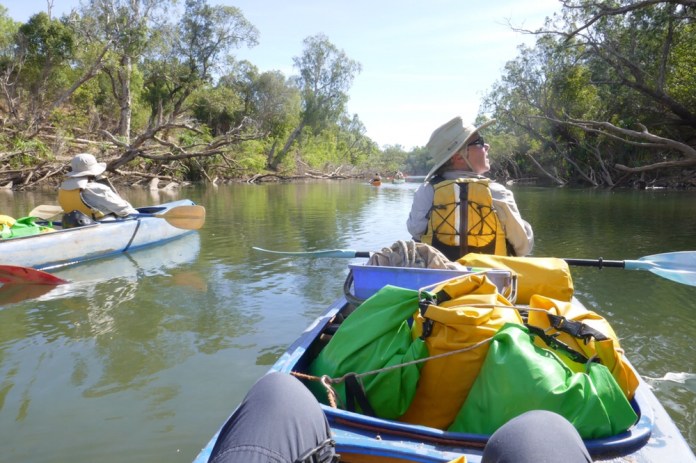
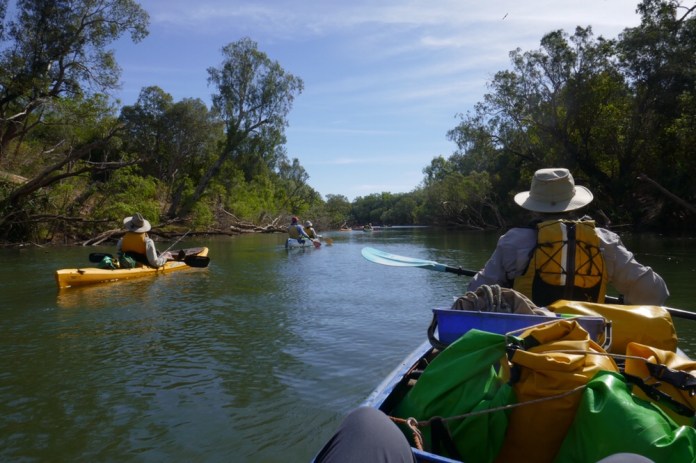
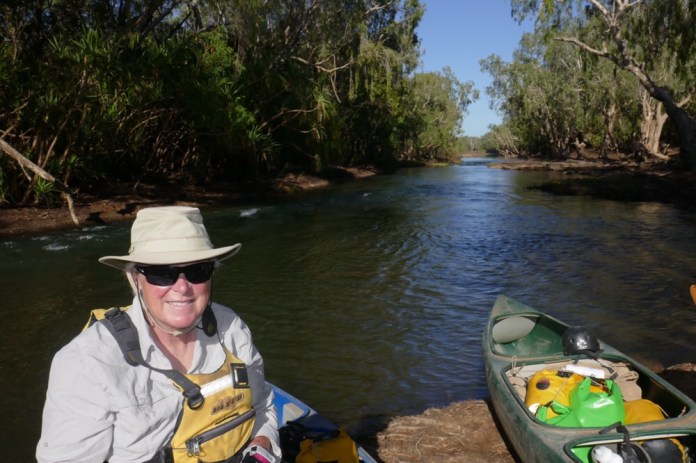
We packed up our gear into dry bags at Gecko canoe’s huge shed, then we all boarded their 4WD bus to be driven to the launch off point. We were on the same trip as a family group, Micks father and his step sister, Travis ( assistant guide) and Mick (chief guide and owner of business). The weather was, and in fact was for the entire trip, simply stunningly beautiful. There was as much sunshine as anyone would want, a clear sky, light cool breezes out of the south east and a river with water so clean our water bottles could be filled anytime we needed by placing it off the side of the canoe and letting it gush in with a satisfying gurgle.

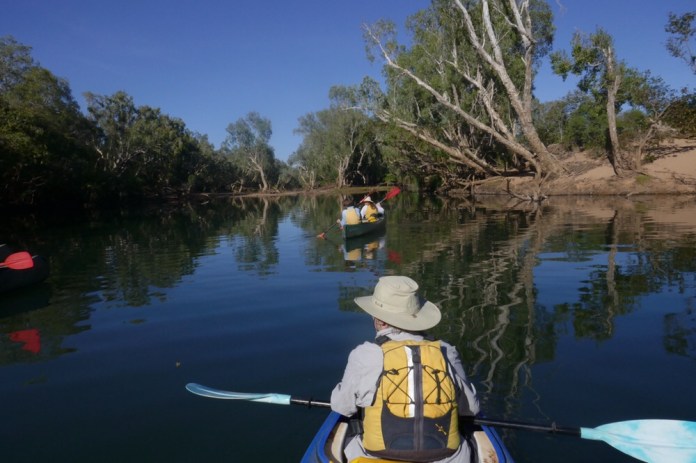
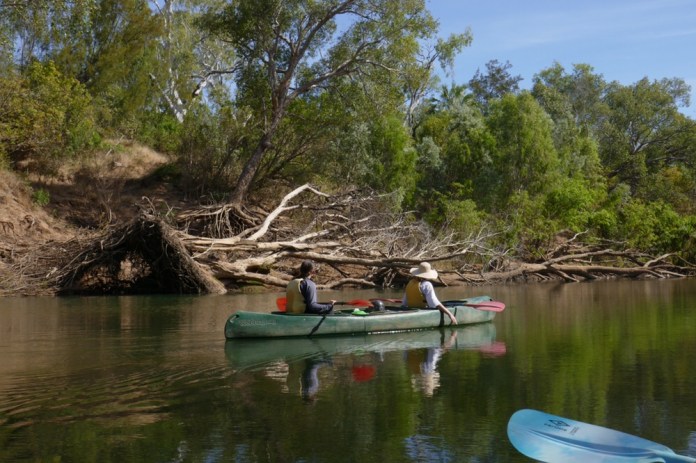
Jennifer and I travelled in a short Canadian style canoe, which has superior manoeuvrability through often narrow rapids but does not track as well as the traditional longer canoes we used in NZ.

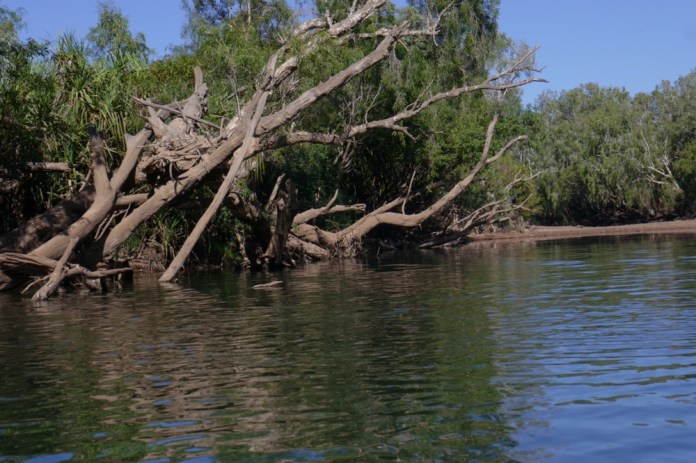
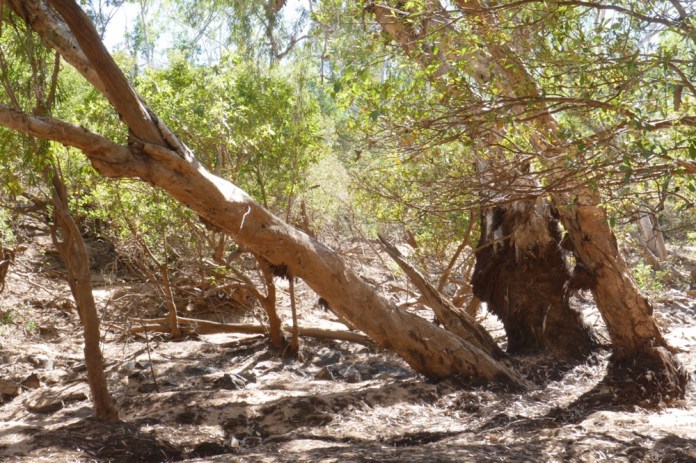
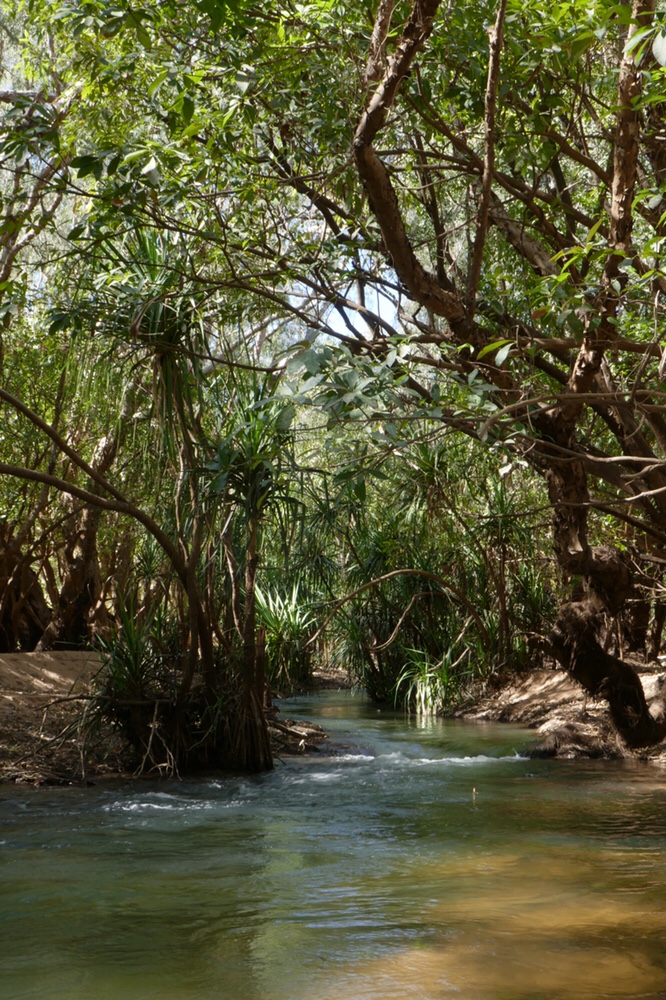
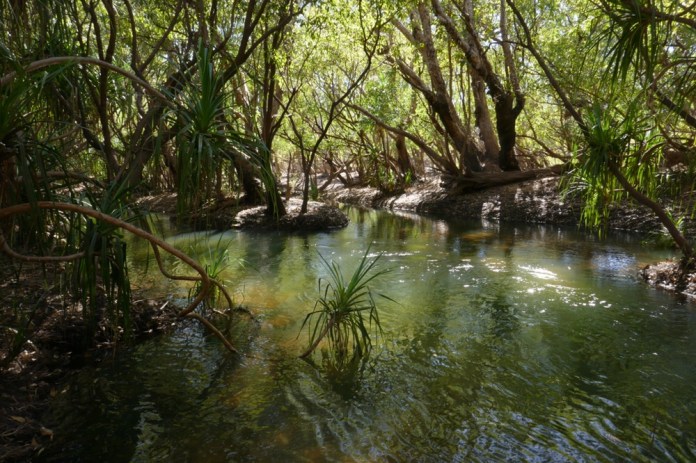
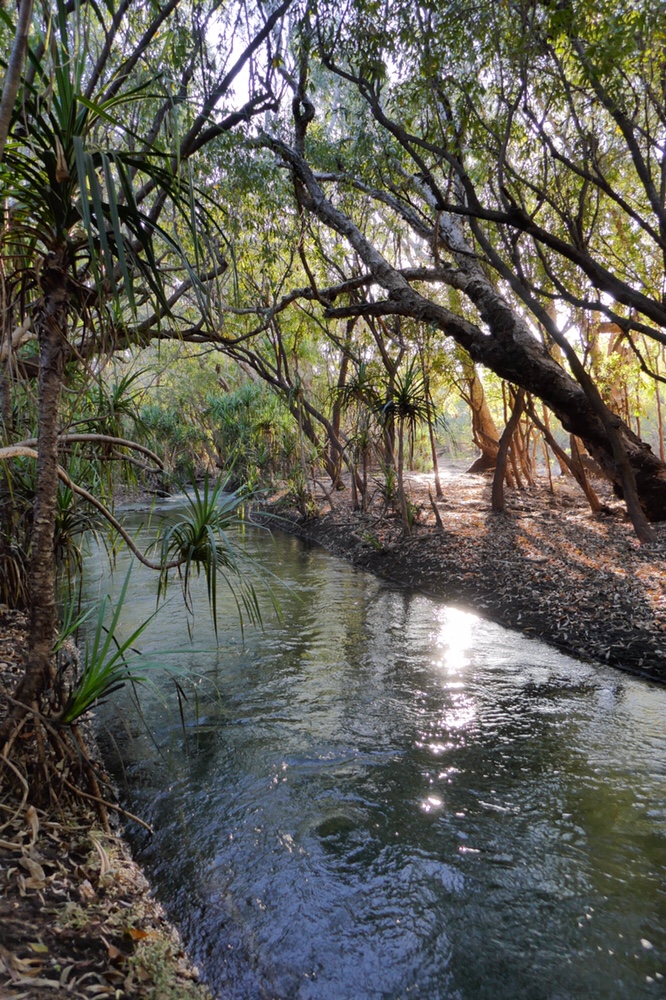
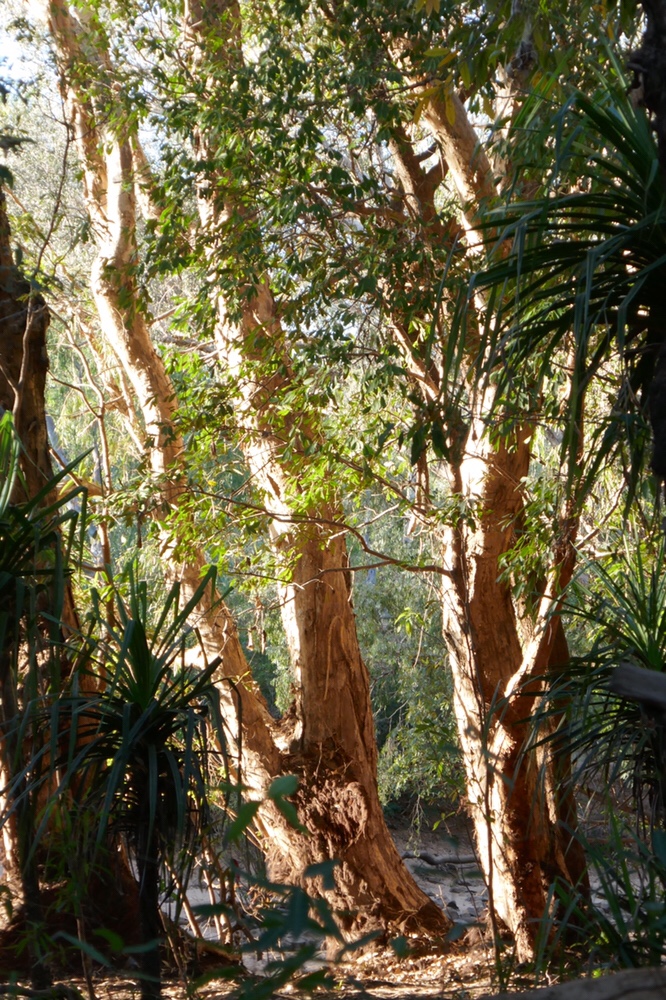
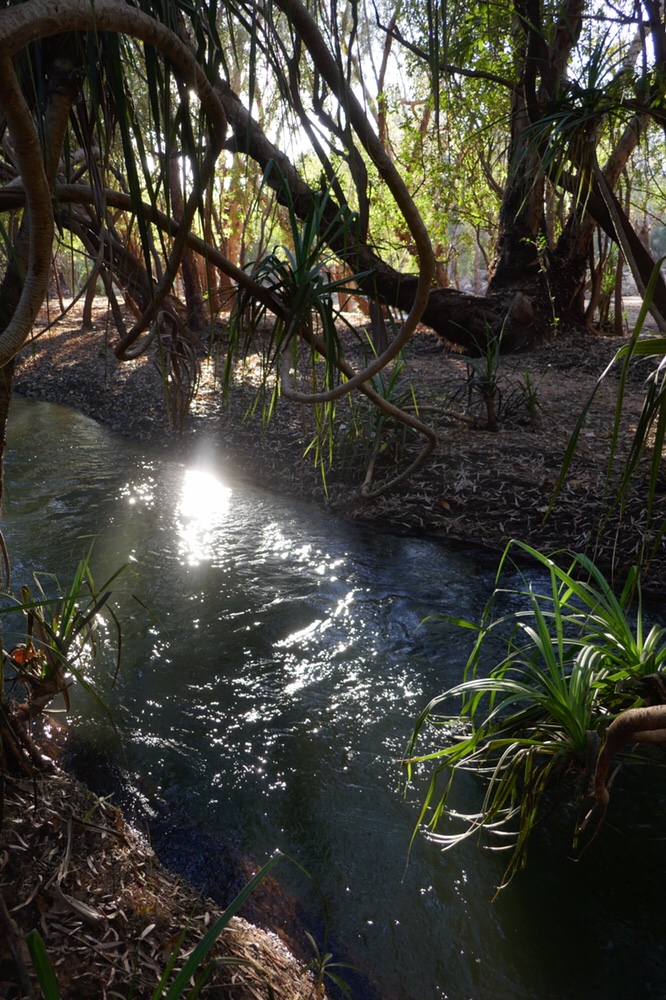
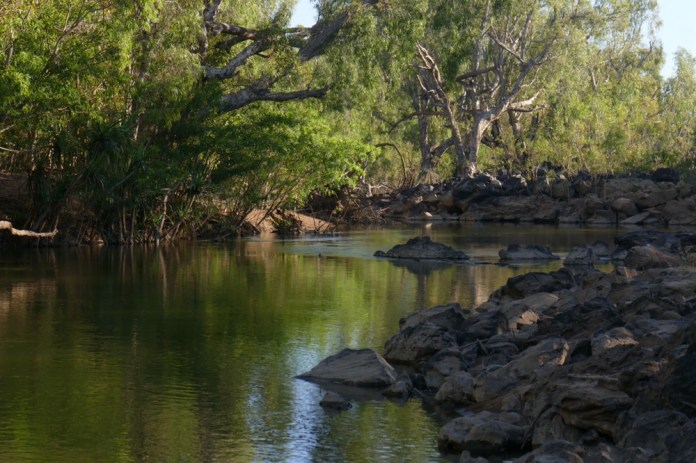
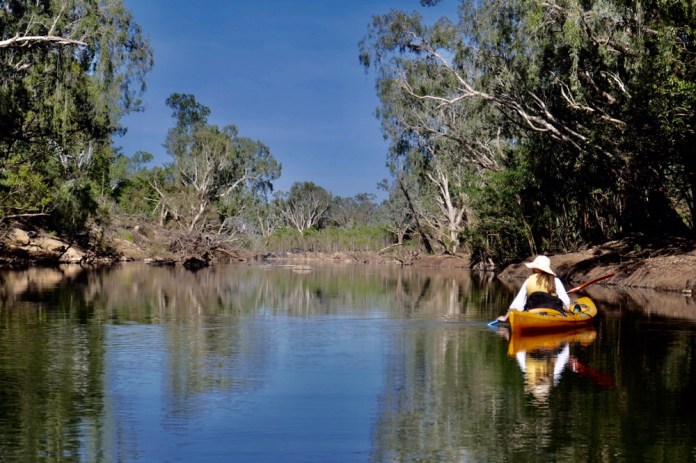
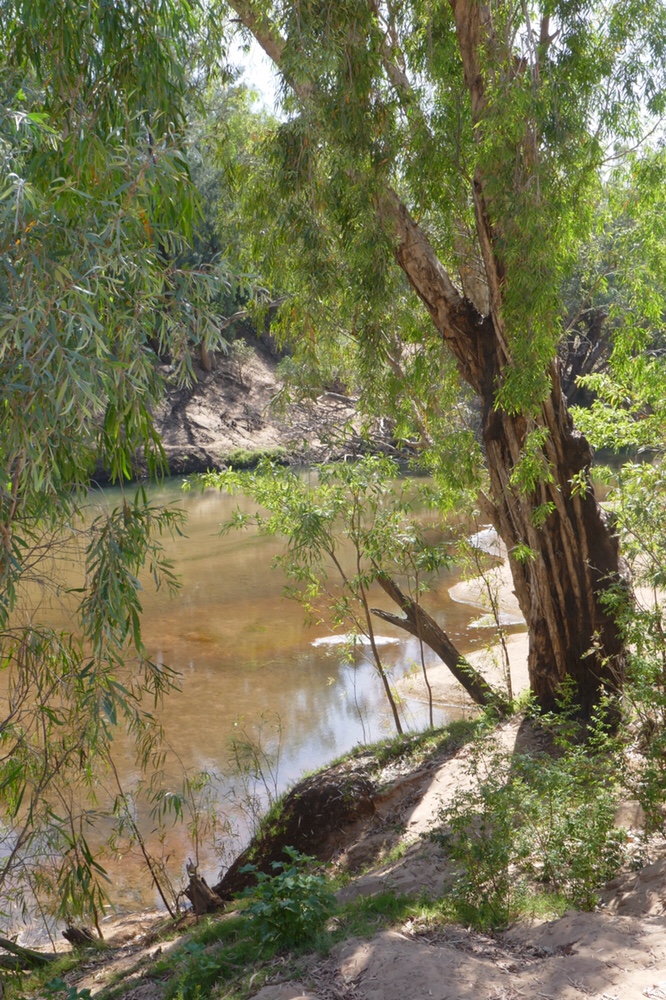
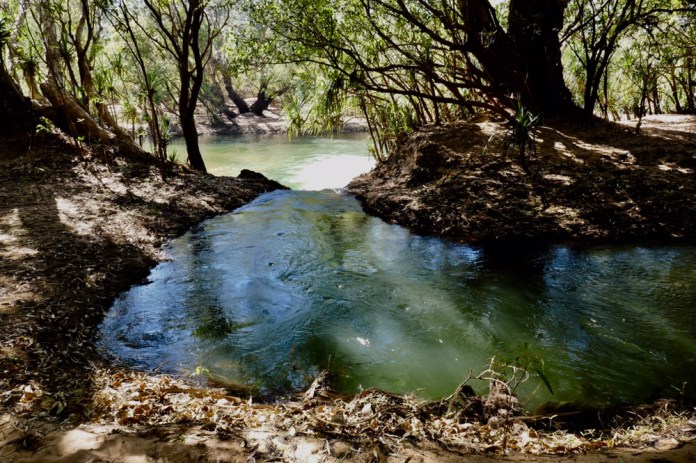
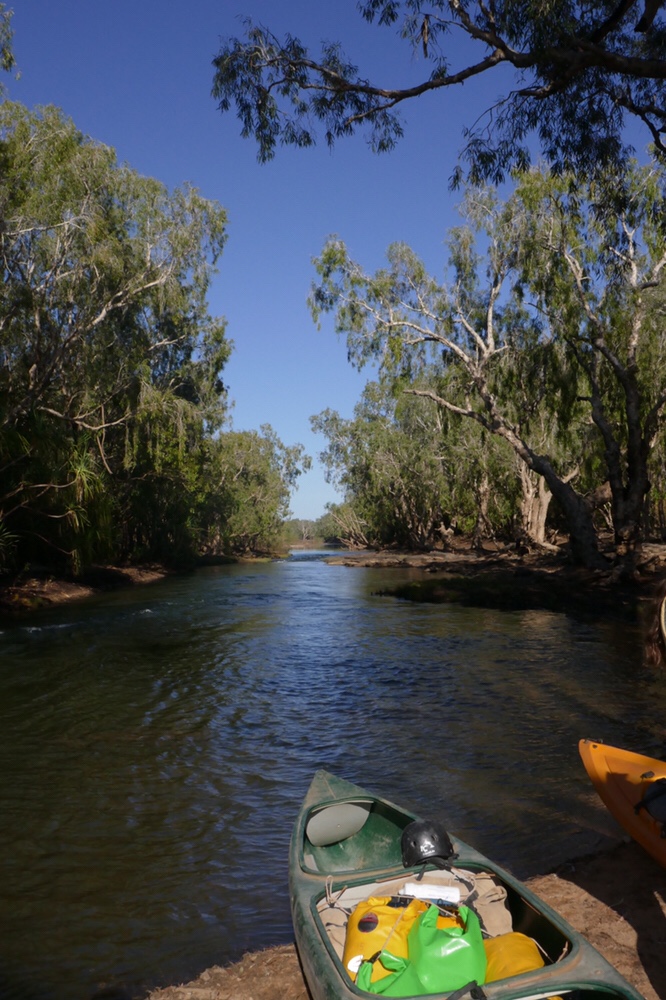
The three day trip was frequently glorious, often exciting and occasionally scary. The beautiful stretches of river with riverine pandanus draped on the banks, and graceful paperbacks and branches arching over the river. There are silver paperbarks with shiny olive green leaves, river paperbarks, Lily Pily trees with their thick green foliage. On the larger red gums which are more common down stream, are ” feathers”, black and grey enveloping the lower trunk. In fact they are not feathers despite their appearance, they are actually roots. In the wet season the river rises over fifteen meters, immersing the trees. These roots draw water and nutrients from the flowing water. Looking high above us, branches broken in the summer floods are lodged in the topmost of trees, very far above the ground.

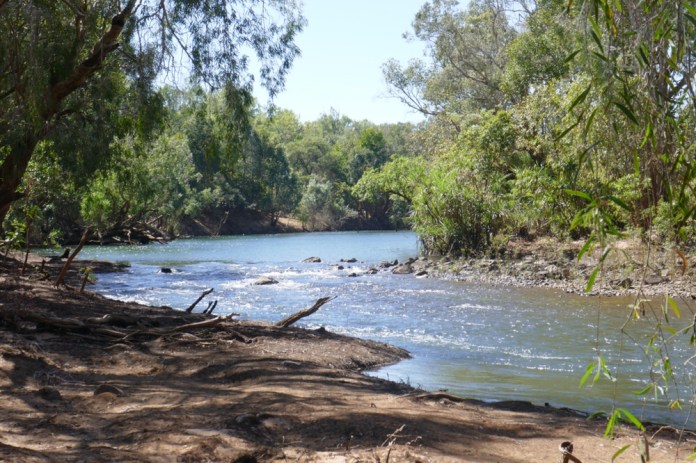
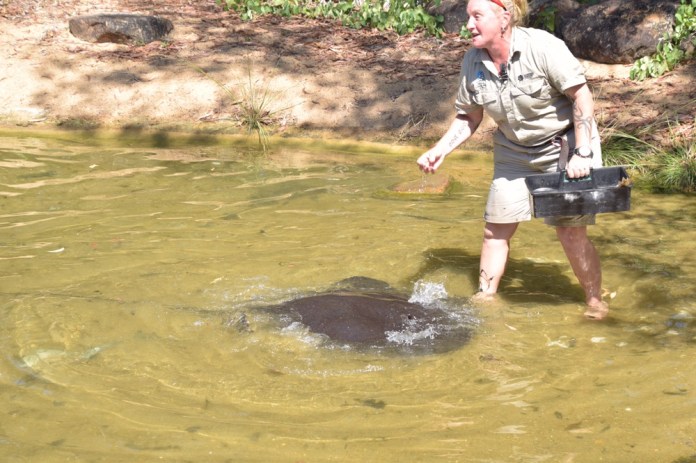
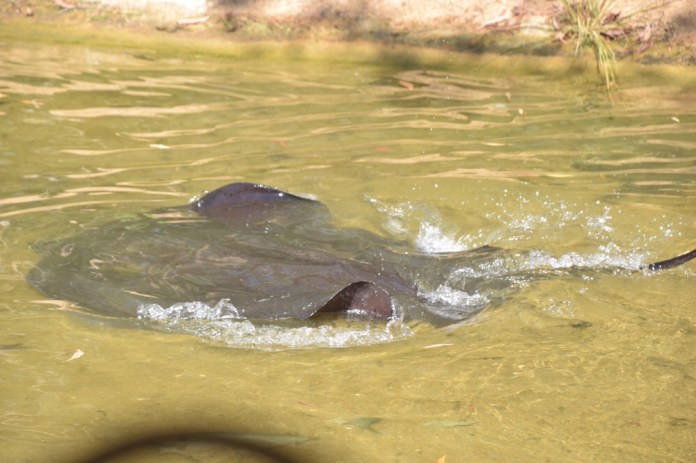
The water now is not summer turbid but crystal clear, it’s fish and turtles and if lucky, occasional sting rays can be seen gliding through the faintly green tinted liquid. The river can be deep and can then be very shallow especially over the sandbanks inhabiting midstream. A few times I had to clamber out and let the canoe float up; now I could propel the boat along till I could climb back in, bum first, wet shoes splashing in sand and water, and paddle off again.

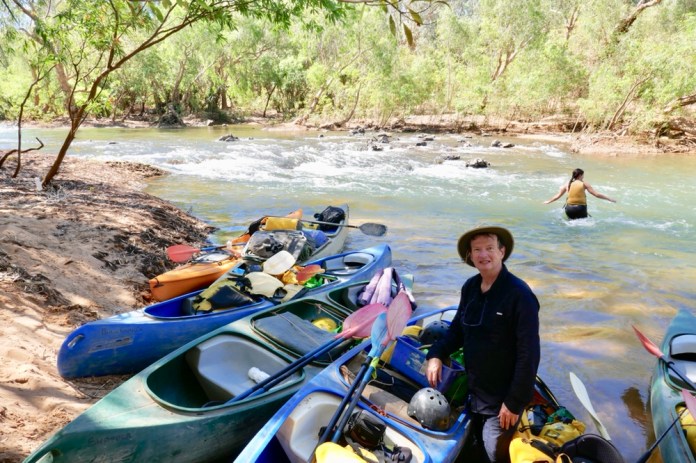
The rapids are grade 1. Well that does not seem much but it’s more than high enough for Jennifer and I to provide rescue experience for Mick and Travis. At one point, Jennifer had the option to abandon ship and Mick offered to get in the canoe. Well…..I steered the canoe pretty well until there was a rock. I could not decide whether to go right or left. I was still puzzling which was the best option when we hit the rock. Mick was a bit flabbergasted. Anyway, he pushed us off and I chugged along backwards down stream with Jennifer madly photographing my debacle. This scored an honourable mention!

I must admit some rapids went pretty well, and we shot through, on the right line, turned at the correct time, in the correct fashion. A real buzz. Other times we achieved the impossible, broaching on a submerged log and being super stuck until Travis waded in and pushed us off. Jennifer hitting a tree with her head and me hitting my knee (on the same tree) as we ricocheted through a narrow canyon. Our main problem was slewing the canoe. The turn was fine but the stern splayed off line, hitting the banks, rocks, other boats and Mick as well.

Mick thinks it is due to over steering. In any case, canoeing is a great deal harder than it looks!

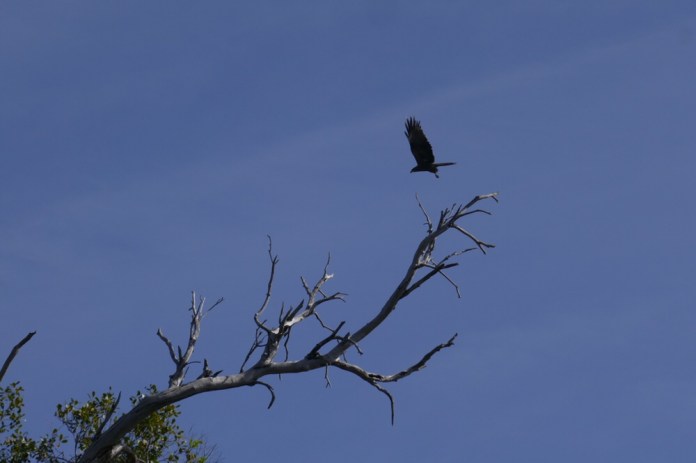
As well as the adrenaline of the rapids there are long stretches of gentle paddling with trees and riverbanks filled with bird life. We saw many birds, including; cockatiels, the brightly coloured rainbow bee eaters striking their insect prey against tree branches, great billed herons lofting out of trees with majestic sweeps of their grey wings, azure kingfishers darting over the water grabbing humming dragonflies, black kites wheeling in the sky to alight on the utter topmost of bare branches to study the river flowing beneath them. There are blue winged kookaburras calling out as they sweep from bank to bank disappearing in the foliage. Graceful White faced herons glide down the river, and so many other birds flying, above and around us. What’s delight!

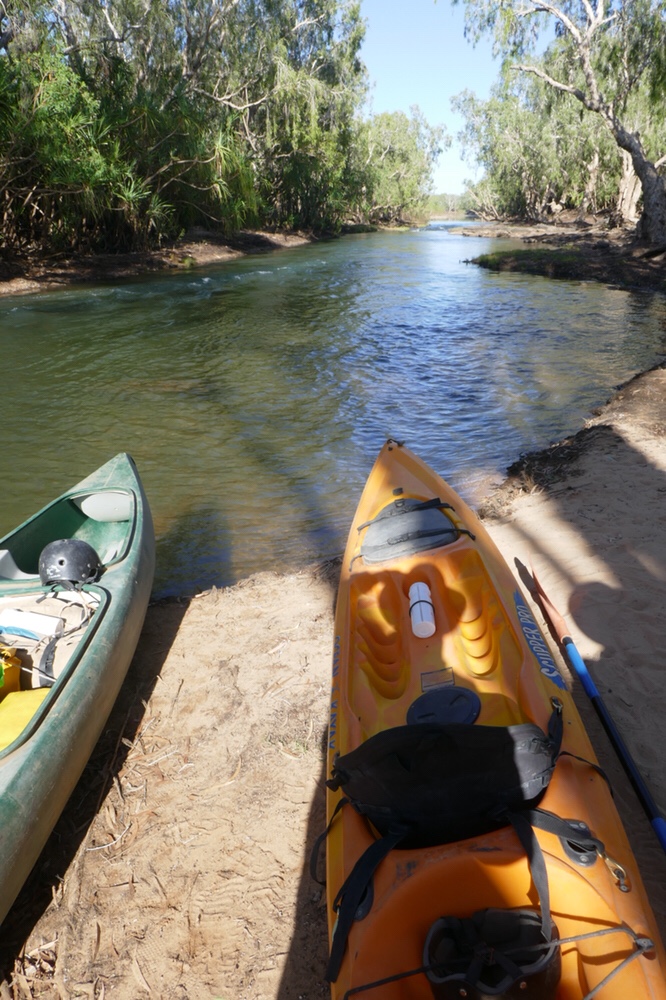
We drew up to the sandy banks for lunch, morning teas and dinner. We camped on the river banks, on soft sand. While we set up our campsites, Mick and Travis prepared terrific meals. We laid out a ground mat on the sand then rolled out the swags and sleeping bags.

Dinner was slow cooked in a camp oven. Coals from the campfire were laid using the shovel onto the ovens. Barramundi, Russian beef, vegetables. Yummy. Tablecloths, candles, and relaxing conversation and of course the superbly cooked meals made for very pleasant evenings.

Close your eyes, and after a count of fifteen, look up. Wow, stars galore. The sky was festooned with stars. Jupiter and Venus shining brightly, the former near the zenith and Venus to the west. At two am, during a toilet break, Mars had well and truly replaced Jupiter at the Zenith, the war god’s planet bright orange light outdoing all the other lights in the sky.

In the river forest, out of the dark, we could hear the calls of Blue winged kookaburras, of owls, micro bats, and other animals. I watched over the water, wondering I would see the eyes of a crocodile. But Mick had chosen well, and I never saw a saltie, slang for a salt water crocodile. We did see a few fresh water crocodiles, one was basking, warming up near our second campsite.

Why does the river flow all year round? It has not rained here for a few months and yet still it’s navigable throughout its length. In Summer, monsoonal rain fills the watershed of the Katherine River, its Gorge, its valleys and all the feeding creeks and smaller watercourses, to overflowing! In winter, the skies are cloud free and no rain is in the offing for many months. There are several prolific natural Springs which supply our river with the water we need. The water is pleasantly warm due to sunlight and due to subterranean heating of the spring water. The water is bubbling along between a hundred to ten thousand years under the ground depending on which sandstone aquifer is discussed.

The trip was well worth doing, the peace and beauty of the river is impossible to beat and the guiding by Mick, with his abundant knowledge of the river and its inhabitants was first rate.
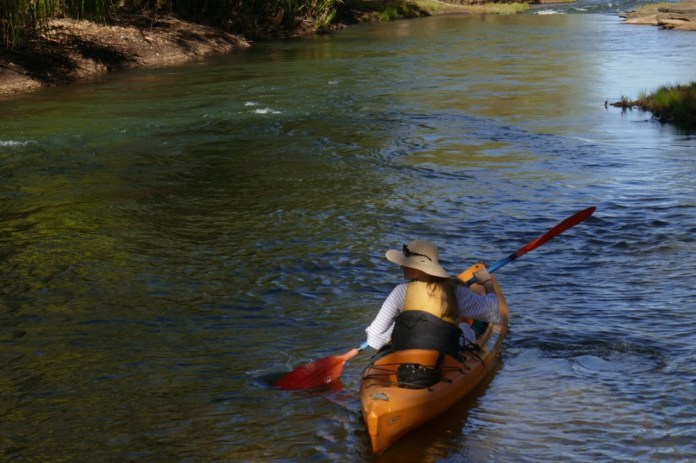
great

Standard
Uncategorized

International Alice Springs Beanie festival

We just finished our four week work stint and had yet another dinner at Montes. We nestled in one of the many niches there and two of us shared a Mexican Parmigana. After dinner we drove to Araluen to see the Beanie Festival. It had only opened a few minutes before, the grand opening following some speeches we missed while enjoying Pinot Grigio at Montes.

There were food stalls outside the centre, perched on the road, CWA, Argentinian pasties and other local foodies. For once I forego the food, and decided I should be a culture vulture as opposed to a vulture pure and simple. Many locals had come along for the evening. The exhibition boy goes for a few days before traveling interstate. There was a long queue of jostling cheery folk keen to see the felt and wool inventions on display.
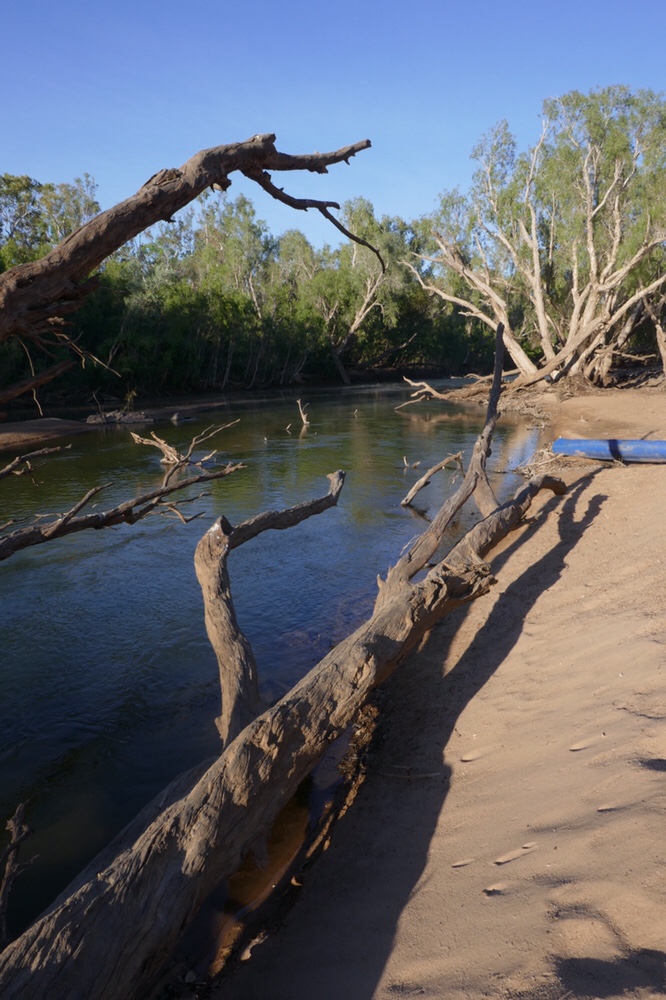
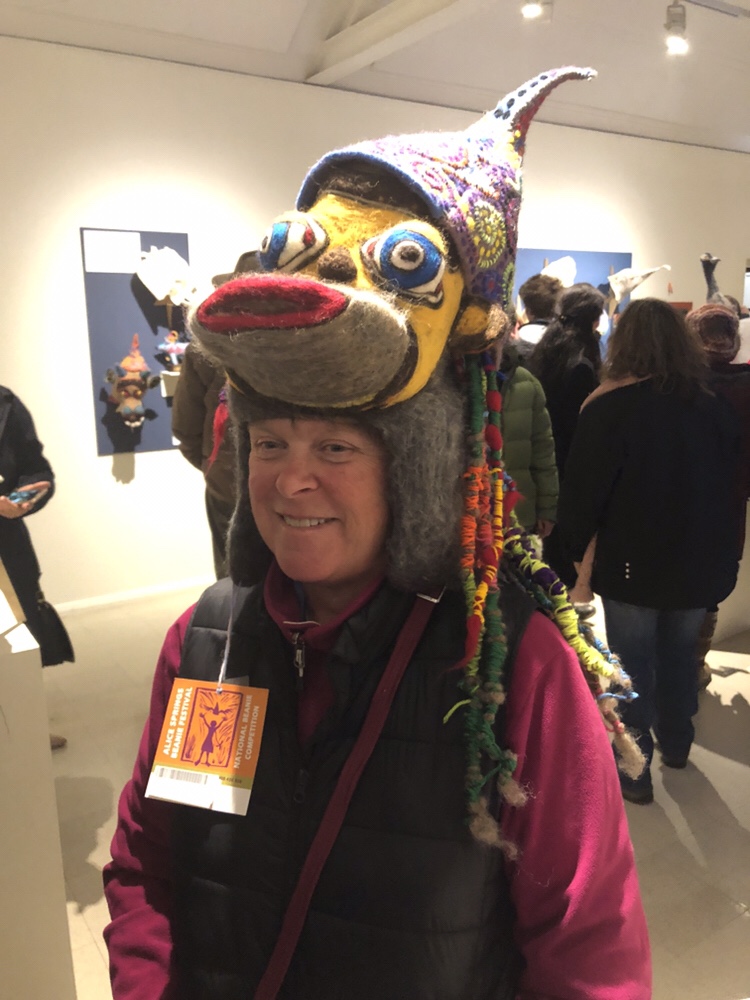
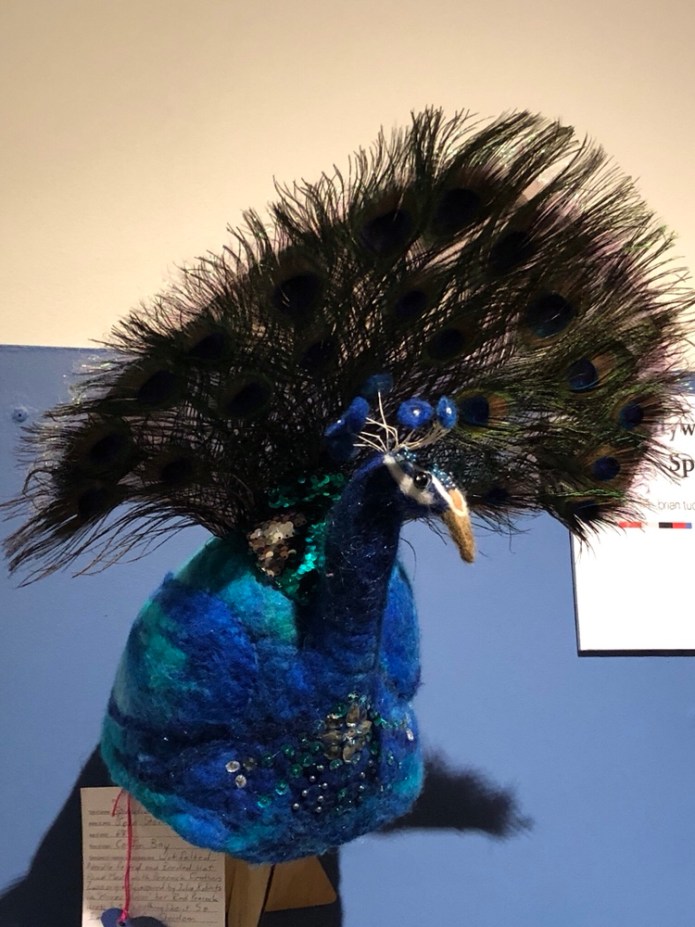
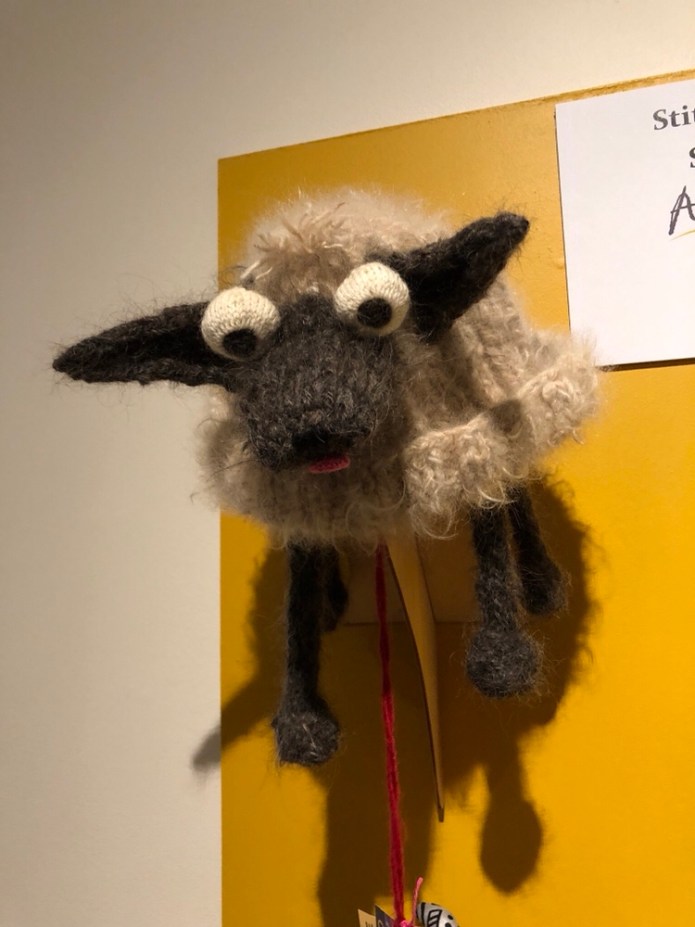
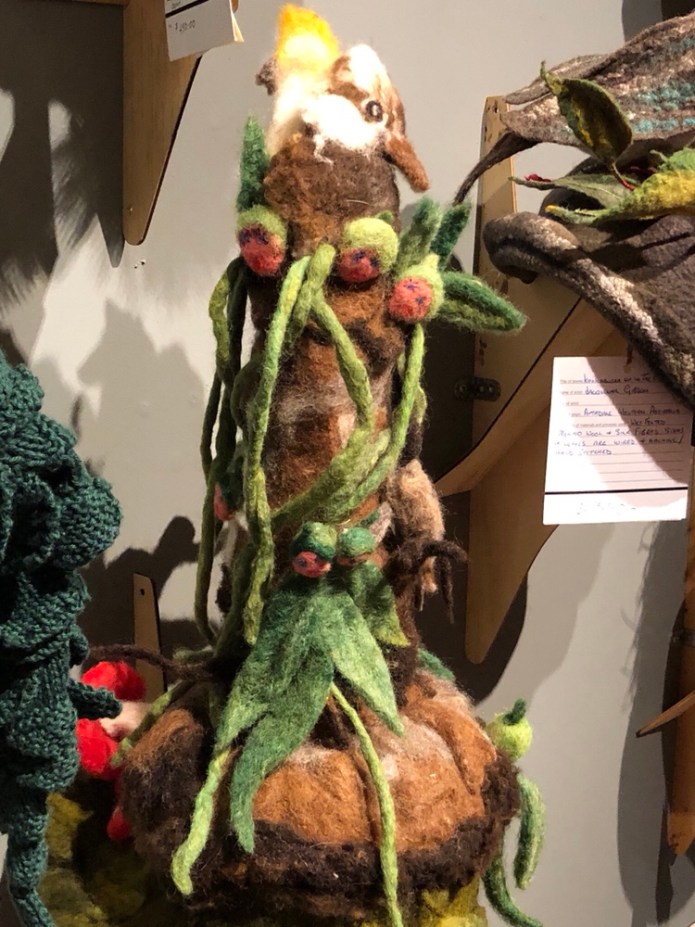
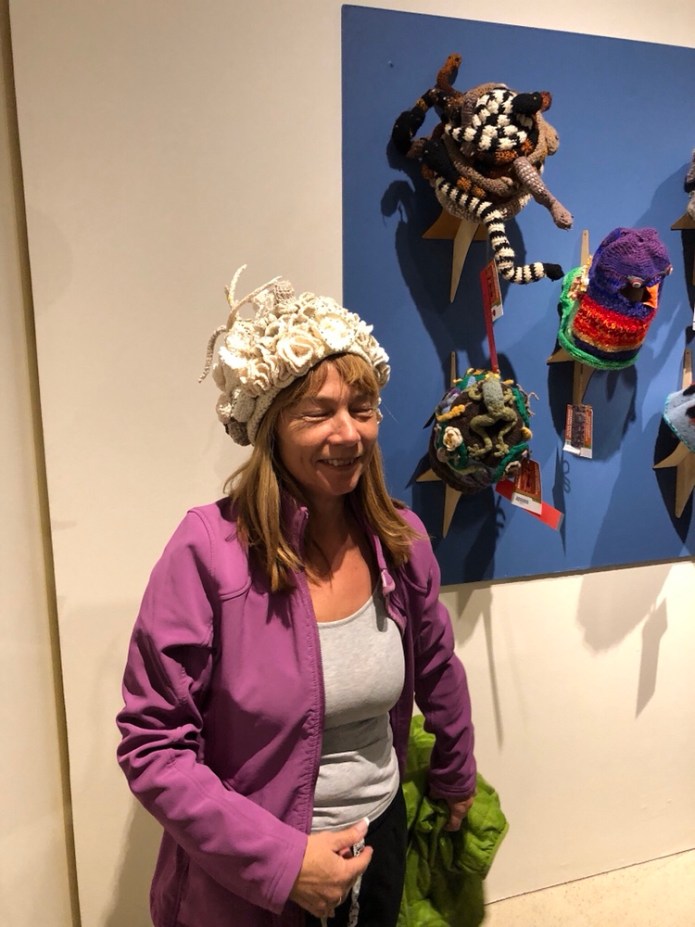
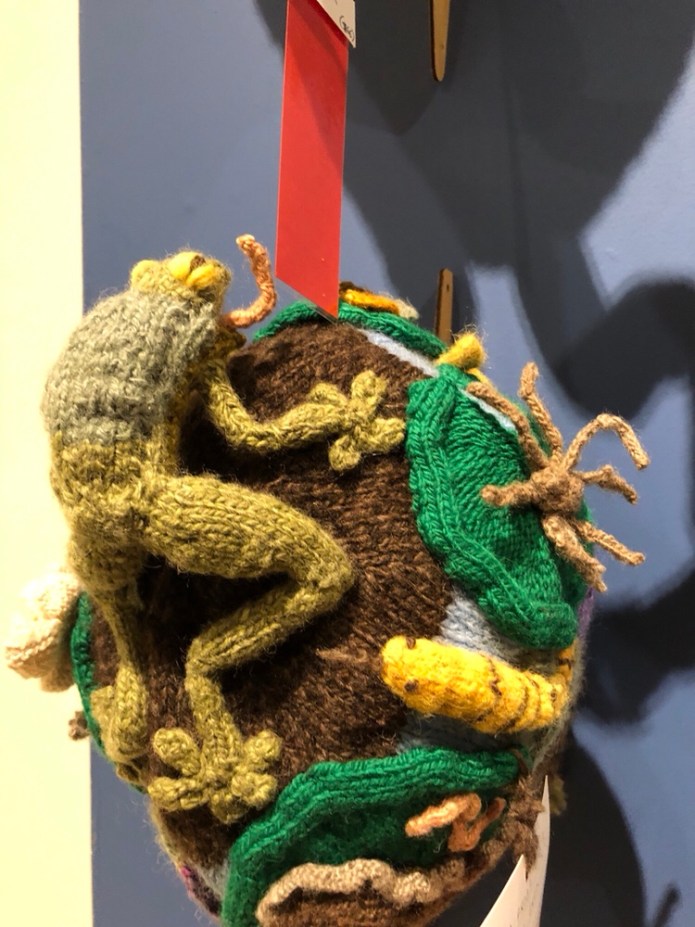
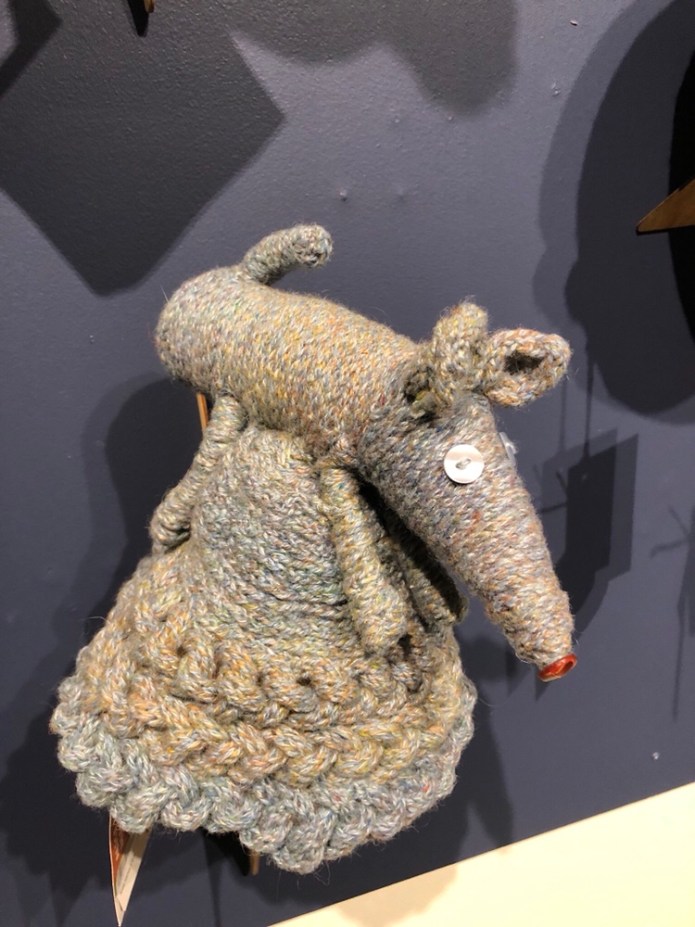
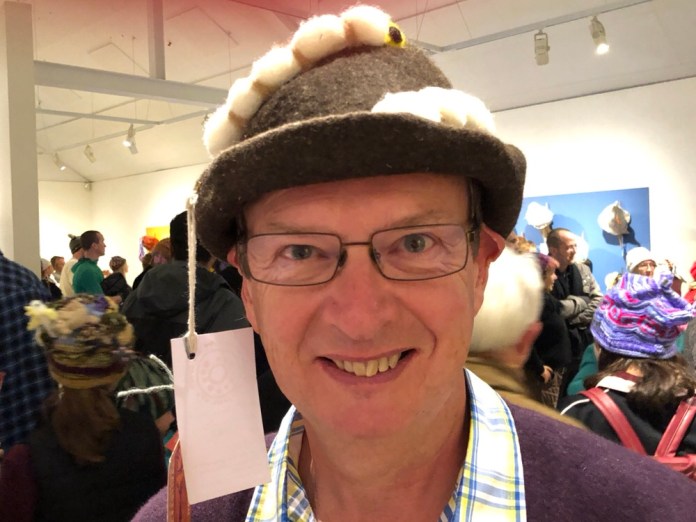
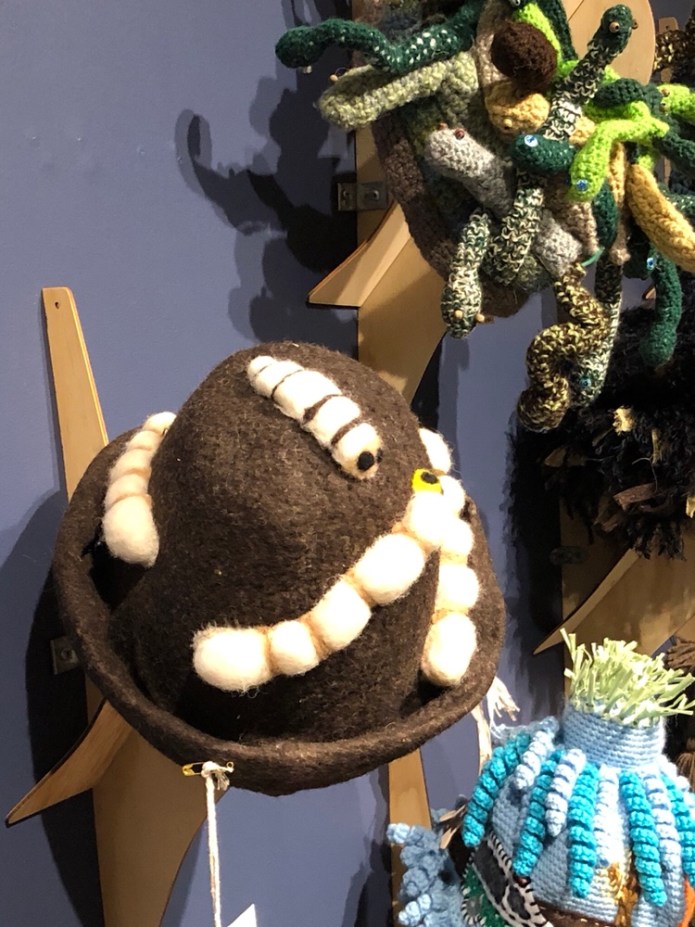
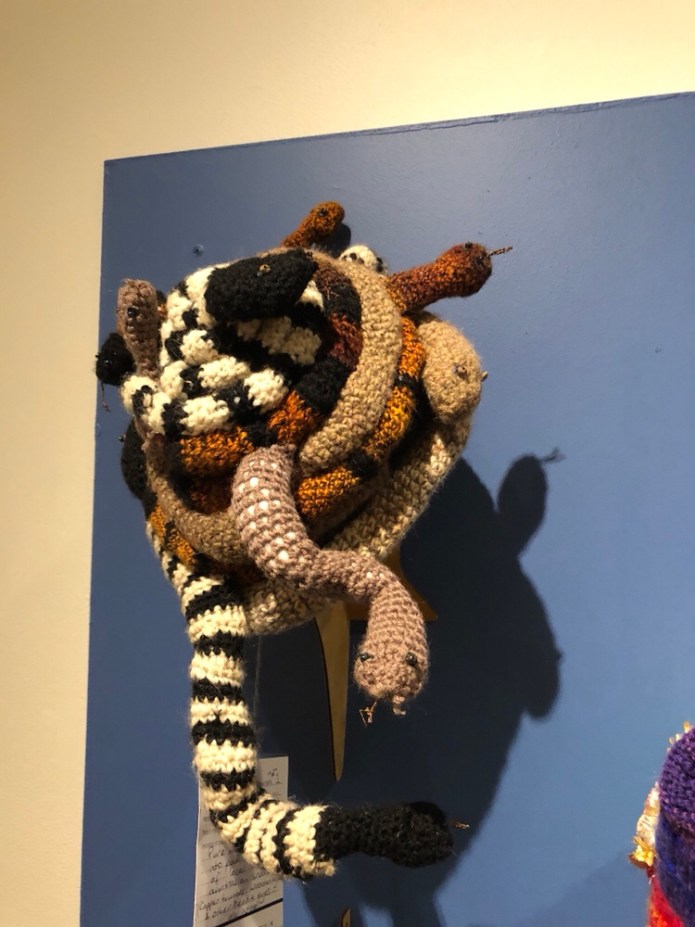
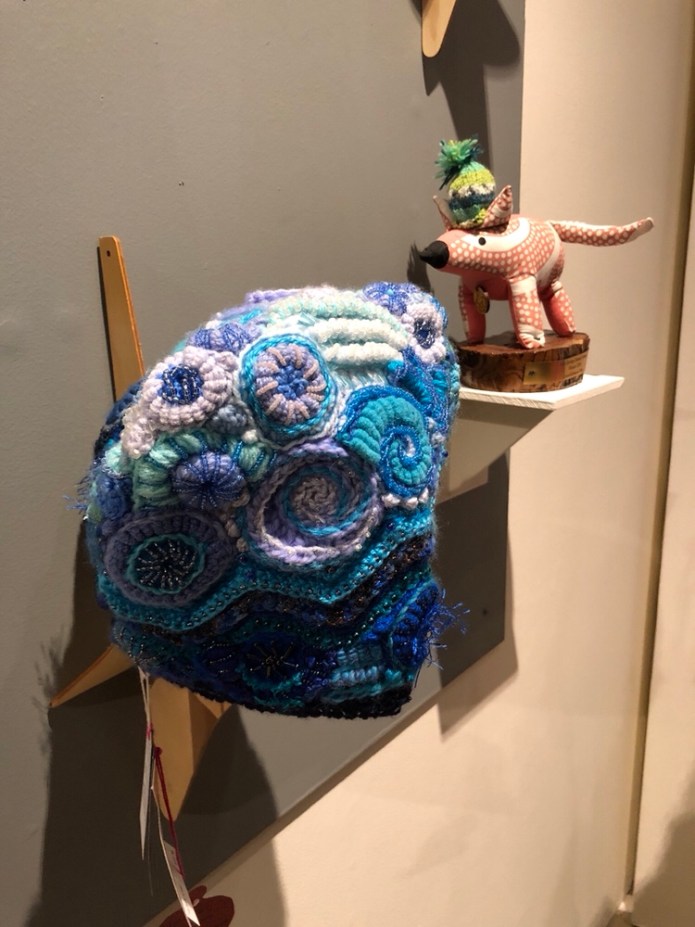
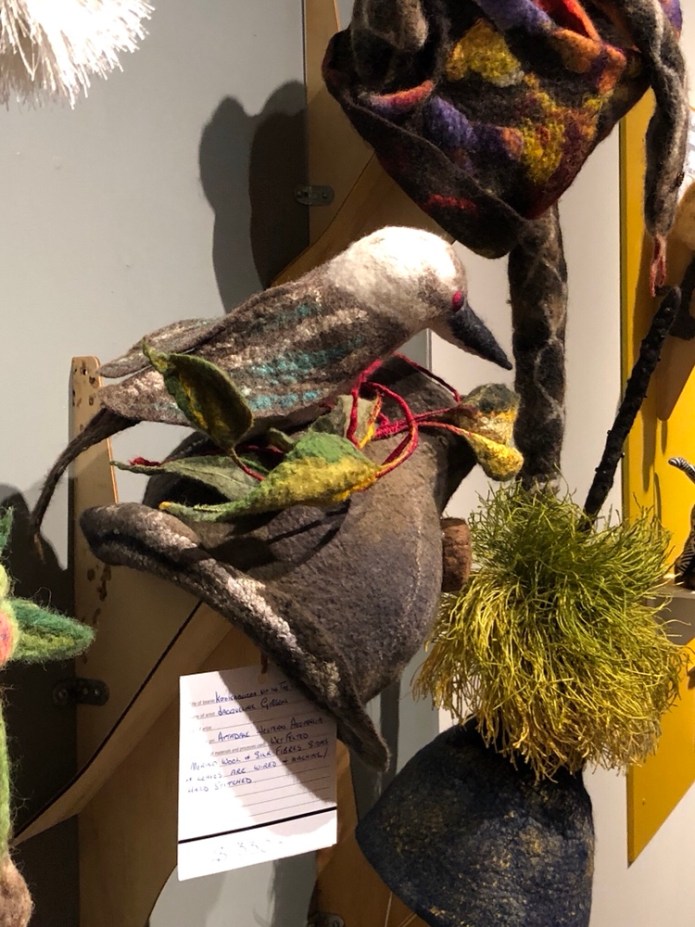
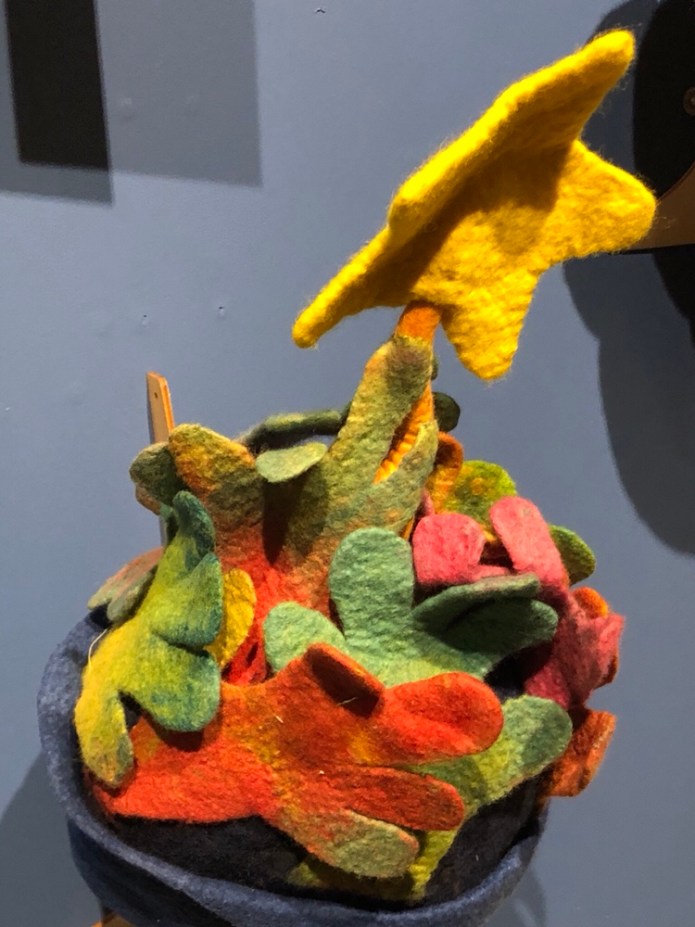
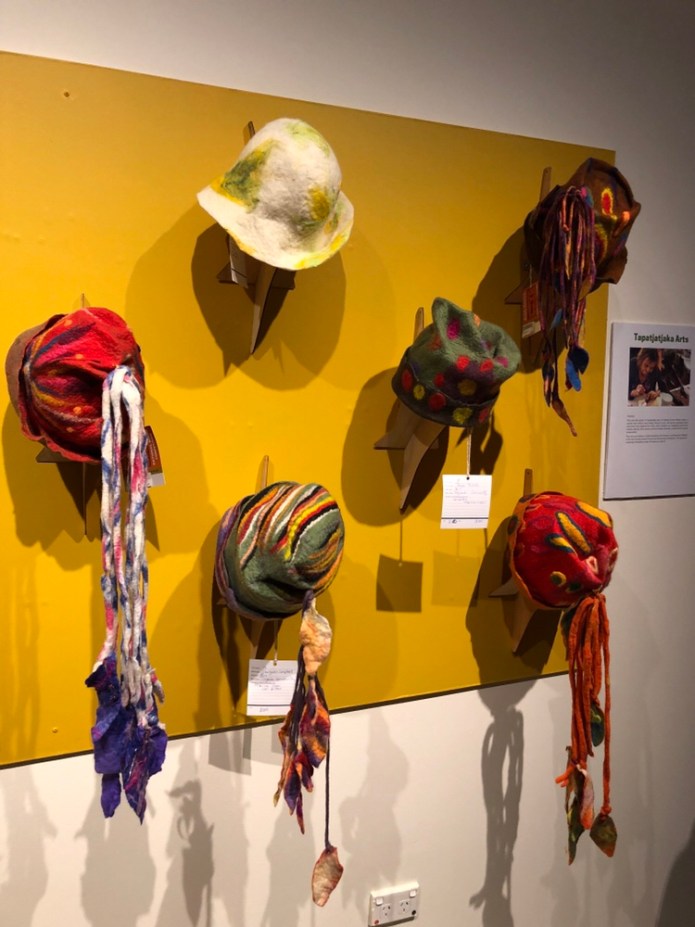
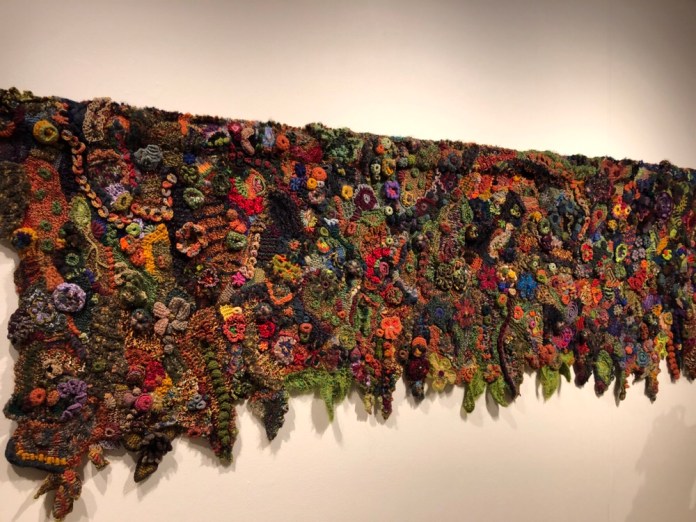
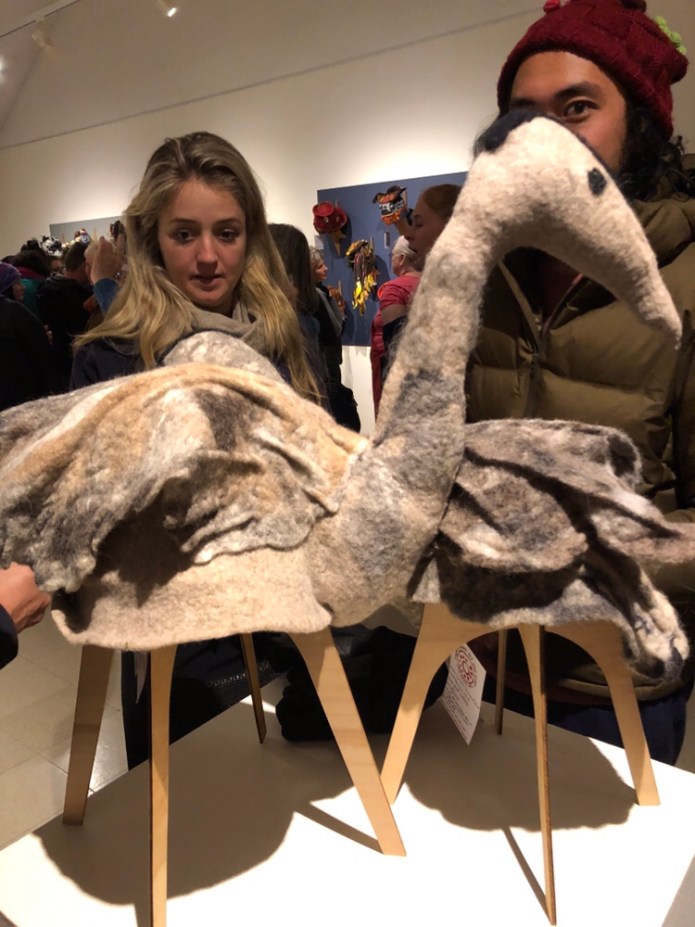
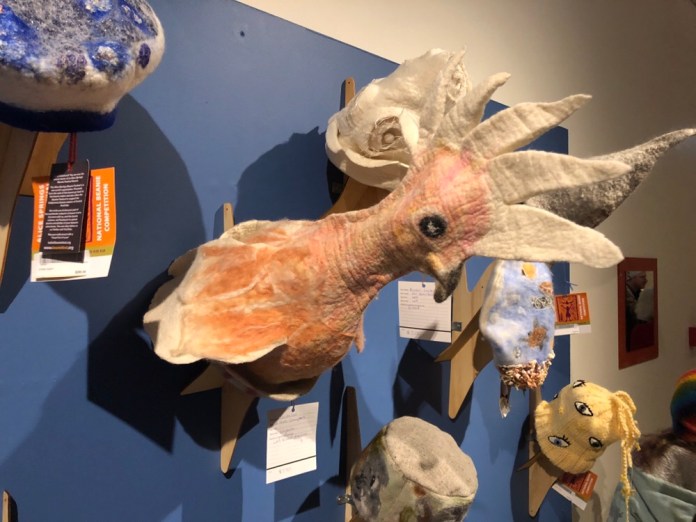
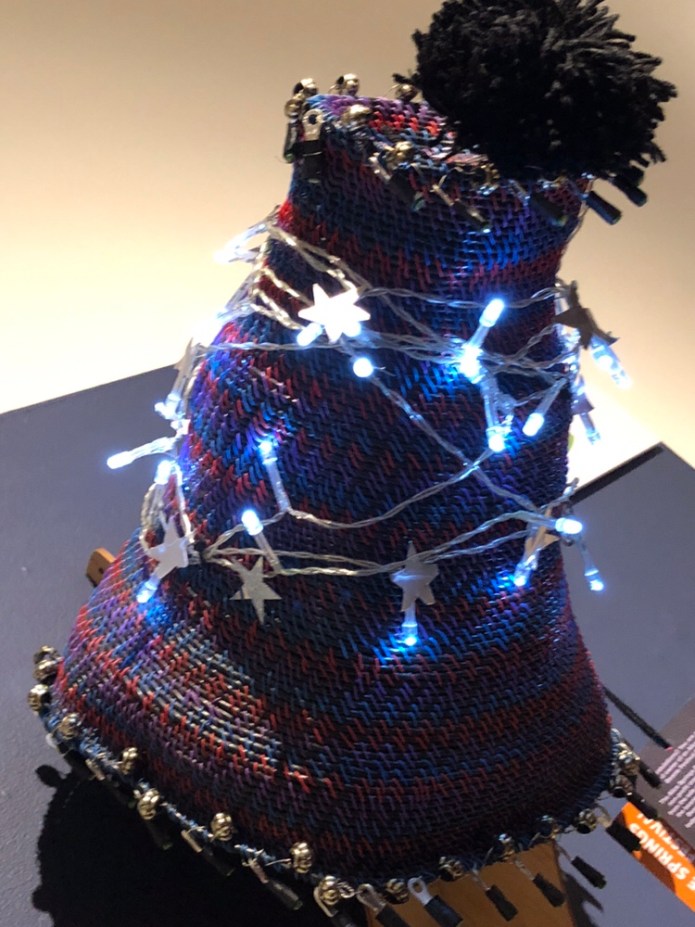
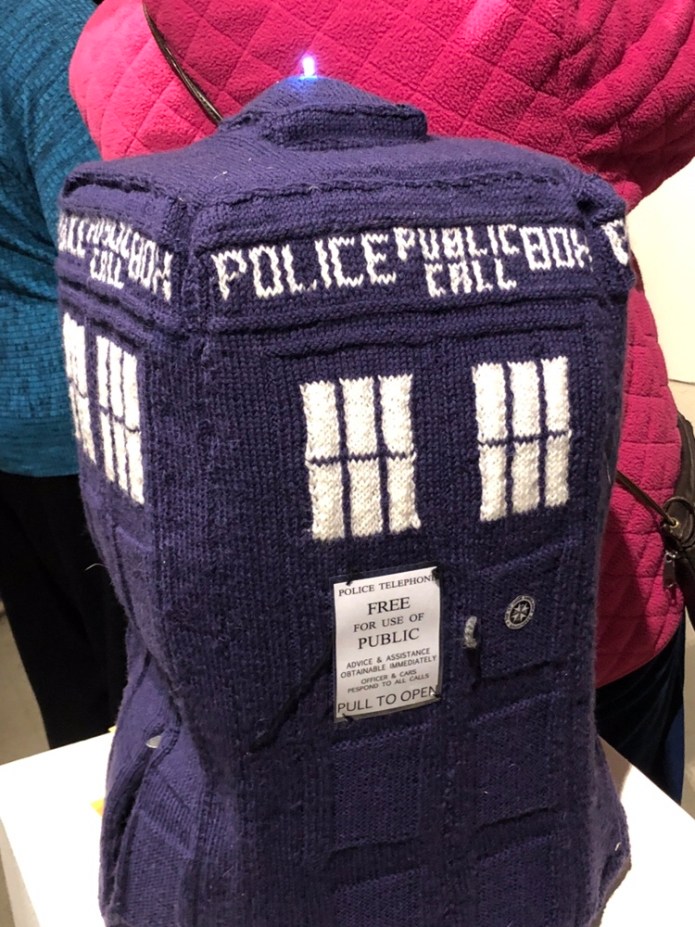
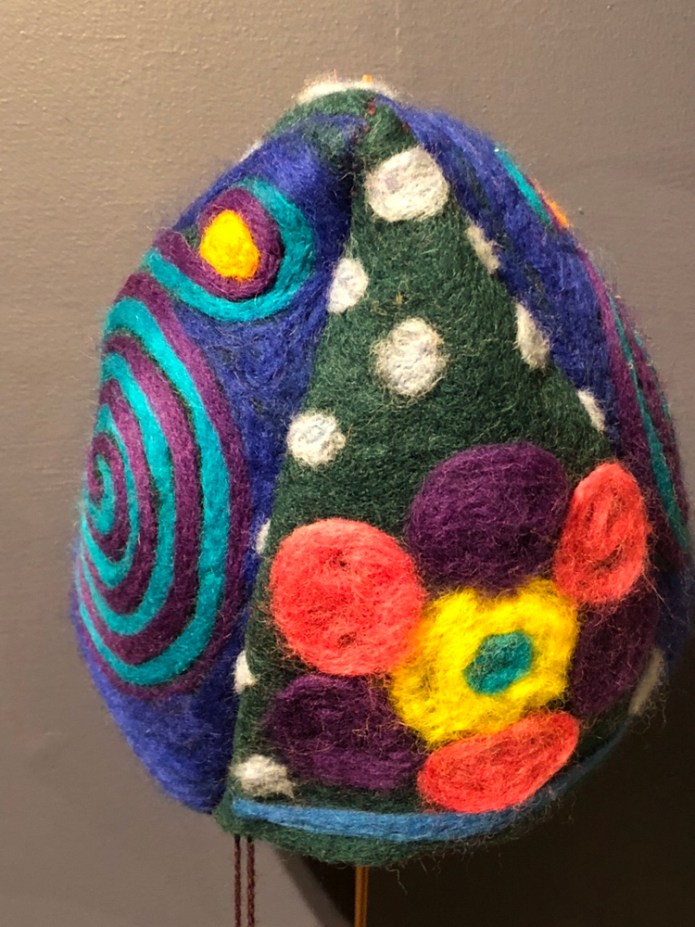
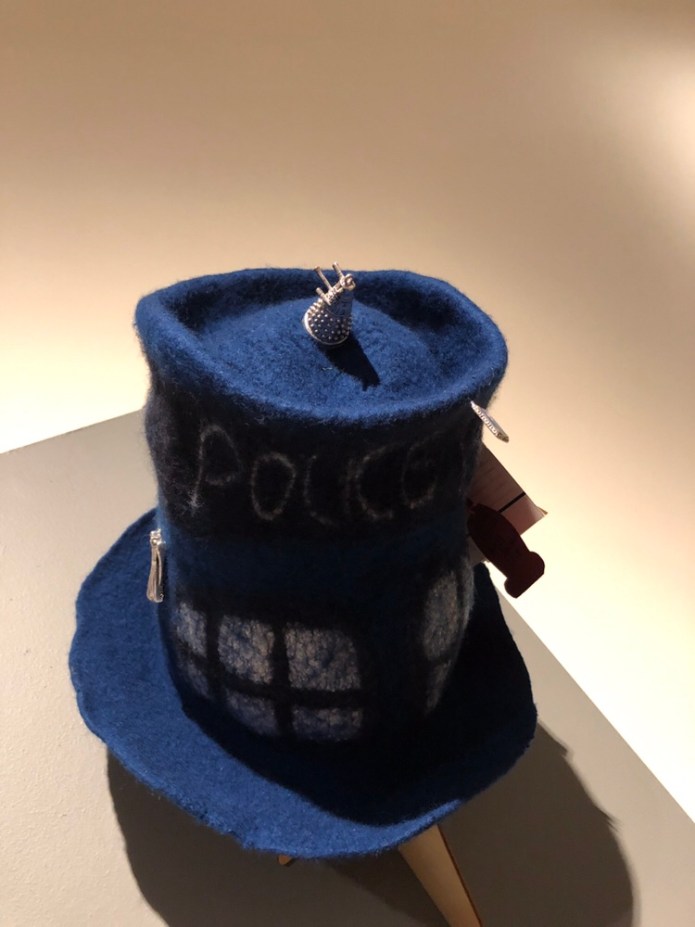
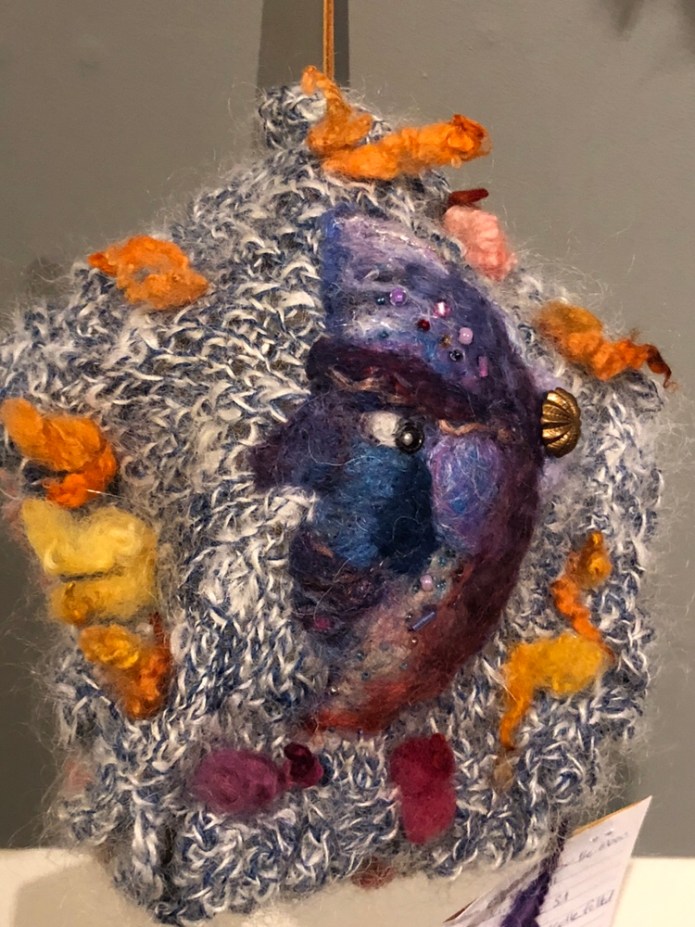
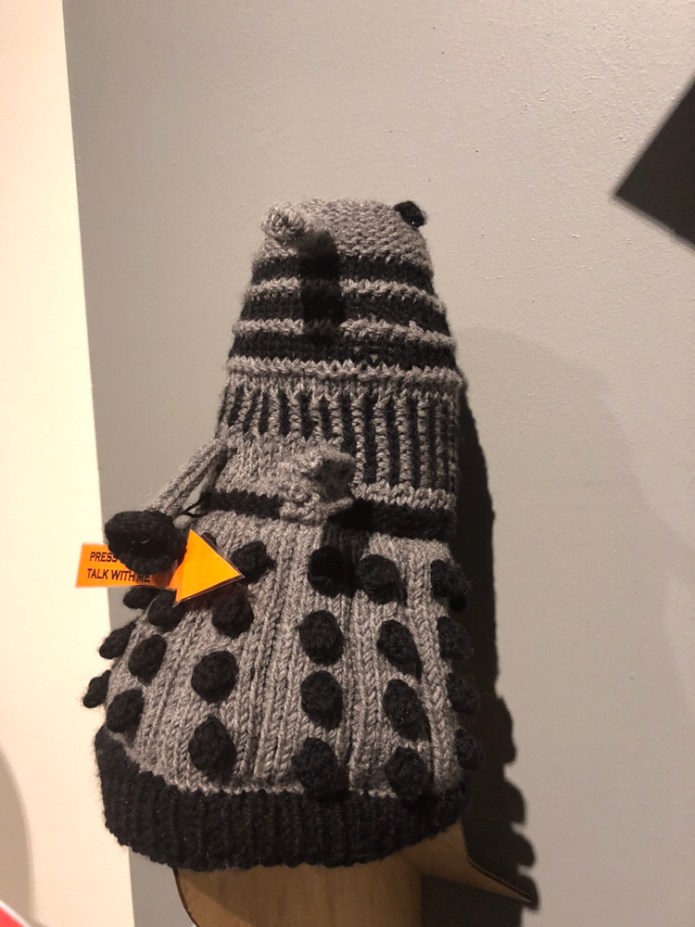
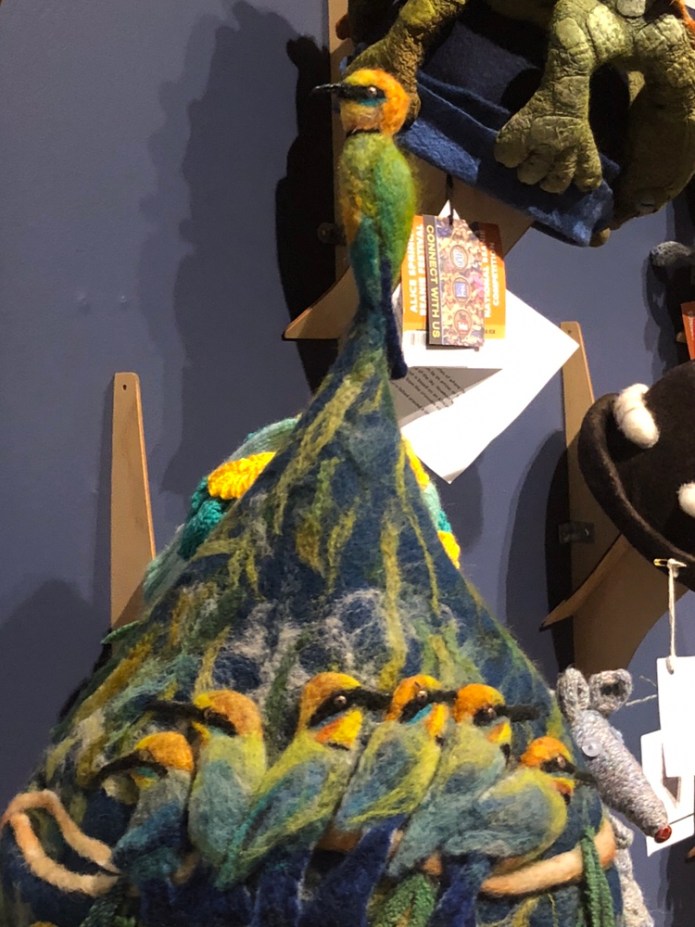
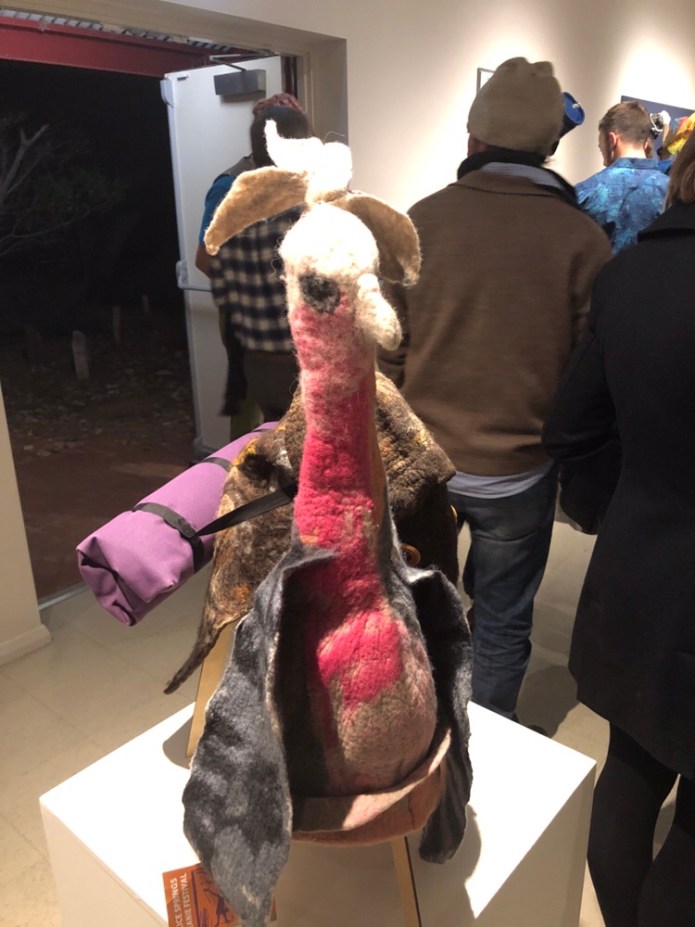
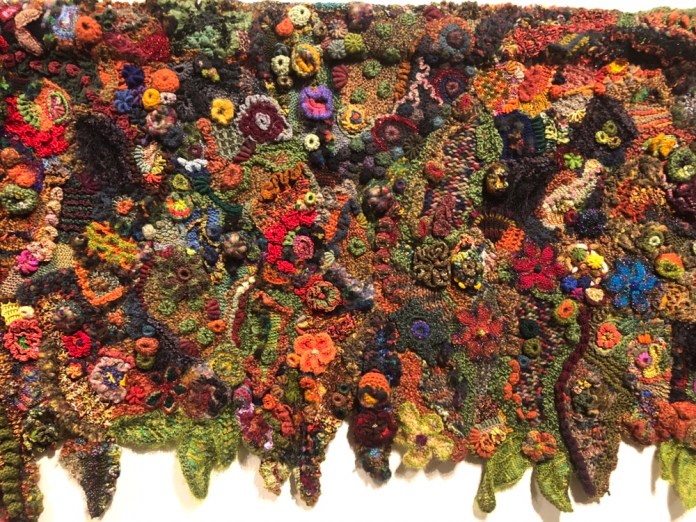
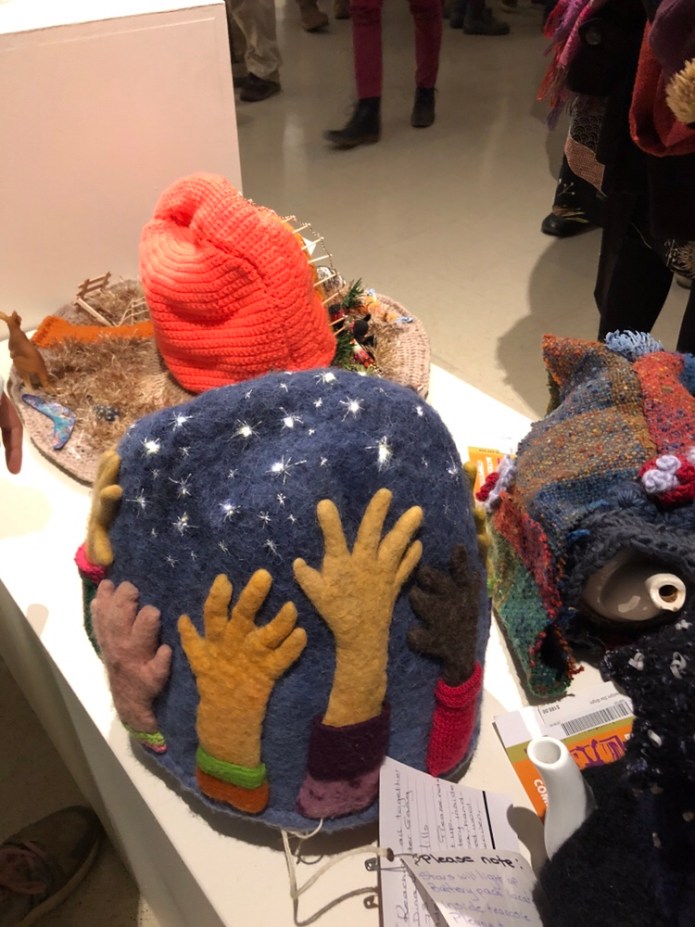
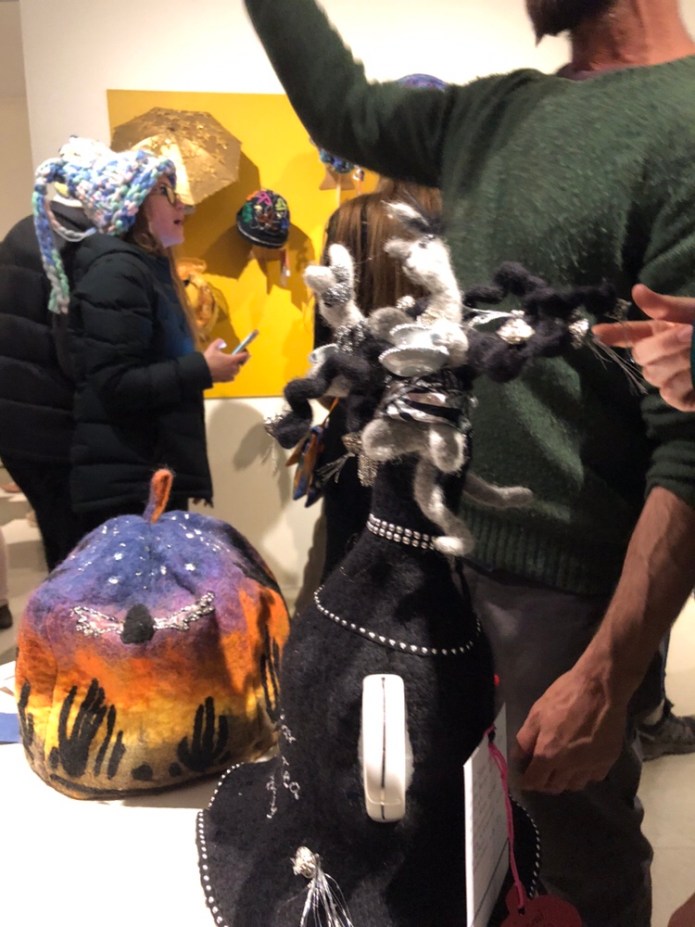
Well we were none of us disappointed. The theme was ” Reach for the stars” and the theme was well and truly embraced. There were beanies birdlike, dalek beanies, Tharsis beanies, rainbow bee eater beanies, entire village beanies and so on. Gee, there are some very creative people out in the desert around Alice. I tried on a felt Beanie with fabric witchity grubs encircling the brow, Jen tried on a fabric creation of a white peacock. Daleks, flying saucers, stars and planets, birds and just people standing around admiring the sky- all of these themes were splendidly and colourfully conjured into head wear to delight the artistic sensibility of the wearer.

Enough scribbling, let’s look at some photos from the night.

Great aren’t they.

Most of these wonderful hats are made by Indigenous men and women to raise money for their communities and create wonderful art.

here is some more

Standard
Uncategorized

Watarka and Ernest Giles track

I’m sitting at Yuelamu clinic. There is a crow cawing from a tree in the clinics yard. Jillian, the nurse, and I have just reviewed an Aboriginal footballer with a toe infection, he had a laceration kicking a football at training last week; not many players wear shoes. In a match when a player takes a mark near the goal, the game stops and the player puts on a borrowed pair of boots for the kick, then takes them off and returns them afterwards. However there is no denying the locals love their footy. TD is wearing his Yuelemu sleeveless yellow jumper.

Last week I drove to Kings Canyon which is also called Watarka. The national park in which it is situated is called Watarka National Park. I went south from Alice Springs, driving on the twisty Stuart Highway. About thirty kilometres south of Stuart wells is a turn off that goes west on the Ernest Giles track. About five kilometres along the track is another turn off to the Henbury Meteor site. The camping there looks pretty good. There are ranges and gorges nearby which make it a good possibility for a long weekends camping but this was not my destination. The main track is a 100 kilometres and is generally a good surface. The last time we drove on the Ernest Giles, a grader was working the gravel. There are stretches of sand, up to a kilometre in distance and these were fun, with a bit of playful sliding at times. I keep the pressures at 30psi, back and front, and the differential lock on to keep all the wheels participating on the road.
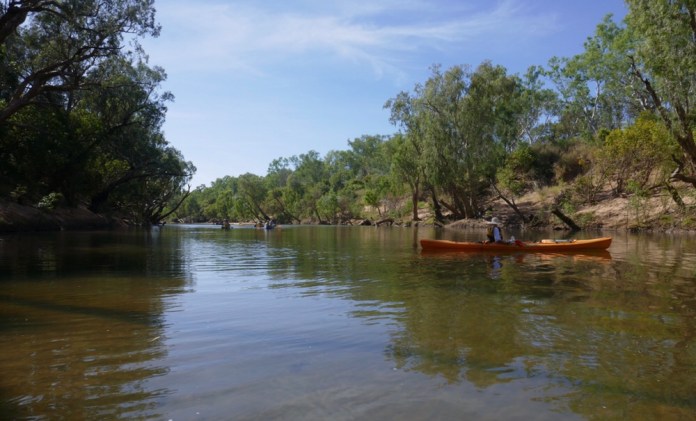
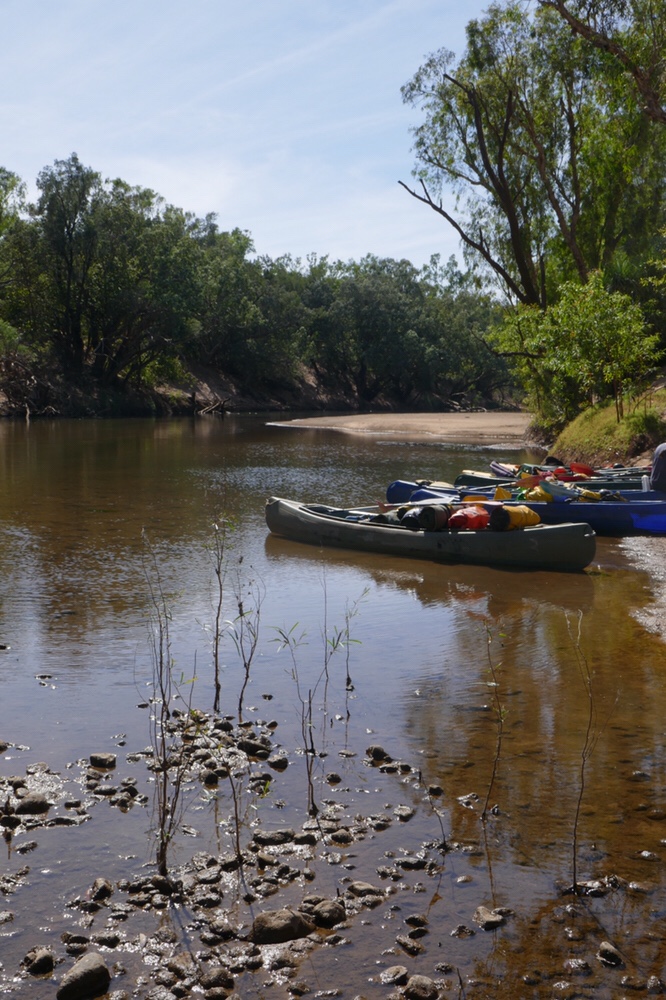
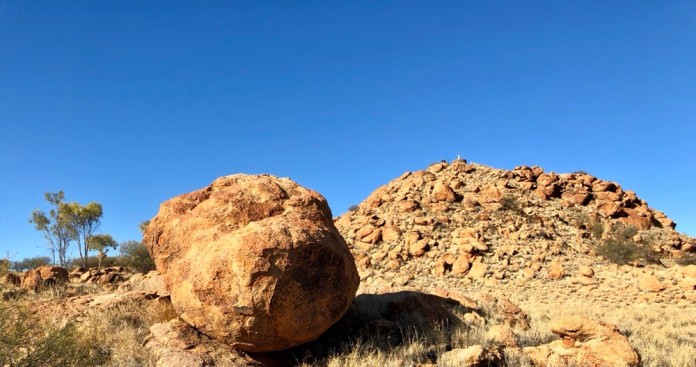
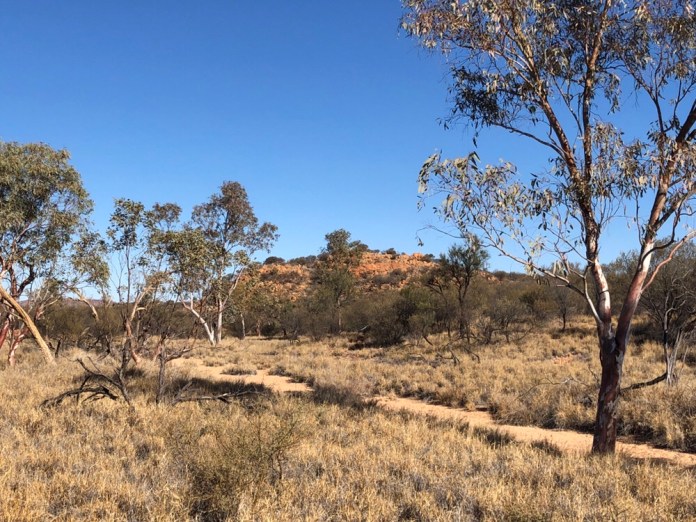
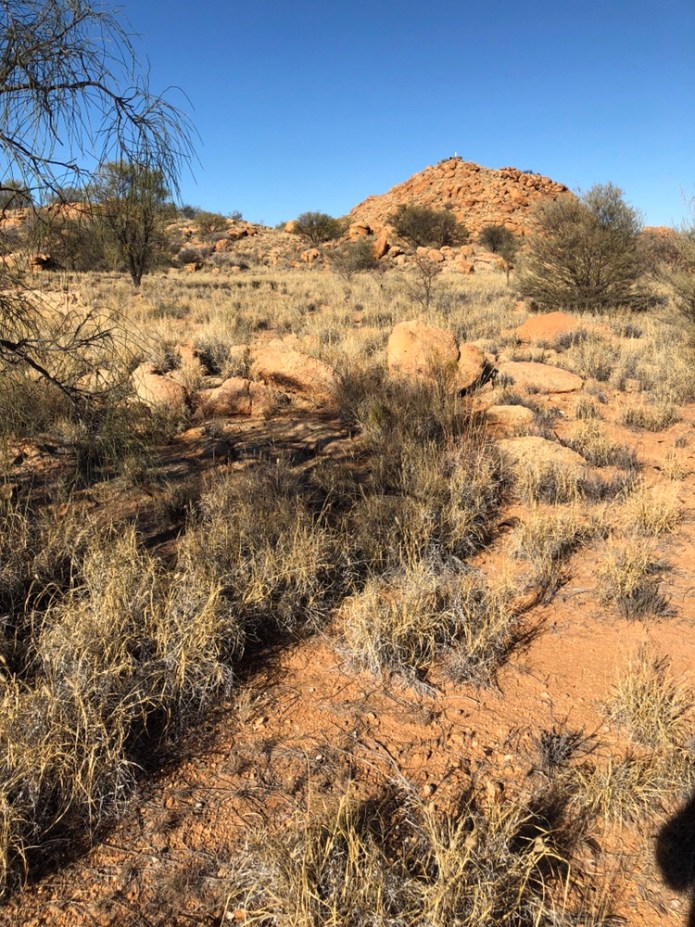
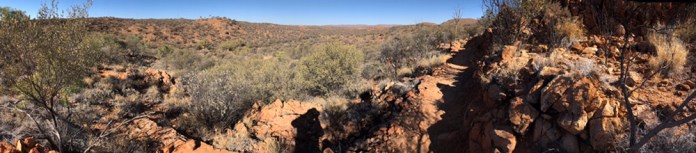
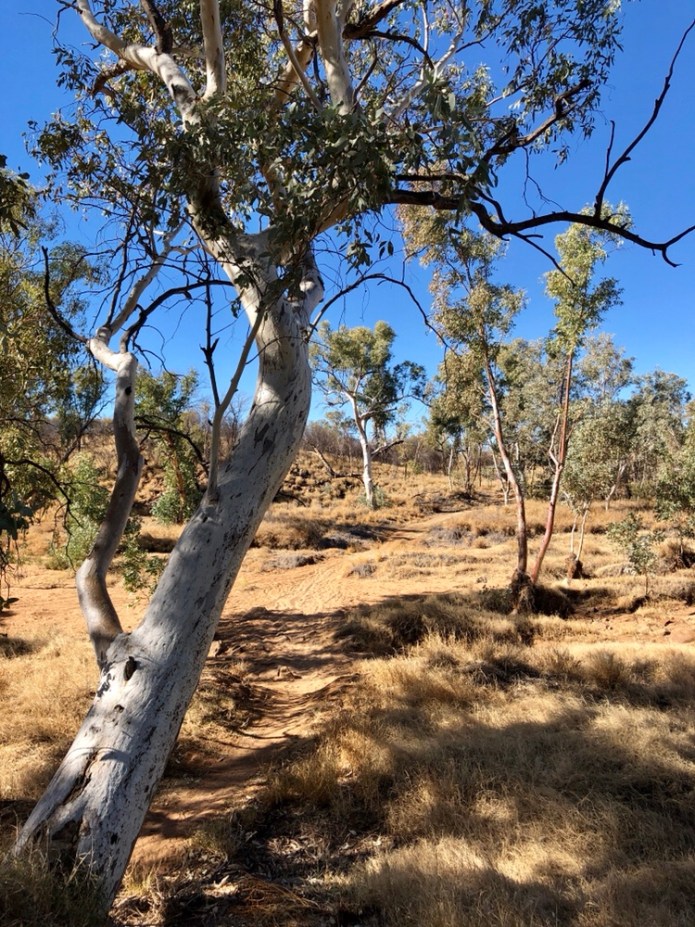
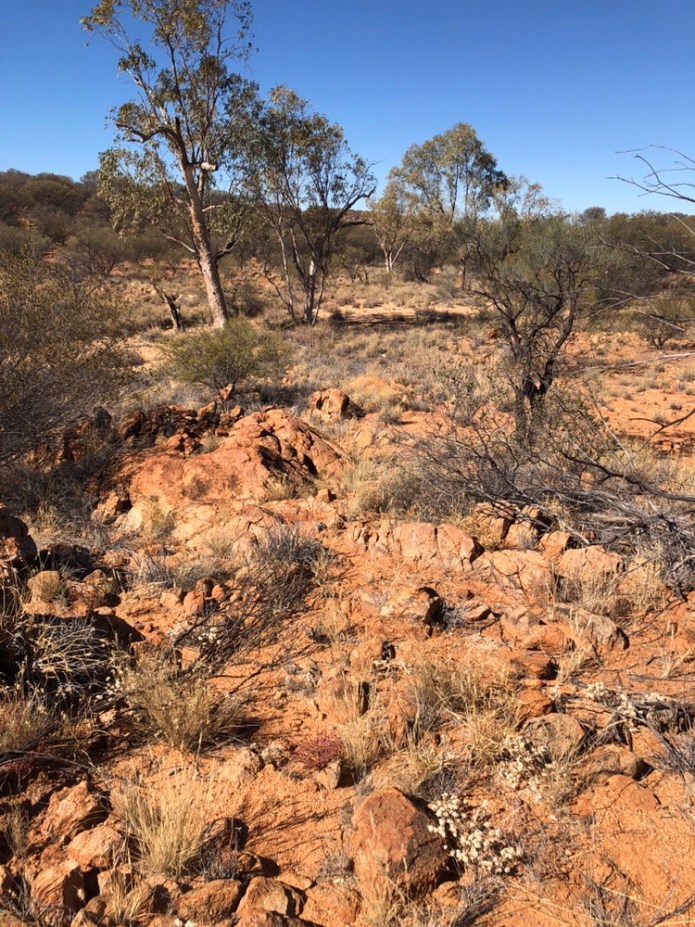
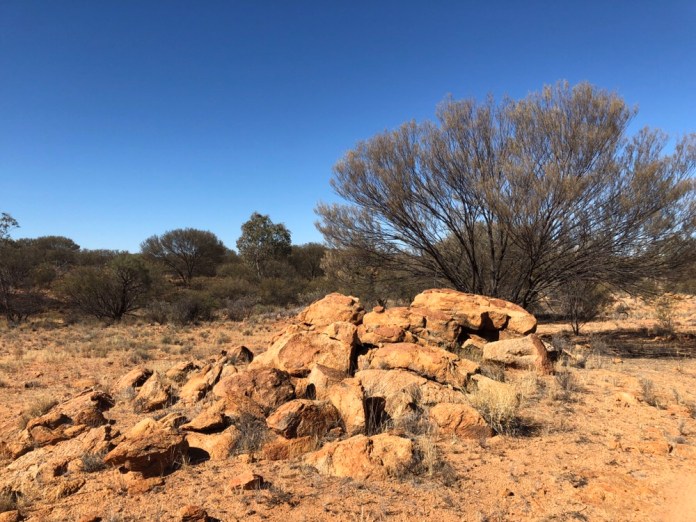
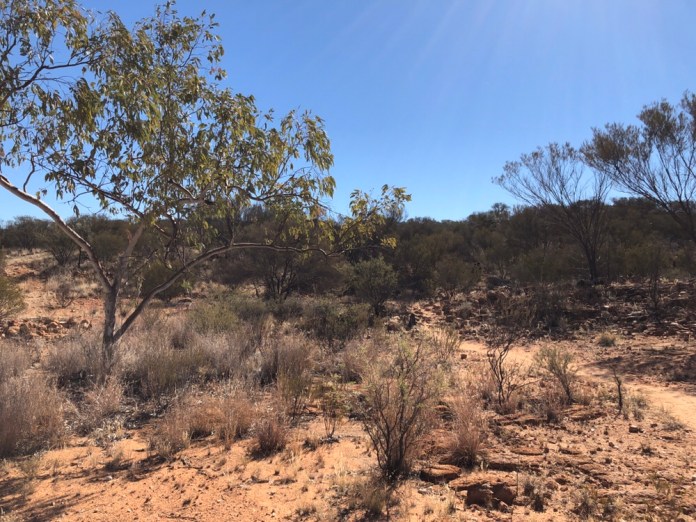
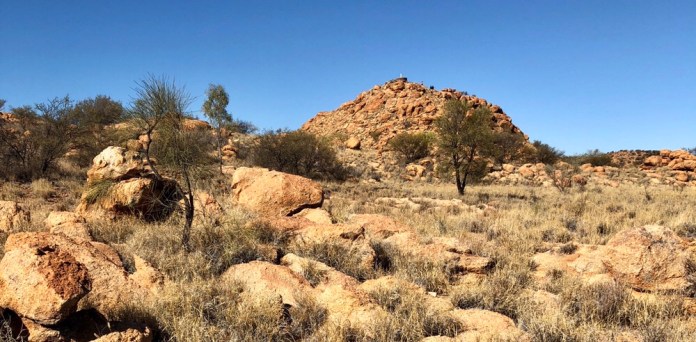
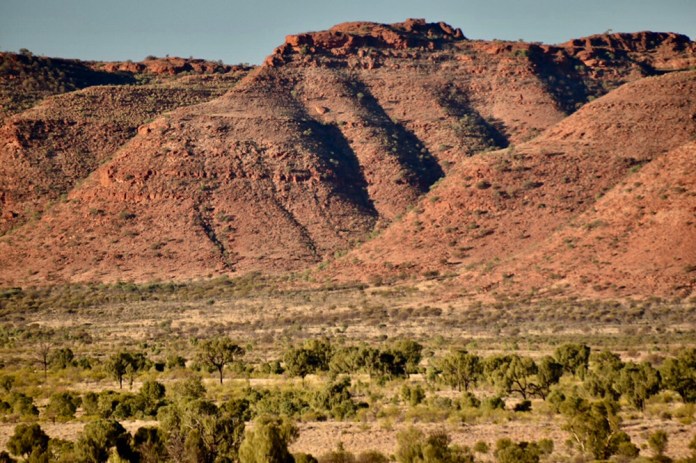
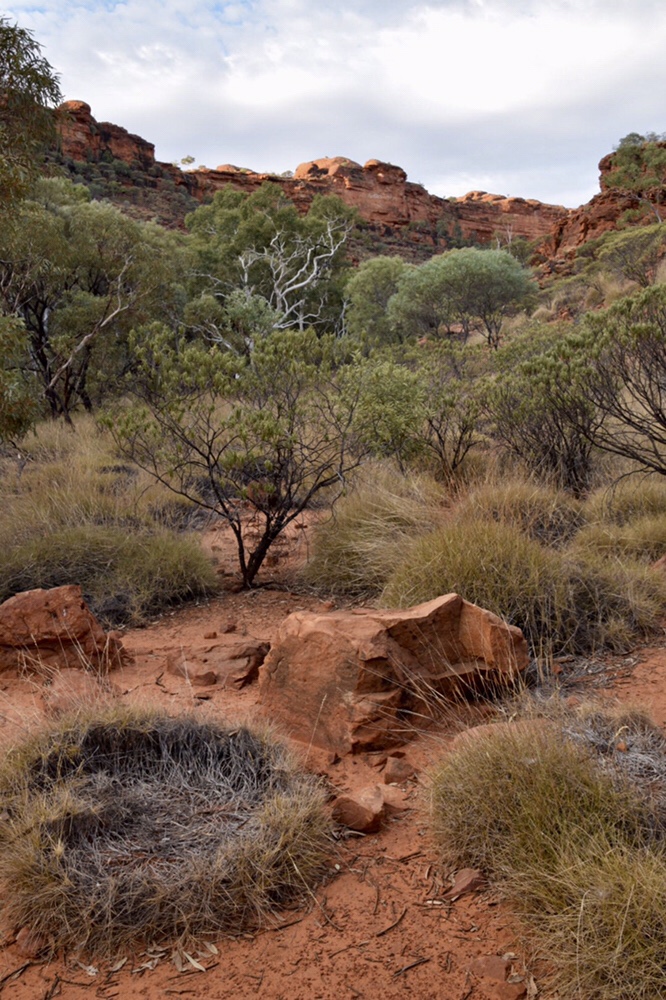
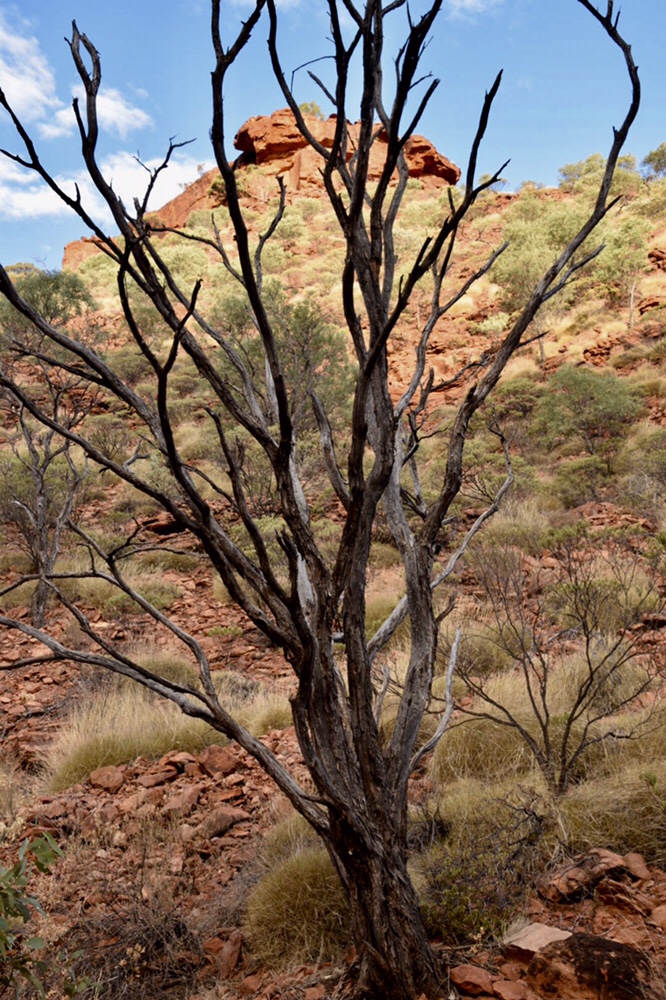
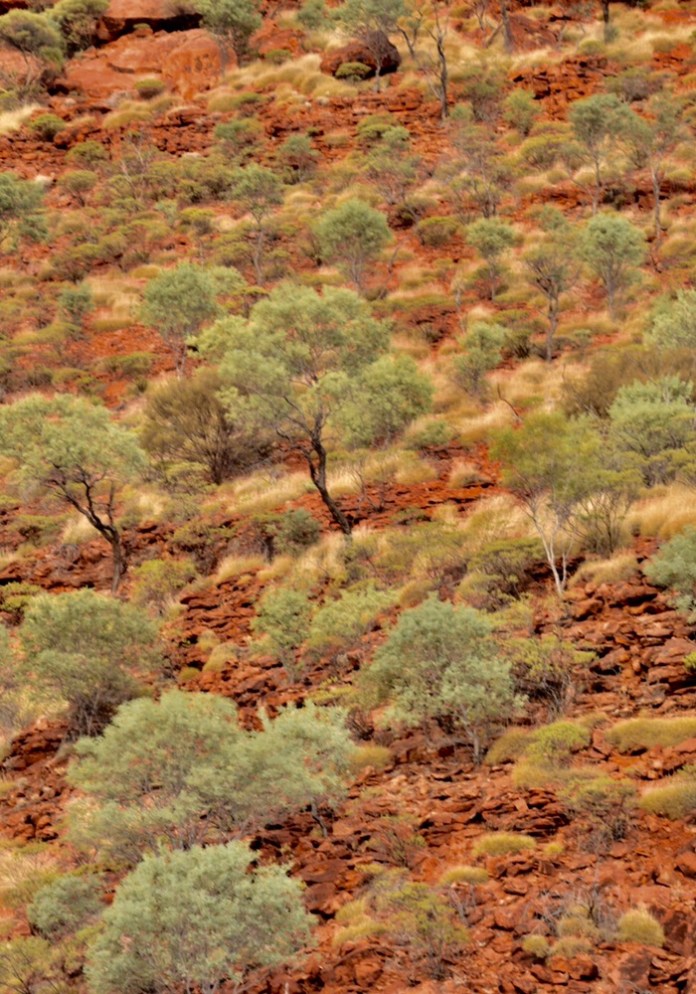
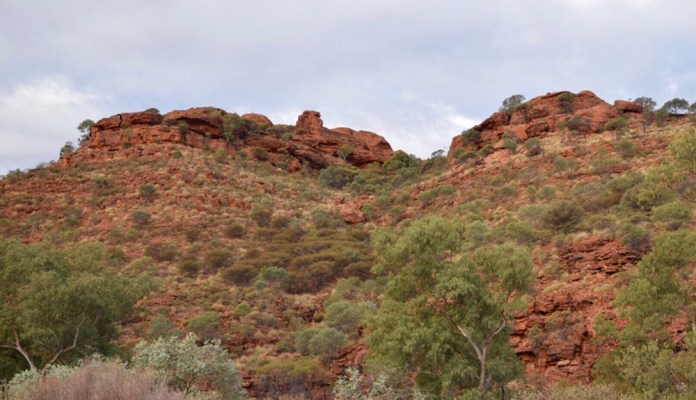
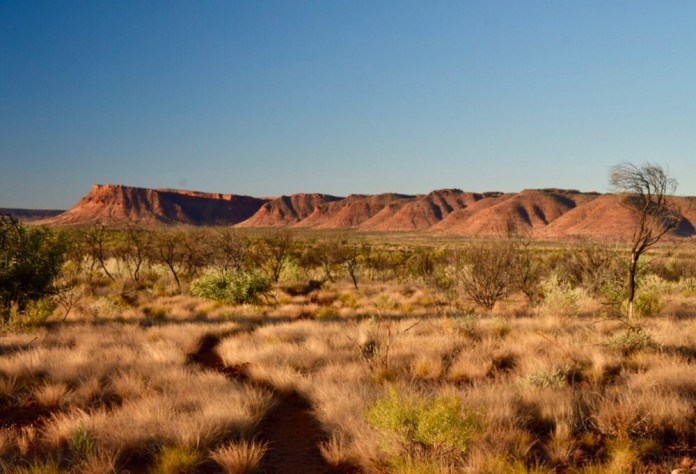
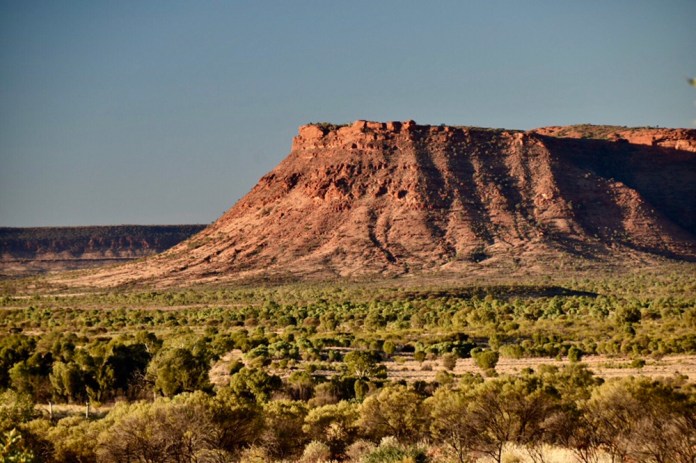
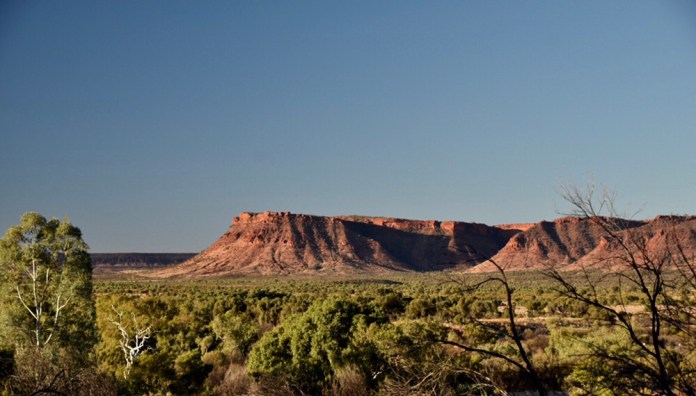
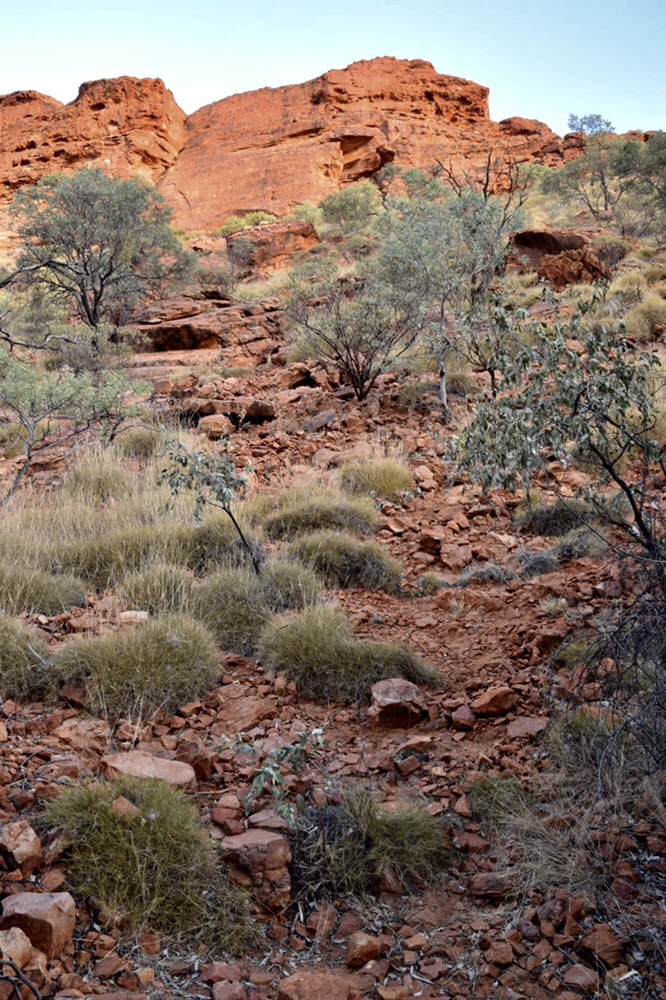
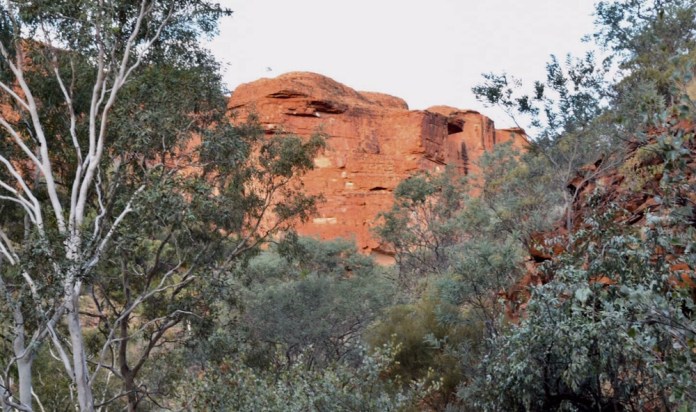
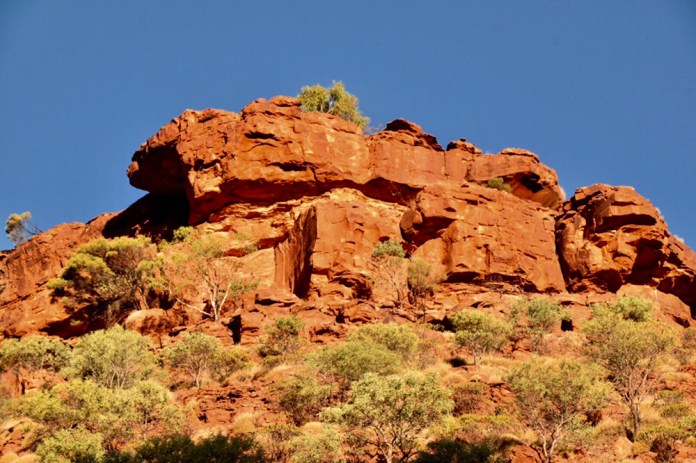
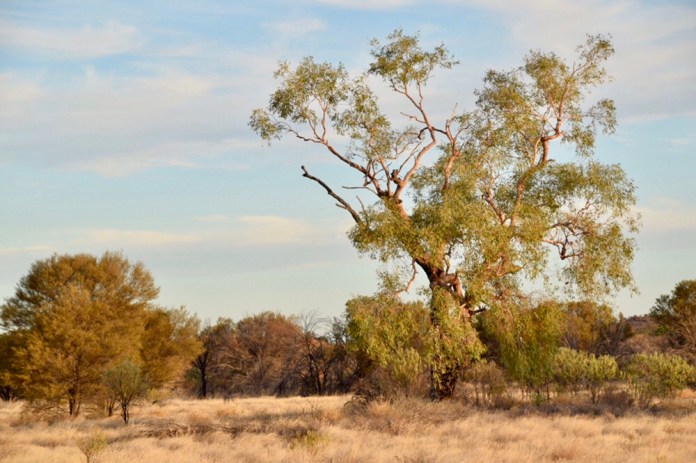
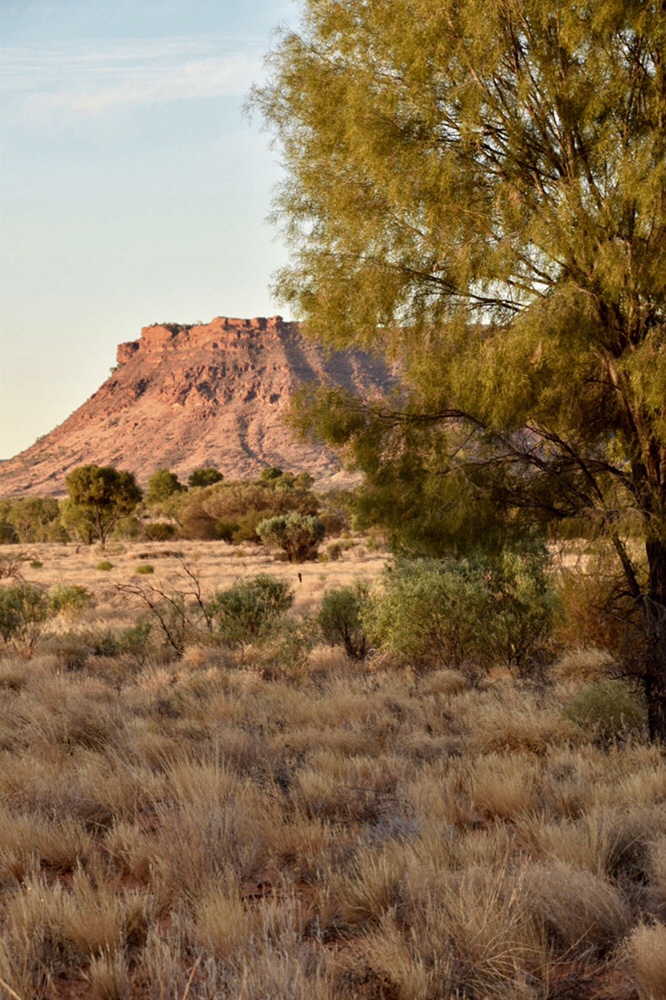
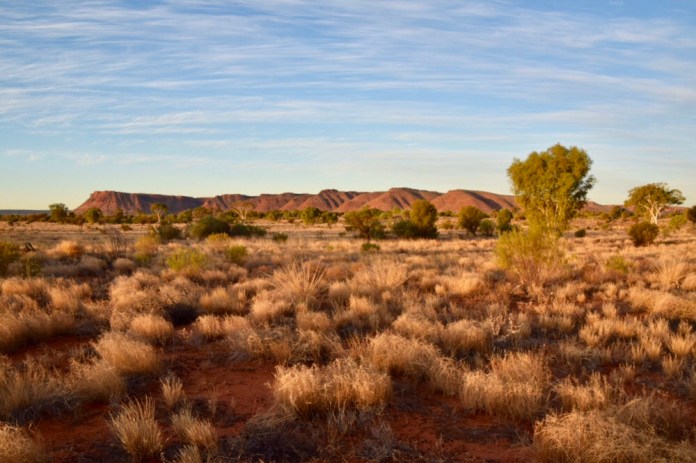
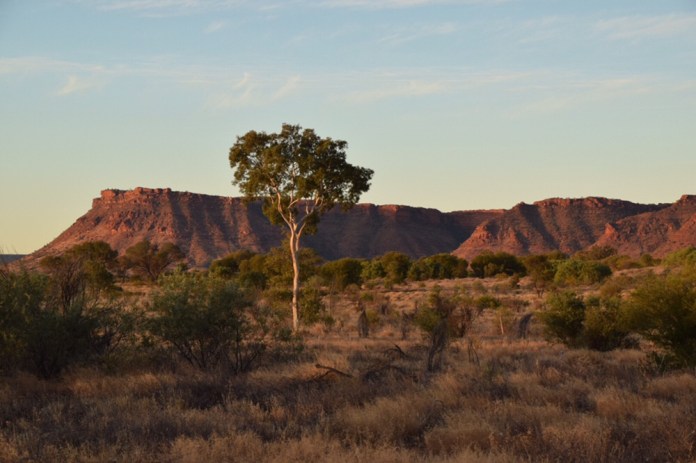
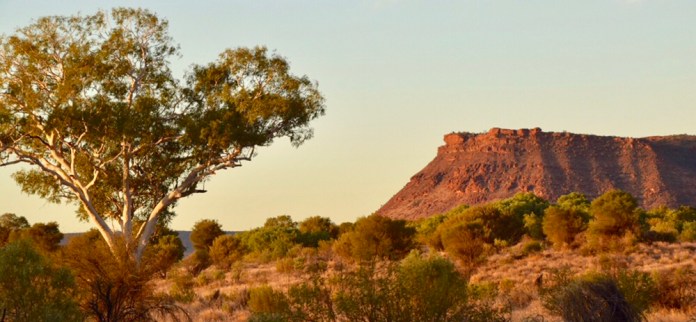
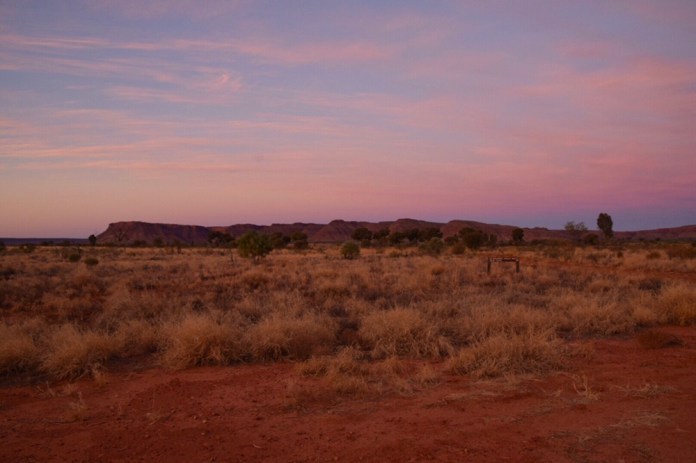
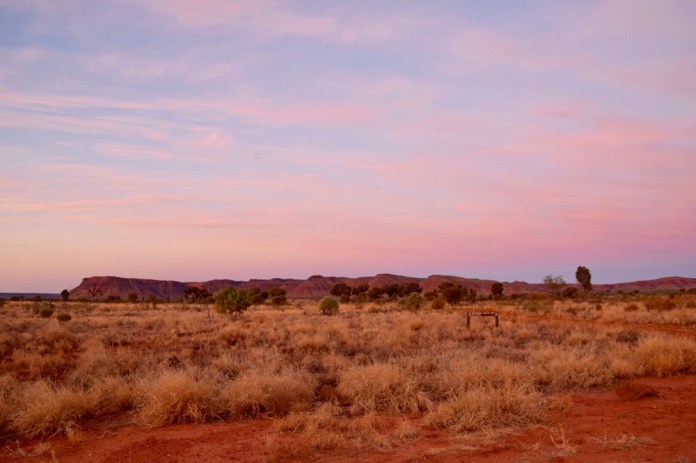
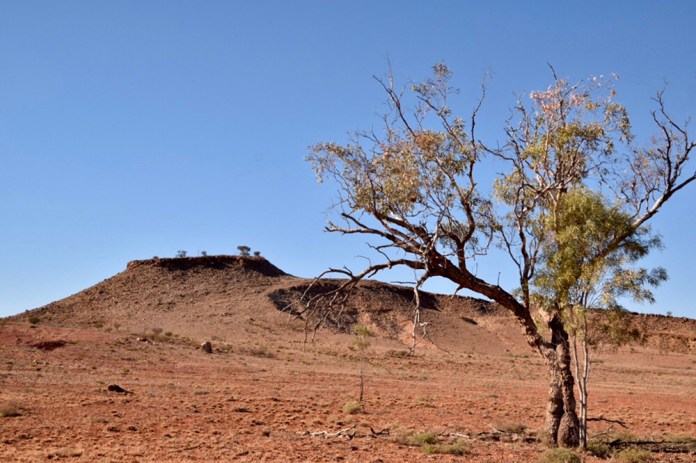
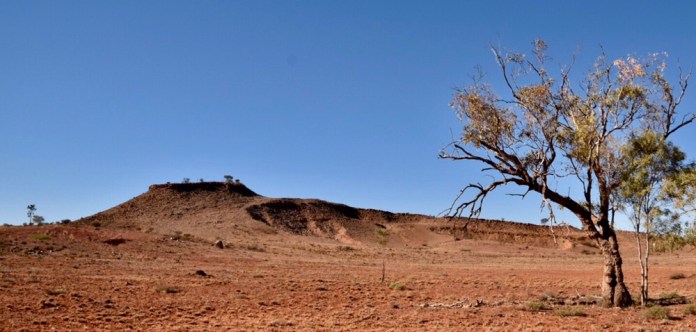
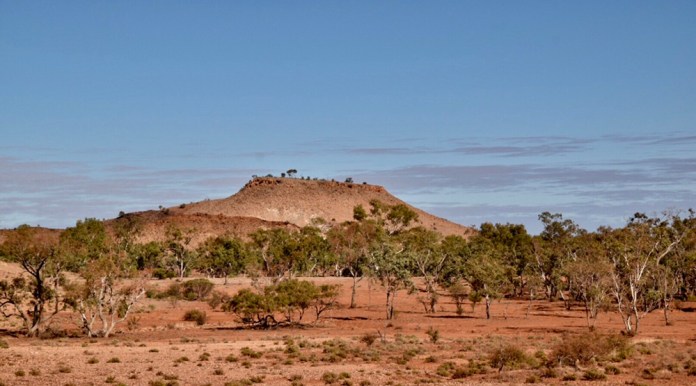
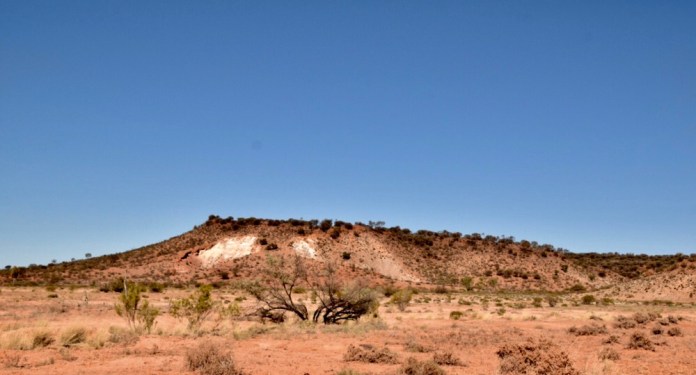
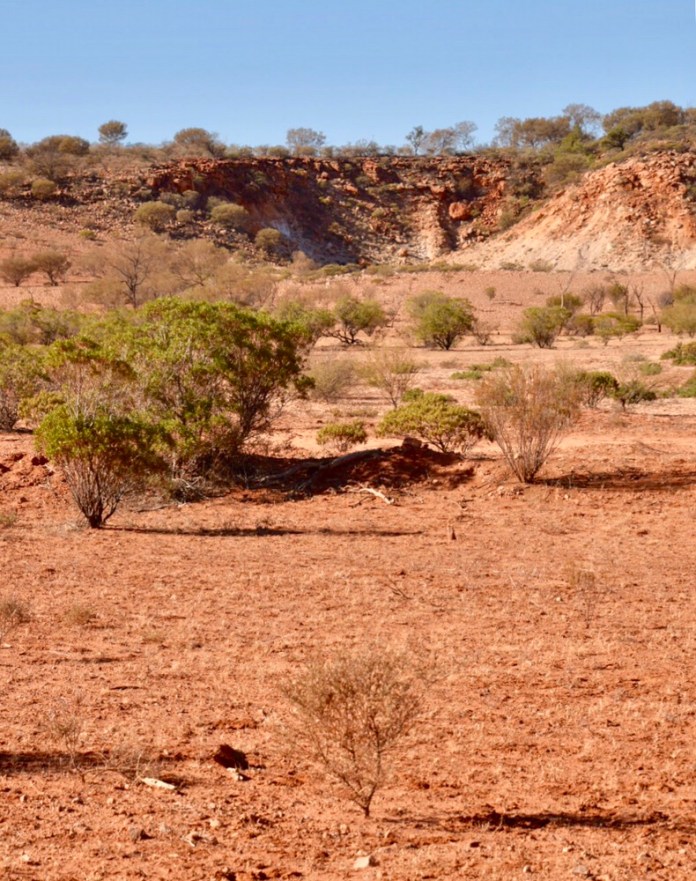
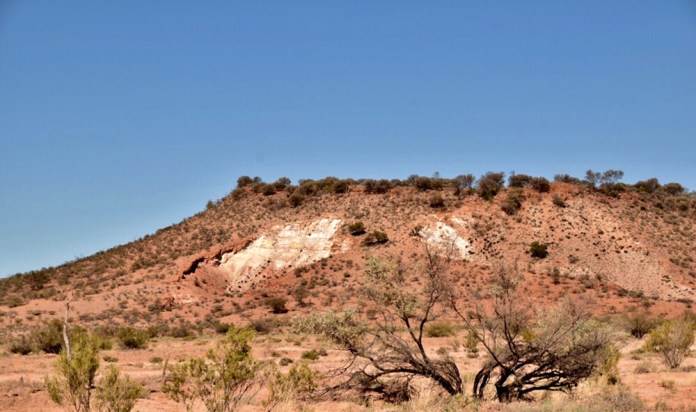
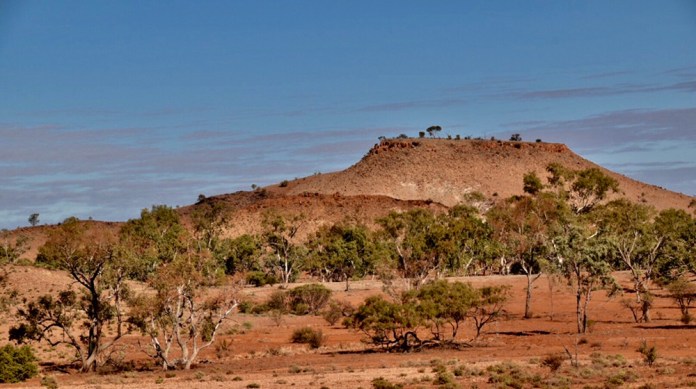
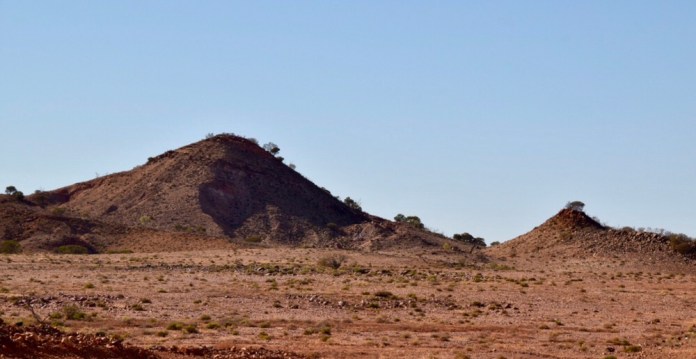
There are some fine views from the Ernest Giles track. Desert oaks, acacias, dry river beds, hills and always that crisp blue sky silhouetting the ridge lines spotted with a few trees. The rich colours, the orange, reds and splashes of white rock with a foreground of forest.

At the Luritja Highway, I turned right rejoining the caravans on the bitumen. It was another 103 kilometres to the Kings Canyon Resort and a shirt distance beyond is the Watarka clinic. To my surprise, I found I was booked into the resort as accomodation was fullin the clinics houses. The resort is great. I had a spacious room, a verandah overlooking the bush and breakfast included. The problem with staying at resorts like Kings Canyon and Yulara, is that it’s impossible to cook dinner. So each night, I shuffled over to the clinic to cook my steak, sausages or chicken. Afterward I braved the chill air to drive the short distance back. I had parking right outside my room which made it easy. In the morning I would walk to the restaurant, the Carmichael room. Breakfast was very good. Now I’m not paying for any of this which is nice. To a paying customer it is $400 a night. I did lash out and have dinner out on Thursday evening. Yummy pork belly, plates of vegetables, and two nice glasses of wine. Now I’m legendary as a two potter, after a week of no alcohol, I felt dry agreeable with the world and all its denizens. I tottered back to my room and slept very well indeed.
The clinic is more fun than some because of the mixture in my clinical work. I was involved in two cardiac cases, stabilising them both and evacuating one, trauma is common here as well. This is from road accidents, locals and tourists doing roll overs due to burst tyres on the bitumen and due to sandy pits on the gravel tracks.

Going too fast helps too! I was involved in the care of a man who fell on the Ridge track. It begins with a steep ascent up a rocky track to gain the escarpment. This gentleman lost his footing and fell. Managing him was interesting, it’s good to use the procedure skills of neck immobilisation ( done by using a bag of wrapped saline either side of the head with tape afire day between them and on the forehead), intravenous analgesia, assessing rib and other fractures. Transporting such patients require a vacu mat. This mat is related and wraps around the patient, keeping the person still. It means transport is safer and less painful. These mats are several thousand dollars each!

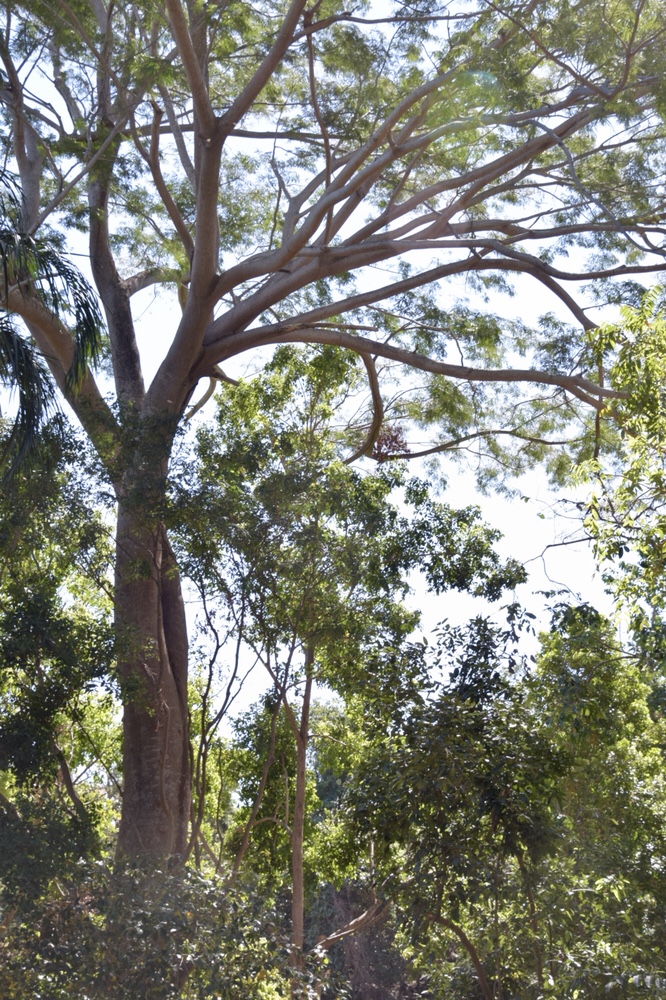
After work, there was not much time before dusk for any long walks but there was the opportunity to do some pleasant shorter walks. I walked the Rim track which goes for 45 minutes, around the resort. You can hardly see the resort buildings. The track offers many fine views of the Carmichael range, all the more vivid and colourful in the light of the setting sun, it’s rising orange glow abruptly above the plain of sand, buffer, spinifex and desert oaks. I walked a track near the clinic along a sandy access road. And also drove to Kings Canyon itself and selected the short Kings Creek walk. Gum trees, river gums, and birds are the highlights, the wagtails, the parrots sparkling colour through the trees in their noisy flights. It’s a primeval experience, the rocks, gullies and cliff tops ancient beyond human time.

On Wednesday afternoon Rod came in for a chat with Chris, the clinic manager. Rod runs a tour company in Kings Canyon. A major part of his business is organising trips for schools. The upmarket private schools including Scotch and Geelong Grammar. The kids spend two weeks here as well as near Yulara. They learn about culture from local elders and do some infrastructure work such as house repairs and painting. Rod is the founder of the Watarka foundation. They have raised $350,000 to expand the local school to go from grade 6 to grade 8. They are waiting on a few permits then construction can begin. The student numbers are from 7 to 24 at the school and there is currently a single teacher. She would move up to grade 7 and 8 and a new teacher would do grades 0 to 6. The experience of education here for indigenous children has been frustrating. After grade six most of the children have achieved a very good standard of education including g literacy and numeracy, good enough to carry on. However, after a term these children feel so home sick and miserable they come home. There are no jobs and no education available for them. The costs and technological savvy needed for home schooling or school of the air are simply beyond the skills of local parents. It’s hoped that extra two years will mean they have the maturity to cope with life away from home. Of interest is that the schools Rod are involved with want to support this venture as well with online learning, live streamed lectures and possible scholarships for the local indigenous children who show promise at th3 end of grade 8.

I drove back on Friday morning. The sand on the Ernest Giles track was cooler and the traction is noticeably better. I’m not sure how much fun it would be to go this way in high Summer with the prospect of rain and the sand being considerably warmer and too pliant under rubber. I stopped to take some photographs. There were no camels this time.

On the weekend, poor Jennifer hurt her lower back sitting in too low and soft a couch. Recovered substantially with time, mobilisation ( gentle!), and getting a new chair from Desert dwellers. Desert dwellers sells gear for camping in NT. we bought an Oztent, Kokoda chair. It has a firm lumber support as part of its design and Jennifer is pain free when she sits in it.

On Sunday we went to Telegraph Station. The Arid lands group was holding a barbecue, a talk from Aunt Patty an Arrente elder and a walk to Wrigley Gorge. Aunt Patty is an older Aboriginal lady with plenty of vim, she told us all about the protest movement surrounding a proposed Junction lake. She makes the point that if you want to live by water, live near it. There is no need to flood sacred sites. The moratorium has lapsed now but there is no move to build the dam to create the lake at he headwaters of the Todd river. Water control for very heavy rain to reduce risk of floods will take a different route, looking at some vast plains that could easily be accessed by minimal earth works.

The barbecue was great. We had camel burgers on bread. Yummy! Jennifer joined us up to the Arid Lands council which is an environmental group based at Alice and gets in involved many of the critical issues around the use of the land includes under the land, ie fracking and th concerns people have about contaminating what is already a parlours supply of water, in regards to both quantity and quality.
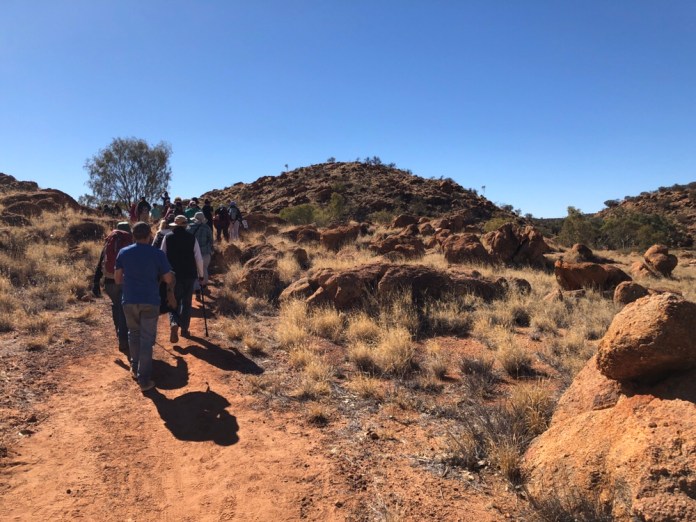
Wrigley Gorge is part of the extensive track network centred at Telegraph station. There are mountain bike tracks, walking tracks and some combined tracks including the one to Wrigleys Gorge. The wind was cool and pleasant, as we all set off. It was a mass of people at the start but the crowd soon separated out and for most of the track I was by myself with merely the susurrations of my fellow walkers ahead and behind. The land is arid and twists and turns along dry river beds, up and over rocky cliffs and finally arrives at Wrigleys Gorge. River gums nestle in a narrow valley. Most of the walkers elected to take a shuttle bus back but I had enjoyed the walk too much to do it just the once.
While writing this I have seen another patient, a little three week old infant who is losing weight and there is no obvious reason why. Mum is only sixteen but appears very capable and she is supported by her mother, who comes in with her. She will be flown out at lunchtime today with Mum and grand Mum to Alice Springs Hospital for assessment and treatment. She is not deathly ill but the continual loss of weight is an enormous concern and requires attention. The bush bus another option but that departs twice a week and I don’t think we have the time to wait for it’s next trip and the four hours on the road with a sick baby does not bear thinking about.

Standard