Uncategorized

Rose Isle

Rose Isle

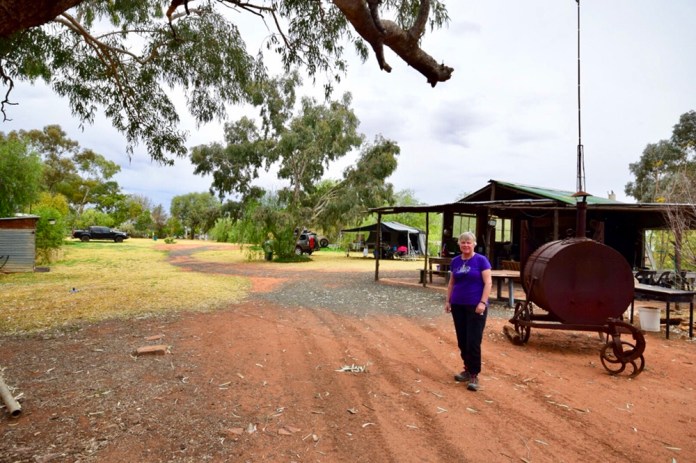
About 70 kilometres south of Bourke on the Loath road is the sheep station called Rose Isle. The road is dusty and corrugated for much of the way. We were met on our arrival by Samantha Mooring. Samantha is a fifth generation western NSW lass. Despite the parched, grassless pastures extending in all directions she was still cheerful and very welcoming. We met Pippa and Arabella, two dachshunds. Pippa is the informal meet and greet for any guest. She would run up, ears flapping, tail wagging, and after a brief pat rolled onto her back for a full on tummy scratch.

Gary, her husband was our host for our three day stay as Samantha had to go to Sydney to collect furniture. Fortunately she has Gary well trained. He brought us delicious scones for morning tea the next day. He stayed to chat about the drought and farming life on this stretch of the Darling River. He explained that though the lack of rain is a problem, a bigger and far more persistent one is how the water is divided up. Cubby, a cotton grower has huge water requirements, and has a dam upstream that holds the volume of Sydney harbour and half again. The introduction of European Carp to control water grass that choked canals has lead to the complete loss of water weeds and grasses, a massive number of carp and the explosion in nutrients causes regular Blue green algal blooms: its impossible to swim in many of our inland rivers due to this problem.

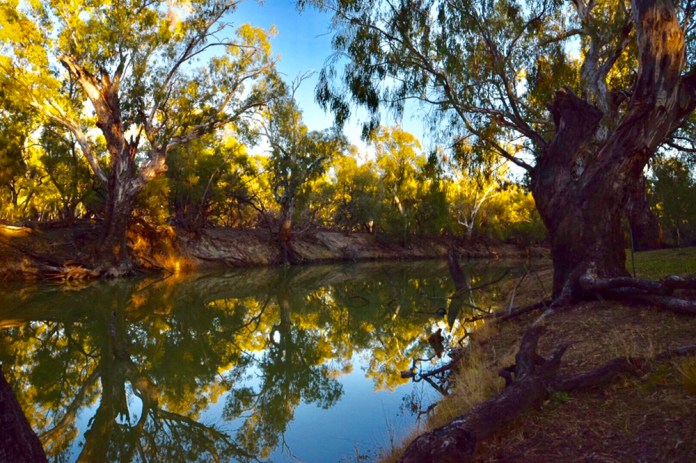
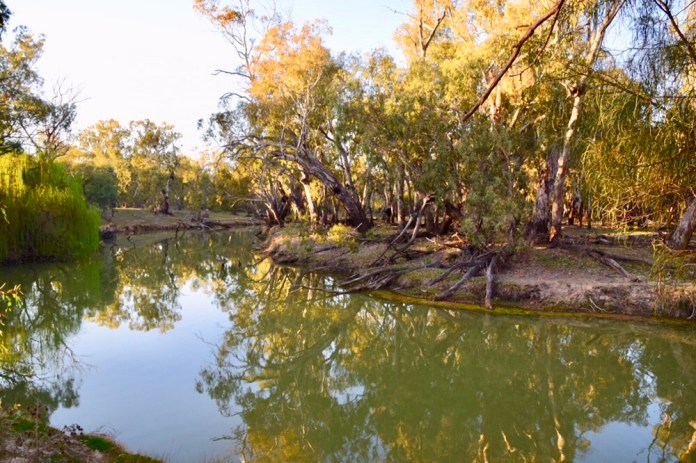
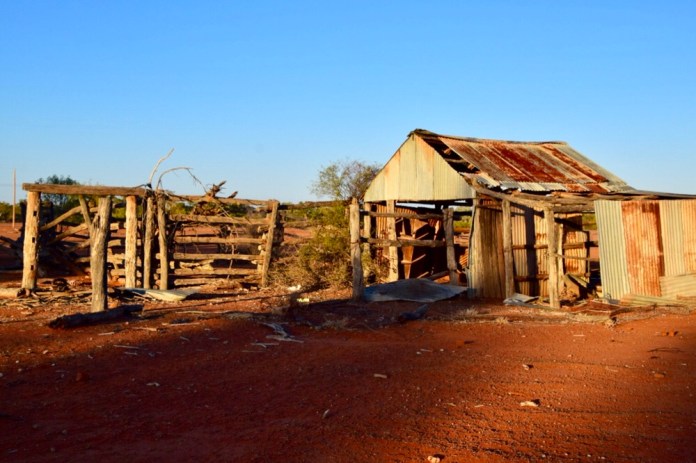
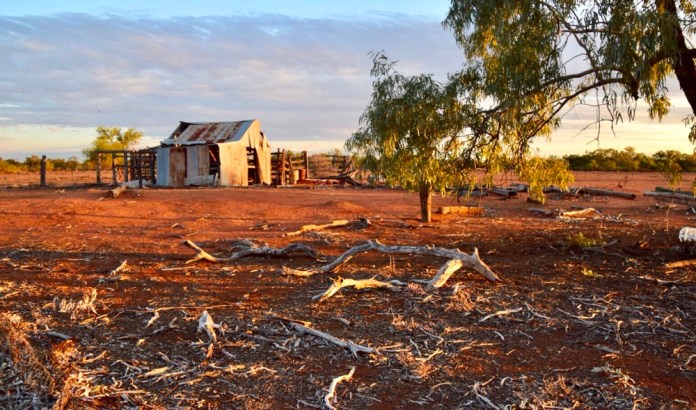
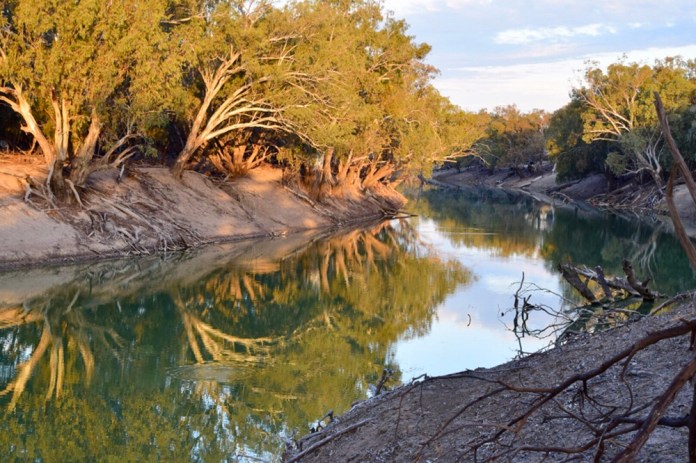
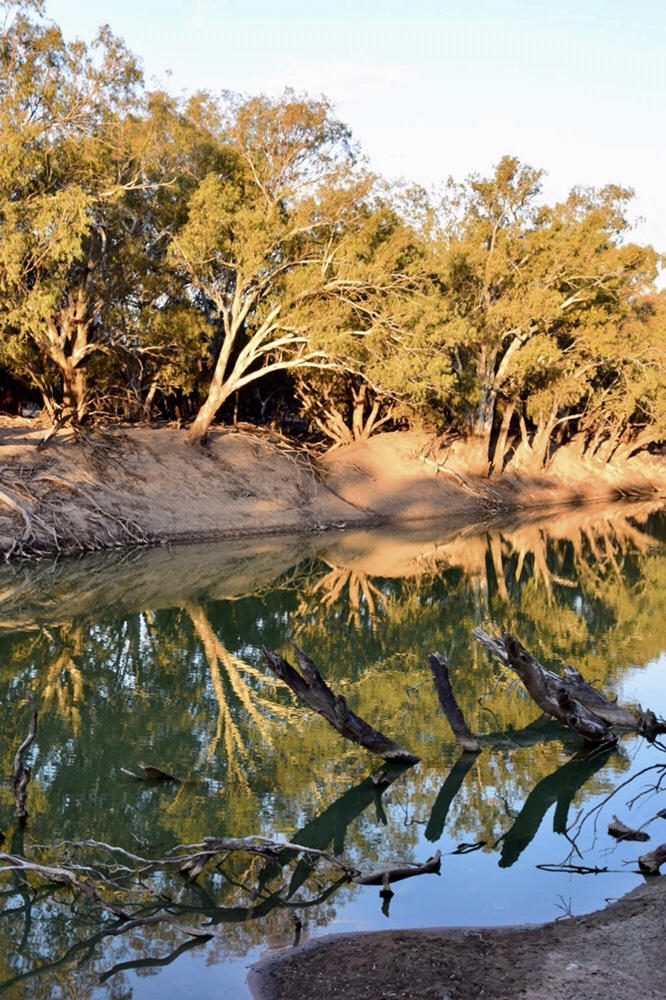
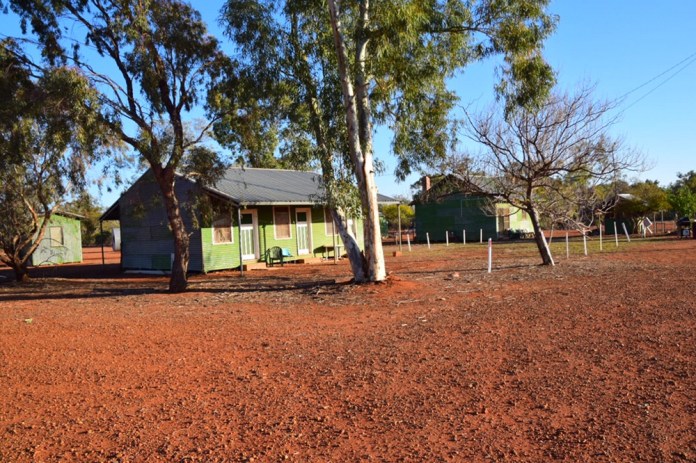
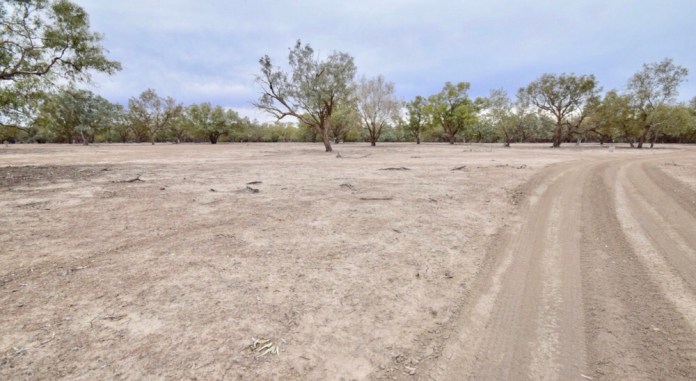
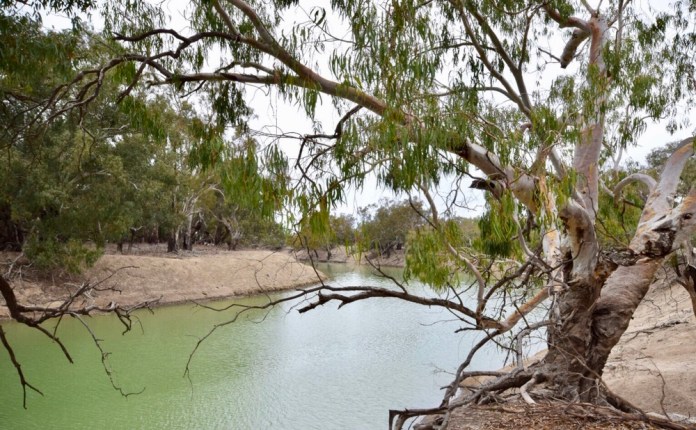
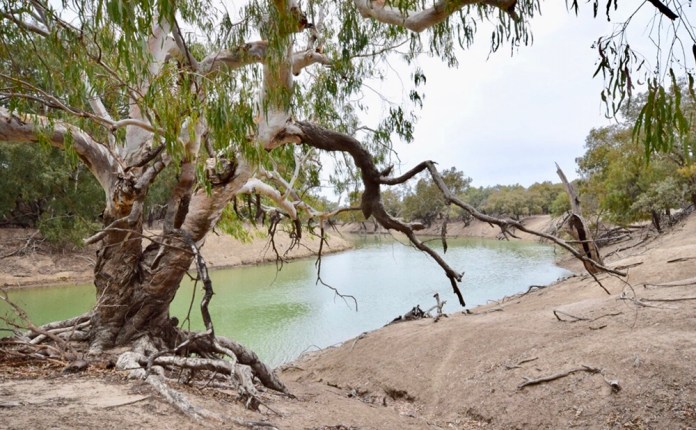
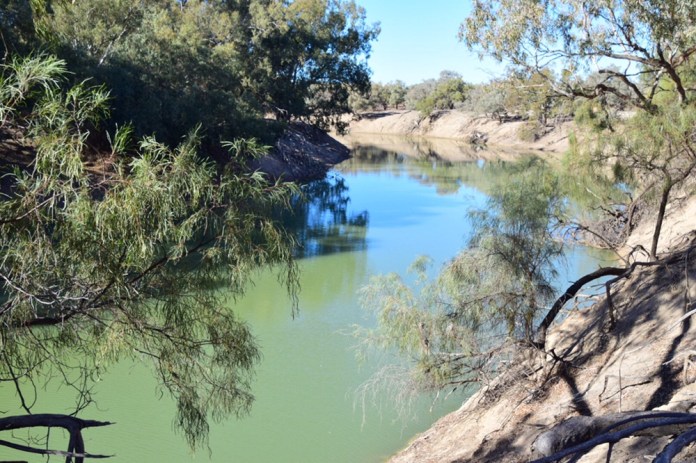
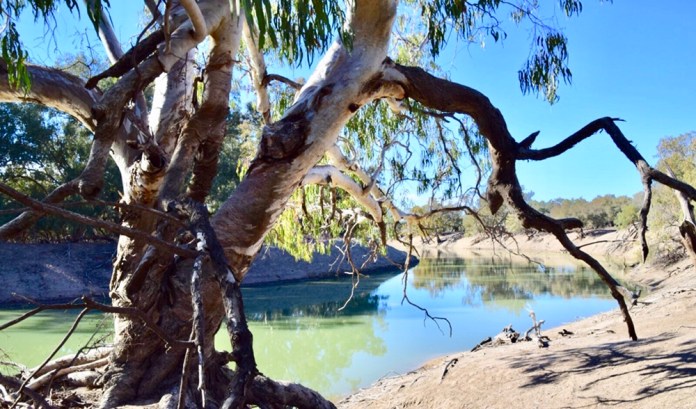
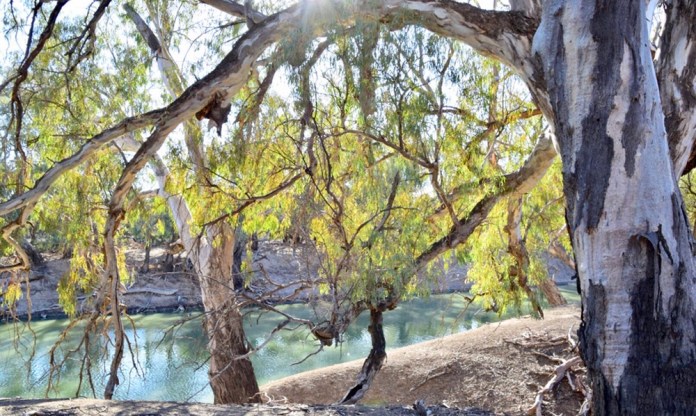
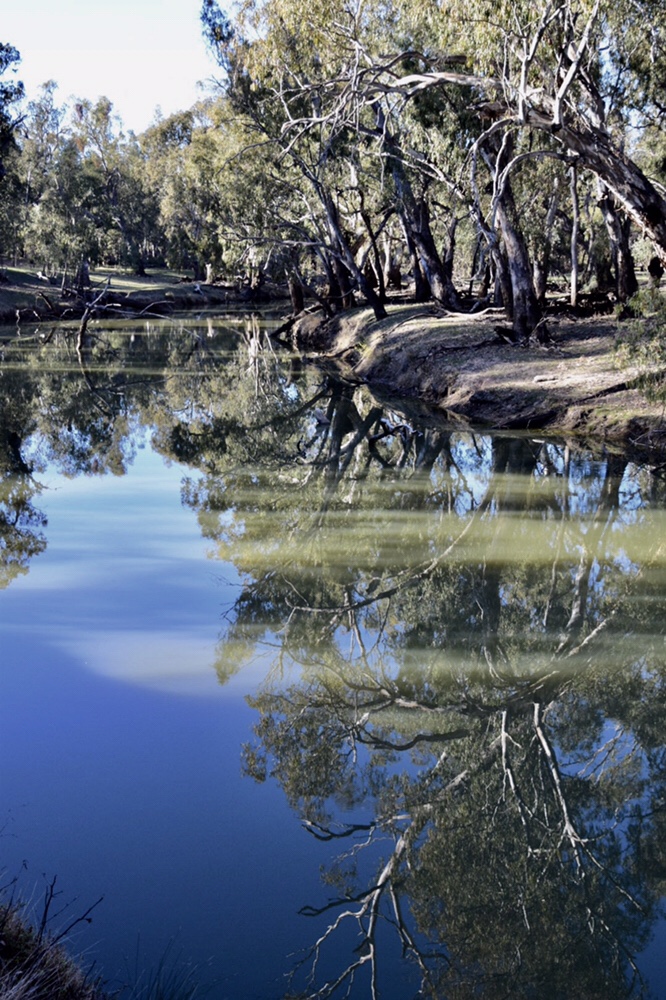
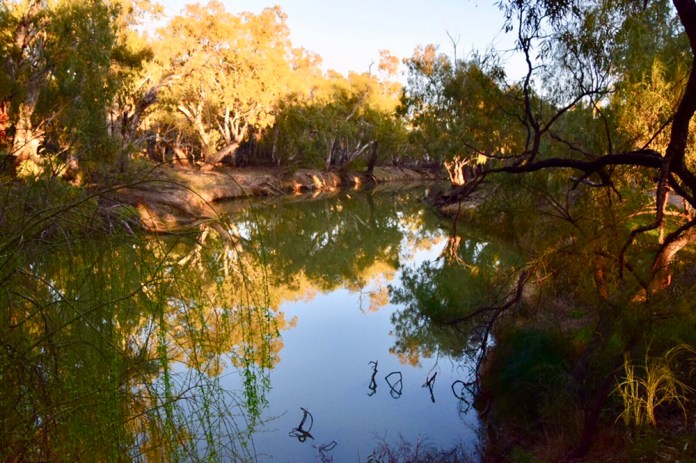
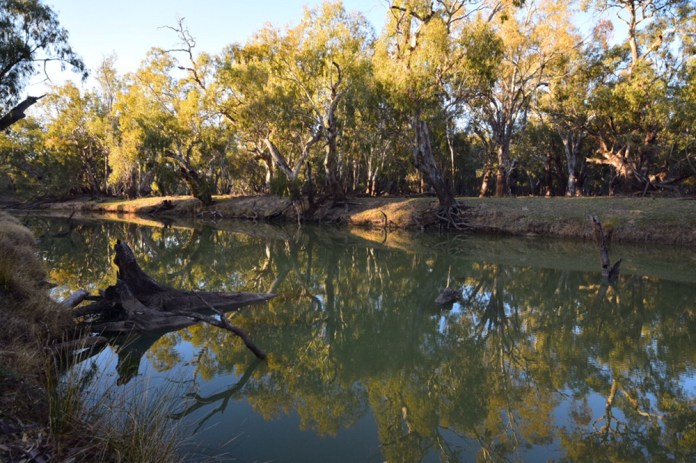
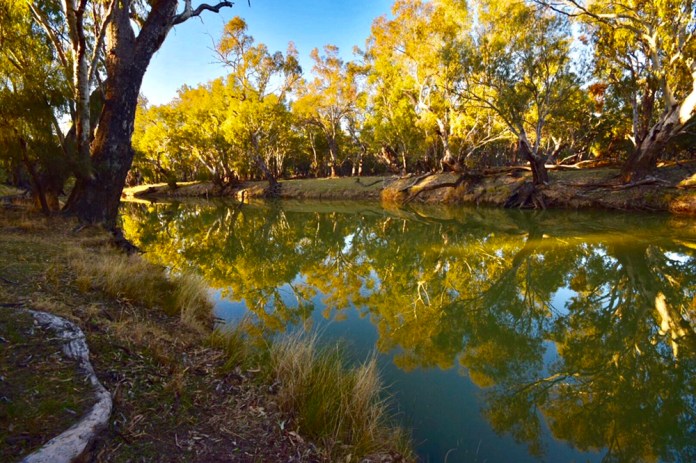
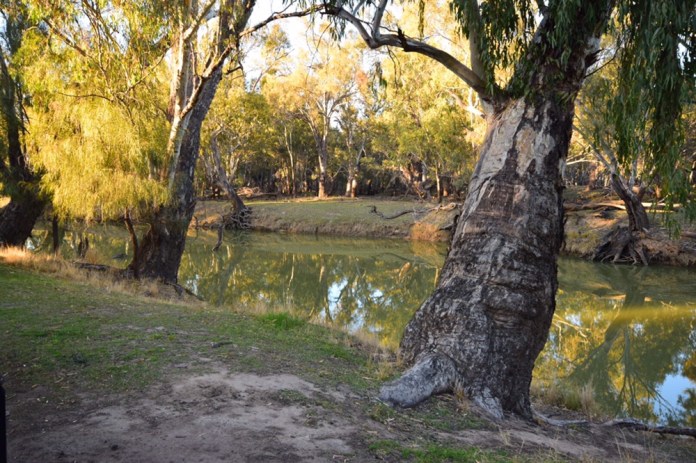
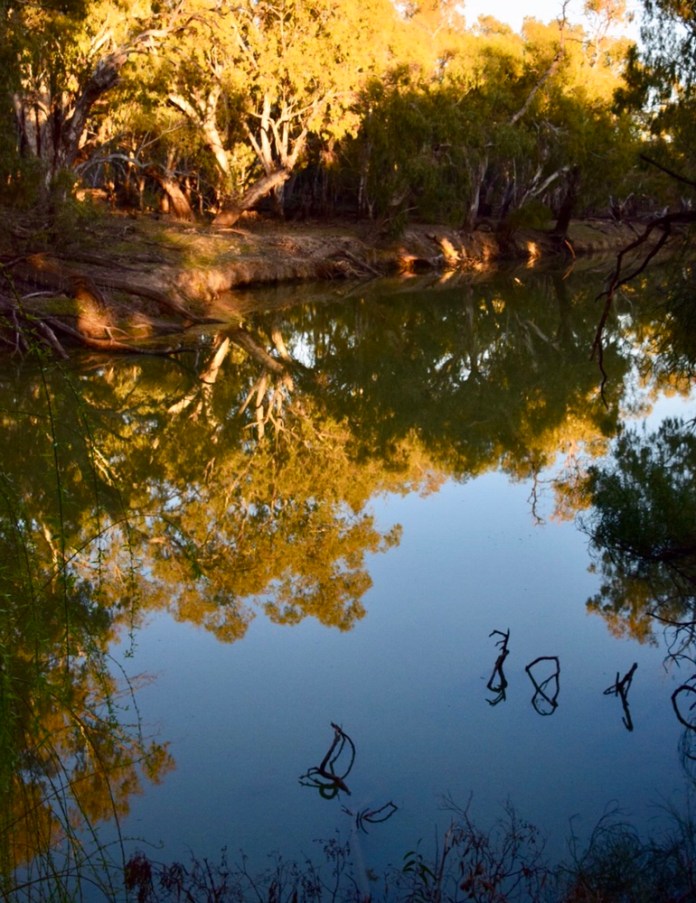
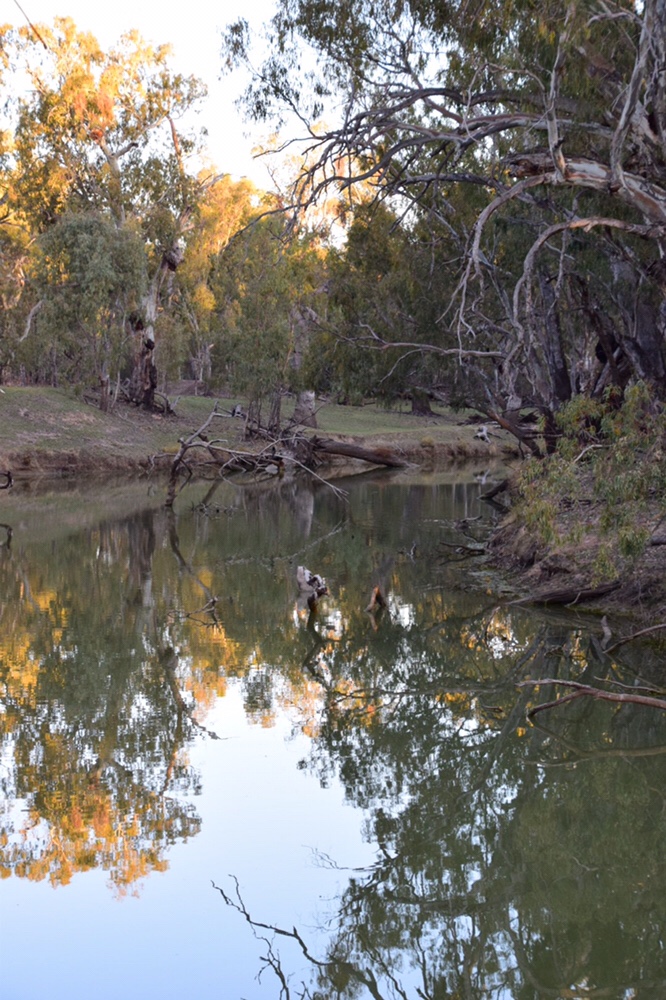
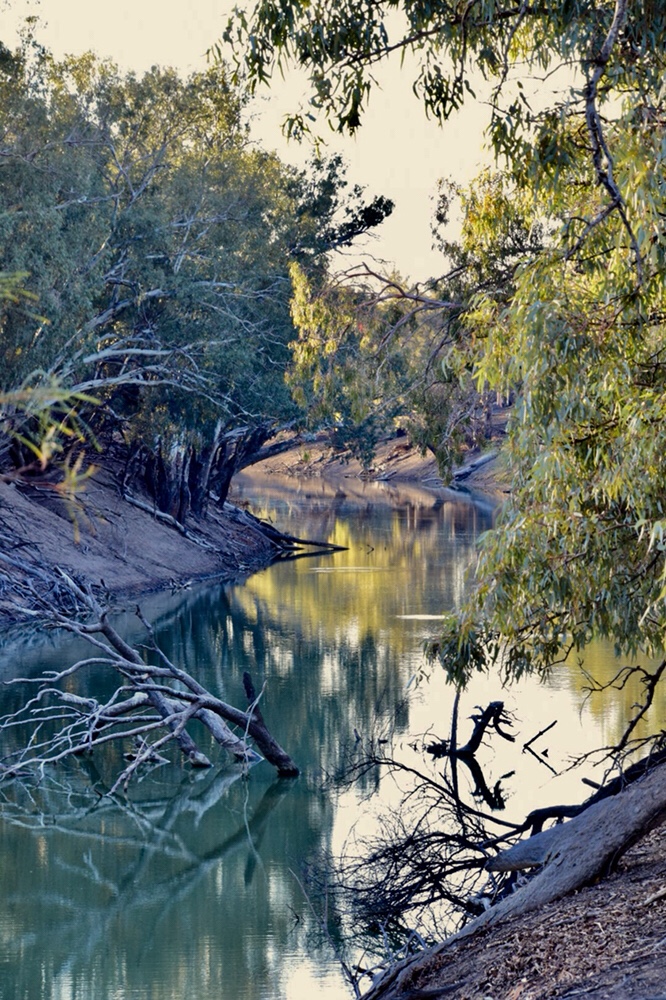
Each morning of our three day stay I would walk along the Darling River all the way up to the bush camping area. I saw the river in different moods; the warm orange light and stillness of later afternoon, the fresh light glittering trees of the opposite bank reflected in the river of morning and the windy swaying trees and rippling water of mi day. I passed an old shearing shed of coolabah and corrugated iron walls and roofing. There were the shearers quarters, small green painted cottages with bedside made up, television and kitchen facilities. There are not many sheep wandering the pastures. If pastures conjures up an image of verdure, of waves of lush green grass with sheep and lambs cavorting in the sunshine, forget it. There is no grass, none for nearly twelve months. All feeding is from hand delivered hay, lying in blocks of straw behind metal fences. There is enough water for the sheep to drink but not nearly enough to irrigate or use sprinklers to make this land truly productive again. Goats trot about, oblivious to the harsh landscape. A decent size goat earns a farmer like Gary, $60 a head now. Gary has moved most of his stock to another property and like most of the farmers in western NSW and QLD, he is loath to sell his sheep because when the drought finally ends from where would he buy more sheep? In most droughts large areas of the eastern seaboard are spared, well enough to enable restocking but not this time as the dry extends not only in time but in geographic extent. He is pretty stoical about the whole thing but there is a sense of his frustration with large businesses who monopolise water to a scandalous level.

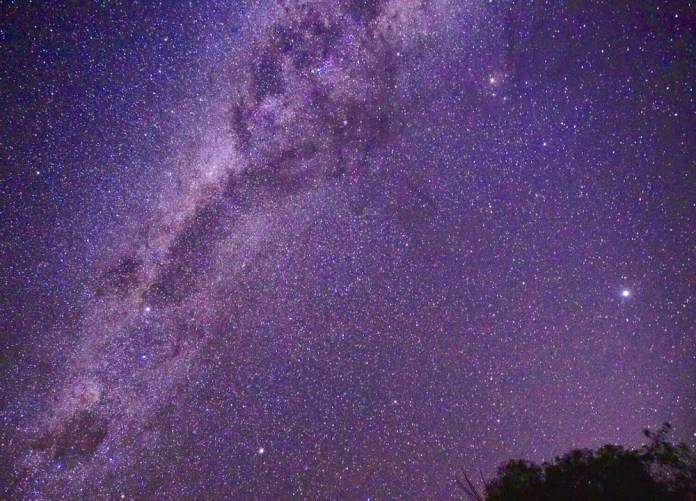
Each night we set up our telescope. We had lugged it all the way north and been pretty frustrated with it to be totally honest but at Rose Isle it all came together. The telescope worked brilliantly. We explored globular clusters, galaxies, stars and planets in what was perfect sky conditions. What a great night! The next evening high level cloud came in but it did not matter, we were confident we could do it again if the sky was right.

We spent time just resting and reading. It was beautiful by the river when a raucous brown bird landed on the table beside us. It’s brown spots and bars on its back and it’s typical cry indicated it was a spotted bower bird. We saw mallee ring necks, a magnificent green parrot, on the grass of the camping area. Kookaburras laughed as they called out of the forest at dawn. When the afternoon cooled approaching evening, Jennifer lit a fire in the fireplace. We sat in comfy chairs as darkness gathered outside and read our books, Jennifer a detective novel and me consuming SF.

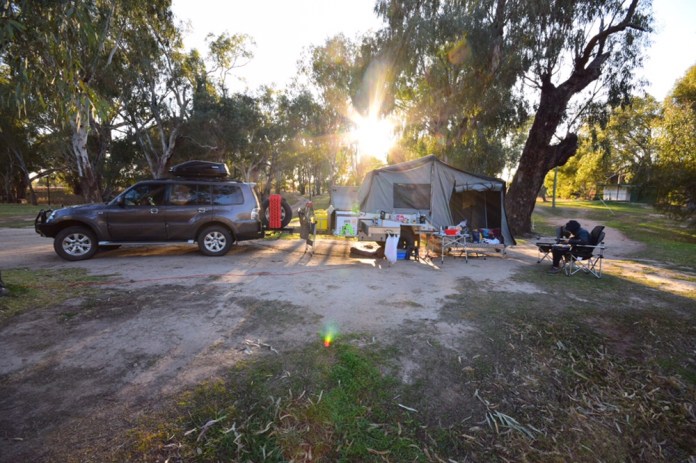
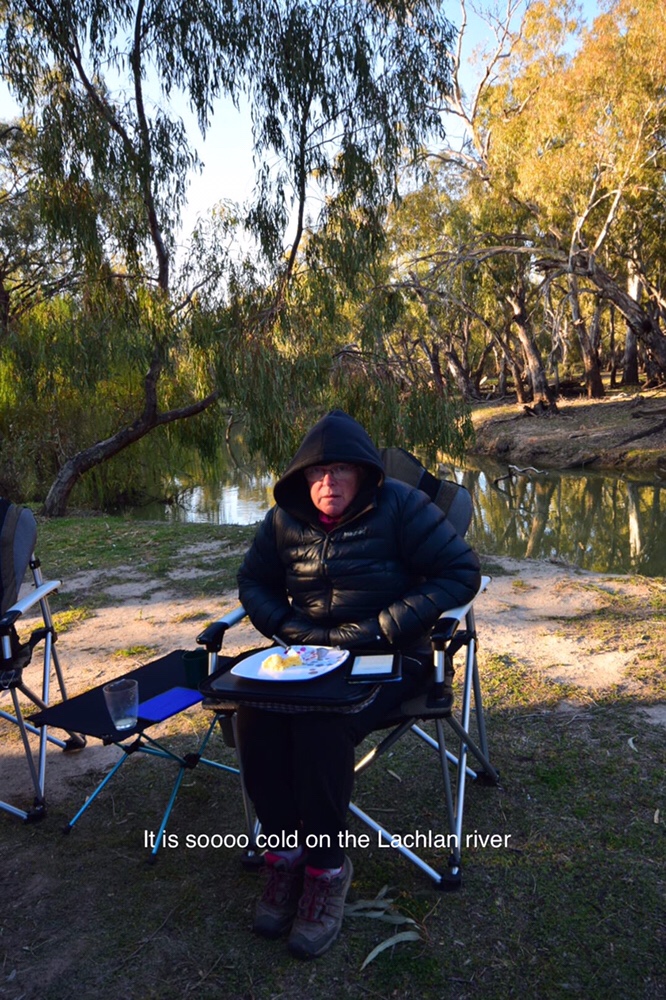
We drove from Rose Isle to Billabourie. This is a station on the Lachlan river and it’s a mixed farm. It’s about forty kilometres from Hillston. Josh is a young miner from Cobar who arrived at Rose Isle with his wife and young son. He told us about this farm stay. It’s a pretty spot by the river. We parked the camper trailer adjacent to and overlooking the river. I played my guitar in the afternoon while Jennifer read. No luck with a telescope as the trees, the river gums and coolabahs, blocked unhindered access to the sky. A very relaxing afternoon.

From here, we drove to Deniliquin, then to Melbourne via Echuca.

Jennifer and I have just spent a wonderful few hours with the kids in Carlton. We will spend a few more days in Melbourne before boarding the ferry for a trip home.

Standard
Uncategorized

Central Australia to Bourke

Central Australia road trip 2018

I’m sitting on my comfy camping chair at Kidman Camp. It’s a caravan and camping ground about 6 kilometres from the town centre of Bourke, NSW. There is a cool breeze, cloud overhead and so I am wearing a down jacket, undone but a down jacket none the less. I have rarely seen clouds the last four months, and rain only once this entire trip. The rain was a few droplets miserly dropped from the sky few days ago when we camped in Charleville about 500 kilometres north of here.

We had planned to return to Melbourne via the Birdsville Track. A few days before our rotation finished Jennifer was perusing information on the web about Birdsville; road conditions, accommodation and so on then she stopped, gasped, “ the Birdsville races are running next week.” The population of Birdsville jumps from 120 to between 9,000 to 11,000 people which means overflowing campgrounds, pre-booking any accommodation several months ahead, and seriously choked outback roads and toilets. A change of plan was required.

Our last job, in that last week before our break, was based at Elliott. I did the Barkly run with Tony and our pilot was a delightful young lady called Kelly. Kelly is one of three female pilots who work at RFDS in the centre. She learnt the skills of outback flying on the huge cattle stations, landing on sandy strips, dodging kangaroos on the tarmac and following dusty roads from bore to bore, station to station. Jennifer worked at Elliott while I was flying around and was very busy seeing local Aboriginal women and a fair few white locals too. On Friday we started packing up the car and trailer which we had driven north from Alice Springs the previous weekend; breaking up the distance with an overnight stay at Wauchope.

Late Saturday morning we began our trip home. Our first overnight stop was at Barkly homestead on the Barkly Highway. As it is located right beside the highway, road trains were reasonably frequent. There is good dining available and so Jennifer and I shared a seafood platter. Many road trains stop at Barkly, and I love watching them. They are so big, so powerful, it hard not to be impressed by the engineering of their construction and the skill of most of the drivers. Even minor changes in driving can throw the last trailer into a passing car. Im told, a centimetre at the steering gets wheel equals a meter for the last trailer.

The next day we drove to Mt Isa, through Camooweal. We stayed at Top Tourist Caravan Park for two nights. We have never been to Mt Isa before so it is all very new to us. For some reason we arrived thirty minutes late for everything. A few days later, and I mean days, we figured out the time zone was different.

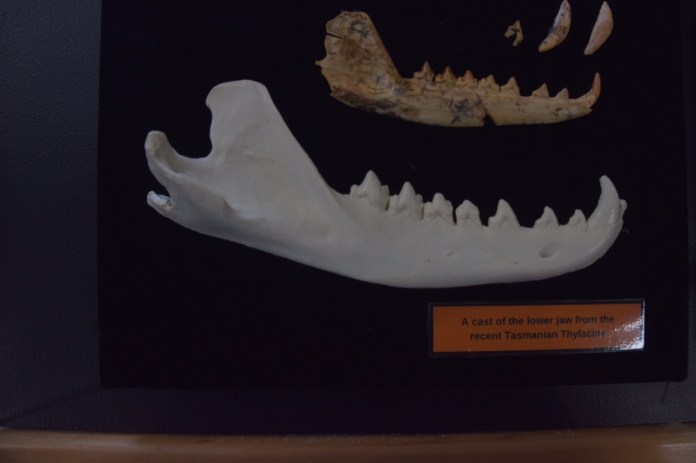
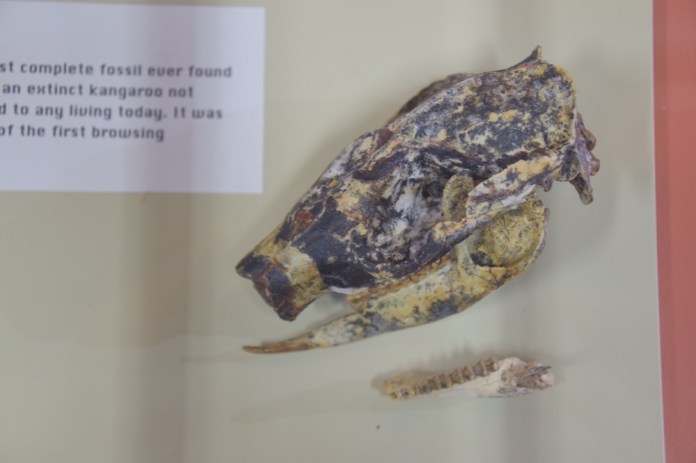
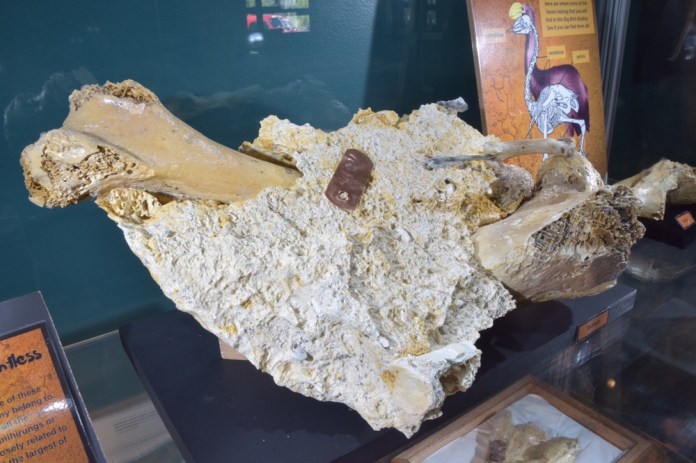
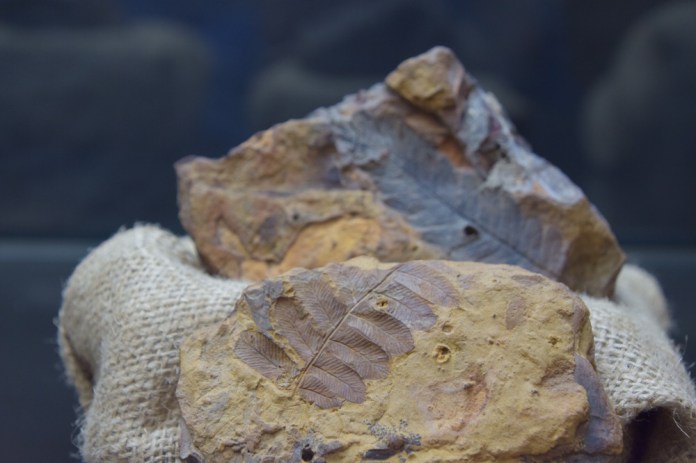
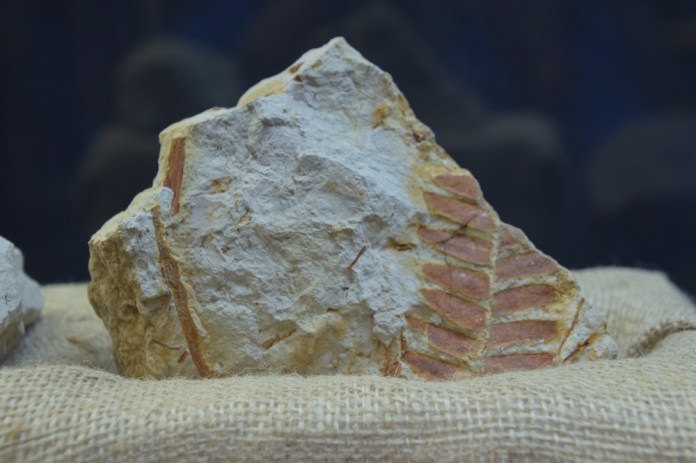
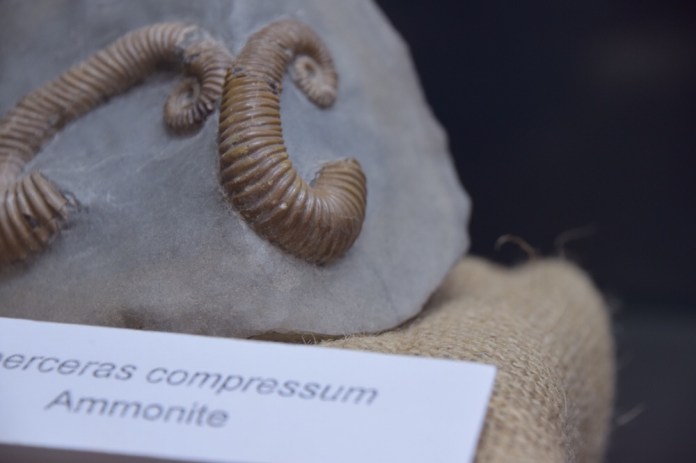
Top Tourist Park was great. We had a shady site near the entrance. The camper trailer was in shade most of the day. Our chairs snuggly placed around it. We went for dinner out on the first evening to Buffs RSL Club. We had to become temporary members. We could have been anybody or nobody. It felt a bit weird showing bits of paper when I ordered a meal. Anyway, the meal was superb. I have never had better steak. We had so much that we secreted some in alfoil to slice up for our lunch the next two days. After dinner a courtesy bus dropped us off outside the caravan park. The next day after breakfast, we drove to the information centre. A wing of the Information Centre is dedicated to the Riversleigh fossils. On our drive to Mt Isa, we passed the turn off to Riversleigh. It’s a station on the Gregory River where some of the most important Miocene fossils in Australia have been found. Soon after it’s importance was realised, this laboratory to process the fossils was established in Mt Isa. Scientists not only supervised and participated in the dig itself but also helped with the processing. Teams of technicians worked on the fossils. Then suddenly the money dried up, and the laboratory was closed. For eight years, the forgotten fossils laid in their rocks on shelves, microscopes gathered dust and any fossils recovered at the dig site were shipped straight to Sydney. Mt Isa had lost out. Two enterprising locals in 2008 convinced the local council the centre should be reopened. These two people process the fossils from Riversleigh. They dissolve the limestone rock in which the fossils are imbedded using baths of 2% vinegar. Of course this takes time, but finally the bones emerge out from the dissolving stone. As they do they are coated with plastic dissolved in acetone. The acetone evaporates leaving a residue, a protective coating of plastic. These two people are not trained formally at all to do this type of work, but their fossils have been used by universities around the world. These scientists borrow the fossils for years or months, but they have to be returned to the lab in Mt Isa. Here they are displayed for people like me to study, to amaze and to enjoy.

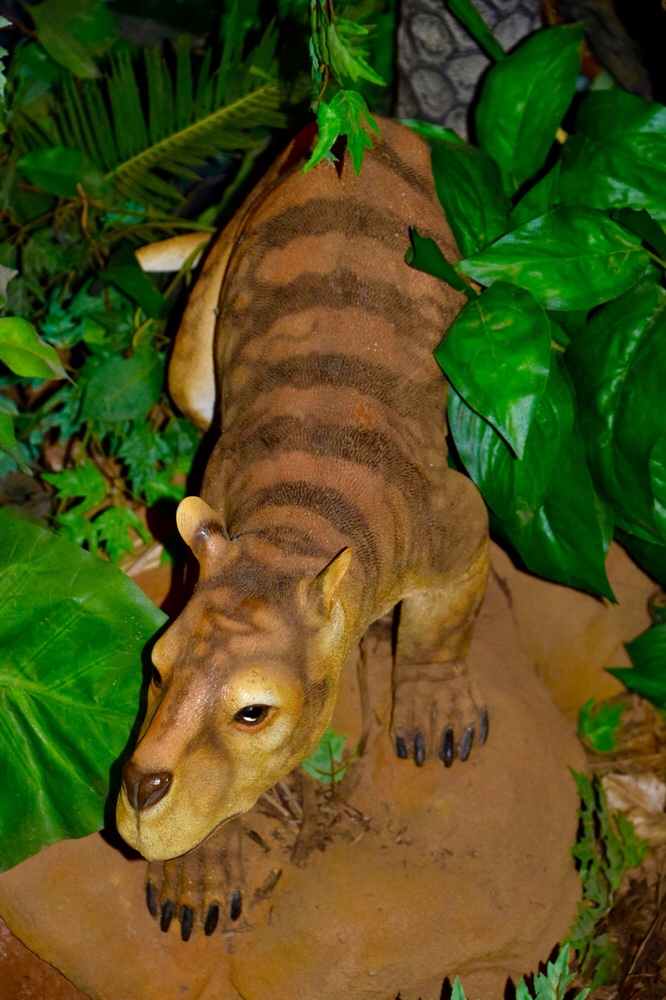
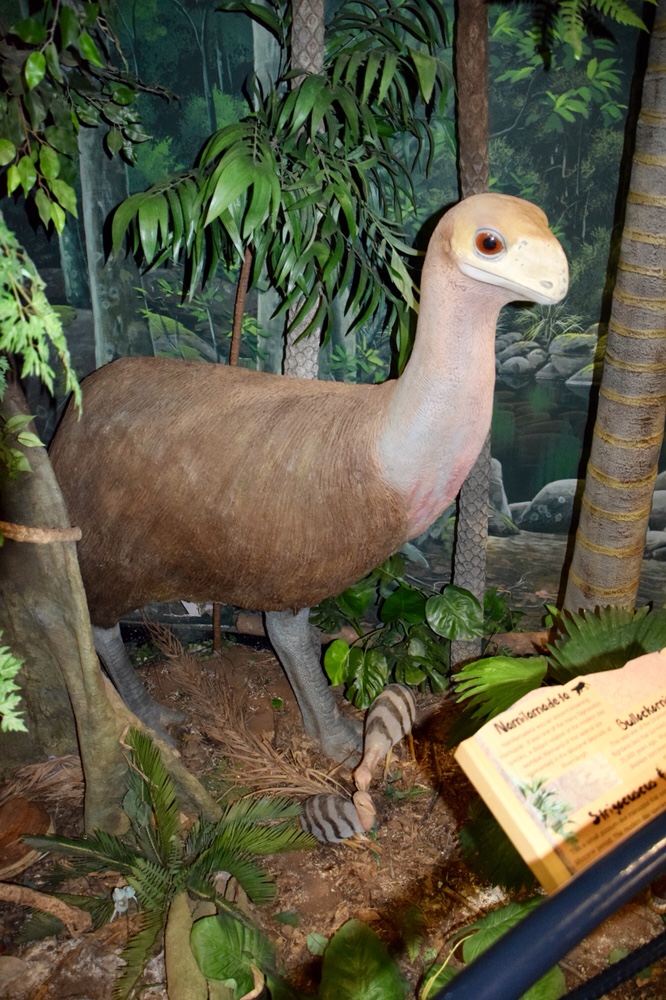
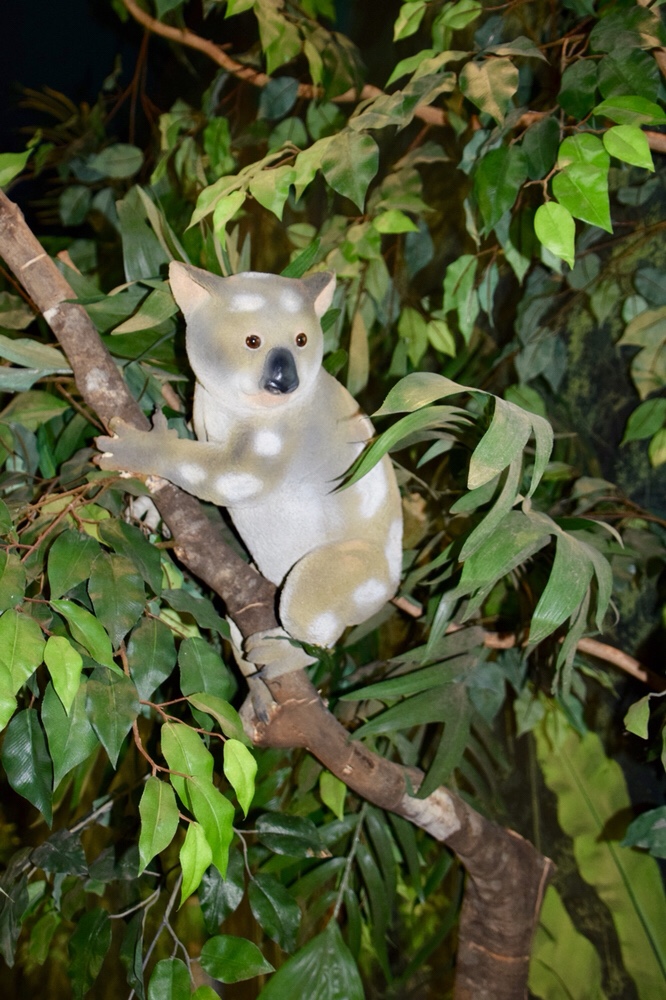
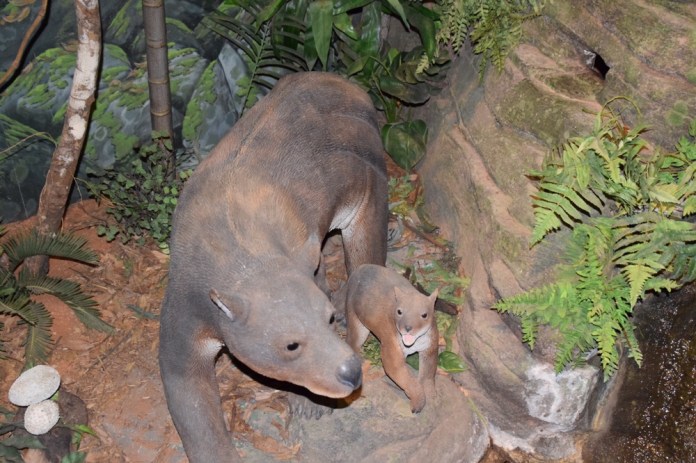
Pieta guided us through the museum, including the labs where she works. There are splendid models, life size of the unusual marsupials which lived at Riversleigh. In the Miocene which is about thirty to ten million years ago, the great inland sea of northern Australia had retreated, leaving abundant rivers, forest and a mild climate, these ancestral marsupials all thrived. Giant diprotodon, the ancestors of wombats, and the size of a hippopotamus, ate the shrubs and plants of the temperate jungle. Marsupial lions and thylacines hunted them, pursuing them, hiding in the trees and foliage. Baru, one of several ancient species of Miocene crocodiles, as well as other giant reptiles including pythons equal in size to the modern anaconda of South America and giant lizards like Megalenia hunted the diverse marsupial megafauna. Giant kangaroos, possums, and even a creature called a “ thingodonta” lived in the Australian Miocene. All of them exploited different food sources.
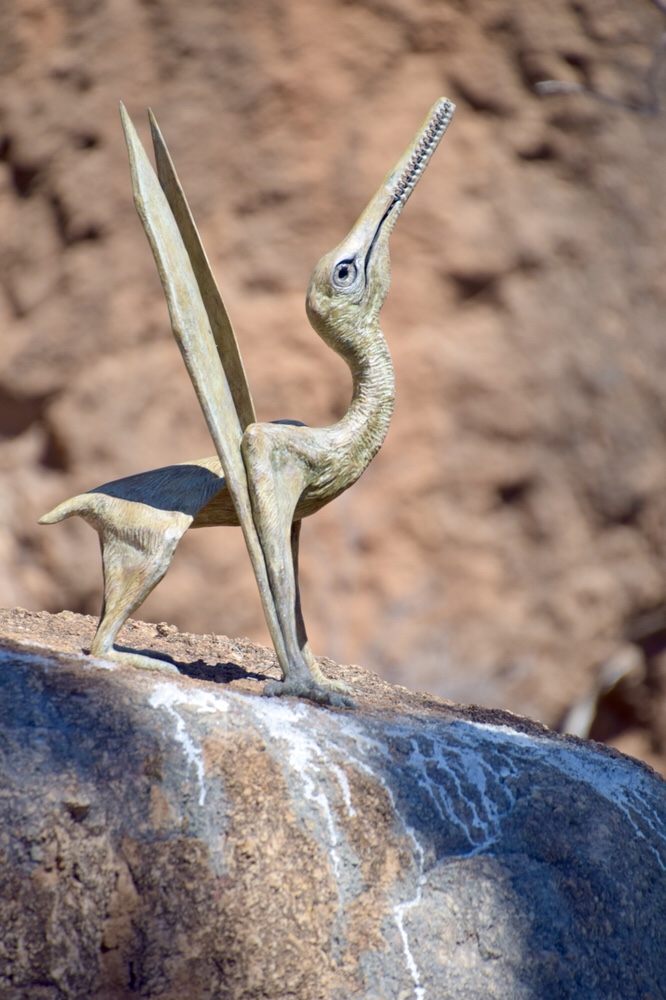
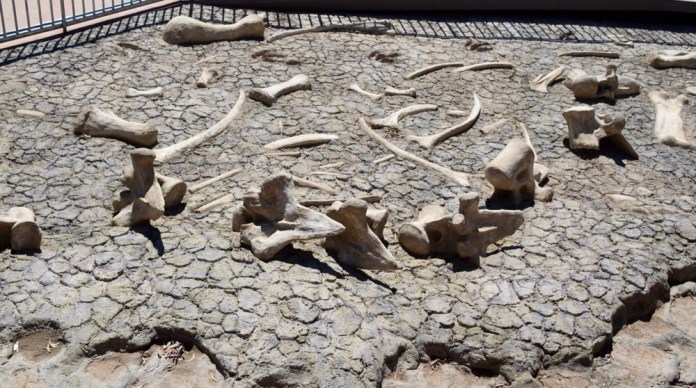
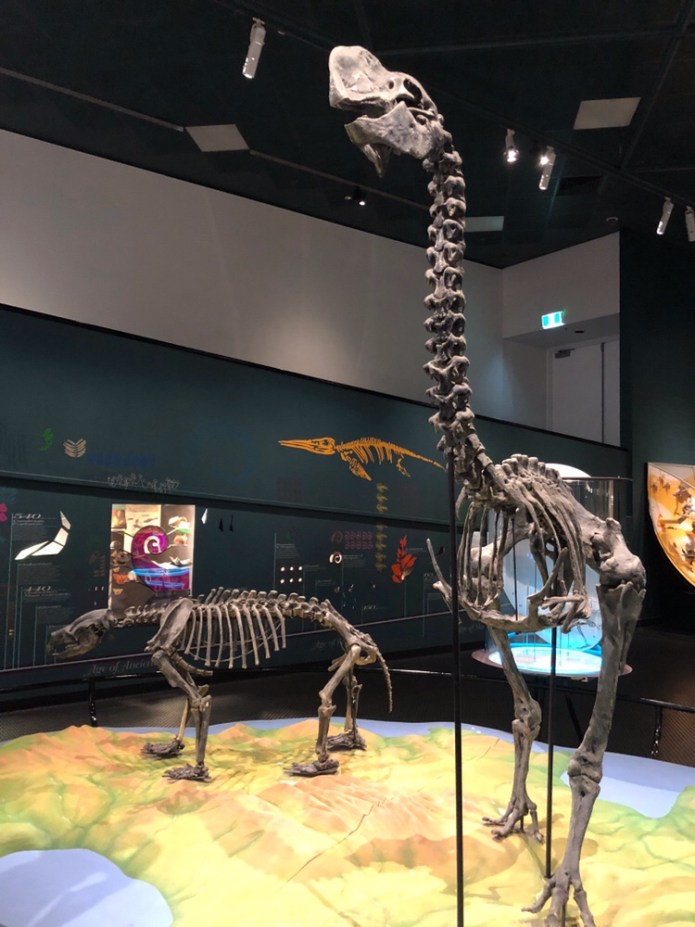
On our last weekend in Alice Springs, Jennifer and I had visited the new megafauna museum that had just opened in Todd Mall. It’s a Centre for the display and study of megafauna from Alcoota near Engewala. There are many wonderful fossils on display but my favourites are of a giant goose, that stands over two meters tall and a complete baru. A baru is an ancient crocodile that hunted in the billabongs of mid Miocene Alcoota . Alcoota and Riversleigh are of similar age but the latter has fossils from a longer period of the Miocene and extends into the Oligocene as well.. At Mt Isa, there are some fabulous fossils of ancient bird, including the “demon duck of doom”. There is the colossal beak of this ancient bird, it stood three meters tall. This is more formally called a dimorphid but I prefer the alliteration of its common name.

We spent three hours there and the high point, the best thing of all was using the microscopes to see the tiny fossils. The jaws of marsupials, and the teeth and inner ears of bats. These specimens are so perfect, and all prepared here.

While in Mt Isa we bought some new camping chairs. We had left similar ones in Alice Springs to use on our return in October. It was great to get our bums and backs, especially backs into these terrific chairs. We spent the afternoon relaxing in our new chairs, soaking in the wonderful experience of seeing the Riversleigh fossils.

From Mt Isa, we drove to Winton. This is a long drive and we were happy to finally arrive at the Tattersalls hotel. It was thirty dollars to stay at their caravan park. Our only excursion that day was to visit the information centre. We had heard vague comments about dinosaurs in Winton. We had seen signs mentioning various dinosaur themed sites in this general area. Well, the information centre was a waste of time. However, luckily, when opening a garbage bin, I noticed a discarded brochure about Dinosaur Canyon. I retrieved this brochure later, after dinner. Then Googled Dinosaur Canyon. . Ah ha! About twenty four kilometres from Winton was the Australian Age of Dinosaurs museum.

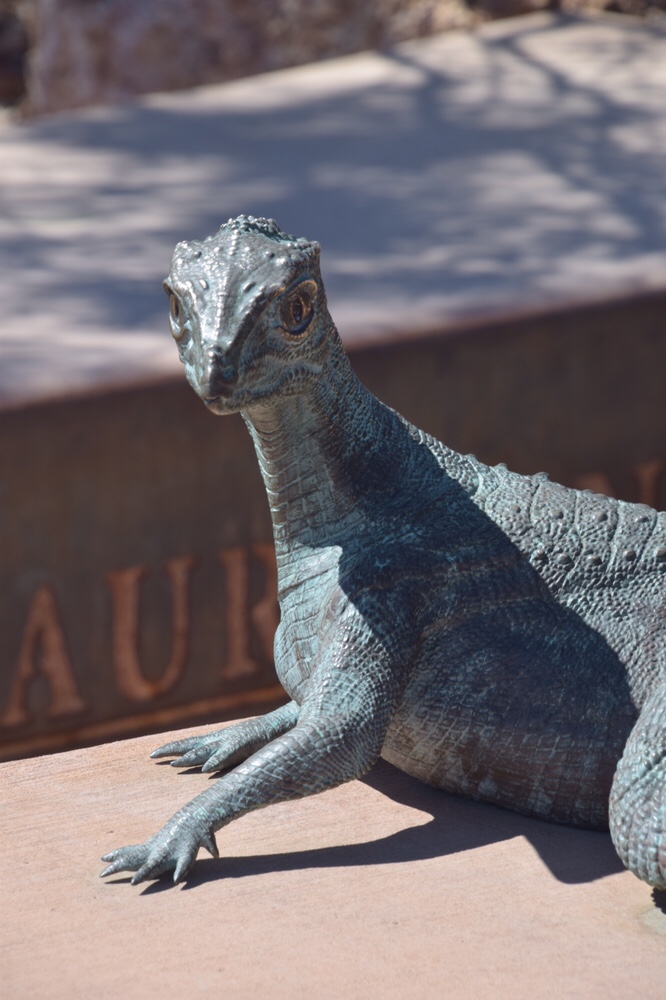
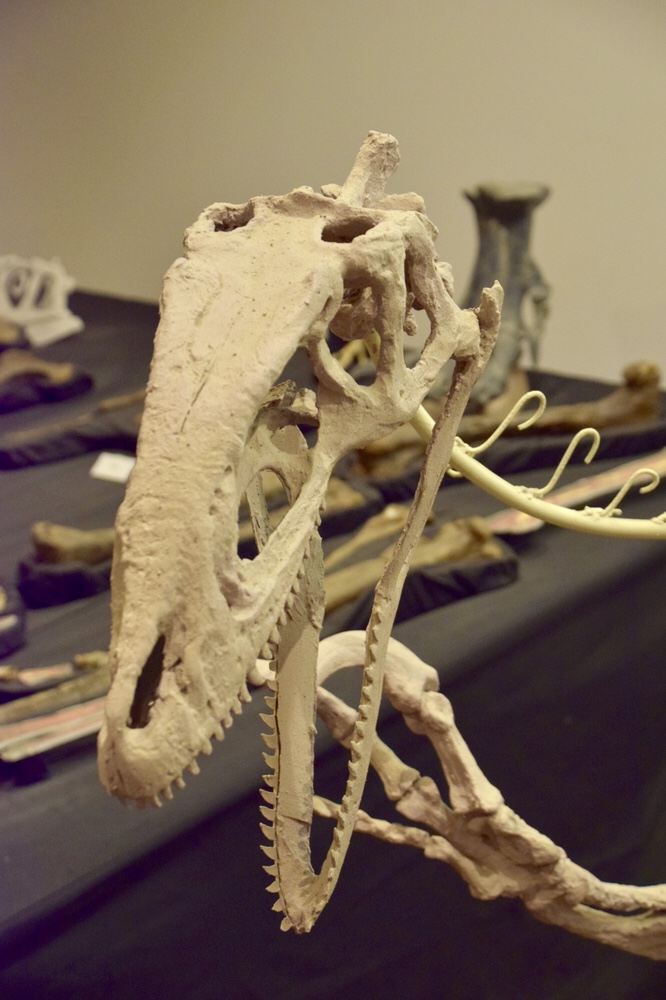
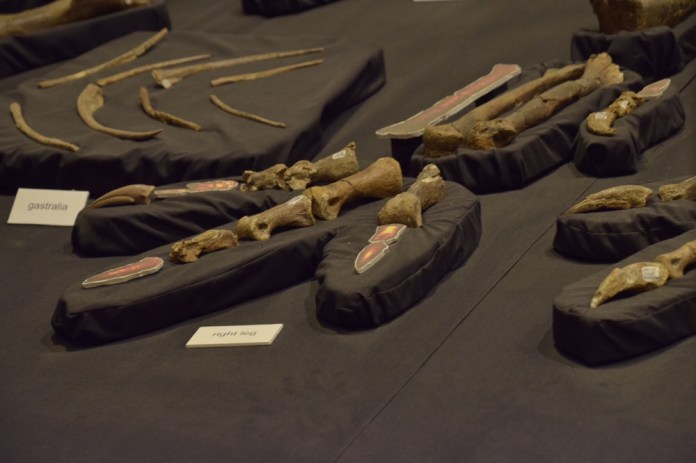
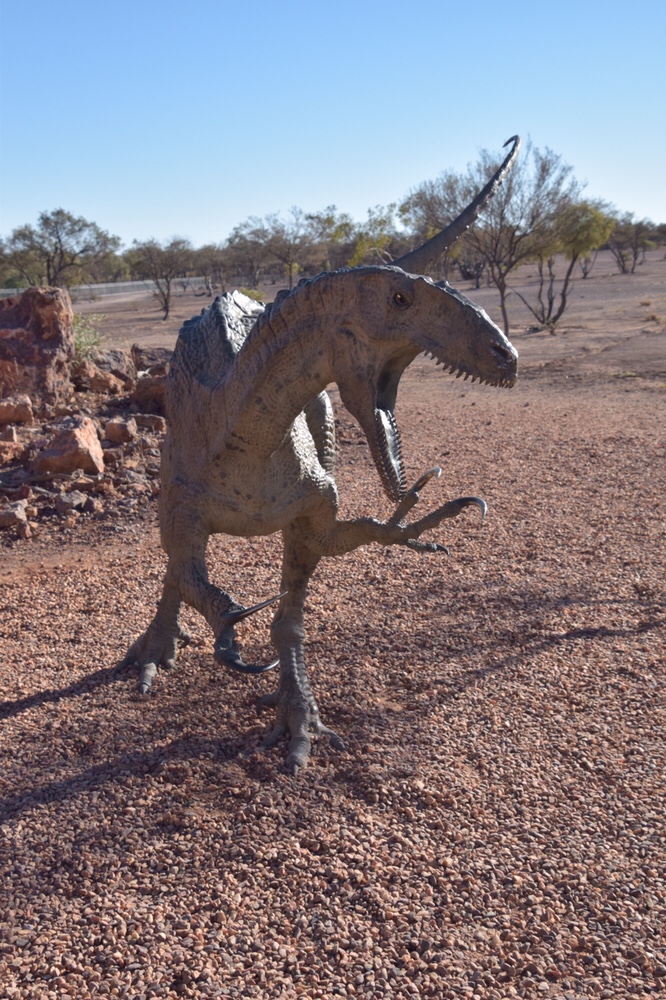
The next day we packed up the trailer, and began our drive to Longreach. This section was only 180 kilometres so we had ample opportunity to spend some time at Dinosaur Canyon. It’s not like Jurassic Park, no accountants were eaten by theropods, so it was much better. We opted for the Ultimate pass. This pass includes, a visit to the processing laboratory, a guided visit to the collection display centre and an outdoor walk to visit LifeSize metal casts of the creatures discovered here in Winton and in Queensland. From the visitor centre there is a short walk to the laboratory. Before I tell you about the laboratory, I had better give you some background. A local grazier, David Elliot, discovered a fossil, well he more or less tripped over it, it was a femur of a sauropod. It’s about two meters long. He spoke with the Queensland museums scientists who were very sceptical. It’s been the conventional understanding amongst many scientists in Australia, that we have a poor dinosaur fossil record due to our geology. Elliot took a contrary view, as a farmer he is very aware of soil and how it behaves. The soil over a vast area of Queensland is called black soil. When wet it churns materials up from deeper layers including the sedimentary rock, laid down in the Cretaceous and containing fossil dinosaurs. His theory is that many of the fossils are of older, or sick animals that died, trapped and unable to extricate themselves from the thick mud of billabongs common in that time in Australia’s history. The billabongs were surrounded by vast forests of conifers, angiosperms ( the earliest of flowering plants) and cycads. Plant eaters like the sauropods ( Diamantinasauras Matildae) and hadrosaurs ( muttabasaurus ) were the prey of meat eating dinosaurs. The pack hunting theropods like Australovenator Wintonensis also named ‘Banjo’ are also located in these fossil deposits. Fossils have been located over a wide area, and it looks like this area of Queensland will be one if the richest fossils site for Cretaceous dinosaurs in the world.

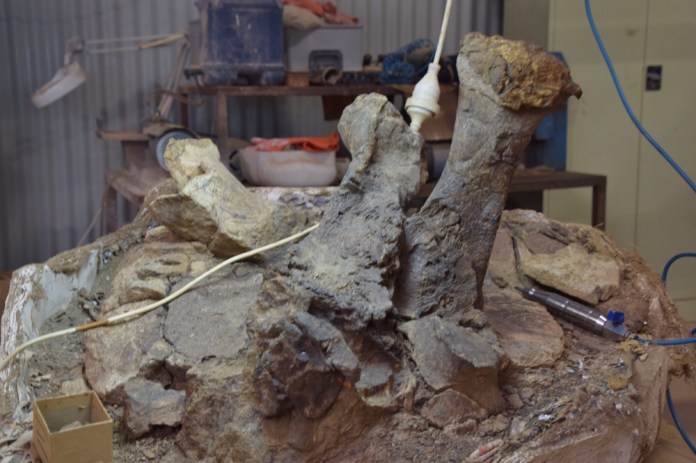
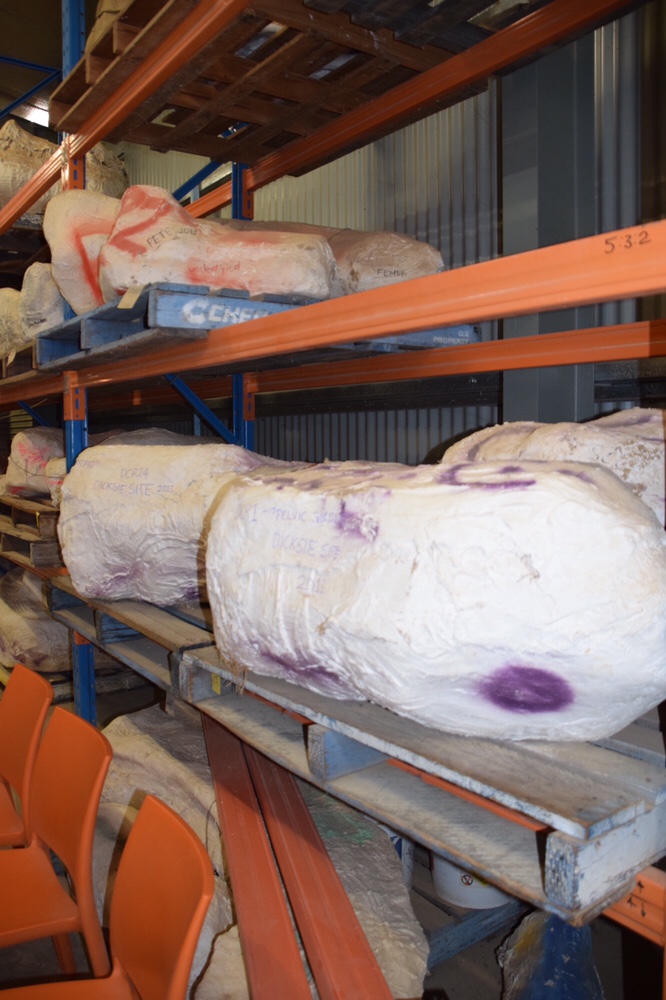
David Elliot was frustrated that the recovery of fossils was so slow due to lack of money and personnel so he started a museum dedicated to the study, recovery and preparation of the fossils found here. The laboratory is where each fossil is painstakingly drilled out of the surrounding sedimentary rock. The technicians are all volunteers. This means that fossils can be processed far more quickly than a museum or university, more people, less cost. Fossils that are brought to light are lent to museums or individual scientists but they ultimately will be displayed at the museum in Winton. This means the local people, the farmers who locate the fossils and the visitors who help prepare these wonderful specimens, can enjoy them and get some financial return for the local community too. In the lab four volunteers who have done a ten day course in preparing these fossils, drilled away, bringing these fossils back to life ( as it were). On the shelves are massive rocks containing yet to be prepared fossils, all dated and on inscribed on their their covering plaster of Paris, are descriptions, names and location and the number of associated fragments. The collection room, has three fossil dinosaurs, a twenty metre sauropod called Matilda. Another bigger, more robust sauropod called Wade ( not his real name ) and the bad boy, a two meter tall theropod called Banjo. Banjo has enormous twenty centimetre curled claws on feet and hands which were used to embrace then disembowel another dinosaur.

The outdoor section consists of a walk to see artistic recreations of the animals recovered here. There is a display of small dinosaurs, fleeing from Banjo. This is based on the fossil tracks at Lark Quarry which show a dinosaur stampede on what would have been a wet clay surface. Other dinosaurs are displayed as well as a groups of small pteranodons, which are not actually dinosaurs but flying reptiles. All so much fun.

When we arrived in Longreach We were quite tired as though the trip was not that long, it was fatiguing. So we skipped the Qantas exhibition in Longreach and instead had an early night. We had dinner at the campground while listening to a country and western singer. An unusual form of entertainment for us.

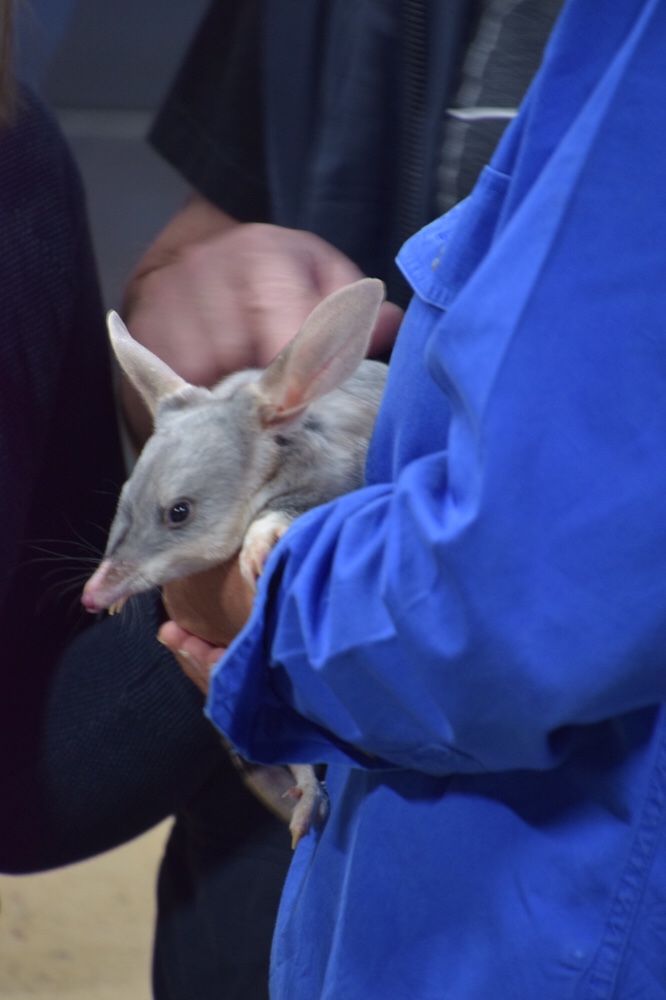
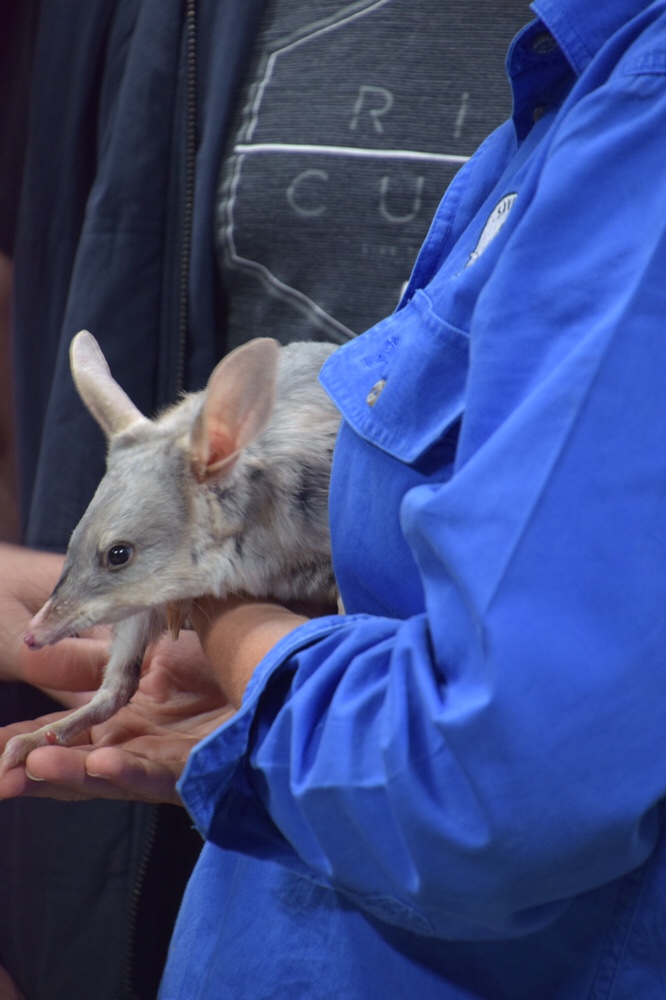
The next day we drove to Charleville. We decided to spend three days in Charleville because there was not only a great deal of interesting things to do but also because the people there were so friendly. We started our activities with an early nine o’clock visit to the Bilby Experience Centre, which is right next door to Charleville old railway station. The first 9 am session is a touch and look session. Yep, we were able to see a Bilby close up and actually pat it. The fur is so soft. They are the most gorgeous animal. Most animals start off cute but don’t stay cute. I was originally quite cute when young but that cuteness has quite recently faded, nose dived actually. Well Bilbies are cute forever!

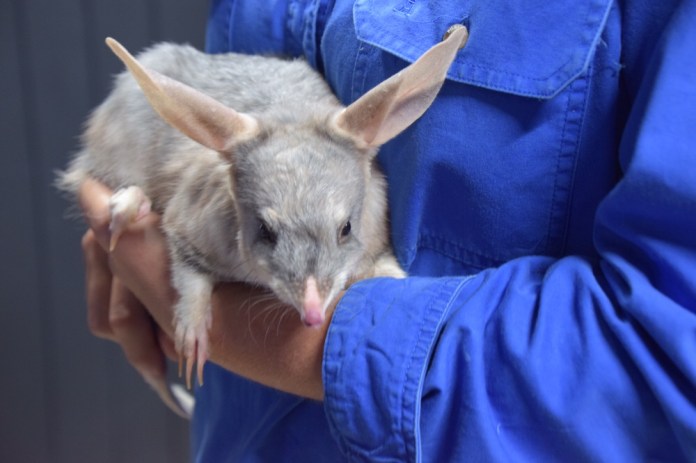
This is a fund raiser, and information hub for the non profit Bilby Association which is saving Bilbies in Australia. A local man and a scientist worked together to educate Australians about the threat to Bilbies especially in outback Queensland. Their numbers were falling drastically due to competition with rabbits, and being preyed upon by feral cats and foxes. The only way to protect these small marsupials until feral animals could be controlled was to fence large areas of bilby habitat and reintroduce Bilbies that had been born in captivity in Charleville. Charleville Bilbies have been also used to repopulate similar fenced areas in south Australia as well. A really inspirational story and for us a wonderful experience.

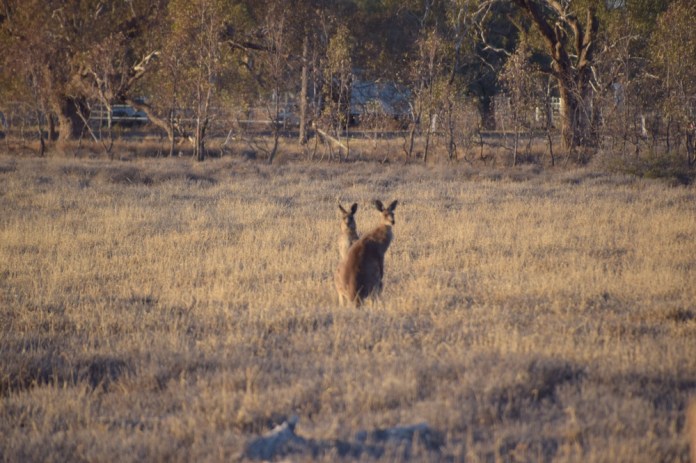
We relaxed over the afternoon, then went out for dinner at the Corones Hotel. This is a beautifully restored old building. We had a great meals. We stayed at Charleville Bush Caravan Park. It was quiet. It had clean and modern amenities. Plenty of shelter to stay out of the wind and lots of visitors. There were Apostle birds, chattering about us. They are also called CWA birds due to the noise they make. They’re called Apostle birds because they travel in groups of 12 or less. Grey kangaroos and emus are in the paddocks adjoining the park. Every day at 4:30 there is happy hour when all the guests sit around a blazing campfire and chat about our day. On some nights, Ian, cooks up damper in a camp over, pouring hot coals over the oven. His recipe is self raising flower, lemonade, salt and water.

The next day we did a WW2 tour. A young man led us as we did a tag along tour to see some of the fascinating artefacts pertaining to the WW2 history of Charleville. Charleville was the largest American base in Australia. We were shown the top secret Norton bombsight used in WW2 and in subsequent wars till mid way through the Vietnam catastrophe. It is still classified by the American military. So how did Charleville get a working, fully restored norton bombsight. eBay is the answer. It was so accurate that a bomb dropped from 28,000 feet would land within thirty feet of the target.

We learnt about the weekly dips for enlisted men in a 50:50 mix of water and DDT. We saw the regimental aid station staffed by two nurses for about a thousand soldiers and airman. We saw the runways where B17s, B 24s and fighters both American and Australian took off to head north or fight in the pacific. The concrete floor of a dance hall built in 1946.

James really brought it all alive. The long term project of the history buffs in Charleville is restore the buildings on any concrete remains and make it an even more enlightening experience.

Th high point was our visit to the Cosmos centre on the last evening in Charleville. We spent two and half hours seeing wonderful stuff in the sky. As we journeyed from nebula ( ring nebula, swan nebula, dumb bell nebula) from globular clusters ( omega Centaurus) containing millions of stars. To hearing about the birth and death of stars. The fate of our sun as a planetary nebula. I could see the double star of Alpha Centauri looking all the world as two headlights. This telescope was a 14 inch Meade telescope. This is a serious light bucket. We saw the majesty which is Vega. We also looked at Saturn and the satellites and bands of Jupiter. After our sky viewing we spent another hour doing astrophotography, learning how to use our cameras to take stunning views of the night sky. Mike our guide, did a fantastic job of inspiring and educating us about the wonders of the big sky.

The next morning, we drove to Bourke. As in Back of Bourke. Well the back of Bourke is hard country indeed and is a synonym for tough country. The land, the paddocks have been desiccated by the drought herein outback NSW and Southern Queensland. In Charleville, there is a sign thanking tourists for spending time and, of course, money in Charleville. The drought is making it very hard for locals to survive.

We are staying two nights at Kidman Camp Caravan Park. Last night we went to a regular function here at the park called Poetry on a plate. A bush poet sings songs while his offsider prepares a meal. Tonight it was beef stroganoff, dhal and rice with a desert of lemon tart for afters. Before I could get my meal, a call went out, does anyone know CPR. Well that sounds like business. I jogged toward the commotion to find Jennifer already there helping. An older man had had a stroke. His poor wife was just bereft. He regained some consciousness after about five minutes. The ambulance arrived and transferred him to Bourke Hospital. We spoke to his wife this morning; she said he’d substantially recovered but was being air lifted to Dubbo for a CT brain scan.

The music was okay. No, let me be fair, he was actually a very good singer but I find the schmaltz of many of the songs about loving mothers, lost love and dying dogs, some what excremental. What a cynic!

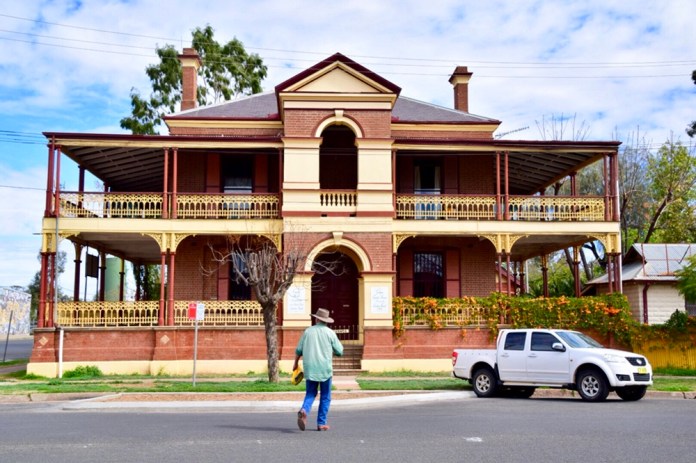
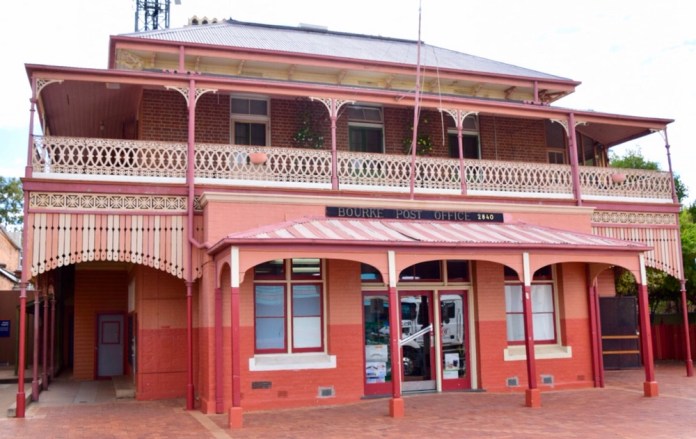
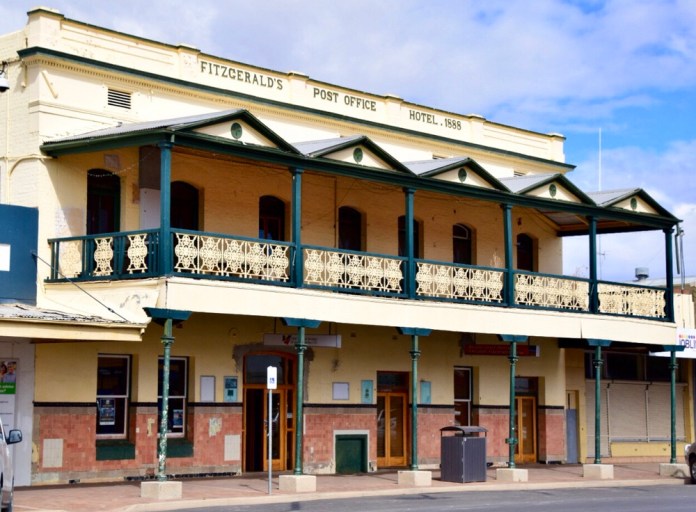
Today we had a slow start after yesterdays long drive. We drove into Bourke and took some photographs of the fine buildings in the town centre. We visited the Back of Bourke experience. This is really good. There are three buildings joined by stone paths and each looks at different facets of Bourke’s history. There was way too much to take in in one go but thankfully, the pass to the museum goes for two days. Stories of the mythical inland sea that propelled Sturt, Wentworth, Oxley and Mitchell to explore the centre of Australia. The tales and endeavours of the explorers are balanced by the records of the local Aborigines.

The other buildings had more information about paddle boats, Cobb and co, RFDS, locals, bushrangers, and the railways, and, above all else, sheep.

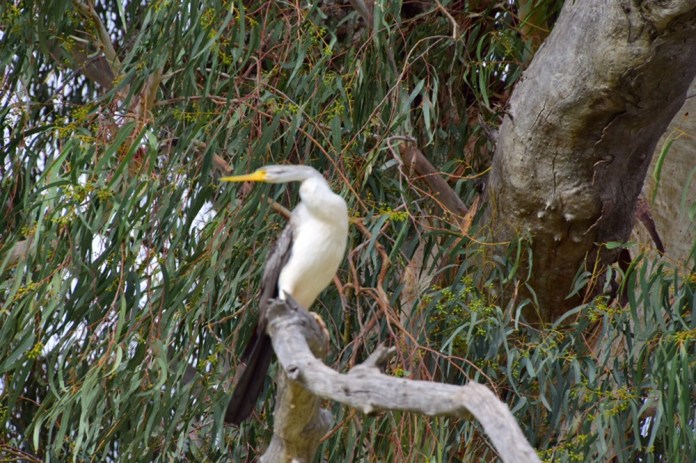
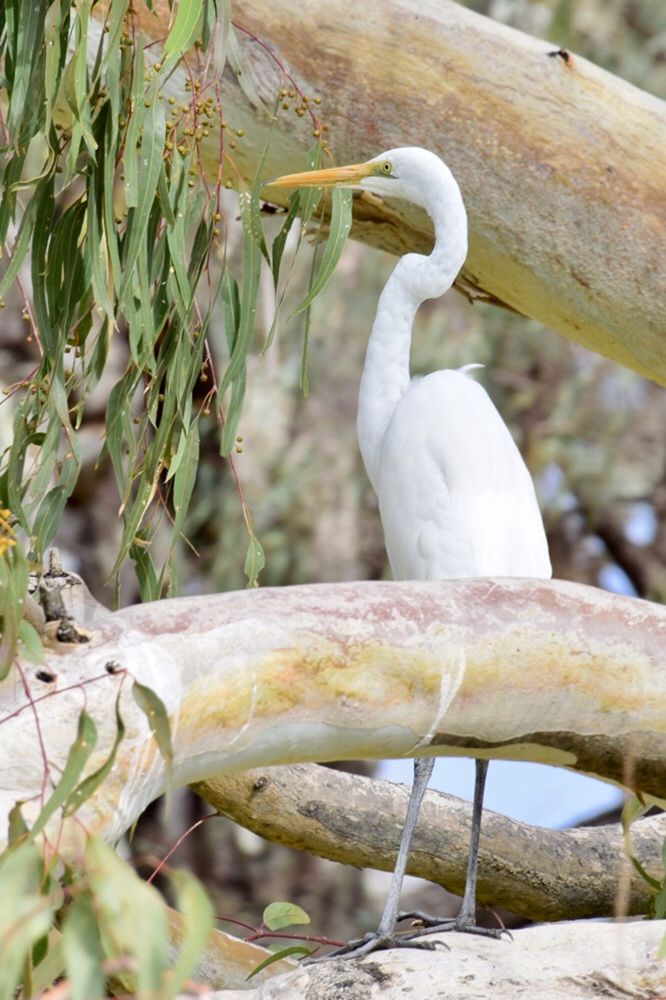
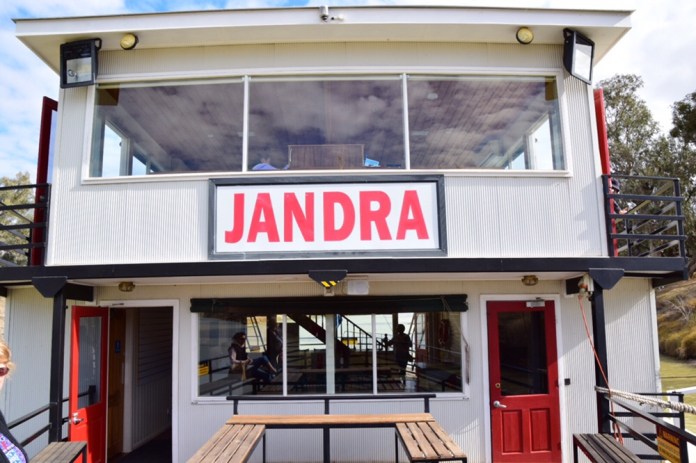
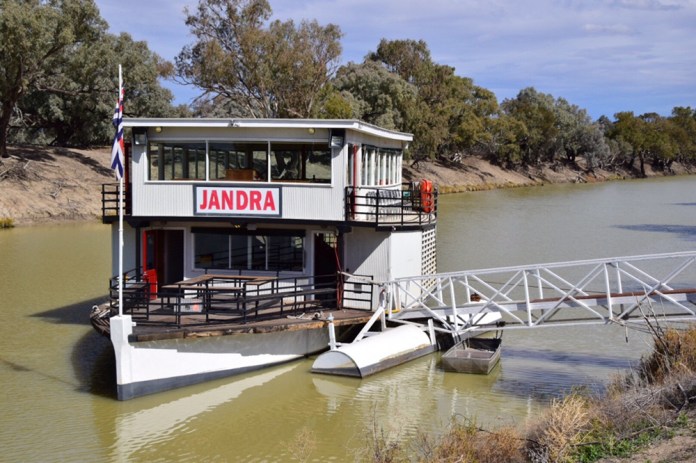
We drove back in time to board the PV Jandra which is a Paddle vessel not steamer. It is squarely based on the original Jandra from extant contemporary designs and photos. The trip began at 2pm and goes up stream, under the old bridge with a it’s central section that can be raised. This was not necessary today but when water ran high, it was very necessary indeed. The old paddle steamers of which there were 250 all up plying the Murray-Darling system transported cargos over vast distances. In flood years, paddle steamers would go up 180 Miles Overland, right to the doors of some remote stations. The catchment for the Darling goes from NSW and well into Queensland. The current Jandra was built in 2000 and is diesel-electric powered paddle steamer. Like its steam forbears, it’s very manoeuvrable but nothing like as fast. The last paddle steamer pulled out of Bourke in 1931. Railways killed the paddle steamers. We had a very relaxing cruise soaking up the stories of these amazing vessels and taking photographs of birds, bridges and the ubiquitous grey barked, squat, coolabah trees situated just beyond the river banks. The metal frame of one old paddle steamer remains on the golf course. It was marooned behind the levee banks before it could reach the main channel. The captain lived in the beached vessel for many years.
On Tuesday morning we packed up the trailer, left Kidman Camp and drove to Rose Isle. On the way we stopped to revisit the Back of Bourke Centre to continue where we left off. There is so much information here that we had to break up our study of all the exhibits.

A few presentations of local identities really impressed me. Percy Hobson was an Aboriginal man who excelled at the high jump and won the Commonwealth games, setting a new record. He stayed in Bourke and travelled every weekend all the way to Sydney to compete in club sport. He was refused attending the warm up competition in Jakarta because of his aboriginality. He was told to keep his aboriginality pretty quiet. He was heading for the Tokyo Olympics when a serious knee injury put paid to his athletic career. He was much loved and very respected in Bourke. When he set a new high jump record for Australia as a junior on his return to Bourke on Sunday evening, the whole town met him at the station.

Abdul Khan was an Afghan entrepreneur who set up camel teamsters to haul freight in the outback. He and his drivers got into some hairy situations with rival horse teamsters. He was rich and successful due to paying his drivers very poorly indeed. He was a gambler who lost his Sydney mansion in a card game. Constable Cleary was sent to Bourke in 1865 to deal with the lawlessness in western NSW. Several officers had been shot by bushrangers. Cleary was Irish and a determined man who hunted down Captain Starlight, and made Captain Thunderbolts life so difficult by pursuing him hundreds of kilometres that he moved out of the area to easier country. He never received any service medal or rewards for his undoubted gallantry due to his Irish heritage.

Right now, I’m completing this essay sitting at Rose Isle Station. A cloudy sky, a gentle breeze, a glass of wine and Jennifer sitting reading beside me. What more could anyone want or need.

Standard
Uncategorized

Katherine Gorge . Sunrise. Sunset.

Katherine Gorge cruise

We were on our way back to Alice but had one more outing to do. We arrived on Sunday afternoon at Max & Lyndal’s place then went out for dinner with them and a fellow teacher from Lyndal’s school to the “ big fig” named after the great fig tree in the middle of this outside dining venue.

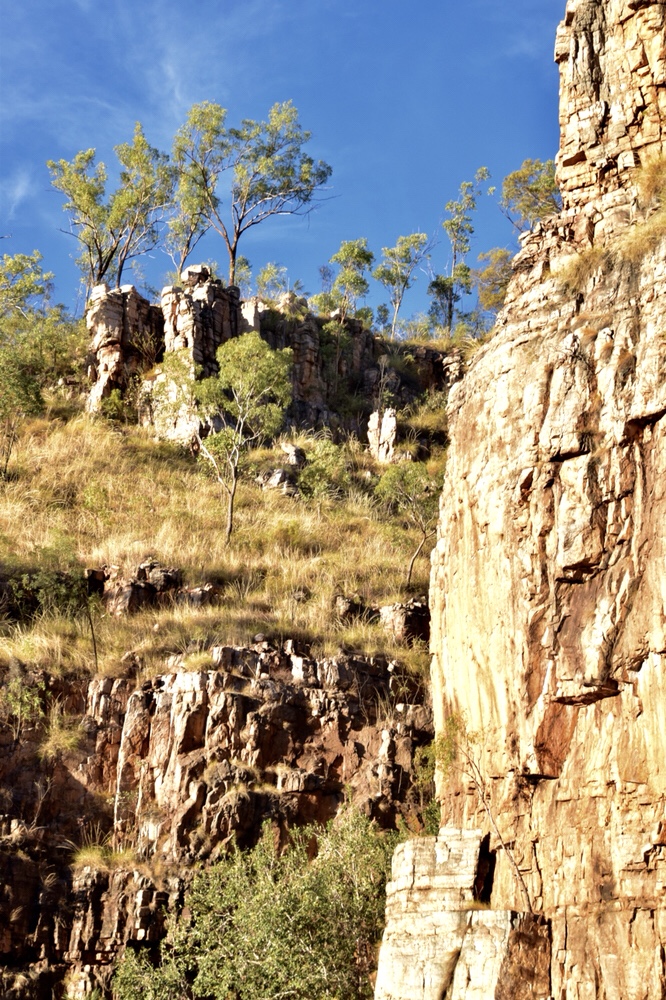
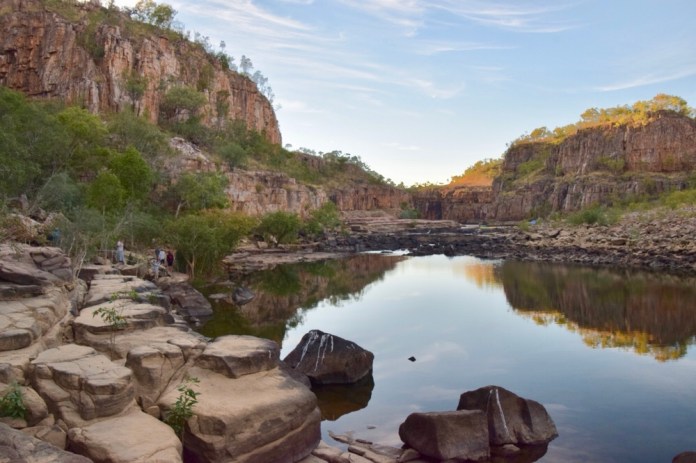
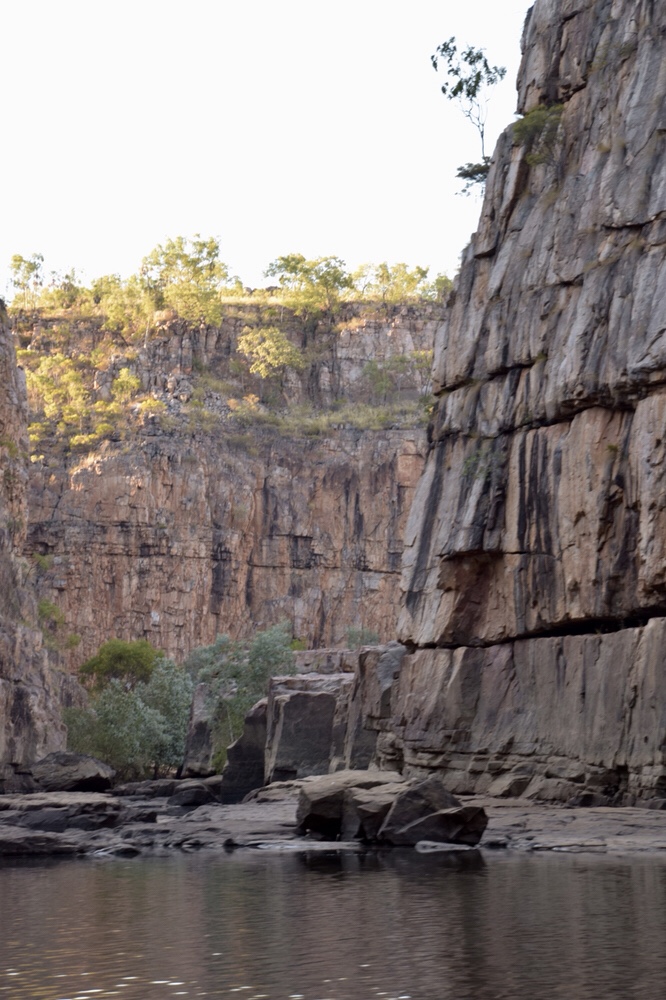
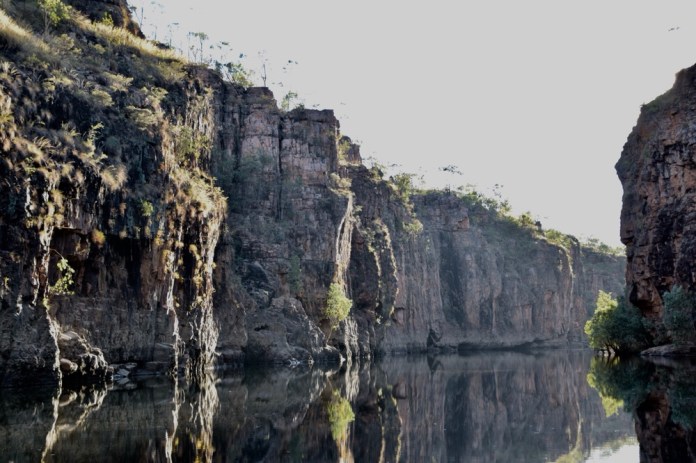
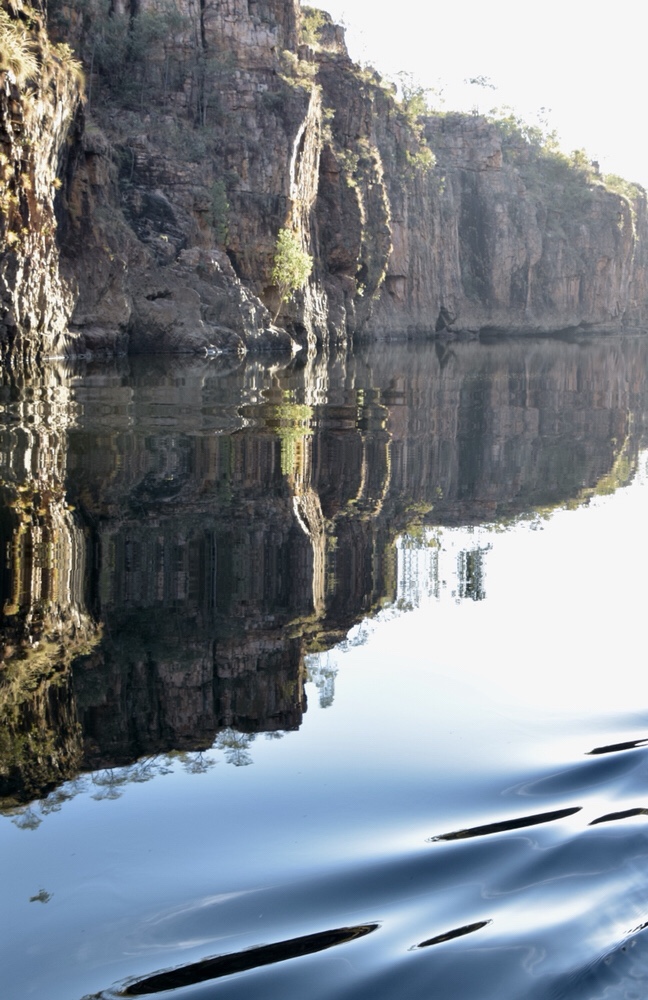
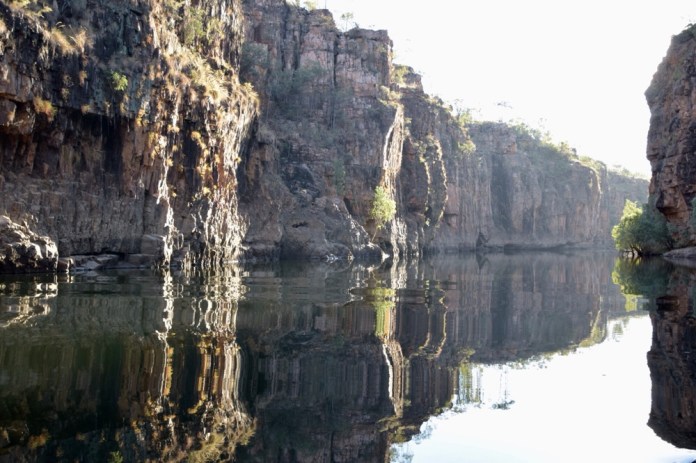
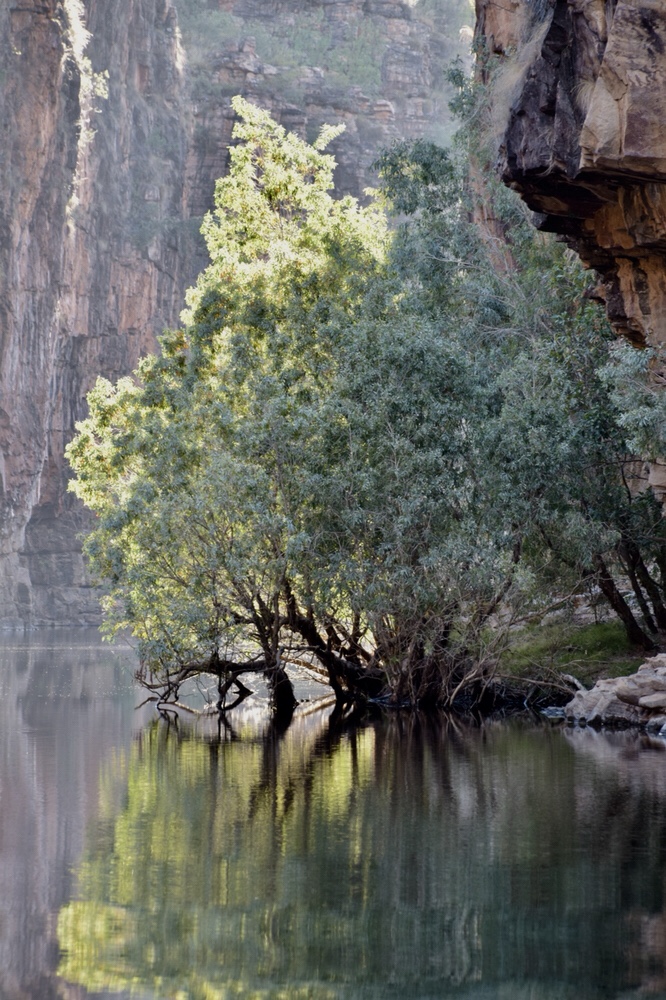
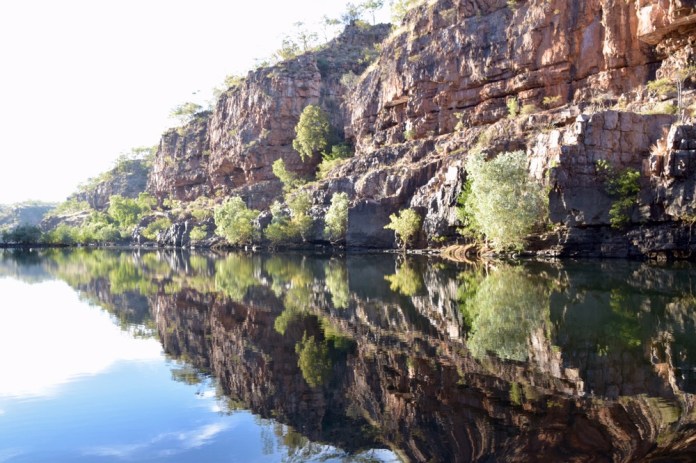
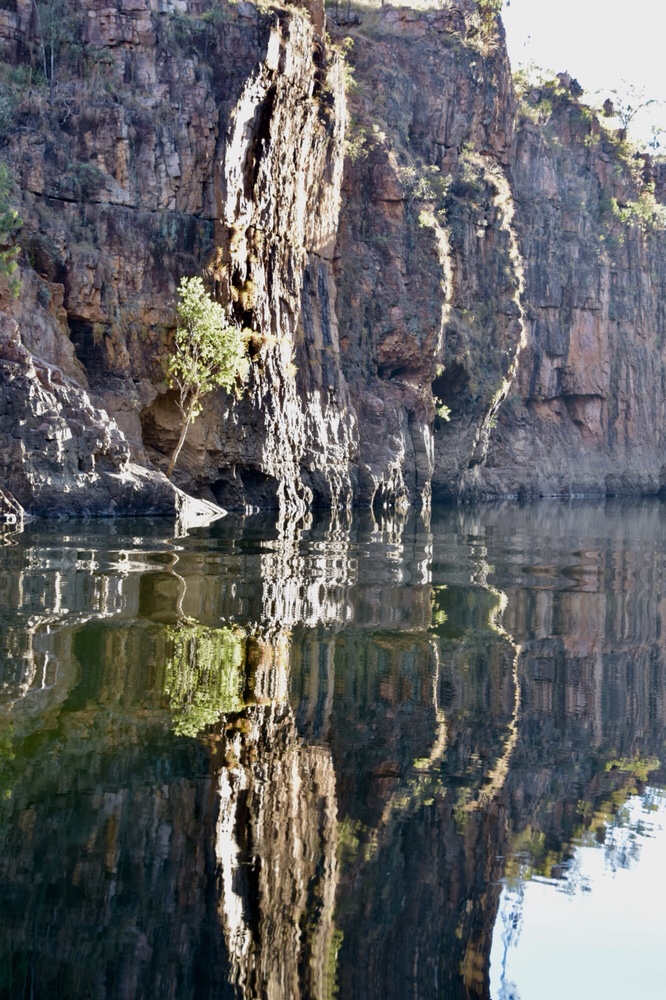
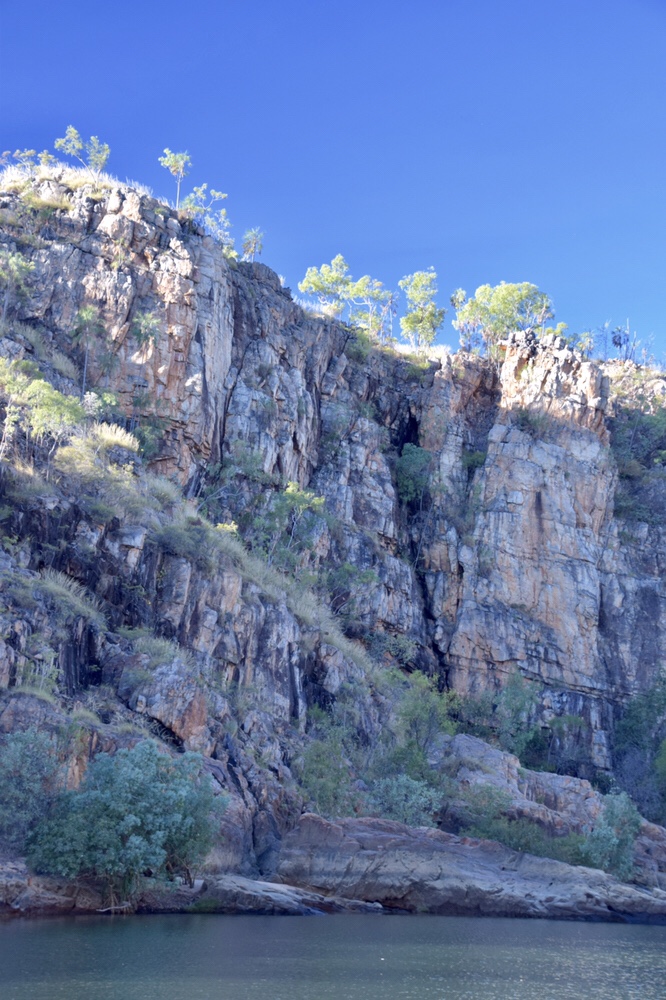
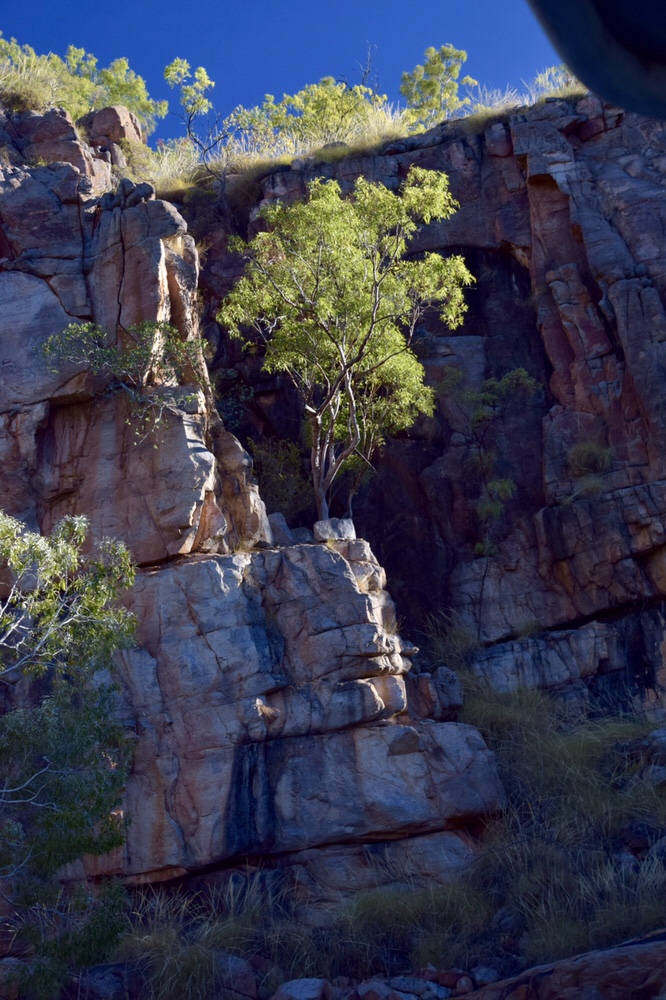
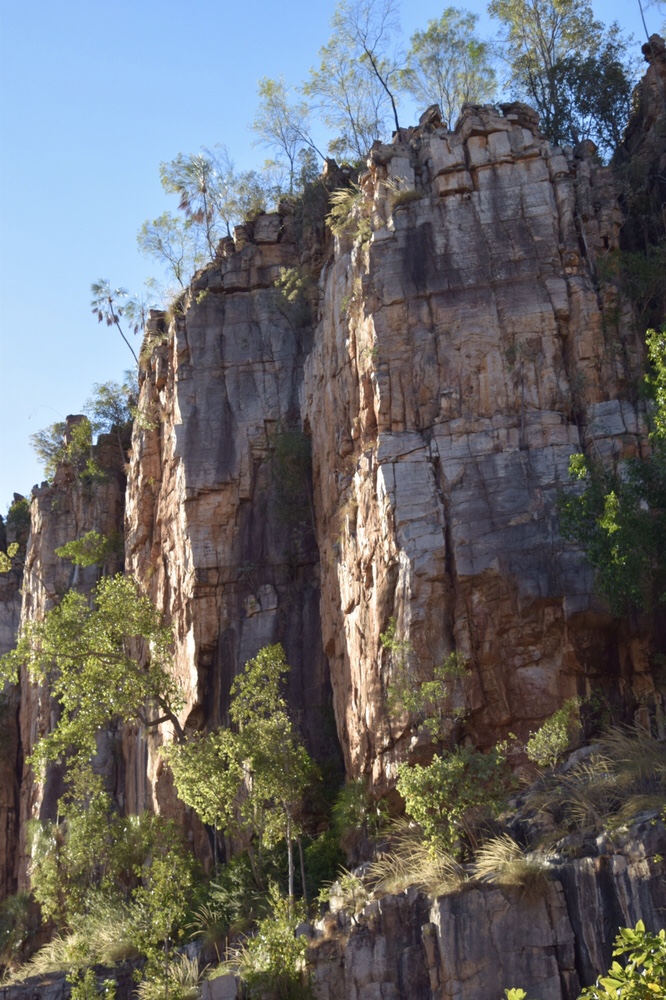
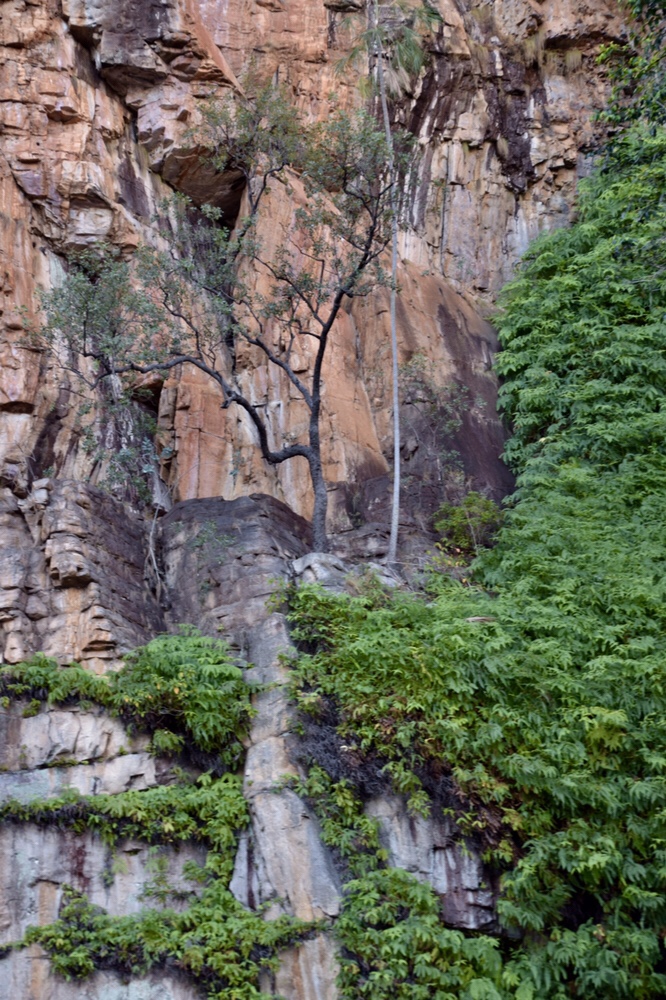
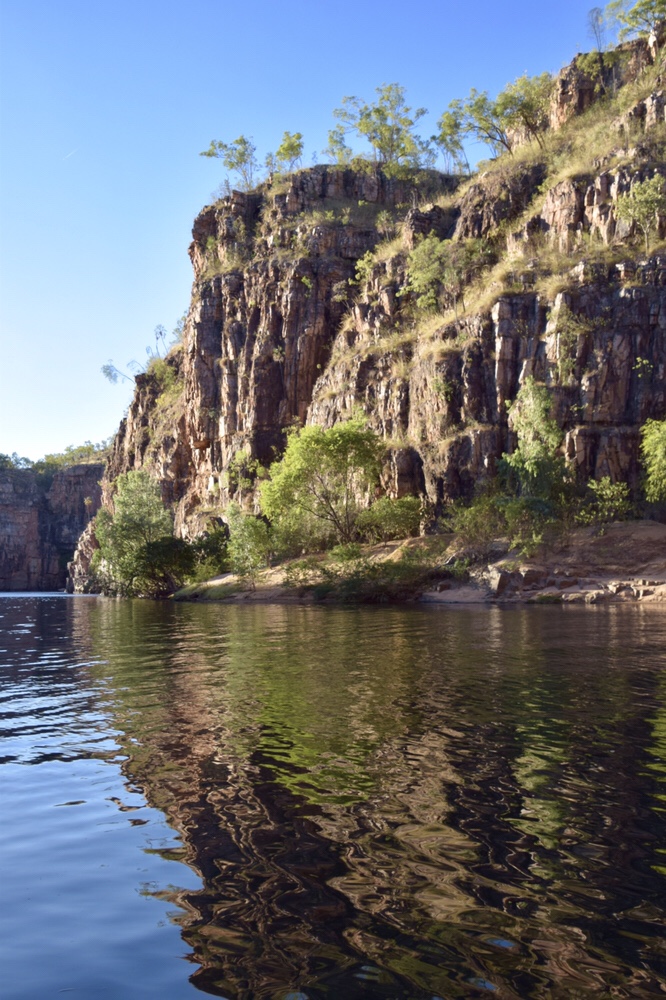
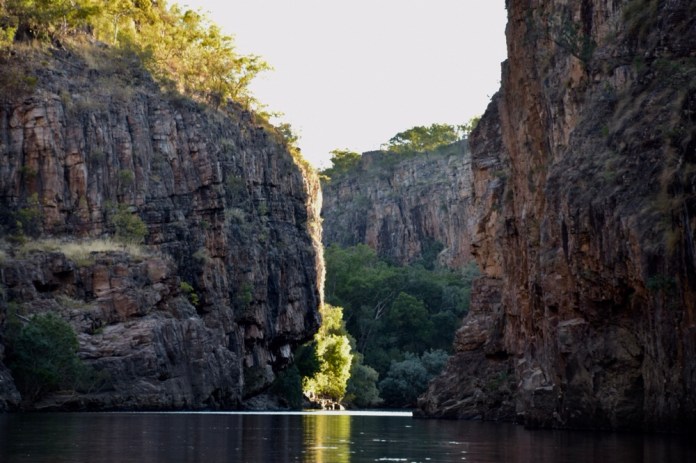
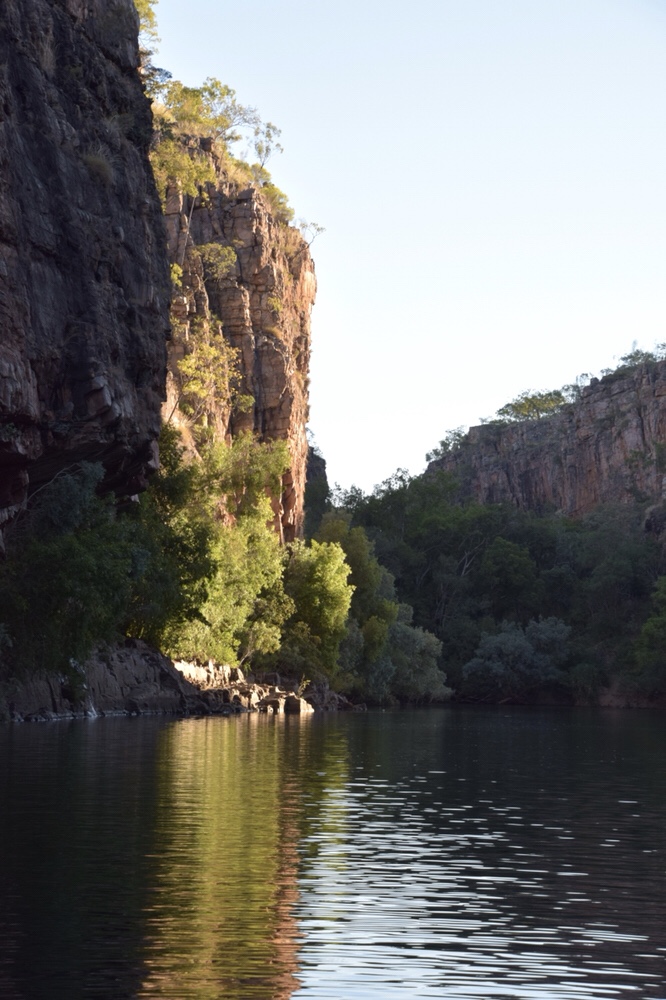
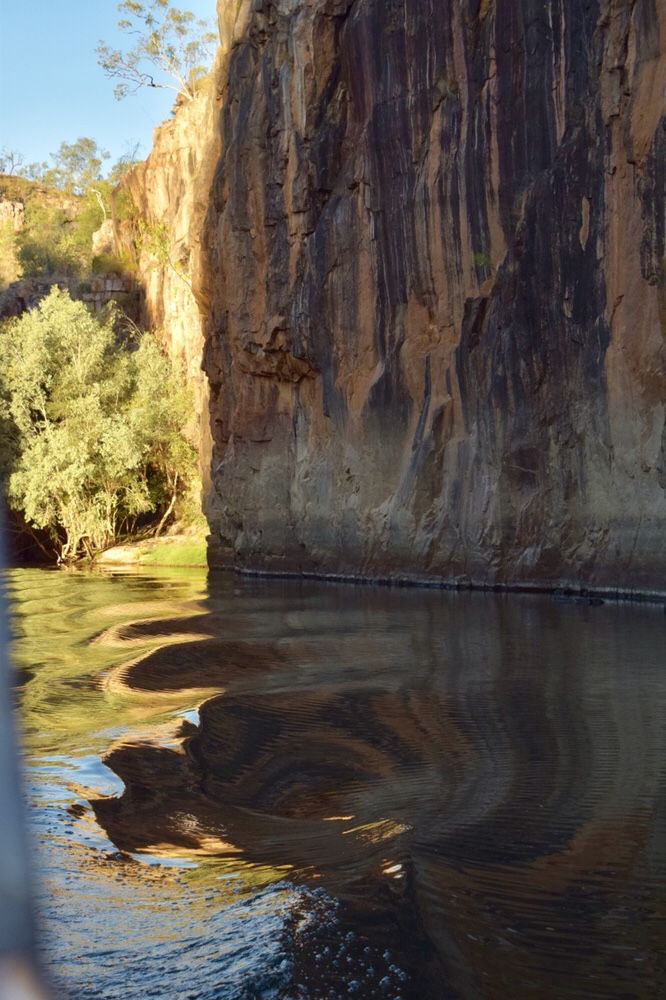
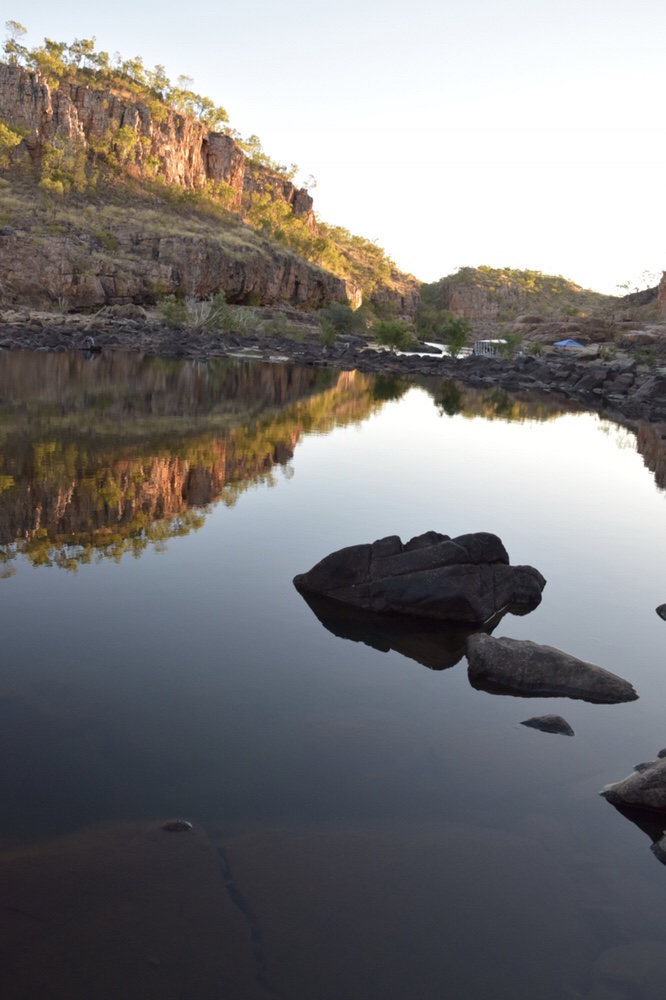
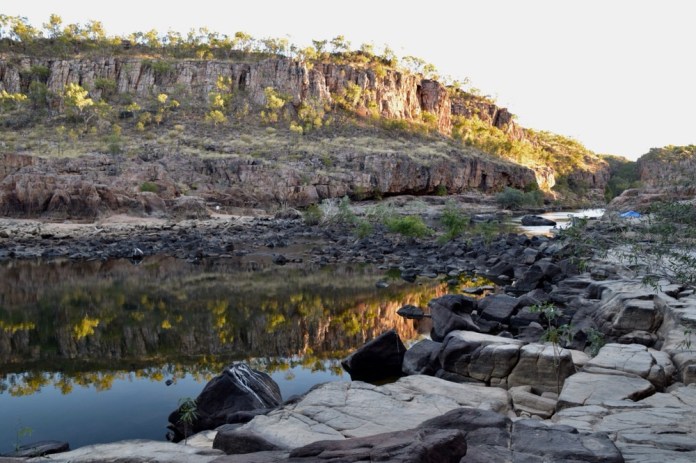
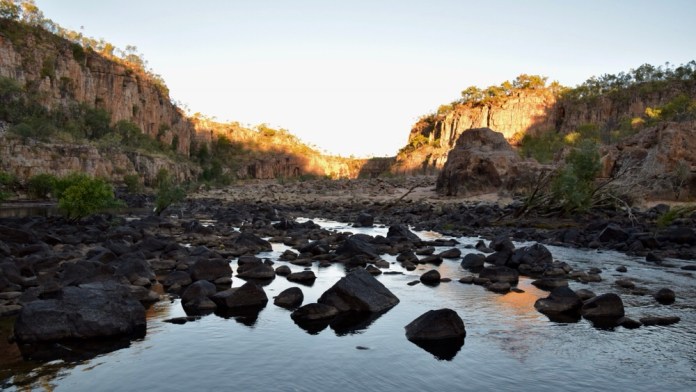
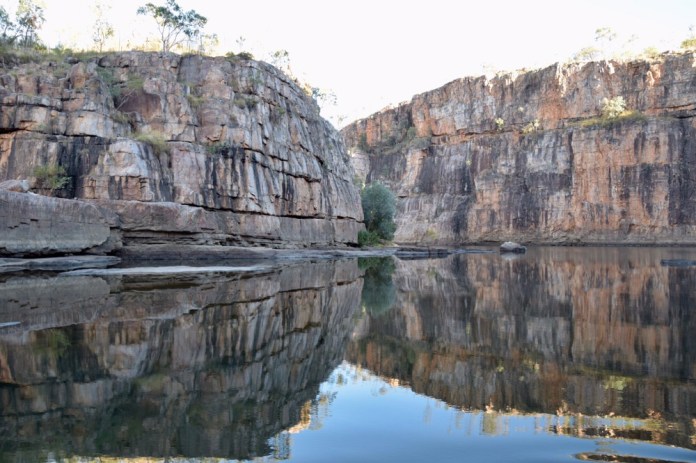
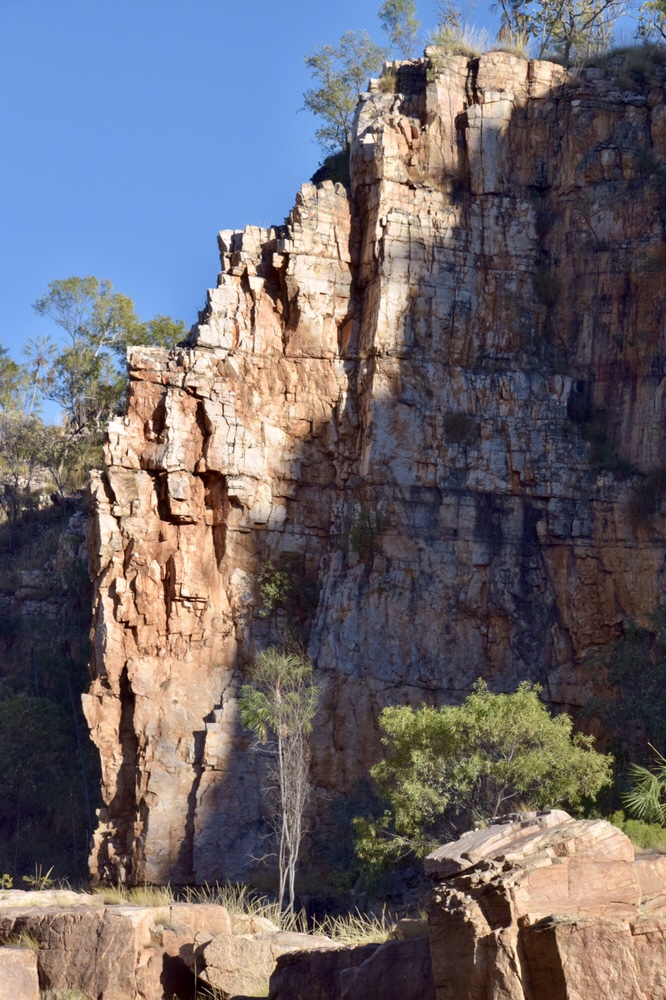
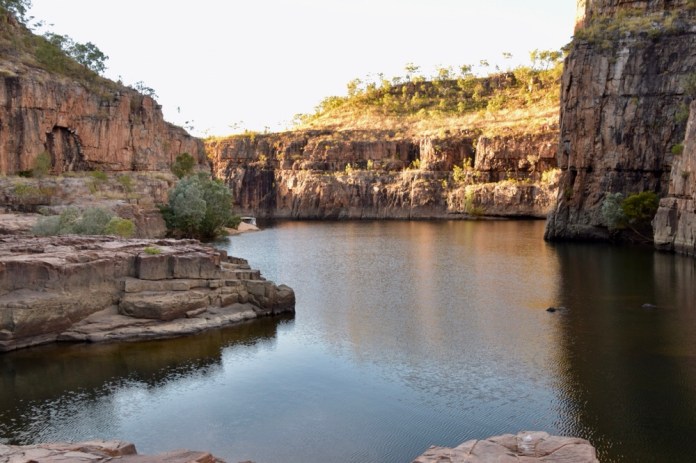
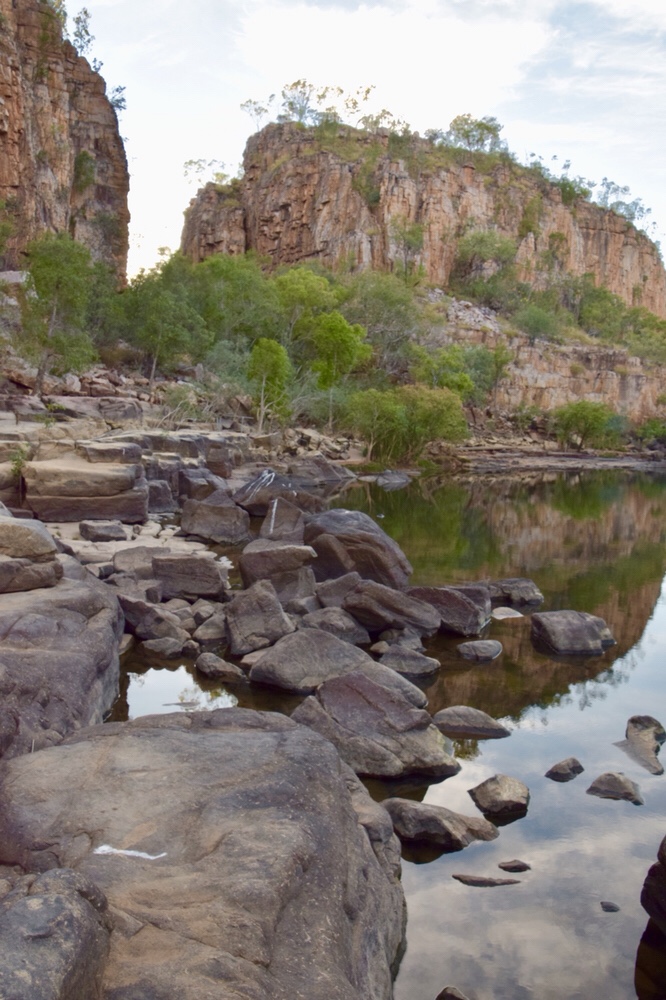
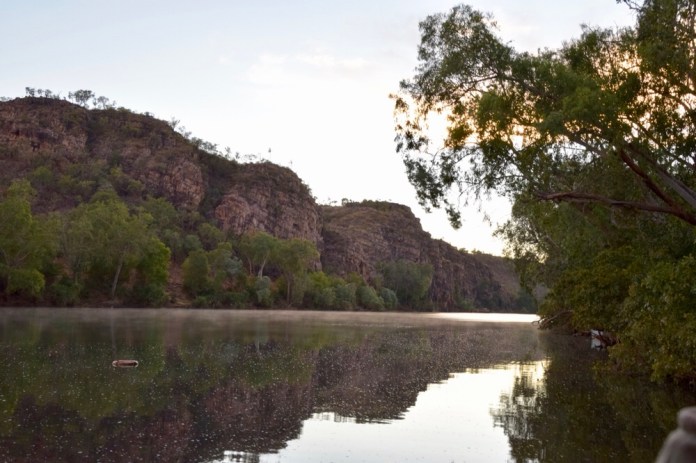
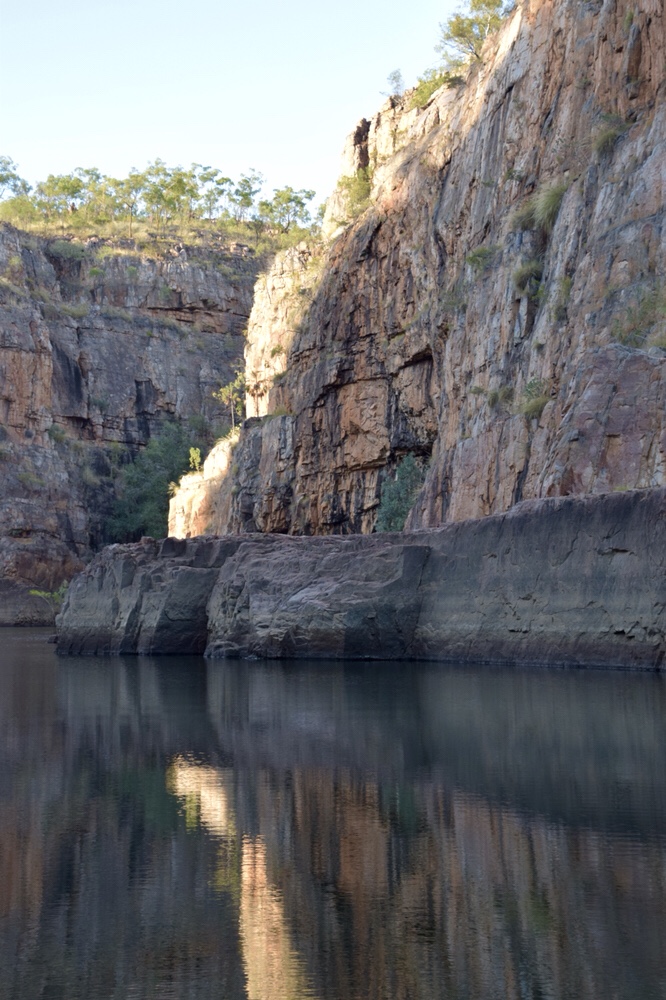
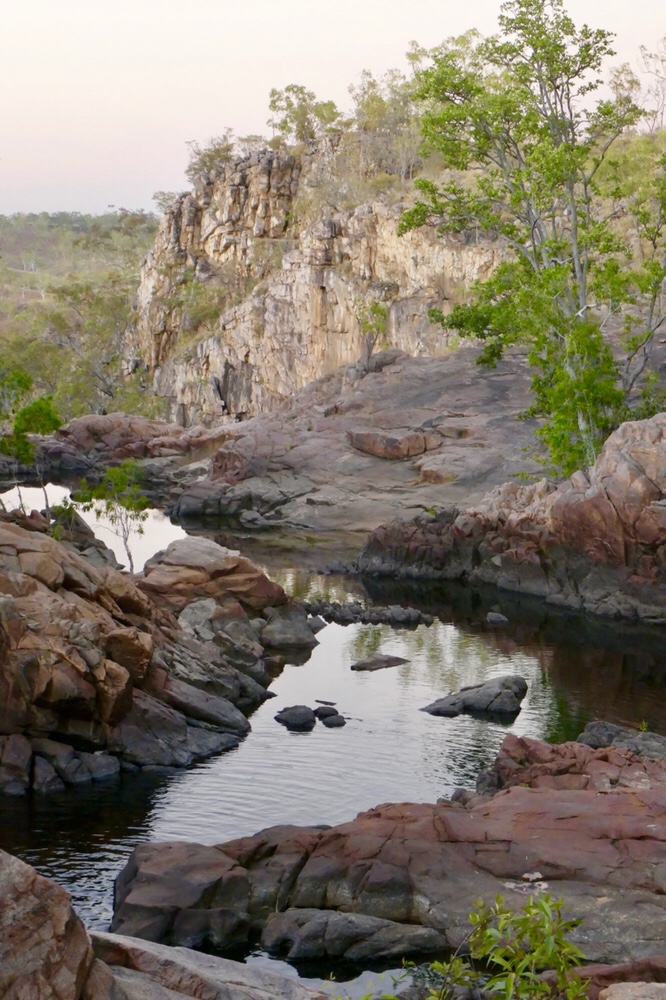
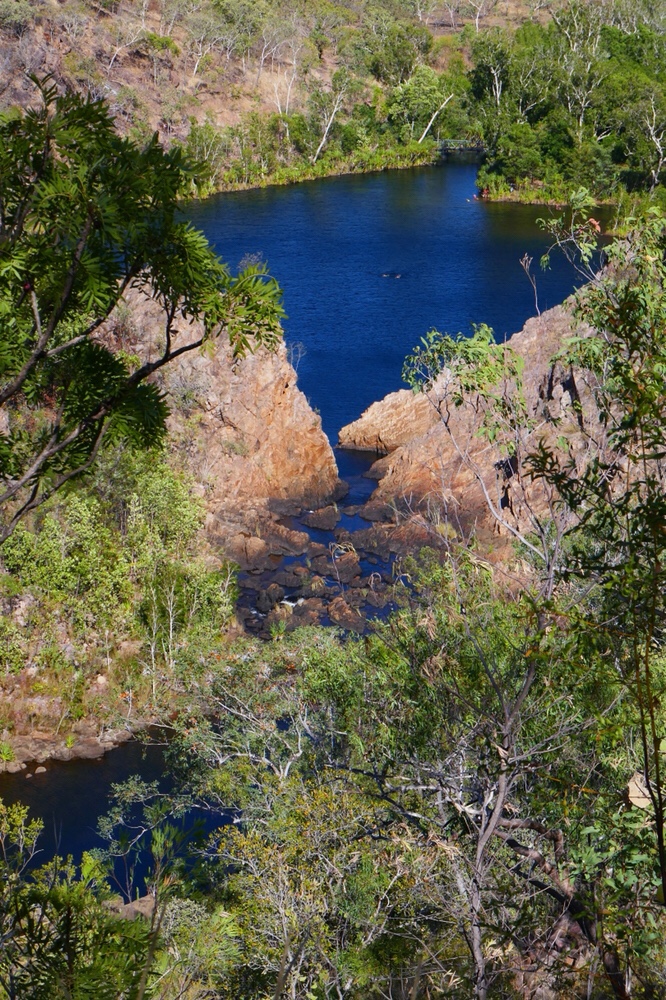
Early Monday morning, Jen and I drove out to Nitmiluk National Park. It was very dark before sunrise as we mingled with the other guests. It was a wonderful trip as the sun rose and we chugged along up the first Gorge. The boat is moored at the end of the Gorge then there is a short walk to another boat which takes us all along second Gorge. Really very beautiful. As we are the first boat, the watercourse was still, reflection sublime and the sunlight splashed through gaps in the Gorge rock cliffs illuminating stone and water alike.

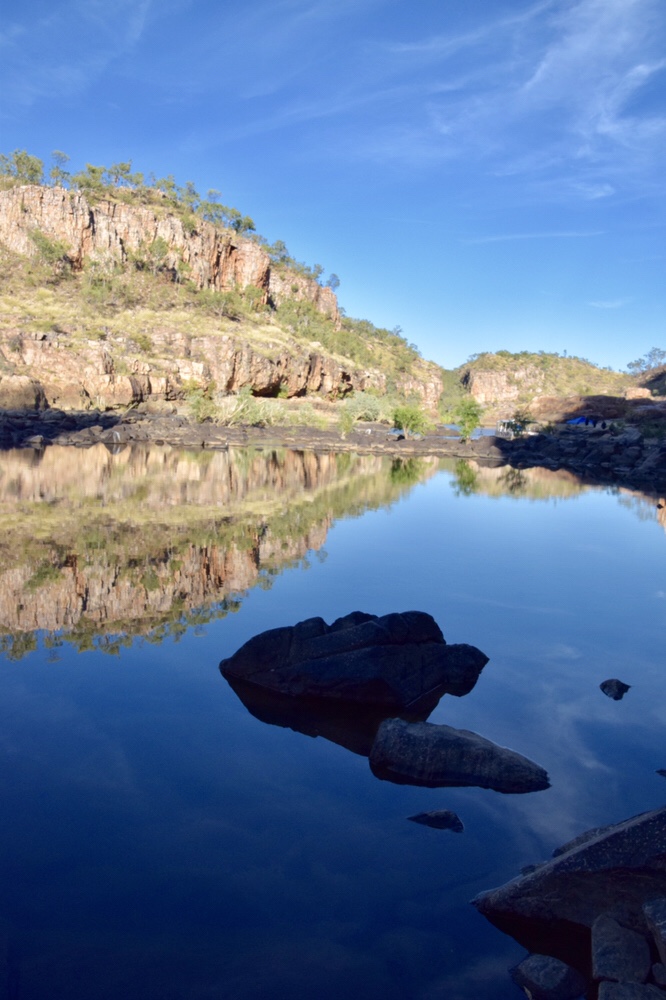
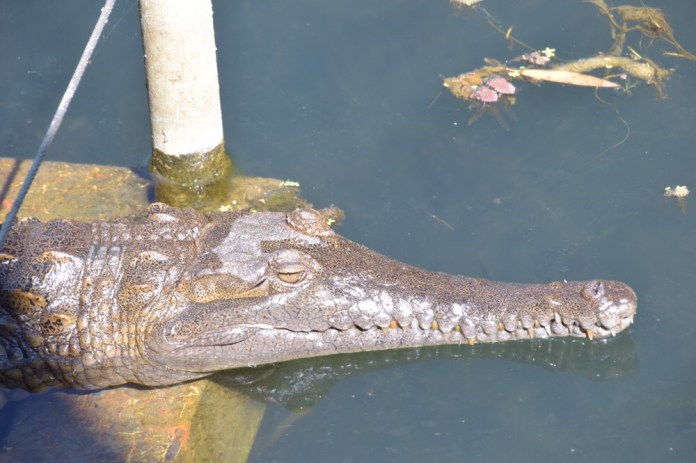
And in the evening we did the sunset and dinner cruise. This is very, very good. The light was in the western sky and it was very different. Fresh water crocodiles lazed on the sandy beaches or cruised languidly between boat and shore. The same route as the morning trip but a lazy return on first Gorge, enjoying a delicious meal including crocodile meat. It tastes like chicken which means it tastes of nothing in particular.

A wonderful day.

And a great end to our holiday in Top End!

Standard
Uncategorized

Jatbula walk

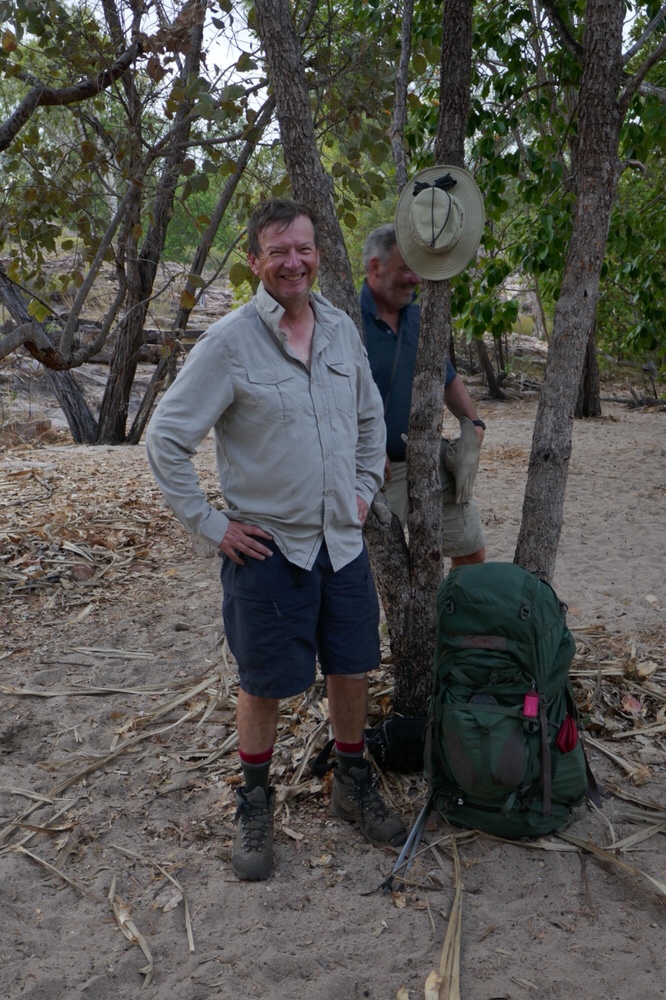
Jatbula conjures up very definite images to the bushwalking fraternity in the know. I had the privilege of completing this six day walk through Nitmiluk National park. I was one client in a group of walkers in a trip organised through World Expeditions. There were three guides, Michael, Reed and Travis, all young fit men who guided us all and helped the more nervous amongst us to cross rivers ( which included me).

This national park is jointly run by the Jawoyn traditional owners and the parks service. This walk and the fees that go with doing other activities in the park as well as monies from the excellent visitor centre, all contribute to the income stream from the park. The park provides many job opportunities for indigenous people here in Katherine.

July is the best time to do the Jatbula walk. In June the trailblazers have established the route through native greases and spear grasses, crushing the grasses. The regular burns have now finished allowing for new fire dependent sprouting of trees and grasses. The burn has also cleared the land for travel removing low scrub and the sharp spear grass. The seeds of spear grass are the main food source of the Gouldian finch. These small brightly coloured birds flies in the air in small flocks, sparkling with flashing green, red and purple, nestling together on branches of small shrubs.

The bigger trees sit aloof and only somewhat blackened on their trunks by the cool burns of this season.

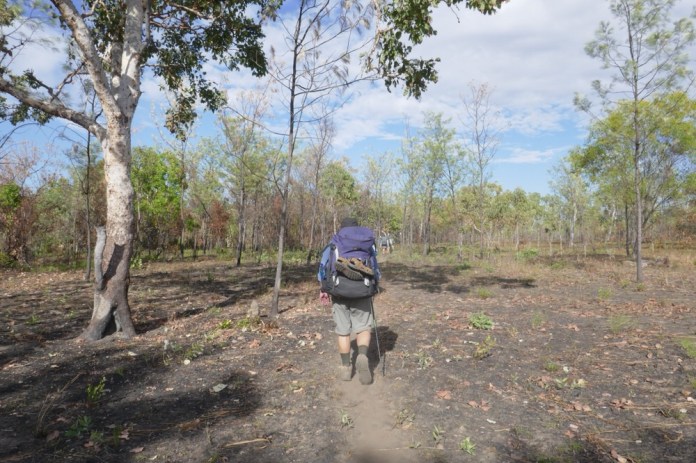
The walk begins at Katherine Gorge as a short ferry ride from the canoe ramp to the opposite bank. The first day is 9 kilometres and was hot, mid 30s, as we clambered up to the high ground. The track is generally easy to follow. There are frequent white metal markers with a blue triangle suspended from trees, either hanging down or wired to a trunk. The track is variable. Some areas have smooth surfaces of gravel that permits quick walking, others are studded with rocks, some are on rock platforms. These sections get very hot underfoot even through my boots. The pounding of walking with a heavy pack on solid ground or rock gave me bruised feet. Each morning it was a bit hard to start but the ache settled down enough to enjoy the walk.

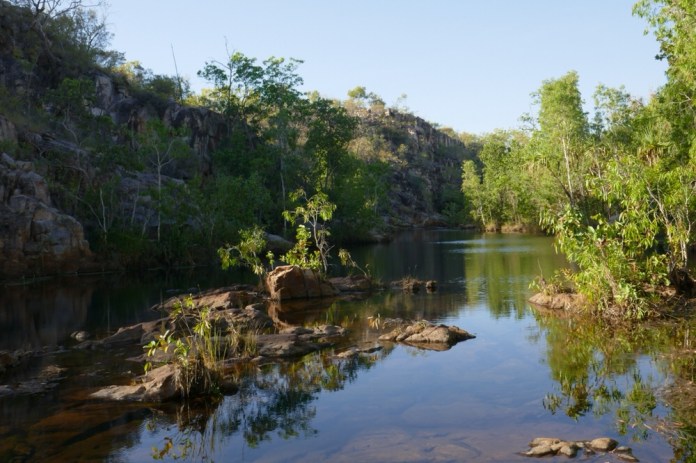
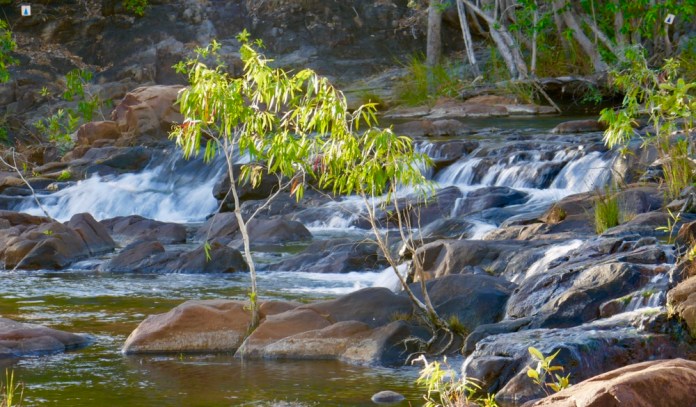
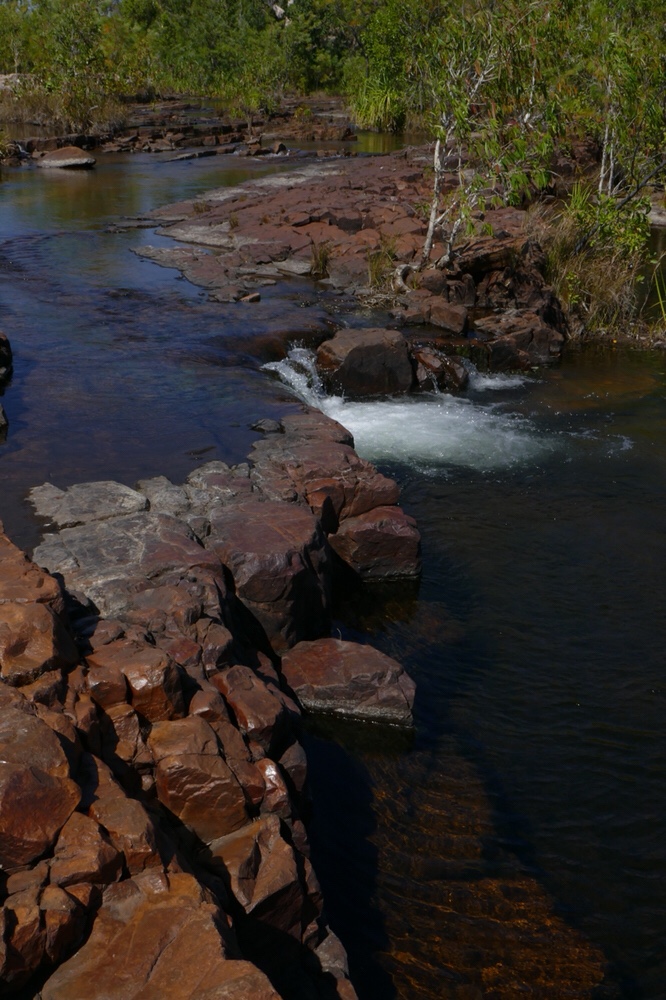
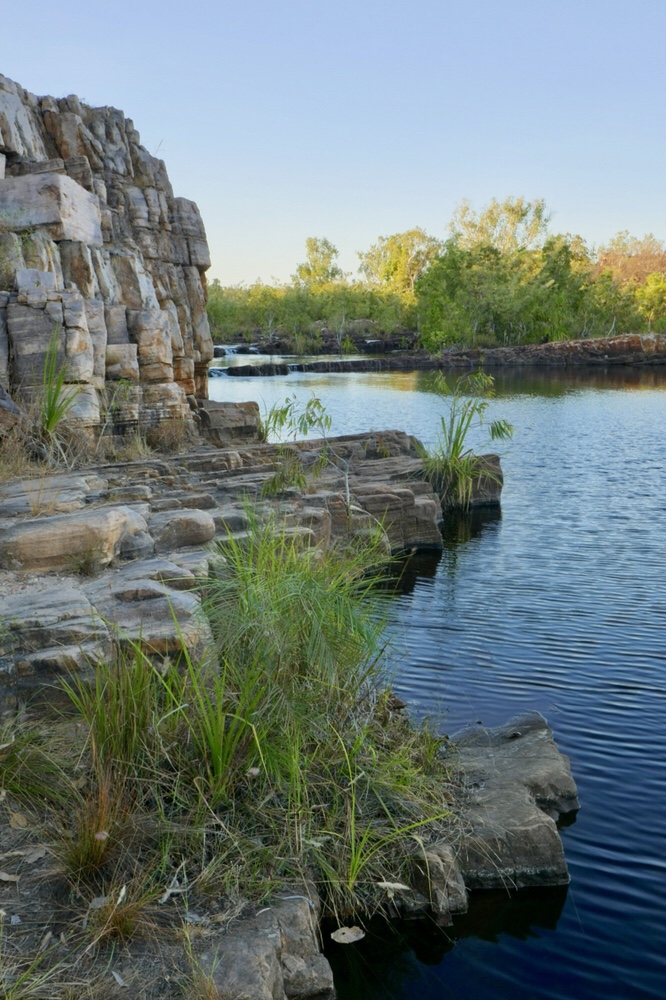
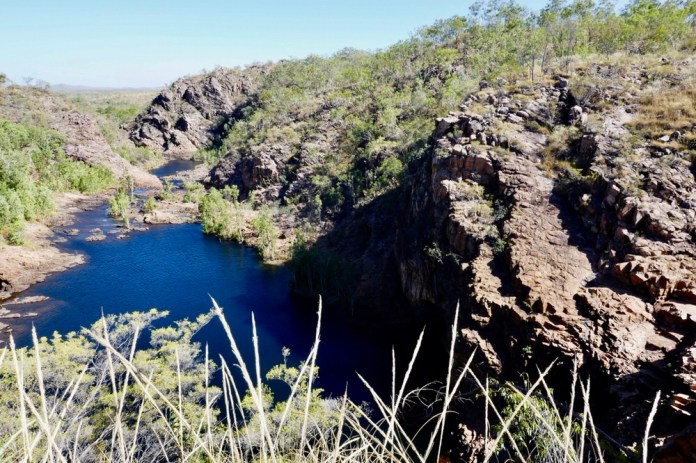
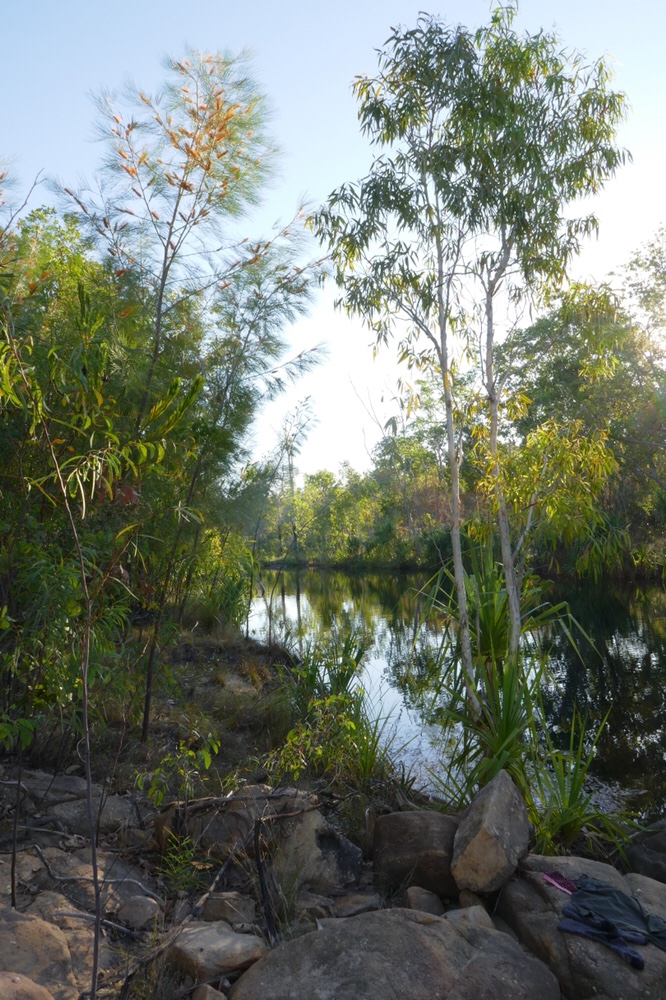
Each day ended by camping near water: waterfalls, rivers, waterholes and billabongs. The water is very clean and there were no problems about drinking it. After a long hot walk it was refreshing to cool off in this water. The water comes from Springs. Rain falls in huge quantities in summer, and drips through the porous soil and rock to meet an impervious shield of stone, the water can sink no further but bubbles and percolates along to emerge as fresh springs. As the water never travels deeply, it’s cool and crisp.

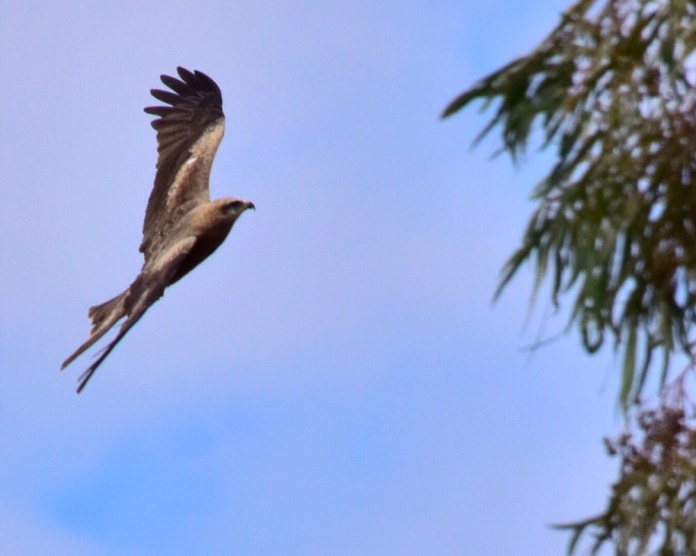
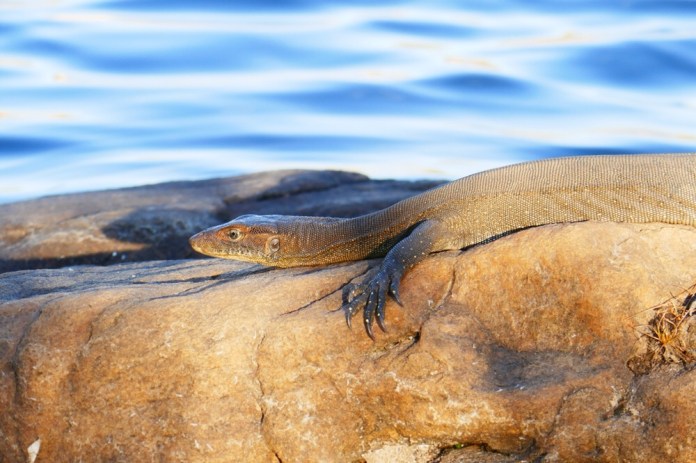
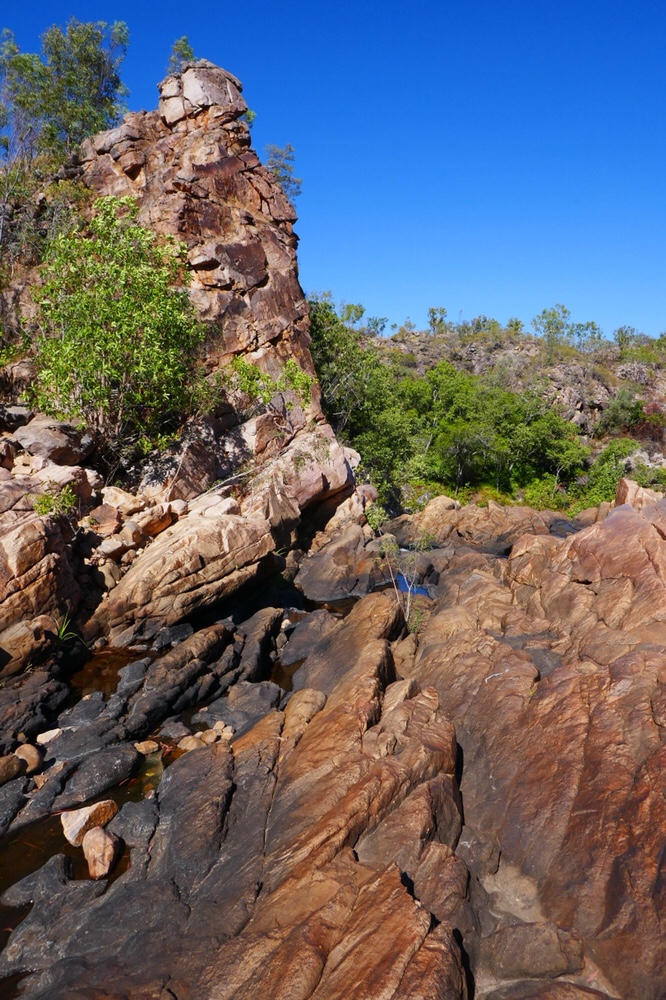
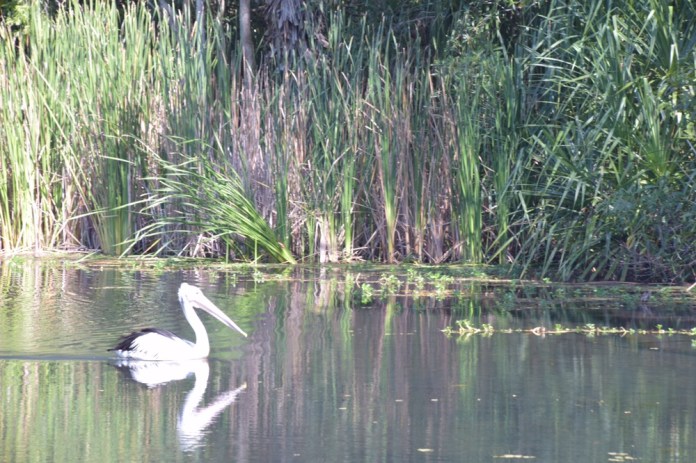
Other inhabitants enjoyed the water as well. We saw Rainbow bee eaters, I saw a forest kingfisher, whispering kites and herons hunted their respective prey as well. A water monitor lay on a rock near one waterfall while nearby a brown snake bathed in the sunshine. All this while we were all splashing around in the waterfall landing pool. Some waterfalls were tall, all were beautiful. The golden sunlight at dawn and again dusk lit up the adjacent rock face as water plummet down narrow slots.

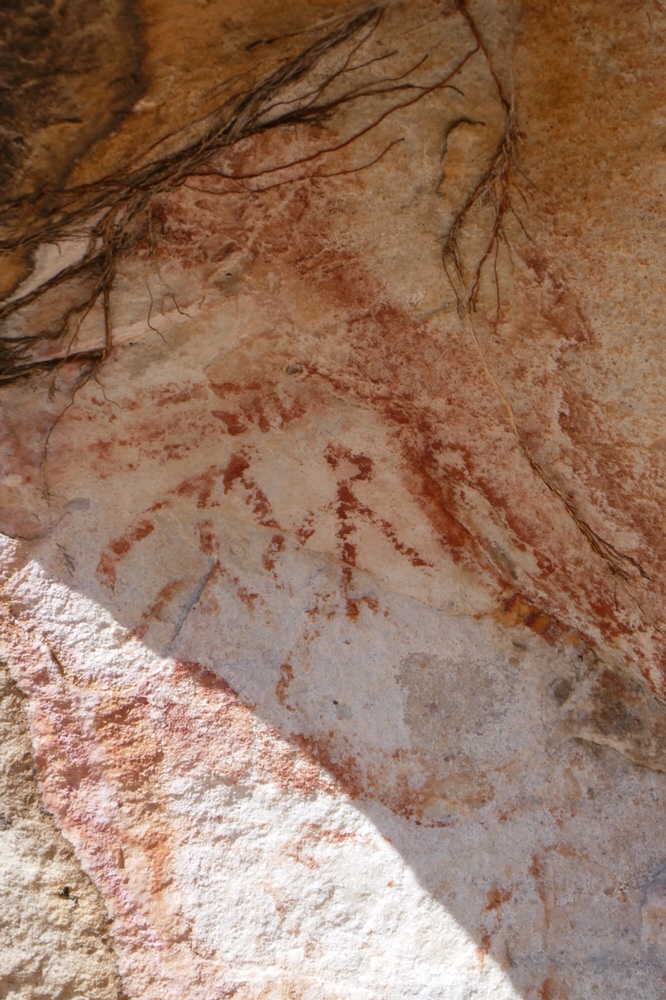
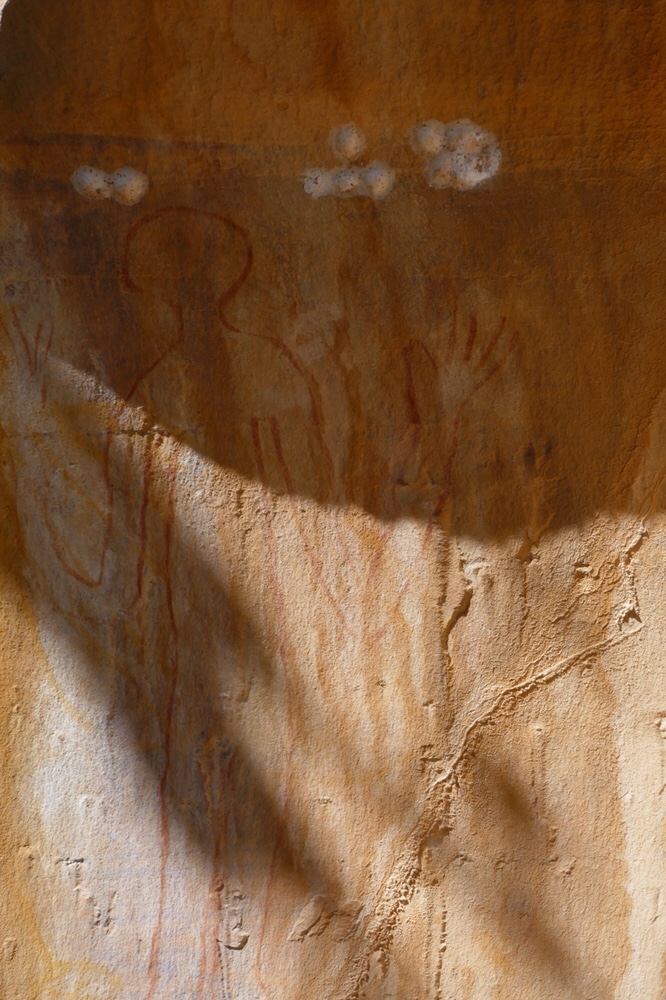
Some of the highlights were visiting very remote rock art painting sites. The amphitheatre is a steep climb down into a wide gully and on the smooth face of the cliff, are painted crocodiles, barramundi, kangaroos and nine fingered bad spirits; red and white and and orange pigments were used to create these lively apparitions.

In the evening, I could stand on the bank and look down through the water. Perch and turtles were swimming, the perch with grace and purpose, while the turtles flopped around as if going forwards was a hazy concept, and beneath them, fresh water yabbies and small crayfish scurried on the bottom rushing into shadow as torchlight penetrated the depths around him. Small red eyes on the water, that’s freshwater crocodiles.

Dinner and meals were different every evening. Pesto spaghetti, cous cous, and many more with an emphasis on the vegetarian menu a sits hard to carry meat in these hot conditions. The guides would gather up the food and utensil bags were all helped carry to assemble meals. We would be setting up our insect nets, hanging them from cord strung between trees. On the ground, a simple tarp, then sleeping mat and sleeping bag. The sleeping bag is rated for mild climates. There is no way I could have justified using my alpine bag.

Looking upwards at night, the branches of the overhanging trees resemble delicate fingers with stars silhouetted far above them. The stars are cool and bright in the otherwise dead black sky at least until the moon rises from the east. I pulled my beanie over my eyes to shield them from the glare. The evening started warm but at about 2am it gets cool and I zip up my bag.

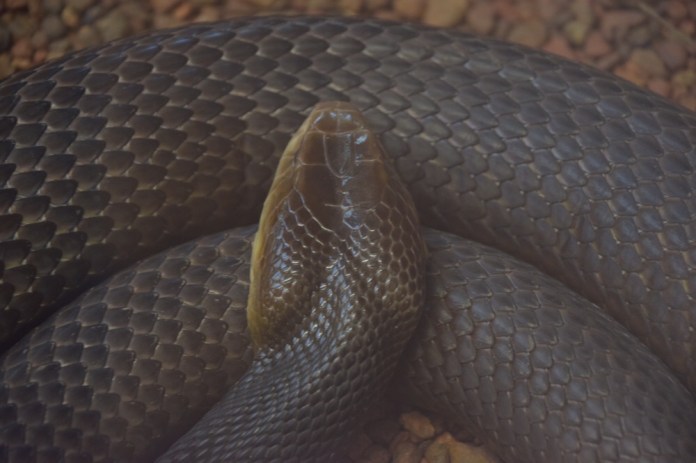
Going to the toilet can be interesting. I’m glad there is a no alcohol policy ( that’s a personal one) on these walks as the climb to the facilities can be steep and uneven. One evening death adders were coiled beside the steps leading up to the door. I developed retention for a few hours. They are composting toilets so water can ever flush down into the nearby streams and water holes. We don’t use soap or detergent even washing dishes to avoid contaminating the natural environment in any way. The numbers are very limited on the walk with only 13 people allowed per day. Most of them walk with walking companies but three people can go fee style. The competition to get these three spots is intense and many people have missed out for years.

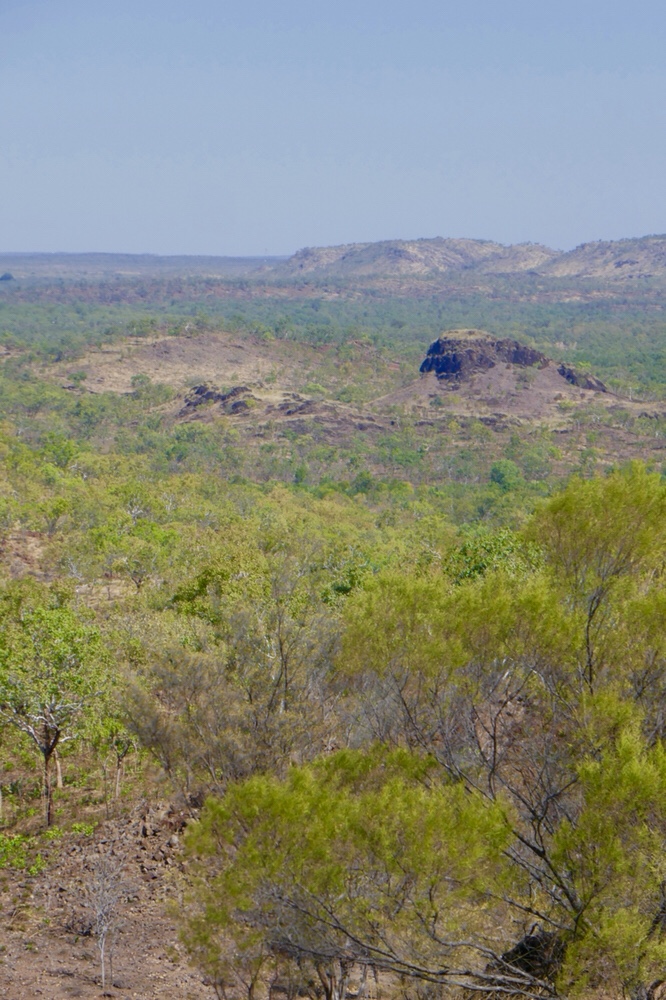
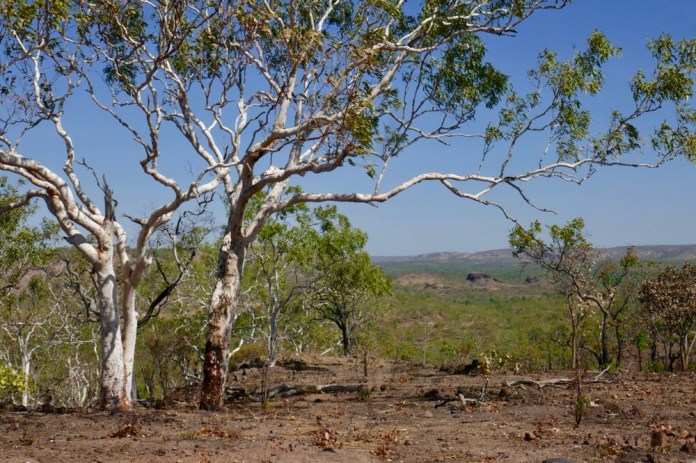
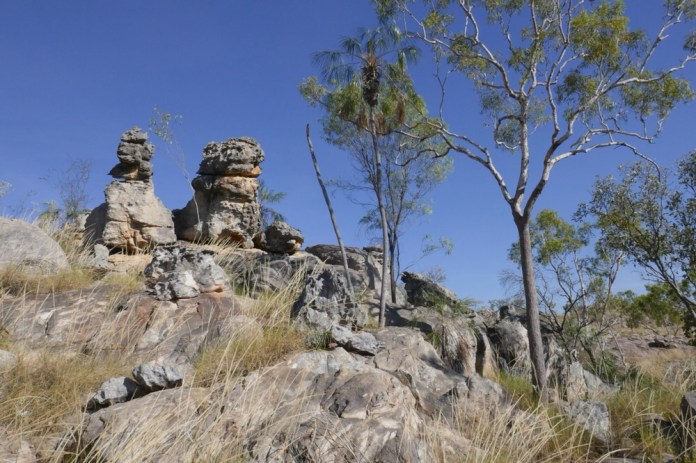
The tracks are different each day and within each day. Some sections are exposed and the sun beats down through sparse tree cover, other sections are shady with gums, salmon gums, wattles, pandani and ghost gums. We did not see any wallabies or kangaroo at all. We saw ghost bats flitting and squeaking above us in the dark of evening. The region was not lively with animals during the day but at night I could hear the howling of dingos. It’s a plaintive noise from the skyline that hovers over the forest. Some dingos came through our campsite early one morning to flee when disturbed by our movements sleeping.

The other walkers were my vintage and mostly retired. They all enjoyed the walk including one man who thought it was going to be a day pack walk. Well it was not. The packs were initially 18kg and were finally 16 kg as the supplies were used up. It was good to share jokes and stories with the other fellas. Three ladies did the walk and enjoyed it just as much.

Most clothes were rinsed when we cooled off in the streams and waterholes. One walker placed his wet underwear in a tree to dry off over the remaking afternoon. To his horror and much amusement, green tree ants infested them and despite generous bets, he could not be persuaded to put them on.

The walk ends at Edith Falls. It felt strange to be amongst so many people again. Kids carrying floaty toys, mums in bikinis and Dads with snorkels. I felt out of place with my huge ruck sack, grubby Tilley hat and dusty boots. The walk is terrific, and it’s whetted my appetite for more adventures in the outdoors.

Standard
Uncategorized

Museums in Darwin

On two seperate days we visited museums, the first was the Northern Territory Museum and Art Gallery and the second, this was the Darwin Military Museum.

The Northern Territory Museum is perched on a stretch of coast with beautiful views of the water. It is a modern museum with a strong natural history section with many fossils, especially Miocene. In the Miocene (5 to 15million years ago) Australia was a thousand kilometres further south than the present day. The cooler, wetter conditions meant there were year long filled rivers, extensive numbers of all season billabongs and a spectacular series of parallel mountain ranges in central Australia of which Uluru is the remnant. The marsupials of this time included some very large animals such as Sabre tooth marsupial lion, marsupial rhinoceros and diprotodon, an immense wombat. There were many fish in the billabongs and rivers. It was a time of abundance. Many of these fossils are on display at the museum.

There is wonderful display about the foundation of the NT. The Northern Territory was the original Northern Territory of South Australia, that’s why John Mcdouall Stuart was funded by the south Australian government on his six trips to determine the route for the Overland Telegraph. But for every big idea that succeeded many more failed and South Australia was losing interest in its northern half. Hardly any white people, let alone white women came to live in Darwin ( it was called Palmerston then) and the population was made up mainly of Aboriginals and Chinese settlers who were involved in mining, opium dealing and gambling. The new federal government decided this region was going to be taken over by non white races and this was unacceptable. Partly due to racism but perhaps also because they feared the military consequences of having a white minority so far from the southern and eastern states. The federal government paid in todays money about 700 million dollars to take over the Northern Territory. The Feds had big ideas about mining, railroads and farming especially cattle. Not a lot came to pass, the heat, the isolation and the difficulties of transport and communication with local and overseas markets eroded the profitability terminally. A giant meat works collapsed financially after only a few years. The restrictions on drinking included increased prices, gambling was limited. The locals thought that this was a sorry time for the territorian.

There is a fascinating and moving display about the 1974, Cyclone Tracey. This was a small cyclone generated in the Timor sea as hot water laden air and cold currents of water and air met pricing these terrible tropical storms. Small though it was, Tracey was powerful with all its energy concentrated in high velocity winds up to 260km per hour. The lazy Darwin buildings made of light timber and corrugated iron roofs were destroyed but also buildings of brick and mortar like the refurbished town hall were destroyed. Hippies living on a beach were wiped out, washed out to see on giant storm tides. Boats were sunk with crews aboard. Two boats were found years later on the sea floor and it looks as if one was trying to rescue the other.

About 260 people were killed in the Cyclone but unlike Hurricane Katrina, the government sent in support immediately and evacuated 36,000 people in five days.

It was true devastation on an epic scale.

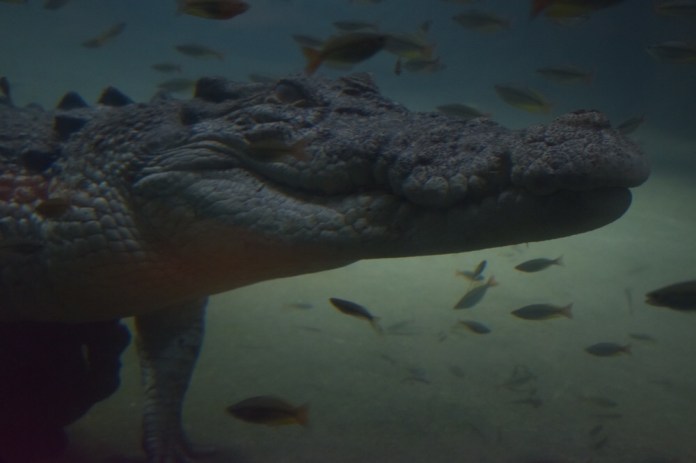
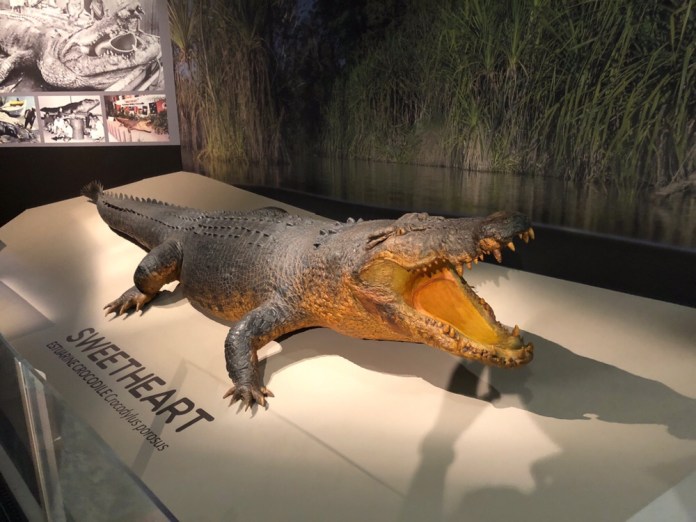
In a passage is ” Sweetheart” a stuffed crocodile 4.6 m long. It was a crocodile that went rogue attacking fisherman on the Alligator River. Enough was enough after one more attack, and it was captured. The plan was to transfer it to a crocodile farm for breeding but unfortunately the sedation was too strong and it suffocated when its palatial folds collapsed thereby blocking its airway.

There are boats in the museum. These are traditional boats used by Indonesian sailors, Tiwi and Melville Island canoes and even some boats used by Vietnamese boat people.

It’s an excellent museum with abundant information about the NT, it’s history, it’s native wild life and its people.

The Darwin Military Museum is on the outskirts of Darwin. It is an excellent display about the military history of Darwin especially informative about the bombing of Darwin in 1941.

The crews manning the defences of Darwin were conscripts and were badly trained, looked down on by the overseas serving troops and were thought to be be lesser men then most other soldiers. Anyway, they fought very bravely over 62 bombing attacks over the Northern Territory. 262 people were killed on the initial attack, many wharf workers were killed as the port facilities were attacked, all the post office staff were killed, nearly all the crew of the USS Peary (90 men) were killed as bombs hit the magazine and blew up the cruiser. Many other ships were sunk or badly damaged. The presentation at the museum included audio recordings of the survivors, it was very moving. The bravery of the chief nurse on the Manunda, a hospital ship that survived the attack then collected as many survivors as they could.

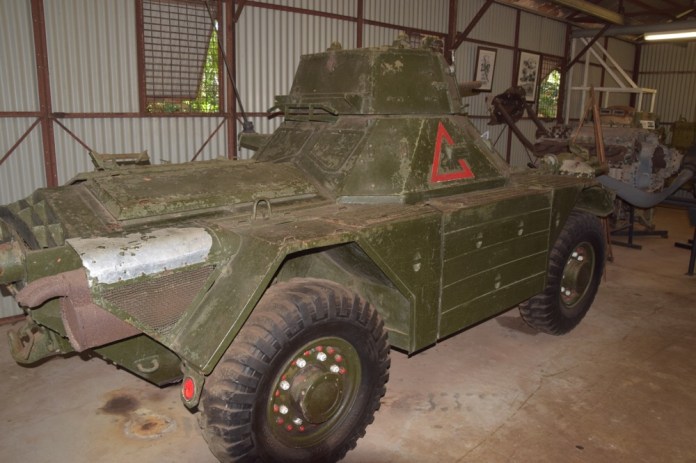
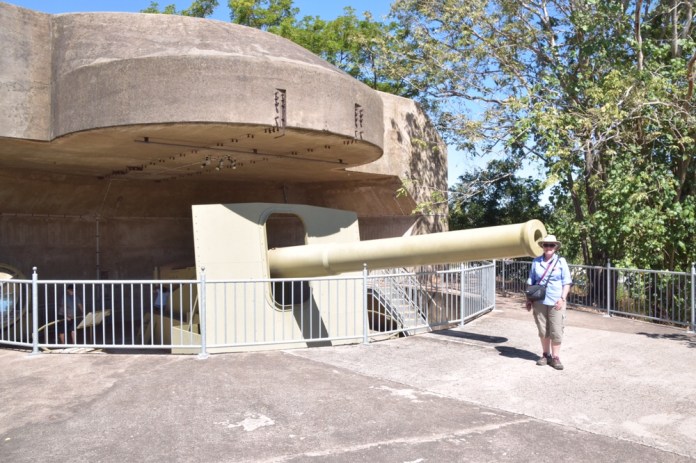
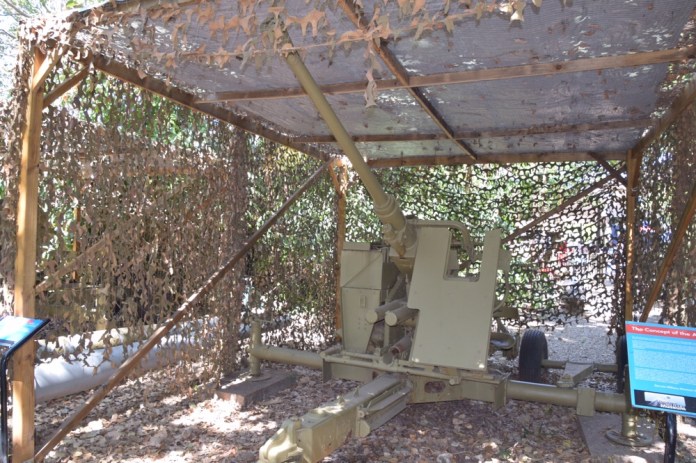
The museum has displays on WW1 and 2, Korean War and the Vietnam war. All well worth seeing. There is also a giant cannon for attacking shipping. Obsolete before it was finished as war took to the air.

Standard
Uncategorized

Sunset cruise Darwin

On Wednesday evening we went to Crustacean for dinner. We had a table overlooking the end of the jetty. The Arafura Sea was calm and grey beneath a smoky sky. Fires and smoke coming from burn offs in west Arnhem Land across Darwin harbour. I had crumbed barramundi and Jennifer scallop Mornay. A very pleasant meal. It feels strange to be dining outside in winter and not wearing a jumper and down jacket. After darkness fell, the cruise boats returned lazily to the dock.

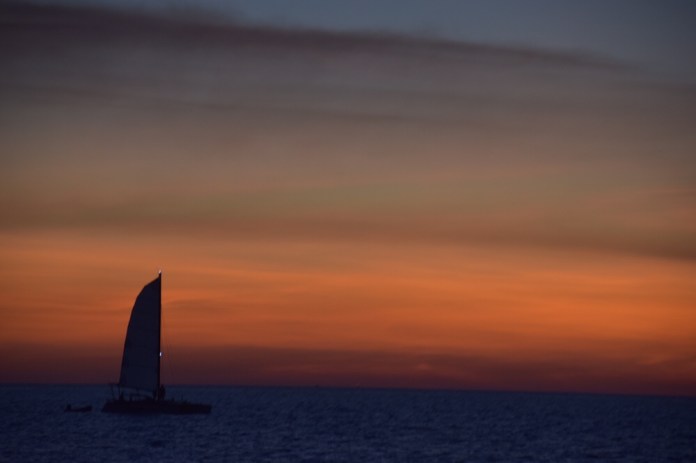
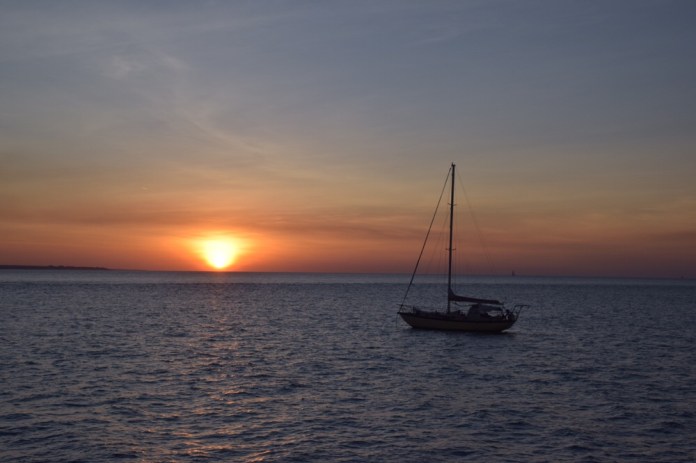
The next evening, we boarded the ” Darwin Cruises” boat. It was a very comfortable trip, as we were conducted to a table for the evening, located on the port corner of the din8ng cabin. The cool breeze from the air conditioners was very welcome after a hot afternoon at our campsite. The boat was far from crowded and this made the trip even more relaxing. Before and between buffet style courses, Jennifer and I took up vantage points on the perimeter deck outside the main cabins and took photographs. There is the parliament building, there is the wild hippy beach where 70 beachcombers vanished when Cyclone Tracey hit, the scattered moored yachts bobbing in the afternoon swell, and the setting sun, the atmosphere aglow from sun light diffracting through smoke and haze, splitting off the blue to leave signature orange and red.

Standard
Uncategorized

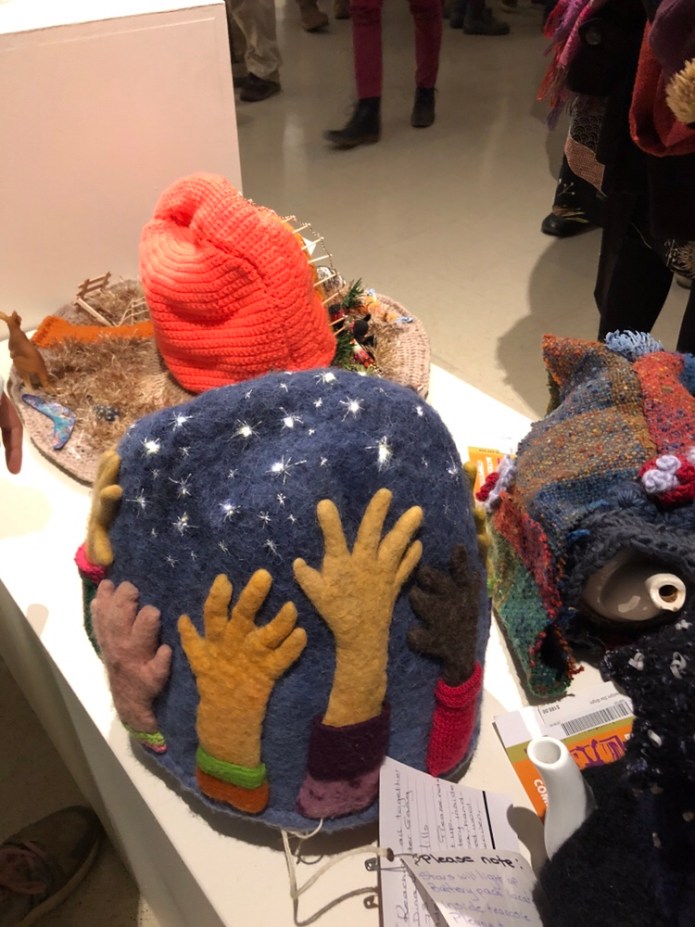
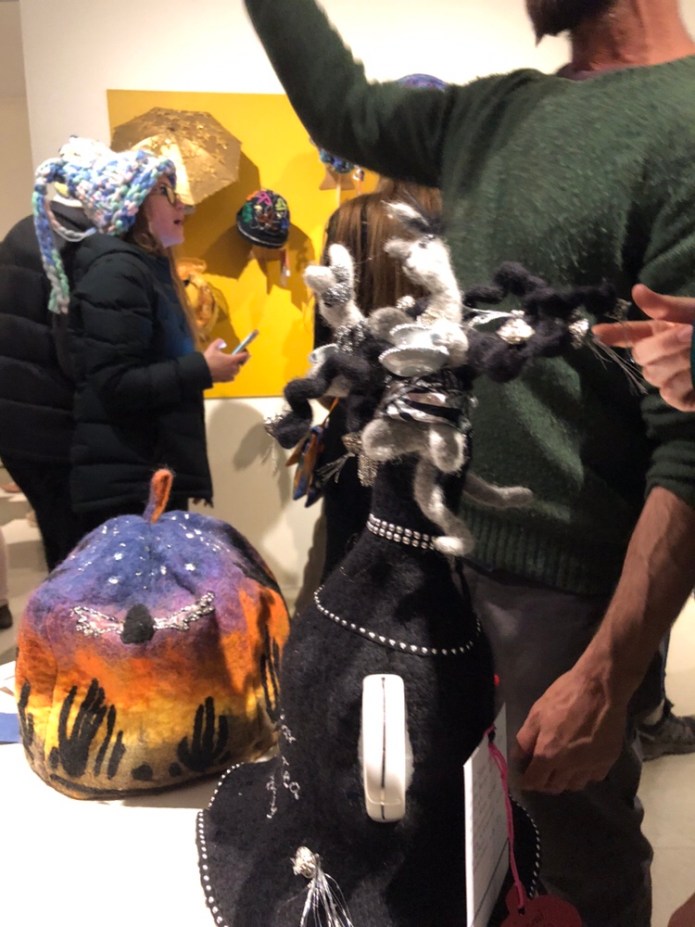
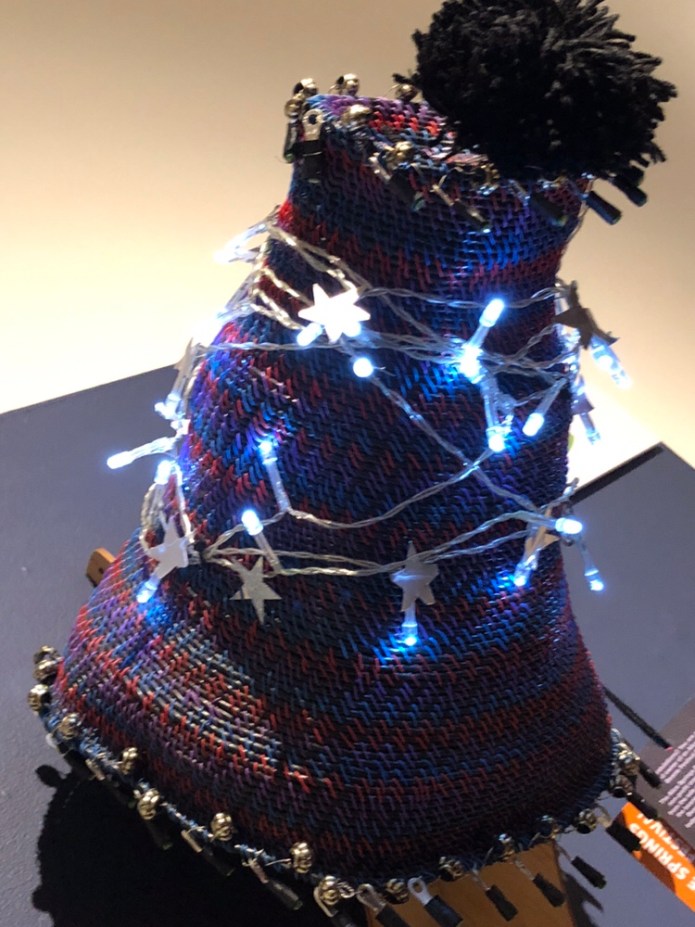
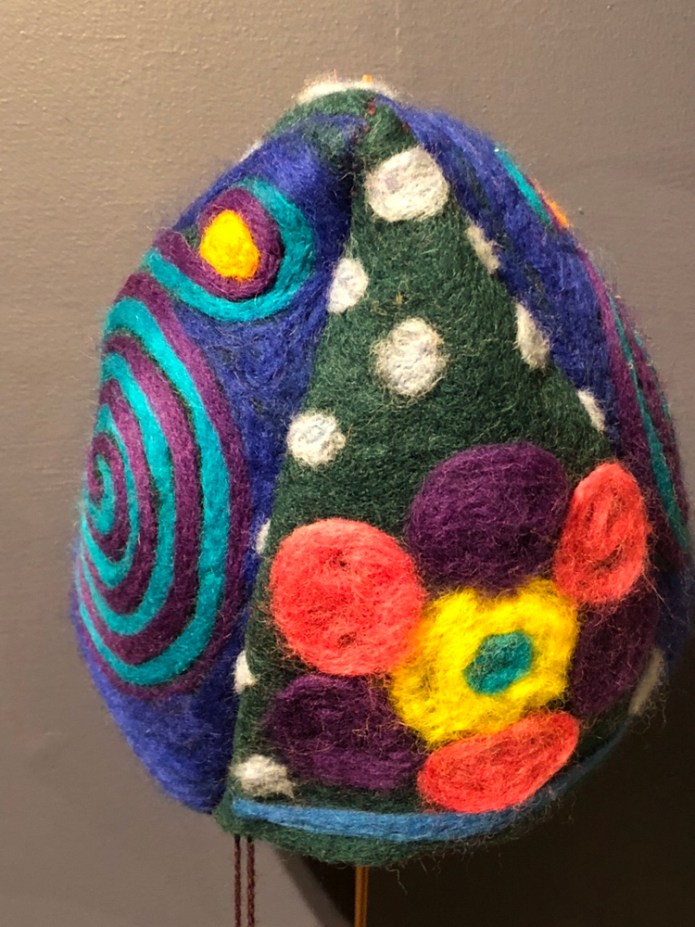
International Alice Springs Beanie festival

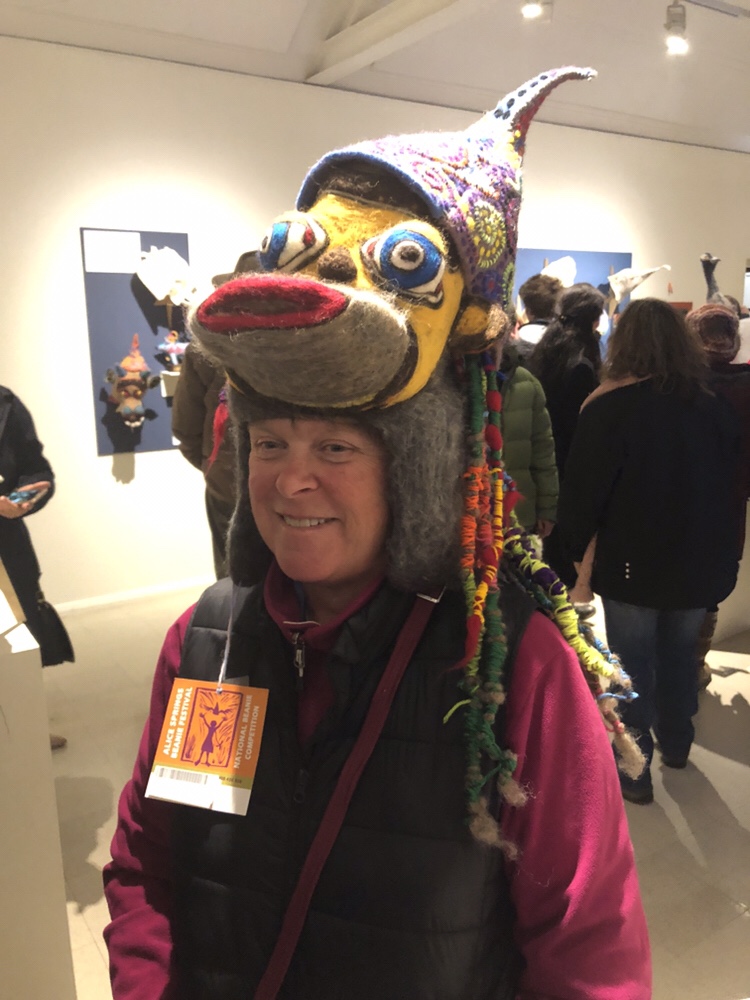
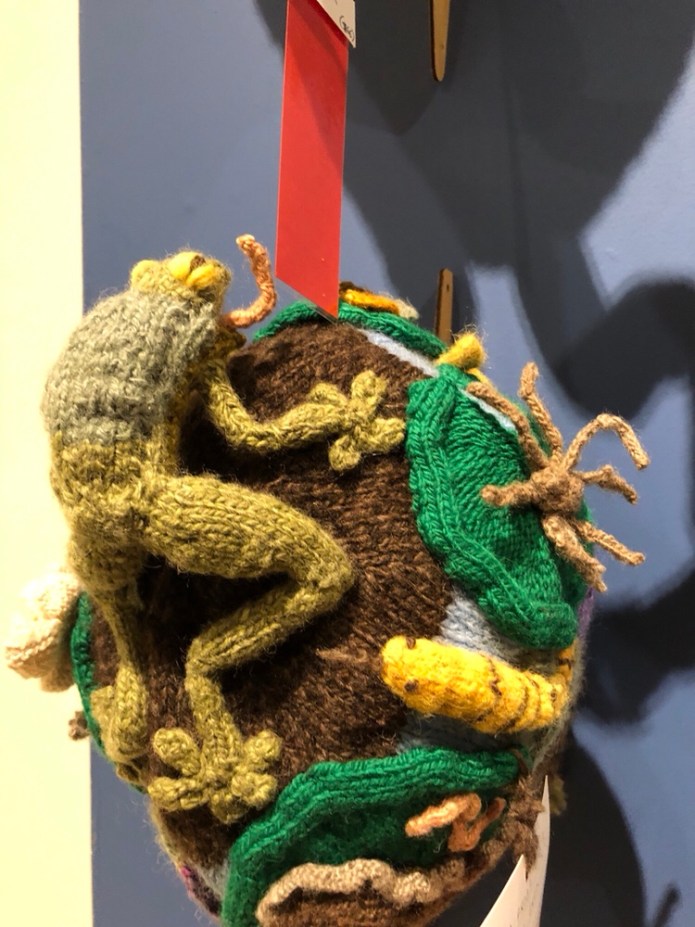
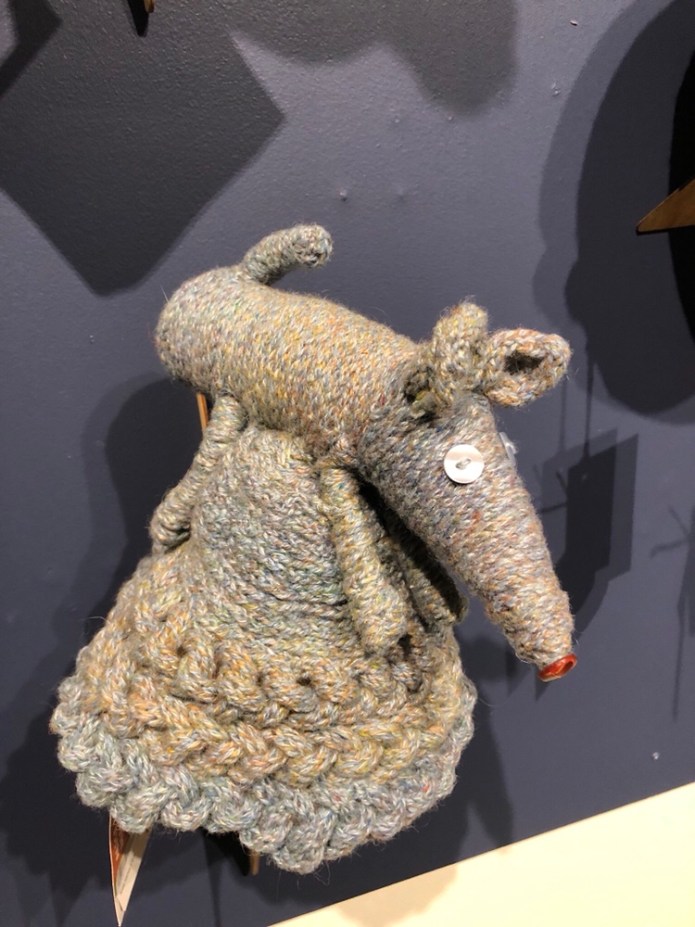
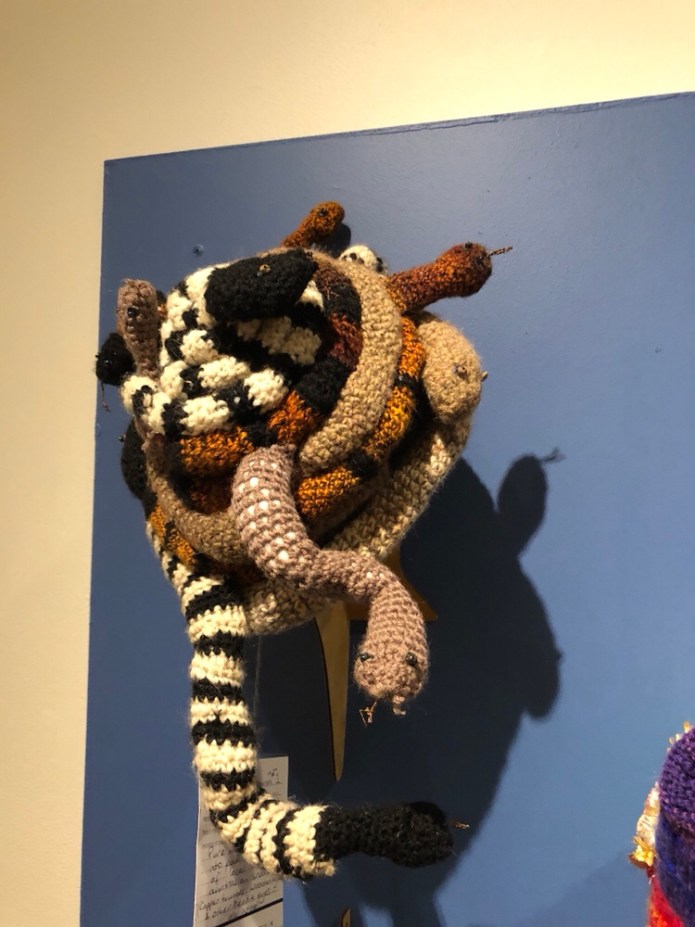
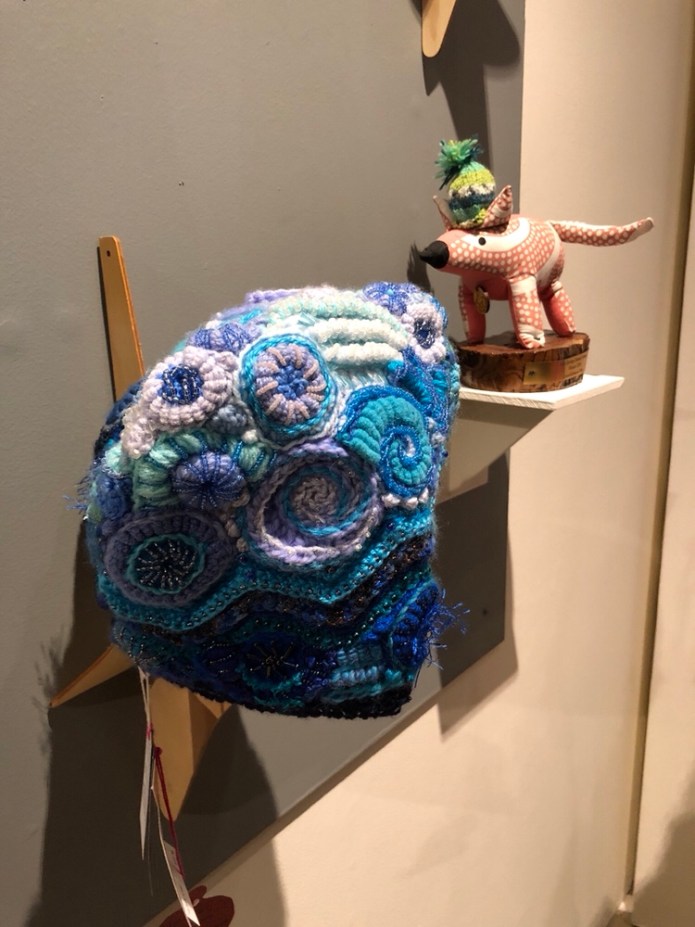
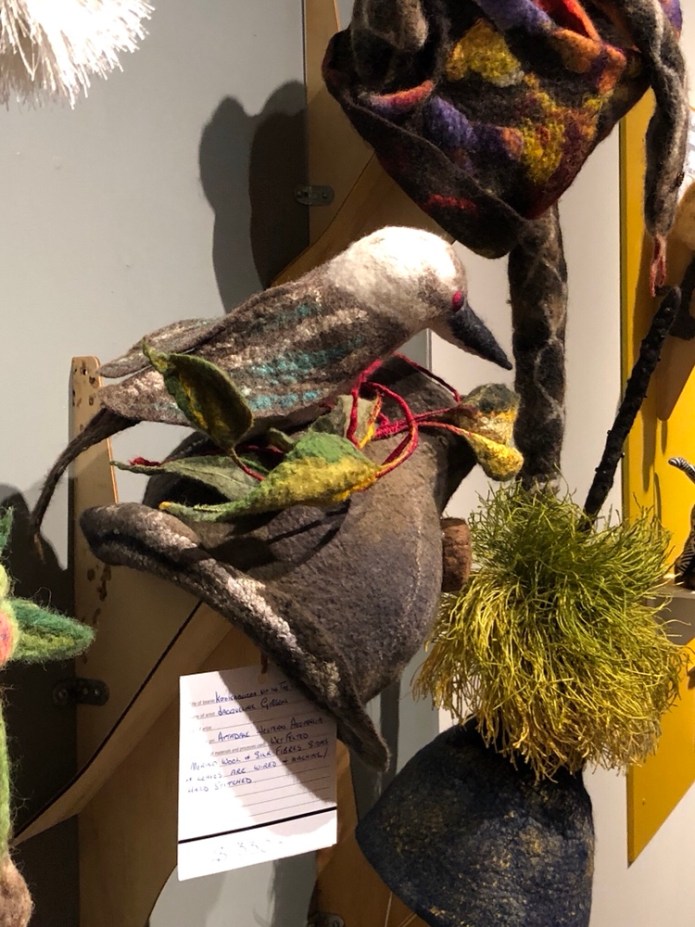
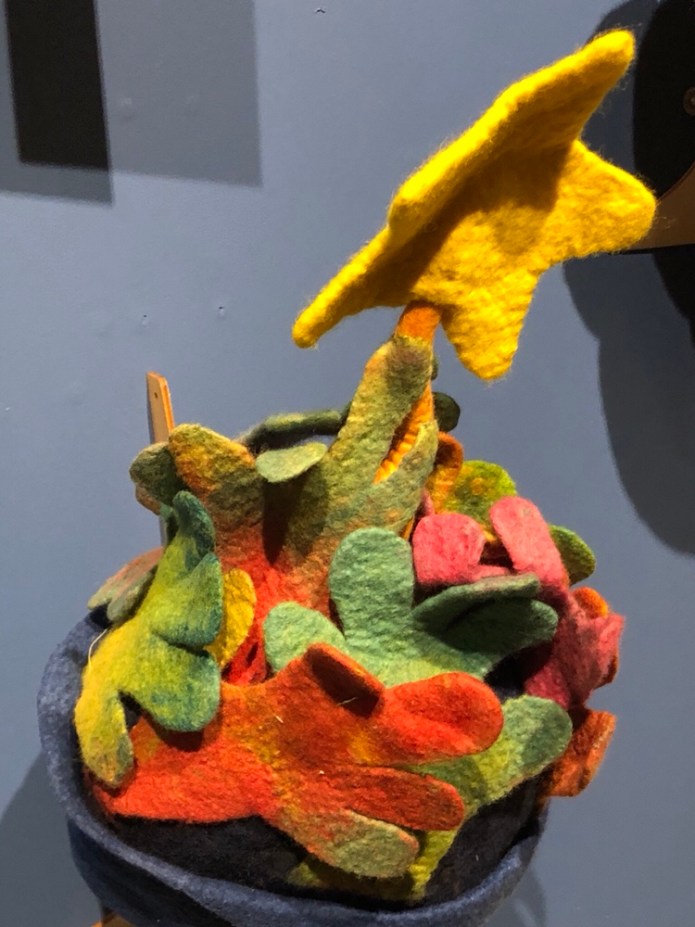
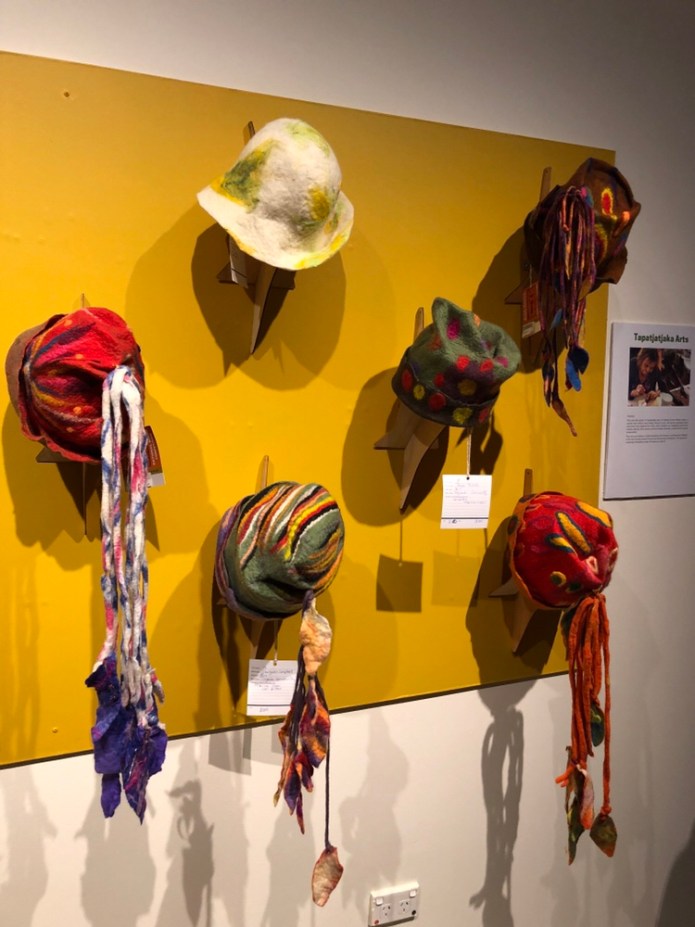
We just finished our four week work stint and had yet another dinner at Montes. We nestled in one of the many niches there and two of us shared a Mexican Parmigana. After dinner we drove to Araluen to see the Beanie Festival. It had only opened a few minutes before, the grand opening following some speeches we missed while enjoying Pinot Grigio at Montes.

There were food stalls outside the centre, perched on the road, CWA, Argentinian pasties and other local foodies. For once I forego the food, and decided I should be a culture vulture as opposed to a vulture pure and simple. Many locals had come along for the evening. The exhibition boy goes for a few days before traveling interstate. There was a long queue of jostling cheery folk keen to see the felt and wool inventions on display.

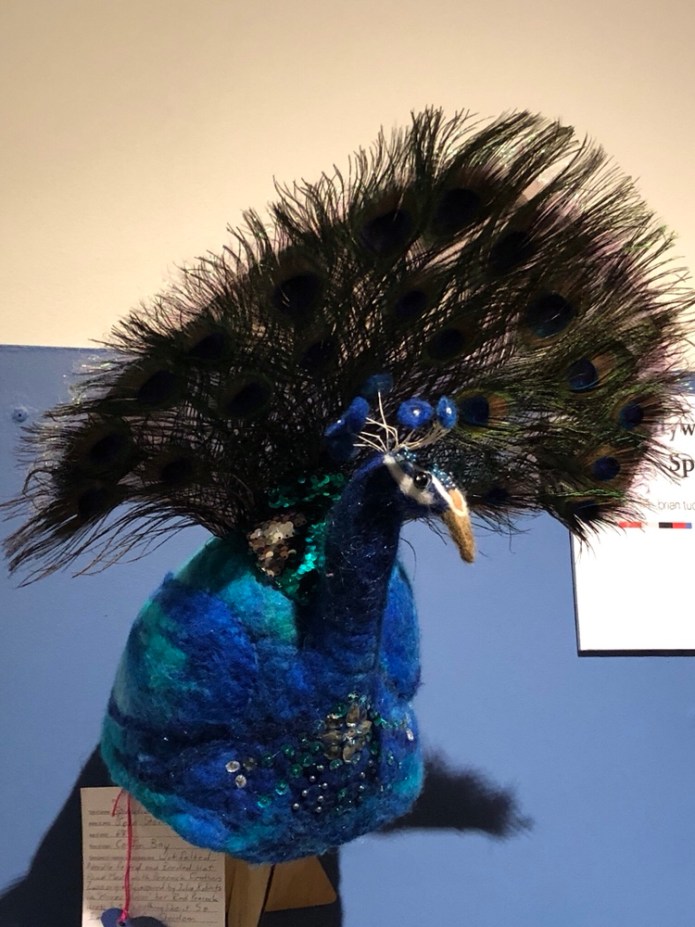
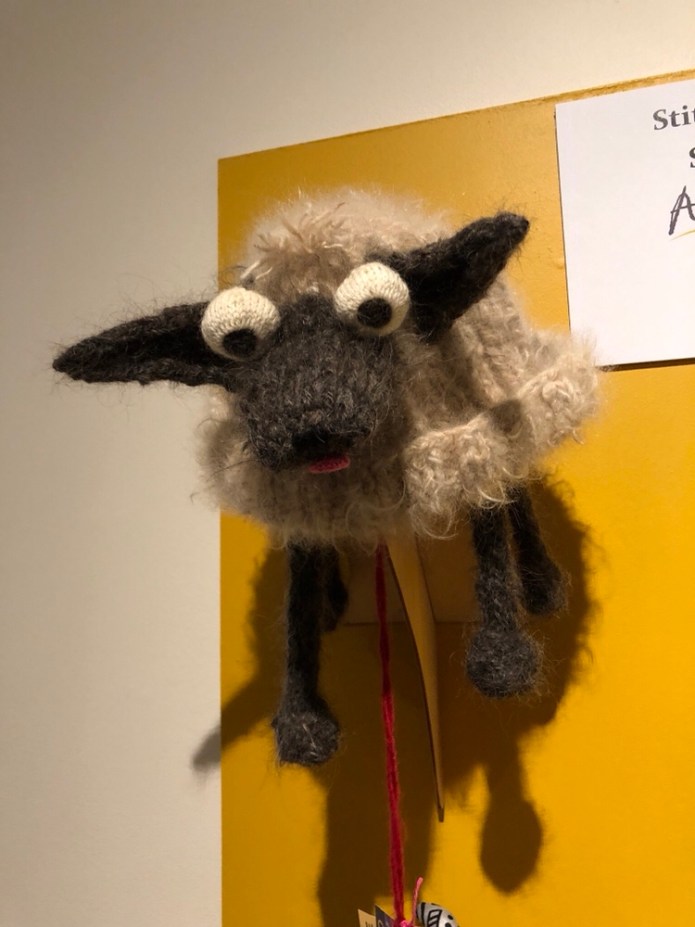
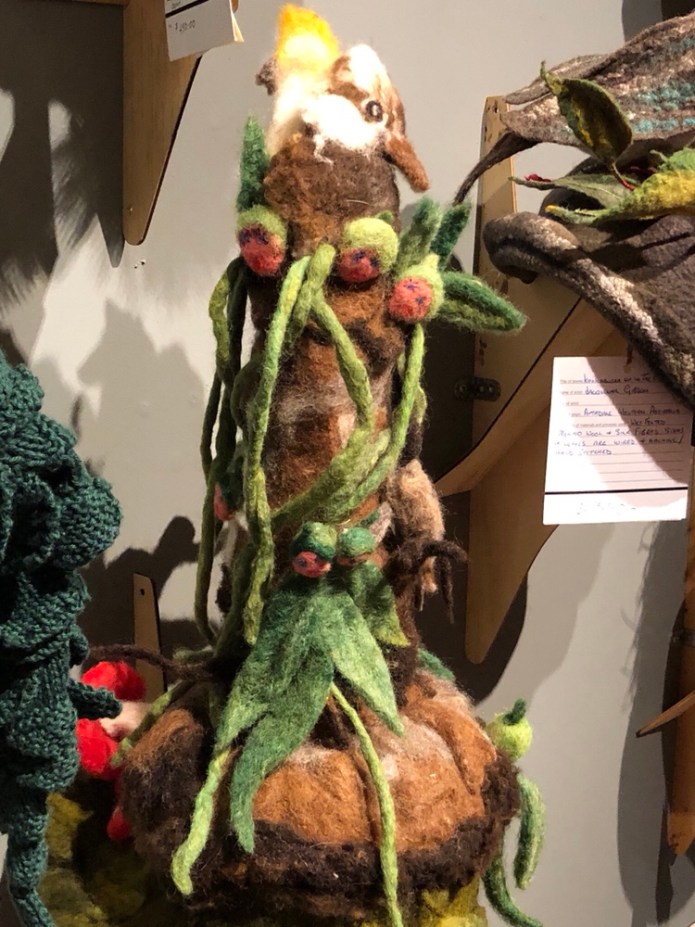
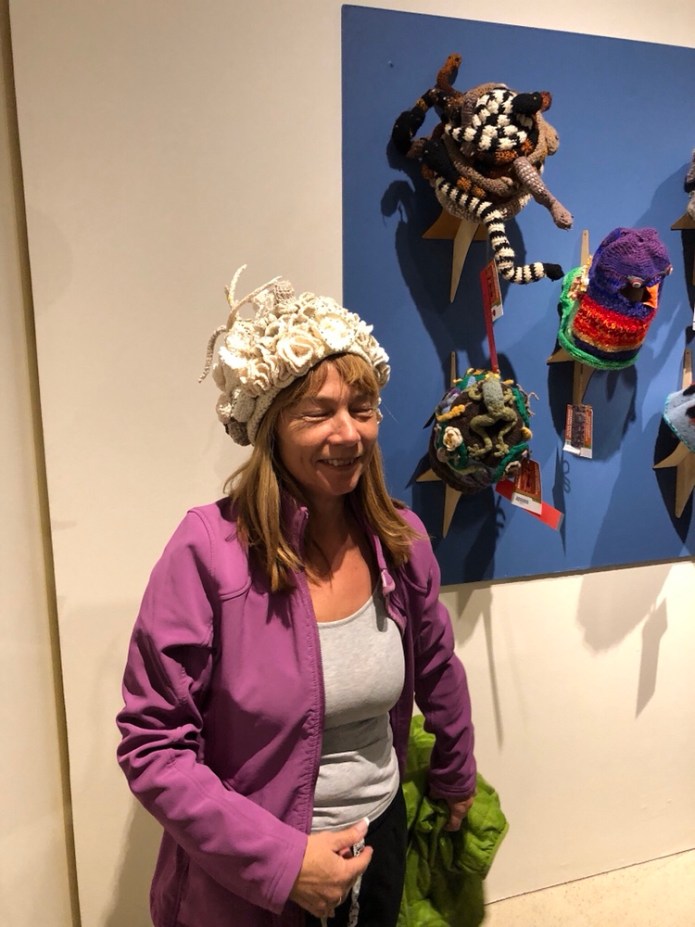
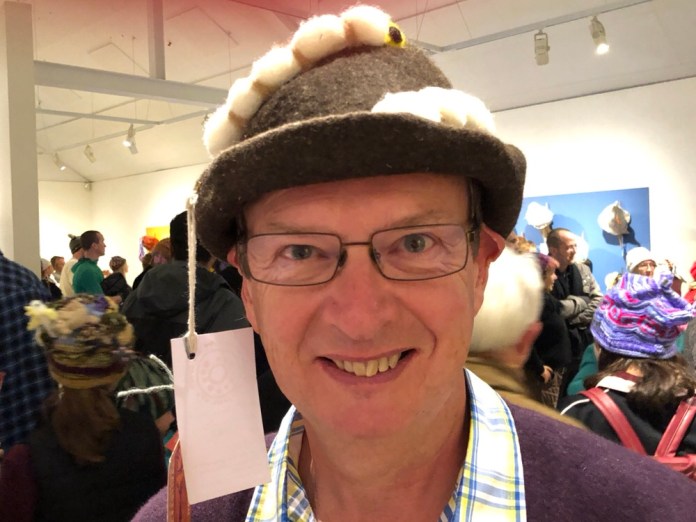
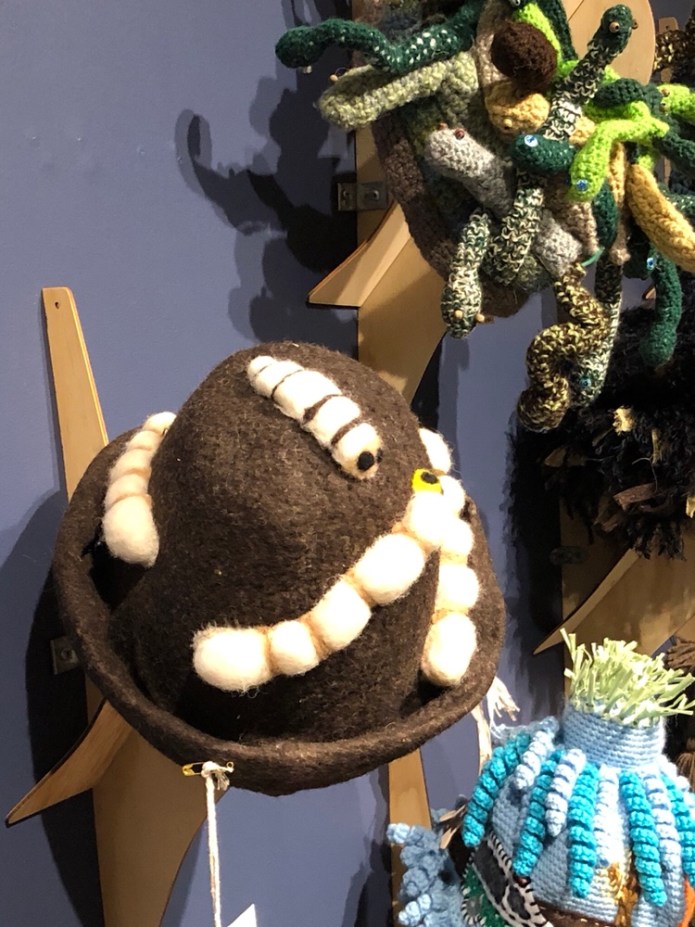
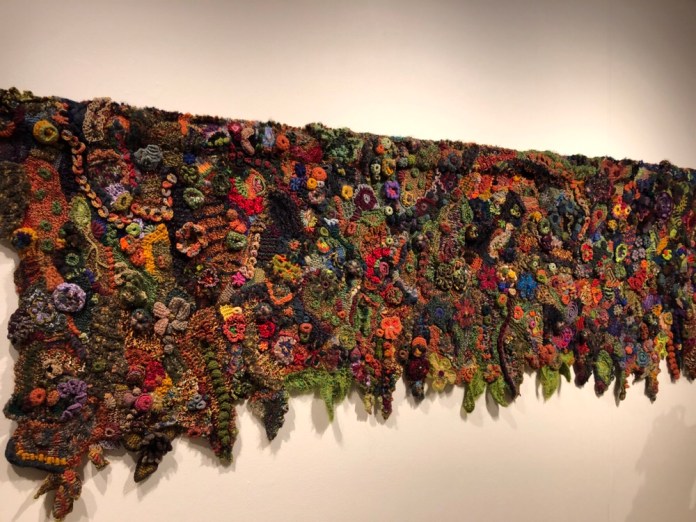
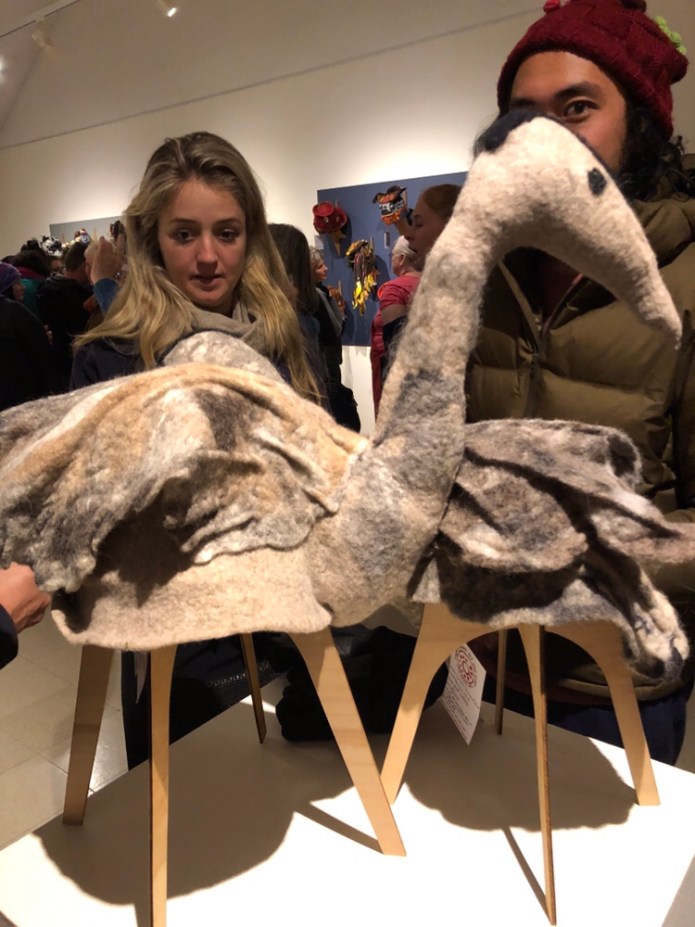
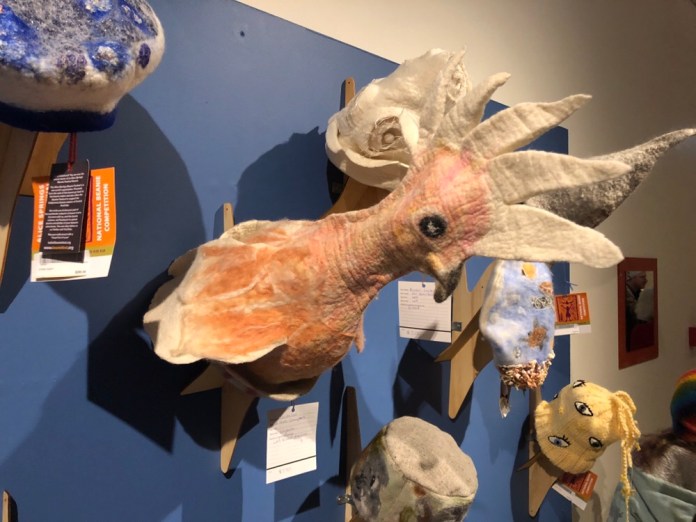
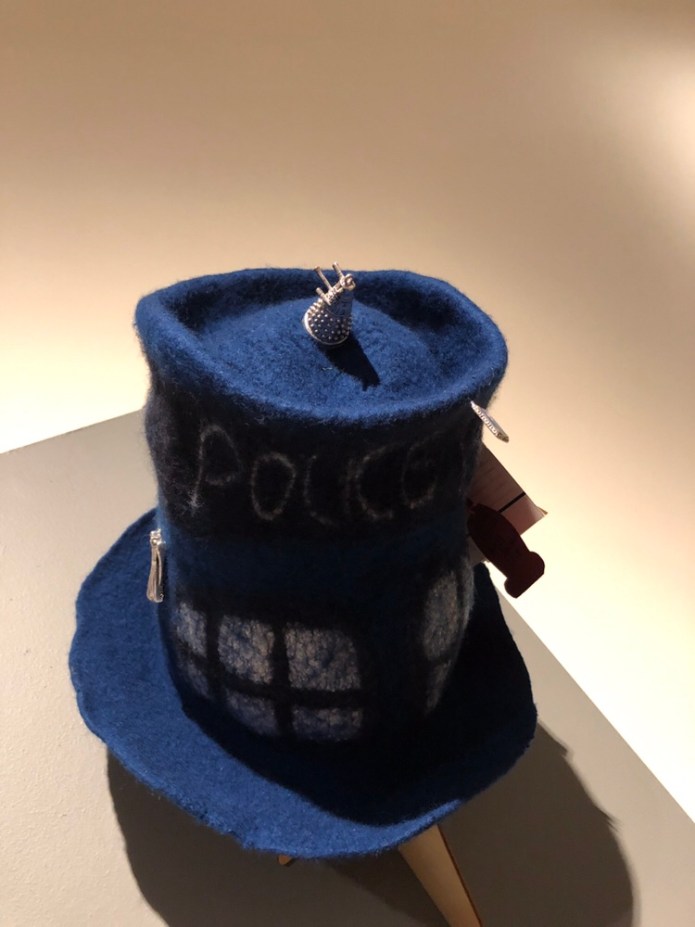
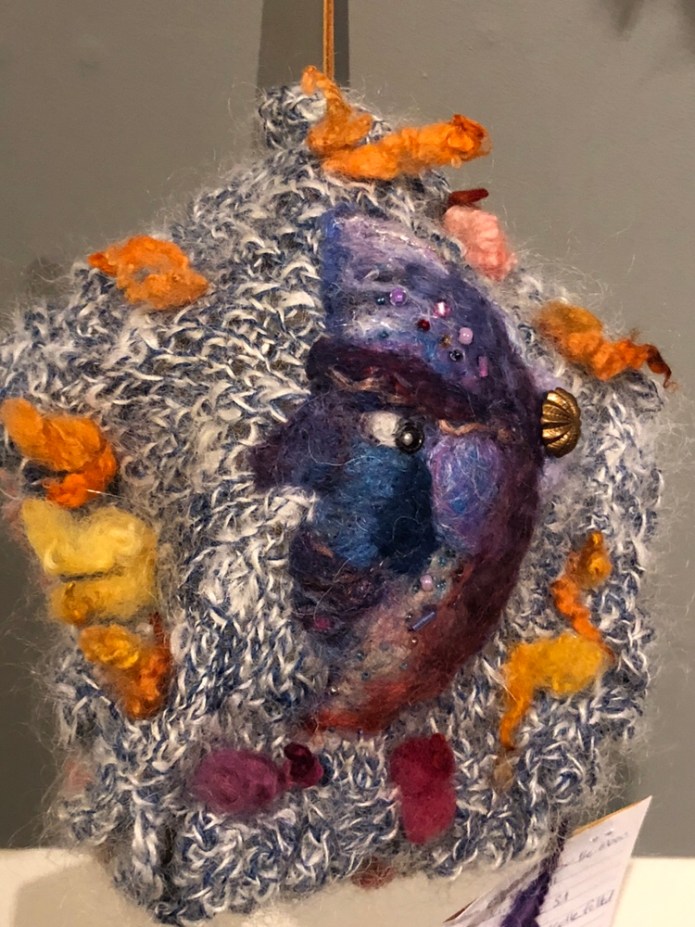
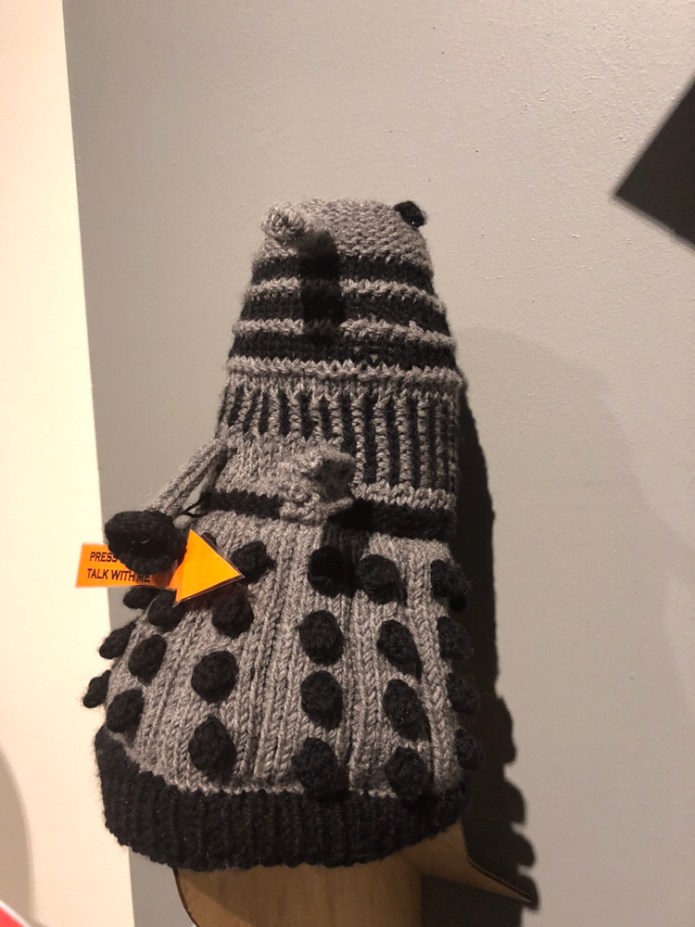
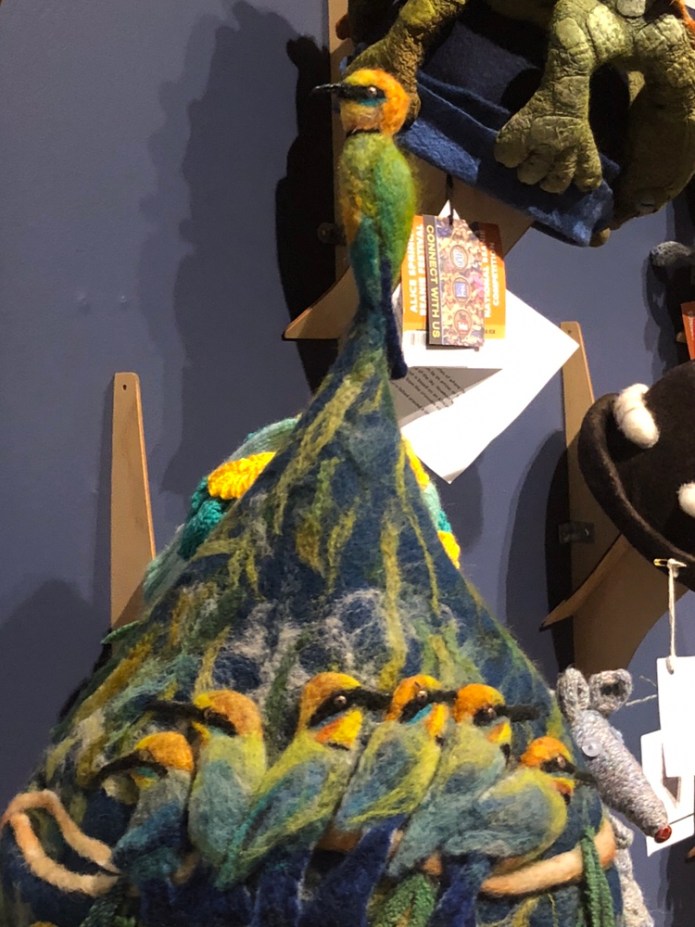
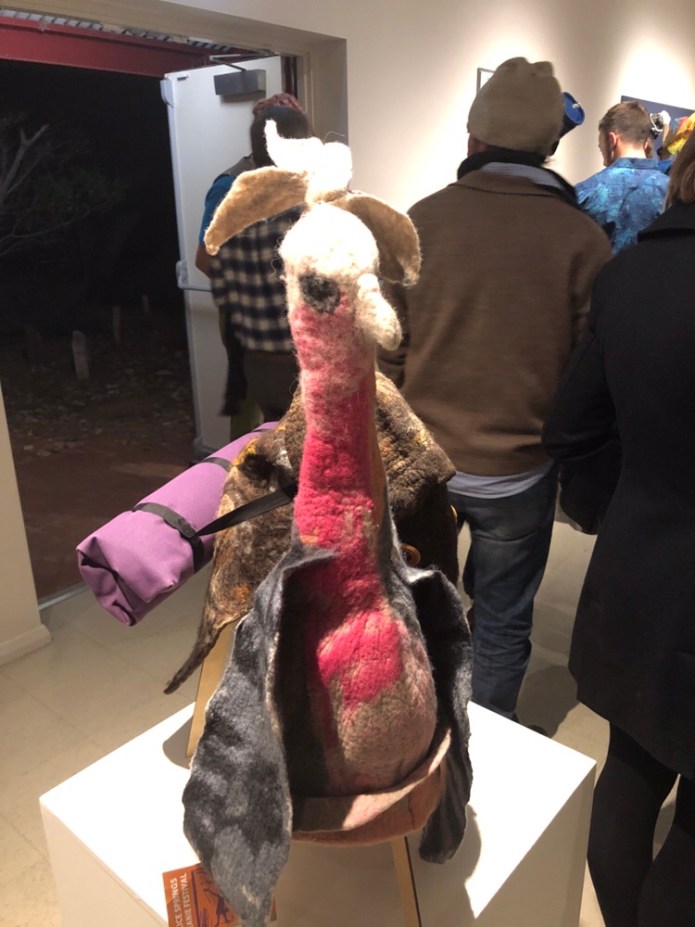
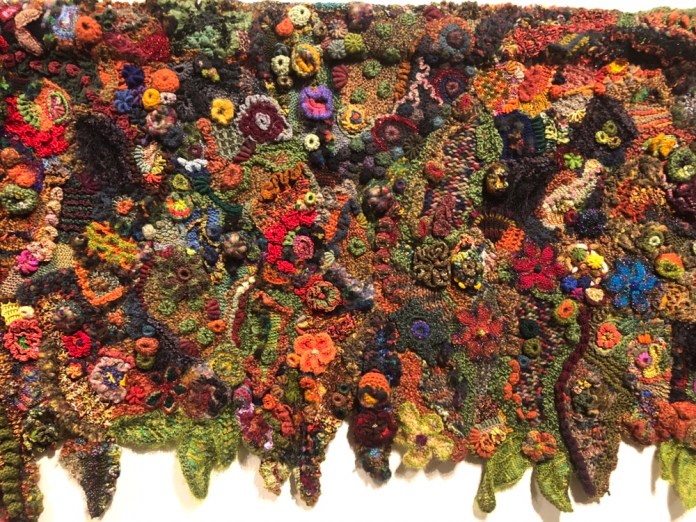
Well we were none of us disappointed. The theme was ” Reach for the stars” and the theme was well and truly embraced. There were beanies birdlike, dalek beanies, Tharsis beanies, rainbow bee eater beanies, entire village beanies and so on. Gee, there are some very creative people out in the desert around Alice. I tried on a felt Beanie with fabric witchity grubs encircling the brow, Jen tried on a fabric creation of a white peacock. Daleks, flying saucers, stars and planets, birds and just people standing around admiring the sky- all of these themes were splendidly and colourfully conjured into head wear to delight the artistic sensibility of the wearer.

Enough scribbling, let’s look at some photos from the night.

Great aren’t they.

Most of these wonderful hats are made by Indigenous men and women to raise money for their communities and create wonderful art.

here is some more

Standard
Uncategorized

Watarka and Ernest Giles track

I’m sitting at Yuelamu clinic. There is a crow cawing from a tree in the clinics yard. Jillian, the nurse, and I have just reviewed an Aboriginal footballer with a toe infection, he had a laceration kicking a football at training last week; not many players wear shoes. In a match when a player takes a mark near the goal, the game stops and the player puts on a borrowed pair of boots for the kick, then takes them off and returns them afterwards. However there is no denying the locals love their footy. TD is wearing his Yuelemu sleeveless yellow jumper.

Last week I drove to Kings Canyon which is also called Watarka. The national park in which it is situated is called Watarka National Park. I went south from Alice Springs, driving on the twisty Stuart Highway. About thirty kilometres south of Stuart wells is a turn off that goes west on the Ernest Giles track. About five kilometres along the track is another turn off to the Henbury Meteor site. The camping there looks pretty good. There are ranges and gorges nearby which make it a good possibility for a long weekends camping but this was not my destination. The main track is a 100 kilometres and is generally a good surface. The last time we drove on the Ernest Giles, a grader was working the gravel. There are stretches of sand, up to a kilometre in distance and these were fun, with a bit of playful sliding at times. I keep the pressures at 30psi, back and front, and the differential lock on to keep all the wheels participating on the road.

There are some fine views from the Ernest Giles track. Desert oaks, acacias, dry river beds, hills and always that crisp blue sky silhouetting the ridge lines spotted with a few trees. The rich colours, the orange, reds and splashes of white rock with a foreground of forest.

At the Luritja Highway, I turned right rejoining the caravans on the bitumen. It was another 103 kilometres to the Kings Canyon Resort and a shirt distance beyond is the Watarka clinic. To my surprise, I found I was booked into the resort as accomodation was fullin the clinics houses. The resort is great. I had a spacious room, a verandah overlooking the bush and breakfast included. The problem with staying at resorts like Kings Canyon and Yulara, is that it’s impossible to cook dinner. So each night, I shuffled over to the clinic to cook my steak, sausages or chicken. Afterward I braved the chill air to drive the short distance back. I had parking right outside my room which made it easy. In the morning I would walk to the restaurant, the Carmichael room. Breakfast was very good. Now I’m not paying for any of this which is nice. To a paying customer it is $400 a night. I did lash out and have dinner out on Thursday evening. Yummy pork belly, plates of vegetables, and two nice glasses of wine. Now I’m legendary as a two potter, after a week of no alcohol, I felt dry agreeable with the world and all its denizens. I tottered back to my room and slept very well indeed.

The clinic is more fun than some because of the mixture in my clinical work. I was involved in two cardiac cases, stabilising them both and evacuating one, trauma is common here as well. This is from road accidents, locals and tourists doing roll overs due to burst tyres on the bitumen and due to sandy pits on the gravel tracks.

Going too fast helps too! I was involved in the care of a man who fell on the Ridge track. It begins with a steep ascent up a rocky track to gain the escarpment. This gentleman lost his footing and fell. Managing him was interesting, it’s good to use the procedure skills of neck immobilisation ( done by using a bag of wrapped saline either side of the head with tape afire day between them and on the forehead), intravenous analgesia, assessing rib and other fractures. Transporting such patients require a vacu mat. This mat is related and wraps around the patient, keeping the person still. It means transport is safer and less painful. These mats are several thousand dollars each!

After work, there was not much time before dusk for any long walks but there was the opportunity to do some pleasant shorter walks. I walked the Rim track which goes for 45 minutes, around the resort. You can hardly see the resort buildings. The track offers many fine views of the Carmichael range, all the more vivid and colourful in the light of the setting sun, it’s rising orange glow abruptly above the plain of sand, buffer, spinifex and desert oaks. I walked a track near the clinic along a sandy access road. And also drove to Kings Canyon itself and selected the short Kings Creek walk. Gum trees, river gums, and birds are the highlights, the wagtails, the parrots sparkling colour through the trees in their noisy flights. It’s a primeval experience, the rocks, gullies and cliff tops ancient beyond human time.
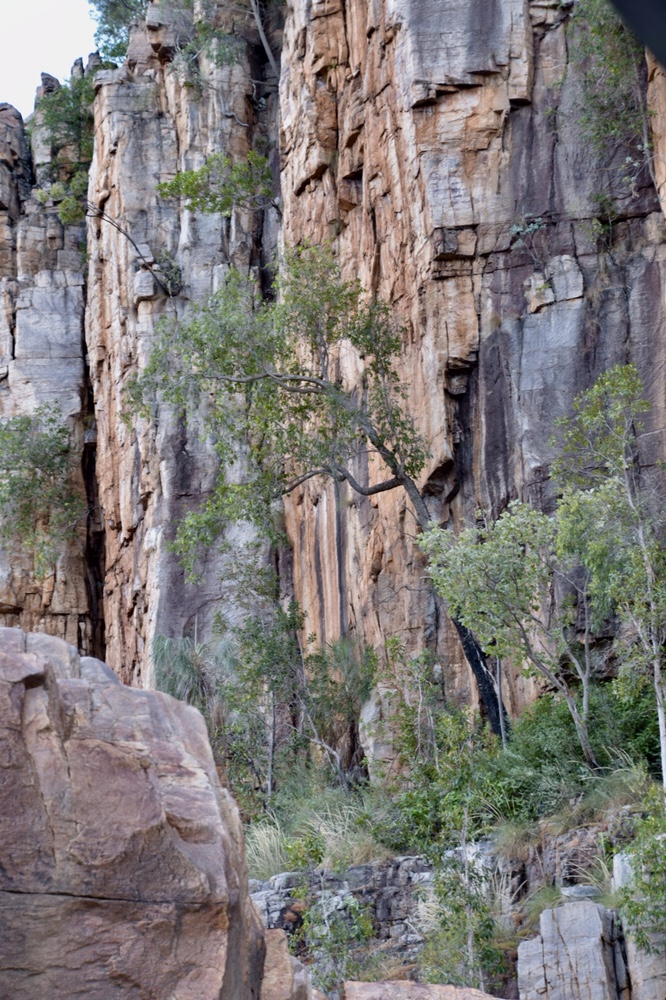
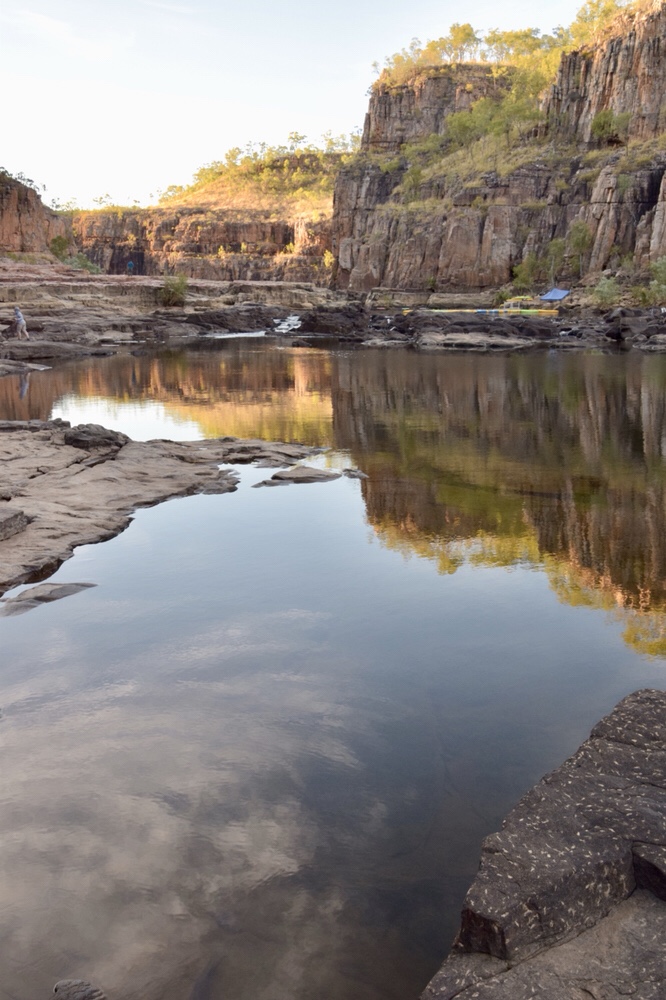
On Wednesday afternoon Rod came in for a chat with Chris, the clinic manager. Rod runs a tour company in Kings Canyon. A major part of his business is organising trips for schools. The upmarket private schools including Scotch and Geelong Grammar. The kids spend two weeks here as well as near Yulara. They learn about culture from local elders and do some infrastructure work such as house repairs and painting. Rod is the founder of the Watarka foundation. They have raised $350,000 to expand the local school to go from grade 6 to grade 8. They are waiting on a few permits then construction can begin. The student numbers are from 7 to 24 at the school and there is currently a single teacher. She would move up to grade 7 and 8 and a new teacher would do grades 0 to 6. The experience of education here for indigenous children has been frustrating. After grade six most of the children have achieved a very good standard of education including g literacy and numeracy, good enough to carry on. However, after a term these children feel so home sick and miserable they come home. There are no jobs and no education available for them. The costs and technological savvy needed for home schooling or school of the air are simply beyond the skills of local parents. It’s hoped that extra two years will mean they have the maturity to cope with life away from home. Of interest is that the schools Rod are involved with want to support this venture as well with online learning, live streamed lectures and possible scholarships for the local indigenous children who show promise at th3 end of grade 8.

I drove back on Friday morning. The sand on the Ernest Giles track was cooler and the traction is noticeably better. I’m not sure how much fun it would be to go this way in high Summer with the prospect of rain and the sand being considerably warmer and too pliant under rubber. I stopped to take some photographs. There were no camels this time.

On the weekend, poor Jennifer hurt her lower back sitting in too low and soft a couch. Recovered substantially with time, mobilisation ( gentle!), and getting a new chair from Desert dwellers. Desert dwellers sells gear for camping in NT. we bought an Oztent, Kokoda chair. It has a firm lumber support as part of its design and Jennifer is pain free when she sits in it.

On Sunday we went to Telegraph Station. The Arid lands group was holding a barbecue, a talk from Aunt Patty an Arrente elder and a walk to Wrigley Gorge. Aunt Patty is an older Aboriginal lady with plenty of vim, she told us all about the protest movement surrounding a proposed Junction lake. She makes the point that if you want to live by water, live near it. There is no need to flood sacred sites. The moratorium has lapsed now but there is no move to build the dam to create the lake at he headwaters of the Todd river. Water control for very heavy rain to reduce risk of floods will take a different route, looking at some vast plains that could easily be accessed by minimal earth works.

The barbecue was great. We had camel burgers on bread. Yummy! Jennifer joined us up to the Arid Lands council which is an environmental group based at Alice and gets in involved many of the critical issues around the use of the land includes under the land, ie fracking and th concerns people have about contaminating what is already a parlours supply of water, in regards to both quantity and quality.
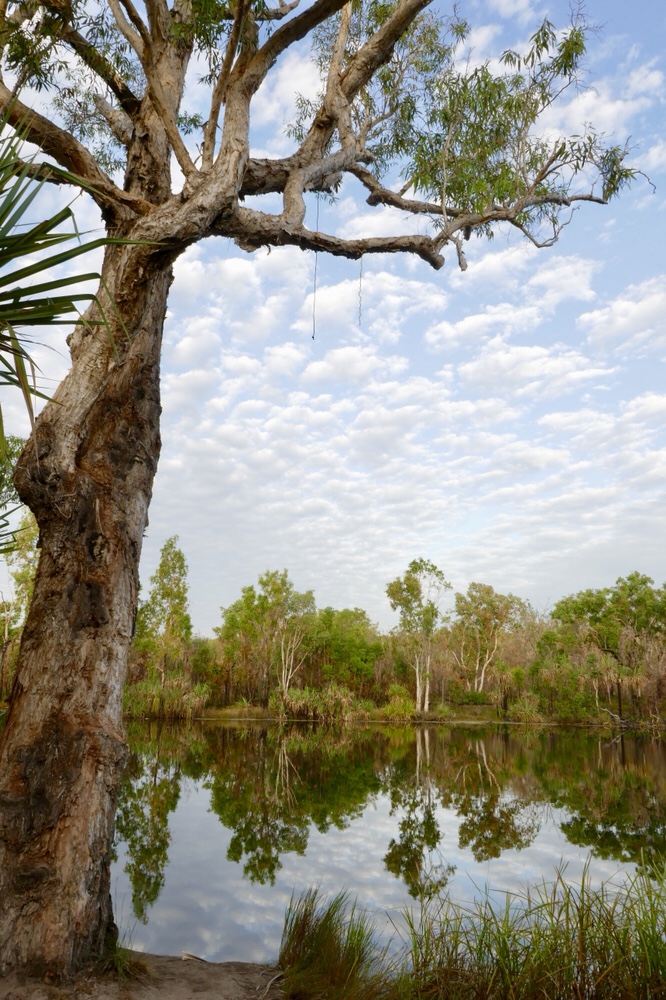
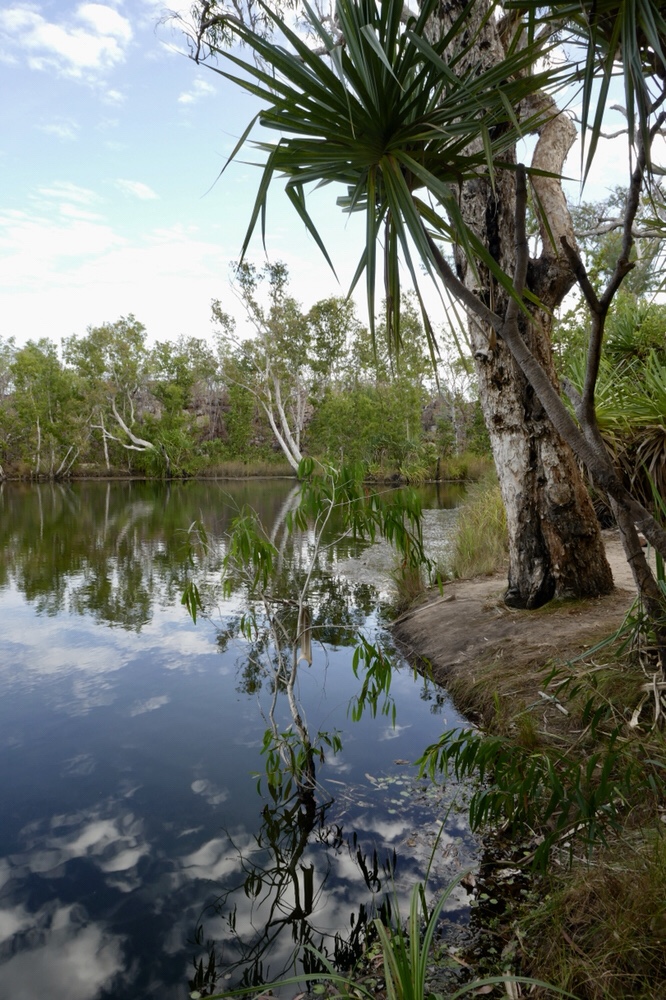
Wrigley Gorge is part of the extensive track network centred at Telegraph station. There are mountain bike tracks, walking tracks and some combined tracks including the one to Wrigleys Gorge. The wind was cool and pleasant, as we all set off. It was a mass of people at the start but the crowd soon separated out and for most of the track I was by myself with merely the susurrations of my fellow walkers ahead and behind. The land is arid and twists and turns along dry river beds, up and over rocky cliffs and finally arrives at Wrigleys Gorge. River gums nestle in a narrow valley. Most of the walkers elected to take a shuttle bus back but I had enjoyed the walk too much to do it just the once.
While writing this I have seen another patient, a little three week old infant who is losing weight and there is no obvious reason why. Mum is only sixteen but appears very capable and she is supported by her mother, who comes in with her. She will be flown out at lunchtime today with Mum and grand Mum to Alice Springs Hospital for assessment and treatment. She is not deathly ill but the continual loss of weight is an enormous concern and requires attention. The bush bus another option but that departs twice a week and I don’t think we have the time to wait for it’s next trip and the four hours on the road with a sick baby does not bear thinking about.

Standard