Hiking, tasmania

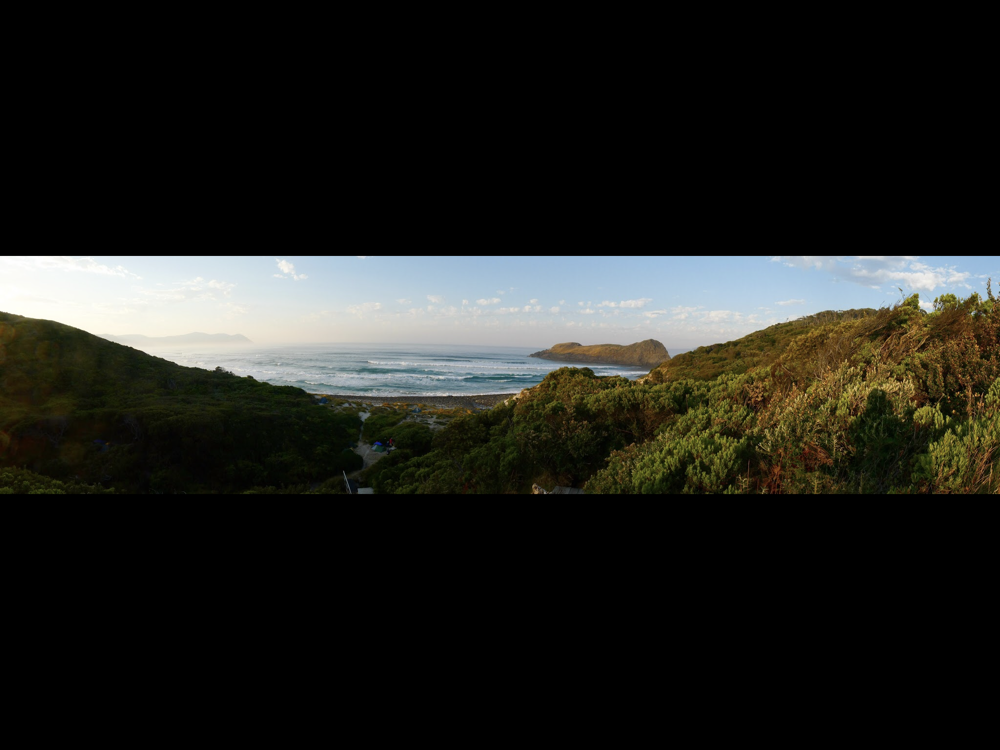
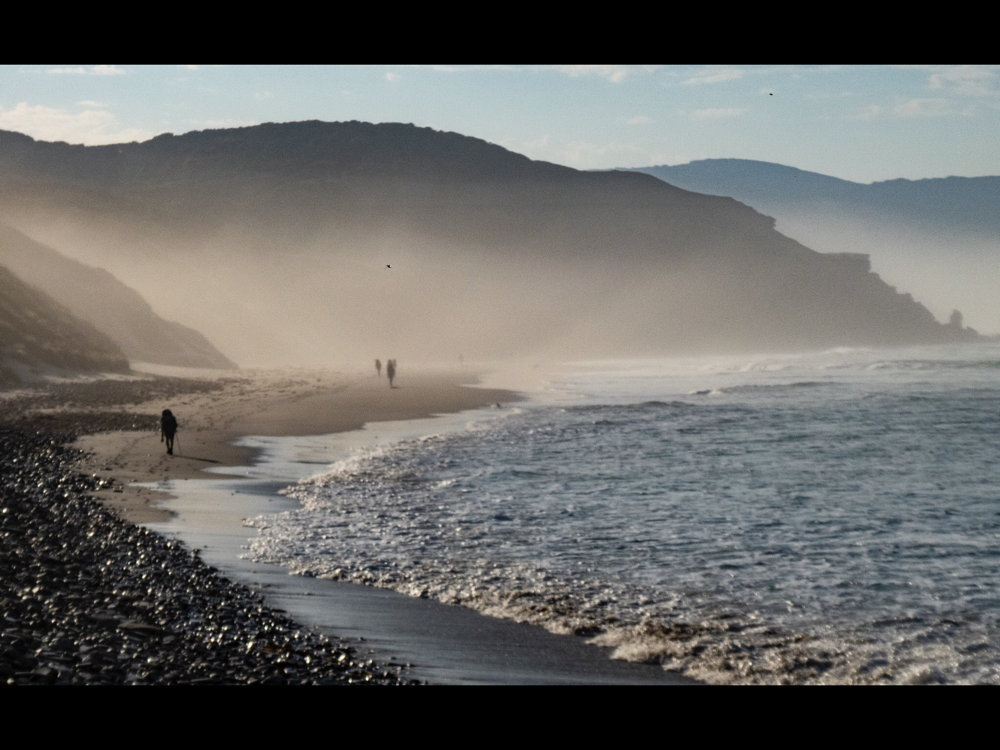
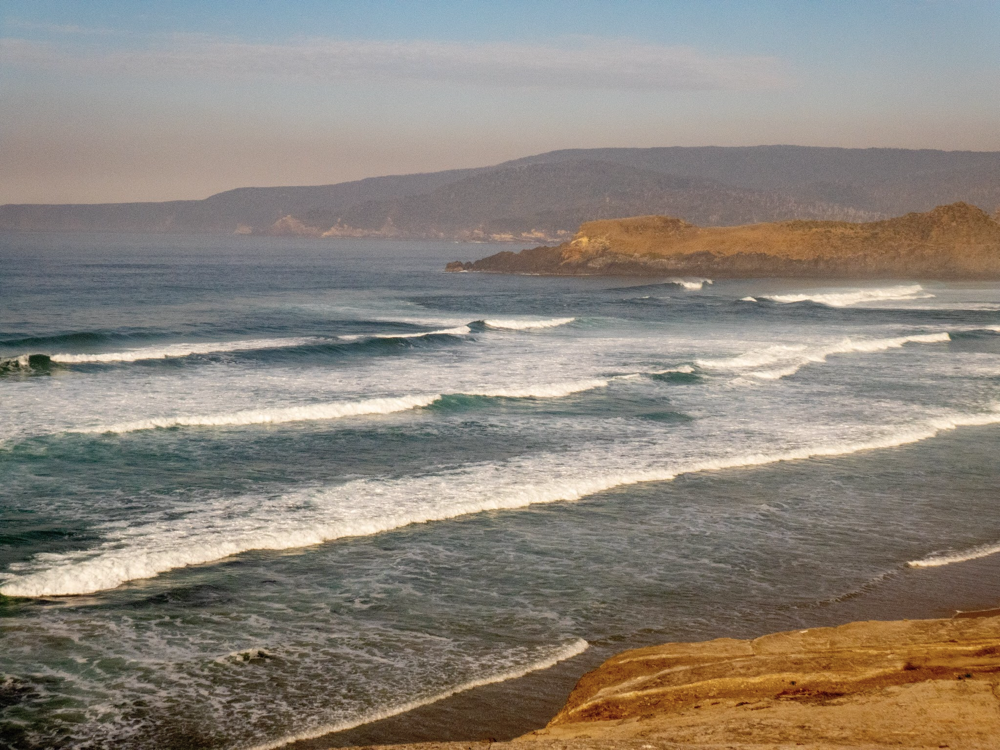
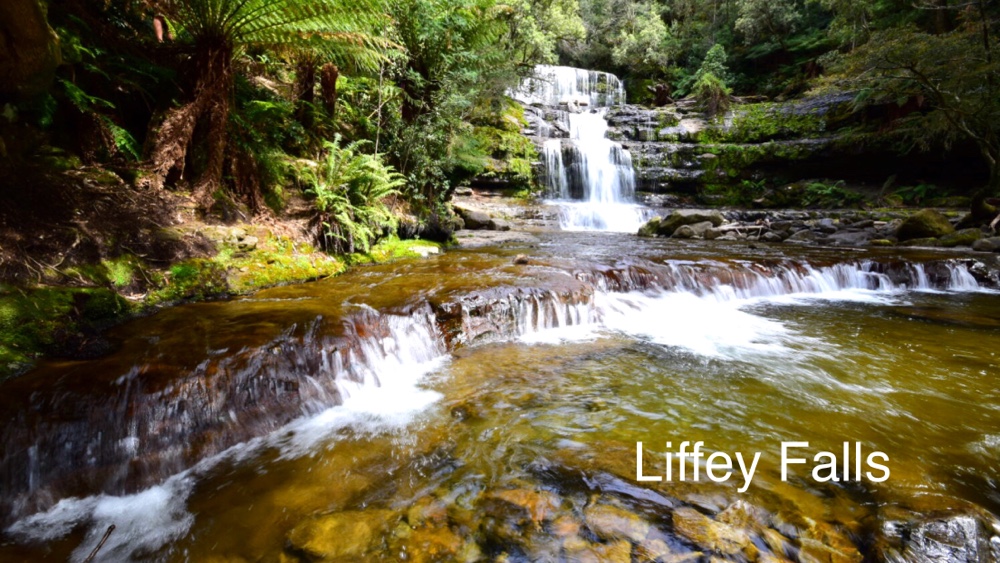
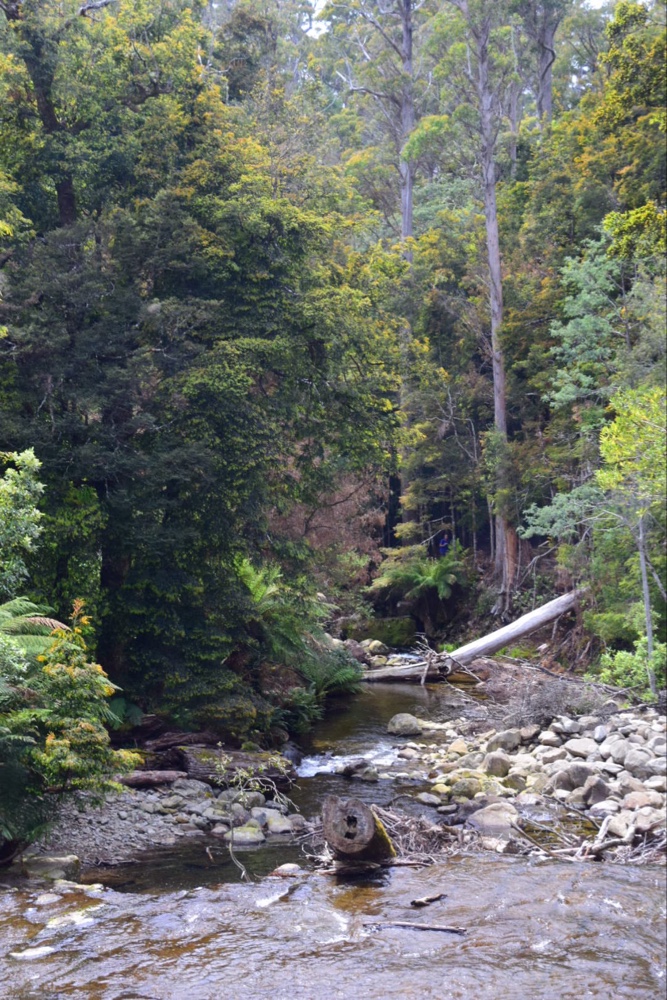
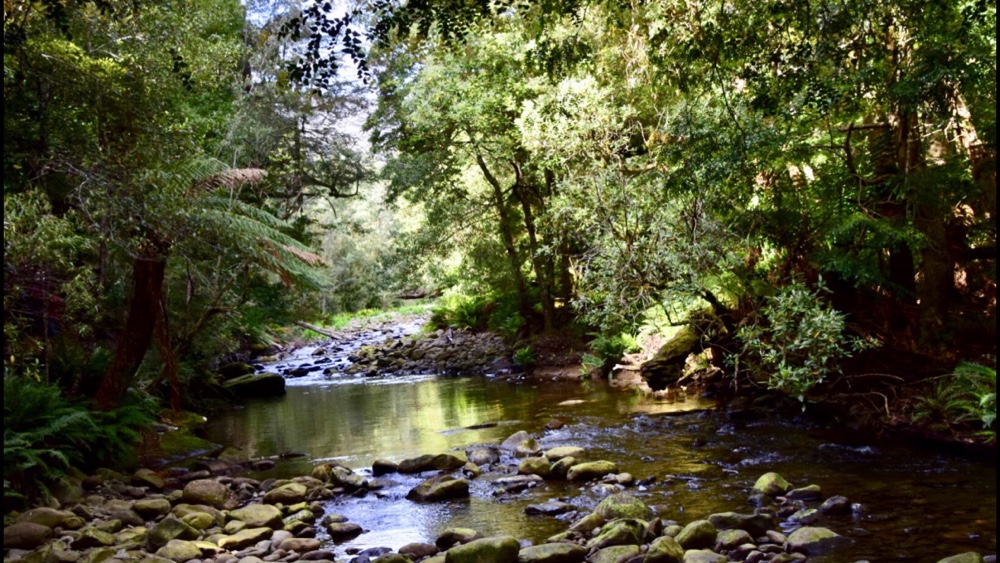
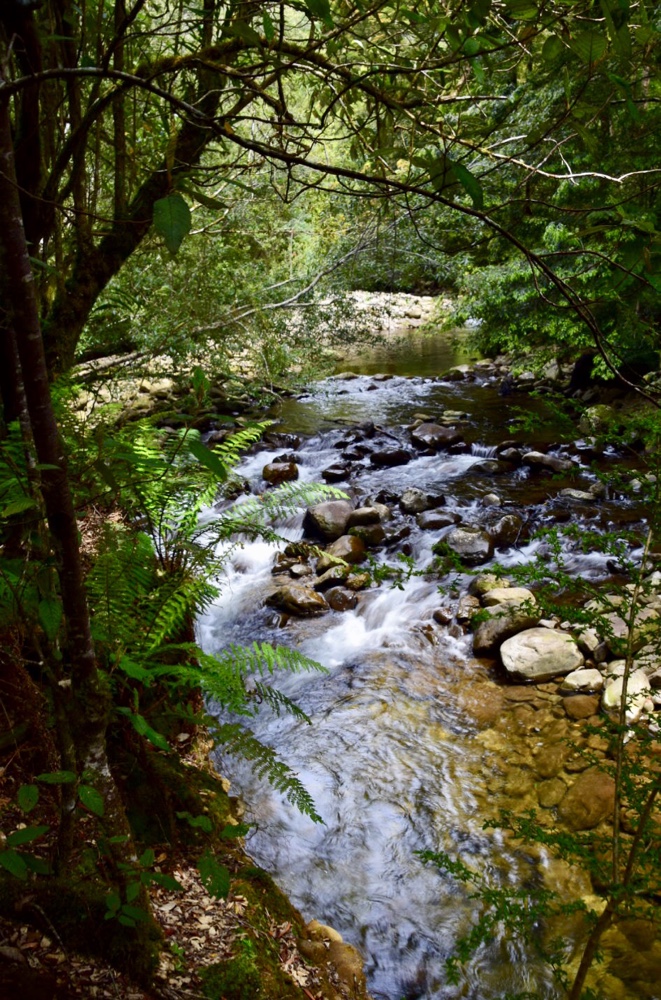
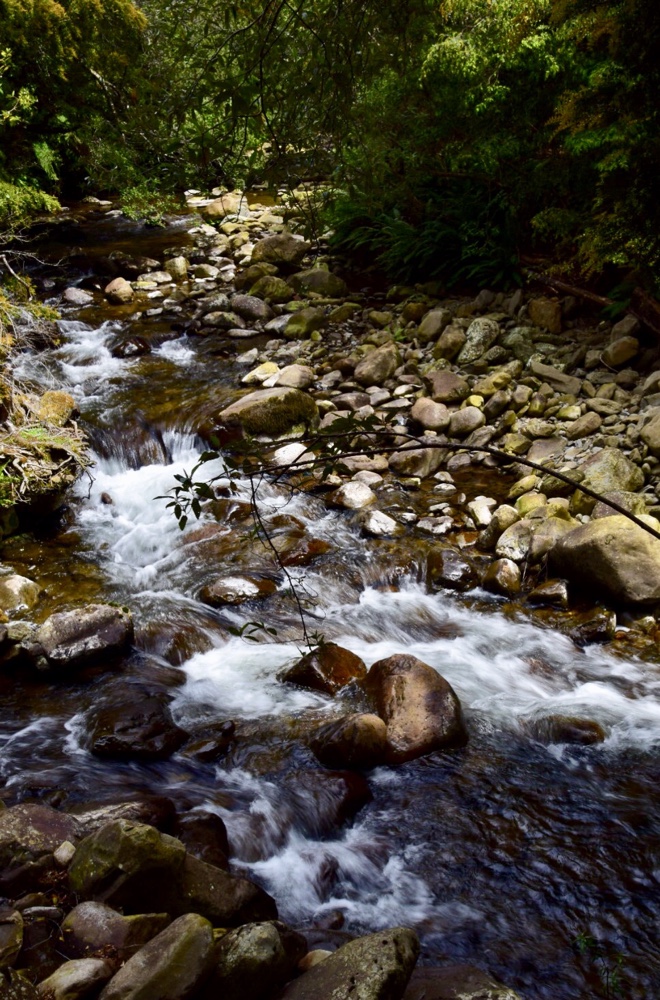
Liffey Falls walk, Northern Tasmania

14.2.2022

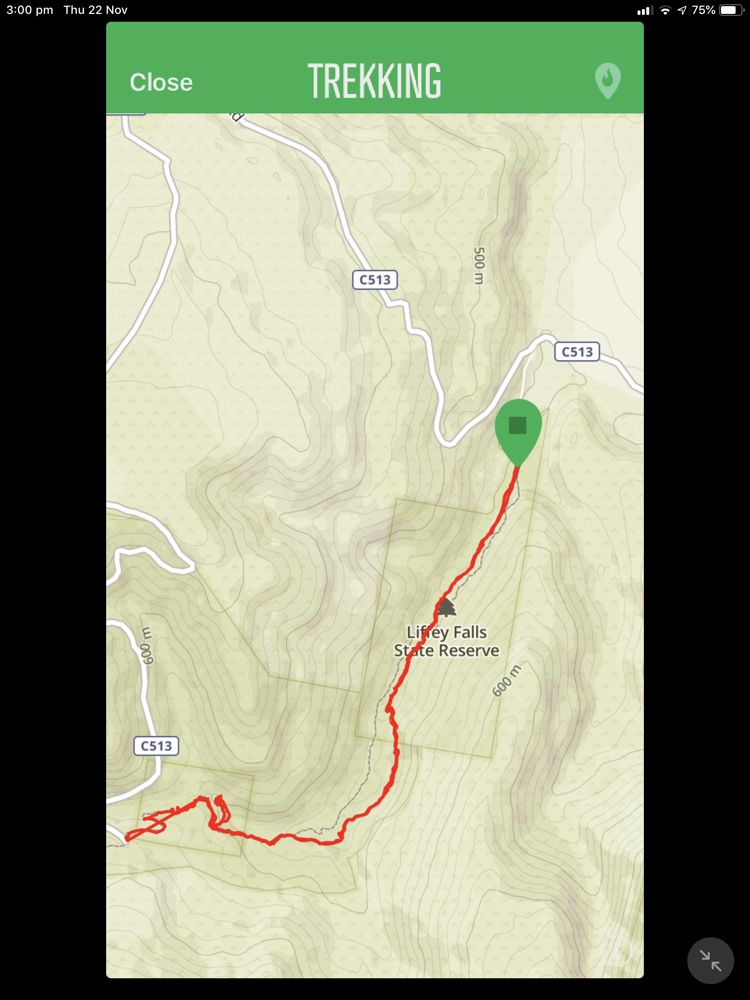
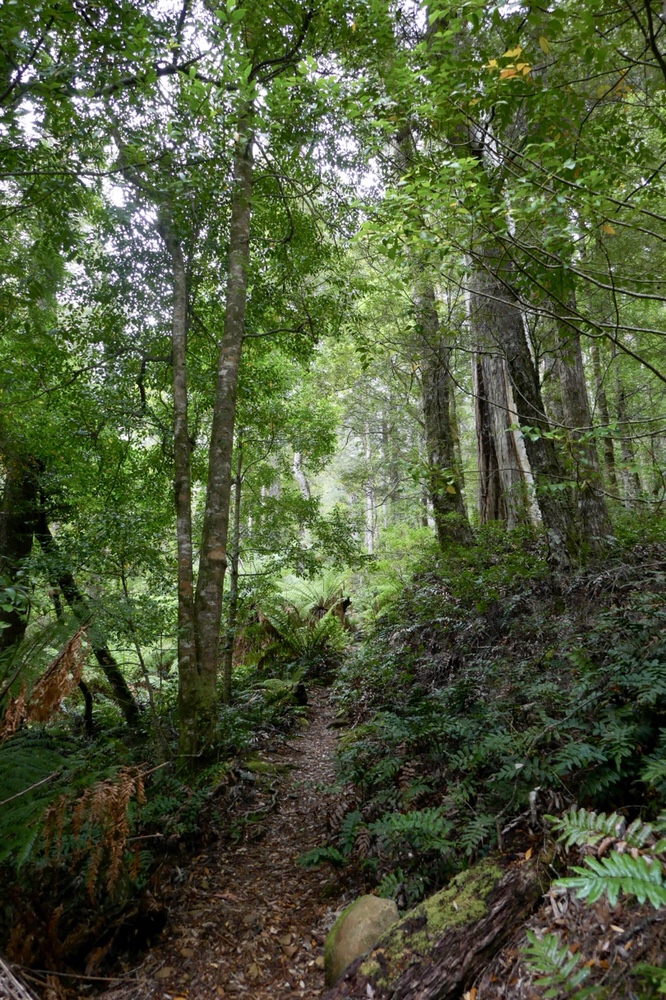
We decided to do the walk from the lower car park at Liffey to the top car park and return.

Its about a 9 km hike. The track begins at the campground located downstream on the beautiful Liffey River. The track is very clear as it begins its way north through dry sclerophyll forest with abundant tall, straight trunked gum trees and bracken ferns. A sawmill was located here in bygone times and the timber was all extracted from this valley. There is now little other evidence of forestry activities except for the track itself where felled trees were brought down on a simple log railway. In convict times heavy transport was done by groups of men who were chained together but in the more enlightened times when Liffey was exploited, I suspect horses were used.  Animals have been badly treated in the most part. I think back to my own Welsh heritage when my grandfather worked as a  boy in the coal mines, sweating beside pit ponies who were born, lived, worked and died without ever seeing the sun.

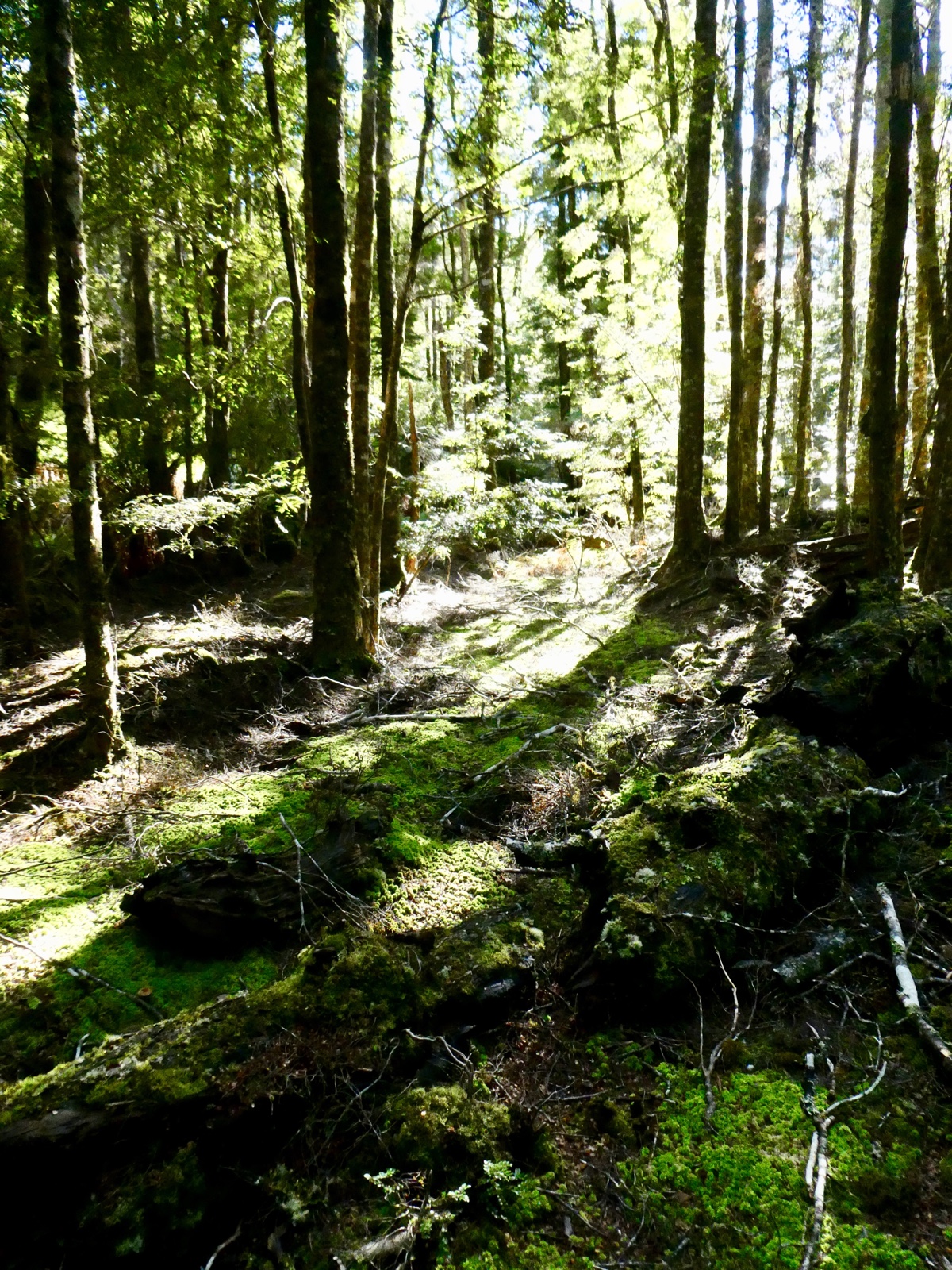
Thankfully in this part of Tasmania, the forest has been permitted to recover. It lacks the giants of the rainforests seen further south, especially in the magnificent Florentine Valley but there is still plenty of variety to enjoy on this walk.

The sky is hazy from forest fires burning northeast of Launceston. The bluffs above the river are finely obscured by smoke. They are sandstone. It was lifted here by dolerite, which is still deep in the earth, far below our boots. The genesis of the Western Tiers is one of the geological consequences of Antarctica tearing itself from Australia. Antarctica  left behind the island of Tasmania with which it has always previously travelled.

The rain and snow spilled onto the high country to the west (well at least West now) and melt water formed torrents, the landform changed, creating the ancestral Liffey River. It flowed with vigour, powered by altitude and abundant water, etching its way through the sandstone. This sandstone forms the river floor and the steep valley sides, littered with caves.

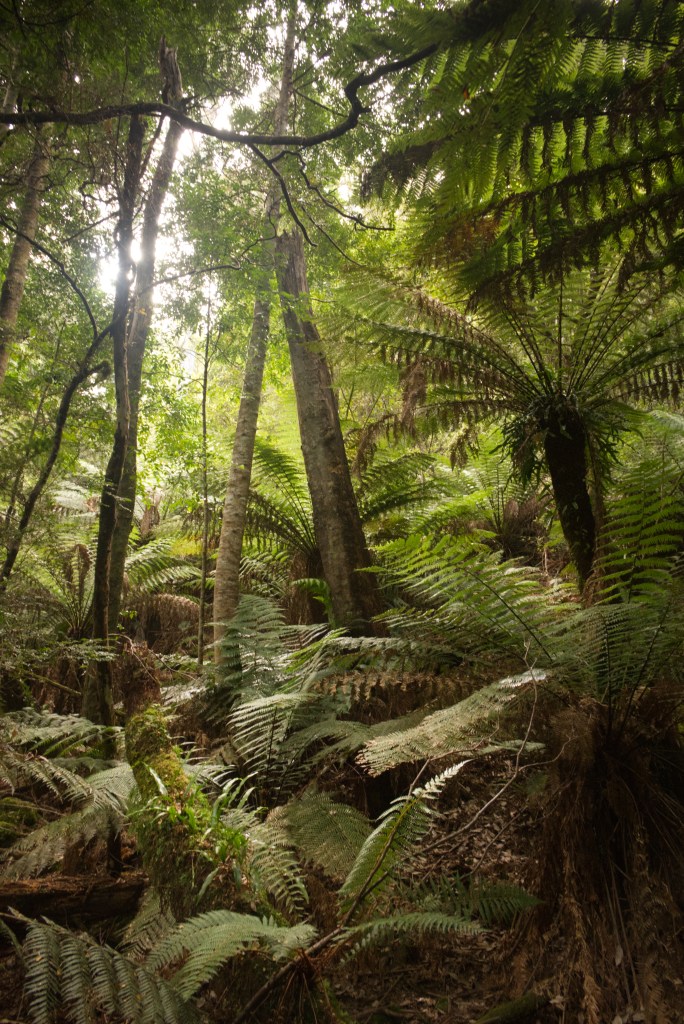
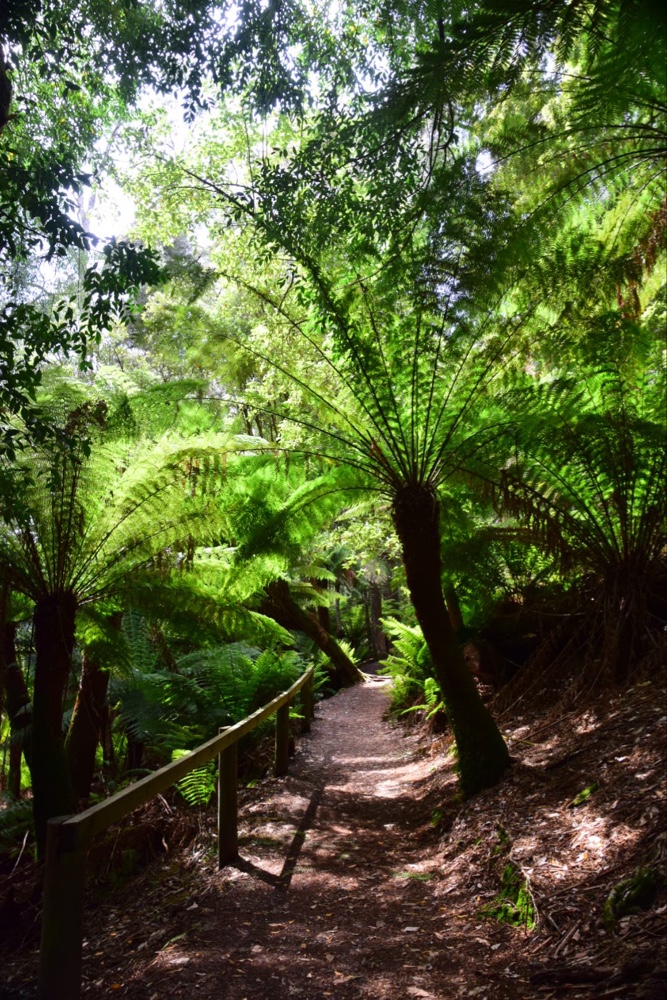
Man ferns, also called Tree ferns, and even more correctly, Dicksonia Antarctica. Again, this link with Antarctica. The track winds gently, swaying and undulating between these tall ferns. They are abundant, especially in dense groves nestled between the larger eucalypts located on the shallower slopes. Their fern branches arch over the track shading walkers like us. The brown fibrous surface of the ferns is inviting to touch, its pleasant to run my fingers over it. The light is even; a sunlight dimmed by morning, smoke, and the many sheltering trees and ferns. It scatters softly over the plants and down along the river; much of the bank is dark, forested, obscured but there are some renegade splashes of light which graze the water or a fortunate fern; aglow before the rest.

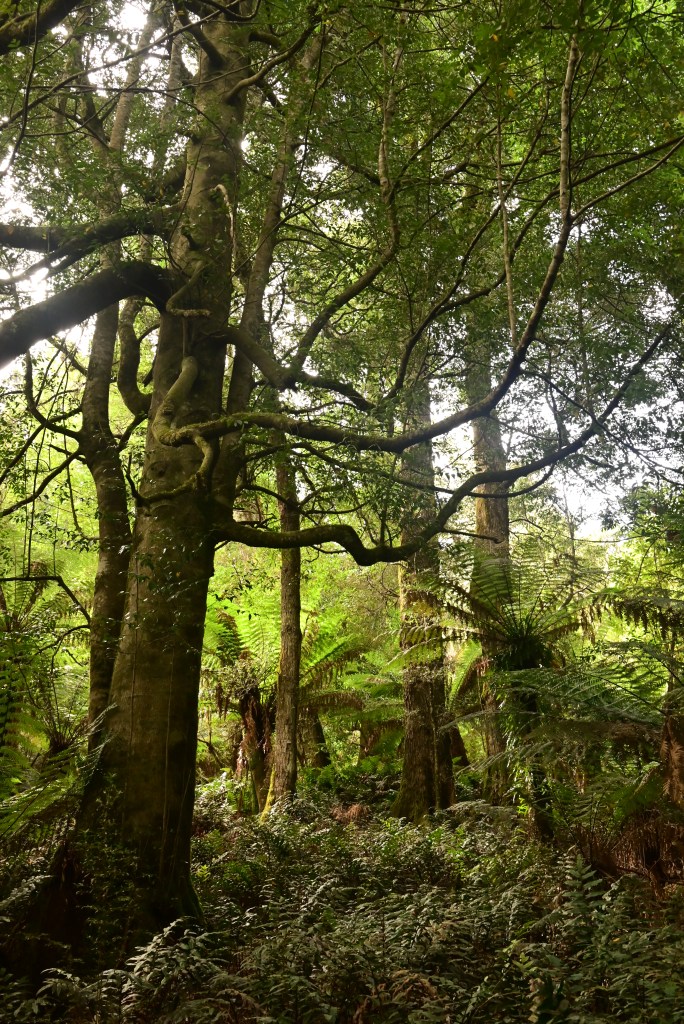
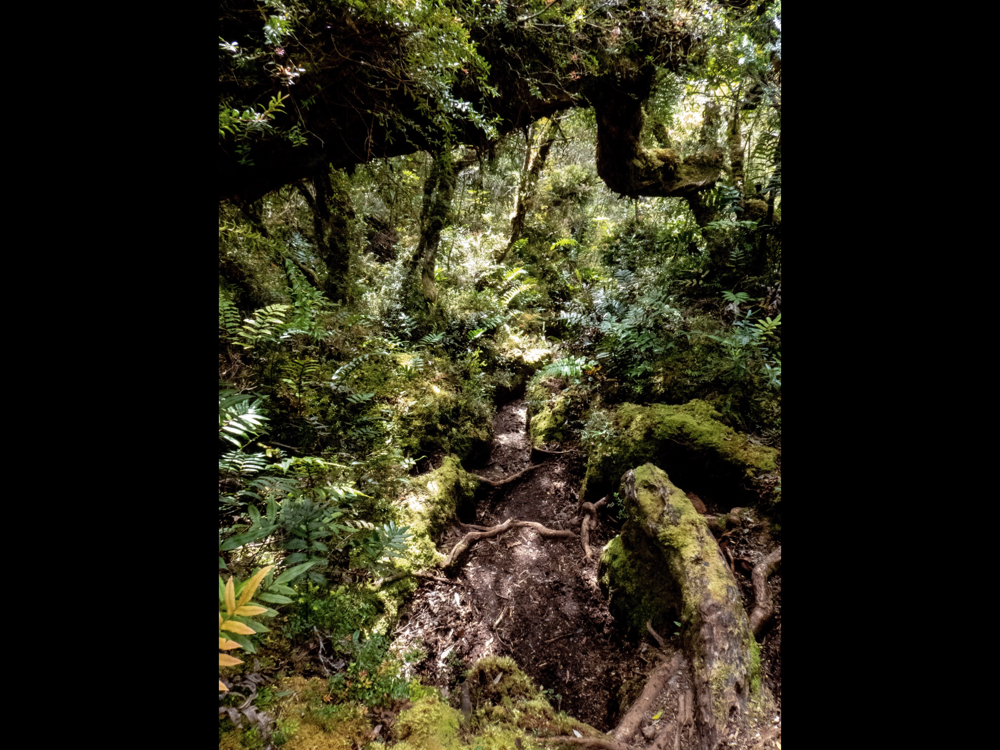
Soon we ascend, into a mixed forest with Myrtle Beech, Dogwood, Native Olives, Leatherwood, Sassafras, Celery top pines and tall eucalypts; the latter stand high, confidently astride the others except for the occasional large Myrtle Beech. The Myrtle Beech is an evergreen with small delicate leaves. Their dropped, brown, dry leaves are scattered over track and forest floor alike.

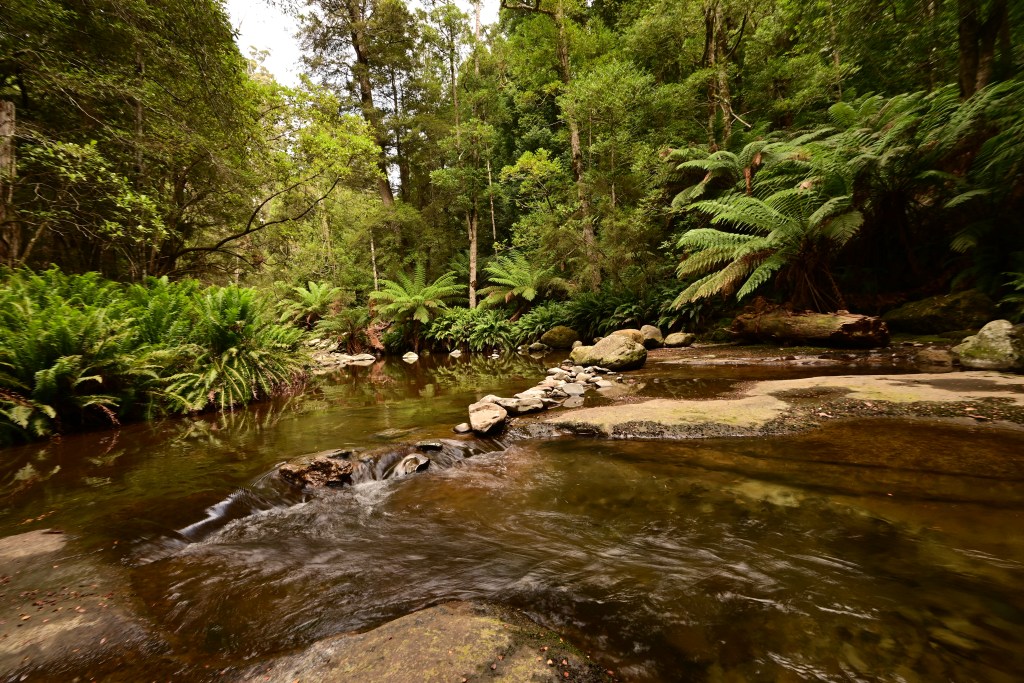
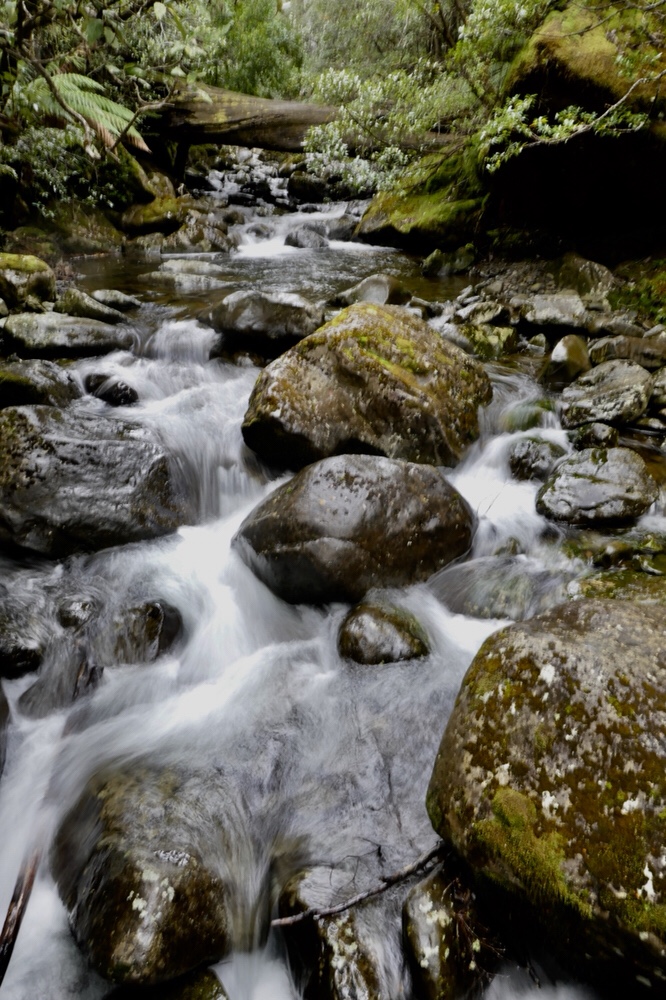
There is always the sound of water flowing, tumbling in the river. At some locations its possible to drop down the bank and look along the stream. It has been unusually dry in Tasmania the last 3 months, and the general water level is low. Fish can be easily seen as they dart to and fro in the transparent water.  The ofttimes single river running from bank to bank is now braided into separate, shallow streams; these splash between rocks; at times congregating in deep pools then they continue, their paths re-joining again and again.

We crossed the well fashioned bridge over Quinn’s Creek, a tributary of the Liffey.

A family of Superb Blue Wrens flitted together out of the forest to alight en masse on the branches of tree ferns. They rapidly darted off again and through the twisted branches of Myrtle Beech and as suddenly disappeared as they had arrived.

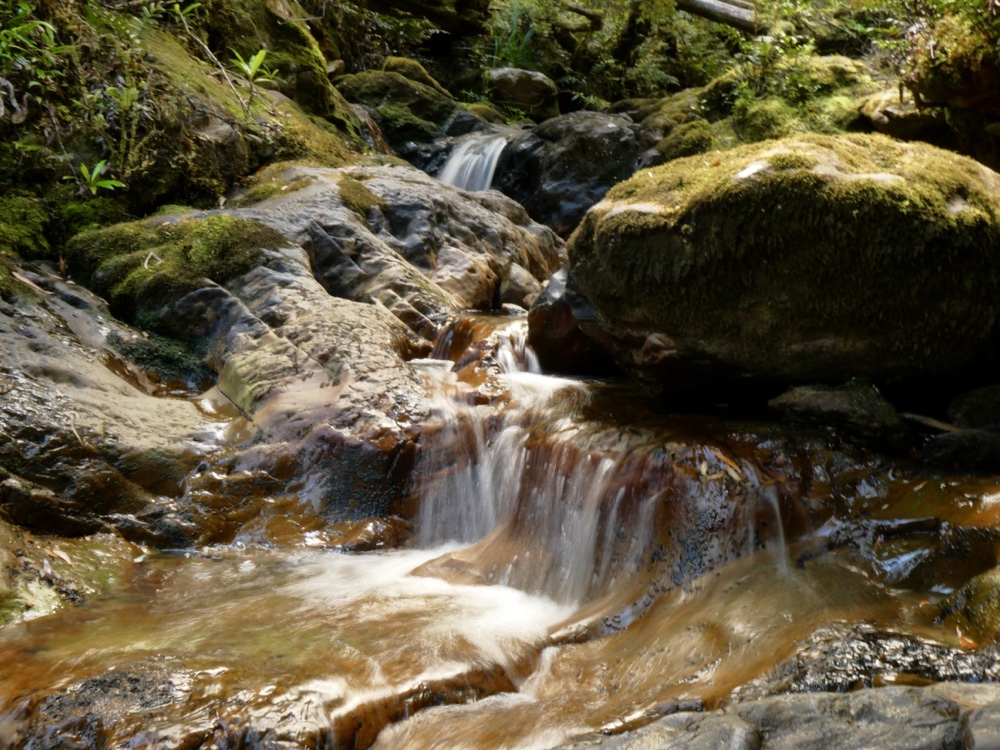
The first waterfall is 4 km from the beginning of the walk. It has been the subject of many calendars including one of mine. There are many round or oval stones that are not sandstone. The question arises about how they got here. They are called drop stones. At one time, probably the last great Ice Age from 2,000, 000 to 10,000 years ago, there were glaciers and ice bergs calved by them. Glaciers collect stones and rocks, then as the Ice bergs begin to melt, these stones are lost and fall to the bottom of the river or lake. The waterfall is series of horizontal sandstone shelves which sweep across the rivers course. It is a delightful waterfall even with the minimal flow we were seeing today.

Jennifer and I set up cameras, attached lenses, played with filters, and took lots of photos. Later we saw a family group with some 2 year and 3-year-olds straddling and climbing the steps to enjoy the views. We carried on the track to the cascades. We sat on a dry rocky platform beside the stream to relax. Afterwards we took more photos of the river, its pools, and cascades as they swirled around us.

We walked up the steps to the car park for a light lunch while sitting at one of the wooden picnic tables. On our return, we stopped off at a look out, then, when I returned to the track, I met a Tiger snake. It was in loose coils sunning on the dusty path. Suddenly unravelled and tried to enter the cover of foliage beside the track. I stepped backwards quickly and inadvertently collided with Jennifer and sent her flying backwards. Jennifer was sore from her heavy landing. Thankfully no permanent damage. The snake was gone by now. Tiger snakes are very venomous. This one was an adolescent as it was not big or long. These are even more risky as they cannot do dry bites very easily or limit the amount of venom they instil into a bite. Tiger snakes can be black (like this one), stripped, or even yellow and have a large head unlike the more delicate tapered head of a Copperhead snake.

It as getting warmer as the morning turned to afternoon. The air was dry and becoming dusty from distant smoke, but the forest was just as beautiful. The harsher light discouraged photography. At the conclusion of the walk, we both felt tired and a little irritable. We had not drunk enough. We knew this as we studied our water bags when we pulled  them out of our packs.

Main Liffey Falls
Ancient Myrtle Beech
Liffey River in the early morning
dicksonia antartica (tree ferns)
upper falls
lazy river above the falls
Standard
Hiking, tasmania

A gentle walk around Lake Dove, Tasmania

Walk around Dove Lake.

Date:  8.2.2022

As Jennifer and I are now retired, we have the time to do more walking and not just together each morning on the streets of Launceston but to some of the many beautiful places available to us in Tasmania.  Tonight, I am sitting on the big, green couch in our living room. Jennifer is sitting in her favourite chair. She is watching an old episode of New Tricks. I look up occasionally to see what’s happening. I spent an hour or so editing yesterday’s photos. The walk around Lake Dove has been my first opportunity to use the Z5 camera I bought early last year. I took my older Nikon camera and my very portable Lumix on our travels up north.

On Sunday we discussed driving to and exploring Cradle Mountain, well at least Lake Dove. As Jennifer has had some awful injuries over the last few years, any bushwalking must start gently. Tasmania has many wild hikes, and Lake Dove is not one of those. However, in awful weather, even the most benign hike can be dangerous. We have walked Lake Dove in freezing conditions. The track is mostly sheltered from wind and storms, but the surface of the track can freeze over. Snowmelt water pools in the rocky and scree covered paths and then freezes. The track becomes very slippery.

Jennifer decided to buy a roast chicken so she could make up sandwiches the morning of our walk. It has been 4 years since we last walked there , and we were very surprised at the many changes to the facilities and tracks.

We were tardy leaving on Monday morning. I am not clear why merely getting up takes so long when you are retired. Maybe it is the leisurely breakfast, the long shower or basking in the absence of haste. Anyway, we finally set off. It was a magnificent drive when we left the highway. We stopped at ETC for coffees. The road allowed us to cruise beside the Mersey River, we turned before a caravan and car but then were stuck behind a truck. Our reprieve was temporary. The road took us to Moina, nestled in forest, then turned left, past the turn off to Lemonthyme Lodge, then finally to the turn off to Cradle Mountain National Park.

We did not recognise the new visitor centre. A double storey complex with a huge footprint. It does not house many more services than the old, small timber building, but it now looks impressive, and if you feel the need or ever have the opportunity you can swing a cat in it, even a large one.  And this you could not do in the old centre. At one end is a shop for souvenirs and some hiking paraphernalia hanging on the display walls, which you should have brought with you before you ever came to Cradle Mountain. At the other end are hermetic reception desks for booking the bus or getting a park pass. We already had our annual pass, so it was the only bus ticket we needed and that’s free. Communication is more difficult as I get older, hearing issues, speed of modern speech, masks and the plastic walls between everybody. I am glad our needs were simple as no complex discussion could begin to take place with any hope of achieving clarity of meaning. None of the Chinese tourists had their bus pass as they waited for the shuttle. When the doors opened, they marched on and just as quickly marched off as the driver shooed them off to get a ticket at the information centre. I don’t understand why a free service needs a ticket. I suspect that collecting the ticket means you must show or buy a Parks pass. No ticket = maybe no pass. These national parks, and none more so than Cradle Mountain, are huge income generators for Tasmania.

The bus stops at the siding, a short walk form the visitor centre, there is a loud whooshing sound as the bus drops downwards to enhance access. We got in and found two seats near the front and tucked up with our packs. So many other walkers are only clutching a mobile phone as they enter the bus. We take the whole proper equipment thing very seriously. Despite the brilliant sunshine baking the entire surface of northern Tasmania and Cradle Mountain in particular, we had water and rain jackets, snake bit kits, in case there were multiple snake bites, extra warm gear, lotions for sunburn and insects as well as the lunches Jennifer had made. The indigenous insects I hate most are March flies. They take not the slightest notice of any insect repellent, whether this is chemical indifference or just plain bloody mindedness, I don’t know. As we have made the effort to put on these revolting sprays, I don’t believe it is unreasonable for any reasonable insect to at least pretend to be repelled by them. Its seems unfair, and even discourteous.

It did not take long to get to Dove Lake. At present, there is no car park as construction work spreads from the building site itself to the old car parking area where all the raw supplies are scattered about. The building is proceeding apace, its wall of glass spanning one entire aspect. The glass reflects the green of the grasses and shrubs. Despites its large size, the building is surprisingly discrete. Now it is not finished and horror of horrors they may give the building a golden roof or add statues of heroic Tasmanian Politicians, both of them.

We walked from the sign in office down a gravel to the track around Lake Dove. We went clockwise as usual. The track is well maintained, the steps graded, though Jennifer does find that the levels of each step are too big for one pace and too small for two. She must do a series of bunny hops to my leisurely amble. At least the steps are not so high that she to climb up or down each one as she had to when descending Tongariro in NZ.

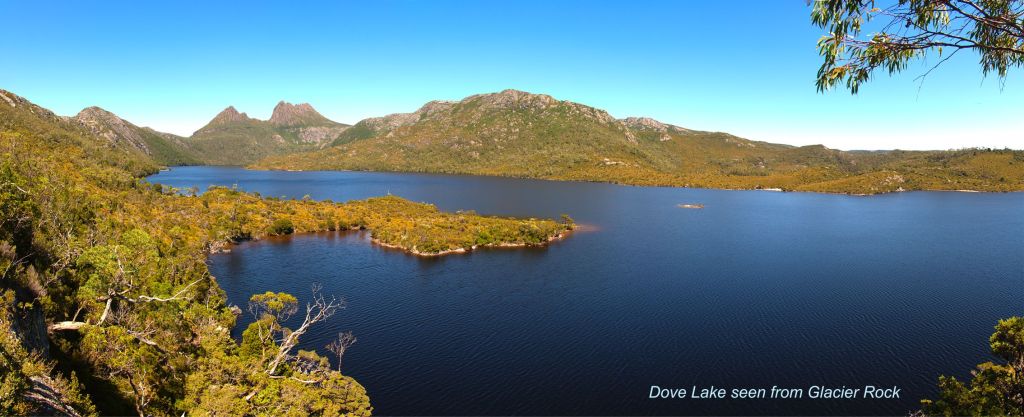
The sky is amazing, I have never experienced this clarity of view and such perfect blue skies. The beauty of the rocks, mountains, towers, water, and plants are for once supplanted by this wonderful light. Everything was lit up. The colours of flowers left over from Spring and summer glittered, the wind propped waves shone over the deep, in stately dance over the lake from edge to edge. Cradle Mountain, Mount Campbell, majestic Hanson Peak, the ruggedly beautiful hanging valley beneath Kathleens Pool, and Marions Peak could be seen in detail, every shadow, every rock and pitted wall, seemed so close, you could reach a hand and drape a finger down along the columns and ancient stone. Distance seemed irrelevant, light connected and illuminated with a rare pleasure.

We stopped at Glacier Rock. I am going to pause here to explains that this feature was once called Suicide rock because of a steep wall and drop to water on one side. This steep wall is very characteristic of glacial action. The glacier met this dense lump of quartzite, and climbed one side, then descended grinding and sculpting the rock. Yet, it proved too tough a beast to be ground out altogether, but the shards it carried all splattered beneath its icy belly, debris it had gathered on its journey from the top of Cradle Mountain, did their damage creating the sheer wall that drops to the lake below me. It is now called Glacier Rock. The top of the rock is now festooned with a wooden veranda, and a rim of steel posts. No more having picnics and seeing your thermos or a younger sibling roll off into the lake. I used to enjoy the clamber on to the top of Glacier rock. In retrospect it was inevitable that anything this close to a road was gong to be made SAFE. I am thankful that the steel posts are dark green and arguably discrete when observed from the other side of the lake. It could have been so much worse.

We carried on our walk, warm in the sunshine and easy underfoot. We stopped frequently to enjoy the views of the trees, shrubs and we even saw an echidna. Another walker stopped on the path, and it was he who silently pointed into the shrubs. There was the echidna, he was resting for only a moment, before he clambered over a branch, gave us a quick, blurry look, then disappeared.

We visited two spits of land, that create small beaches, to look out over the lake. There are fine views to be had and especially of Cradle Mountain. Now the name “Cradle” Mountain has created some confusion over the years, so I have done some research. I used a book and not Google. A practice I no longer thought possible. Well retirement is an opportunity for exploring new ways of being and doing things. Any way. The name cradle precedes the introduction to Australia of the Miners Cradle. It was used to exploit alluvial gold in Victoria and NSW. It was used by surveyors in the 1820’s which is 30 years before the Gold Rush. In fact, It was named after a baby’s cradle, a nineteenth century version at that. It is no wonder that modern parents who can only recall an Ikea inspired bassinet won’t recognize a rocky version of its wooden ancestor. Only compounding the problem of interpretation are the liberal servings of imagination and alcohol, that seem to be fundamental in the naming of features geographic.

One of the great pleasures of walking around this lake is the diversity of plants. Certain aspects lend themselves to certain species. The most sheltered areas favour the beeches, while the darker, cooler spots have pandani reaching upwards in the speckled light. There are waratahs, mountain pepper, celery top pines and many more. At least the celery top pine has leaves that look like celery. It gives one a fighting chance of identifying at least one plant when the flowers have fallen off onto the ground litter. Mountain plum pines with their bright red cherries are plentiful. Cabbage gums, also called Snow gums in Victoria are twisted into agonised contortions by the weather and snow of the cold winter months. Banksia flowers, warm, yellow bottles are splashed atop their trees. The only reliable flower in this location.

We stopped for lunch at our usual spot, a wooden platform nestled at the southern waters of the lake, a spot planted beneath Weinfdorfers Tower.  We relaxed, looked around us, chatted, and then ate our sandwiches. Soon after we had finished, one of our daughter’s friends from school with her Mum arrived. It was great to catch up on what Issie had been doing since school. Of course, she keeps reasonably up to date with everyone on Facebook, so we did not have a lot of news for her. They soon left us on the track as we stopped to take more photographs of the forest and lake.

Previously on our visits, the walking from this point on was not as good. This was solely due to these long metal wire paths hanging suspended above the ground. They would wobble as we walked. I never felt safe on them. Now, there is a new surface, rubber matting on firm struts to walk on. This is much more pleasant. The trail goes through beech forest, skirts a rocky prominence then there is an ascent on stairs to the track. This track continues upwards and provides many beautiful views of the mountains. The cliff beneath Kathleen’s pool abuts Marions lookout. This is a massive block of stone; I suspect its quartzite. This would make it much older than the dolerite of which Cradle Mountain, and the towers are made. Quartzite is sandstone which has been heated and compressed by tectonic movement eons ago. Dolerite is magma that erupted form the mantle but is then trapped beneath other layers of rock. the slow cooling that allows giant hexagons to form; the columns that you can see. Quartzite has another property, the tectonic forces that created it, also twisted it and for this reason it is sometimes called Folding rock. there are numerous spots where the grain of the rock can be seen to bend and twist. This all take place long before the dolerite was formed.

The leaves of the Myrtle Beech are all green; no early hints of the colours they will sport in April or May. As we ascended, the forest thinned and stunted, then fell away, till only grasses and low shrubs abutted the track. The track consists of loose stone held by sturdy wooden barriers to each step. The footing was certain for nearly the whole walk. We stopped at the Boathouse by the lake. Its colour, pale and muted greys from its ancient timber slats, blends in with the beach with its grey erratics and the light washed green of the grassed slope behind. On some of the older, less used tracks, the same timber which supplied the wood for the boathouse provided boards; first placed there by Gustav Weindorfer in the 1890s.

We caught the bus back. We were too late for coffees at the café but visited the Souvenir shop before beginning our drive home. As we would not arrive home till after 6 pm, we decided to visit Empire India for dinner. Rogan Josh and Chicken Saagwala are great for dinner after a long but very pleasant hike. When we got home, Jennifer started the washing machine while I passed out. What a super day!

South end of Lake Dove, with Marion’s Peak insight
the boathouse with Cradle Mountain to the left. Glacial Erratics are at the waters edge
FROM LEFT TO RIGHT: Mt Campbell, Hanson’s Peak, Cradle Mountain, and Marion’s Lookout.
Standard
tasmania, Uncategorized

Flinders Island with Tas Ex 2020

I am sitting very comfortably on a camp chair, perched beyond the reach of our near permanent summer sunlight, sheltering in a gazebo/tent. I am on a Tasmanian Expeditions trip to Flinders Island with two guides; MJ and Alice and six guests and Mitch who is in a slot between guest and the Tas Ex. company. Most of the guests are of my knee popping, hip creaking, and back crunching demographic. None of us have been to Flinders Island previously and I think all of us are excited about the possibilities for this visit. 


At the campsite where we will be staying are a smorgasbord of facilities, let me take you around; there is the sheltered meal area where MJ and Alice prepare most of the meals and which doubles as a shelter from sun and rain, there are the scattered tents set up on timber platforms each containing a stretcher, there is the toilet and shower and then there is the ground spotted with strategic potholes, wombats, snakes and jack jumpers. Tas Ex rents this area from a local landowner but is looking at obtaining a camping area nearer a beach – any beach – as they are all fabulous, isolated, clean and beautiful, and curve endlessly into the distance.

Flinders Island is the main land mass of the Furneaux group of Islands. In every direction, from any highpoint or beach, you can see these islands. Apparently, they are all teeming with snakes. The vast numbers of these reptiles are all the more appalling as they are the size of industrial pipes and dripping with venom. Of course, I cannot see them from here on Flinders Island, but I know they are there. 

Tobias Furneaux was a captain on a ship called the “Adventure” and was the junior officer to Captain Cook being historical on the “Resolution”. You may know that Captain Cook came to Australia a few times, first in the” Endeavour” and later in the “Resolution”. Cook wanted to know if there was a strait between Van Diemen’s land and Australia or not and tasked Furneaux with this problem. Furneaux bobbed up the east coast of Tasmania and saw loads of water, strong currents, all flowing from the west, but he thought it was a bay, possibly with a very big rip. Thus, the discovery of Flinders Island was delayed -until – the non-arrival of rum provided the needed motivation and finances. In 1796, a ship carrying 7000 gallons of rum, which in metric is the equivalent of 5 million hangovers, left Calcutta tasked with bringing alcoholic oblivion to Sydney Cove. The ship was called Sydney Cove, to help with navigational challenges, given the amount of alcohol on board such challenges could be reasonably expected. On the way they managed to locate at least five hurricanes which is something of a record – it is unclear if there was more water in the ship than outside it. They rounded the southern tip of Tasmania, hit the water north of our island, then easterlies blew them west, until they were shipwrecked, between what came to be called Preservation and Rum Islands. The rescue of the surviving crew and the restoration of all that rum to a thirsty Sydney, were naturally top priorities. It was a shemozzle in many ways, the poor crew who paddled off north, were mostly drowned or speared or arrived in Sydney after weeks of just awful walking from ninety- mile beach to the outskirts of Sydney. One of the ships that came to rescue them, sailed into the sunset then promptly sank, and was only located by divers in the mid- twentieth century. Matthew Flinders was a young officer, in charge of the third rescue ship. On his return to Sydney, he convinced the powers that be, to give him and his best mate, explorer Dr George Bass, a small ship to explore the waterway before any more rum was lost. It was Flinders who named Bass Strait in his friend’s honour. Flinders Island was not named that by Flinders, who christened it Great Island. It was Governor George King, who chose the name by which we know it today. Matthew Flinders was not only incredibly competent but a truly decent human being, and it is fitting that this beautiful island is not his only namesake but that a fine university in South Australia is named after him as well.

I have dreamt for years about coming to Flinders Island. Together with King Island floating just to the west of Bass Strait, they are the only two places where the 40th parallel makes landfall all the way to South America. Its just water and albatrosses for thousands of kilometres in either direction. Closer to home, there are at least forty islands in the Furneaux group depending on the tides and prevailing seas. Our flight to Whitemark began at Bridport which is an hour drive from home. Whitemark is the principal town on Flinders Island. The group was split between two planes. These chubby machines resemble obese shopping trolleys as they rumbled happily through the air. We flew along the scenic Tasmanian coast, then diverted north to Clarke Island, then skirted Cape Barren before arriving at Flinders Island. Below us we could see many flat topped, islets resembling beached turtles. Their splendid rocky, granite coasts and faultless sandy beaches each had a penumbra of green water which swiftly blended into the dark waters of Bass Strait. There were great shoals of green tinted granite beneath the waves, these hazards would have been invisible when sailing across these waters in the wooden ships of the nineteenth century.

Only the bravest of mariners or fisherman would venture in these waters. The government in Sydney was reluctant to build a lighthouse, as it was not going to be built near Sydney – has anything changed? Unfortunately, it took twoshipwrecks with great loss of life finally to prompt construction.

For most of our short week on Flinders Island as well as the flights there and back, the sky was hazy from both mainland fires and a blaze on the north east of the island. I feel a bit frivolous being a tourist while my country, its forests, homes, native animals and businesses are incinerated but the places that aren’t burning need the economic benefits of tourism. 

Alice and MJ met us at Lady Barron Airfield, they were standing outside the minibus and its trailer. I had spoken to MJ (Mary Jane) a few days before by phone, but it was the first time I had met Alice, which is odd in a way, as she is a Launceston lass through and through. We were driven north, past Whitemark, along mostly well surfaced, gravel roads, past haze obscured mountains, farmhouses on dry paddocks, round barrelled black or brown cattle and small flocks of Cape Barren geese posing beside shrinking farm dams. Mating currawongs bustled in the trees and then flew out to race the bus. 

The contents of the campsite were discussed above but its location has remained a secret till now; the property abuts the main road on its eastern aspect and Marshall Beach on the west. The campsite is near the road, and you can hear the occasional car or truck. The beach is about 1 kilometre away, a walk along a vehicle track then spiralling through a maze of tea tree and she-oak to Marshall Beach.

Marshall Beach was named after a shipwreck. In the splendid Furneaux Museum are artefacts from its wreckage recovered over the years – especially brass taps. Everybody survived this shipwreck and surprisingly this was the norm for this sort of calamity. Boats did vanish or were lost with considerable loss of life but that was unusual, which says a great deal about the competence and bravery of the crews and captains of these ships, not to mention, the passengers. It must have felt like a lottery every-time they boarded a ship, but board they did. We get anxious about delays traveling by air while they were not fussed about dragging themselves in their anklelength crinolines or woollen suits, through surf onto an isolated beach after a shipwreck. Another ship was filled with clocks, and littered beaches with tens of thousands of spoked rings when it split up on a submerged shoal off the coast. 


Flinders Island has some great eating and drinking spots. I forgot to mention that before arriving at the camp site, we interrupted our drive with a visit to a new café at Whitemark, where I had a coffee. There is a fine selection of wines and even a local whisky. I must admit I did not like it; young, and a bit rough on the throat, but a few years down, it will mellow I’m sure.

Each tent is of a robust construction and fabrics, quite waterproof, and fastened to a wooden frame/base. There is a stretcher and mat for sleeping but nowhere to hang clothes which doesn’t affect me as I always pile my clean and discarded clothes together in corners making them simultaneously easy to find and as a bonus, provides a habitat for spiders. I had one circle hook inside the tents apex – I used this to hang wet jumpers or shirts, but the interior was so well protected from the elements, nothing could actually dry as humidity sky rocketed whether the sun came out or not. 

Lunch on day 1 was a locally made quiche with salads prepared by MJ and Alice. We gathered ourselves in our chairs into a rough circle basking in smoke muted sunshine. In cooler weather, the centre of any group of chairs would be a campfire. Not today or any time this week, as its all total fire ban.

After lunch we boarded the bus for our first walk. We parked at the ramp/entrance to All-ports beach. The route is a perambulation along white sandy beaches, interspersed with horizontal giddy rambles over granite spits.Underfoot I balanced on small, wobbly rocks wedged between doubtfully fixed boulders. I took great care to avoid a fall as the consequences of tipping over with a rock wedged ankle are not to be countenanced. There are few shore or ocean birds to watch; there was a Pacific Gull gliding overhead, red lippy on aperky, orange beak. There was pair of Sooty Oystercatchers goosestepping in the shallows before launching into the air and flapping in single file over the water. We saw no migratory birds, and indeed, according to locals, their numbers are way down on previous years. It can only be hypothesized why this is the case. One suggestion is the lack of plankton in the north pacific and waters north of Australia. Muttonbirding is a major industry for Flinders Island which depends on adequate numbers of Shearwaters arriving from Siberia and setting up in their old nests in the Furneaux group. Locals, especially Aboriginals, put their hand and arm down a tunnel, to pull out a shearwater; however, sometimes it’s a sleep deprived Tiger Snake! What a surprise!


The walk is only a few kilometres, ending at Castle Rock. Castle rock is a large tor situated high up the beach. There is a great crack bifurcating this loaf of granite. It is smeared with red streaks of feldspar and coated with orange coloured lichen. When I studied the surface of the rock, I could feel and see its roughened nature, a dough of stone peppered with abundant crystals. I am no geologist but basically, granite consists of three major ingredients, mica, silica and feldspar that can all form crystals. Granite contains traces of other crystals such as tin or the famous Killiecrankie Diamonds, a less than valuable garnet. These “diamonds” are washed out of eroding granite onto the beaches we are now walking on.


After our walk, we drove to Whitemark to buy any alcohol we wanted. The pub is called the “Interstate Hotel”. This is easily the biggest building in Whitemark. It was built in 1911, boasts a balcony and 32 rooms. Thankfully, the originally installed acetylene lighting has been replaced by electricity. The bar was full of fishermen, farmers and a few firefighters all sipping beers. Two boxed pizzas were waiting to be picked up and smelled rather good! Meanwhile, the solitary barmaid would rest her elbows on the bar, listen to your order then abruptly dart back into the cool room to retrieve a bottle, cask or usually a carton. Flinders Island has its own winery, it is called Unavale winery and its located on the south western tip of the island. Some of the other guests bought a bottle to sample the wine and they enjoyed it very much.

There has been a fire on the north east of the island for the last three days, its nothing like the size or severity of the mainland fires but the local crews were not being complacent about it. The road north was blocked and at least three crews were working there around the clock. The island is dry, the typical Irish green paddocks of Tasmania replaced by fields of stunted, brown turf. The forests and bush in the nature reserves is drier than normal and this is where dry lightning started the current bushfire.


After a brief interlude at the campsite, we visited Wybalenna. Wybalenna is the saddest place in Tasmania. Aborigines had not lived on Flinders Island for 10,000 years before being dragged here in the 1800s. The original Indigenous inhabitants had been on the island from about 40,000 years to 10,000 years ago. They were marooned as the waters rose, flooding their great hunting plain from Westernport to Tasmania to create Bass Strait, and make their homes into islands. The reed and bark boats built by Tasmanian Aborigines are terrific for estuaries or rivers, but these vessels would not have been able to provide safe travel between Flinders Island and Tasmania.

To North Tasmanian Aborigines, Flinders Island was the land of the dead. Between 1833 and 1847, the Tasmanian government of the time, moved Aborigines rounded up around Tasmania to a settlement called Wybalenna. It is now farmland with little indication as to its previous notoriety. Large compounds built to house the 134 Aboriginals have gone, though the brick chapel has been well restored and at least there is some information here about what happened to the men and women transported here. George Robinson convinced and cajoled the Aborigines he met when travelling Tasmania, to come here. I doubt they had much choice.

When only 47 Aboriginal people were left alive, the facility was closed and thesurvivors were moved again, this time to Oyster Bay in eastern Tasmania. The people at Wybalenna died from malnutrition, neglect and depression. I walked into the cemetery, I saw a few tombstones to white people who are buried there, but there is only one marker, one plinth, that lists the number of (approximate) Aboriginal dead scattered in the earth. MJ asked me what I felt, I said I felt physically sick. 

I was looking with a very jaundiced eye at this place but two things lifted my mood; a local farmer, physically indigenous, was pleased our group was visiting and learning about Wybalenna, giving us a cheerful, thumbs up and wave as he drove his Ute along the gravel road beside the cemetery and the second thing was an oval plaque in the garden behind the chapel. I cannot remember the details of what was said but, an esteemed elder, a woman, wrote that though bad things had happened here, good can happen too. No matter how bad things were or can be, there is still a place for good. Our visit here kicked off many discussions about modern Aborigines and how their opportunities and future could be improved not only in Tasmania but all over Australia. Certainly, many stories have been lost, but new ones can be made which could include both white and black Australians. New Zealanders embrace Maori culture, maybe it is overdue for all of us in Australia to embrace Aboriginal culture!

After returning to the campsite, MJ explained that our walks for tomorrow and indeed for our entire stay would be decided by weather and fire. Certain climbs should not be attempted in windy conditions, while an ascent of Killicrankie should not be done in wet weather as a large granite shelf near the summit, can become too slippery for safety.

Overnight, I slept well, I was warm and comfortable with the tents outer fly open but the inner well secured to discourage little visitors of reptilian persuasion. As much as I might enjoy discovering a tiger snake curled up on my chest in the morning, I would not want to frighten the animal by launching it into orbit. I arose in plenty of time for a 6:30 am breakfast. Though it had not rained overnight, there was now a fine damp drizzle, so we enjoyed our meal in the tent. Though it is a little cramped, it was better than getting wet before the day had even begun. MJ and Alice cooked up fried eggs and toast for us all. I sat consuming muesli and sliced up banana while I waited. 

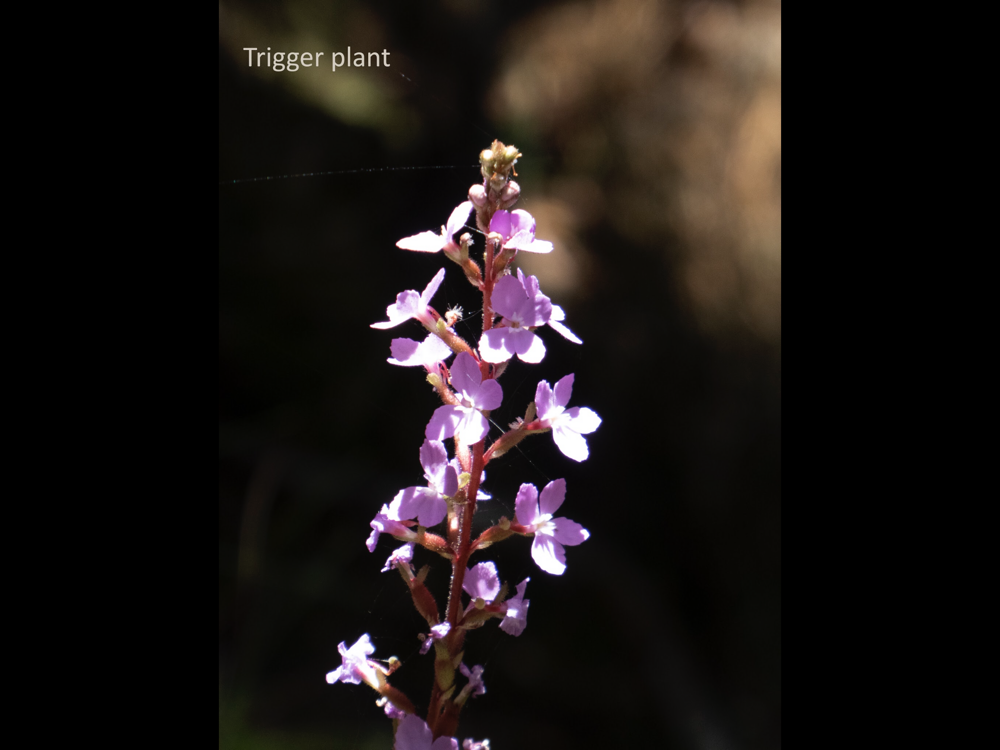
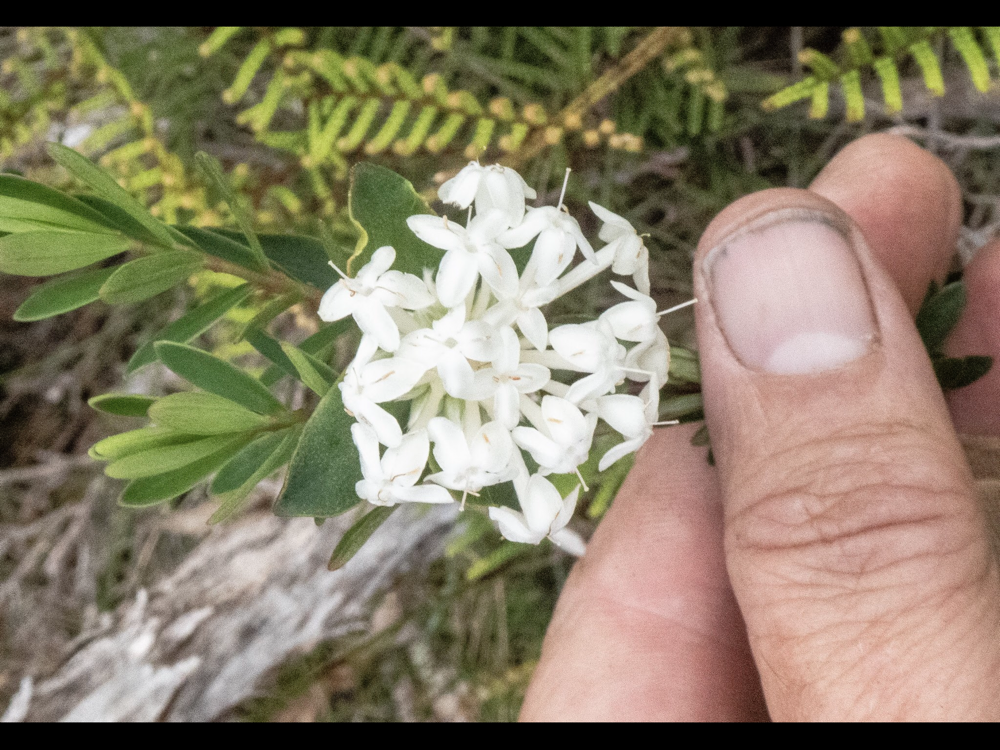
After breakfast, after washing my plates, I packed up my gear for the day especially not forgetting to bring plenty of water. We drove to a parking area near Killiecrankie docks to commence our morning walk to the hamlet of Killiecrankie which is to the south west. The walk commences with a kilometre stroll down a winding 4WD track with some fine views of beaches and granite formations located to the north. The dock is a collection of eroded granite boulders interspersed with sandy beaches and would be beautiful in any weather. The track skirts the coast. It is a mixture of magnificent bushland,rockhopping and trudges on sand. There were many coastal flowers including: coastal trigger plants (delicate purple flowers poised off a single stalk). There was abundant coast wattle; rounded pigface (a purple flowered prostrate clinging to sandy ground); smooth rice flower (masses of tubular, white flowers) and my favourite, twining glycine with its purple pea flowers  a climbing plant sheltering  amongst larger shrubs.

We found an old sealer hut wedged up against a granite wall. The roof was blown off to one side. Most of its timber paling walls were broken, and some supports were askew. Sealers were amongst the earliest inhabitants of Flinders Island. The survivors of the ship “Sydney Cove” regaled their drinking companions in the inns of Sydney with stories of seeing many seals in the Furneaux Islands. The ships used to transport the men and the seals they killedwere small vessels and so many sealers had to bunk in isolated huts to continue their grizzly work of extracting oil and preparing skins while waiting for their ship to return. However returning ships were often delayed, and sometimes wrecked. Dwindling of their provisions made their isolation and privations extreme. Unfortunately for the seals, these marine mammals had no fear of men, and it was not long before they became extinct. This was despite last minute warnings and quotas imposed from far off Sydney. Newly arriving American sealers took no notice of colonial authorities and finished the complete slaughter of these beautiful animals. Sealers lived in these tiny, inadequate huts  all much like the one we visited  for often many, lonely months. It would have been very cold and bleak when sheltering from winter storms and the long nights typical of Bass Strait. For company, they sometimes captured Aboriginal women from the mainland. Their descendants are still living on Flinders Island today.


The track was hard to follow in one section, but we soon sorted that out. We stopped there for morning tea and a sit down to ponder the world, on a rocky area with a fine view of a haze covered ocean and the steep hill called Old Man’s Head. This consists of an upward thrusting jumble of granite boulders. It is very visible from Mount Killiecrankie as it arises from its western foothills.Even though it is not tall, its top was still obscured by low cloud. This coast is very reminiscent of the scenery at Wilson’s Promontory on the southern coast of Victoria. Here is the same orange flecked granite, shields of stone, and sheoakforests filling the interstices with green at the lower altitudes, while a plethora of Tasmanian Alpine trees do so at higher levels.  The bare rock of exposed summits defies all but the smallest and hardiest of plants. The gnarled shrubs and trees are natural bonsai, hugging water filled rock holes and whatevershelter they can find amongst the stones.

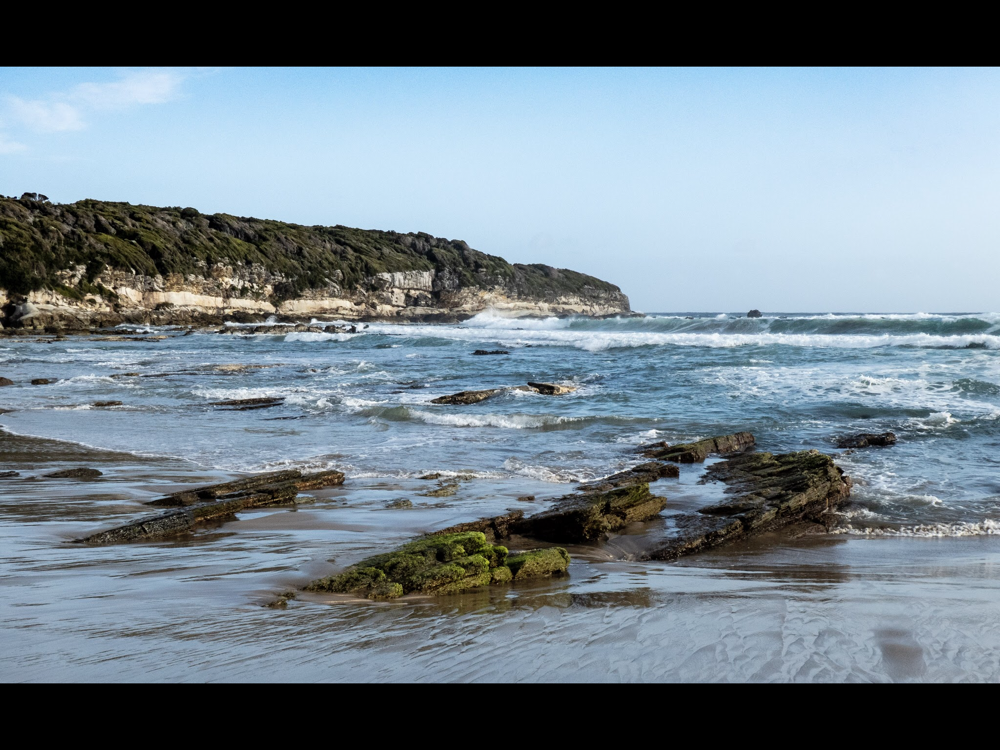
I plunged along, taking photographs and brainlessly leaving the actual path just before I reached the turn off to the base of Stacky’s bite. The idea was to walk beneath it rather than over it! I could see my companions milling about on the beach below me. I threaded my way back into the bush and soon joined everyone else on the beach. I was now the same level as the sandstone arch, named Stacky’s bite. MJ had explained how it formed but I was unable to hear or seek clarification as I was then high overhead on top of said arch. The bite is rough, ripped stone; it’s not smooth at all. This rough surface was created as jagged pieces of ancient sandstone were extracted by torrential winds, surf and sand to create this appearance. Larger fragments were strewn on the adjacent beach, all festooned with drying kelp and sea grass.  This sandstone predates the granite of the island. The arch was at one of two headlands that together create an entrance to a small bay. From above, the beach curved gently over its extentand faced a pulsating, jade of entering waves.

Beyond us are many small islands, the breakers of Bass Strait carelessly hurl water up and over them, the cascading water briefly drapes them in a white cowl.

Beyond this little bay, the track soon alters from a bush path to a route on a vast,wide beach. The sand here is grey to white depending on how much sunlight can bathe the sand. This sand is made from the silica grains washed out of the granite backbone of this island and its cousins. after twenty minutes walking, we reached the hamlet of Killiecrankie, a cosy headland sheltered by long granite spits, a few houses nestled in bushland. Two fishing boats were moored in the shallow bay. MJ had prepared lunch for us. By now, due to the constant drizzle and wind, I was becoming rather cool. I had been uncharacteristically diligent in wearing wet weather gear but I had sweated over the walk so my clothes were damp. After lunch I was happy to climb back into the warmth of the minibus and return to the campsite to put on fresh, dry gear.

In the afternoon, we visited the Furneaux Museum. About five years ago, enthusiasts of local history received a grant to set up this wonderful museum. There is a new building which houses the entrance area and main exhibit; an exhibition which changes from month to month. There are four other buildings of historical significance, all related to aspects of island life. There is the whole school- house (named Dryazhell as no alcohol was available locally for the sole teacher) which in addition to information about education, contains geological and natural history exhibits, artefacts of Aboriginal life and many fine paintings and photographs of famous ships which worked or came to grief in Bass Strait. There is an old mutton birder shed with photographs and exhibits of how the killed birds are still processed. Another shed contains larger artefacts including old machines used in farming and shipping. Even medical care is discussed with a doctor’s leather bag from the 1920s, anaesthetic and surgical equipment. In the main exhibition hall, the display was about island graves; too many children died of infections and other – now preventable – diseases while most adults also died long before their time.

The museum is managed and totally staffed by volunteers. It is an excellent museum located at Emita with views of All-ports beach.

My favourite display is a series of drawers containing numerous geological samples from around the island. An accompanying booklet explained the significance of each rock or fossil. I read with interest how granite forms and of what it consists. Granite arrived in Tasmania a very long time ago. Between 350 and 400 million years ago, magma swelled up from deep in the mantle, and was trapped deep underground by sandstones that had been created from the sandy floors of shallow seas 50 million years before that. When magma cools slowly, it forms crystals, principally of feldspar – an iron containing mineral which is naturally orange or red in colour, mica and silica/quartz. These crystals give a graininess to the rock  scientists recognised the similarity to grain, in Latin,called granum – grain – hence granite in English. Magma which cools more quickly than granite but is still underground (intrusive), is much smoother when it solidifies  and it’s called dolerite. The granite here is Jurassic in origin, thus coexisting with the time of the dinosaurs – so when you look at granite mountains on Flinders Island you should imagine how these impressive structures have eroded from Himalayan dimensions over the last 200 million years. Erosion  powered by the action of ice, glaciers, sand, wind, lichen, plants and water – acted to smooth, rip and crack the boulders and monoliths into the amazing shapes we see on Flinders Island today.

I think it is obvious how much I enjoyed the two hours I spent at Furneaux Museum. I would be delighted to return there.

After our visit, we back tracked to Whitemark for supplies then back to the campsite. The steady rain meant we had to huddle inside the tent to enjoy dinner – a splendid chicken kormas. The rain ceased during the meal and the wind rose, blowing steadily for most of the night.

On Tuesday, the weather was Bass Strait fickle. At least the rain allowed us to head north east, along a road that had been closed due to fires. We drove to the north eastern tip, parking the minibus in view of Northeast inlet. This is a long, almost rectangular bay which has truly feral tides. I later read of the many travellers in this area who came to grief negotiating the turbulent tides of this bay. I could not see far, barely across to the other side of the inlet due to thick smoke.

The original plan was to walk north west, cutting cut across to Palana beach to see its famous dunes. MJ decided that the views would be poor and there would be a significant risk of getting lost due to necessary landmarks obscured by mist and smoke. We headed south along the road, repeatedly taking any opportunity to photograph the inlet. Unfortunately, the smoke was aggravating one guest’s asthma, so we packed up to drive off and find somewhere away from the smoke.

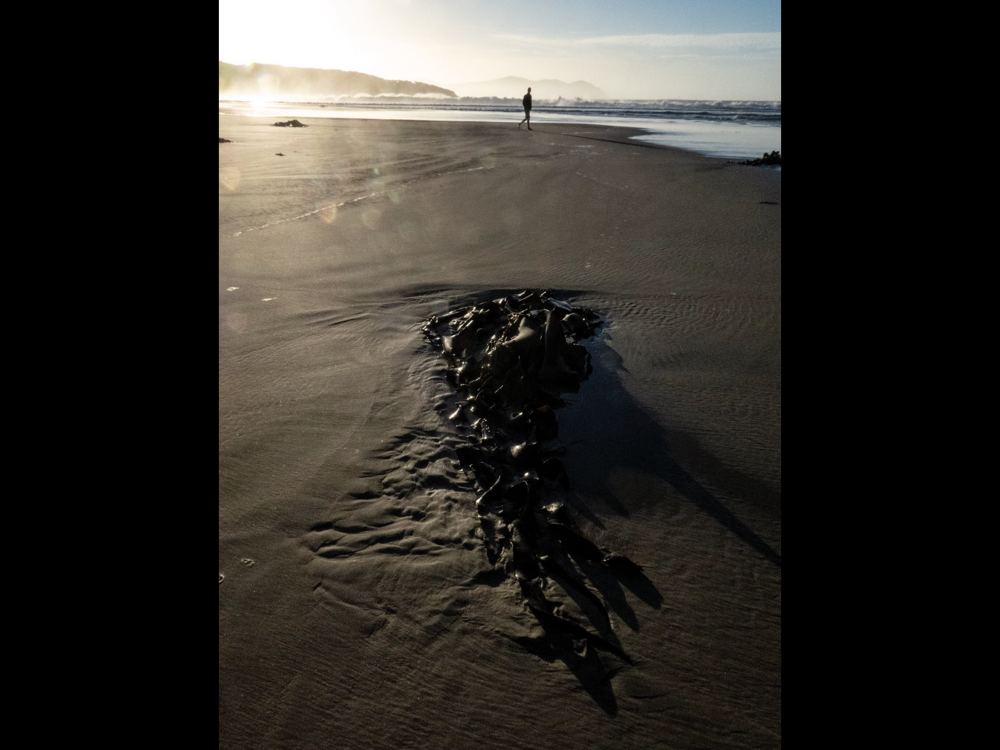
We drove to a beautiful beach, waves placidly lapping its clean, white sand; the water is only a few metres from parallel lines of seaweed washed there by the morning tide. In the distance, hovering on the ocean was the blue silhouette of Mt Killiecrankie. What a wonderful walk, boots trudging in the moist sand, green translucent water bubbling into wavelets to my left and above me, a wild sky, a churning battle of smoke, wind and rain.

We could not see our destination until we were quite close. Blue rocks is a point of land littered by blue granite boulders and huge sheets of blue stone. We stopped here for morning tea while MJ scouted a route to the next beach. Unfortunately, land has been sold right to the high tide mark and now some locations and routes are no longer safely accessible. The clamber over slippery shoreline rocks was not felt to be adequately safe, least of all when even more wet and slippery in rain. MJ called Alice on the UHF radio from the road and soon Alice arrived with the minibus to take us to Sawyers Rocks Coastal Reserve for lunch and the opportunity for yet another beach ramble.

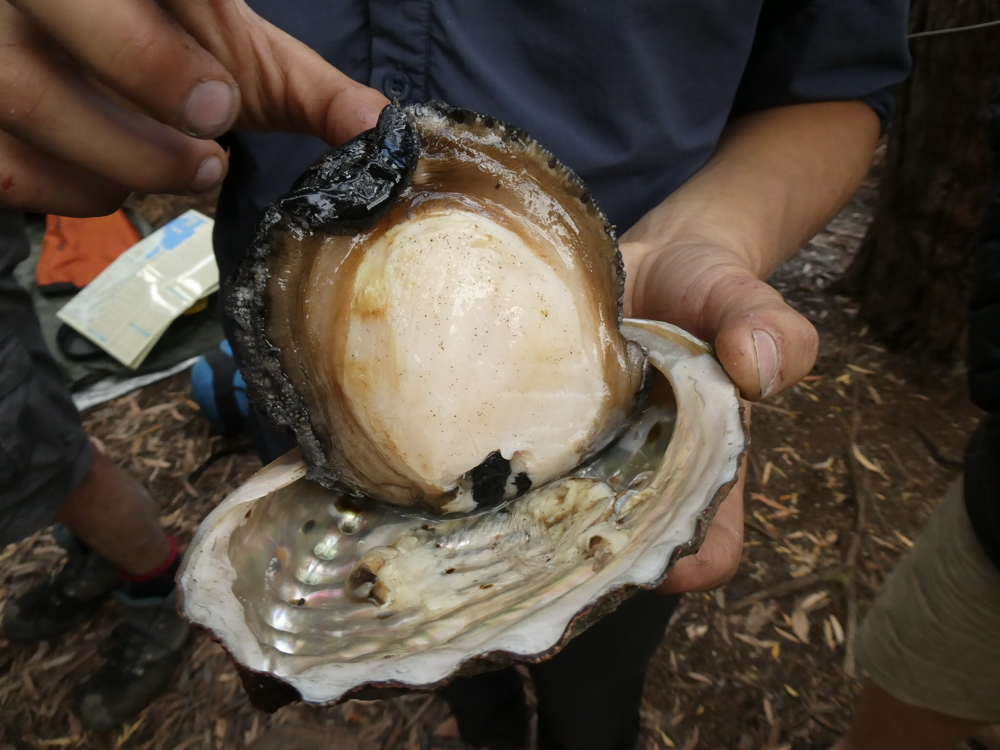
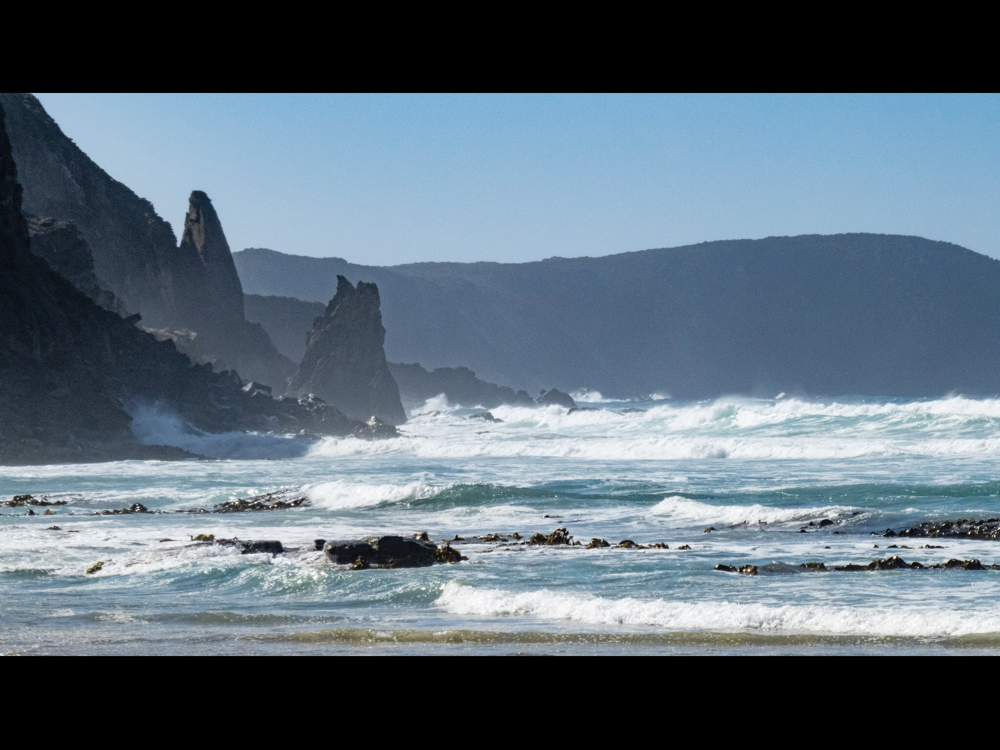
Happily, our time at this magnificent reserve coincided with the main dry spell of the day. We ate lunch at a picnic table beside the beach before commencing our exploring. This section of coast has many cosy beaches however its main feature are multiple granite boulders and rocks strewn in both water and along this coast. Some boulders were solitary, reflected in still ocean; others in mad groups of wildly, jutting stones, sharp dinosaur teeth stained not red but orange; while some form placid, harmonious clubs, each member an individual with a uniqueness created by wind, ice and deep time. I walked between them, splashing my way through the retreating tide, camera clicking away, each fresh image stealing my attention from that preceding. Periwinkle, scallops and abalone attach to the lower surfaces of the more sheltered boulders.

I saw one couple taking photos but beside the members of our small group, there was no one else. This sense of isolation, of a natural space to finally be, is refreshing and relaxing. It is a special charm of this island and helps make any journey here especially rewarding.

We drove back to camp for an expedition. MJ wanted to find the route that leadsfrom our camp site to Marshall Bay, in sight of Castle Rock. Our intrepid journey began by following car tracks to the first of four dunes. At this point, the track was harder to follow as it was covered by trees and bush. We skirted the old fence line, now fallen to the sandy ground; darted under bush and trees and climbed up a dune to see the Pacific. I felt a stirring in my chest, like Balboa, who stood atop a hill and saw the Pacific – the peaceful ocean – for the first time. We plummeted down another dune, then arrived at the beach. By now light was beginning to fade, the sky was so dark and hazy, so similar in colour and texture to the ocean, that the horizon was a thin white line, barely lit by the falling sun.


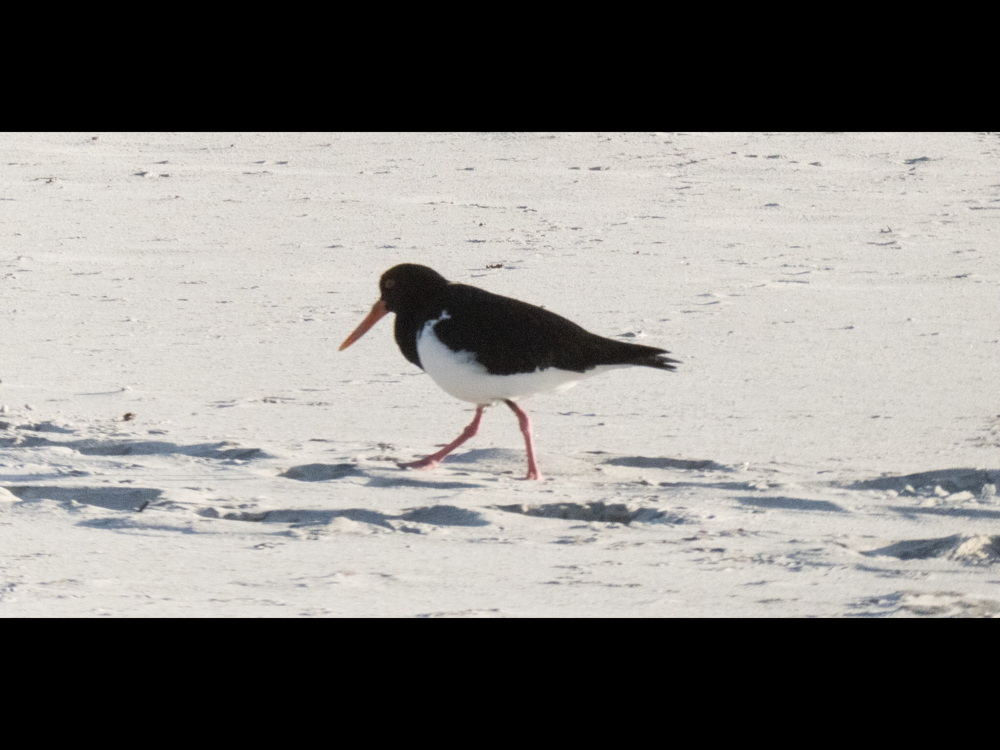
I was spellbound watching three pied oystercatchers. They were marching up and down the wet sand, kicking up water and staring intently downwards amongst the grains for food. 

On Wednesday the 8th of January, we climbed Mt Strezlecki. The decision to this was a leap of faith, the “leap” being the plan that the sky would clear enough to make any views worthwhile. It was an early breakfast with a departure at 7:15 am from the campsite. The drive was south to Strezlecki National Park. The walk began with a climb over a fence then into the lightly forested foothills of the mountain. It was a steady climb up to the peak at an altitude of 756 m and about four kilometres from the start. The type and density of vegetation changes radically with the ascent; beginning with coastal forest below to alpine mosses and spare natural bonsai near the peak. One of the highlights of my journey on the island was discovering a hyacinth orchid standing proudly upright beside the track. This beautiful orchid is much smaller and more delicate than its cousins in the Victorian High Country, but its bright magenta colouring is the same. 

The climb was doggedly upwards except for brief respites; pauses where the track curled its way around rocky cliffs with showers of water raining down to ferns below, a cool glade of tree ferns nestled around a dry creek and at the switchbacks that separated the steadily steepening ascents. Views to the beach below and the Furneaux Islands beyond were fleeting, obscured by cloud. When the mist briefly dissipated it allowed glimpses of a peak or one of the other mountains arising from the Mount Strzelecki foothills. As we rose higher, the cloud rose even faster finally giving us some magnificent views. However, the pinnacle of our climb remained hidden and mysterious above us.

There many trees and shrubs to admire, as well as many flowering bushes and plants creating gorgeous white and yellow masses of colour. There were Pepperberry, Dogwood, tall Rice flowers, the much taller Blackwood and all sizes of ferns, from those that grazed our knees to those under which we hiked.

As we climbed into sub alpine forest, the atmosphere was refreshing and moodily beautiful, mist left streaming damp onto the leaves and branches as we pushed them aside. Water condensing directly from clouds tumbled down graceful mossy stone cliffs forming streams which dropped to a two tieredwaterfall we had already seen from the track below.

The track is rough and steep and becomes more so, challenging us technically as we ascended. I did not find it easy and was getting apprehensive about the looming descent on a slippery trail. A few of our hikers opted to wait it out on a sheltered corner. Those of us who persisted arrived on an exposed rocky shelf, overlooking a saddle with the final climb before us. The final ascent was quite steep and covered in cloud. We decided to pause here before heading down the track. We stared through the mist only able to see vague outlines of the peak, then suddenly and only for a few moments, there was a gap in the cloud, revealing its striking appearance towering against the forests and lesser peaks.The gamble had paid off!

It was cold at our viewpoint so could not stay long and soon commenced our descent. The track is slippery even in dry conditions, so extra care was needed today. I extended my walking poles, converting me into an ungainly quadruped but the extra support and stability they provided were very valuable. I slipped occasionally but never seriously, carefully placing my boots in clefts or wedges and then lowering myself down. The hurdy gurdy of the racing descent is not for me. MJ emphasized the benefits of descending sideways, so if you do fall you land on your side and not on your head. 

The track became less demanding and less technical as we dropped below the 500 metres mark, returning to a pleasant stroll through a shrub lined track with fine views over Bass Strait and the islands: Mount Chappell Island, Badger Island, East Kangaroo Island and Big Green Island: all of which lie to the east of Mt Strezlecki and the coast. 

After we returned to the bus, we drove to a bay with fine views of the mountain and its accompanying range. Trouser Point beach has crystal clear water for ocean swimming. A coterie of black swans cruised the water while a few children played happily, laughing and splashing in the shallows. Their parents watching them from the beach. In the distance I could see the western corner of Cape Barren Island, a mountainous blue tinged island poured over the waters of Bass Strait. While some of the others went swimming, I explored the granite spits and shelves above the water, taking photographs of this wonderful scenery.

On Wednesday evening we had dinner at the Flinders Island Golf Club. We all enjoyed our selections from the marvellous meals on offer. I had gnocchi and it was terrific. The only ill fortune of this otherwise great day was that one of the hikers injured her ankle stepping off her tent platform.

On Thursday, we were all a bit tuckered out but only one of us had an injury worth noting. Unlike Wednesday. We had a slow start with my usual muesli,fried eggs and toast for breakfast. The plan was to walk up Mt Killiecrankie. So rather than walk along the coast from the docks, instead taking the narrow, sign posted track to the top. Mt Killiecrankie is half the height of Mt Strezlecki and thus lacks the splendid variety of flora of its taller southern cousin.

The track winds its way gently upwards through tea tree and silver banksia, then ascends amongst a garden of granite sculptures, the work of father time and erosion. It is these wonderful formations that inspires interest; there is the Oneeyed man that resembles a character from the pen of Hogarth, all bulging cheeks and hooked nose. There are tors rocks hollowed through their bases creating sheltered pools and caves .All the wild shapes channel the wind into a whipping hourie blowing off our hats.

We negotiated a low cave then a narrow split in the granite to reach an ascending slope of granite. This the end point if there has been any rain, making it dangerously slippery. We climbed up it to re-join the track, then it was a short path to the final climb, a balance up some steep granite boulders. I demurred at this point while the others went to the Trig Point. I camped out below but had wonderful views of Mt Tanner, the green hinterland and the townlet of Killiecrankie at the head of Killiecrankie Beach.

I was high above the rock formation called Old Mans Head about which we had walked a few days before. I spent a relaxing thirty minutes admiring all these views from the serenity of my rocky eyrie.

As we descended, we met a few groups on their way up, including a small dog named Trixie. The sky had cleared substantially over the morning allowing unhindered views of the steep massif above Killicrankie docks which abruptly emerges out of coastal forest. Its backdrop are the splendid northern beaches below a cloud-flecked, blue sky.

We soon arrived back at the bus and were conveyed to Palanna beach at the north of Flinders Island. We had lunch at the southern tip of the beach, enjoying views of the two Sister Islands. Sunlit granite shoals are just off the beach. It is truly a magnificent sight, a long stretch of sand, peerless ocean water and waves washing up the beach, great sand dunes piled up above us and birds hunting on the wing: pacific gulls dropping to beneath the surface and then flapping away to an outcrop to enjoy a crab, and oystercatchers pecking industriously at wet sand for worms and tiny crustaceans. My camera then had a convulsion and refused to work. I managed to do a factory reset later and it was all apples. I was very smug with myself as I have never in my life repaired anything electrical much less electronic! After lunch I enjoyed a long, slow walk in brilliant sunshine along the beach, skirting the wetter, deeper sand, and repeatedly stopped to gaze westwards, admiring a gently curving horizon, full of ocean and islands.

After lunch and the walk at Palanna, we drove to Whitemark. I tried the whisky at the café next to the jetty. It’s a local distillation but I did not like it, a bit too astringent for me. I wandered over to Jon the Juggler’s shop, where he makesand sells, sauces, condiments, jams and all sorts of yummy products. I visited the council office for brochures about Flinders Island, and then bought some books at the local newsagent. I was walking around main street, there were three people walking or shopping, and they were all relaxed and charming, smiling and saying hello at any opportunity. This is a grand place.

Back at camp, it was time to clean myself up. I had put the solar showers on the main table, and they had warmed up nicely over the morning and early afternoon. In fact, we had to add some cold water to avoid any scalding. Dinner was wallaby patties and salad, delicious.

After dinner, in fading light, we drove down to an evening soiree at Castle Rock. MJ and Alice cut up a fruit platter which we all enjoyed when chatting and sitting together as we looked out over the darkening ocean. The sunset was lack lustre, but the company was terrific.

When it became too dark, we donned headlamps and scuttled up the sandy path to the minibus. By the time we arrived back at camp, the wind was rising, buffeting the tents and trees. It was not a great night for sleeping as each time a gust of wind blasted the canvas, the rebound would hit me on the head. I had also had two normal coffees that afternoon. At 3am, I was like a meerkat hopping on a mound of hot sand in the Kalahari. I was awoken at 6am by MJ as she walked amongst the tents, calling out that breakfast was ready. I had tidied up my tent, bag and gear the previous evening, and actually located some clean socks and underwear for our final day; fortuitous? Yes?


After breakfast of pikelets and muesli, I swept up my tent once more, and carried my bag to a spot near the bus and trailer. I even had time to help with dishes and the general washing up. Anyway, we were all soon packed up and ready to go. We drove south to Trousers point beach. On this occasion we walked the entire length of the beach. Smoke haze had worsened, and the mountains were muted, irregular silhouettes standing up behind grassy dunes and glades of trees. Water was lapping the beach, crunching, walking in sand  white, gritty crystals without number  seaweed with its microscopic cargo of eggs and seeds lay serpentine on the tide line. We walked, talked, fossicked for a shell or driftwood, in touch with the waters edge. We soon arrived at the picnic area at Trousers Point. One story is that a solitary cabin boy survived a shipwreck, cast ashore sans pants, at this very promontory. 

We continued into the bush beyond the point. It is a charming and easy walk with a wide variety of coastal endemics including she-oaks and boobiallas. The track then leaves the bush and returns to the point in parallel with a granite laden coast. There are many delicate coves, full of glittering green water and rocky pillars and platforms washed smooth by incoming sea. The smoke had cleared again, here was an unhindered view of Bass Strait beneath a rich, blue sky. What a beautiful day it had become! We reentered the forest, and rejoinedAlice. She had made up a super plate of food: cheeses, salmon terrine, salami, sliced fruit, baguette, and biscuits to dress up with all this delicious produce.Before lunch, I went for a swim. The water was so inviting but so cold! There was hardly anyone on the beach to be appalled at my slow – glacial  entry. Just three adults chatting in the shallows, who did not even notice me. The sandy bottom formed temporary clouds as I walked along. Flecks of seaweed bobbed at different depths. I could see the bottom with complete clarity. It took me some time to get my head under water but at last I could enjoy thrashing around in the water and swimming a few strokes before heading back, then out to get dressed, ready for our lunch then return to the airfield.

The sky was getting hazy again and the weather forecast was not good if we further delayed our departure, so we headed to the airfield early. The same plucky little planes flew us back to Bridport. The mountains, islands and sea beneath us was as hazy as the sky. I could see the lead plane in front of us as it darted through clouds. The islands were beautiful, water surging onto their granite coasts, precious small beaches and flat, treeless interiors.


By 4pm I was home, by 4:30 pm I had had a shower and was ready for dinner.


Final word – for now

Flinders Island is a wonderful place to visit, it is relaxing, low key, great dining and fine local produce. It is very beautiful whether you are most interested in looking at flora, fauna, the coasts, forests or mountains.  

The friendliness and professionalism of our two guides -MJ and Alice – was first rate. I cannot wait to get back and see more of the island as well as revisit old haunts.


 All the images from the trip have already been posted. Check back in the blog.


Standard
tasmania, Uncategorized

Free haiku inspired by the Blue Tiers

Ramblers

Walk

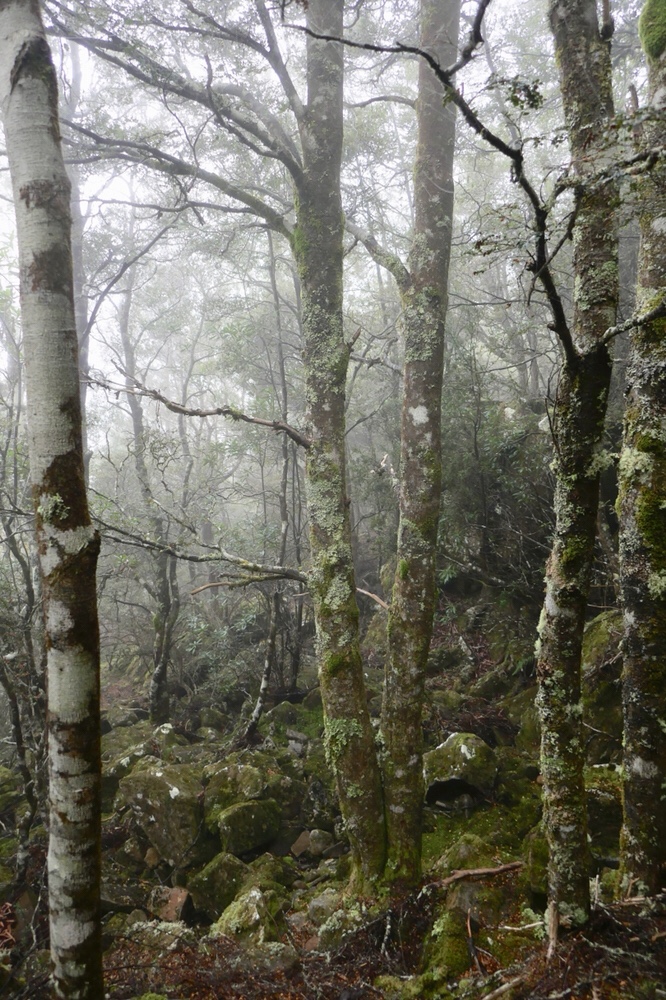
In the forest

Breathing

Looking

Being

Ramblers gather

Near their cars

Greet

Number

Name

Then pierce the fog

Driving / driven

Is it

Snow in Autumn

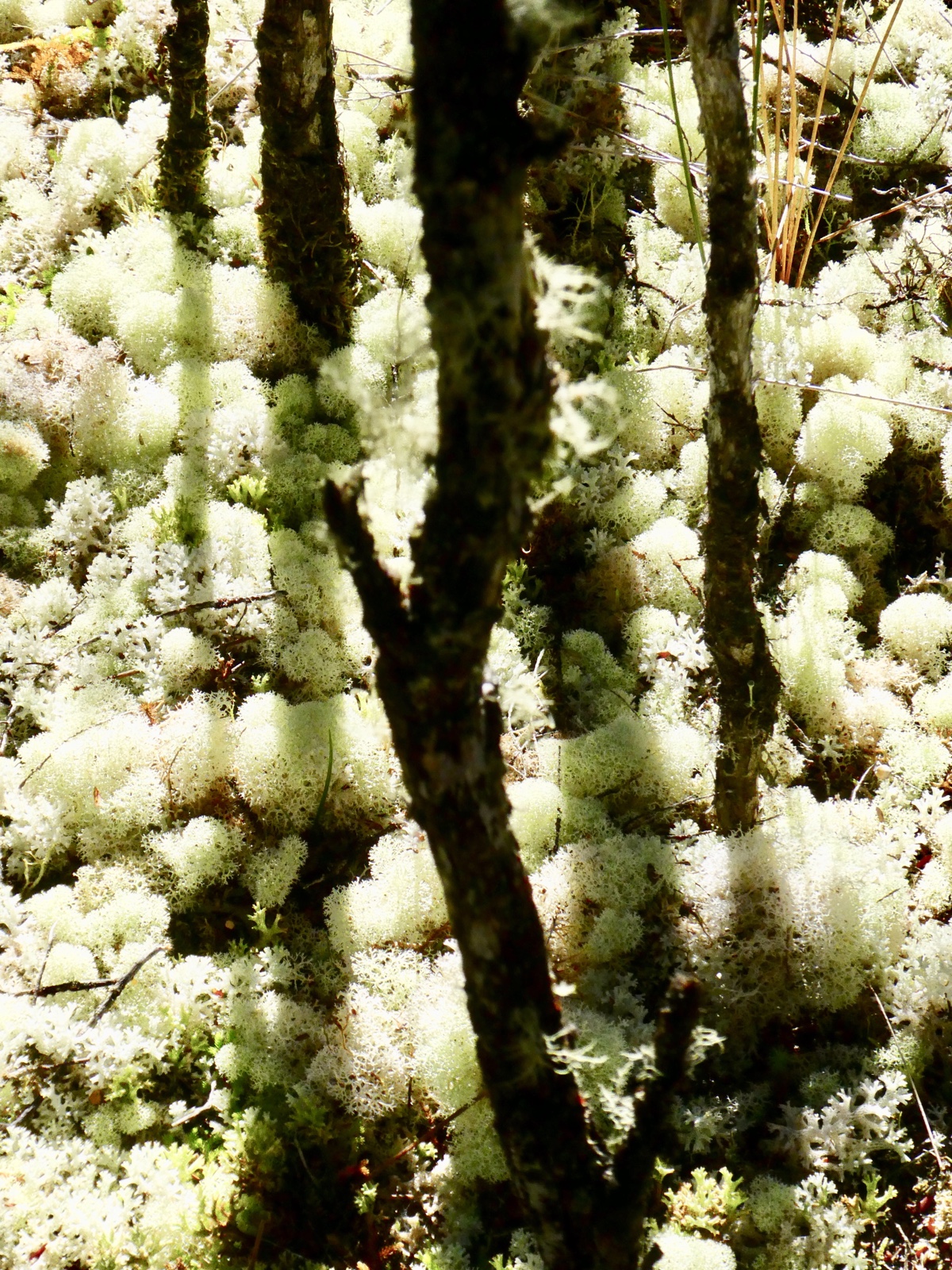
Scatterings of weaves, of lace

Not pure White

But hued the palest of green

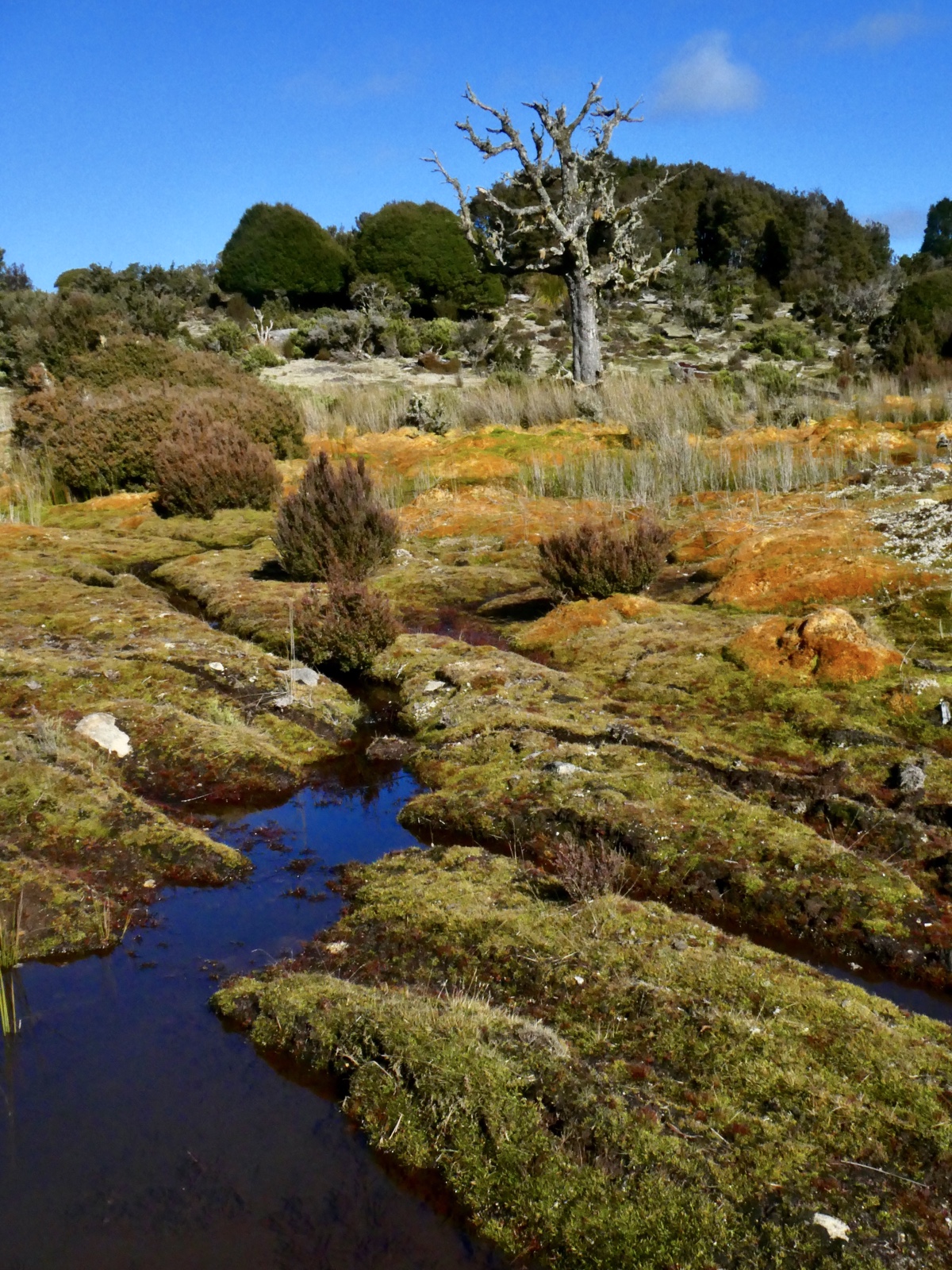
Moss and grass beneath

Waiting

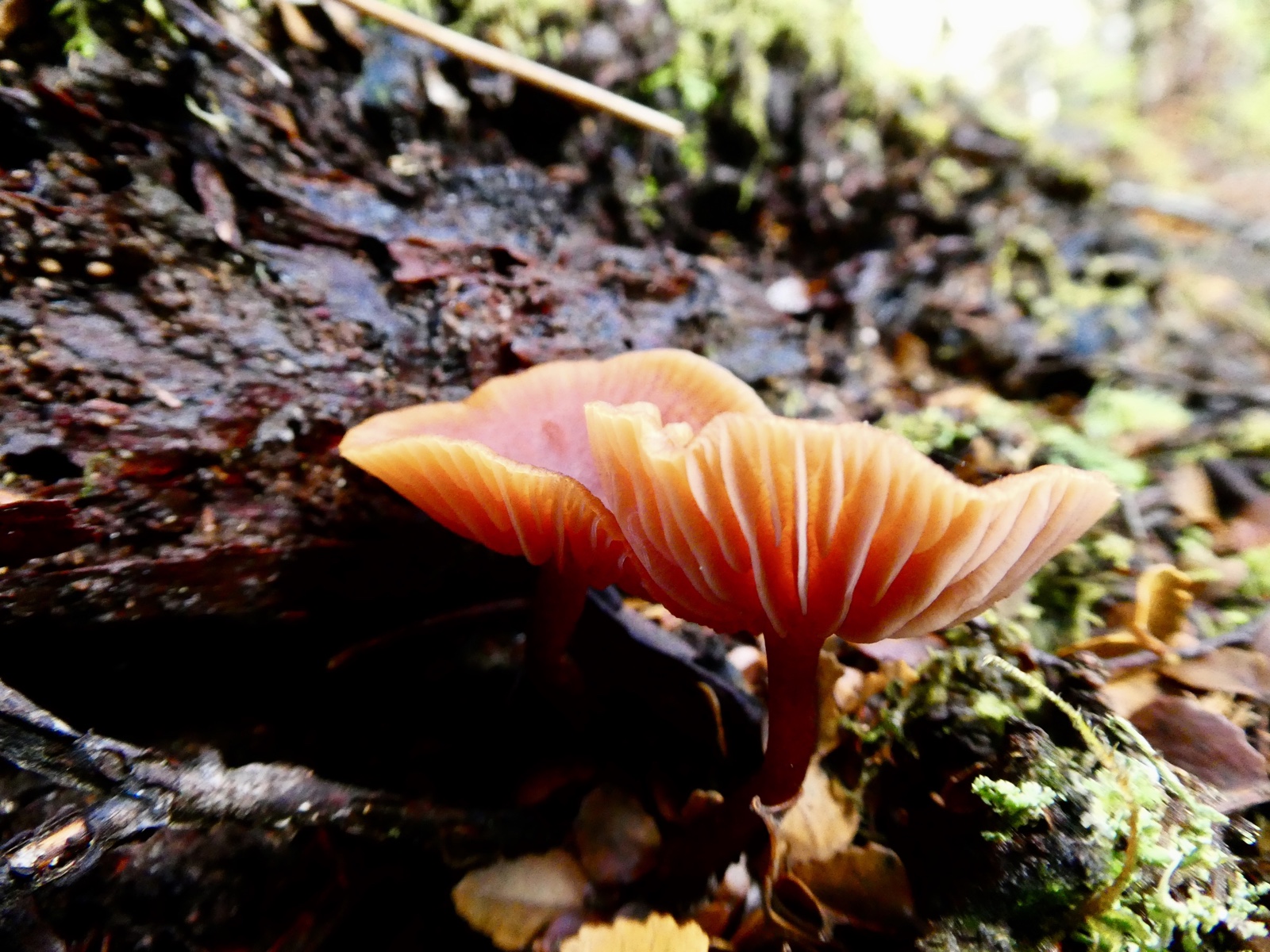
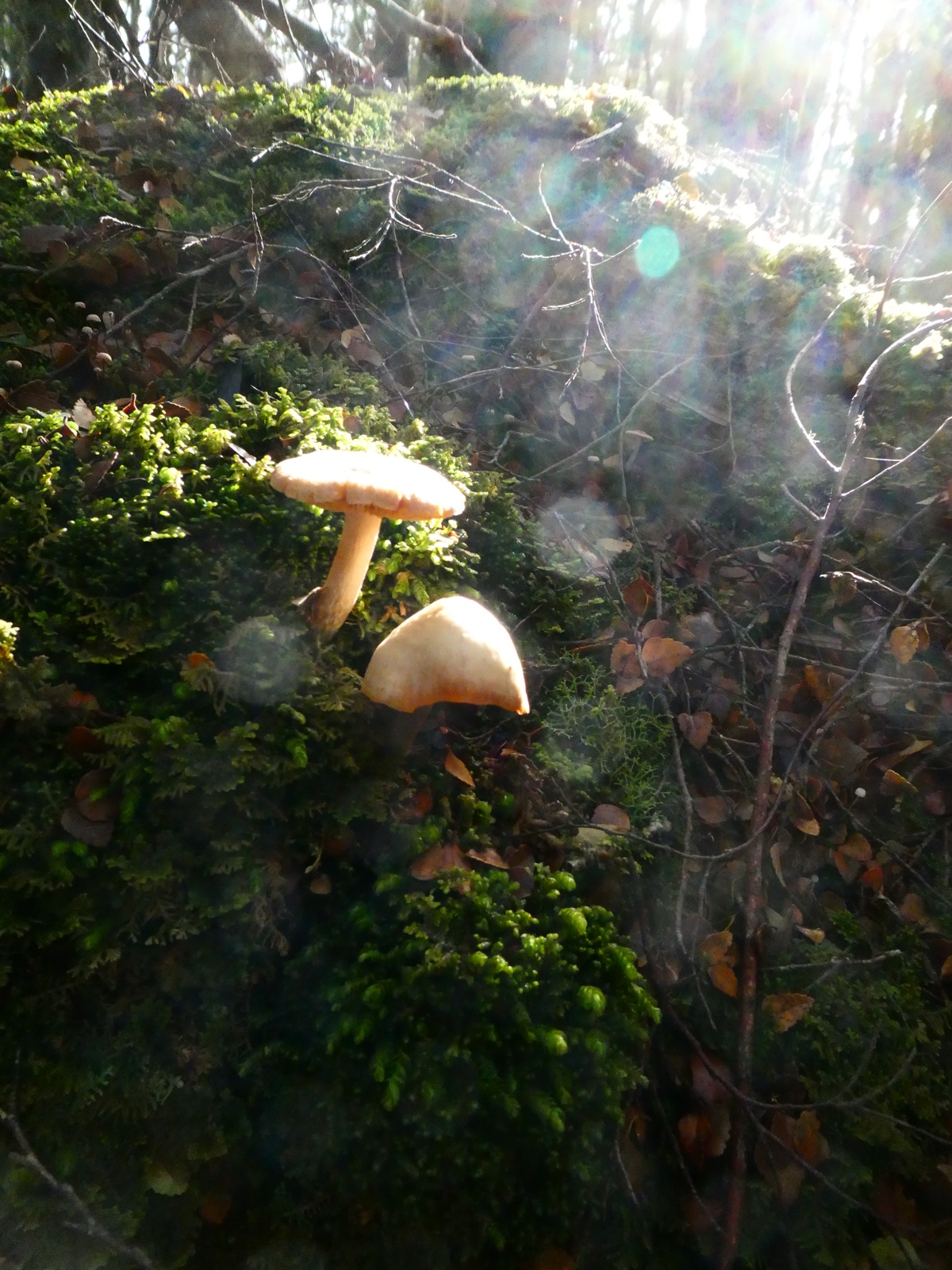
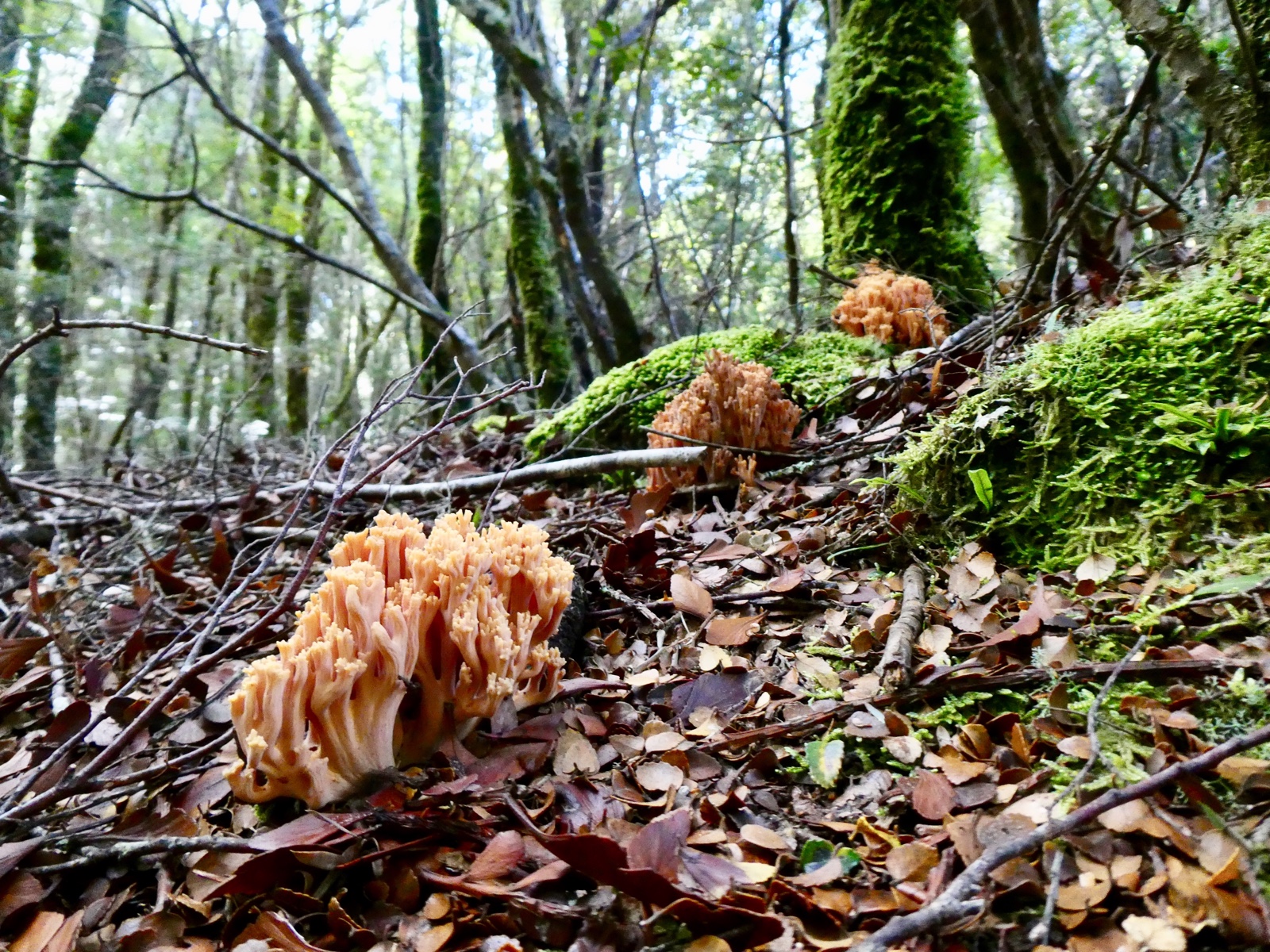
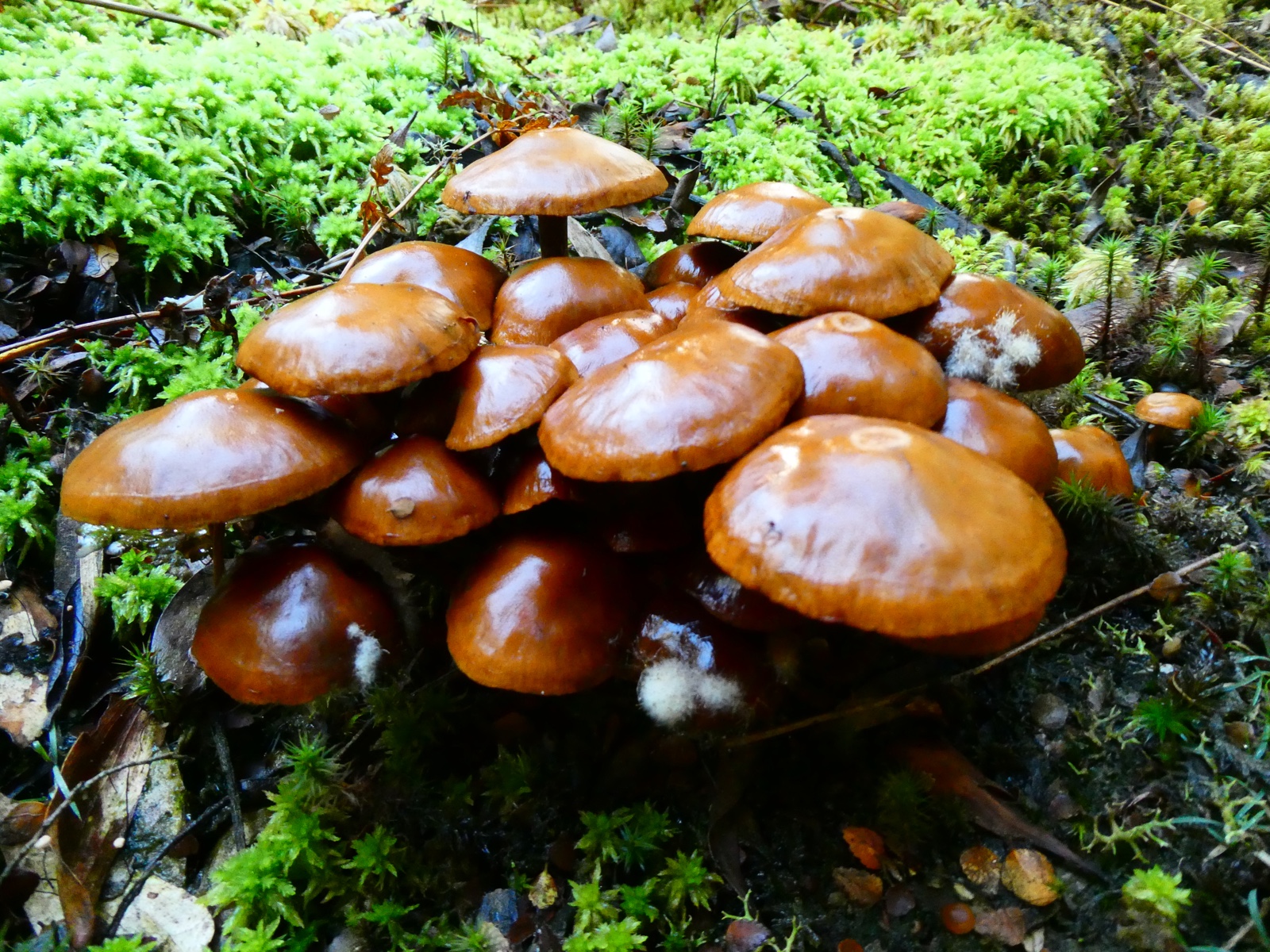
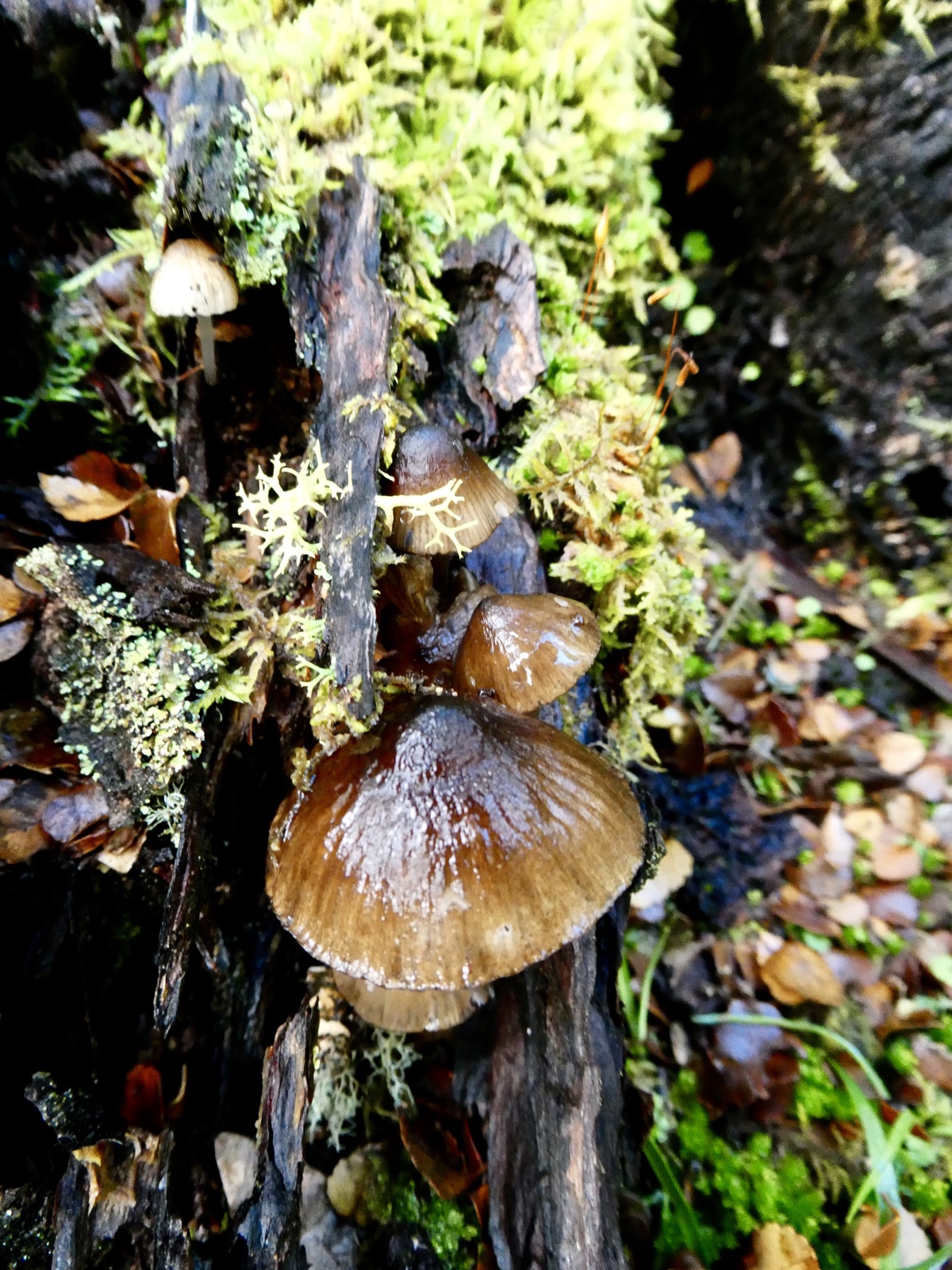
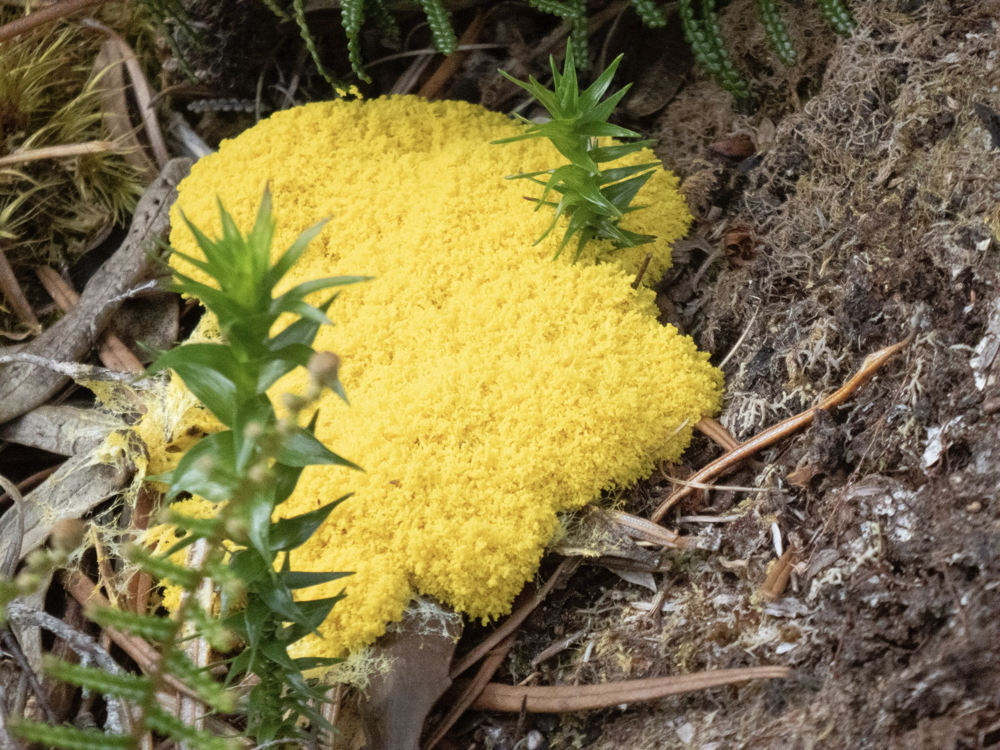
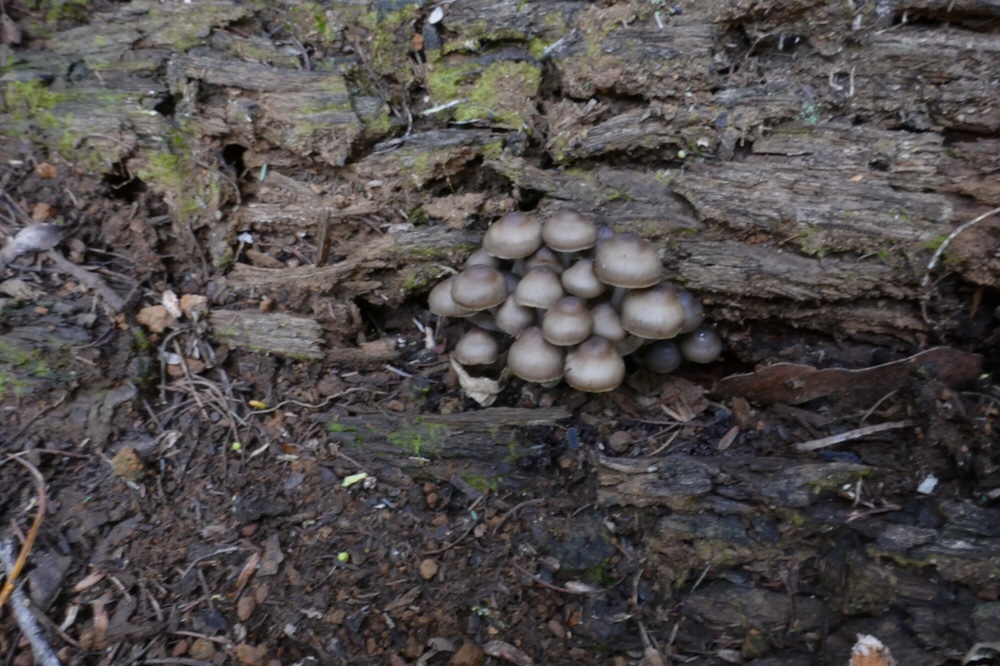
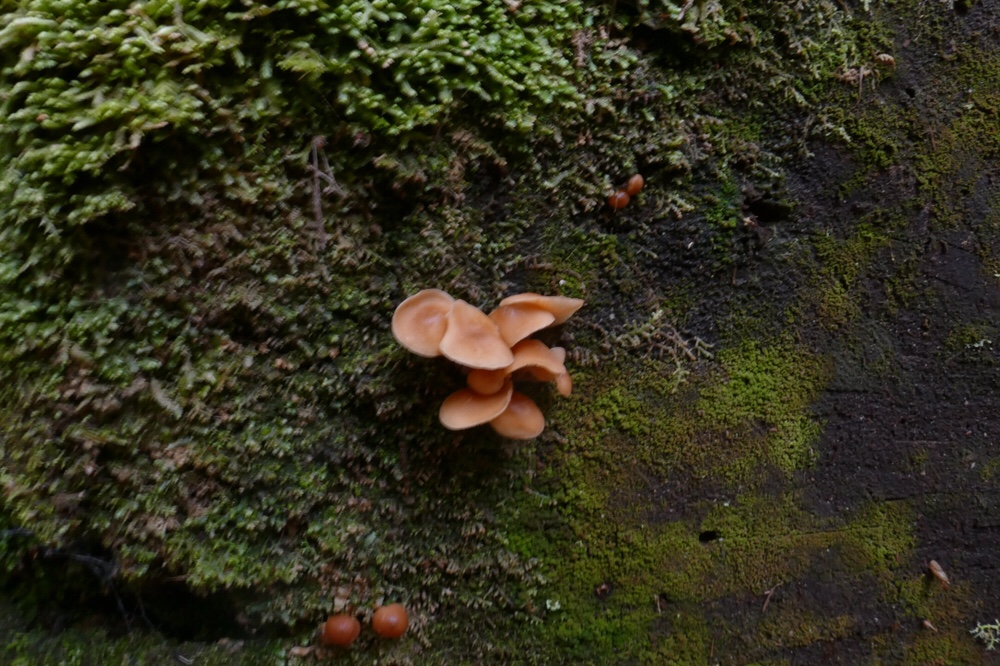
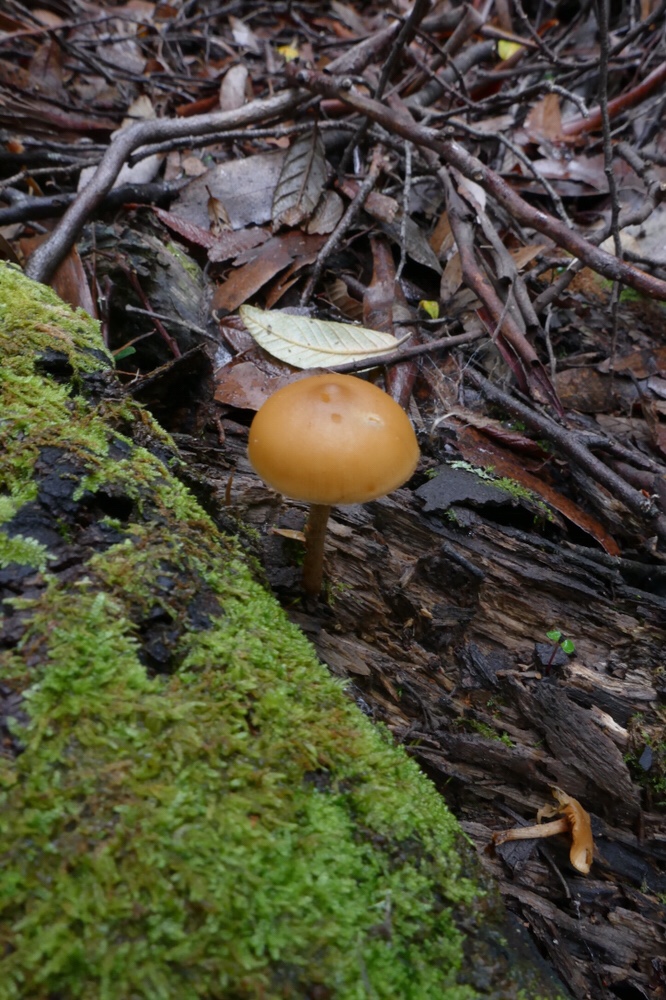
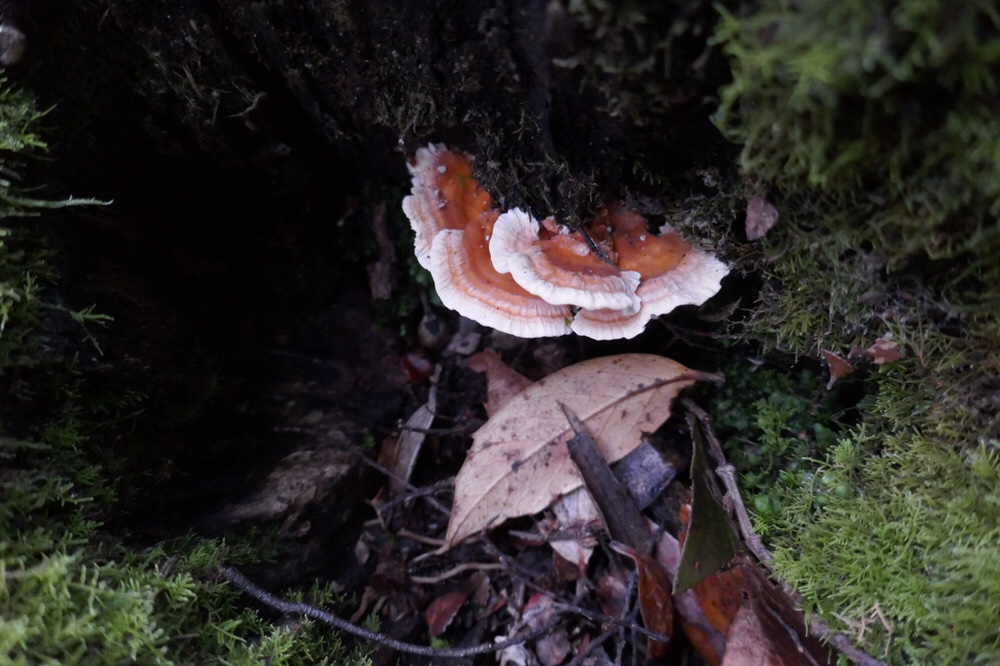
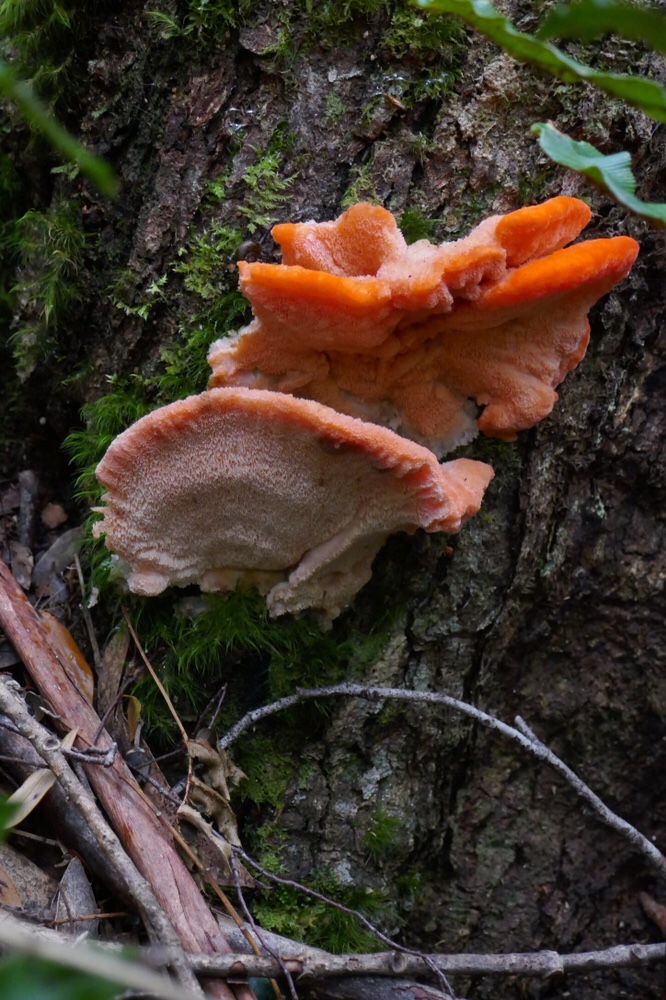
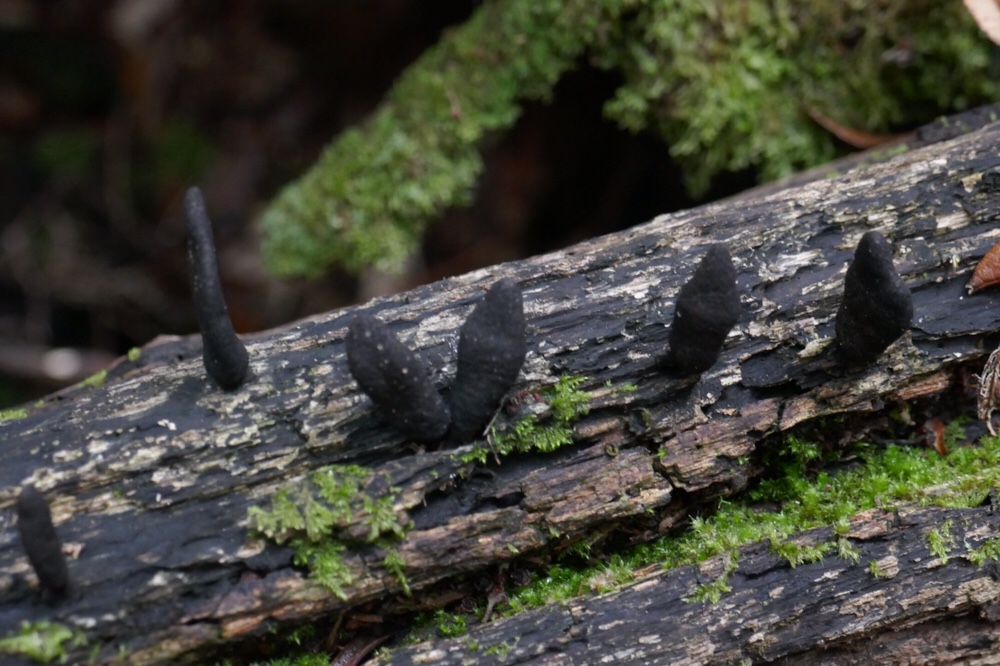
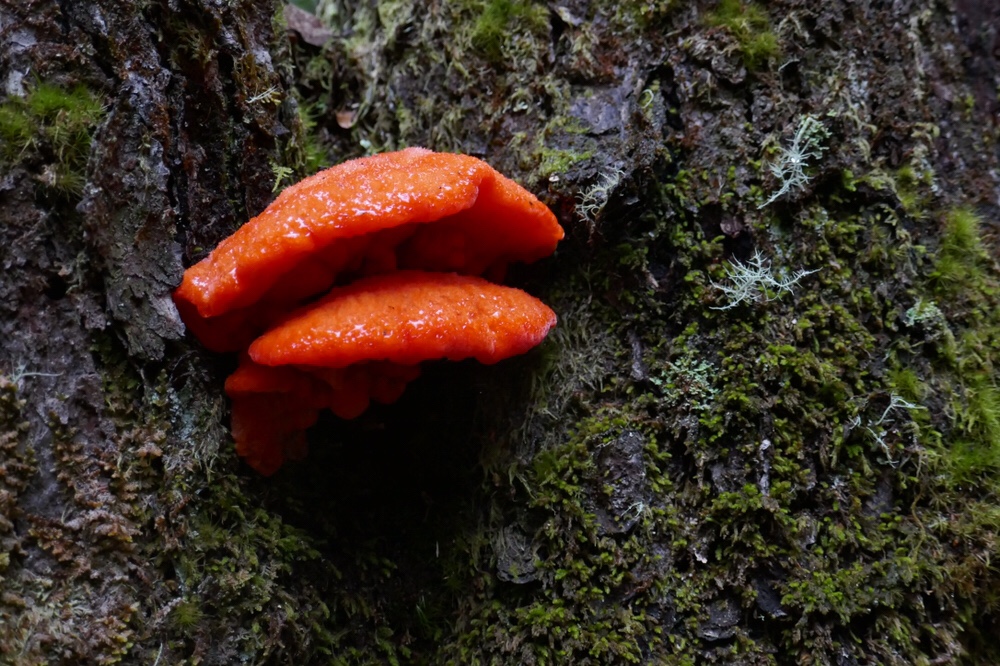
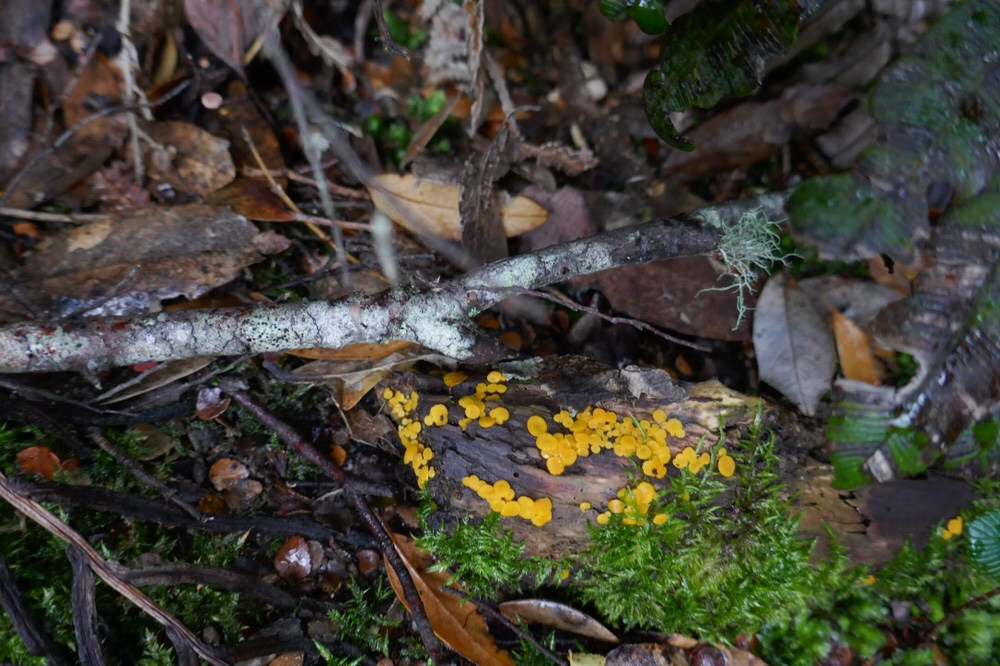
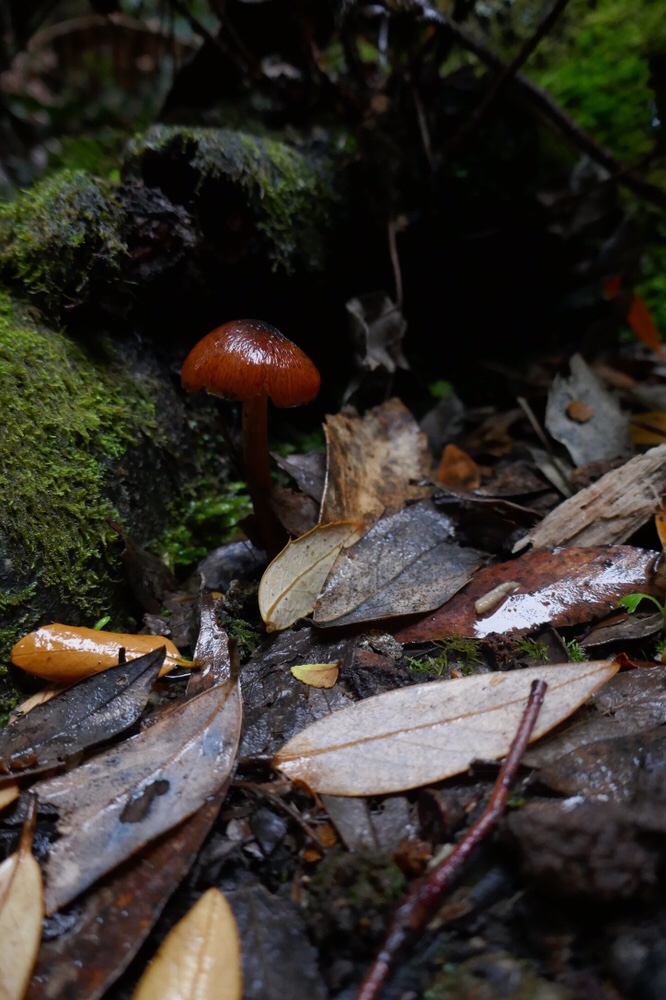
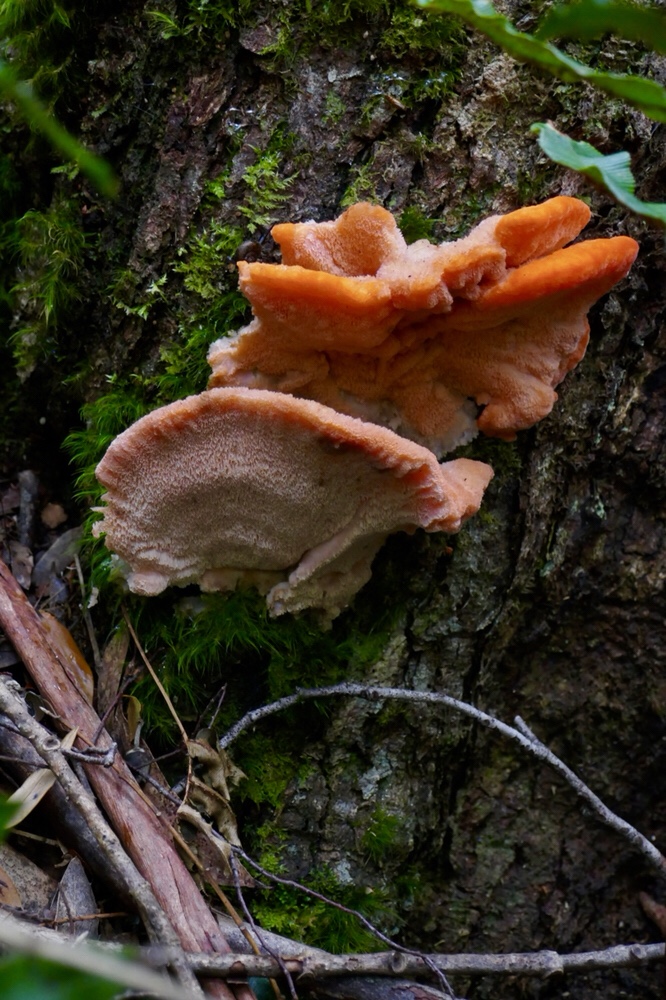
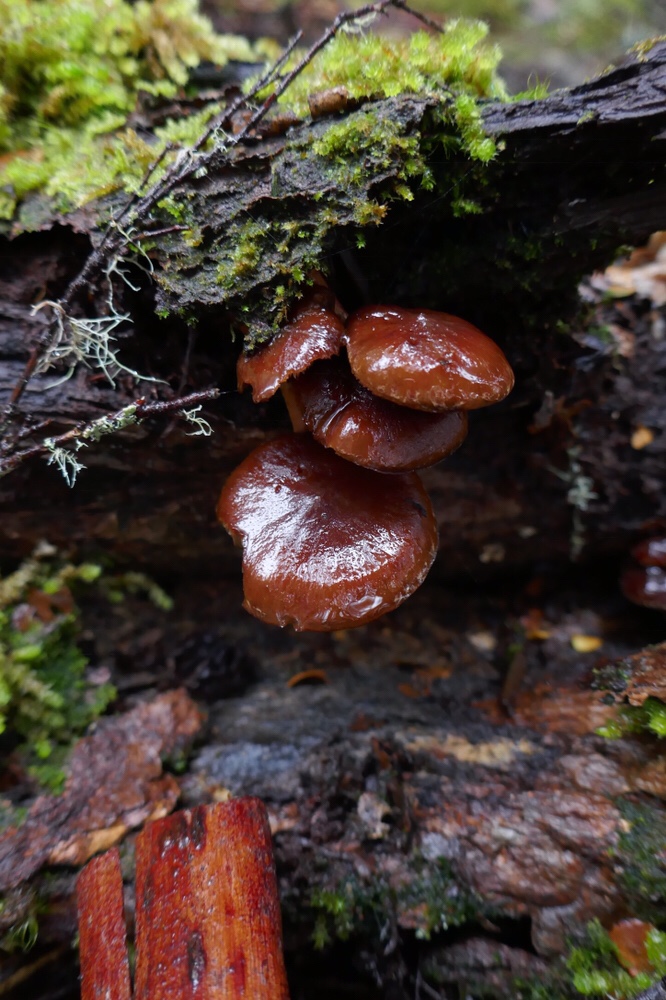
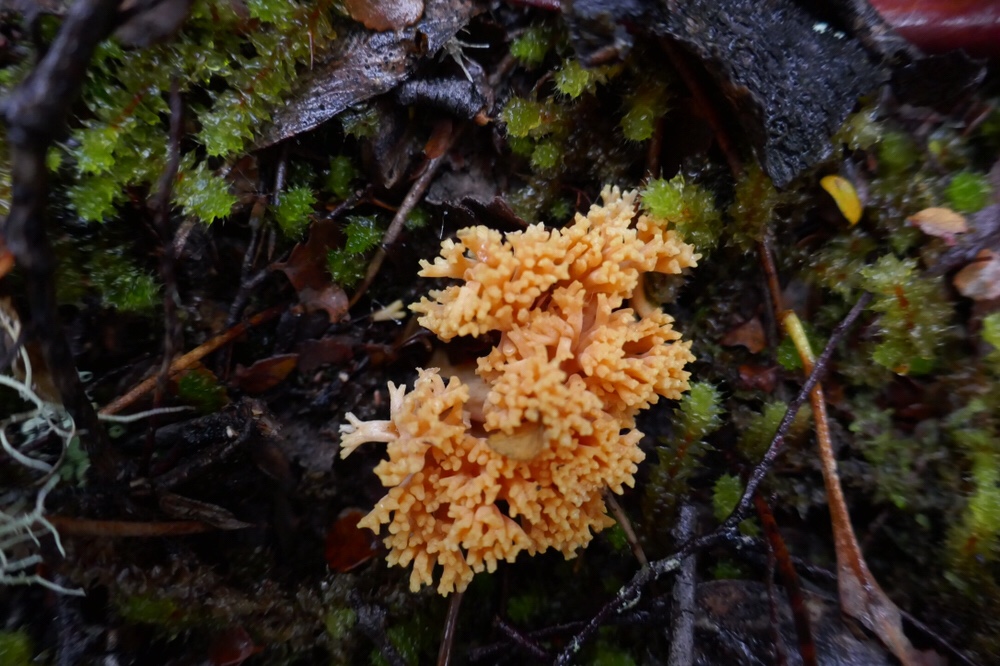
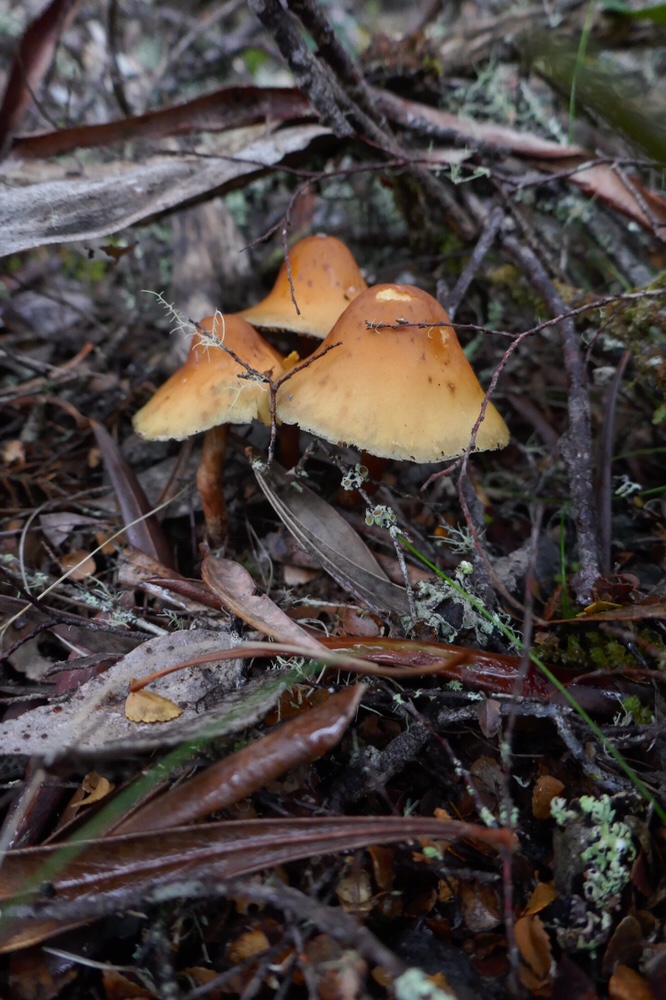
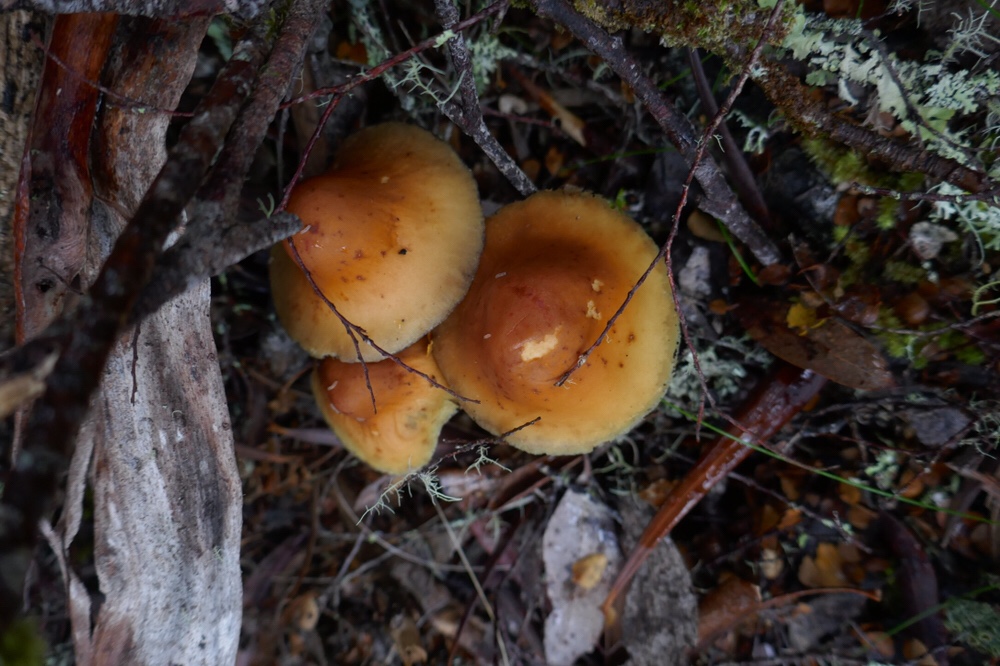
Fungi= they

Crude, raw colours

Have erupted from the ground

From dead and living trees

From the detritus of ferns

In perplexing multiplicity

I saw a conning tower

Above the water

yet I do not call it a submarine

I see eyes

mouth, lips and nose obscured

and yet do not call those eyes a face

I see one of them

And can understand I am seeing only the smallest part.

Riotous colour

Form and shape

Limbs leaping

Saucers jostled together

Moisture pooled like glistening sweat

Light leaps in

Ramblers Walk

Talk

Listen and and be

Forming tendrils of friendship and acceptance

As do they

spiralling in earth or logs

With multiple fibres

Like us

Communicating and knowing

And being truly alive

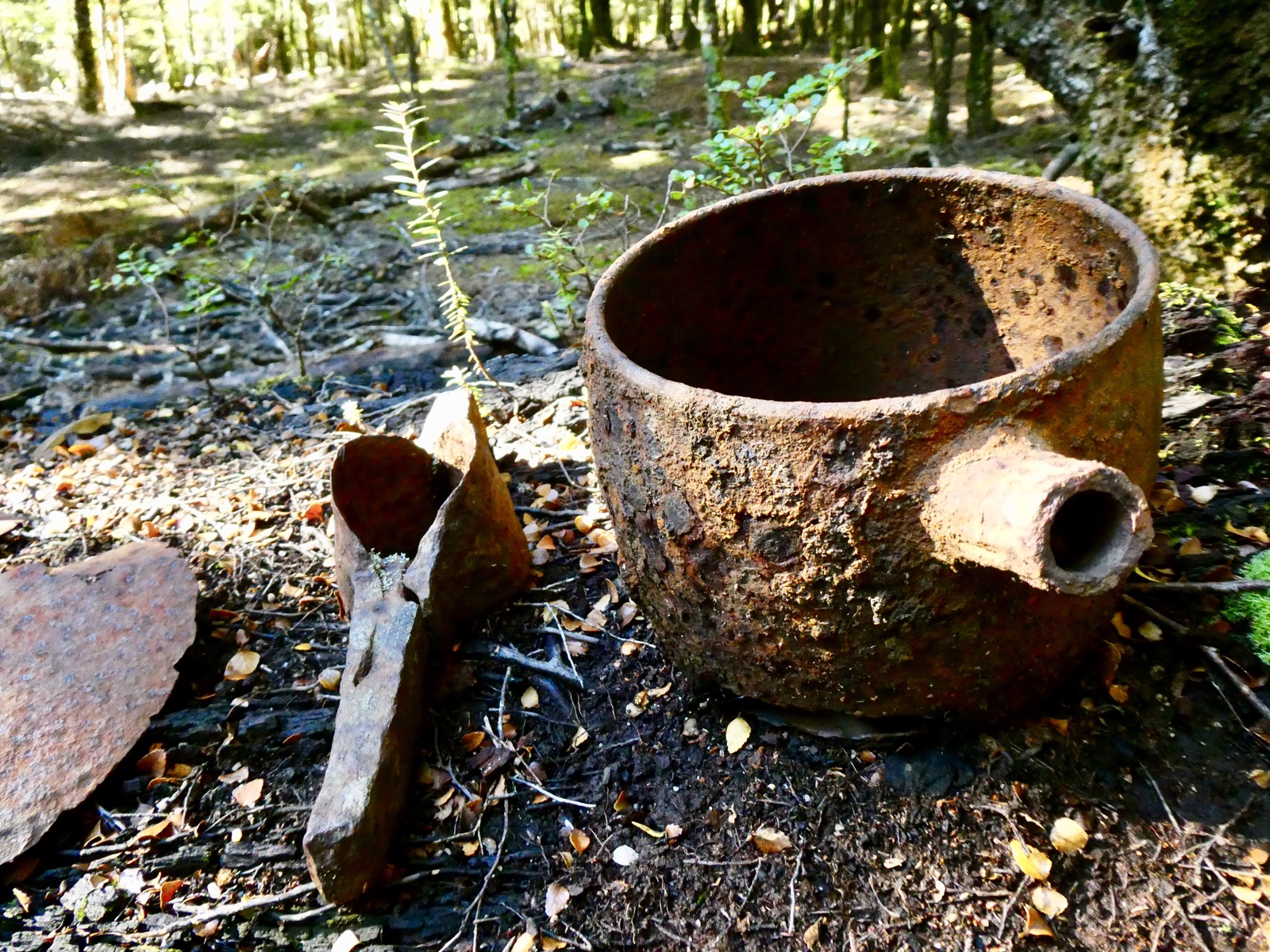
Miners

Of different races

Dug and drained the high tiers

In the desolate cold

Following lodes of tin

shining, metallic hyphae

Leading to ruin

Till the soil spills the debris of their time

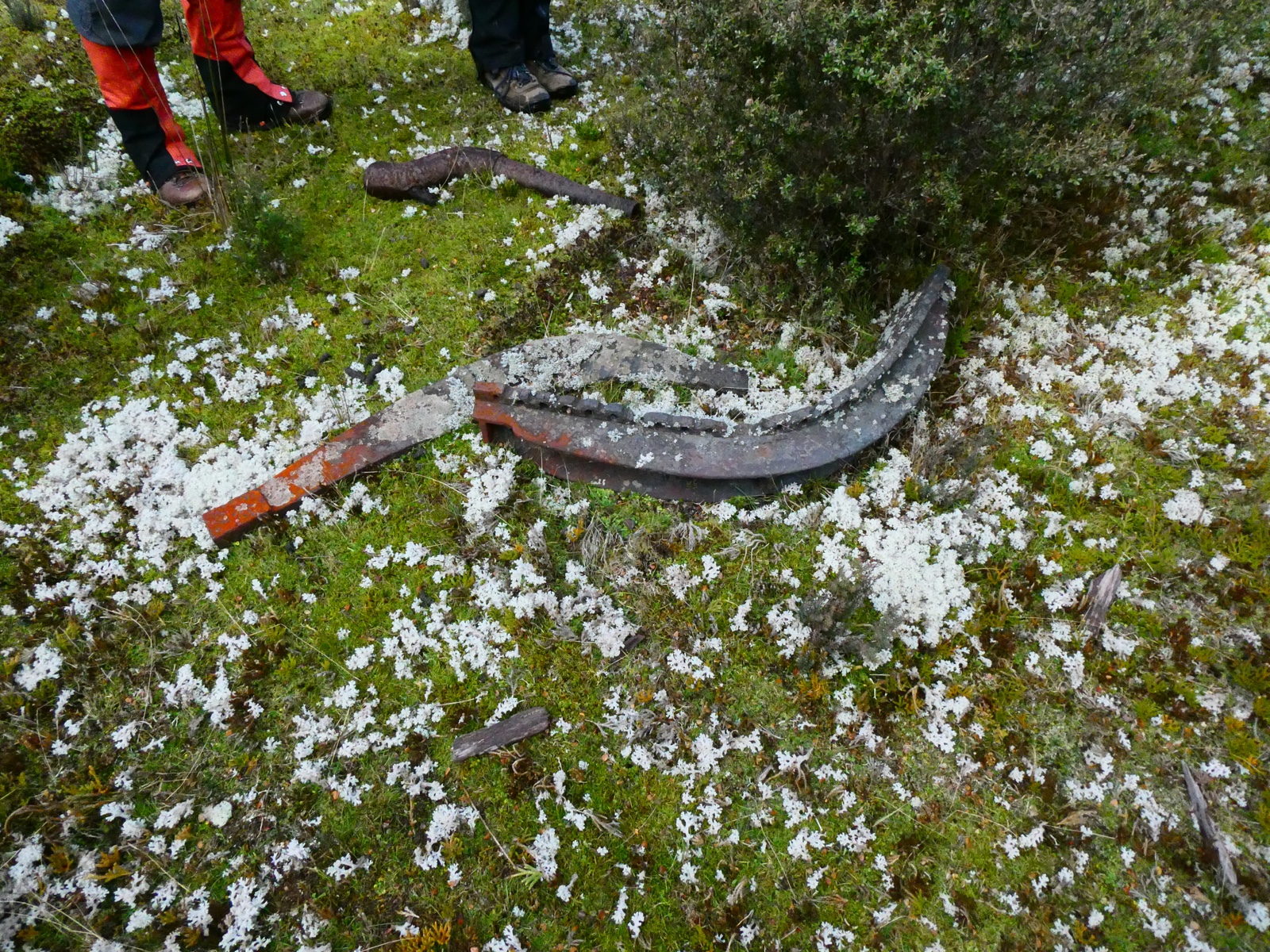
Pots, tractors, glass, and blades

At our feet

Standard
tasmania, Travel

South West Walk

South West Walk, Tasmania

26/12/2018
The adventure begins! I am having a wonderful dinner with Jennifer opposite me at Rockwalls Bar and Grill Restaurant, Salamanca Place. An eye fillet steak washed down with an excellent Riesling from France; on its side is a plain rectangular white label with “Burgoyne” in curled italics and 2015 higher on the nape of the bottle.

At 2pm today, I met the other walkers about to commence the South West walk with Tasmanian Expeditions. We met our two Tasmanian Expedition guides at the Mountain Outdoor store in Bathurst Street. I felt a tap on my shoulder and turned to see Earle. Earle was one of the three guides on the Jatbula Trail I completed a few months before. Nom is a young woman and with Earle, the second half of our guiding complement. They checked our gear.

(In retrospect, I really, really need to economise on the gear I take on these long walks but everything seems so… necessary at the time of packing. It does not feel so necessary when I am carting a 24 kilogram pack for 10 hours up hill and down dale.)

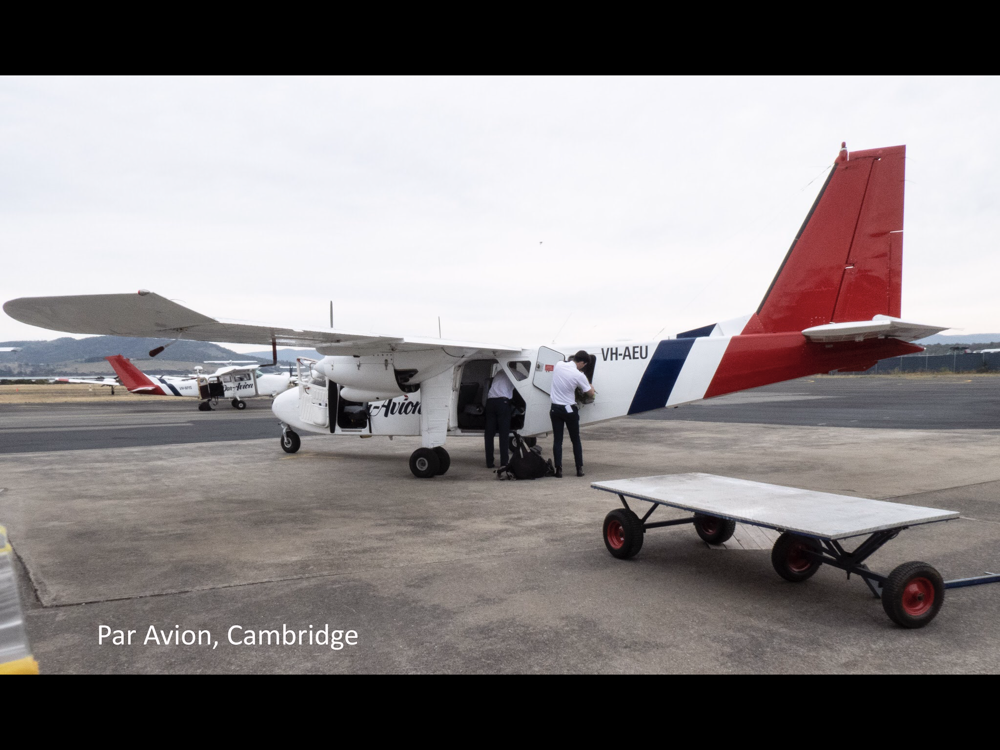
Tomorrow we will meet on the pavement outside the doors of the Astor Private Hotel, for bus transfer to Cambridge airport. From Cambridge, Par Avion will convey our group piecemeal to Melaleuca.

I must admit to some self-doubt about my fitness. I have been training for 4 months with packs and weight vests and I hope that will be enough.

Sunday 30/12/2018

I have not written about any events or musings these last few days due to straight out weariness. A weariness which is not ennui surrounding modern consumerism but weariness which means I cannot actually move any part of my body. Arrive camp, set up tent, collapse (in it), hibernate until I can move something and my overall body pain drops to tolerable levels: this was arrival protocol for the last 3 days of walking.

The reason I am writing today, day 4 of the walk, is that it has been a rest day and I must admit was an opportunity very well received by me.

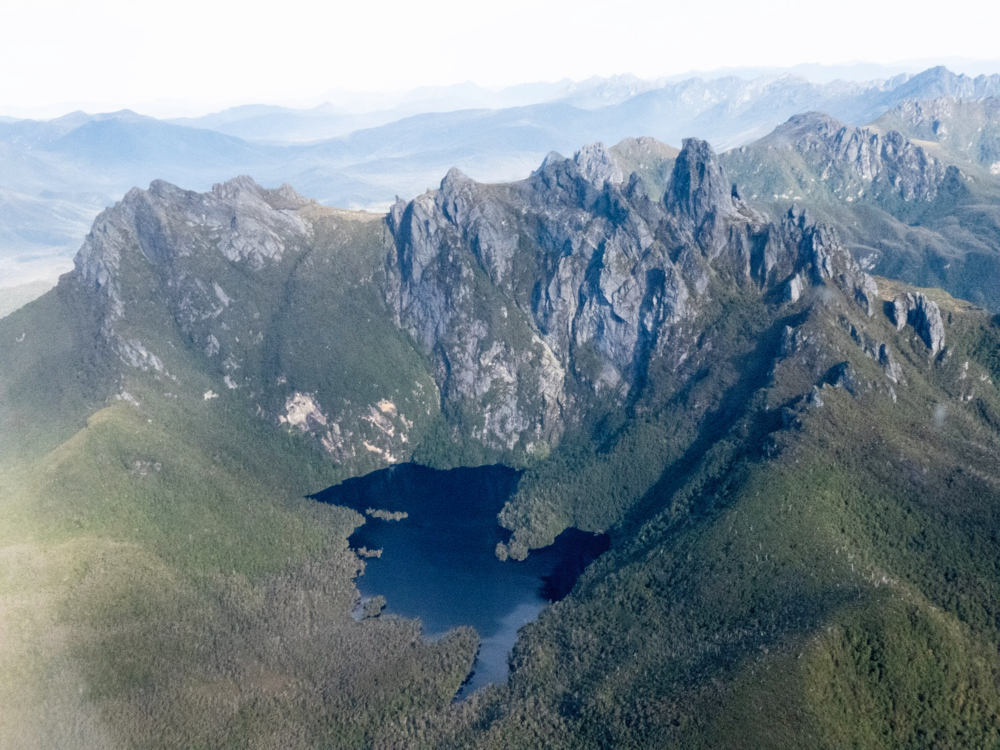
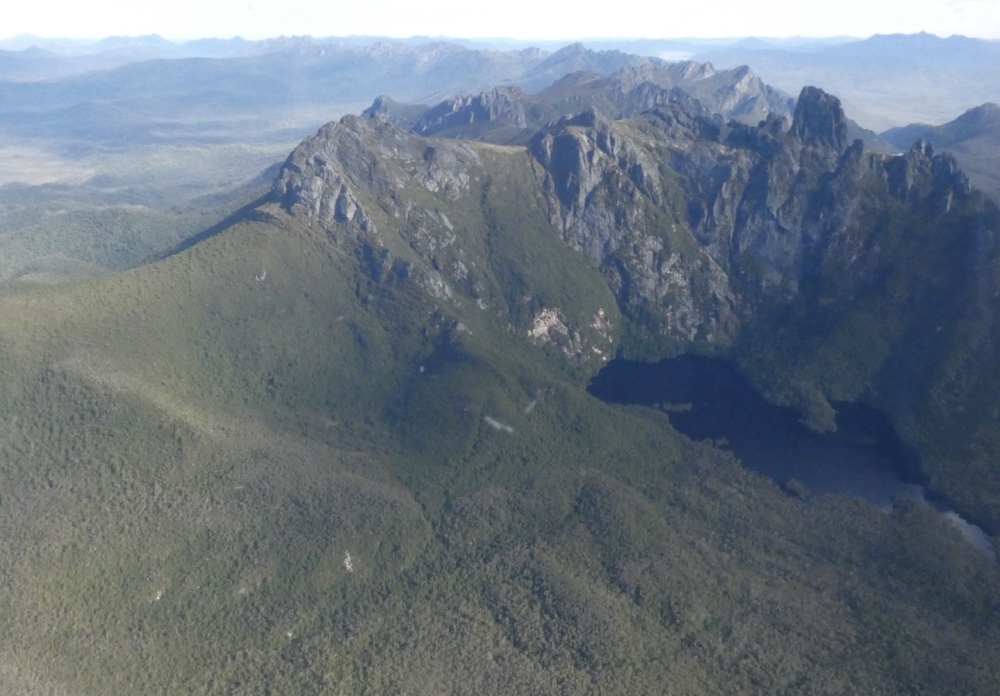
In the late morning of the 27th of December, we arrived in aerial convoy into Melaleuca. Each plane carried four of our party as well as our gear. The flight can be described as fantastic, with almost clear skies, minimal wind and magnificent scenery over which to fly. The blue of the sky punctuated by scatterings of white fluffy clouds and distant views only vanishing into haze hundreds of kilometres away. I could see Cradle Mountain hovering on the horizon far to the north. There were the Western Arthurs rising into the air; ranges of massive rugged mountains some with lakes, blue, still and poised between pillars of stone.

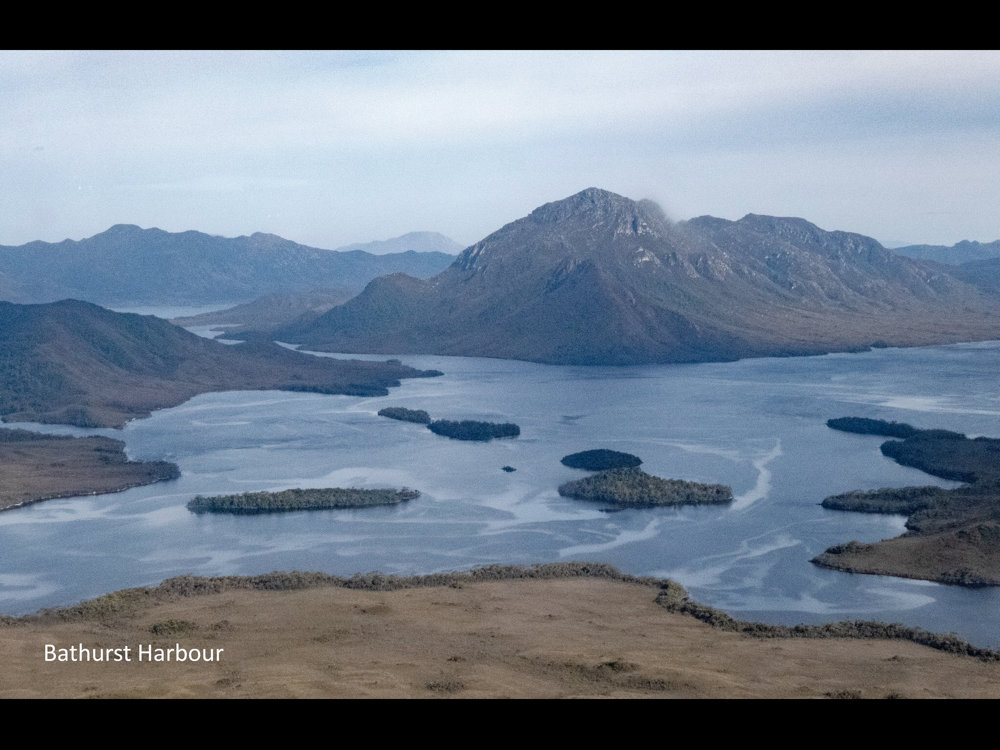
The plane skirted Mt Picton; great buttresses of rock erupted through bare, slopes, all stark and featureless above the dense forest situated below its tree line. Then we saw Bathurst Harbour. It has been barely 45 minutes since we departed Cambridge. The harbour is huge and our destination, Melaleuca, sits on one of the southern arms. Islands dot the harbour. The solitary air strip looks as if a giant pale cream paint roller was run along the ground leaving a narrow white strip. As the plane turns and spirals down, the mountains and ranges all around spin crazily around, until the craft adroitly levels again, and the strip lies in front and just below the nose.

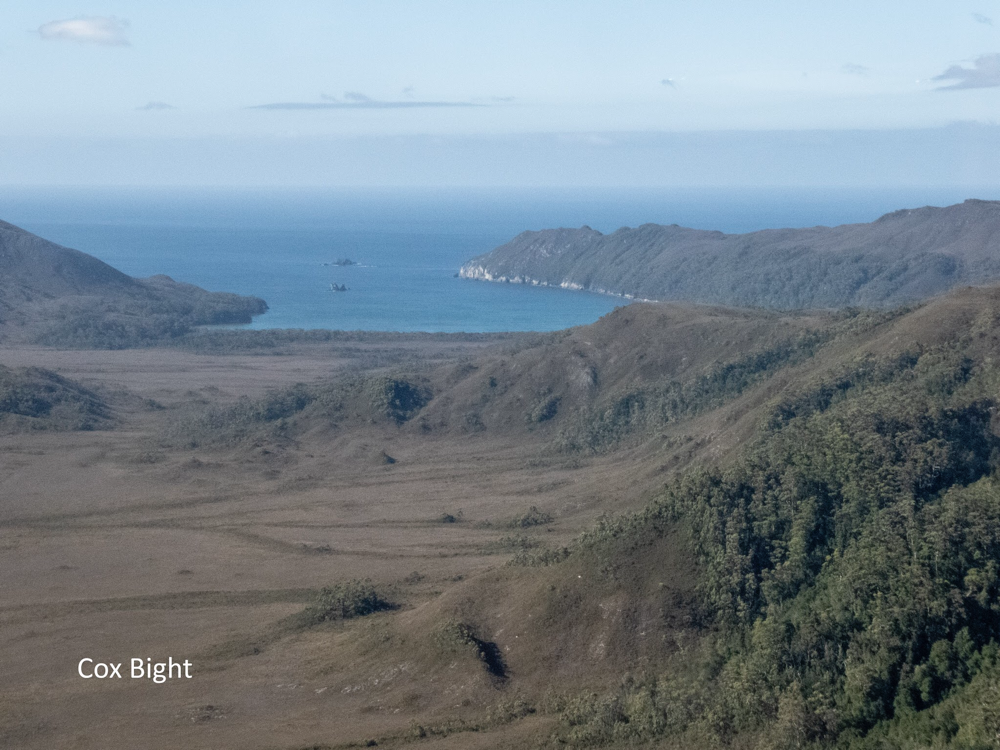
At Melaleuca, we had an hour of free time to explore the area before leaving on the first part of the walk. This afternoon’s hike leads to Cox Bight ; a beach nestled beneath and to the east of the New Harbour Range as it juts into the southern ocean. I visited the Deny King museum, which has displays about the area as well as the many personalities like Deny who lived and worked here for much of their lives. Deny’s old radio transmitter/receiver is on display under a glass cabinet. He used this to communicate with the outside world, to help in rescues and in educating his children. I did the short walk beside the river which eventually carries on all the way to Port Davey. This short walk has many interesting displays about the Aboriginal experience in this region.

I walked back to the airfield. The ranger was wearing gumboots and a sunhat, typical southwest apparel and told us tiger snakes and their babies, were lodged under the water tank. Mmmm. Thirsty or not?

We loaded up, put our packs on and began the 11 km walk to Cox Bight. The track consists of pine boardwalks and dried-out muddy tracks; it winds and undulates gently, surrounded by button grass and low heath. At ground level are fairies aprons as well as sundews emerging from the dense mud. Fairies aprons are single petal purple flowers with thin dark stalks and are carnivorous. They are a member of the genus, bladder worts. The term Bladder worts refers to “bladder” a sac filled with water and “wort” is old English for plant. Water fleas or other insects thriving in the water at the base of the plant. The “bladder” is filled by water under negative pressure, and has a small opening at water level, sealed by stoma. An insect touching these stoma triggers them to open, and water and the insect are then sucked into the bladder. The opening is sealed internally by mucus and then the feast begins! Sundews have glistening, sugary mucus that attracts flies but once they alight, they cannot extricate themselves and then the sundew produces digestive enzymes.

I saw a sun orchid, it was so heavily festooned with flowers that it lay on the surrounding grasses. A duck orchid stood proudly, barely bobbing in the sea breezes.

The boards on which we walked are dry and provide a secure walk way. When wet I think the outcome would be very different. The sliding of hikers on the now wet, already smooth, timber is legendary.

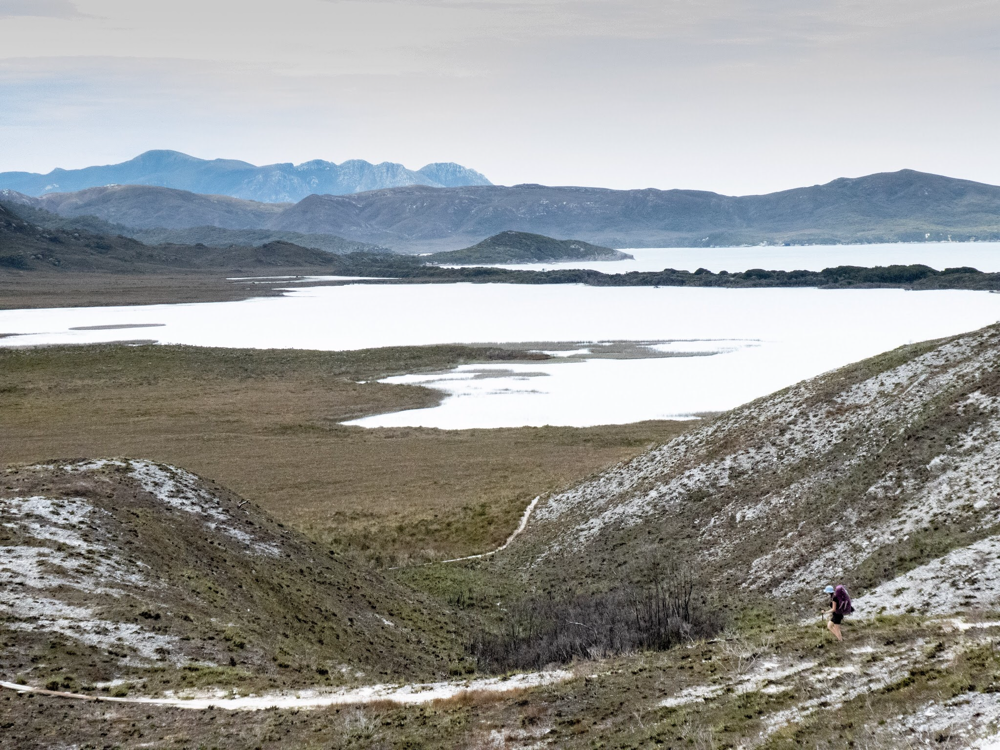
The track slews up and around the lower eastern slopes of New Harbour range. Freney lagoon is a brackish large body of water that lies behind the beach at Cox Bight. Freney lagoon was grey; a silver shimmer danced on its surface in marked contrast to the long lines of rolling white surf coming into Cox Bight from the Southern Ocean.

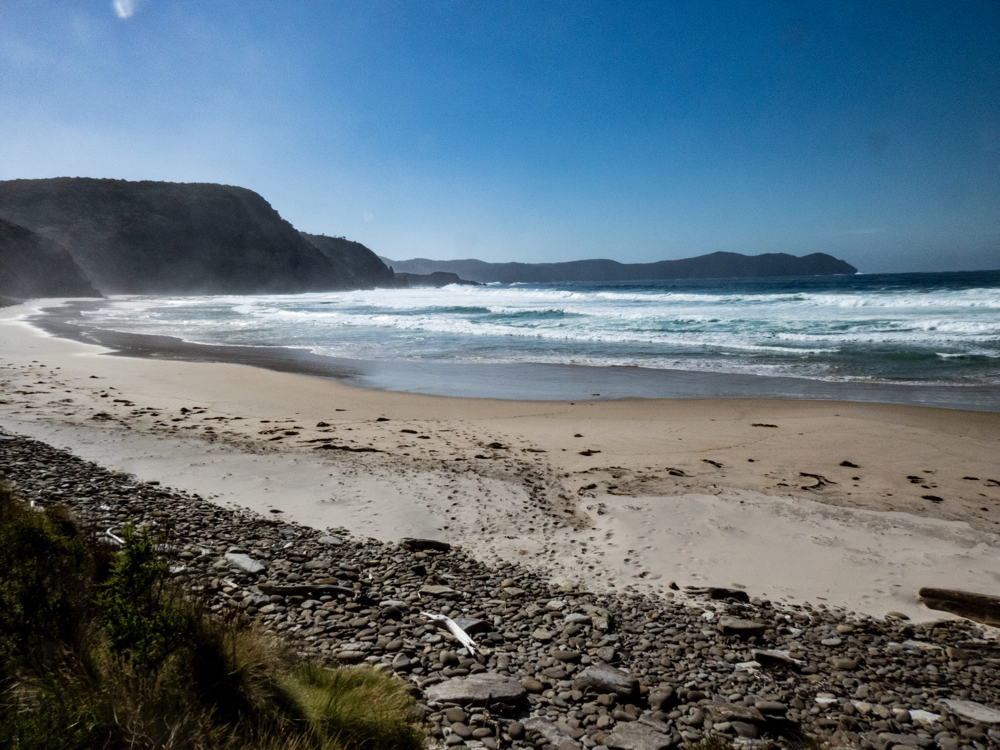
It is only a short walk along the beach to the campsite near Eric Point. The campsite is both beautiful and sheltered. After setting up my tent I walked along a sandy track back down to the beach. White sand within the reach of water darkens to metallic grey as surf transmutes and merges into repeating circles on the bank; wavelets ascend the shore then fall back, awash into the sea. This blisteringly clean beach and coast is magnificently back dropped by Eric Point and New Harbour range.

Some of the walkers decided to go for a swim. They all described the rip on the bays edge.

In the approach of evening, a band of curved cloud hung over the hills, and as the sunset grew in colour, the pink purple richness of the sky was reflected in a film of water glistening on the beach.

As I laid my head down in my tent, the sound of surf did not lull me to sleep as I still felt untested on this walk, and much was still to come.

In the morning, I needed to fill my two water bottles for the days walk. A nearby stream carved its way through the beach. The water tested fresh and cool. Our guides had set up breakfast. Tea, porridge and coffee. The way they made coffee is interesting. A large, wide lidded saucepan is filled with water, the water is boiled. Over the top of the boiled water, sprinkle ground coffee. Let it brew for a few minutes. Then score the coffee with a knife (Criss-crossing). Then replace the lid and bang on the side of the saucepan. Then wait for the grounds to sink. This takes about 10 minutes. Then use a scoop to fill your coffee cup while taking care not to disturb the coffee at the bottom of the water.

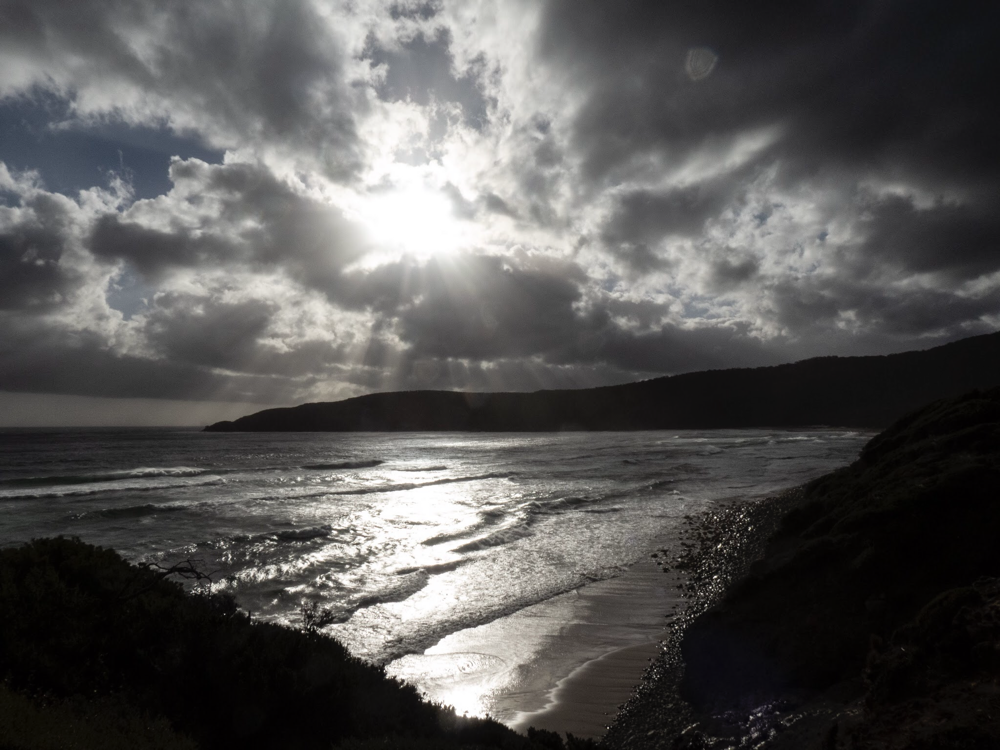
I visited the beach again. To the south the sky was filled with abundant grey cloud, turning the water and surf a steely-grey. Then the sun pierced through a small gap in the clouds, sending scintillating beams of light through the air to dance on the crests.

Today we walked from Cox Bight to Louisa River. The walk begins with a stroll along the beach which offers wonderful views in all directions. The full majesty of the New Harbour range becomes increasingly apparent as it rises above the straggly gum trees with each step eastwards. There are a few shallow creek crossings, the streams diffused as water straggles over the shore. The yellow coloured rock at the end of the beach is the point where we left the beach and truly begin our approach to the climb over Red Point Hills. These hills are 250 meters high, with a pretty steep and unrelenting climb. It provides a litmus test to whether a walker (like me) should continue the rest of the South west walk or not.

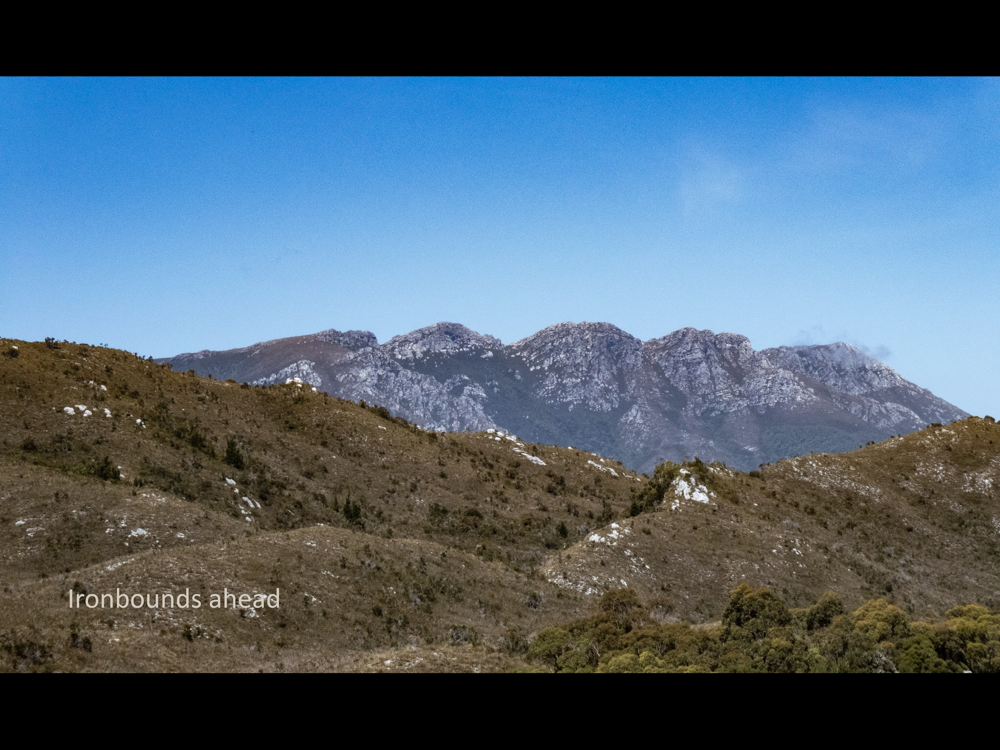
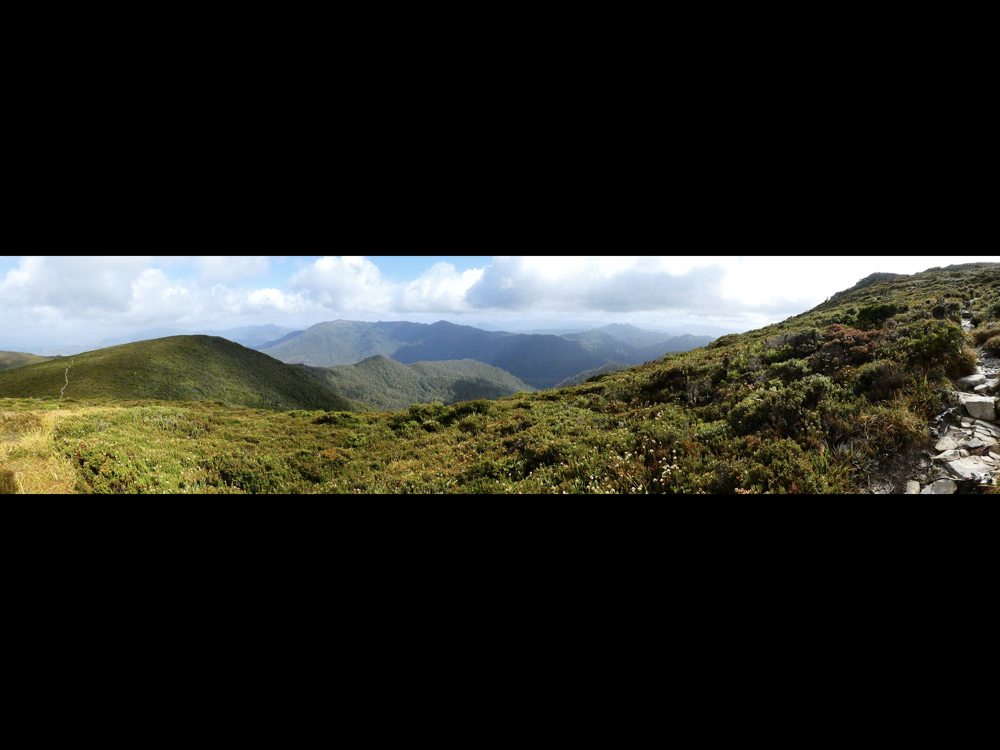
Climbing up carved steps, then rocky depressions, all the time ascending inside a forest; views hidden by the trees. It is indeed a solid walk and a fair test of anyone’s fitness. After descending the hills. The track winds, travelling up and down through the Spica Hills, patches of forest interspersed with heathland full of wind stunted scrub. This scrub is virtually impenetrable. The reason people get lost is that there are sometimes many tracks, created to skirt deep ponds of mud. However, the dry conditions and winds of the last month, have made the muddy areas considerably easier to negotiate. A few creeks were crossed but all were shallow and presented no challenge or concerns. Over one of them, a rope was suspended across to help walkers get over in high water conditions. In a situation where a fall could occur, it is essential to undo the buckles on your pack otherwise there is a real risk of drowning if trapped by your pack under water. Beyond this creek, the forest is murky and dark, trees blotting out the sun. Suddenly I entered a great field of button grass and heath, a waving plain of soft green, and there above low hills was the Ironbound Range, a triple peaked monolith silhouetted against purest, blue sky.

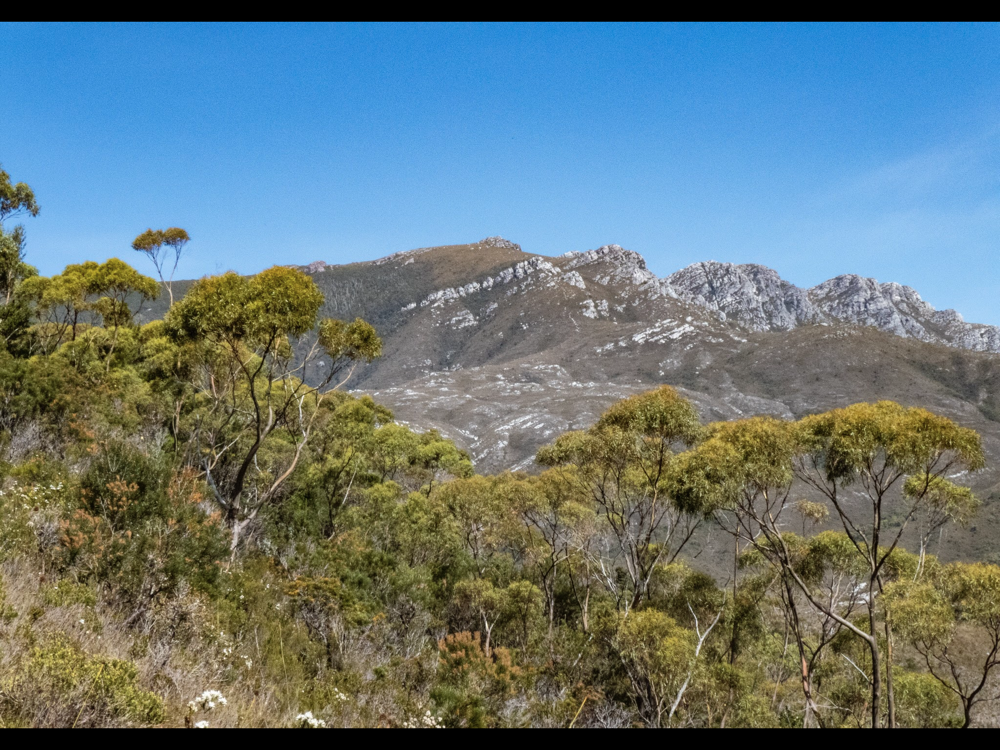
It is a massive range that stands alone, a fusing of four mountains with a demanding 1000meter ascent and then an equally difficult descent.

By this time. Some 7 hours into the walk, I was getting sore in the shoulders. I am using a new pack that I think is operating above its weight specifications and I am sure I have not correctly set it up. It is amazing how additionally fatiguing pain can be over and above the physical effort of a hike. The pain became so troublesome, I just walked in a gritted teeth, determined way but even the aching I was tolerating was not enough to lessen my appreciation of the beautiful views around me.

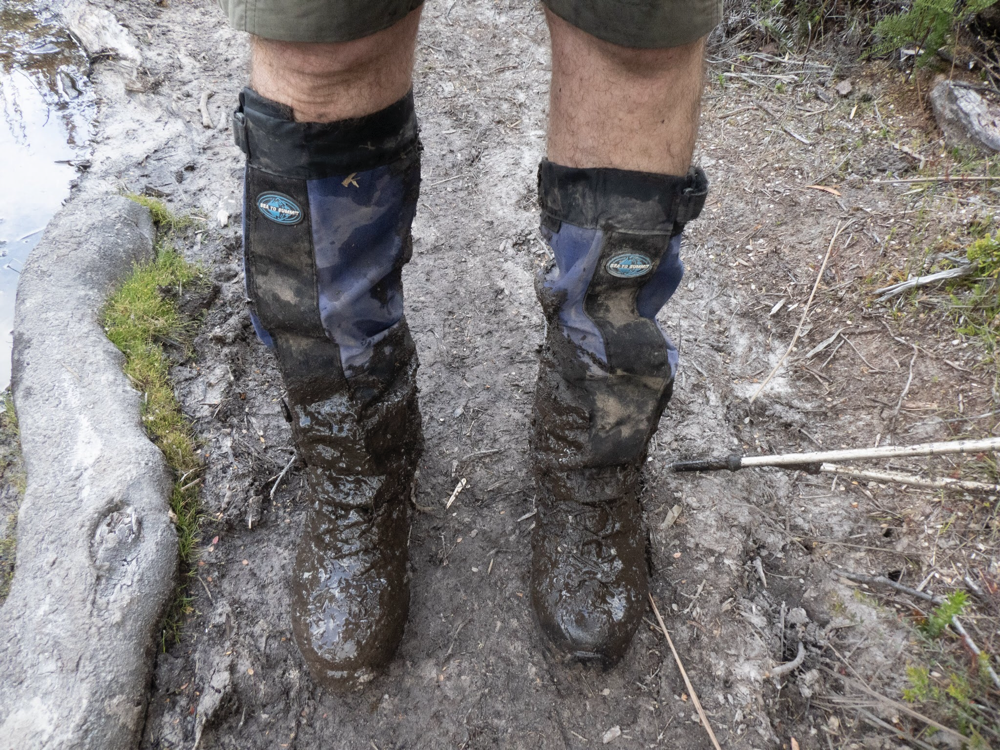
We then dropped into a narrow valley, into forest, and skirted a river at its bottom following it downstream briefly. Here was the Louisa River and the camp site was on the other side! This river is far from fast flowing now but is none the less much deeper than all the creeks I had already crossed with nonchalance. I tried to balance on rocks to get across and keep my boots dry. Well that did not last long. I slipped in sideways, avoiding a fall into the river but I could not prevent water tumbling over the lips of my gaiters and into my boots. Bother!

I cannot be too upset as the experience of many other walkers is that crossing the Louisa River can be a terrifying affair. A rope crosses over the flow, to provide a hand hold. The water can be deep and very fast flowing and can often be impassable, forcing walkers to wait till it is safe to cross. A small sign advises you to do just this.

The campsite is beside the river. After tipping the excess water out, I put my boots on a fallen tree branch beside my socks to encourage some drying in the afternoon sunlight! I had brought some sandals to wear around the camp site and give my feet a chance to breathe. Early in today’s walk, I had developed a blister on my big toe, and Nom had help me dress it. I was surprised how quickly it formed while still on the beach at Cox bight. I think it put the tape on too tight as the nerves in my toe were affected, almost a tourniquet effect as the toes swelled up on the rest of the walk. Blisters are a serious problem on long walks, a common reason for forcing air evacuation if it becomes impossible to continue.

I found a flat site near the river and near the camp kitchen. I put up the inner part of my tent then correctly fitted the fly on. I had put it on upside down the night before! Other campers did not believe that was even possible to do.

Before dinner, I sat down with Earle and we adjusted the pack back cables to shorten the fitting along my spine. It is a new design to both of us both, but I think we figured it out.

We walked 18 kilometres today and boy, was I tired. I walked down the short track to the river and took many photographs. I followed the river around its bend climbing over branches and balancing on rocks. The water is deeply tannin stained by the tea trees that line the valley and river edge. Like nearly all the water here, it requires no filtration or cleaning. Only at one spot (South East cape rivulet) was the drinking water somewhat brackish and I emptied it as soon as I could to replace it with fresh stream water.

Nom gathered us together after dinner to tell us about the next day, the walk up and over the Ironbounds; up and out of sleeping bags, then breakfast at 4am. The hike is 12 kilometres but involves 1 kilometre up and 1 kilometre down and 1 kilometre across the top. Did I imply it’s hard? Well it certainly is, and all the more for lugging up 23kg of pack. Alan, another walker, carried an item for me that saved me a few kilograms. This was very much appreciated. If I can pre-empt my overall impression of the Ironbounds; it is the hardest walk and the most beautiful walk I have ever done. This description can be justly applied to the entire South West walk.

In the morning, I awoke to a pitch interior in little tent, grabbed my headlight and then quickly packed up my gear into the pack. By 4.30 am I was having porridge, and by 5am I was ready to set off. Light was beginning to filter over the horizon, the valley walls and the trees as I walked into and among the trees and as swiftly, began my ascent.

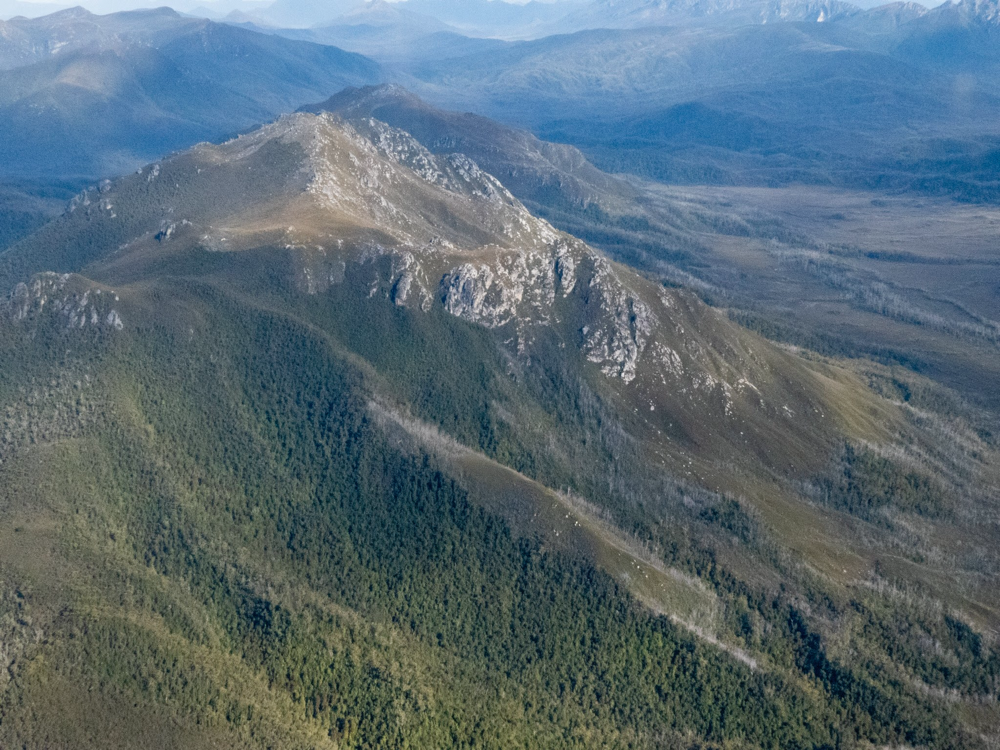
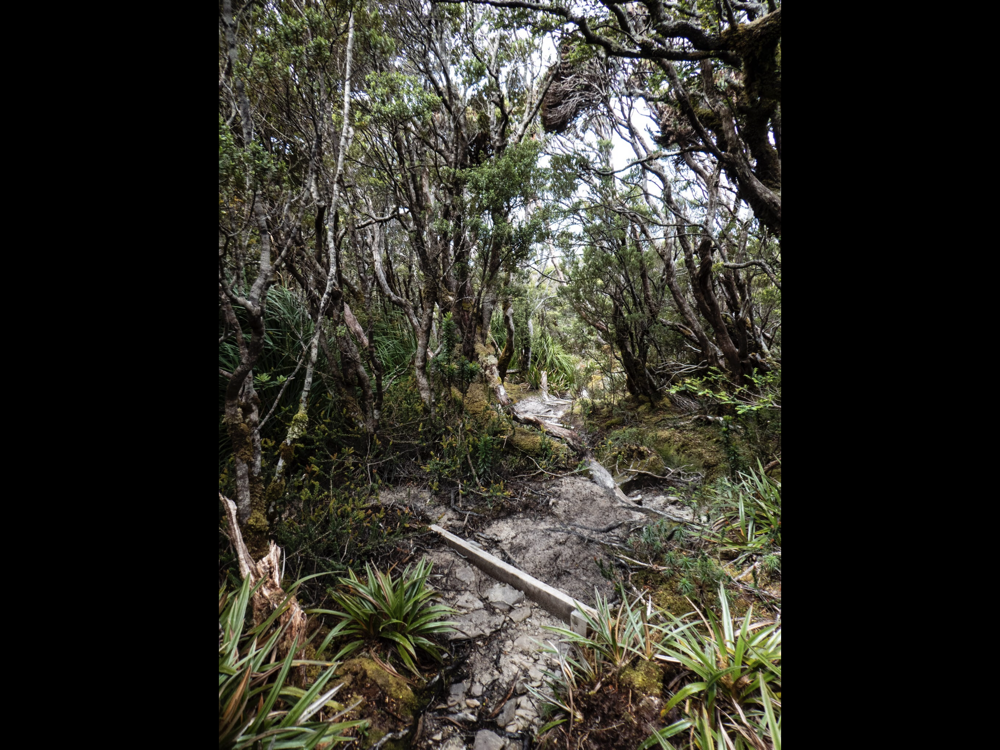
The track winds up steeply through forest, the track alternately rocky and muddy in stages. It’s a grunt, a slog rather than technical mountaineering. We left the tree line, entering the sole preserve of shrubs and grasses. As I climbed these were increasingly lower and more stunted. Around me the wind shrieked louder and louder. While behind me, the clouds looked increasingly threatening and dark, obscuring distant views of the coast, and the nearby mountains and valleys of yesterday’s hike. There were the tell-tale signs of rain, the grey thin streaks of water bending in the wind which was steadily rising more and more as we ascended. Rarely, a portion of the skies would clear and sunlight stream in to illuminate a tiny portion of the landscape. To the south was the Southern Ocean with its surf entering Cox Bight; to the west the majestic Spica hills, and far to the south there were the many islands of the Matsuyker group. I did not know that Sue and Tony, my friends, were sitting at Louisa Bay and thinking of me as I climbed into the teeth of a gale. Then mists, wind and cloud jostled the mountains and I could see nothing more of what was now far below me.

Nom was encouraging me as I walked up. Both of our guides are first rate and blend a love of the country with a ton of practical knowledge about safe walking in remote places like this. Nom explained that it is important to shorten the stick and palm the hand, with the palm over the top of the stick. This helps increase both strength and balance. The pack adjustments made last night, were very helpful in reducing pain in my shoulders.

As I ascended, there were sections of board walk, and some wooden and rock steps to make it easier. It is not a trackless ascent. However, much of the climb up the western side of the Ironbounds is very exposed and as the wind rose and rose, it became harder and harder to keep my balance and walk as well. Some of the other hikers had bad falls injuring knees and ankles.

Nom and I found several flowers, including: a Tasmanian Star lily which for all the world looks just like an orchid – it’s a purple flower with long petals and a yellow stamen and style. I photographed this in rain and wind and somehow the shot worked. There were many other flowers including; other irises, Christmas bells with their cherry red bells, spider orchids which should be too delicate for these places but thrive here, and the brown and beautiful duck orchid. Orchids are the largest of all plant groups. They get their nourishment not from photosynthesis like most plants. They have symbiotic fungi that tap into other plants root systems and steal nourishment from them and then shares the stolen sugars and minerals with the orchid perched gaily above.

The ascent is described in three stages, a steep first pinch, a less sloped section then a final steep pinch. I had got used to the less steep middle section, skirting between pillars of rock, decked at their bases with orchids and other flowers. Then I looked up, a high peering through mist, the other walkers were dotted on the slope far above me. With echoes of our favourite movie, Galaxy Quest, “you have got to be kidding”. “Who designed this?”

I climbed up this section feeling somewhat aggrieved but admittedly I was forewarned by Nom. At the top, the wind slammed into me. The boardwalk on this near level section across the tops, would normally provide an easy path but today the wind barrelled over the lip of the mountain throwing me off. Walk a few little, little steps then stop, balance into the wind while the gust hits. I fell twice dancing over the rocks till I was left standing, amazingly with no injury but at some points the boardwalk is high off the ground and I am very glad I did not fall there.

The wind roared over the mountain. It was deafening.

The top of the Ironbounds is reasonably flat, and it is 2 kilometres until High Camp, the first sheltered spot. Actually, this is the first sheltered spot since leaving Louisa River. When I arrived there the earlier arrivals were wearing rain jackets, stamping feet and snacking to keep warm. I enjoyed a muesli bar and a drink of water before heading out again. I was under the impression it was going to be all downhill from here, but I was mistaken. The track re-joined the plateau and quickly became even more exposed to the weather. Earlier the wind would erupt toward me in gusts with pauses, brief ones but with just enough time to shuffle onwards; this time it gusted non-stop. We all had to walk leaning 40 degrees into the wind and walk like crabs clutching our sticks and toppling side-ways to where the descent properly began. The track drops quickly from the plateau but the walk is not precipitous, just “technical”. The term “Technical” is jargon for difficult terrain; abundant muddy tracks, fallen branches, long rocky drops, diverging tracks and all of it, very slippery; yep it was technical.

I can only begin to imagine how hazardous and demanding it would be in really bad weather with rain and fog obscuring the route and frustrating walking. The rain that had dogged the early ascent of the Iron bounds had gone, and sunshine splintered through the overhanging crowns of trees. I soon stopped to remove my waterproof jacket and pull out my tucked in shirt to let it flap around me. Two hours after leaving High Camp, I arrived at Low Camp where I met the leading walkers. I could have stopped for the day right here; my earlier energy was spent. However, on this walk, there were still many kilometres to go before I could relax at a campsite. I just had to dig deep and keep going. The lunch was splendid as always; wraps we could generously stock with salad and meats.

I hope I have made clear how totally demanding the walk is but what I have not emphasized enough is how truly beautiful and biologically amazing the flora is. Over the last two hours I had travelled in alpine flora, then subalpine trees and flowers; wandered into fern glades, littered with glistening moist moss, slime moulds hunting: then entered a dark gloomy rainforest at the bottom of the Ironbounds. If you know New Zealand, this single day is like a Heaphy track in splendid miniature.

From Low Camp there was still three more hours to get to Little Deadman’s Bay.

A kilometre from the lunch spot is a set of waterfalls and cascades, great for a rest and a place to fill up my diminishing supply of water. I carried 4 litres of water. One of the bottles had electrolyte solution to replace some of the salts my body lost on the walk; doing this this really helped prevent cramps and muscle fatigue. The rocks and platforms around the waterfalls are sloped and wet, very slippery and especially so when trying to put heavy packs back on. These heavy packs require a wild hurl into the air then swiftly swinging a shoulder under one harness before wrestling into it, and that is hard enough to do correctly on the flat. Luckily, Earle has spent some time with me resetting the pack and as a result the walk was much more comfortable than on the previous day. Most of the remaining three hours walking was on easier track with the notable exception of the first few kilometres. This section had a steep sideways cambered slope, so it paid not to fall over and end up down in the tree filled gully on my right. Considerable erosion combined from, the many walkers, the wild rain and weather, had severely narrowed the track and made many sections deep and very muddy. Then suddenly there was a hint of blue, the ocean through the trees, and steadily the increasing roar of surf penetrated the forest. There was still 45 minutes to go, and the track was now quite easy twisting its way amongst sassafras, coast banksias and ferns. The track hovers above the coast, the rocky cliffs and promontories, and rocky narrow grottos at sea level: all struck by waves that surge up their stony flanks. The sea is a blue expanse rippled by long lines of waves which span the full length of the greater bay. As they finally meet land they become airborne, roaring into tumbling, white foam above the rocks.

There are many small inlets, choked with kelp and offering caves in their cliffs. Alan climbed down to one the next day and later told us about the sounds of water echoing within them as water surged in.

The rocks and platforms of the many inlets glisten and glow, reflecting the light of the falling sun.

I arrived at the camp at Little Deadman’s Bay at 6pm; I had walked for at least 12 hours after commencing at 5 am. I was astonished that I felt less tired than at the end of the previous day. However, all I wanted to do was sleep. It had been easy to keep myself well hydrated using the twin water bottles tucked in small packs on my front. After dinner, a pasta dish, I went to bed and crashed into slumber. I don’t think I even dreamed, just slept! I woke at 6am and decided to spend this break day bludging which was more- or- less the plan from the start. This was a designated rest day and I was going to do just that. I beach combed up and along the small bay, then wandered a short distance along the forest tracks; I sat on rocky platforms to admire and photograph the beautiful southern light and gorgeous coastal scenery. Off the coast are magnificent islands including: DeWitt, Il de Golfe, both are part of the larger Maatsuyker group. To the south east, South Cape could be seen jutting into the Southern Ocean. Though my legs did not actually hurt they were not really interested or indeed motivated to do things like lift me up or walk more than a short distance, so I spent much of the day resting in my tent, eating and reading. I sent messages to Jennifer on my In-reach communicator, just to let her know I was okay and what I was doing. It is only capable of sending and receiving text but does include a map of my location with very accurate longitude and latitude. Being able to keep in touch with Jennifer was great for my morale. The weather was exceptionally kind, sunny and a warm breeze perfect for drying off wet boots, gaiters and other gear.

31/12/2018

Well 2019 is about to commence. I am in my tent camped at Surprise Bay as I write this. Unlike the soft lapping of the water at Little Deadman’s Bay or the riverine gurgling at Louisa river, there is now the steady sound of uninterrupted surf; white caps on the top of the rolls of waves are ceaselessly entering Surprise Bay. In the distance, surf is jetting into the air as the ocean washes up the rocky edges of islands off Pretty Point. Before I wrote this, I went for a morning walk on the sand and amongst the rocks, to take advantage of the morning light. When descending to the beach from the campsite, the track steepens and a rope with monkey fists tied along its length provides traction and support. At the base of this cliff, my first obstacle is a lagoon; depending on the tide it is about 5 metres across. It is shallow now and the water is refreshing as I wade through it. It is cool and wet on my bare ankles and feet as I cross over to the beach. Now I am wearing sandals, so it does not matter if they get wet. Seagulls wheel in the air and screech as I approach their nesting platforms hidden high among the rocks. My short walk on a lonely beautiful beach is an inspiring way to commence the day. However, I am getting ahead of myself so I will recommence today’s story with the tale of my walk from Little Dead man’s bay which ended at Surprise Bay last night.

Though it is “only” thirteen kilometres from Little Deadman’s bay to the campsite at Surprise Bay, it took me 13 hours including breaks; leaving at 8am and arriving at 7pm. The walk begins with a short stroll along the rocky Little Dead man’s Bay, past the little creek that provides such delicious fresh water, until reaching an orange marker on a tree. Here is where the track continues. The track is rough (but easy to follow) requiring sustained concentration on foot placement and balance. An injury anywhere on this walk would be very difficult to manage. On a map the small black dots that signify the walk route break few contour lines, but inside that contour interval of 40 metres, it undulates and twists remorselessly. We briefly walk along Deadman Bay before leaving the coast once more to walk through forest and climb over Menzies Bluff. Many matures trees provide shade for this section of the walk. About three hours after leaving Little Deadman’s Bay we reach the stately Prion beach. The walk along Prion beach goes for four kilometres and provides wonderful views of the surrounding mountains, and adjacent ocean. We continued along its length until meeting a sandbar. Here we turned north to find the boats and other walkers all making ready to cross. The boats are well secured against rising tides and weather and we needed to unclip and haul them down to the wide lagoons water line. This beautiful body of water, the end of the biggest river of this coast is named New River lagoon. The water is a deep blue, a breeze ruffling its surface; there is a band of trees and scrub and standing far behind and high above them, I can see Precipitous Bluff. This is an impressive near vertical monolith stained an even blue by haze and distance. To cross, packs are stowed in the rowboats and oars placed in rowlocks; it only takes 10 minutes to row across. It is essential to leave a boat on each side and both will need to be secured as we leave. The attachment points are sturdy steel carabineers attached in turn to heavy rope. We had lunch sitting on the ground in the forest lying just beyond the lagoon. The weather was beautiful, sunshine and clear skies, it all made for amazing vistas. I could only imagine how difficult it would be to cross the lagoon in rough seas and heavy rain.

After lunch we continued the walk. The track first dropped into forest, its warm still air hovers in the shade. Then a sudden climb, a grunt up a short climb to a vantage point; I could see Precipitous bluff, and to the left and much further away was Federation Peak, looking like a small collection of toppled pillars on the horizon.

We left the coast, losing sight of water and waves, walking on tracks, some muddy, some very muddy, through plains of button grass and heath. Here at last we met the serious mud for which this walk is famous (or is that infamous). I have not described the extensive lengths of track that had mud some 20 cm deep but here some bogs a metre or more in depth and were met with no warning. Nom plopped downwards in front of me as if she was riding a fast elevator straight down. She adeptly lurched to the right placing herself against the more solid edge of the track. Alan helped hoist her out. Luckily her boots stayed on; boots can be sucked off in the process of being extracted from the sucking mud.

The boardwalks are few on this section of the walk. Typically, they consist of two parallel boards, 10 cm wide and 2 metres long; there is usually no chicken-wire (anti slip) covering them. This is not a problem in the dry conditions we have had on our walk but in the wet the timber can be very slippery indeed. I should mention that the weather conditions of this current walk are exceptional; dry, minimal rain, warm sunny days. Look it certainly makes for easier, more pleasant walking but the plants, especially ferns and shrubs looked stressed. They flourish in and are adapted for wind, cool weather and frequent rain, not these persisting sunny, hot and dry conditions. Even while I was walking this section, fires were kindling north of me, in the heart of the South West Wilderness Area.

Soon we re-entered forest, appreciative of the shade and skirted the coast once more, providing more opportunities for views of the steep rocky promontories piercing the southern sea. It was now two kilometres from the tracks junction with Surprise Bay. By now I am tired but there is no option but to continue. In this situation, I rely on my training for the walk; the fitness it has provided as well as a determination to just keep going. Life is about two things; turning up and keeping going. I think that most people who do this walk have to dig deep in their personal resources (physical and mental) at one stage or another. I did not rely on mental and physical toughness. I snacked on glucose treats. I had muesli bars. I made sure every second litre of fluid I drank was topped with electrolyte solution to replace some of the salts lost in sweat on the walk; disturbances in body chemistry are easily prevented but hard to remedy without prolonged rest.

The track wove its way up and down through forests of tall eucalypts and ancient tree ferns, their litter of shed leaves and fallen fronds making this steep track deliciously soft underfoot. The fronds of the many ferns hanging above shone with golden auroras of light from the setting sun. I was simultaneously tired in one sense but refreshed in another; it is strange how two such contrary feelings can exist side by side. Now, the walk meets a steep uphill section, then turns beginning a gentle downhill meander that seemed to be take me near the beach, so close I felt I was about to arrive, then it drifted away, time and time again this happened before finally I arrived at the beach.

This beach is truly beautiful and worth every painful step to get here. The sand is clean, white and pure, it surrounds several rock formations; sandstone and conglomerate cobbled together; then tossed into the sky by the energies of the ancient earth. It reminded me of the Statue of Liberty tipped askew and emerging from a similar beach in the closing scene of the original “Planet of the Apes”.

There is still a kilometre to go and my feet hurt! When I walk up a track and especially down a cliff, my increasingly swollen toes jam and strike the boots toe box.

At the end of the beach is shallow river, it is an easy wade across to reach a rocky platform. This continues up a cliff. Here is the end of a gracefully curving lagoon, tannin coloured water eager to enter the ocean. As I cross the flow tugs at my ankles. The track then continues on up a steep rock face which is easy to climb because of a length of sturdy rope, its repeated knots provide hand holds allowing me to haul myself up, step by step.

The campsite is only a few tens of metres further on. By now I am in a daze and intellectually struggle to find a camp spot. All my mental processes are sluggish; thick like cold porridge. Finally, I find a site, assemble my tent, climb in and rest without bothering to inflate a mat or pillow; being horizontal never felt so good!

At 7:40 pm I felt rejuvenated enough to climb down to the beach. I crossed the river in my sandals then walked across the sandy shore. The sun was now low in the sky; coloured horizon and clouds glowed in orange and gold in interrupted bands; its richness mirrored faithfully in the sheen of seawater on the beach.

Dinner was cooked by our terrific guides and consisted of Beef Stroganoff with Tim Tams for dessert. Afterwards I slept very well.

Today, it is only a short walk of 3 hours to the campsite at the east end of Granite Bay.

1/1/2019

It is 6pm and I am sitting after a fashion in my tent at Granite Bay Campsite; I am more hunched over than I would prefer as I am scribbling on my note pad. It is too hard writing lying down. We spent the morning relaxing at Surprise Bay and left on the walk to Granite Bay after lunch. Nom gave us a very interesting talk about ferns. The track enters the forest and goes up and up, and you guessed it, up some more. The track is not rough just steep. The forest itself is beautiful; mountain gums, ferns, mountain peppers, geebungs and many other Tasmanian shrubs and trees create a botanical wonderland which is a pleasure to walk within. The track then descends to Granite Bay. There is a precipitous climb down an ancient timber ladder held together by ropes down to the beach, all of which I negotiated on my bottom. Large packs have an unspoken shared conspiracy with any ladder to cause teeter tottering on any descent. I am a safe walker but not an elegant one! Nom stepped down this rickety ladder with complete confidence.

At the beach we could see across the waves and ocean swells, the magnificent cliffs of South Cape. These kilometres of dolerite cliffs, Earle explained, are 300 metres high. Dolerite is ancient, it forms deep beneath the surface and is immensely strong rock: it has been described as the backbone of Tasmania. These cliffs drop vertically into the ocean, each hexagonal pillar fused to its neighbour for aeons. Sea surf crashes into their bases never endingly sending up jets of salty sea spray into clouds of sea haze.

It was a short walk along a rocky beach, hence the name Granite Bay. The surf covered the sandy part of the shore near the water’s edge. We had to clamber like lobsters with our walking sticks in place of pincers, balancing on the slippery rocks. At the end of the beach is a waterfall which was not all that impressive owing to minimal rain. I clambered up the rock face with some help and then it was barely a hop and a step to the campsite. This is perhaps my favourite camping area of the entire walk, with abundant tea trees, plum trees, and celery top pines. Later on, Alan and I visited a small waterfall upstream of the other waterfall that plunges onto the beach.

2/1/19

This morning we left the Granite Bay campsite. My sleep was only interrupted by the need to get up at 1 am and reorient the tent. It was a simple matter to remove pegs and turn it to lie down the slope and not obliquely across it. The entire slope issue had utterly escaped me when I set up the inner and fly earlier in the day. The wind howled over me as I fixed the tent pegs down. The toilet at this camp site is a disgrace! Most of the toilets on the walk are modern enough with heavy doors which cannot be opened by the local fauna and a seat and “bowl” over a drop toilet. At Granite bay, there was merely a small rectangular hole in the floor, no seat at all, and already the results of the morning ablutions were sad to say the least. Eeech!

We left the campsite at 7:50 am and immediately entered forest and began a 5 kilometre climb up a rocky track of which the first two were very steep. On the way up, the track would dip creating hollows where water and mud would collect, creating some very boggy track. These bogs are not only deep but wide as well and it can be challenging to skirt them without damaging the track even further. I think that in these difficult sections, there should be track work to not only ease walker access but help prevent erosion. The track modifications need to be selective, targeting stretches of track where walkers are causing damage. On the sections of the walk with boardwalk or hardened surface, plants and flowers can be found right beside the track while in the muddy boggy sections, the churn of 1500 (per annum) walkers prevent anything at all from growing there.

The track dried out considerably as the highest point was reached. The other walkers were waiting under a canopy of tall eucalypts. They were talking about seeing a large tiger snake on the track. I never saw a snake on the entire walk which does not bother me one bit. After a snack and a drink, I hauled my pack back on, and headed down the track. It was a beautiful walk, a track winding its way gently downhill amongst tall straight mountain gums, between ferns and scattered native trees. Then the track emerged suddenly into splendid sunshine before carrying along a boardwalk to the lunch spot; the route sinuously twisting in a landscape of dense heath and small native trees.

Lunch: wraps stuffed with salad, salami, cheese and tomato.

There was only a further three kilometres to go after lunch. After lunch, there was yet another climb but a much gentler one than earlier. Then it drops down slowly descending a long ridge. On the way, it cuts across to the clifftops, to form eyries with fine views of South Cape and Ocean far below. The track ends today at South Cape Rivulet. At the rivulet, Earle lead us seaward where the water was shallow. The rivulet enters at the western end of superb long sandy beach with a forest of tea tree and tall native grasses above the seashore. To my left, the rivulet widens into a wide, serpentine lagoon that blends into forest. Sunlight lit up the leafy crowns of the tallest trees on the hills above the lagoon. Far across the bay, South East Cape beckoned amongst surf and waves: as the sun provides a crystalline blue sky to bathe all of the bay and beach.

In a romantic (impractical) beachcomber way, I pitched my tent on the sand on the beach. There was some shelter from the wind but not nearly enough. I improvised sand pegs, burying the pegs in the sand. The tent at least was not going to blow away. I was feeling smug with myself. I rested in the tent and though admittedly it was not going to blow away, least of all with my weight inside, the walls of the tent were flattened into my face by the wind. I decided I would move the tent and I soon found a much more sheltered spot among the grass trees. Mum and daughter on the walk pitched their two- person tent adjacent to me. Suddenly a gust of wind pulled the tent into the air, jettisoning the pegs into the underbrush. They (the pegs) were never located. I must bear some responsibility as my first choice of campsite heavily influenced their own selection. In my new campsite, I could still hear the roar of the surf and the wind blowing through the trees but now that the tent was sheltered and motionless. I would sleep easily.

3/1/19

I have had a nap. The day has been all a dreamy heat and after a short walk from the Rivulet camp site we soon arrived at the new campsite located just beyond Lionhead Island. I slept okay last night at South Cape Rivulet, but it was too warm, and overnight, I soon exited my sleeping bag and thermals to lie on them instead. These small tents are terrific at keeping heat in and the fly zips are not adequate to adequately ventilate them. After so many days with no shower, I am glad I was in a single person tent.

This morning I woke up, grabbed my trusty camera, a Panasonic TZ-90, and revisited the beach for some early morning photography. It impossible for me to do justice in words or even pictures to the serenity and still beauty of this place. Far in the distance, across an expanse of ocean, is South East Cape a narrow promontory, a featureless blue due to sea and wind haze. Turning my eyes to the left, I can see a nearer promontory, its distinct layers of stone and rock merging with the east end of the beach. Surf crashes over the rocky platforms that emerge from the sand covering them in white flecks of tumbling water. The beach sweeps around the bay, white and unobstructed, with hooded plovers quickly marching on the shore, sea gulls and pied oyster-catchers wheel over the waves before landing on the beach and peck at the sand beneath their feet. Grasses clump in small protective mats in the sand higher up the beach. Behind them tea trees and taller grasses form a forest well above the water-line. The surf roars non-stop: long unbroken wave crests cross the width of the bay, before crashing into rocky points or surging up the beach where I am standing. Waves surge into the mouth of the rivulet, sending ripples across the brown water of the lagoon before dissipating upstream, wobbling the tree reflections as they pass.

I followed the rivulet upstream, it bends first to the left and then to the right, it is a wide and lazy water, mirroring the forest above it. After breakfast and packing up my gear, we began the walk from South Cape Rivulet to Lionhead. The walk begins along the beach which I had already explored, turning off into the scrub at the orange marker used the length of this track. It began on loose stones to a clear smooth track. The walk goes through coastal forest, full of banksias, ferns and low gum trees, forever shorn of height by winter storms and winds. The way was often overgrown; I struggled to clear the path with my sticks trying to locate any snakes. The track was muddy in sections and moderately steep. Some trees had been felled by wind or weather and had to be climbed over, but all in all, it was not a difficult walk. I arrived at the first of two beaches. As I walked along the sand skirting the waves, I looked up to see a gothic tower, perhaps built by nature out of its arrogant opposition to surf and waves; its crown was the wild water tossed high over its battlements.

Then this beach was left behind. The walk twisted upwards through forest before descending to a sandy grotto where the most delicious water flowed. The water at the rivulet had been adequate but was a bit too brackish to enjoy. I glutted myself with this new water before filling my two water bottles. There was only a short walk to the beach, worn boots collapsing in the soft deep sand.

I walked along the stony uphill section of the beach, past Lionhead rock and I would have carried on all the way to Cockle Creek given the ease of the walking. Earle tapped me on the shoulder and telling me I had walked right past the campsite. I had seen the steps leading up the site but carried on anyway. It was located very close to the stream where I had stopped earlier to drink. The timber stairs are solid and well built. The drop on either side of the steps is a few metres. I am a bit nervous of heights, but Nom sensing my concerns, had told me of a useful trick. Hold your poles in front of you and just in the periphery of your vison. The brain sees this as a wall and if you don’t dilly dally, the brain can maintain this illusion long enough to descend a staircase or steep, narrow slope or a narrow bridge.

At the top of the staircase is a short boardwalk through tea trees to leads to a small campsite. We had the pick of the sites as we were the first to arrive that day. Later arrivals had to find other sites such as near the bottom of the stair case amongst the grasses or in the sand behind the beach.

Most of the other walkers decided to try and walk to south East Cape. Though it looks close on the map, the tough tea tree, heath and scrub make a direct traverse impractical. This was my opinion. I stayed behind enjoying a nap in my tent, a quiet read on my kindle, and a pleasant generally mindless reverie in the afternoon sunshine; an afternoon filtered through the branches.

I wandered down to the beach to fill up my bottles once more and then walked to explore the rocks and rock pools beneath the Lionhead, the huge stone island abutting the coast. To me it resembles a lion couchant, with its hind quarters facing the incoming seas. Between the island and the beach are vast rock pools and stone formations, while giant untethered kelp now wafts in the water beneath its surface.

The others arrived back at 4pm.

Tomorrow is the final section of the South West walk, the 11 kilometres to Cockle Creek.

4/1/19

I am lying in bed at Amberly House, Sandy Bay road. I have had a shower, extracted dead insects from behind my ears, admired the wreckage of my toes, shaved my nine-day beard and have put on clean clothes.

This morning began at Lionhead, after a hot night in the tent. I opened the fly as much as I could do but it was still warm, too warm to stay consistently asleep. I woke up at 5:30 am, I let my thoughts meander for 30 minutes, vainly trying to slot them in useful parts of my brain. I packed my gear into the pack, sent a message to Jennifer on the in reach and had breakfast. Porridge in a bowl, added hot water, mixed vigorously with a spoon till the flakes dissolve and form an edible mixture. I scooped a cup of coffee into my cup with the ladle sitting on the lid.

I descended the four flights of stairs. I stopped often to admire the impressive views of beach and coast. Unfortunately, the clear vista of the Lionhead itself was obscured by haze. I walked along the beach leaving Lionhead behind me. The sea haze filled the atmosphere over the beach giving a magical quality, a hazy background to silhouettes of the walkers further along the beach. The track commences with a short steep path from the beach, up and over Coal Bluff where there is a visible seam of coal. Fragments of what look like shattered briquettes crunch under foot. The track enters a forest; cool shade is very welcome as the day is already beginning to warm up. The path is easy, its undemanding nature makes for quick walking. Also, the packs are the lightest they have been, putting lightness in the step. The forest soon opens out into a rolling expanse of button grass and heath. The coastal views of ocean and mountains enjoyed early in the walk are now replaced by low hills, with none of the drama of our first climbs. It is none the less gentle sweet country. We finally enter a tea tree woodland, before arriving at Cockle creek. I had spent much of today’s hike walk chatting with first one then another of my fellow walkers and the day had gone quickly.

We visited the whale sculpture and generally stretched our legs, having left our packs near where the bus would arrive. We boarded the bus on our return to our packs. We stopped for lunch in Huon at a café. We soon arrived at our destination outside the Astor Private hotel. The walk was over at last.

Afterword

I am in the townhouse at Alice Springs, its hot outside but the air conditioners are keeping us both comfortable. It has been four weeks since I completed the walk. I can sum up the walk like this; it was the hardest walk I have ever done, and the most beautiful. The other walkers and guides supported and encouraged me and I did likewise for them. Perhaps this is the most important lesson for me; whatever you can achieve alone is nothing when compared to what can be achieved as a team working toward the same goal.

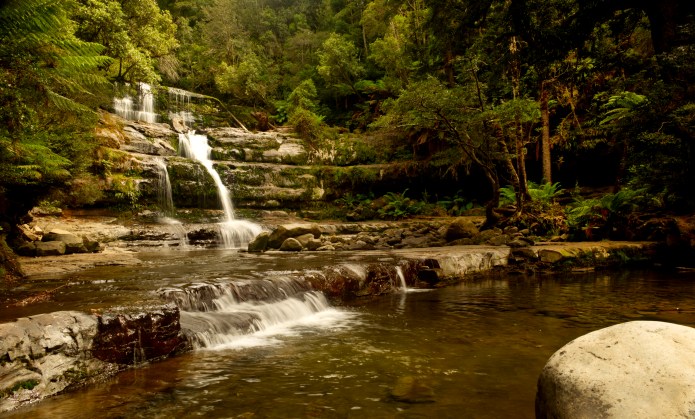
Standard
tasmania, Travel

Walking in Tasmania

As you may realise not a great deal happened on our stint in October. It’s starting to resemble comfortable slippers, a few less surprises and a lot more comfort. I took some sky photos in Hart’s Range. This is a community on the Plenty Highway only about Three hundred and fifty kilometres from the Queensland border. Almost shopping distance! The accomodation for staff is a short distance from the community so it makes walks in the surrounding country easier and being outside at night is a bit safer too.

I was able to do some wilderness walks with friends while back in Launceston.

I joined a walk with the Ramblers club. It’s was a fine sunny day, a Sunday. We drove all the way to Lake Rowellan and along the Mersey forest road. This road allows access to the Walls walk, Lake Myrtle and of course Lake Louisa. Yep, we were going to walk to this highland lake. An ancient glacial lake which splashes its banks only 3 kilometres from Lake Rowellan but it’s a somewhat vertical route. The walk starts about 100 meters short of the Juno river road crossing. Pink tape is suspended from tree branches to mark the start and to indicate much of the route. The track is not well defined but if there is any doubt, just go up!

There were 16 walkers, Jock took up the tail end and Trevor lead the way. We were warned to keep the next walker in sight because of the scrub and narrow winding track. It’s a solid climb up, including a short scrambles over rocks and trees that have crashed on the path, then a refreshing meander through a glistening rainforest, all the branches, mosses and lichens dripping with moisture despite the sunshine. A slime mould which I kid you not, resembled snot smeared over a child’s cheeks, it was white and shiny and snotty on a log we all carefully stepped over. The end of the track is on a narrow lake bank. We stopped for lunch right here and munched sandwiches while enjoying the view both sublime and very peaceful.The water was so clean and clear, the ancient logs which had tumbled in over the years could be distinctly seen beneath the surface.

The weather was beautiful from start to finish. We headed down, and thankfully, it’s never as steep going back. Funny that. We surfaced from the forest above Juno creek taking some photos there before re entering the forest and then dropping down to the road.

On Monday I went walking with Gareth. We drove to the lower, downstream end of the Liffey falls walk. It was a very pleasant hike up always within cooeee of the rivers and creeks of this area. The track is vastly improved from a few years ago, it’s well benched and easy to follow. There are established ferns and trees providing shade and shelter. There are creek crossings on well built bridges. Not a challenging walk perhaps, but very refreshing and beautiful. The waterfalls did not disappoint. There are now several viewing platforms to enjoy the river and waterfalls.

We had lunch in the upper visitors area, sandwiches for me and some sort of sport food for Gareth, that read like rocket fuel, it’s ingredients were so alien to actual food. But after a mug of hot tea our spirits were amply restored and so sustained, we continued our walk, back downhill to the car, strolling along the river.

Standard
tasmania

Lake McCoy

It was an early start for me. We set the alarm for 6:30. I looked out the window at the far end of the corridor to see dawn breaking through a twisted dark cloud. I braved the front door, oooh, cold. I went back inside and upgraded the equipment I’d planned to take on today’s walk.

I met everyone else at LINC in High Street, loaded up my pack and boots into the boot of Trevor’s car. I travelled with Elaine, Trevor and Julie. While the six others came in other vehicles. It’s 125 km to the point on Maggs road that is the starting point for the walk. The day simply became more beautiful, dissipating my worries about a too cold day. The weather could not have been kinder or more enchanting. The rich blue sky providing a striking clarity to landscape.

The start of the walk does not look all that auspicious, piles of forestry debris gathered into numerous piles in readiness for an autumn ignition. The track sets up through scrub, the trees and shrubs almost and in fact often do obscure the way. Trees have belligerently decided to land the length of the track. This obliterates the route and provides a slippery obstacle to clamber over. Pink, yellow, orange and white ( faded coloured plastic ribbons) hang off tree branches and stumps. The route these impromptu signposts provide should be thought of in the many not the few. As previous walkers got lost, they started tying on plastic ribbons, and so producing a bewilderingly complex labyrinth in what is already a nearly opaque track. It’s slippery, uneven and as we ascended given to sudden collapse. The track for a substantial part of the way goes over sphagnum moss. And it’s deep, my boots springing and sinking in the pale green moss, it’s like walking on a too soft mattress but the simile collapses as suddenly the right or left leg drops through into the wet never never World of sodden peat beneath. My boots were very damp by the end of the walk.

The track provides a steady climb with occasional pauses to clamber, slip, fall over, land spreadeagled on the moss, or wonder where the track might be. We began with a detour. After we crossed a creek, we missed correct turn off to the right and instead carried on straight ahead. Elaine raised the alarm. We were walking west rather than the correct south. Neville located the right track. The storms and rain have sent an enormous amount of debris, twigs, branches, tree limbs and trees, and rocks over the track. It’s not easy. This is not a walk I would ever contemplate doing alone. The other Ramblers are highly experienced bush walkers and thought flummoxed at times, soon sorted out the right direction. The path was never more than 15 cm wide.

The track enters a narrow valley with a central strip of pools, and sphagnum, of scoparia sprawled over the ground, it’s red spikes looking listless, lacking their carnivorous predilections, and Bauera, for once benignly hovering against woolybutt, snow gums and pencil pines.

We entered an arbor, of luxurious moss, soft and spongy, and shaded by healthy pencil pines. A small tarn glowed orange and red beneath the pines, even at noon, the time of the most unkind light. I took a few photographs and as quickly as that I thought, where are everybody. The twisting track, the scrub and dips, meant it was very important to keep alert. It would be too easy to get lost here. Occasionally I’d hear the others call out ‘ Bruce’ . I answered and caught up.

Lake McCoy, is beautiful. It’s most striking feature for me was it’s stillness. What an evanescent virtue? Many pencil pines and woolybutts, crowd most of the lake shore, reflections perfect in the water. Water plants hover just beneath the surface, their cream leaves dimpling the water. The western edge of the tiers is visible behind the pencil pines, it’s abrupt cliffs beneath a flat topped Mesa.

We all enjoyed our lunches in the warm sunshine, took Photos and squelched around in the streams, pools and moss. Very enjoyable. However time was getting on, so we packed up, Trevor put on his back pack, reminding us all there was still more walking to do to get back in daylight.

We walked back to the cars. The track was substantially easier to follow on the way back. It was important to ignore many of the ribbons. Neville lead the way, setting up a quick pass despite the rough, narrow, winding track, and only taking notice of the correctly placed markers. It’s a gift!

We crossed the creek, and it was only a short step back to cars parked at the coup. Lots of the mothers needed to get back to Launceston for Mother’s Day functions so it was a no nonsense descent through the scrub.

It’s been a terrific day, great company, challenging walking and navigation, warm sunshine, and a wonderful natural experience.

Standard
tasmania, Travel

Higgs track with the Ramblers April 2018

Higgs track April 2018

This Sunday was my first walk with the Ramblers. This group has just celebrated its 45th anniversary as a walking and hiking club. There were four people at High street where we had been asked to meet. Two more joined us, Julie at Deloraine and Peter at the start of the walk.

it was a cloudy day with a forecast of heavy rain by mid afternoon. As we approached the steep slopes of the western tiers, cloud partially swathed the mountain sides. The light was softened and gentle.

The walk begins on a bark trail, crosses a creek by an established bridge. We saw the first of many fine examples of Tasmanian fungi. Elaine is even more enthusiastic about them than I am. We took so many photos. The damp mizzle blessed them with the most delicate coating of moisture, making them appear even more delicate and sublime than in harsher daylight.

The track winds up the slope, the steps on the rocky track needed care but did not present too severe a technical challenge. Then after crossing a rocky creek bed, water chugging beneath us as we clambered over them, the route became more difficult. This was only a short interlude before arriving at the cairn marking the culmination of the track.

On the way up we passed a track to the right which is actually the original path, where Stanley Higgs brought up cattle to feed on the alpine meadows and heaths in the Tasmanian summer. He built the track himself in the 1880s.

Mist filled the forests. The blue light and soft wet haze made every image magical. There is something about a foggy forest that harkens back to our north European ancestry in the medieval and ancient woodlands. It resonates with the subconscious.
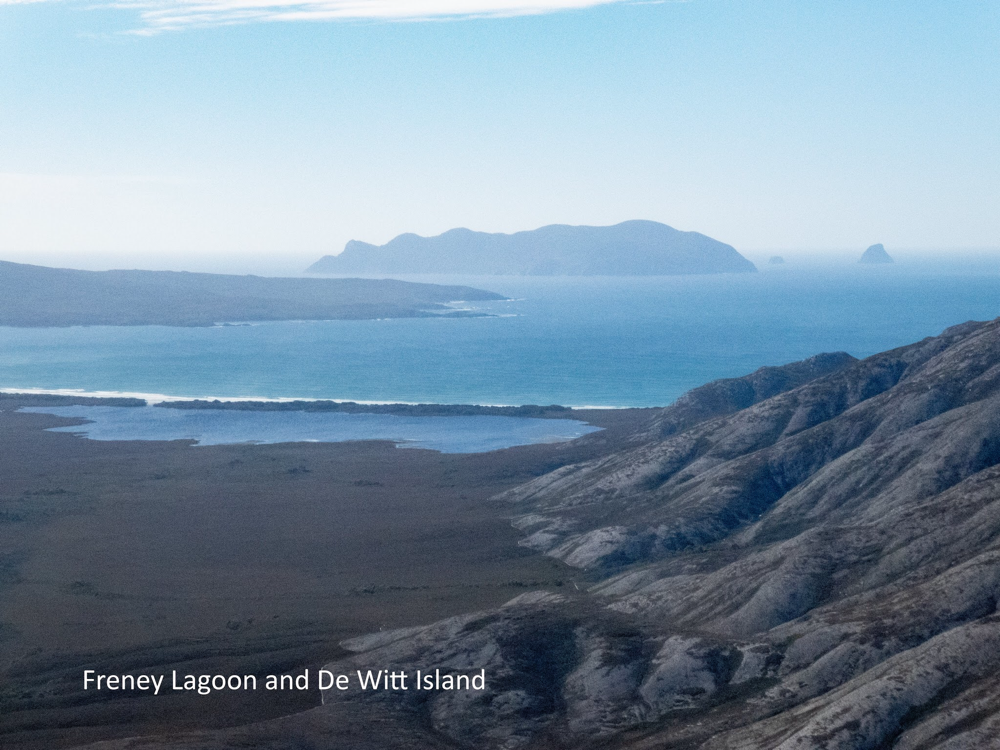
The plateau is covered by snow grass, cushion plants, rocket and herb fields. Ponds and streams woven within the landscape. A solitary pencil pine was silhouetted by the fog. The hut is well provisioned with bunk beds, blankets and cooking utensils. After lunch, we walked the short distance to the lake. It seemed so vast, it’s opposite bank hidden by the prevailing cloud.

The first part down deserved attention , and I was slow as always on any treacherous surface and had only two inconsequential tumbles.

We soon reached the easier section of the descent, and enjoyed the many fungi some nestled in fallen leaves, others emerging from rotting bark and logs and a few peeking out between fern fronds. So many colours and forms.

The ferns and ash trees, the myrtle beechs spotted liberally with moss and bright, iridescent flaky lichens. The bush was quiet and still. It was all very beautiful.
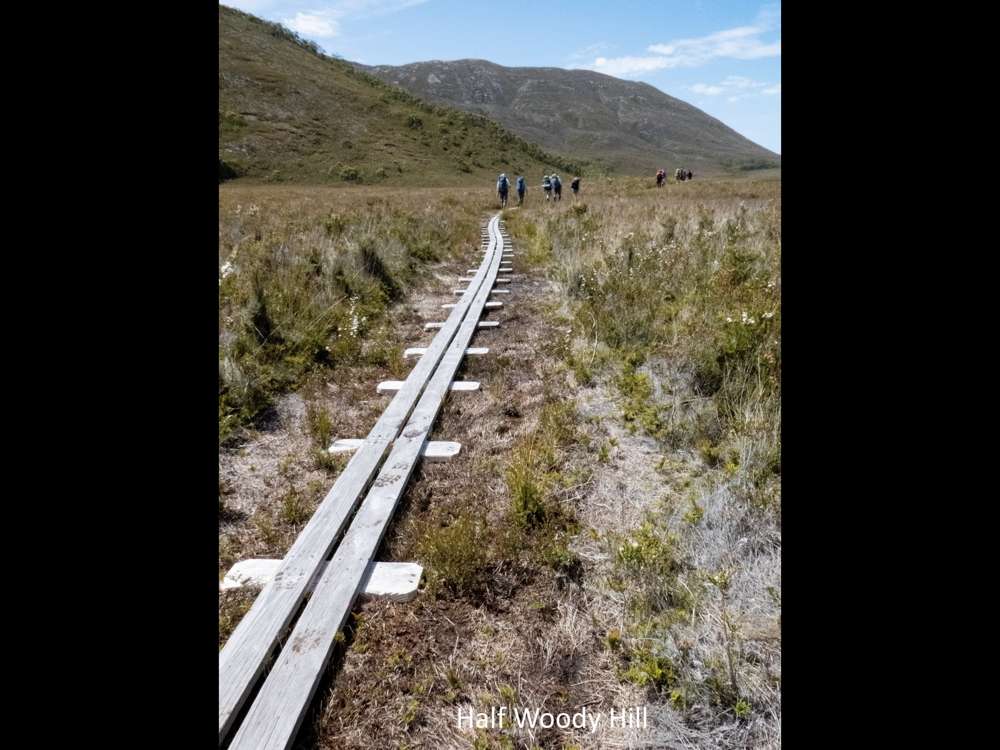
We soon arrived back at the cars, and left this wonderful area. We stopped at an excellent providore in Deloraine for Cake and coffee.

What a super days walk with great company.

Standard