Central australia, Central Australia Work

Central Australia trip to Elliot

It’s Monday night and I’m sitting in my camping chair at the Outback Caravan Park, in Tennant Creek. We began our drive yesterday morning, travelling from Alice Springs to Devils Marbles. It’s 398 kilometres of the Stuart Highway. I took us about five hours including a stop at Ti Tree for lunch. A fine sunny day for driving.
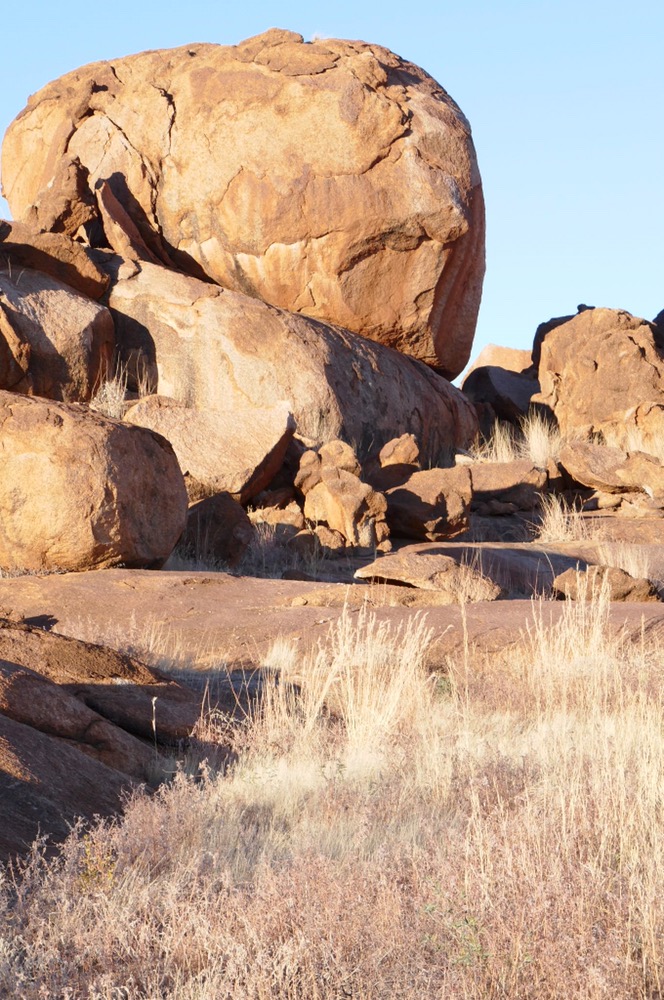
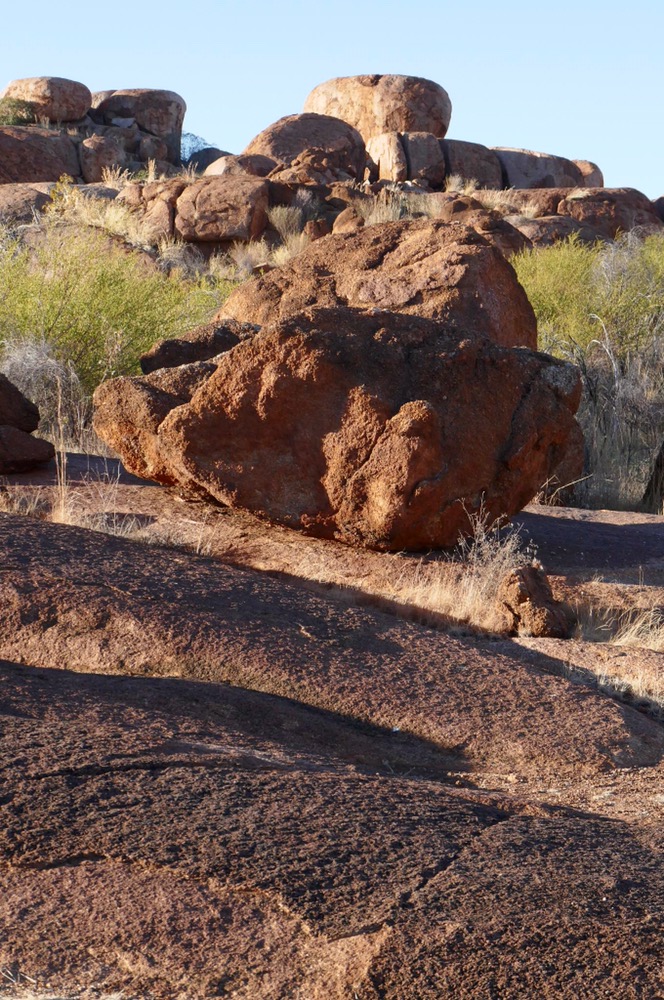
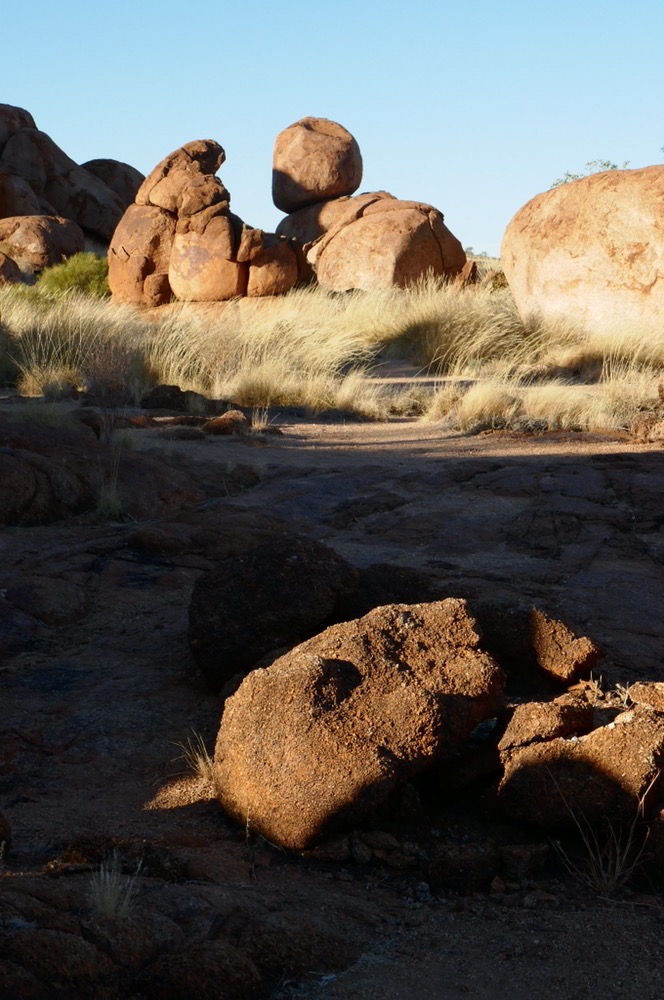
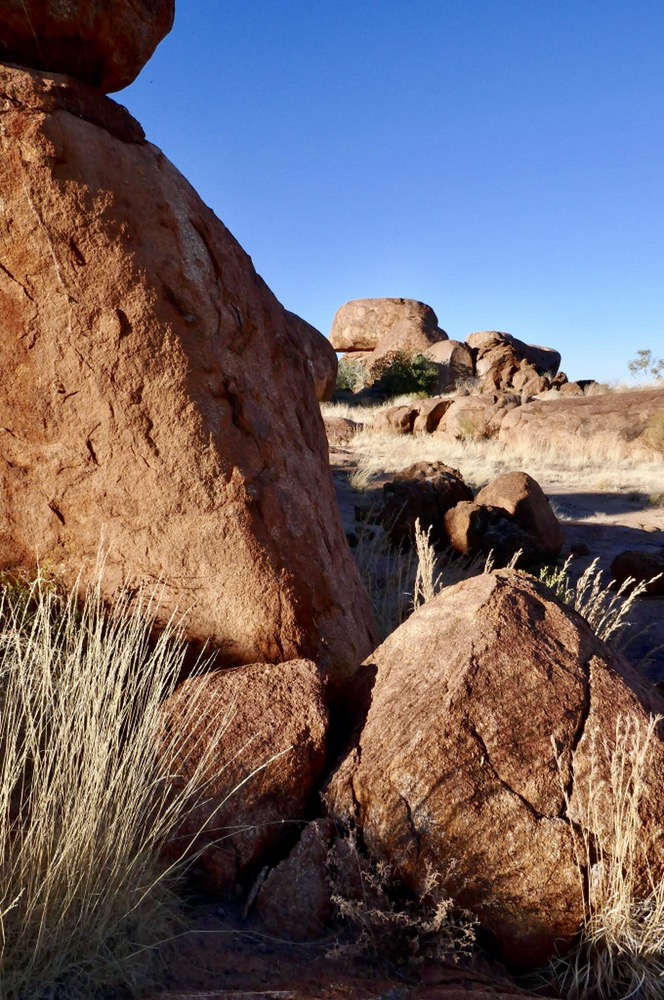
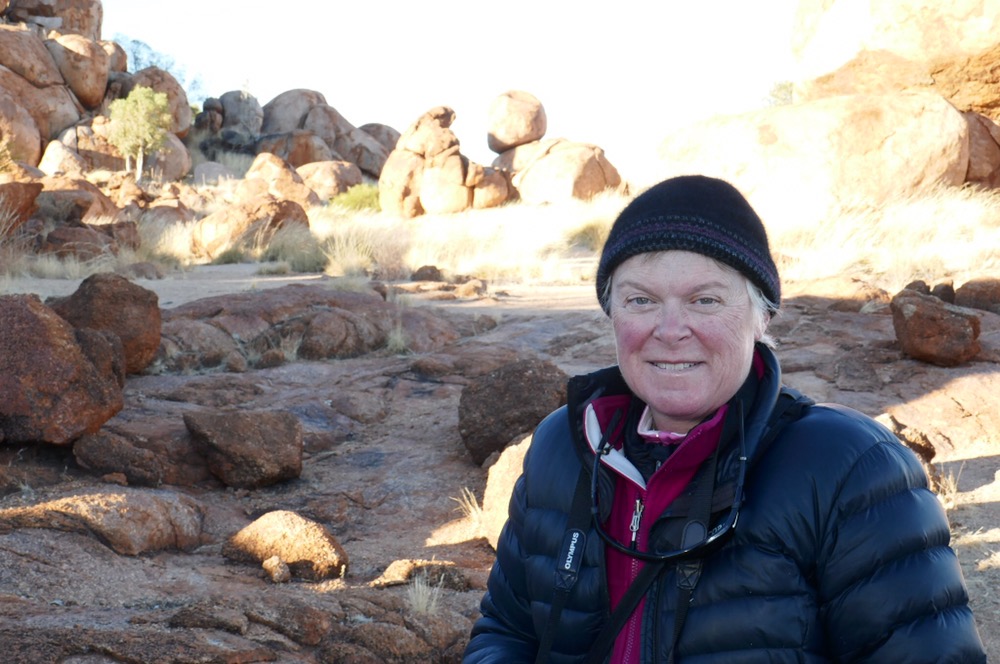
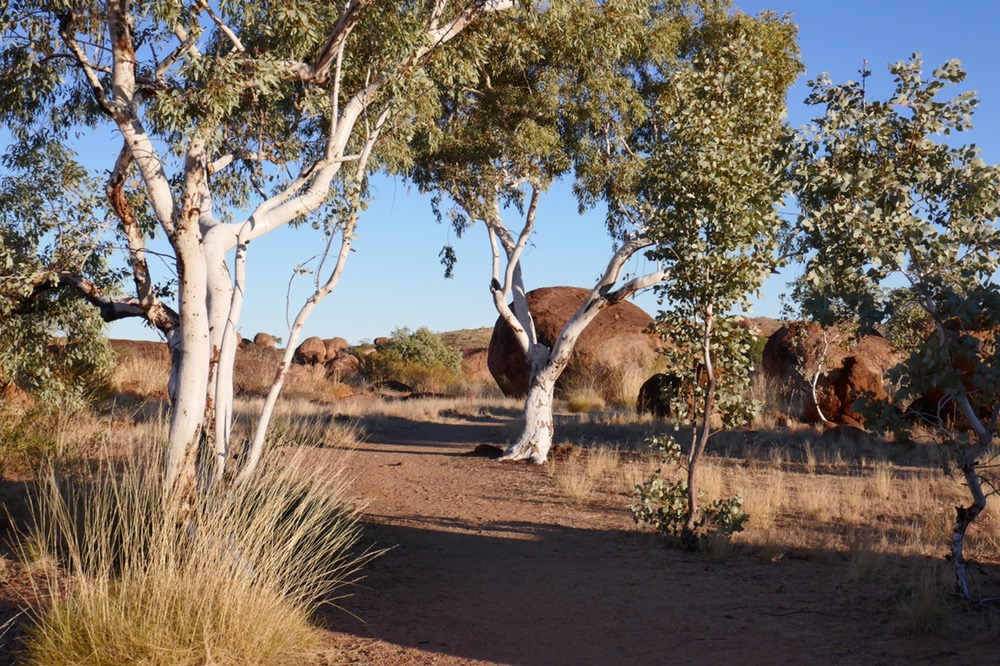
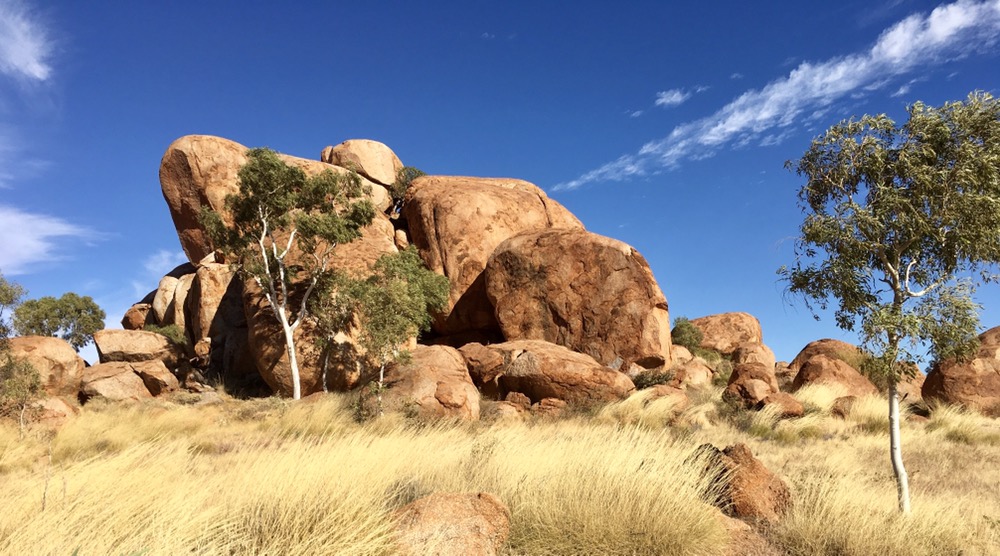
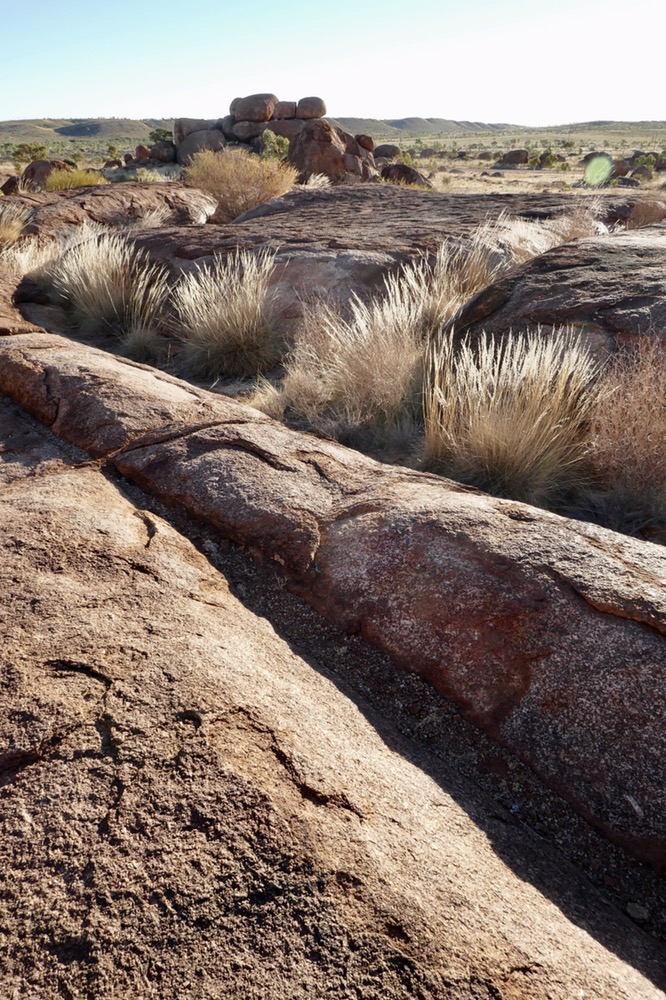
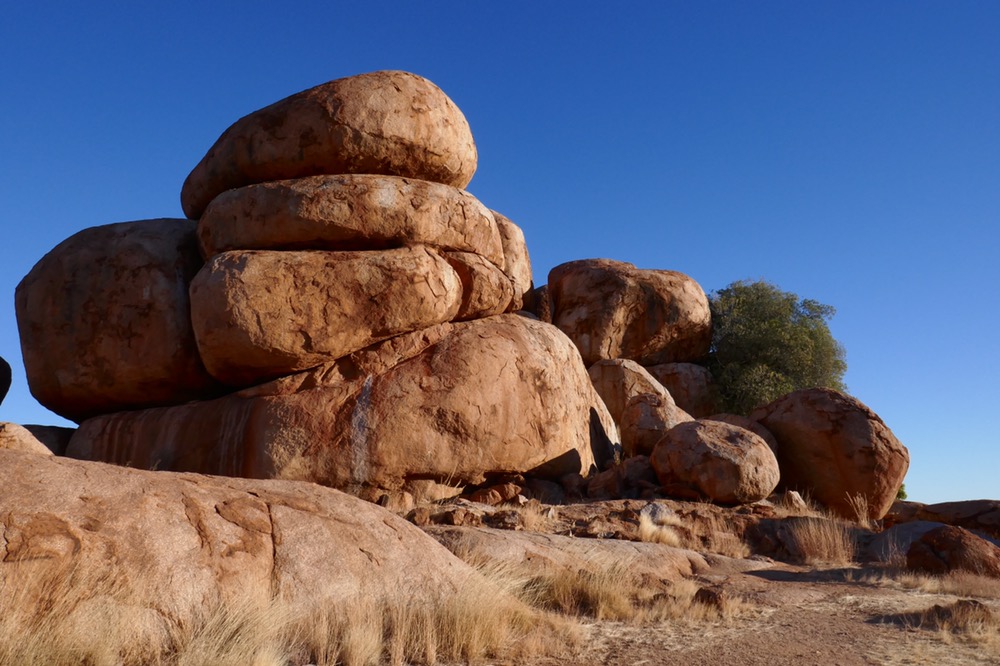
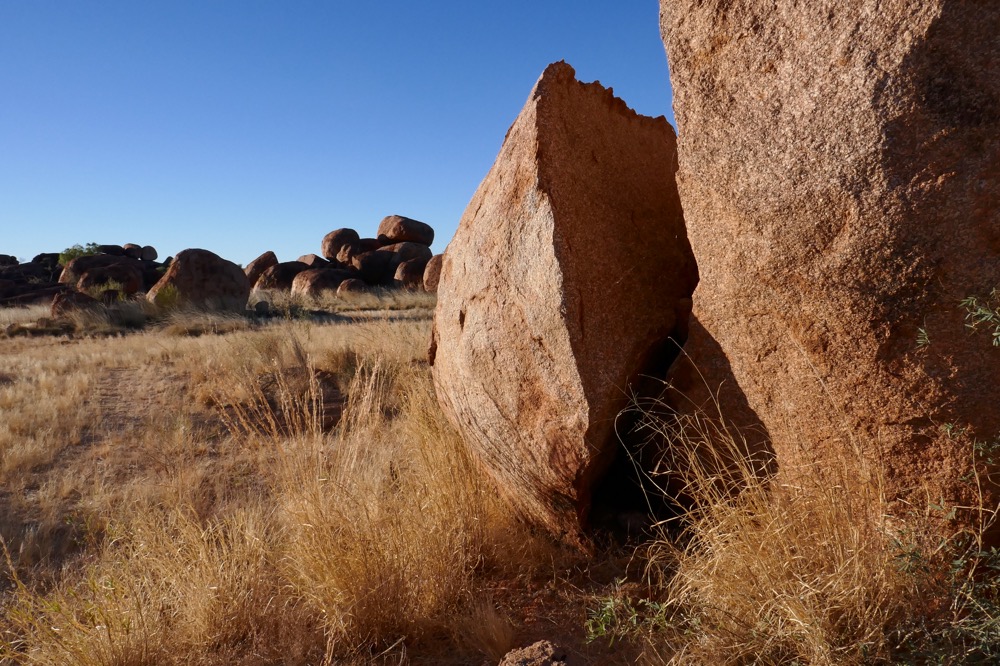
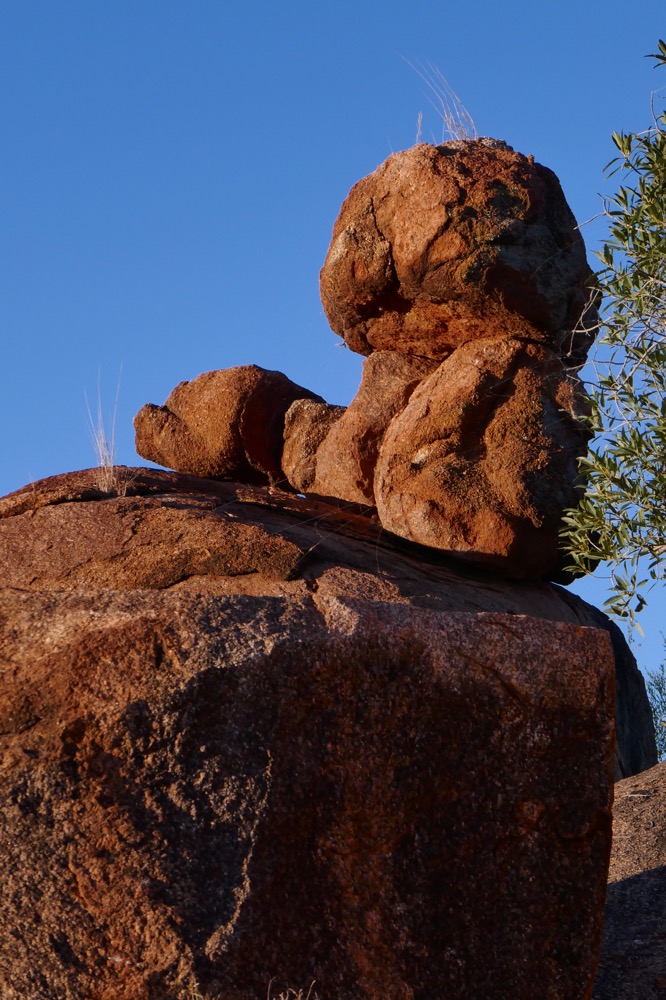
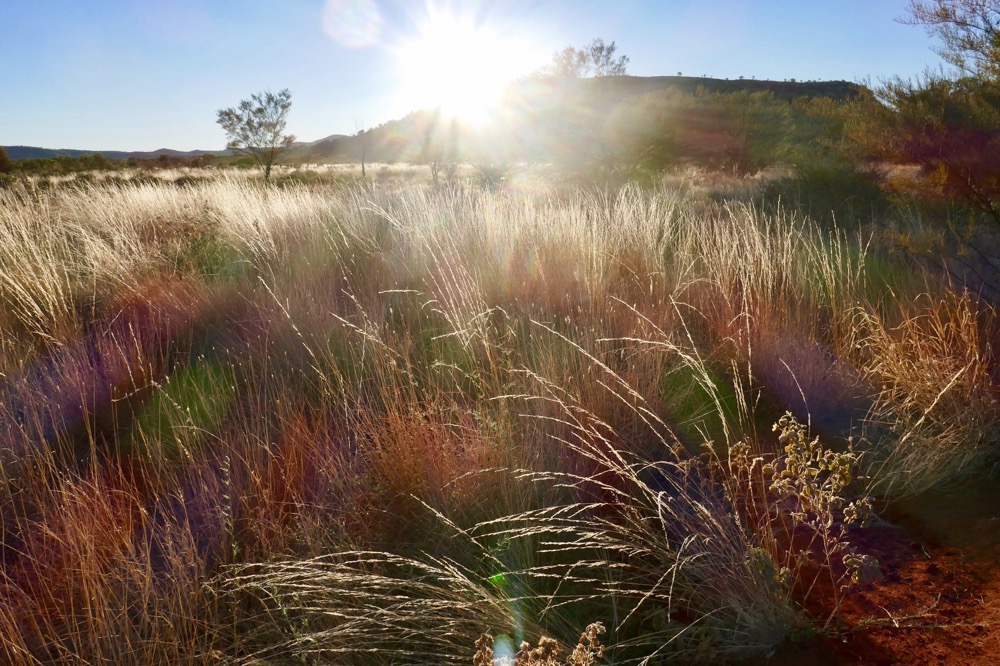
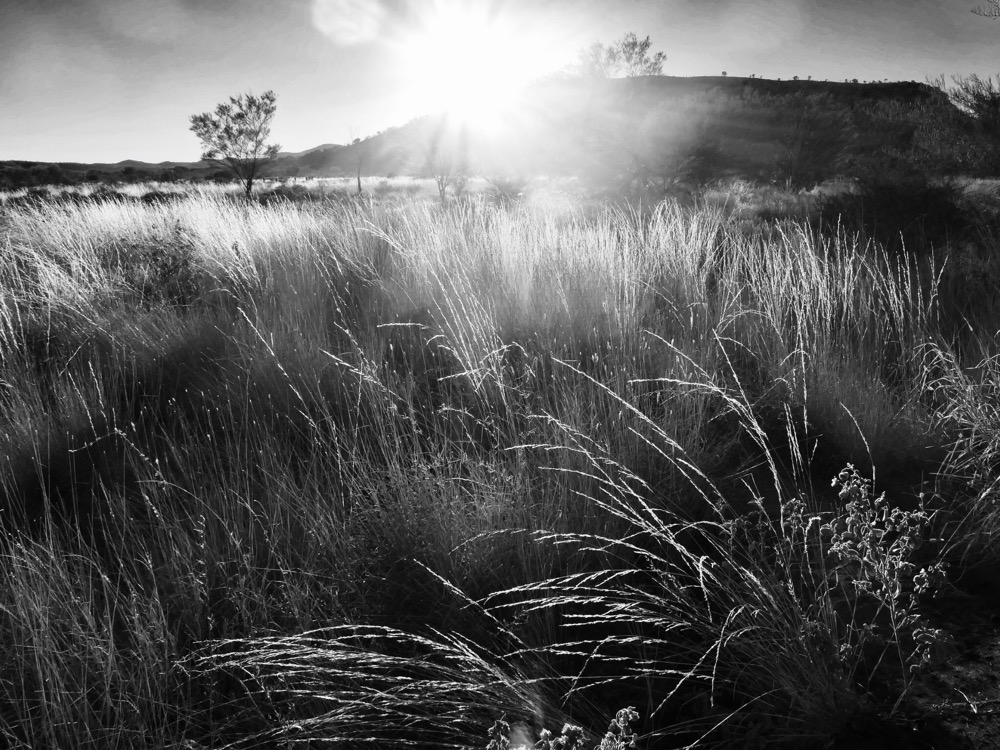
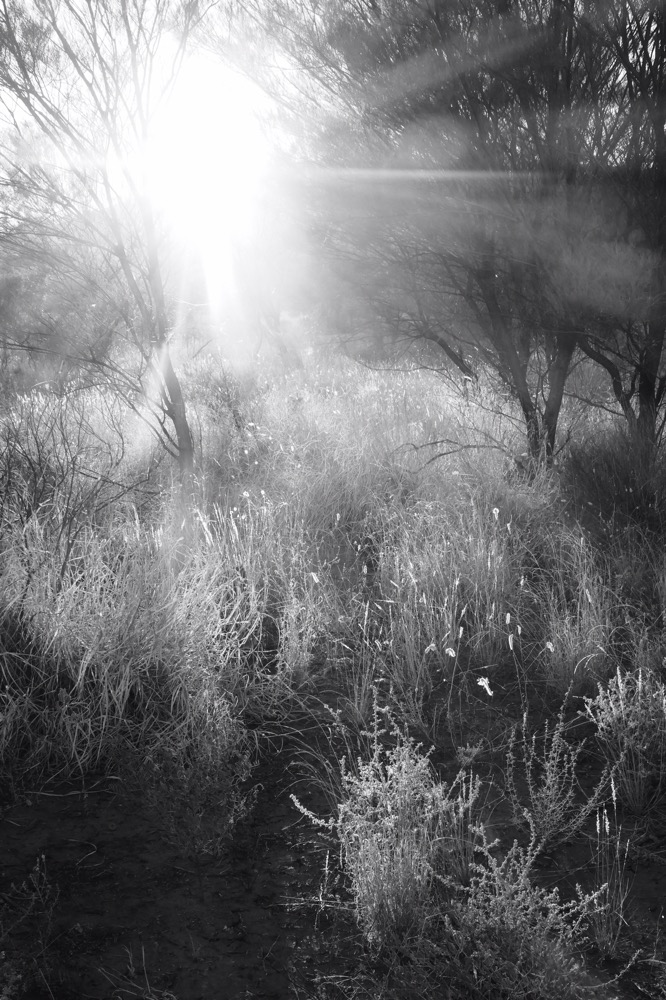
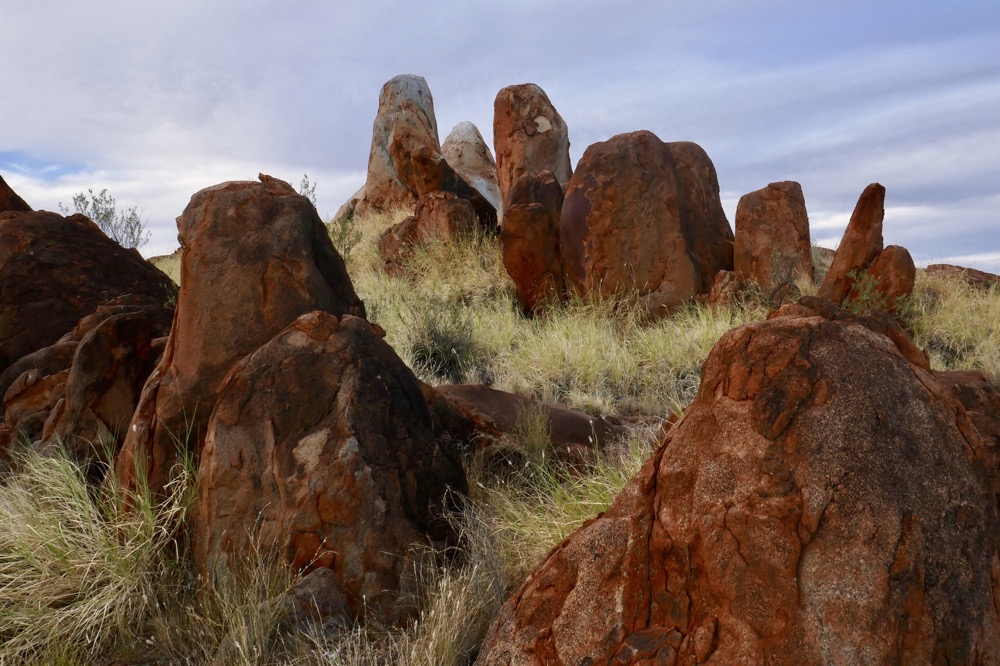
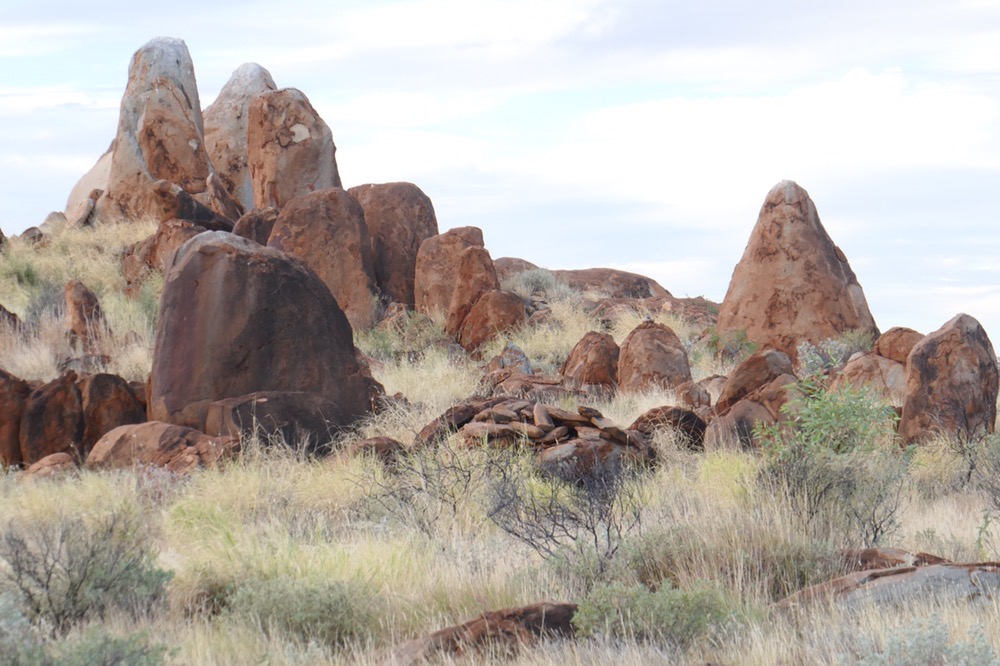
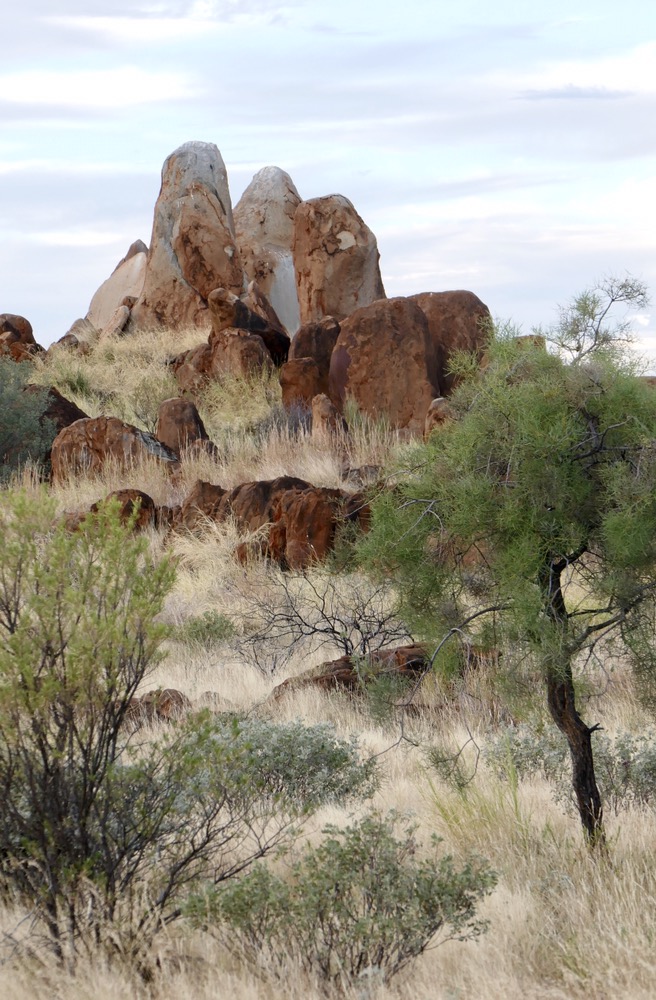
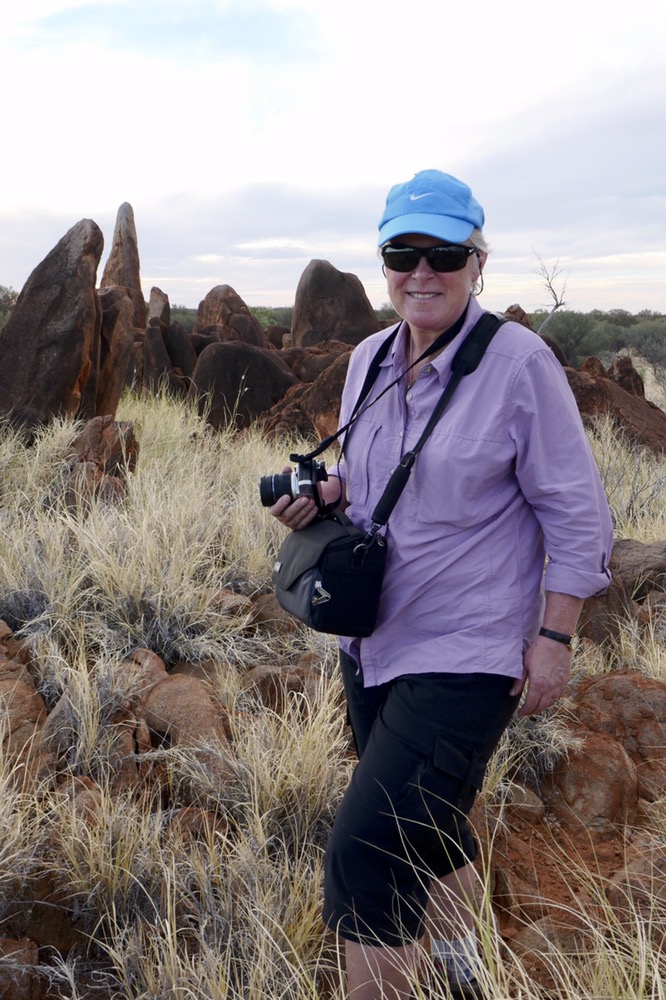
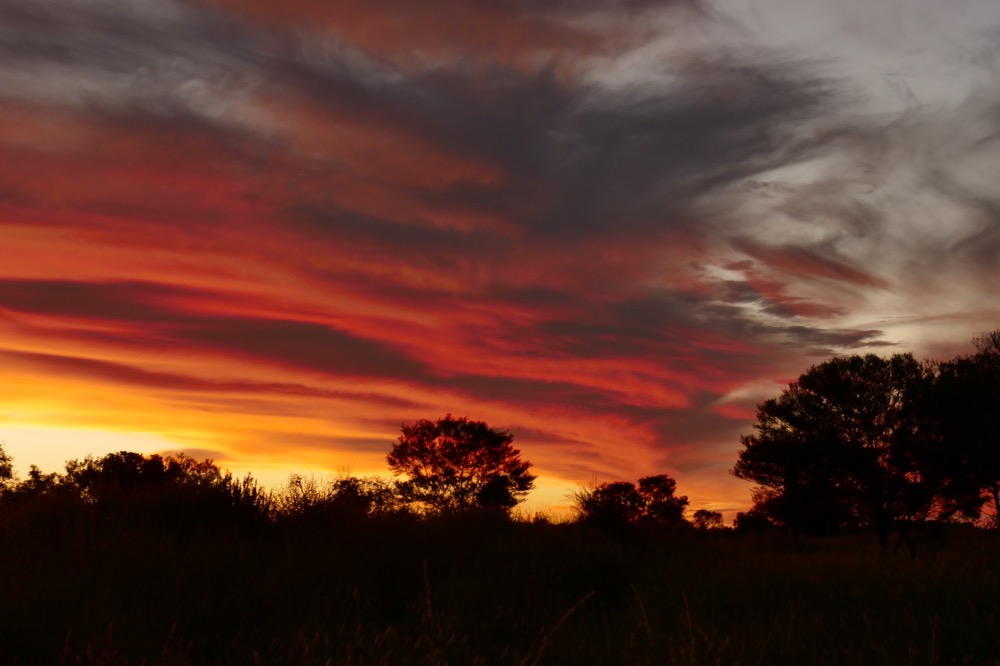
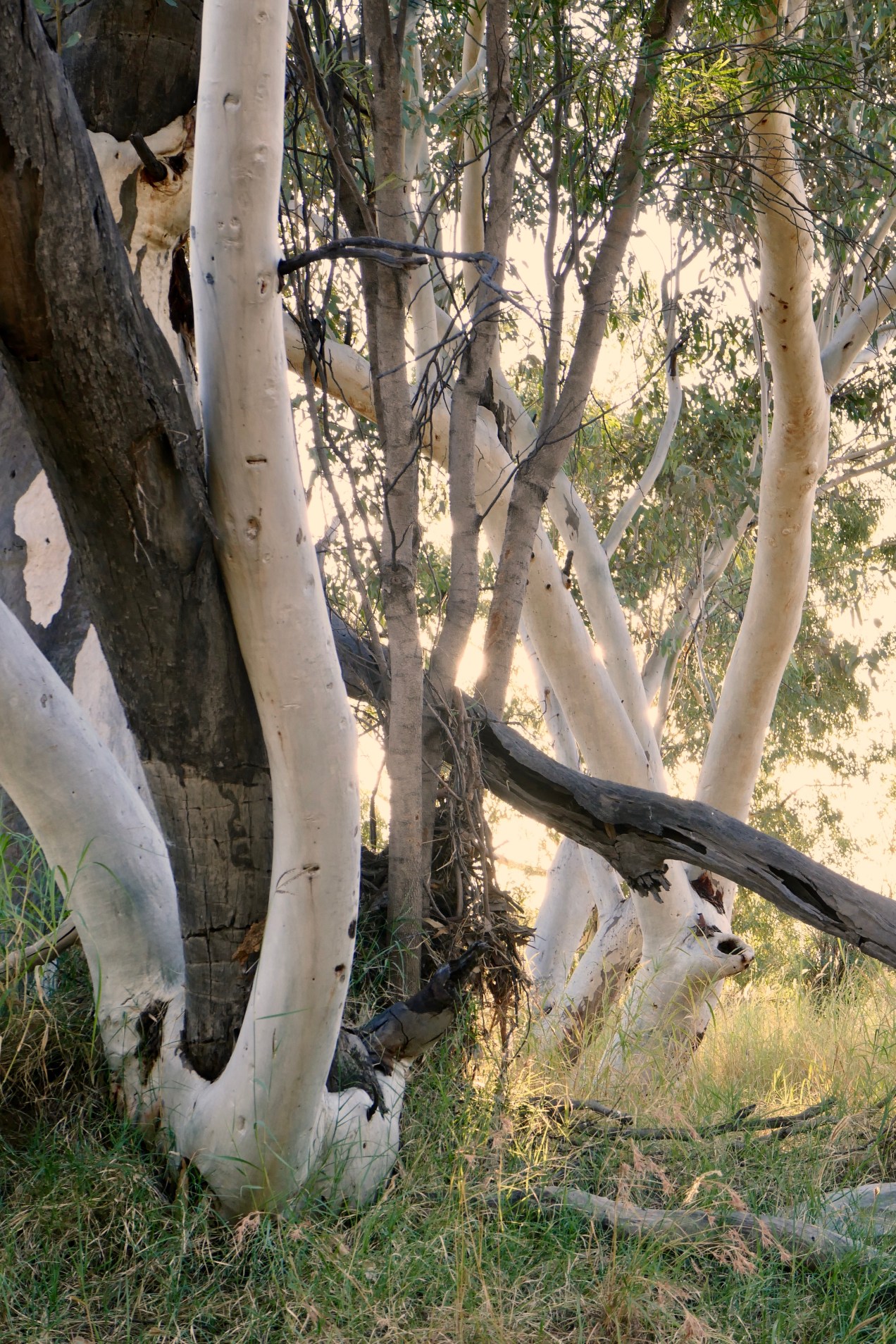
Devils Marbles is one of the highlights of the Stuart Highway. Jennifer and I have visited this park before but it was always a rush, this time we could explore and take photographs at the two best times with no need to scuttle back to work and before it got too dark to drive safely. We walked on the many trails amongst the rock formations. The setting sun sets the rocks red aglow, the grass is backlit as it swirls in the wind, and the gums provide dabs of green and white through the landscape. Devils Marbles are the eroded superficial remains of a much deeper granite massif that arose under an immense layer of more ancient sedimentary rock, sea floor rock, then as the softer surface rock was eroded away the tougher granite remained. But this granite had already been altered, cracked, and split and when it arose into the light of day, these cracks filled with mud and water, splitting the rocks into the weathered Marbles we see today. 
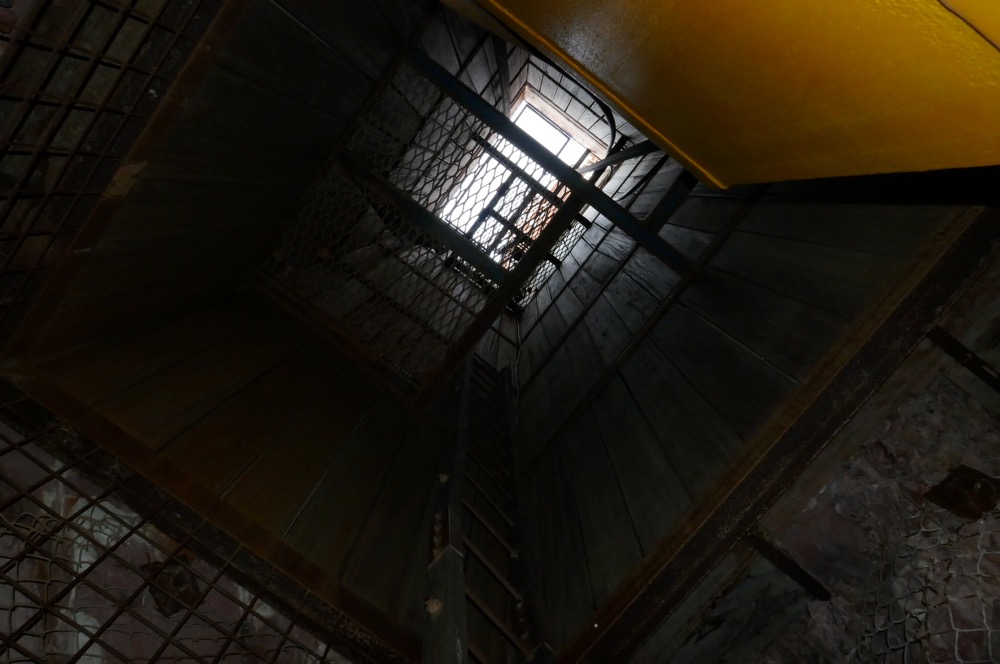
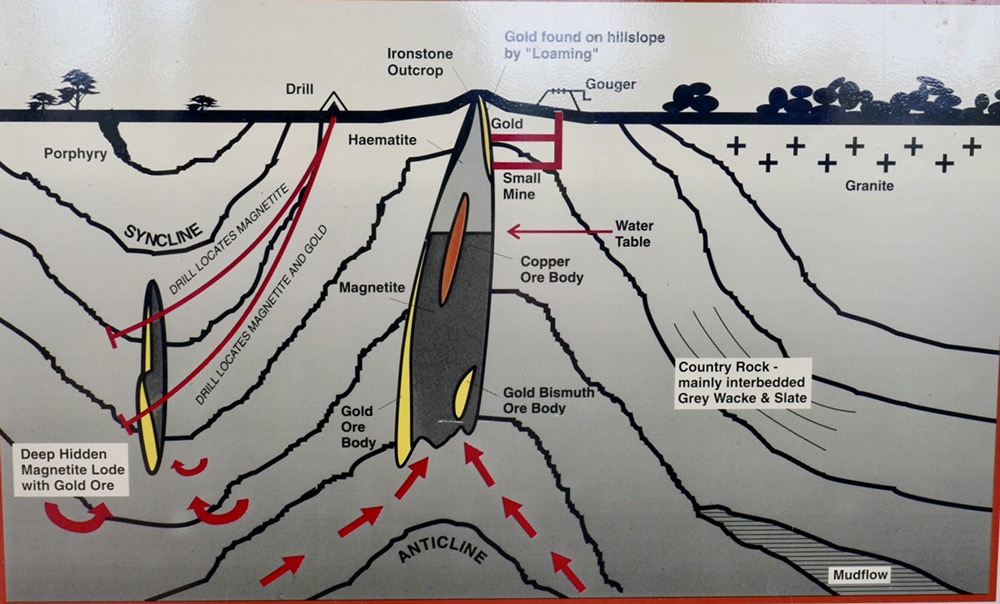
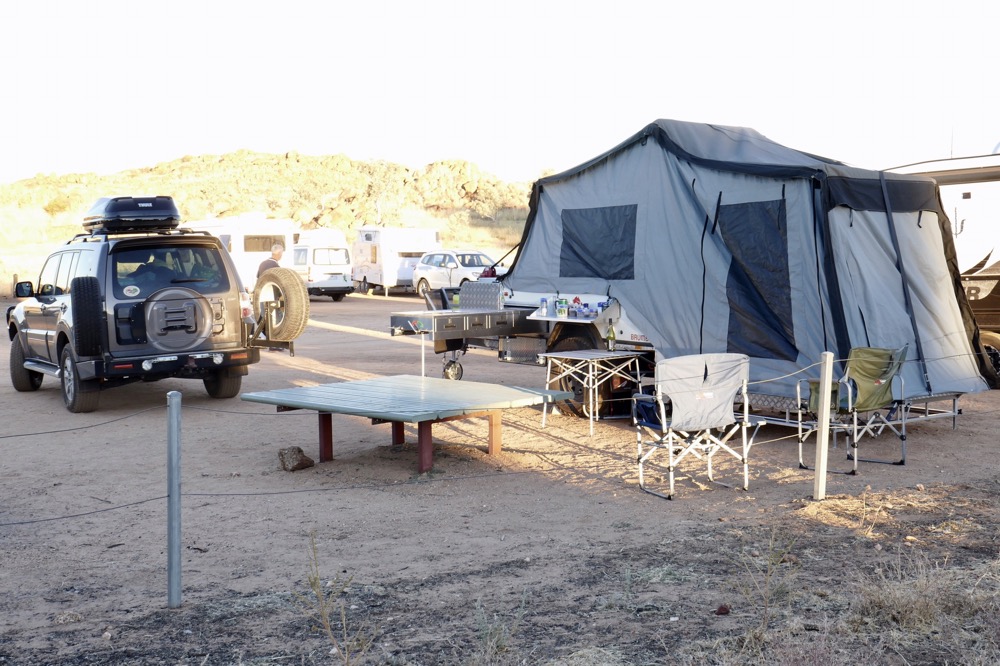
We arrived back at our campsite just as it was becoming dark and cooling down. Overnight it’s very cold so it’s great to be able to rug up in our comfortable camper trailer, under a generous doona. We awoke at seven am, and walked another trail amongst the Marbles and again, were busy taking lots of photographs. We left at 10 am and drove 100 kilometres to Tennant creek. This had very little open on a Monday holiday but the Battery Mine was open. This is a retired mine and processing facility for the gold found in Tennant creek. Beginning in 1926, Tennant creek has been a reliable producer of gold. In all by 1996, 130 tonnes of gold had been recovered. As well as 270,000 tonnes of copper. What makes this area so unique is that unlike Victoria, and most other gold rushes , the gold is in ironstone and not quartz. Quartz is relatively easy to separate from its contained gold, it’s much softer and the gold is often in chunks or nuggets. In Tennant creek, the gold is in fine fragments, too small to even in see most circumstances. Lumps of ironstone, need to be crushed into dust to gather the gold inside it. The ironstone located beneath the water table is generally richer , it’s called magnetite. And you guessed it, it’s strongly magnetic as well. The denser the ironstone, the more magnetic the ironstone then the more gold will be in it. So remote sensing can be used today to locate more gold bearing deposits. 
In the early days, mining businesses were small concerns, one or two blokes, both worked a mine in truly appalling conditions. One man would be lowered down a mine shaft in a bucket, using one leg, to push off the mine shaft wall, then at the bottom use a pick to break off fragments of ironstone. The actual shaft went down through mudstone, as no one can go directly through the ironstone deposit. You have to shimmy up to it and chip off the bit in front of you. It was hot and incredibly dusty. The town grew but it was mostly men. The isolation and lack of female company, made life pretty dangerous at times. Was it worth it? For those men who worked the mines, most did little more than pay their way, but some did do well eventually becoming truly big mining companies but overall the capital and size needed to make a go of this sort of mining, ensured it was the big players, the ones who arrived in the 1950’s which made the really big money and still do. 
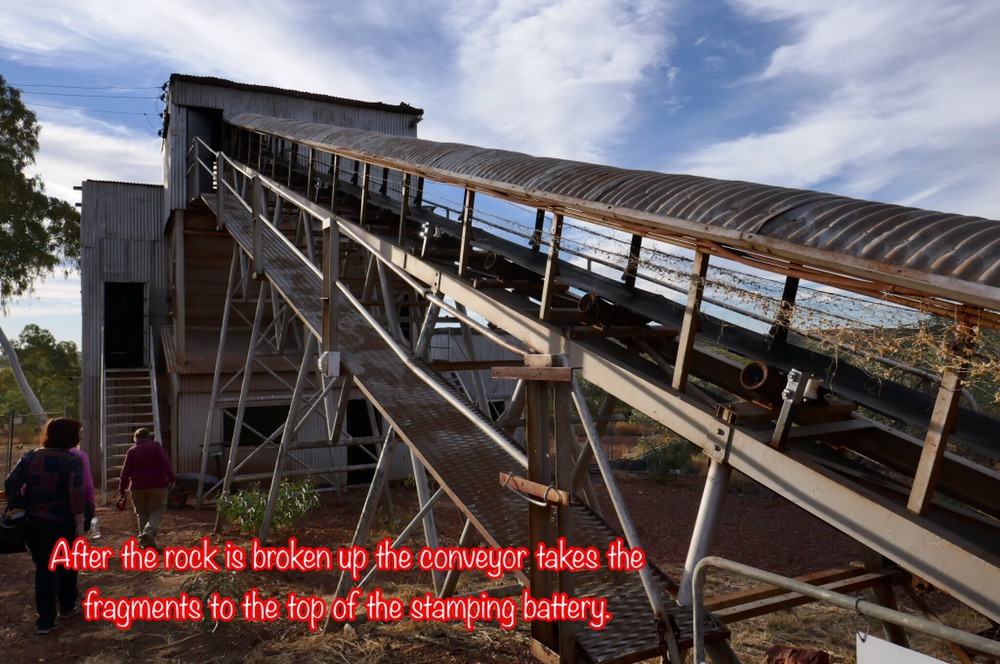
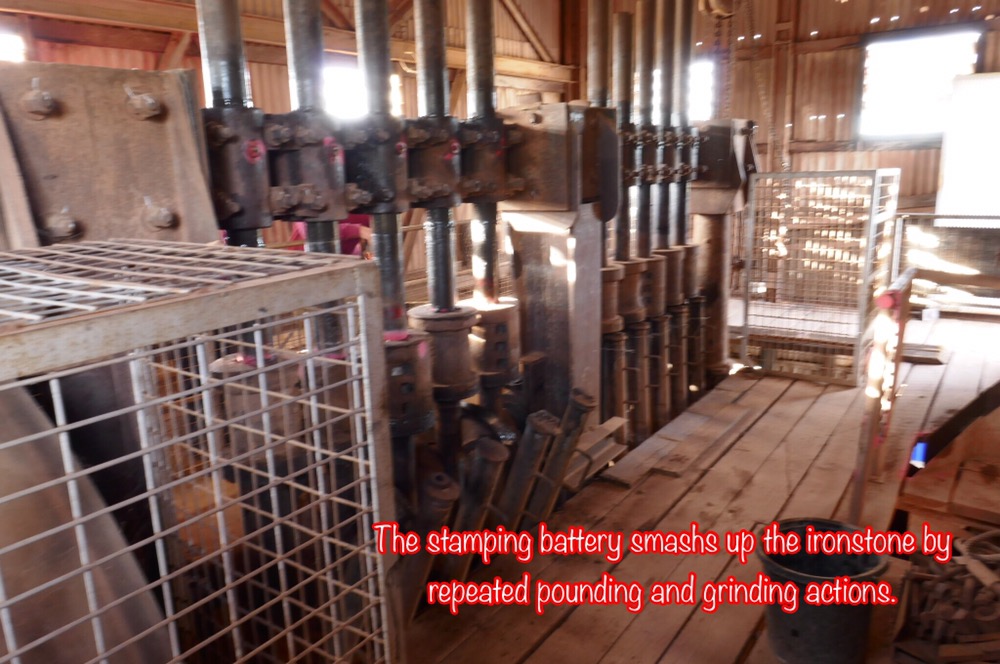
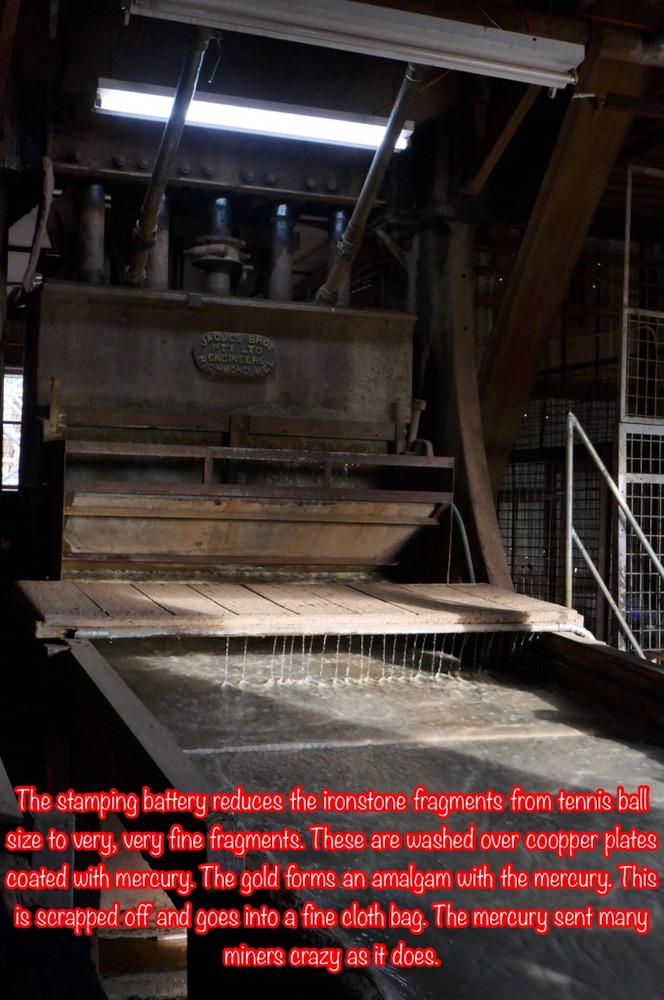
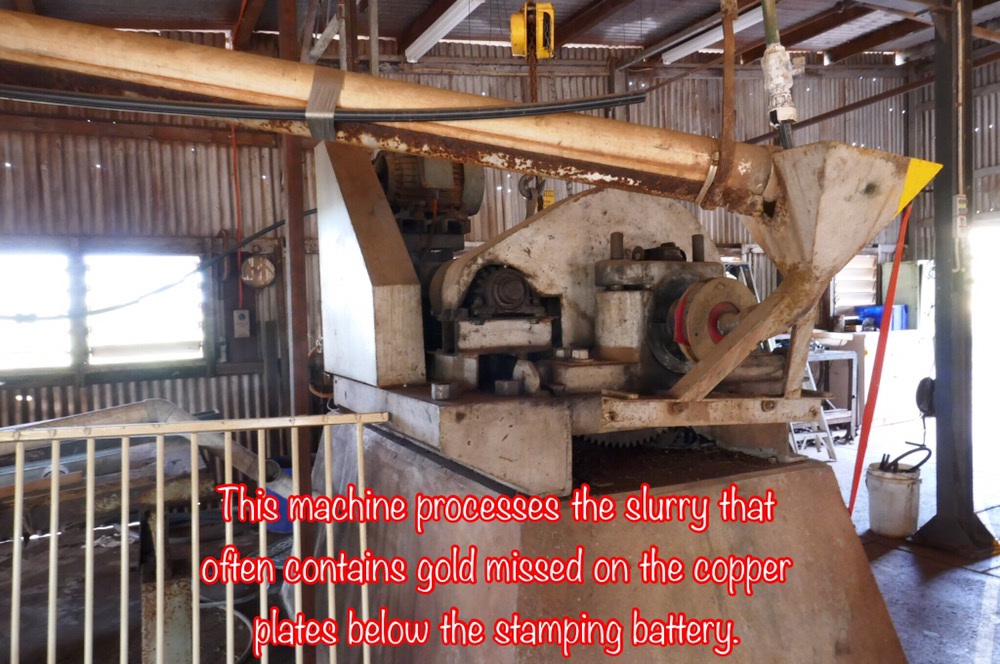
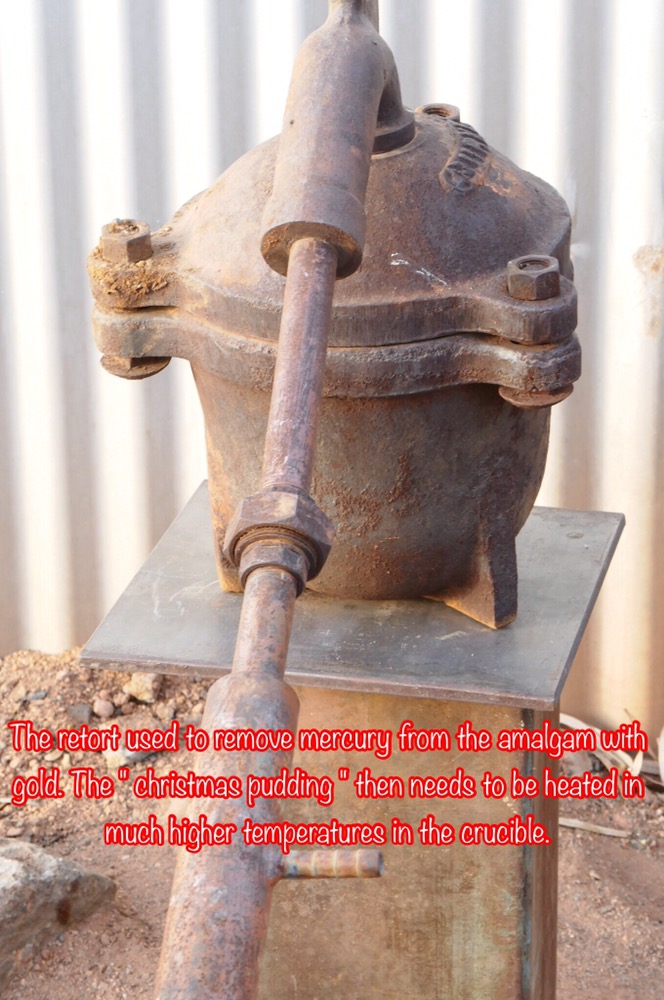
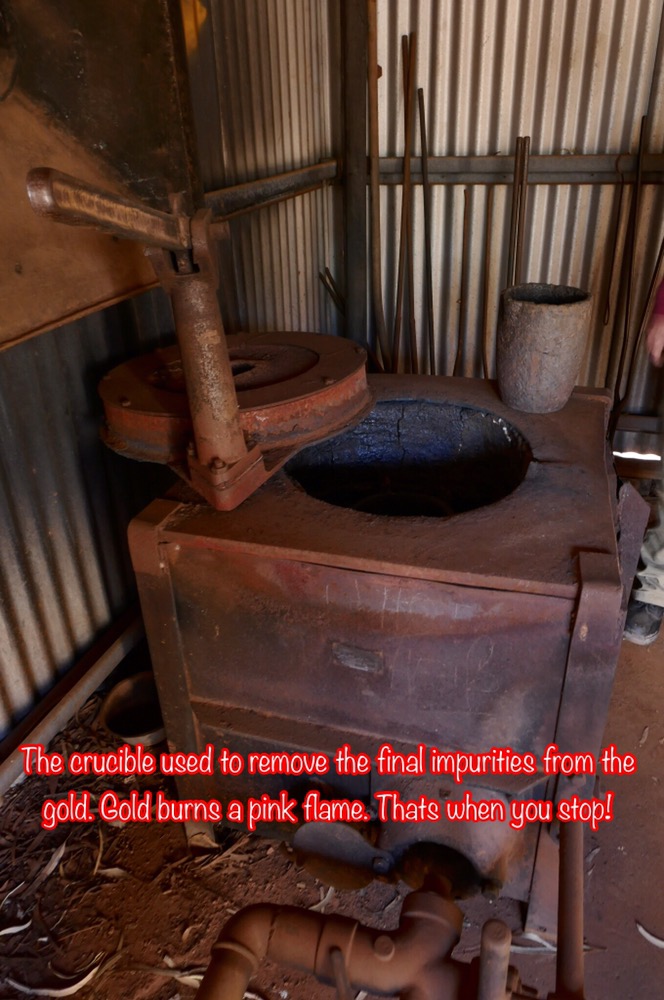
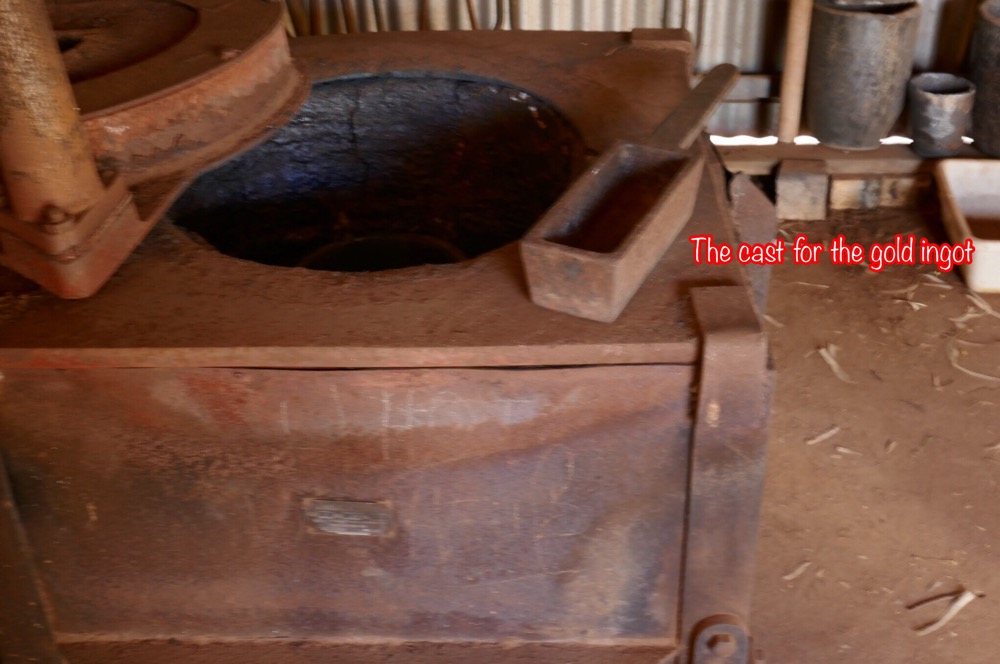
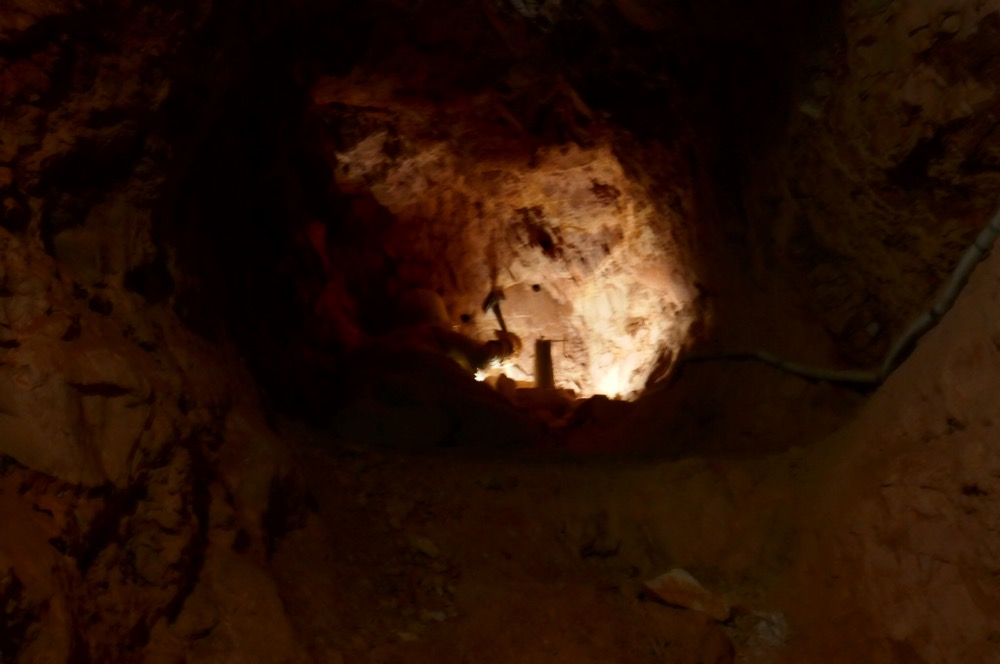
We did two tours. The first tour was through a “mine” built deliberately by Normanby Mines to be used for tourism. They had the expertise to make it as realistic as possible. Along the mine, the guide, showed us examples of mining, form the very early days, to the much more mechanised mining on the 1950s and 1960’s. We were shown the drills, the explosives, the crib room where the men sheltered during blasting, the Beethoven box used by the “powder monkey” to set off the explosives. We saw the mine shaft and the ladder ready and waiting to provide an exit for flooding in the mine. Huge pumps at the base of the mine kept the water out, but as the mine was a kilometre below the water table, a failed pump lead to rapid flooding. The second tour was of the stamping battery. This facility ground up to mined ironstone into a fine dust, you could then use mercury to bind the gold. The amalgam so formed had to be heated in a retort to seperate it from the gold, then the gold had to be heated to fen higher temperatures in a crucible to remove final impurities. A whole years work for a miner in the early days, would produce one or at Most two ingots of gold. An ingot was worth 50,000 dollars, that was a for a year, of 16 hour days, in hot, dusty, noisy and dangerous conditions. 
Afterwards, we drove back to our campsite to relax before dinner. It’s getting cold now. I can hear the cars and trucks on the highway, but only faintly. And that will be us too, as we compete our trip to Elliott tomorrow.

Standard
Central australia, Central Australia Work

Central Australia Road Trip number 4

This week I have spent working at Laramba from Monday morning to departure on Friday morning. It is easily the most friendly place I work, and this trip did not disappoint. I drove up north along the Stuart Highway, to the turn off to Laramba. It’s an eighty kilometre stretch of sand and dirt, and the troopie struggled. The old problem with these otherwise legendarily tough vehicles is the narrower wheel base of the front versus the back wheels, that makes them slidey slippery on sand. Any how, low 4 WD got me out of trouble, albeit being very slow; well at least I kept moving. 

The week has gone well, gradually and methodically working through the listed patients. Francis and Isobel are the two Aboriginal workers who take the clinic car, and try and locate them in the community.
On Friday, I was at the final meeting for the week before the drive back to Alice Springs. I’m very glad I took the option to stay longer because of a wonderful dinner with Helen and Brian, at her place and the chance to talk with Robbie Charles. He is arguably the most articulate and clear thinking Aboriginal person I have met. Robbie is the Project Officer for the transition to having a Community committe in each location  that will meet regularly, and to meet with clinic staff and the district manager of the health service. There are already committees that meet representatives from public services such as for housing, power and water. Usually the same key people are in most committees as throughout human history!
The community group cannot force the clinic or health service to do anything but will be a regular source of advice for the clinic, as well as giving the communities the opportunity to air grievances or suggest ways of improving health care delivery. It is to be a two way process where clinic managers can point out ways the community can contribute to improving health, such as financing a regular bus to town. It’s quite an exciting prospect and it’s being rolled out by aboriginal people from these actual communities.

Standard
Central australia, Central Australia Work

Central Australia Road trip 2 lake Nash

It is Thursday evening and the working week is drawing to close. I’m lying in bed in the donga. It’s been very cold at night so I’m wearing my thermal top and my black beanie. The wind is howling outside. There are some street lights on the road beside the donga, just beyond the wire mesh fence. It is very quiet for a change, the cold and wind keeping the dogs huddled together on verandahs rather than barking at the moon and stars. In the morning we will go for a walk. We walk along the Sandover Highway, all of four meters wide and made of hard red clay starting to crack and tessellate as the summer wet finally dries out. The plains of spinifex and grass are dead yellow, faded from their rich summer green. Cockatoos and corellas group in masses in the few trees, looking like pallid tropical flowers amongst the leaves and branches till they erupt together into the air, keening and calling.

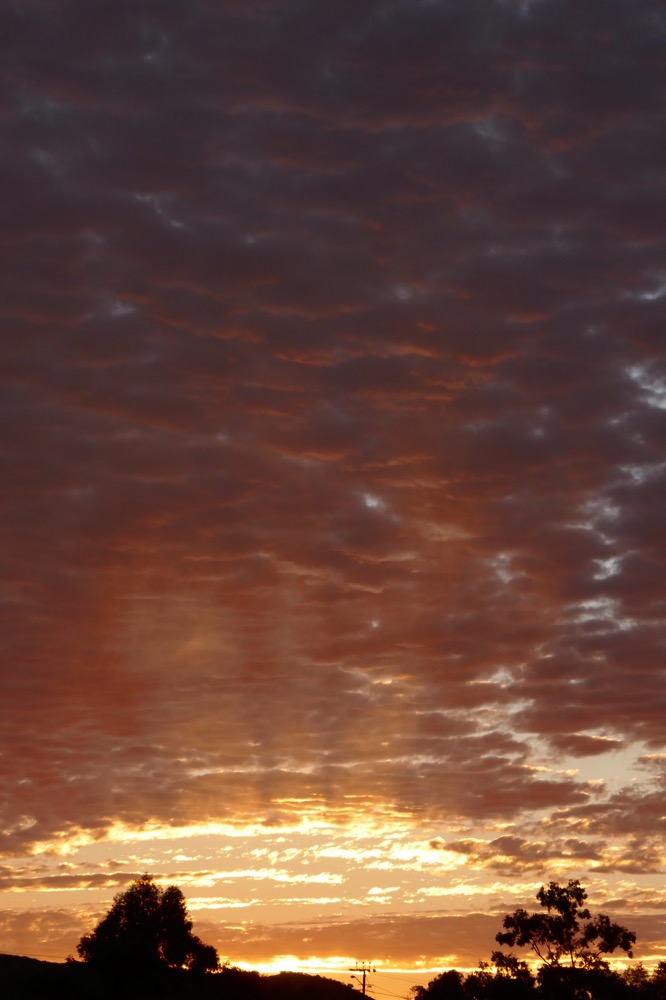
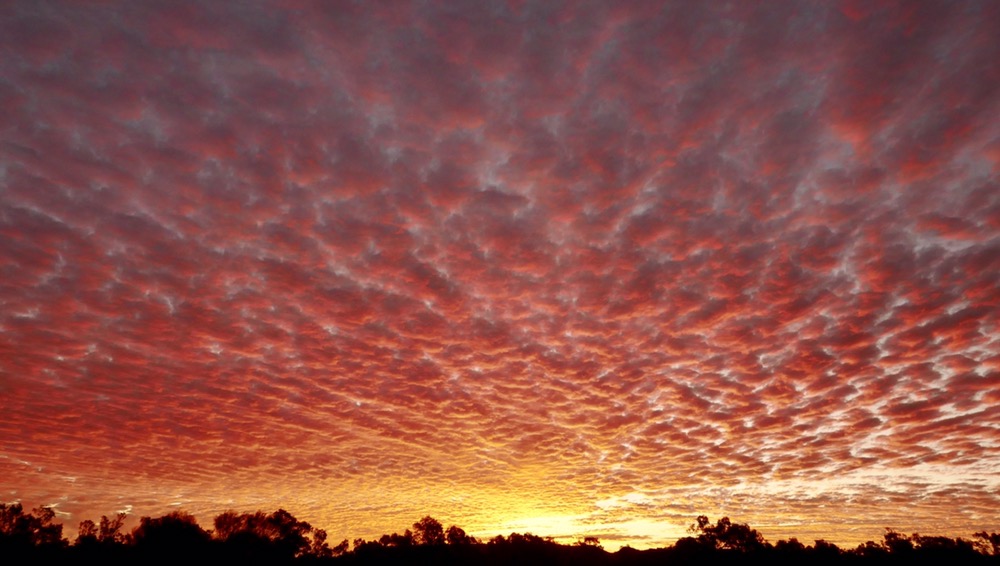
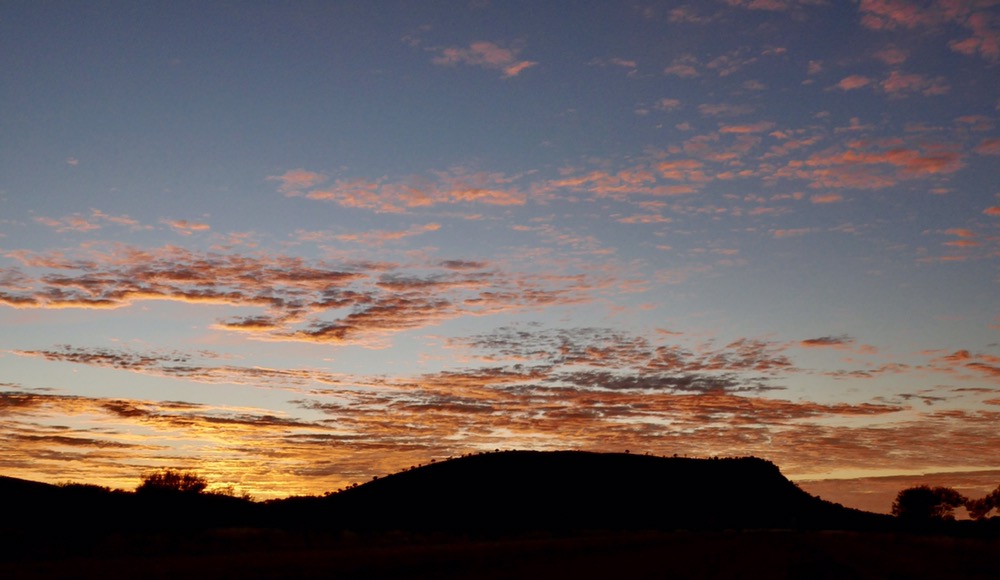
We walk over the plain, diverting onto dusty, nearly overgrown side roads , it would be too easy to get lost in the maze of intersecting tracks. We carry sticks to threaten the dogs nearer town if they get too cheeky. There is always a beautiful sunrise to the east, it can be vivid pink and red, or a burnt dry orange, lighting up along ripples of clouds. The sky is clear and deep blue, and fades only minimally as the day truly begins and the sun climbs above the horizon. 

After breakfast we head over to the clinic. It’s only a short walk. As Jennifer or I make up our coffees, we settle in for the morning meeting with the other staff. The clinic is badly understaffed and there is a too real possibility the nurse manager will have to forgo her leave. The logistics of providing staff to clinics such as Lake Nash are complicated and difficult. The nurses here have enormous responsibility, severe isolation, and really no hobbies they can pursue. Even walking safely can be difficult with the heat and the dog packs. It takes a tough, resourceful woman to do this job. I say woman because I have met only one of two male nurses in my time. One of the staff left to work elsewhere while we were here. Their level of competence and savvy clinical judgement is incredible. These remote nurses are the best. 
It’s been a quiet week for us. At least so far because as you all know, things can get pretty dramatic, pretty quickly even on a half morning’s work tomorrow. 

While we have been here in Lake Nash, the news on TV has been about a treaty between whites and blacks. No one has mentioned it here. The people here just get on with life. Politics seems a very long way away. The big players who are passionate about these sorts of things don’t come here. People still buy their coke, forget their tablets and miss important appointments. While other people care for their sisters, listen with intelligence and interest as we explain about their health, and proudly drink water rather than sugar riddled beverages. As a doctor, I see and hear the stories of their lives. Of being a stockman. Of riding hell for leather across this arid country till his horse is tripped by a deep crevice and he is tumbled off and the horse rolling over him. Of being a small boy and walking beside his father as he cares for a vast desert market garden used to provide food for personnel in WW2. Just one of many unwritten stories of the indigenous people’s contribution to this country’s war effort. Of the woman who accompanies her sister three days a week to the local dialysis centre, and does all the work setting up and running the hemodialysis. She will do this forever never complaining, never forgetting. This buddy scheme is the norm in remote communities and again it is an unwritten story of self sacrifice and commitment. 
My tapestry grows greater and richer with each person I meet and each story I hear.

 All of these stories and people, their voices and faces, are painting in my minds eye a vast canvas coloured by their resilience, warmth and vitality, but tinted with some sadness by the seemingly insoluble and ongoing problems these wonderful people face. I don’t think they care much about a treaty. I think they want to survive and enjoy life as much as they can from one day to the next. Unlike white people who struggle to exist in the present, many Aboriginal people, live far more in the now than we do. This is both good and bad. Living in the moment gives a warmth and spontaneity to life and reduces needless worrying but on the downside, it’s hard to take actions which have a pay off in months or years from now such as taking medication daily. The financial insecurity of Centrelink, the costs of food and services, the social commitments of communal life, sorry business, gambling, alcohol, isolation, the lack of much employment and issues around health, all produce a sometimes chaotic situation in many remote indigenous families. So is it really so very surprising that they want to live in the present moment and avoid focusing on a future which is hard to understand, just plain frightening or of pasts overburdened with loss and grief?

There are not the social and support services here in the bush that we all expect in the major towns and cities. So why do they stay here? Simply because they love this land and are a part of it. For all the difficulties of living remotely, this land is as much a part of them as they are of it. The men talk about the heat of summer, the cold winds of winter, and the satisfaction of having worked on the land. So maybe that is what a treaty needs to be about, their authority over this land. There is a medieval story you may know. A knight has offended a mighty witch and she will stay his punishment only if in one year, he can correctly answer her question. The question being ” Above all else what does a woman want?”. He eventually learned there is a simple answer to the question but it was confronting all the same; the right to choose for herself. I believe that the Aboriginal people in these remote communities should be permitted to choose for themselves too, to run their townships their way and to educate their way. I think we do live in interesting times. Could they do a worse job than white government? Now that’s hard to imagine.
///////////////////////////////////////////////////////////////////////
I have written before about the health impact of water in Central Australia but I learned something new. While we have been at Lake Nash, we met the dentist who comes out to this region. He has done this for thirty years. He told us about a problem at Ali Curung. Dental problems are severe with brown discolouration and loss of enamel, but no decay, due to excessive amounts of fluoride in the water they drink. It’s twenty times the amount added to drinking water in the cities. In addition, tea contains fluoride. And the longer it is brewed the more fluoride is leached into the brew. Here the Aboriginal ladies, brew pots of tea all day or have multiple tea bags in one cup. Unfortunately boiling water for drinking deals with bacteria and viruses but concentrates heavy metals and chemicals. No one has measured the intake for the average person in Ali Curung but it would be three or more times the maximal recommended intake at least. Now fluoride in normal amounts strengthens bone and protects teeth but in large amounts both of these beneficial effects are reversed as bones and teeth cannot form properly. Bones in the arms and legs become brittle and break too easily. Teeth never form proper enamel and pit and break even in adolescence. Normal dental repair and fillings won’t work as the scaffold of healthy enamel is not there. And yet barely forty kilometres away, at Murray Downs, their teeth are perfect aside from soft drink induced caries. Their bore pumps water from a different aquifer. This problem with fluoride has been known for decades but it is considered by government to be too expensive to fix. Water would have to be processed by a costly industrial process to remove the industrial quantities of fluoride.
All the water used in Central Australia is from the great artesian basin, the freshwater it contains comes from as far north as New Guinea and eastwards as far distant as the Great Dividing range. It travels over hundreds of years and thousands of kilometres through horizontal cracks in the sedimentary rock of our ancient seabeds into the rocks beneath central Australia. This vast underwater lake is the Artesian Basin. However it’s quality and safety vary enormously. It can be contaminated by pondages of effluent, or by agricultural chemical run off, seeping down from the surface. It will also be contaminated by the minerals in the earth at their location such as fluoride in Ali Curung, or Uranium salts at Laramba. Water quality is assessed by tallying up to forty different biological agents and mineral toxins, and I recall that very few community bores fulfil all the listed criteria for desirable water in remote Australia. The situation will only get worse as all water reserves are diminishing rapidly due to population pressures. Yuendumu is one example of a town with very limited water security, with a rapidly diminishing supply to its bore. The central desert is littered with communities abandoned due to the local bore dying. When communities run out of water, they have to move elsewhere with a duplication required of all their facilities, few as they are.
The assumption of clean, safe, reliable drinking water is currently not the case in many remote communities. Yet the costs and effort needed to address this issue and provide universal ” town quality water” would be enormous, and clearly quite beyond the capacity of the territory government. Yet would it not be possible to provide even one safe supply of drinking water, one tap adjacent to the shop so at least the locals can fill up water for drinking? Use the bore water for washing and cleaning but have a seperate source of imported or processed water for drinking. Solutions don’t always have to be big and industrial and mind-blowingly expensive.

Standard
Central australia, Central Australia Work

Alice Springs April 2017 Yuendumu: Water Dreaming

Greetings from Yuendumu. Yuendumu is a 3 and 1/2 hour drive from Alice Springs, a substantial part of that travelling northwest on the Tanami Highway. Much of this road is single lane, bitumen with red gravel on either side. Approaching distant vehicles merge with the silvery illusion of mirage. At one stage when I was travelling on the highway on the way back from Laramba, I pulled over to let what I thought was a truck pass but turned out to be a tree ; It didn’t arrive.
The country on the way to Yuendumu is flat pasture land, with long low sweeping hills. It looks and feels like a landscape in a spaghetti western. I would not have been surprised to see mounted cowboys flying across it on Appaloosas. 
Work has been a bit quiet here which makes both of us restless but the saving grace is as always, we have met some terrific local people. They are a thoroughly friendly bunch , staff and patients both. Of special note is the driver here, his name is Jabison. A softly spoken, bearded and slim Aboriginal man who helps out with driving and at the front desk. This afternoon, Lowana the manager told us that Jabison would like to take us for a drive. We jumped at the chance as we had felt pretty trapped in the house, as walking was impossible due to the noisy, aggressive camp dogs all over the town.

Jabison pulled up at the roadside by our house in a troopie, we clambered in and set off. The road got dusty and sandy, and not far below the surface a bit muddy too. This we discovered as we got bogged crossing Mission Creek. Jennifer and I jumped out, and we all put rocks under the tyres until we could drive out. We pushed first one way then the next, having enormous fun. Then after exiting backwards successfully Jabison drove over again now at full speed and very nearly got across till getting bogged again, a mere two metres from the bank and certain safety. Then the local youth group arrived and one of their party, a bear of a boy, big and friendly called Max recognised Jennifer. They tied on a snap strap ( wrongly) but it did give enough pull to get our troopie out of trouble at last. 

It was then only a short trip to the rocks, I think he called them Juts Juta. They are the place of the water dreaming. The place to make rain. It’s also a terrific place for camping out, the eerie red rock formations creating a magical backdrop. This is where the youth group is going to stay this evening.The rock formations seem to erupt out of the irregular grassland and amongst the scattered trees. A very beautiful sight. We walked a path of our own , nearer and nearer, threading a cautious path between rocks and rare patches of flat ground and all the time looking out for snakes. Every new vantage point offered even more fascinating views. What a great privilege it is for us too see this sacred place. Near this place, under the stars they have corroboree, staying here for a few nights; celebrating this beautiful land and sharing their stories.
Jabison drove us back by an alternate route. This track avoids the creek crossing that provided so much exercise earlier. What a fabulous trip this turned out to be as the troopie dashed along the track, a track overgrown by metre plus high grass. The grass was lit up, almost disembodied in the brilliant light of the setting sun. The rays of light were broad beams of illumination into forest, down hills and across grassland interspersed with early night shadow.. As we drove along, Jabison told us some wonderful stories of this place. This area, a plain ringed by five low hills is full of secret places. We passed the men’s place earlier but here were many more. There is a swamp where the people can swim. This swamp has permanent water and has a great lizard, bigger than a crocodile. This great beast stays under the water as it has done for a very long time. Only one thing will cause if to attack and eat a child or adult in the water or lounging on its grassy banks. This is if someone is talking another language to the local people of Yuendumu. They themselves are always safe unless they speak another language. One day a coloured fella brought a group of children to swim and while they played in the water, he saw something big deep in the water. He warned them all to only speak in their language which was hard for him as he was not fluent in the language. No one came to any harm but he was still worried he would get blamed if some of the children got eaten. By the way, Aboriginals call themselves the people and we are the coloured people.

Further along he told us about Bigfoot, a giant who would eat the people, the grown ups and the children of Yuendumu. Anyone who got last or even went out at night was not safe from him. He lived in a cave still called the Giants Hole and he was so big and so strong, he would move a massive rock to form a door. One day the people had had enough and a warrior called Bint Ji ( I have not got the names quite right so apologies to everyone for this) who with other warriors killed the giant, once and for all freeing the people from him..

Today, if it rains, and rains and night comes, in Papunya which is not far from here, if you go out you will see giants carrying huge burning fire sticks. But you can never tell anyone because they invariably will catch you and eat you. 

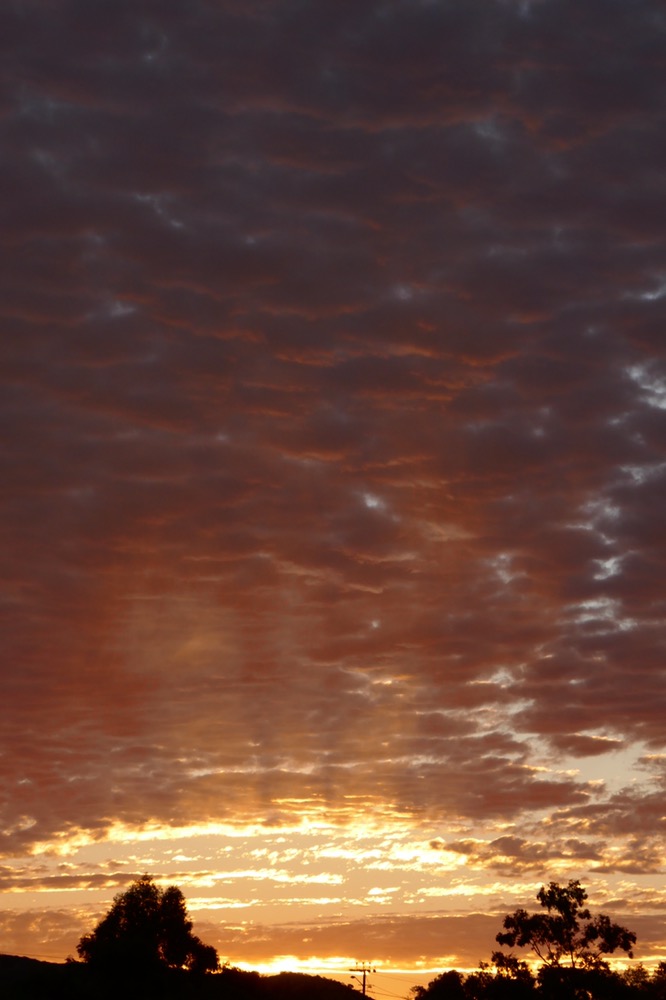
By now our track had joined the Halls Creek road, and we crossed Mission Creek at in more gentile style. The sun was setting apace now and the clouds formed huge folds of richly glowing colour. As we pulled up outside our house, we thanked Jabison profusely then walked across the sandy road to take photographs. We had seen Beryl, who is one of the nurses, standing on the road doing just that with her iPhone. We ignored the barking dogs and watched the sunset with its splendid desert colours light up the western sky. Wow! 

Standard
Central australia, Central Australia Work, Uncategorized

Alice Springs March 2017 part 3 Laramba

IMG_3187IMG_3184IMG_3222IMG_3217IMG_3216IMG_3213IMG_3206This week we have travelled to different communities. Jennifer has driven up with a medical registrar, Sally to work the week based at Ali Curung. I have returned to one of my favourite haunts of 2016′, the little community of Laramba. I brought a student nurse with me who will be staying 2 weeks to my 5 days.

Today is Tuesday, and beside the young student Loren, there is Helen who I met last year and Natalie who is working a few months before taking up another nursing position at Gove. They are a terrific bunch to work with, more chaotic than some, but are willing to do the work and round up the patients I need to review. Natalie and L drive round the dusty and bitumen streets in the troopie, getting out of the car/truck to wake up people sleeping in the afternoon and most interesting for them, a card game of the ladies where many crisp fifty dollar notes were piled on the red ground between them all. Yes, it’s not just the men who gamble, the ladies do too.
The weather has been truly magnificent, about 30 degrees in the daytime, beautiful sunshine, a gentle breeze and a pleasant 10 degrees overnight. I walk to work, it’s not far but I’m thought of as a bit of an oddity trudging along the sandy road from my accomodation on the edge of town to the clinic nestled between the local primary school and the work for the dole centre. The children are wonderful. As I walk past, they call out Hi, Hi. They all wear a blue collared shirt, and blue shorts and run and tumble in the playground every chance they get. The best lawn in town is at the school and it’s protected from the sunlight by a large steel gazebo. It’s lovely hearing laughter from the school wafting around the clinic, best sound ever.
I have seen some interesting medicine, met interesting people, talked to some inspiring people, sparked a few ideas in my colleagues about how to look at problems and tore strips of a mother who did not have the brains god gave a badger by allowing her child to throw away a plaster put on for a serious fracture. I said to her that obviously your five your old daughter is in charge at home – why else would you not keep specialist appointments or do the right thing by her. If I put a plaster on now, would you let her take it off again. Of course your answer is yes. Parents abnegating their responsibility as adults is feeble laziness and a moral failure in their duty of care for their child. However most Aboriginal parents, especially the mothers, can deliver a tongue lashing if the kids step out of line. Overall kids do have a lot more autonomy, if they don’t want to eat or wash, that’s okay, until they get to school and meet Lucy. Lucy is the no nonsense head teacher and she has definite rules about hygiene and self care which she demands from the children – as a result the kids are happy with such a firm consistent hand, and all the little ones love school. One eight year old, a slim young lad said the thing he enjoyed most at school was spelling, closely followed by reading and writing. His mum was sitting in the chair beside me and volunteered that he already can speak three languages, Matabari, Walpiri and English. He is planning with his Mums support and encouragement, to go to high school in Broome to really study English, and he has his eye on another Aboriginal language too. It is tremendously encouraging to see a child and parent with the talent and wit to work hard at something the child loves doing. I talked about how it’s important to study white man stuff but also study Aboriginal stuff too. It’s not easy, it’s learning two cultures, two ways of thinking but the great advantage is that such a person straddling two worlds will have a huge knowledge and spiritual base to understand their experiences. White people tend to be spiritually and community impoverished, living lonely materialistic lives while Aborigines can live in each other’s pockets and inhabit a rich and real spiritual and magical universe. On the other hand, Aborigines struggle to cope with concepts of disease and the part they can play as individuals to ease the burden upon themselves. The welfare state of the 30s to 70s created expectations that white people will bale them out but I think they are rapidly learning they must be self reliant and stand up for themselves. Recently one community was basically diddled out of government housing money, where tens of millions went to bureaucrats in the NT government and was not used in producing actual buildings. They complained loud and long, good on them.
Most Aborigines are poor, they are cut out of the money making pie by location ( remoteness), education ( minimal general and vocational training opportunities) and for many, a lack of aspiration and for all of them a lack of opportunities. You cannot just fall into a career here like you can do in a major regional centre or big city. However, I am very optimistic about the future because of the children I talk too and hearing what they have to say. Education is definitely improving, the standard of reading and writing and numeracy is vastly better than it was a generation ago and improving yearly. I have spoken to many teachers that assure me this is the case, and all the many enthusiastic young students who tell me they love to learn certainly backs this up. Remoteness will get less with satellite based internet and communications, improved roads and better resources in regional centres – Alice Springs has a university and vocational colleges geared up for serving students from remote communities. How functional they may be open to discussion. There are at least five proper high schools in the central desert. The days where substandard education for Aborigines was assumed is rapidly going with more and more dedicated teachers. The biggest problem us truancy often abetted by the parents, but local engagement and encouragement is helping. Now in Laramba most truancy is connected to family dysfunction, reflecting potentially serious problems in those families.

Aspirations improve with exposure to realistic ideals of success and the ever increasing momentum from many inspirational indigenous role models, then through effort and opportunity, they will become people useful to their communities whether as Aboriginal health professionals, nurses, doctors, dieticians and all the other trades and professions. I had the pleasure of meeting Alice who is newly in charge of the work centre. She agreed that there is not much work offering but if you create it, there are lots of useful things that need doing in the Laramba community. Roads, recreation areas, public facilities can be improved or introduced. She has the wherewithal and connections to get resources from government, a process which is always a morass for the inexperienced. People like her can make an enormous difference to any remote community.
However, whatever the chosen career they should not abandon the magic, love and community of aboriginal culture, they will need that to cope with the modern world and stay Aboriginal in their hearts; indeed, I hope that with time they can share these skills with us all. We city people say community, family, love and faith are important but we don’t walk that way, instead embracing isolation, materialism, selfishness, and a vacancy in place of spiritual yearning. Aboriginal culture can teach us a lot about how to live life better as well as what not to do too. It’s all rather fascinating. The spiritual and magical aspects of all of our lives have been neglected for too long.
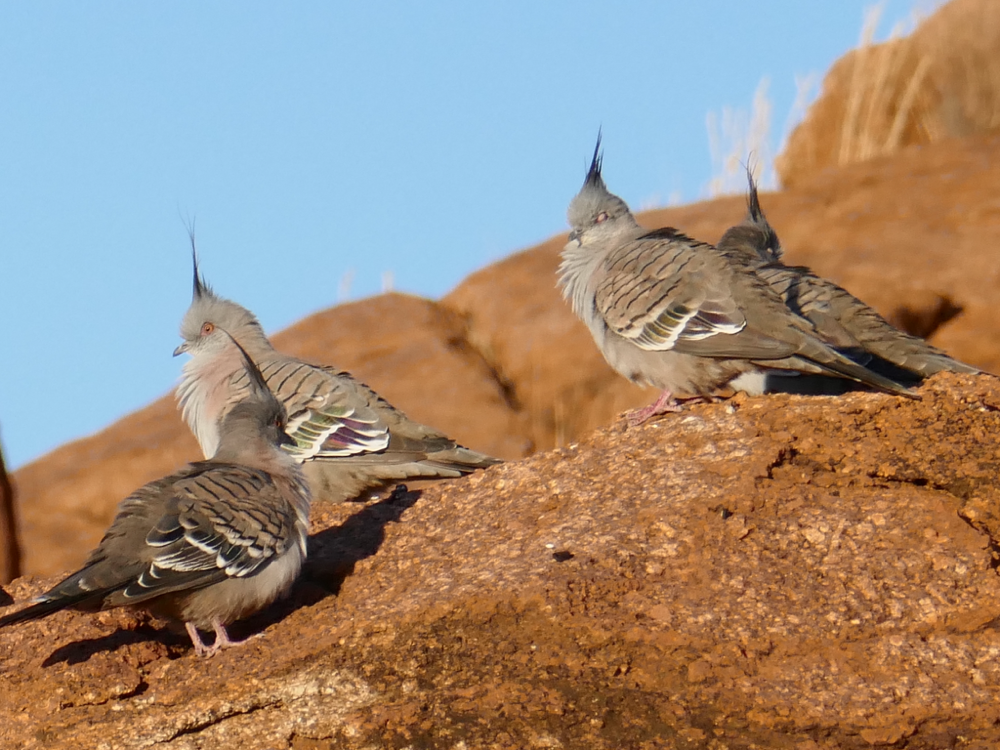
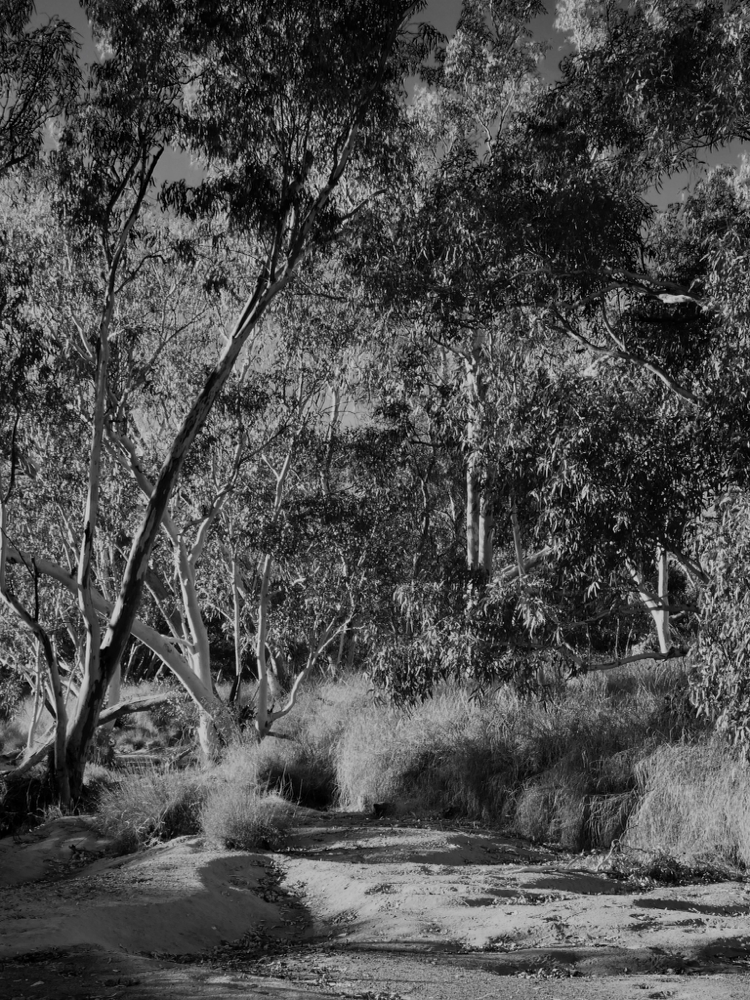
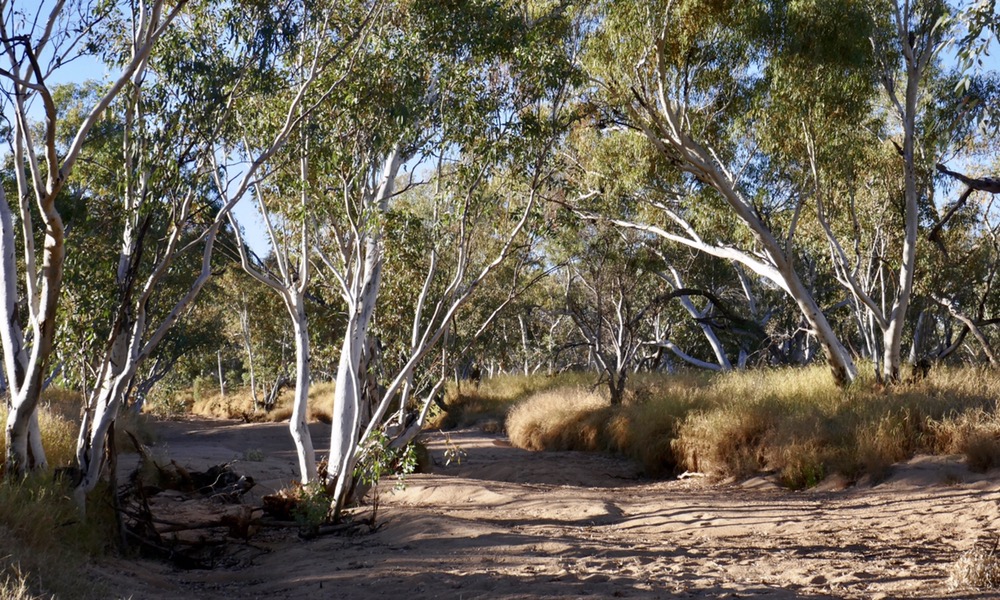
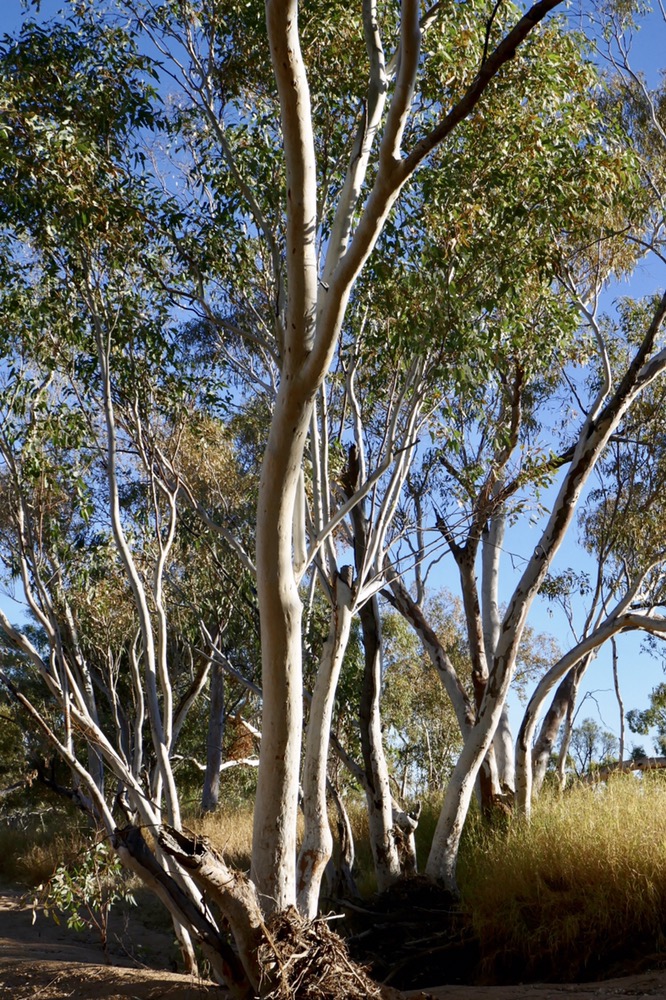
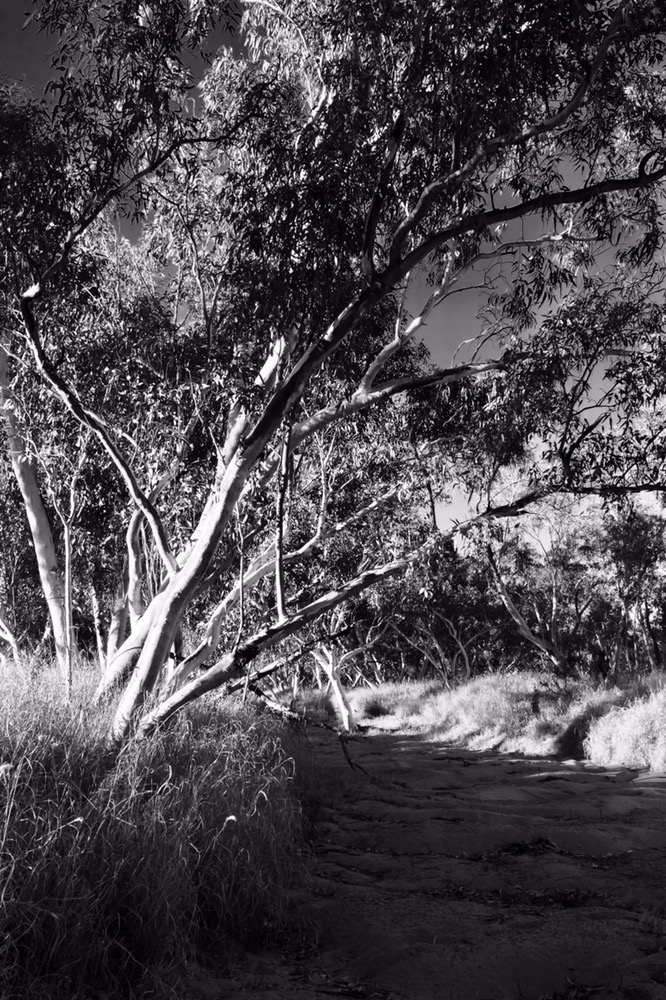
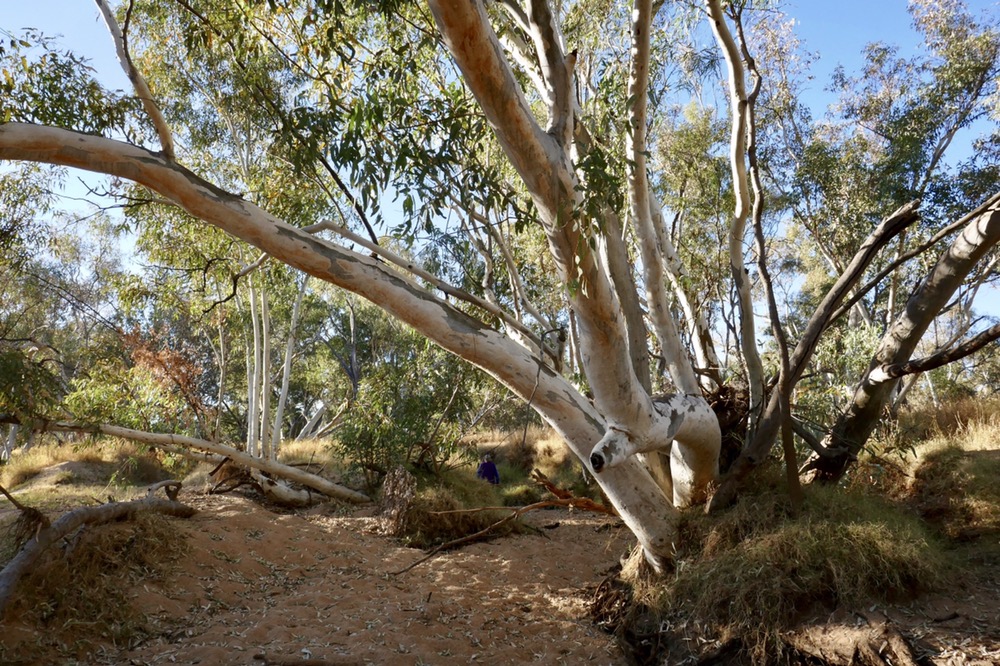
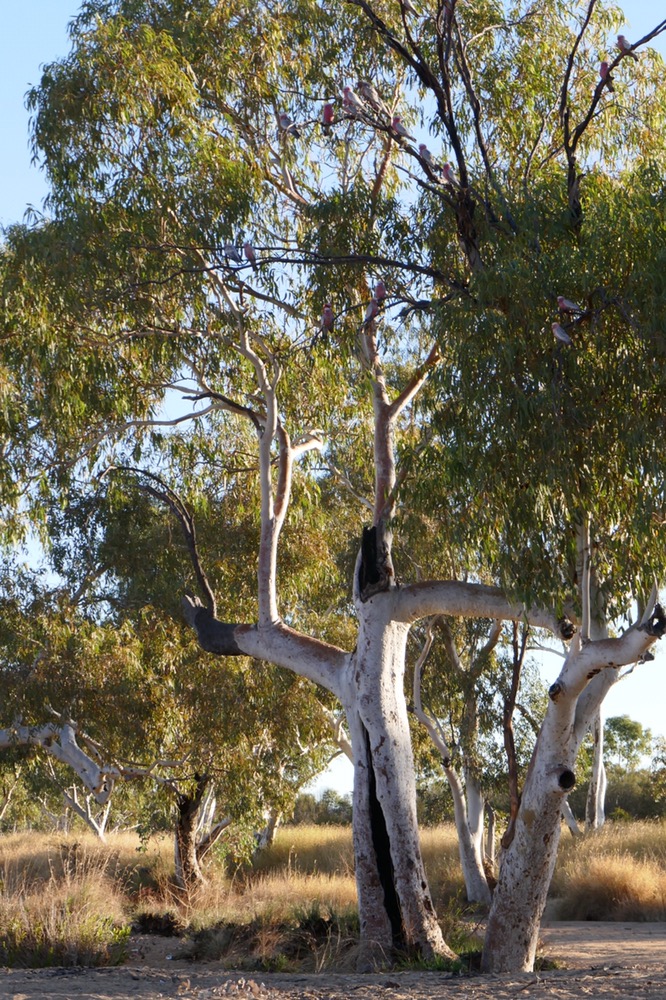
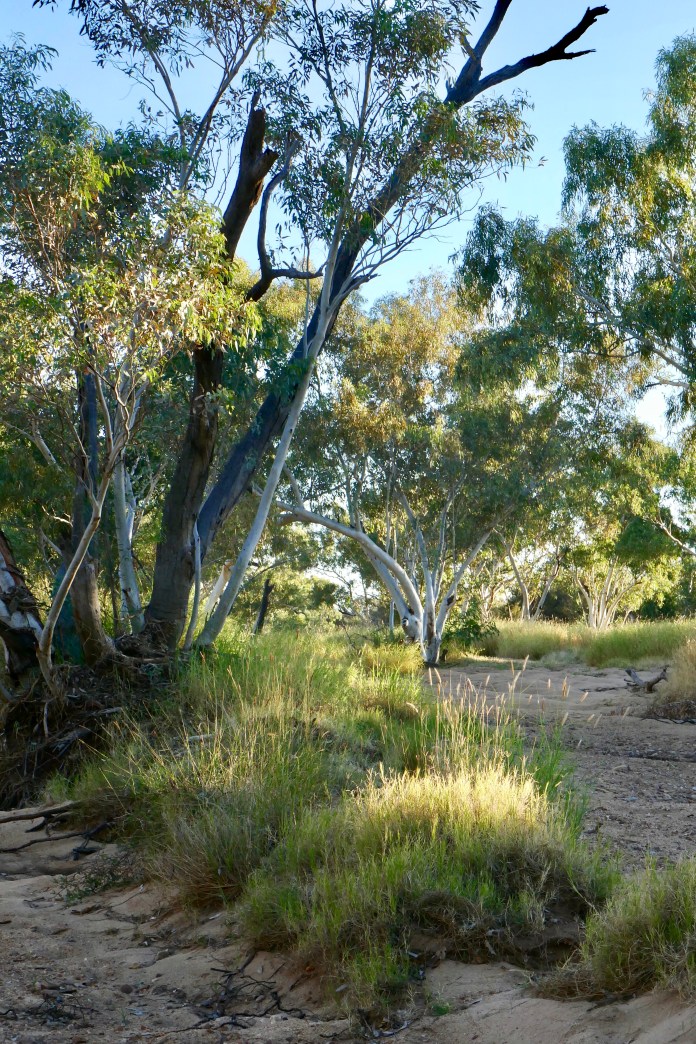
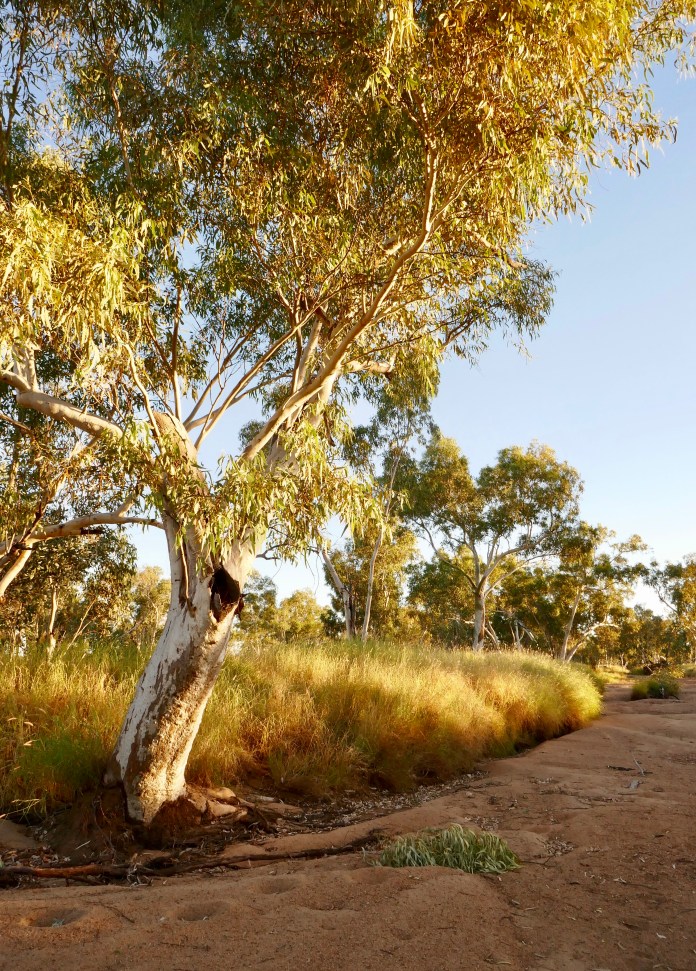
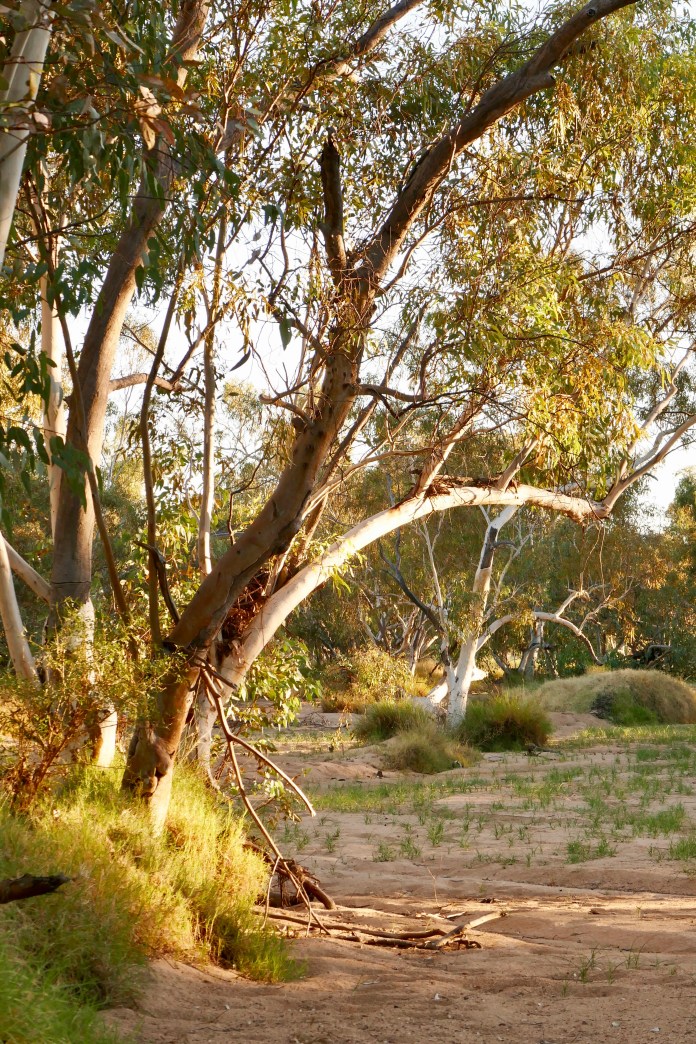
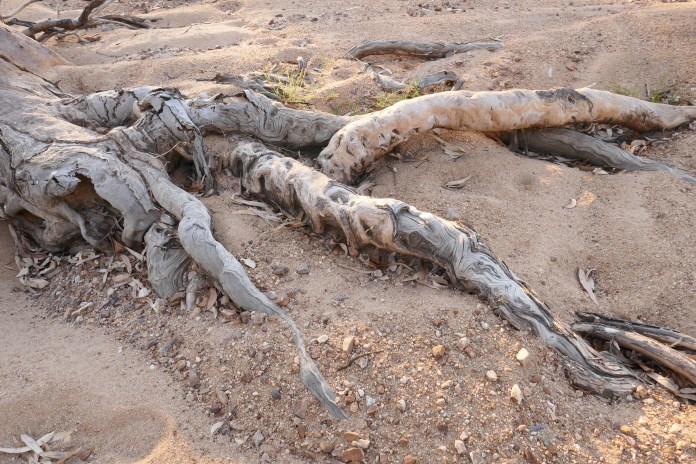
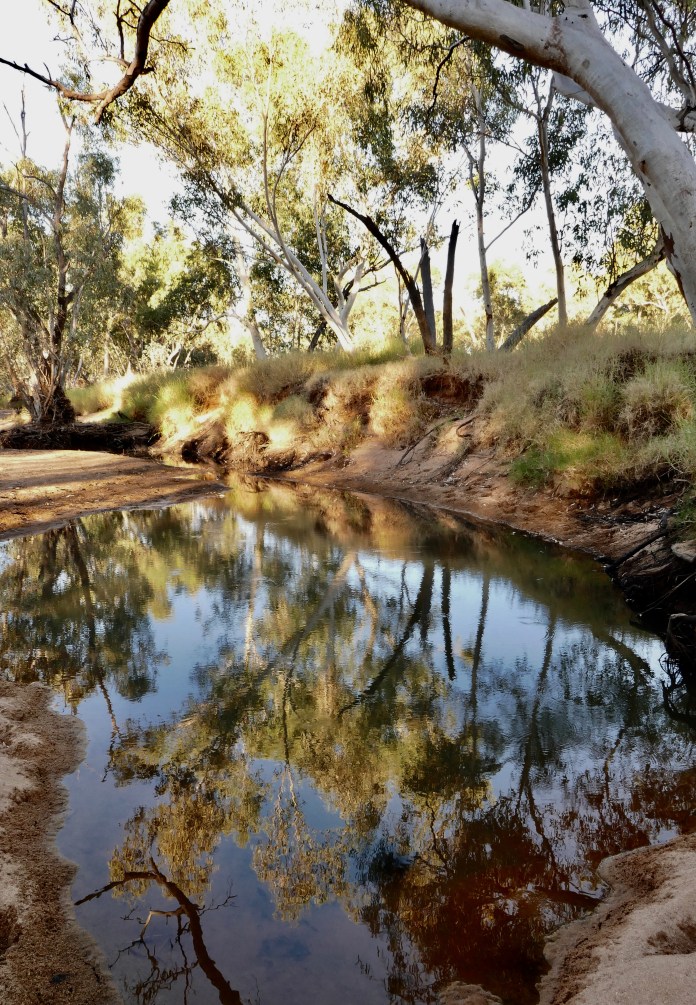
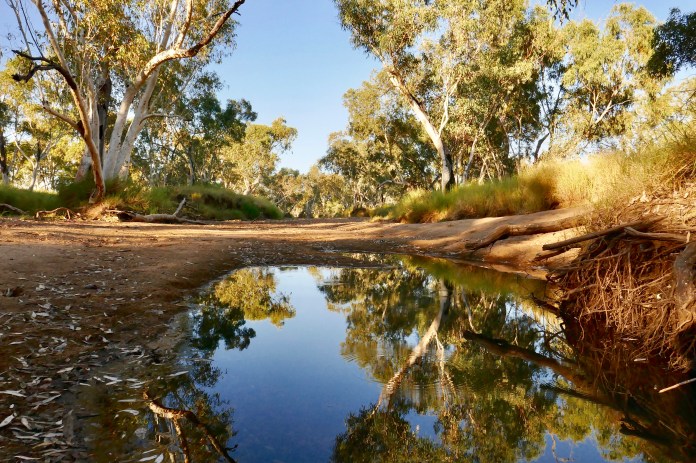
I went walking Tuesday night and then this morning, for the hour of sunset and sunrise, along the nearly dry Napperby Creek. It was about 30 meters wide when it was in flood earlier this year following the unusually high rainfall in January and February. It’s now mostly dry, sandy walking. There are a few lingering dark pools, mostly full of madly breeding mosquitos and insects. Yet sometimes they give wonderful reflections of the trees and grasses of the creek bed. The sandy floor of the creek has many undulations formed by the flow of water and eddies produced around islands, trees and shrubs. The ghost gums and river gums look especially beautiful at the extremes of the day, their multicoloured bark highlighted in patches by the oblique golden rays of the setting or rising sun. There are many birds enjoying the shade and water; zebra finches, ring necked parrots, galahs, cockatoos, budgerigars, crested pigeons, and even a wedge tail eagle was perched in a tree above me. It flew off, lumbering into the air with big lazy flaps of its immense wings; it must have been spooked by the sound of me trudging through the sand.
Laramba is a very beautiful place.

Standard
Central Australia Work

Alice Springs March 2017 part 1

I’m sitting in row 24 in the Qantas jet about 30 minutes from arriving at Alice Springs Airport.
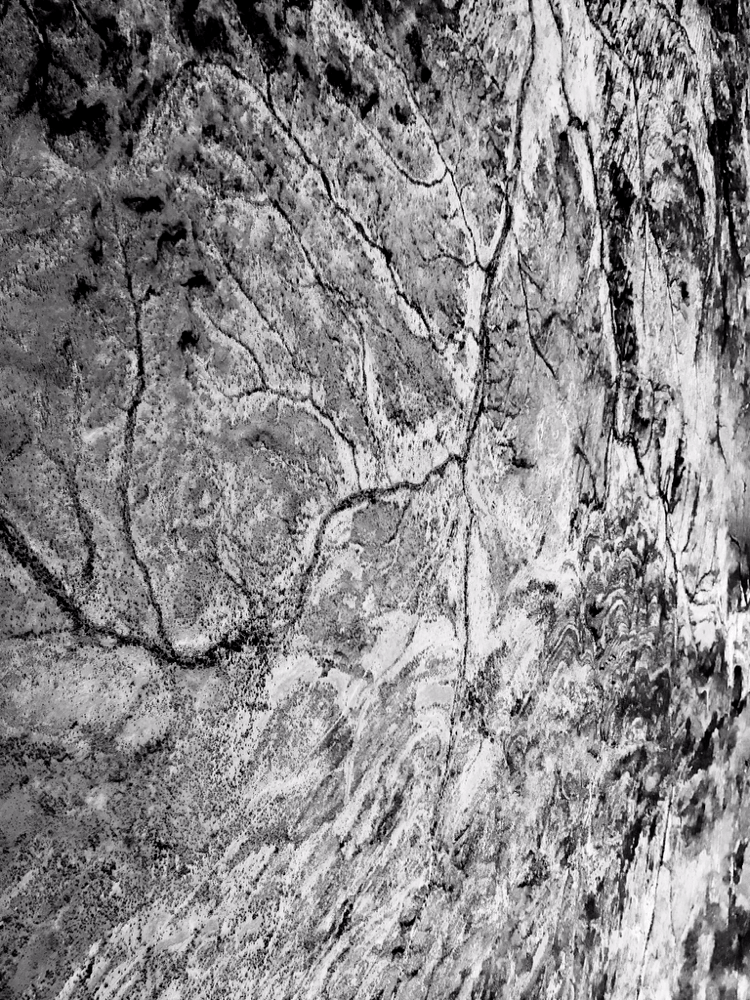
I’m sitting beside Jennifer who is completing a difficult jigsaw on her iPad and listening to Adele wi- fried from her iPad mini. I’m listening to music too; Elgar’s glorious Cello Concerto. I skipped lunch and had a red wine instead, as I am very aware of the importance of maintaining fluids on flights. We have flown over lake Torrens; its salt base swirled into wild patterns, all in dreamy white sediments. Lake Eyre is pink, the water is saturated with shrimp; all it needs is flamingos to dramatise this splash of colour. As high as we are, I cannot see the Pelicans which will be there, feeding, fishing, nesting and totally unaware of how desperate the final push will be for their last nestlings as the water evaporates away. Up north, I have seen the white grey bones protruding out of dried carcasses of those pelicans who were too late to flee east or west away from a dying lake.
We will be met at the airport by a taxi organised by Aeromed. Aeromed is the aviation arm of Central Health. Aeromed liaises with the Flying Doctor Service for our transport to remote communities, helps plan the air borne retrieval of sick patients and does the mundane taxi bookings for such as us who arrive in Alice Springs. We have stayed at number 6 recently, but have stayed at other flats in the same set of units. It’s on two levels, hopefully clean and tidy but last time we had ants trailing through the kitchen on the ground level and the bathroom on the second level, hunting for water. The merest trickle or even the scent of water drives them on. The rooms and lounge are dark unless interior lights are on, much of the window light shielded by heavy curtains. However, even when the curtains are opened wide, the entering sunlight is attenuated by buildings adjacent and the gum trees outside with plenty of lusty cockatoos and galahs sitting on the branches. This shade is not a problem as Alice Springs at this time of the year is still hot and the showers of the wet season are long passed.
///////
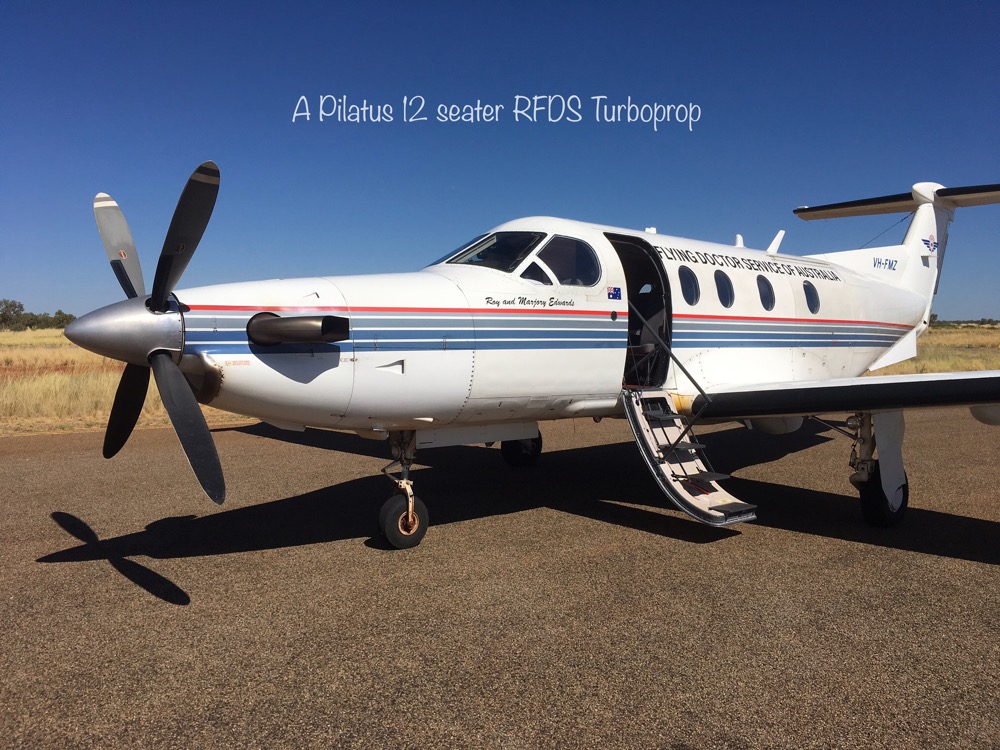
It’s 7:30 am Tuesday morning, we are sitting in our donga after breakfast, here in Lake Nash. A donga is a prefabricated steel clad box with a steel roof above with a definite air gap. It is a box which sits on several stubby concrete pillars. A truck and crane are used to bring them here and then carefully lower them into position. As a place to stay, it’s comfortable with excellent air conditioning and a basic kitchen and mini lounge set up. We arrived yesterday morning by RFDS. The plane which carried all of us is a turboprop called a Pilatus. The flight took 90 minutes to cover the 700km between Alice Springs and Lake Nash. The plane was crowded with people and luggage, on its maximum weight short a bare 1 kilogram. Some of the Aboriginals coming back from hospital in Alice Springs were loaded up with shopping, pillows and bed linen. It’s a problem as the car drive is well over 20 hours to get to Alice via Mt ISA.The flight is noisy so as always I used my noise cancelling headphones and enjoyed some videos. The country beneath is much drier than when we were here last in Central Australia. It looks green in patches but there is no mistaking the desolation the sun produces here. The ridges of worn down mountains resemble giant unarticulated spines of ancient dinosaurs as they gently begin to swirl in the landscape.
Lake Nash is very flat. It is a vast flood plain divided by the Sandover Highway. Unfortunately every time it is graded, it drops a bit lower relative to the surrounding plain, so now any time there is fair drop of rain, instant 400 km canal! It takes weeks to dry out and even when we walked along it this morning it was still slippery and slick in parts from rains weeks ago.
The clinic is situated beside the community store. The clinic is a building made of steel and concrete to resist the termites which promptly destroy any timber structure. The layout us a bit odd with clinical rooms sprouting off from odd parts of the original design. These are the necessities of bush life, you take what you have and adapt it to your needs as they evolve. There is not the money or personnel to rebuild a more useful clinic. The staff are terrific. Bev is in charge, she is friendly, busy and oozes competence. Kirri is an old friend from Ali Curung who is now working here in Lake Nash. There is Angelique, Lorraine and some Aboriginal fellows who help with cleaning and driving – Clarence and Clifford. All of them are very friendly.
It’s now nearly 2pm. In a few minutes power will be off for one or two hours. There have been long standing problems with power here and this is the time arranged to fix it. I wish them luck. It’s about 40 degrees outside. This morning was quite busy. I see mostly men and Jennifer mostly women. I am impressed by how well their chronic diseases are being looked after and how well the senior staff here know the patients and their circumstances. I emphasise changes in diet and exercise in both early and established diseases such as diabetes and kidney failure. The problems with this westernised healthy lifestyle thing are: firstly, no refrigerators in the homes so food is bought daily and too often pre cooked at the shop, fresh verges and fruit are frequently unavailable and always expensive when delivered and finally, the expertise to cook in healthy ways is limited by past poor education. These are part of what we call Social determinants of disease. Before we consider diseases there are these basic barriers to achieving good lifestyles, it’s difficult. Throw in the language difficulties which include poor facility in English, having to translate from English to their own language in real time, the differences in meanings of words due to different cultural experiences, and you have lots of good excuses for poor health outcomes in Aboriginal society. Amazingly, the benefits of patience on both sides, the continuity of health carers over years, and having limited but prioritised goals to avoid overwhelming them, is improving the situation here. Roughly 50% of diabetics in Lake Nash now have taken ownership of their illness and are self motivated to take their medications and attend reviews with little prompting from clinic staff. This is a wonderful achievement. It is about communicating and sharing goals. It’s not having a one sided information flow from health staff to patients. The information flows both ways and that can only happen with intelligence and good will on both sides. The power is now out and the room is starting to warm up, I need to find somewhere cool now!
//////
It’s Wednesday morning. Jennifer and I went for an early morning walk, and on the way we met Jayne who is the visiting nurse audiologist. We all walked together west along the Sandover Highway. The sunrise behind us. Jayne has worked in Central Australia for forty years. She has seen everything and everybody, and mentioned people who we knew as well having worked in remote communities. We talked about all sorts of things as walked along the sandy road. The sound of a truck made me turn back, a 4WD was travelling along a road parallel to the highway, inside the Lake Nash station, It’s lights and dust silhouetted against the early dawn light.
I asked her about education as we passed the local school a few minutes before. For example, Were there Aboriginal audiologists in Australia? In fact Jayne’s boss is an audiologist and an Aboriginal. Jayne has a young friend who is a teacher in Alice Springs. This is a lass she has known from childhood., a close friend of her daughter. She went to university, and then worked in Ballarat. What really struck here, she told Jayne, was the much higher standard of education for children and teenagers compared to Central Australia. So she decided to work and help people here in Central Australia, and has done so for many years, teaching in Alice Springs. Here in Lake Nash, there is a community school with a sign that boasts 120 happy students. But where do they go to acquiring a trade or profession or just more senior studies? Yilara College is run by the Finke Mission on the outskirts of Alice Springs and provides excellent education for the senior secondary Aboriginal students. It is very affordable and there are many scholarships to help with board and educational costs. Jayne in her capacity in testing the kids hearing, has asked many of the students what they want to do with their lives. She said only two had aspirations to anything more than go just go back to their communities. However, I think if you asked most Australian teenagers about their plans for the future most adults would be less than impressed by their lack of ideas. One student at Yilara, a girl wanted to be a hairdresser but could not see herself doing that back in her community because no one would pay her. She believes they would expect her to do it for free because she is family. Everyone is a cousin or an auntie in these communities. The plus in Aboriginal community is the strong sense of real community but the minus is that businesses which would be supported just by a community rather than government money, could struggle with cash flow. The community shops have got around this by being absolutely definite about no credit and supplies have to be paid for. Perhaps the young lass, needs to just toughen up and make the same rules for her own business. A hairdresser would improve hair care, educate people about hygiene and provide a really good service. I recall an Aboriginal doctor in Utopia who went broke because he folded to constant humbugging because of what he felt were his valid cultural commitments, dishing out money to “family” on request. I think you have to be tough as his attitude earned him no respect in his community.
The integration of our two cultures is problematic but can be solved by goodwill, mutual respect and communication. As regards education, there are generous scholarships to do all sorts of study at secondary and tertiary level for remote Aboriginals.Scholarships to schools in Alice, Sydney, Perth, Adelaide and Melbourne can provide first rate levels of education. Sport based scholarships are widely available in Soccer, football and for other sports that include education as well as an opportunity to enter elite sport as a career. As a professional and an advocate for education, I feel disappointed if other people don’t share my passion for what I see as self improvement, utilising all your abilities in a profession or a job, I see it as a loss of potential, a waste. But is this my western, elitist view of things, measuring other people by my standards and not theirs? Less face it, only a minority of people have the opportunity to study a profession but most people can get a job. In remote communities there can be a problem with getting work. There are not the big employers, factories, department stores and so on here in remote Australia. However, there are solutions which have worked. Jayne gave us an example as she walked along under the ghost gums; Canteen Creek was founded by four elders disaffected with how their original community was being run. In Canteen Creek, the elders negotiated land use with the Australian Army in a trade off not for money but community services. These services include a dental clinic run by the army as well building sport centres and other facilities which provide work and activities. Canteen Creek has regular Thursday Emu day, where all the litter is collected through the whole community. It was Canteen Creek which has a spectacular Christmas light display. The army engineers came and taught the women of Canteen Creek how to do arc welding so they could make sturdy bed bases for themselves and the old people in the community. I think it’s an example of how clever Aboriginal communities can be when they have the chance to make decisions for themselves. The top down approach to deciding what communities will get and when, is not the solution that works. I think there could be plenty of work if the elders in each community can be given encouragement and opportunity to develop solutions. Work could include; ranging ( caring for the land, animals and flora), art ( new forms of art including video, sculpture), local businesses like hairdressing, electrical repairer, carpenter, builders, maintaining local water and power, in short, all the services and trades that presently come out of Alice Springs with enormous costs and delays.
One of the potential problems for established businesses often cited in Alice Springs is that most Aborigines take their family and ceremony commitments very seriously and this could mean weeks or even months away from work. But does this actually happen? Is it one of those self evident “facts” ? Do we assume they won’t be able to work? Are we making excuses for not employing Aborigines? Certainly here in Lake Nash most of the men I have met are working and they often have such severe health problems that I think the the government would issue them with a pension if they asked. Most of the very old men, the Elders I have met in most communities, have had long work careers of which they are rightfully very proud. The level of unemployment varies with communities, the well functioning communities with minimal internal conflicts do reasonably well in finding work and setting up programs so men and women can work. The men particularly like outdoor work and land care here in Lake Nash. I would not work in bright sunshine in 44 degrees but they do, only grabbing some shade to enjoy a yarn when sitting together on their few breaks.
It’s Thursday evening and I’m lying in bed after cleaning up the floors of the donga. As each doctor leaves its required to get the linen washed, kitchen and amenities clean and floor washed. The places are usually small so it does not take long. It’s been a busy week at work but not with emergencies for a change but with sorting out issues in people’s health, reassuring and encouraging. I like doing this part of medicine. I saw one young man twice, he’s profoundly deaf and he came in complaining of headache. I could find nothing wrong and then he admitted he was frightened as some one he knew had died from a bleed into his brain. He was very frightened at the thought he might die too. Once I knew this I could really reassure him that he was fine and that headaches are common and are rarely a danger. He seemed to have a weight lift off his shoulder as he understood he was going to be okay. Medicine here is less about tablets and more about talking with and understandings people’s fears and concerns.

Anyway, it’s back to Alice Springs tomorrow morning. The weather forecast is for cooler temperatures in NT, WHICH WILL suit this Tasmanian very nicely, indeed! I just hope the ride won’t be too bumpy.

Ps I referred him to be assessed for a hearing aid. No one should be trapped or isolated in a disability.IMG_3108
Standard