
On Friday the 18th of March, Jennifer and I drove southwest from our home in Launceston to visit Mole Creek.
We went straight to the ranger station as wanted to purchase tickets for cave tours. Lucky for us there were some afternoon slots still available. It was barely 10am so we had a few hours to kill before our booked lunch at Earthwater Cafe.
We decided to do the short walk to Alum Cliffs lookout which starts the other side of Mole creek. Earlier this morning we had already passed it. Coffee was on the agenda. We stopped at a small cafe, painted blue with a steeply sloping roof. Coffee and Portuguese tarts went down very nicely.
When I was standing by the counter, on the wall behind me, were astronomically themed and framed photographs for sale. Nebulae and galaxies. We bought four of them! They are beautiful images of some of my favorite sights as well as one I have read about but have yet to see; Thors Helmet nebula.
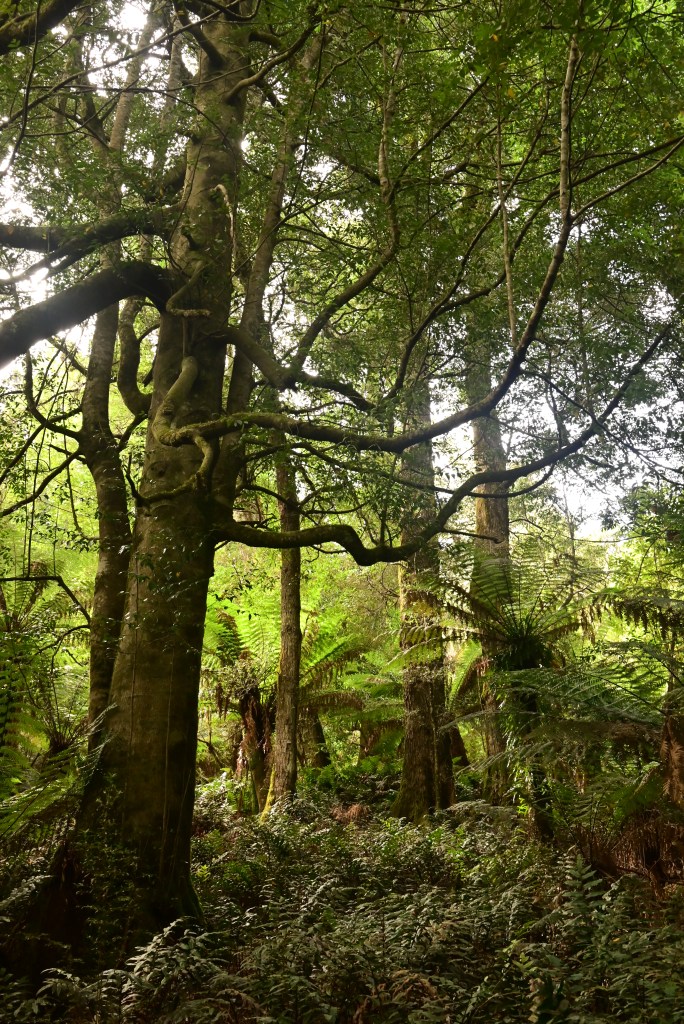
The walk to Alum cliffs lookout begins at the end of a gravel road just before it bends and carries on through farmland. It’s a solid tramp uphill through magnificent and very stately forest. Great, tall eucalypts with a lower storey of bracken and smaller trees including Native Cherries. These were reliable sources of bush food as the trees were covered in delicious red berries between March and December each year.
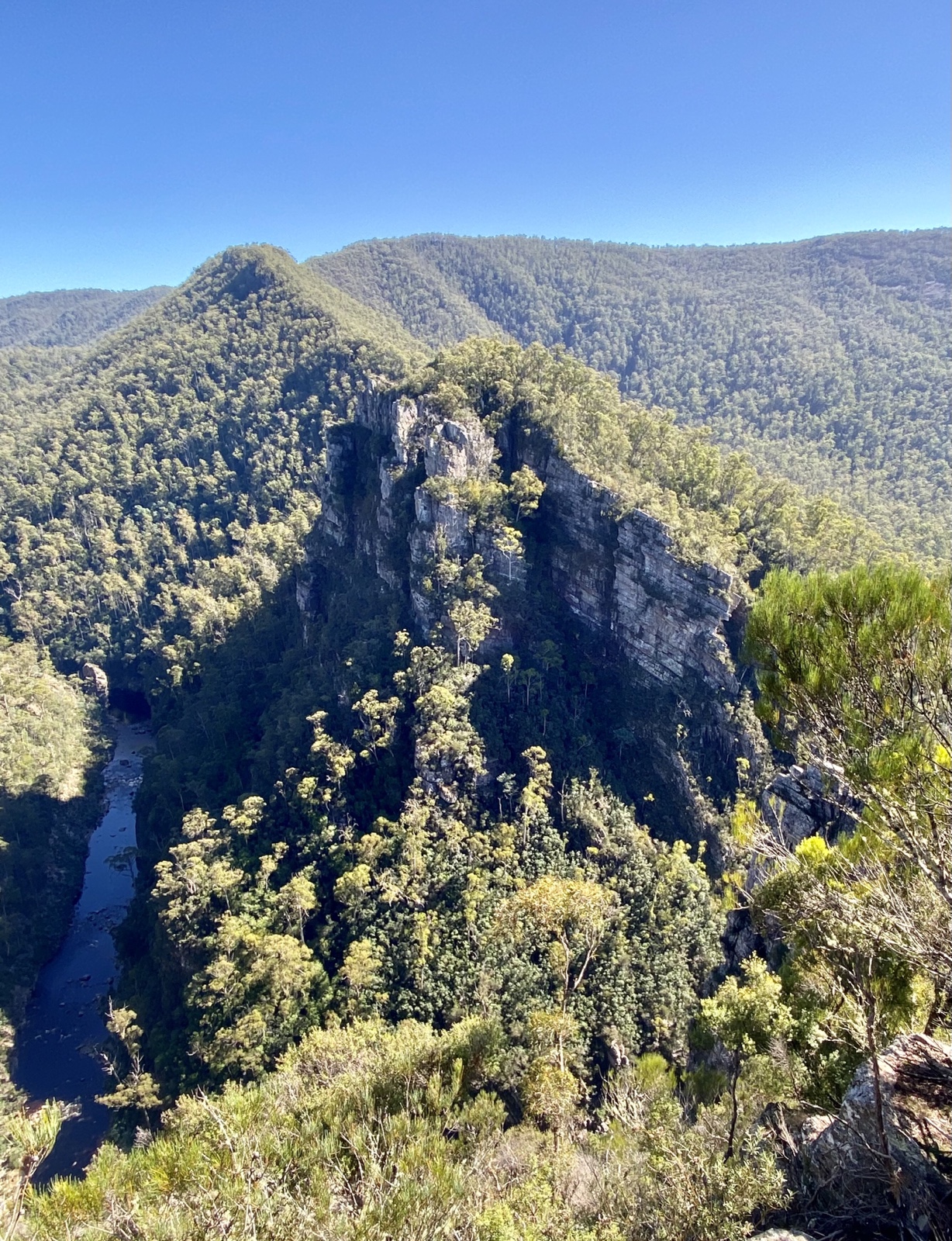
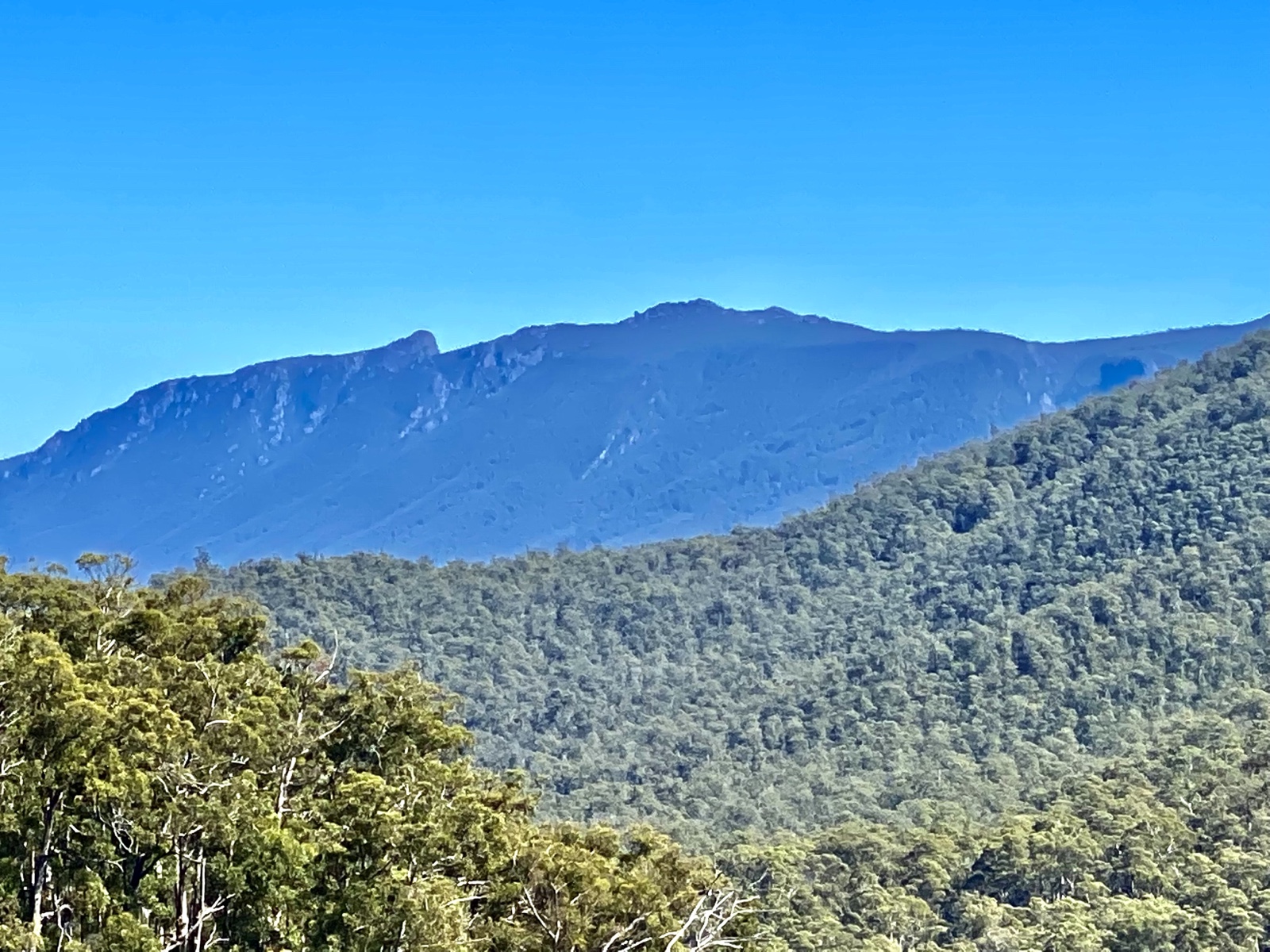
We soon arrived at the lookout. It’s timber framed and ruggedly built, fashioned into two tiers with each providing a different view. The upper tier is positioned to give the best opportunity to see the cliffs while from the lower one you can clearly see the karst towers and ridges high above the river flowing dark and cold.
The alum cliffs are a source of ochre. I could see at least three different colors of clay on the cliff wall. It’s been used by the local Aboriginal people for thousands of years for culture and as the basis for their economy, paying for goods like food, tools and animal skins for clothig from other Aboriginal groups.
The ridge line to our right drops steeply to a river. Gum trees spot the few locations where the ascending slope pauses for a short horizontal step before recommencing it’s vertical climb. There is A narrow wall of limestone, shear from its base, which ends in a rugged edge of bare stone.
We took many photographs. The blue sky, the isolation, the dramatic scenery was very inspiring for both of us.
We drove back to Earthwater cafe for lunch. We both had vegetable burgers and then shared a chocolate brownie for desert. A wonderful lunch in a picturesque location and beside a spacious garden.
We arrived at King Solomon’s cave an hour early so Jennifer read while I angled my seat back and closed my eyes.
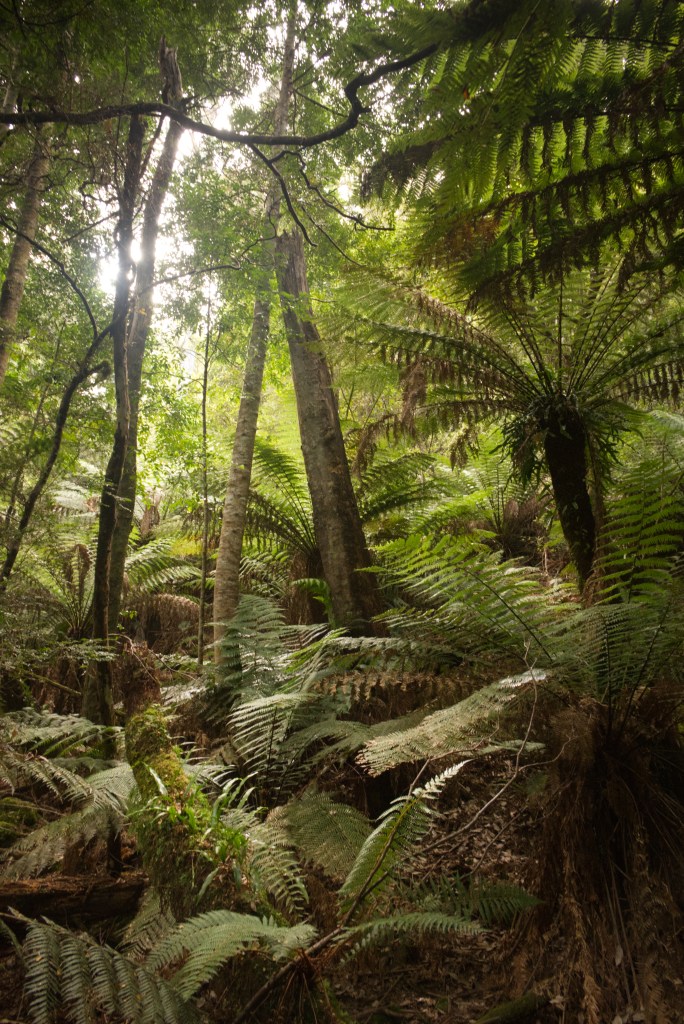
There is a short, shady walk beneath ferns to the waiting area booth. It’s wasn’t long before John, our guide, introduced himself. Due to COVID, the guest numbers are STRICTLY limited to eight people. These small numbers mean it is easy to both hear the guides and take excellent photographs.
King Solomon’s cave is one of many in the area. It’s limestone country, Karst is the name used by geologists to describe the topography which results from abundant limestone exposed to water. Limestone is finely crushed shells of ancient, tint marine animals. It’s mostly calcium carbonate. There are inevitably joints or cracks in the rock due to pressures from geological forces. In limestone they run in a Criss cross pattern and vertically down at right angles to the surface. These joints permit water to drop down into the limestone and percolate through. They can form rivers, caverns like King Solomon’s cave or tunnels. Rainwater absorbs carbon dioxide, which converts neutral water with no capacity to dissolve limestone into a solution of carbonic acid which can. Each drop of calcium carbonate laden water, a load collected in its passage through the limestone above the cave, hangs suspended high above us. The water loses its carbon dioxide to the air in the cave and the calcium carbonate comes out of solution contributing to one of many different speleothems. This is the general term for the many fascinating manifestations of crystallizing calcium carbonate, this crystal is also called calcite.
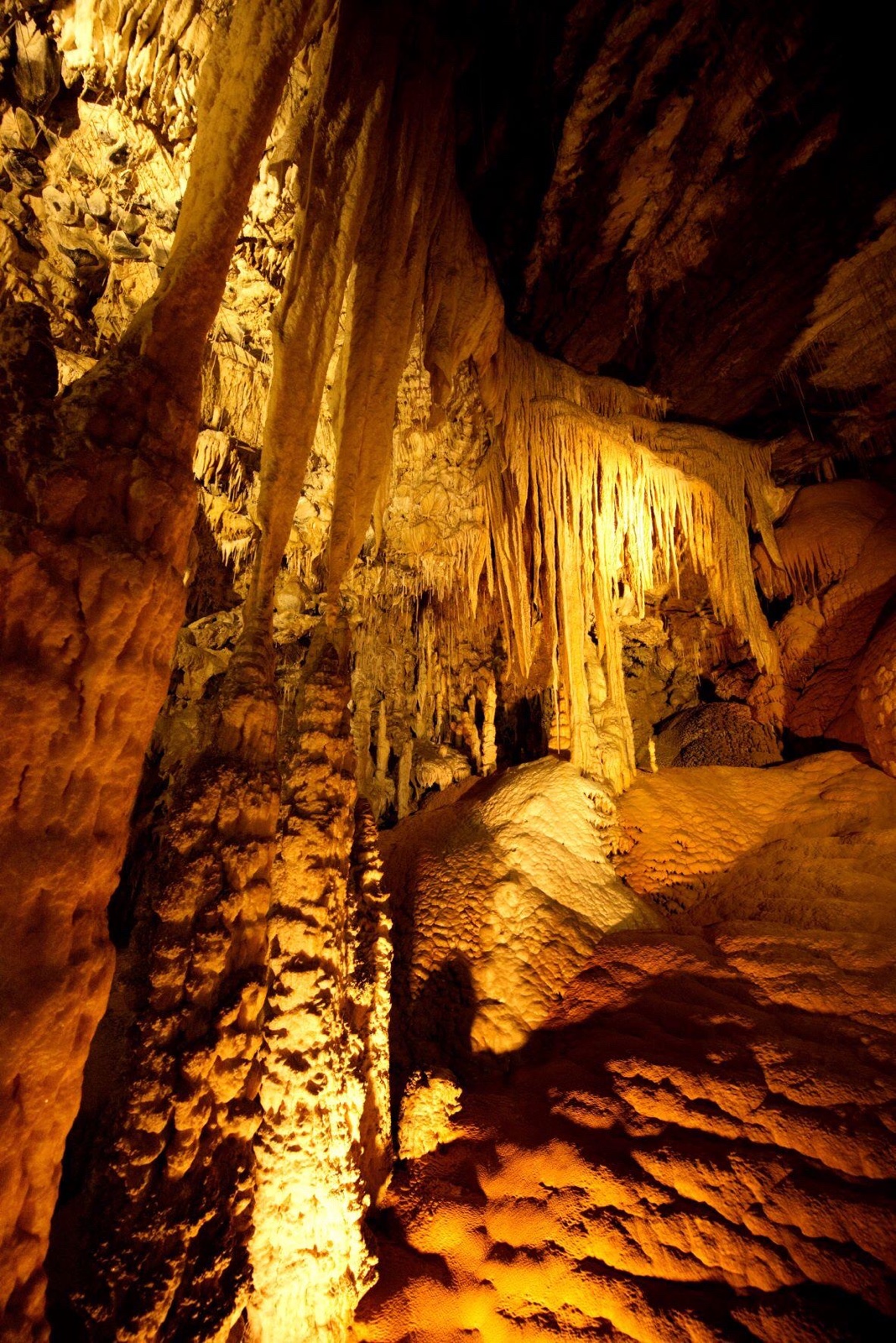
Calcite can be pure white, it can be stained orange by iron oxide, grey by contamination with tin, or uncommonly it can have pink tint from manganese. There can be flowstone. There is a massive flow stone in Marakoopa cave which hovers above the river located there. There are straws. These are long, hollow and impossibly delicate structures which hang downwards up to 6 meters from the ceiling. Water dribbles through the straw, and deposits a minuscule layer of calcite at the tip of the slowly growing straw, before dropping to the floor. When some debris blocks the straw, water escapes and flows down the outside and in time, in thousands of years. A stalactite will form. There are variations such as “parsnips” and “Turnips” which are small but peculiar looking excrescences held suspended by a straw.
While the stalactite always has a hollow straw in its heart, a stalagmite is the splash point and forms a round dome. As time passes, the two structures, the stalactite above and the stalagmite below, may join and flow together creating a column.
The precipitation of calcite can form sculptures which the guides are keen to point out, the three cats, the little mermaid riding a dolphin and so on. I think the science and beauty of this environment is considerable and does not need the razzamatazz of conjuring patterns in clouds.
There are shawls also called bacon rinds , which form from water trickling to and fro but ultimately downwards, creating a waving and translucent sheet of calcite. There can be many of these on the walls or dangling from prominences in the cave. Stalactites can crowd the ceiling creating a veritable organ loft of orange stone.
There are tiny grottos lit by lights tucked in a corner, out of sight.
We followed along behind our guide. John frequently stopped to explain and draw our attention to the fascinating features that crowded around us. The illumination provided by installed lights is a good white balance, with a good rendition of the actual colors as you see them in daylight.
After our wonderful walk through a portion of the cave we quickly drove to Marakoopa cave. We were there in plenty of time to meet our guide, this time a woman called Sue escorted us. Like John, Sue was friendly and also very knowledgeable about the caves.
For the first thirty meters, no one is permitted to take photographs as the light from the cameras disturbs the flow worms on the cave ceiling. Even with the flash off, many cameras use light to help with focusing in dark conditions and these are dark conditions
Later in our visit, Sue turned the artificial illumination off. The darkness is TOTAL. Eyes are utterly useless, there is nothing in front of them. To be in such complete night is unnerving. Even night is a poor comparison to cave or mine darkness as the moon or stars usually give some light, and if the eyes have long enough, you can pick out something but now, in this cave, darkness blanketed each of us.
The insects here as well as other invertebrates have all lost both the power of sight and of any pigments that rely on sight to provide any survival advantage. You don’t need camouflage in the dark. Cave spiders can live for thirty years and can reach 20 cm in breadth. Their legs are unusually long. Their lungs are on the outside of their abdomens. We saw not only the shed carapace and limbs of a spider but saw two specimens. A youngster and an older bigger one, the latter nestled in a rock cleft with her web spanning an aerial thoroughfare. We saw a cave cricket. Again it had unusually long legs. I wonder if this is an adaption to help proprioception of its world, much as blind people benefit from a white stick. There are blind shrimp in the underground stream, creatures that will never leave the dark confines of this cave.
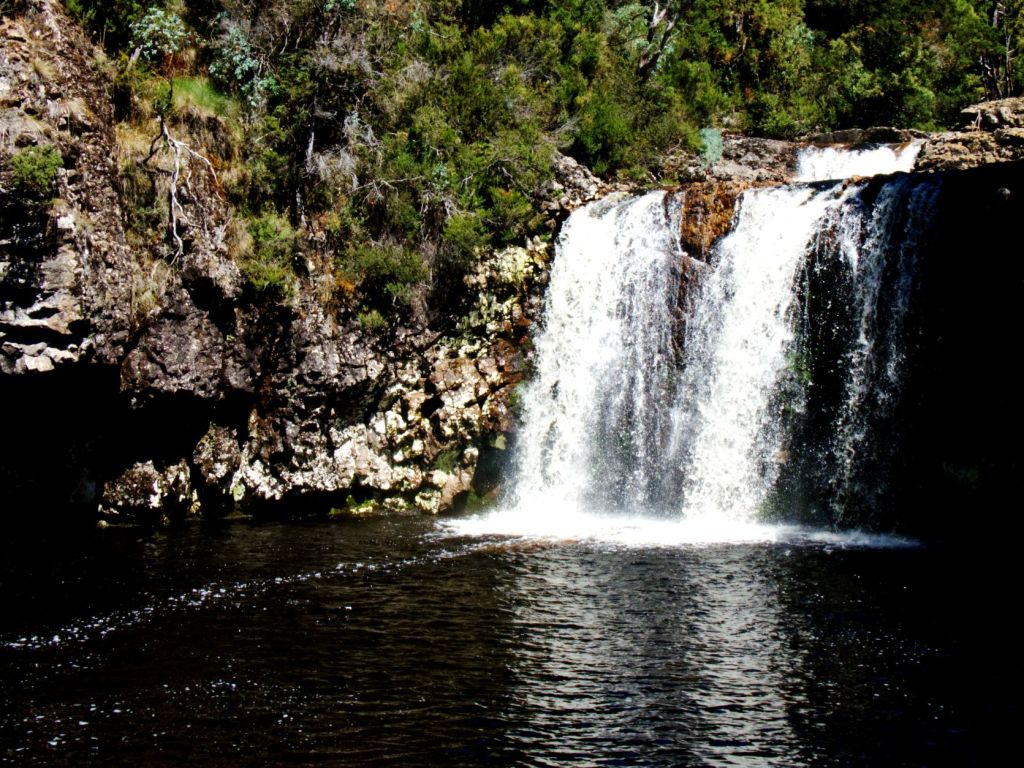
Both caves are very beautiful, King Solomon’s cave with its jeweled and richly decorated caverns and Marakoopa with its underground river and cool, still pools suspended in calcite ponds and behind frozen waterfalls of creamy drip stone.









 brucebarker2016