
On two seperate days we visited museums, the first was the Northern Territory Museum and Art Gallery and the second, this was the Darwin Military Museum.
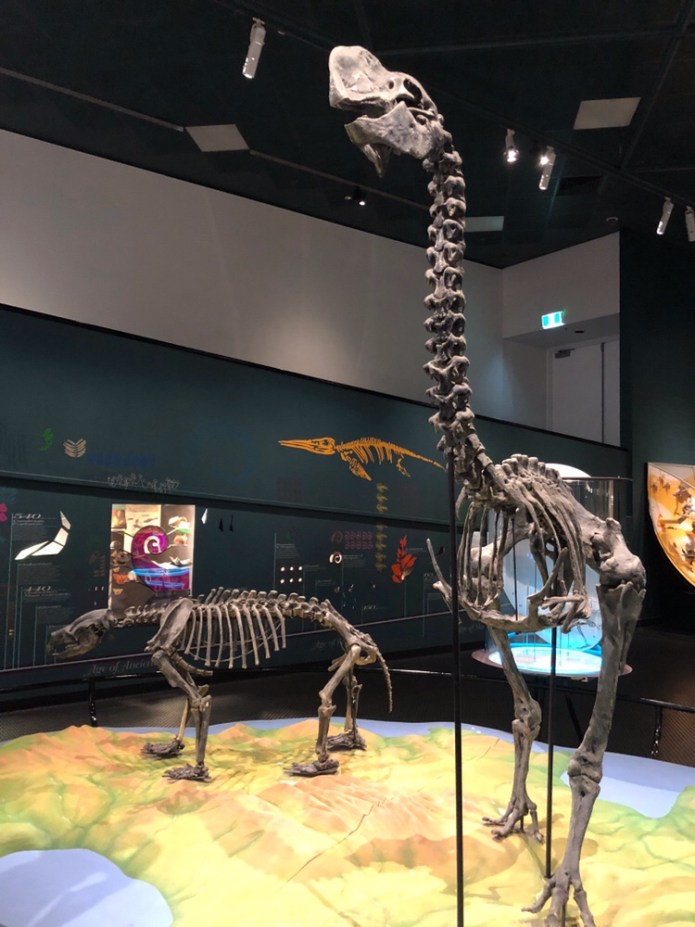
The Northern Territory Museum is perched on a stretch of coast with beautiful views of the water. It is a modern museum with a strong natural history section with many fossils, especially Miocene. In the Miocene (5 to 15million years ago) Australia was a thousand kilometres further south than the present day. The cooler, wetter conditions meant there were year long filled rivers, extensive numbers of all season billabongs and a spectacular series of parallel mountain ranges in central Australia of which Uluru is the remnant. The marsupials of this time included some very large animals such as Sabre tooth marsupial lion, marsupial rhinoceros and diprotodon, an immense wombat. There were many fish in the billabongs and rivers. It was a time of abundance. Many of these fossils are on display at the museum.
There is wonderful display about the foundation of the NT. The Northern Territory was the original Northern Territory of South Australia, that’s why John Mcdouall Stuart was funded by the south Australian government on his six trips to determine the route for the Overland Telegraph. But for every big idea that succeeded many more failed and South Australia was losing interest in its northern half. Hardly any white people, let alone white women came to live in Darwin ( it was called Palmerston then) and the population was made up mainly of Aboriginals and Chinese settlers who were involved in mining, opium dealing and gambling. The new federal government decided this region was going to be taken over by non white races and this was unacceptable. Partly due to racism but perhaps also because they feared the military consequences of having a white minority so far from the southern and eastern states. The federal government paid in todays money about 700 million dollars to take over the Northern Territory. The Feds had big ideas about mining, railroads and farming especially cattle. Not a lot came to pass, the heat, the isolation and the difficulties of transport and communication with local and overseas markets eroded the profitability terminally. A giant meat works collapsed financially after only a few years. The restrictions on drinking included increased prices, gambling was limited. The locals thought that this was a sorry time for the territorian.
There is a fascinating and moving display about the 1974, Cyclone Tracey. This was a small cyclone generated in the Timor sea as hot water laden air and cold currents of water and air met pricing these terrible tropical storms. Small though it was, Tracey was powerful with all its energy concentrated in high velocity winds up to 260km per hour. The lazy Darwin buildings made of light timber and corrugated iron roofs were destroyed but also buildings of brick and mortar like the refurbished town hall were destroyed. Hippies living on a beach were wiped out, washed out to see on giant storm tides. Boats were sunk with crews aboard. Two boats were found years later on the sea floor and it looks as if one was trying to rescue the other.
About 260 people were killed in the Cyclone but unlike Hurricane Katrina, the government sent in support immediately and evacuated 36,000 people in five days.
It was true devastation on an epic scale.
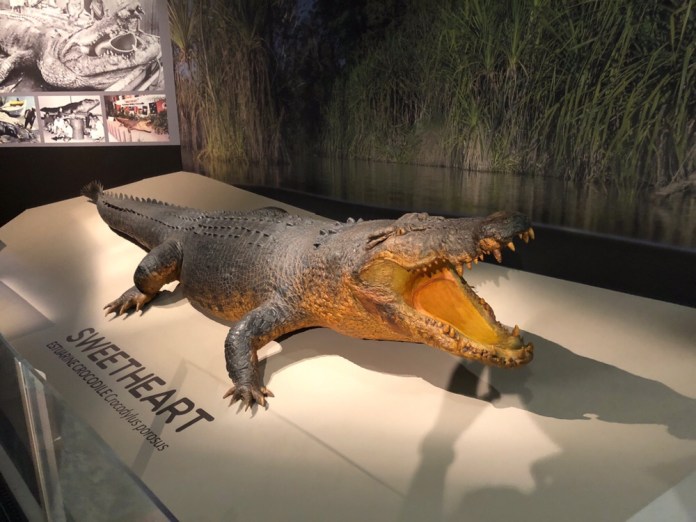
In a passage is ” Sweetheart” a stuffed crocodile 4.6 m long. It was a crocodile that went rogue attacking fisherman on the Alligator River. Enough was enough after one more attack, and it was captured. The plan was to transfer it to a crocodile farm for breeding but unfortunately the sedation was too strong and it suffocated when its palatial folds collapsed thereby blocking its airway.
There are boats in the museum. These are traditional boats used by Indonesian sailors, Tiwi and Melville Island canoes and even some boats used by Vietnamese boat people.
It’s an excellent museum with abundant information about the NT, it’s history, it’s native wild life and its people.



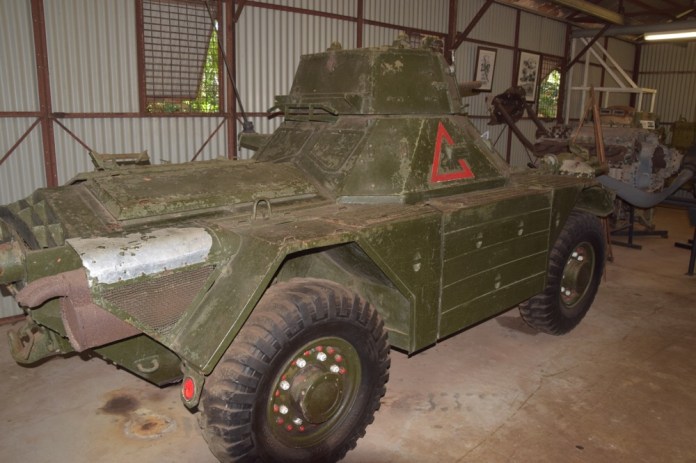
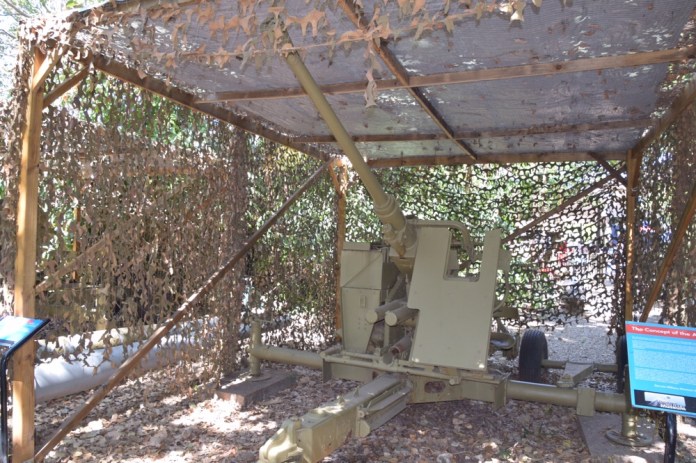
 The Darwin Military Museum is on the outskirts of Darwin. It is an excellent display about the military history of Darwin especially informative about the bombing of Darwin in 1941.
The crews manning the defences of Darwin were conscripts and were badly trained, looked down on by the overseas serving troops and were thought to be be lesser men then most other soldiers. Anyway, they fought very bravely over 62 bombing attacks over the Northern Territory. 262 people were killed on the initial attack, many wharf workers were killed as the port facilities were attacked, all the post office staff were killed, nearly all the crew of the USS Peary (90 men) were killed as bombs hit the magazine and blew up the cruiser. Many other ships were sunk or badly damaged. The presentation at the museum included audio recordings of the survivors, it was very moving. The bravery of the chief nurse on the Manunda, a hospital ship that survived the attack then collected as many survivors as they could.
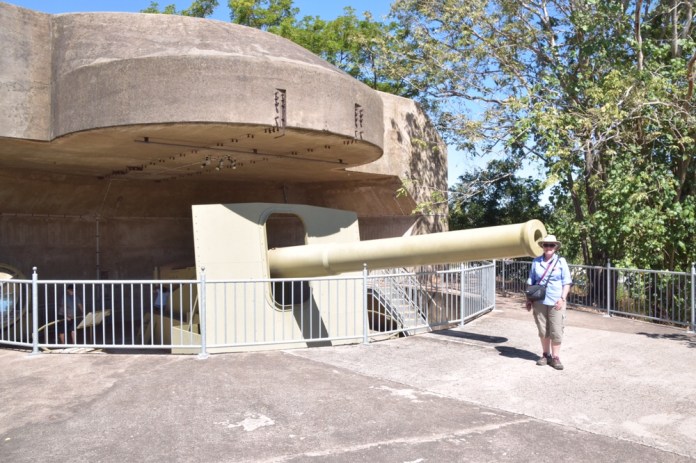
The museum has displays on WW1 and 2, Korean War and the Vietnam war. All well worth seeing. There is also a giant cannon for attacking shipping. Obsolete before it was finished as war took to the air.


 brucebarker2016