
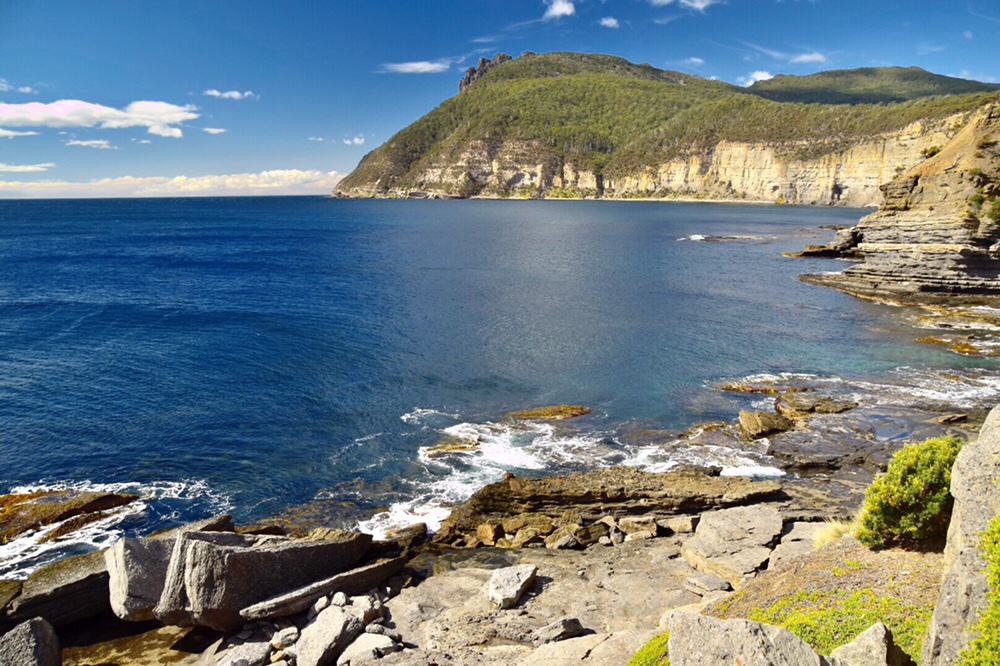
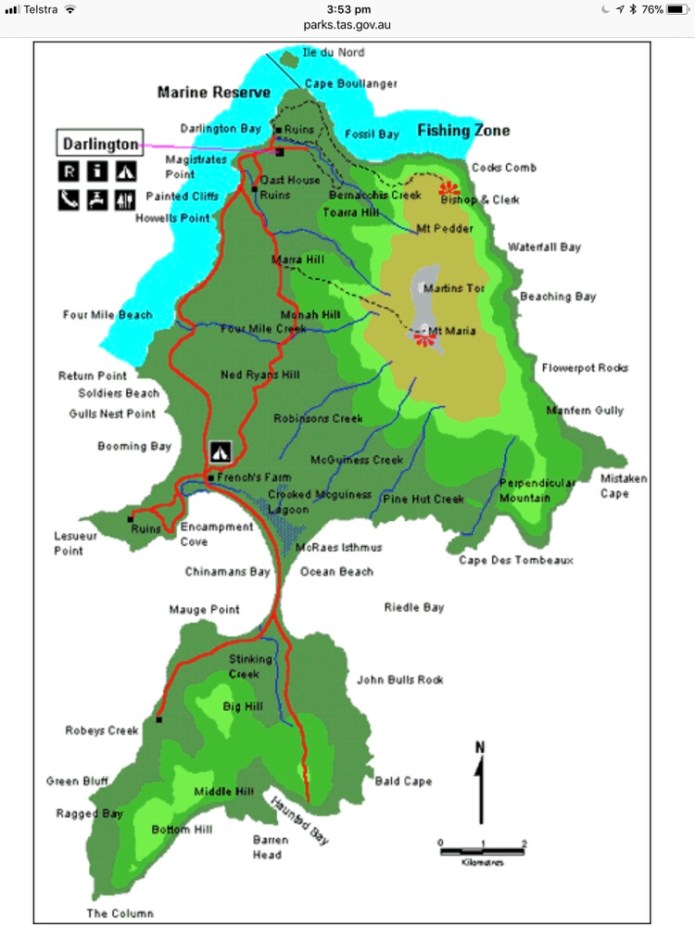
I have never been to Maria Island. I have been to Freycinet and driven along the eastern coast of Tasmania. Always It sits there, tantalising me only five kilometres from the mainland. It can be justifiably thought of as comprising two parts, two mountainous islands joined by a narrow, sandy isthmus.
This is a map published by Tasmanian Parks.
 .
.
I decided to visit. I went as a paying guest of the Maria Island Walking Company. It’s under the same “ great walks” umbrella as Larapinta Walk and boasts similar standards of service and accommodation. I started my trip with them on the 27th of March. Jennifer, and Jennifer’s two sisters had spent a few days in Hobart, staying in an open loft apartment at the Wool store. I joined them on Monday afternoon, having caught the afternoon bus from Launceston. We had a wonderful meal at Annapurna restaurant in Salamanca. Jennifer and I walked down earlier because I had forgotten a down top. Luckily Kathmandu was still open and I was able to buy a very reasonably priced down vest. It came in handy on the walk.
On Tuesday morning, we waited outside the Wool store, until I was collected by the bus. Onboard were some of the other guests with whom, I’d be sharing walking, meals and as it turned out, interesting conversations. We were transported to their office in Hobart. I did not need to repackage stuff or use much of the equipment they provide so instead, I enjoyed browsing their books and hats, while sipping a hot cup of tea.
The cast: Laura and Philip were from Toronto, Canada. John and Moya, were locals from Hobart. Campbell and Anna, from Melbourne. Our two guides, Jai and Ella, were also locals.
The preceding week’s weather had been quite dreadful, very rainy and windy but the forecast for us looked very good. The bureau predicted rain at night but except for a brief five minute sprinkle at Darlington, my rain gear stayed in the bottom of my pack.
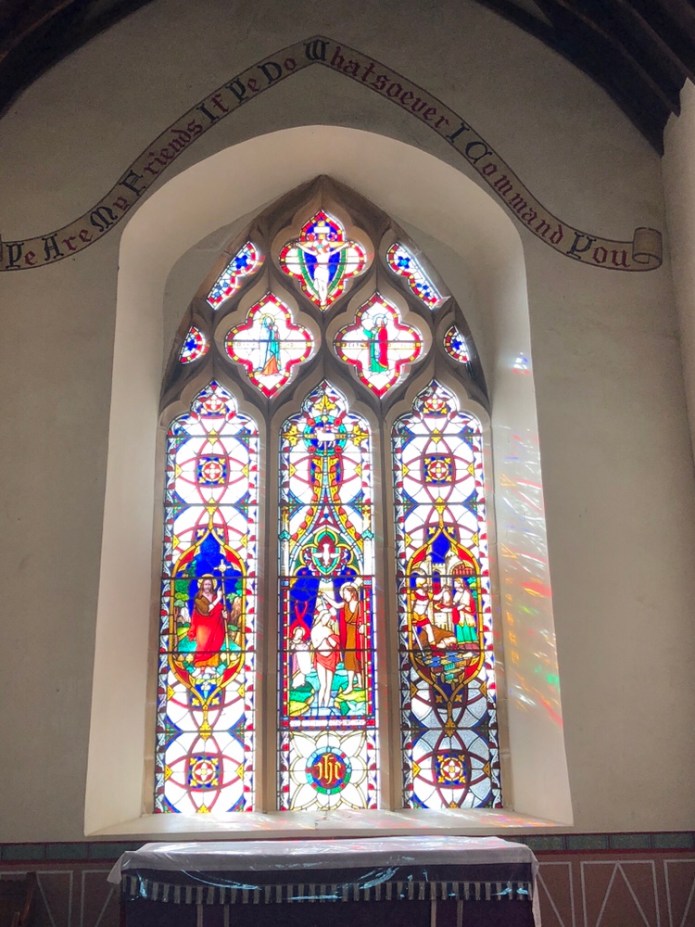
The drive from Hobart to Triabunna take 90 minutes. We stopped at an old church at Orford. The stained glass window here is interesting and its provenance proven but obscurity does arise in the details. It’s a genuine fourteenth century stained glass window, which had squirrelled away at the time of the destruction of the churches and only emerging in the early nineteenth century, before being promptly exported here to Orford.
 At Triabunna we helped the guides and driver, get our packs off the bus, then boarded a motor boat. The water was calm and the crossing uneventful but for seeing a pod of Common Dolphins. There would have been ten at least, their smooth dark grey bodies swimming in the wide blue water between us and the coast.
We moored at Chinamens bay, only a few meters from the beach. We all removed our boots, then holding them up, we splashed into the water, and waded quickly to Maria Island. Jai and Ella brought the packs ashore. After drying off wet feet and putting our boots back on, we walked a short distance up the beach, before crossing the isthmus to Ocean beach. We had lunch sitting in the sand overlooking this wonderful stretch of coastline. There were gentle waves of pristine sea water. The water here is especially clean because the continental shelf is only a few kilometres away and flushes this coastline all the time. It’s hard to calculate depth, as it’s so clear, a meter looks much the same as two or three meters.
Many shore birds were going along the beach, some walking, some running and some gliding, looking for food. The terns flying smoothly over dazzlingly bright wave crests.
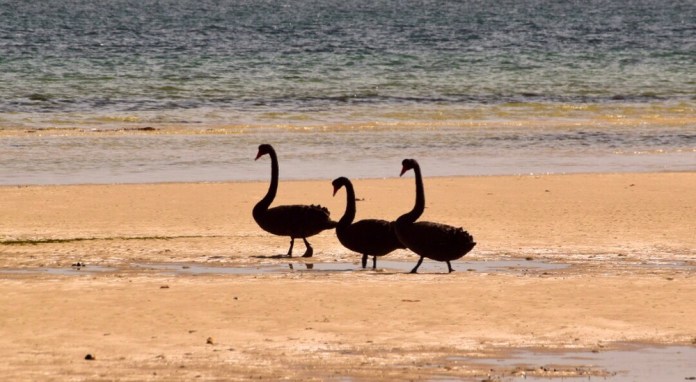


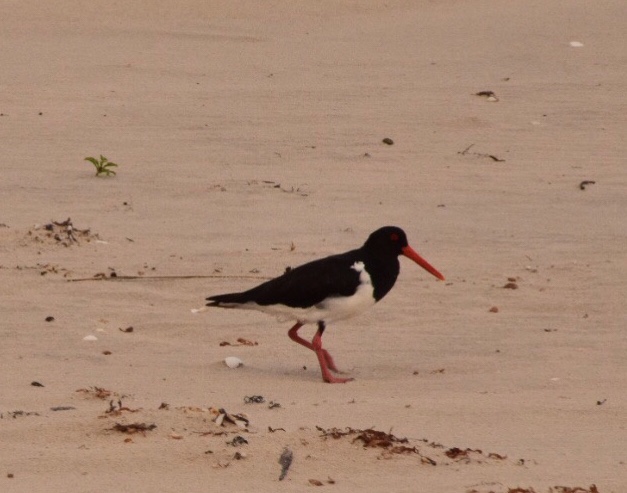
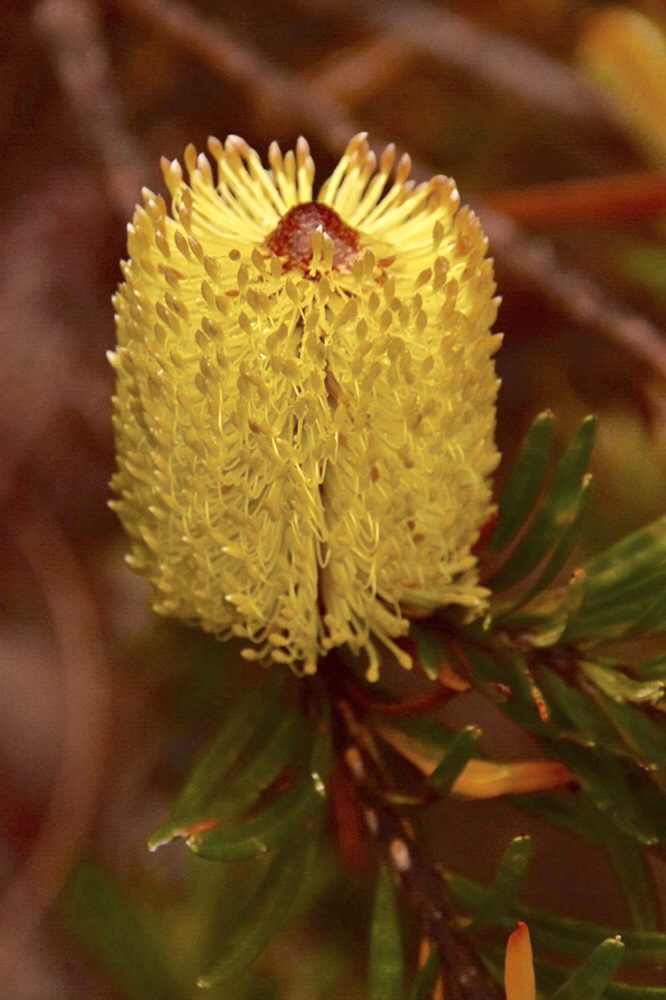 Swans, sea eagles, hooded plovers, terns, seagulls, are just a few of the beautiful sea birds we saw on the many beaches on which we walked during our stay.
We walked south before diverting off the beach, then going a short distance on a forest track, surrounded by mature casuarinas and silver banksias, to arrive at Casuarina Camp. It’s a permanent base now. Originally it had to be disassembled over winter but in recent years that onerous requirement has been lifted. The facility is made up of five tents. These tents are really glamps, timber walls, timber bed bases and comfortable beds. The windows are canvas as is the roof. There proved to be very comfortable accommodation. There are composting toilets, showers, and washroom. For a shower, you collect four litres of warm water, top this bucket into a steel bucket in the shower, hoist it up, then when ready, you turn the handle and water comes down and out. The main eating area, has an outside verandah, and inside, under canvas, is a large dining area. Two gas heaters are there for cold nights.

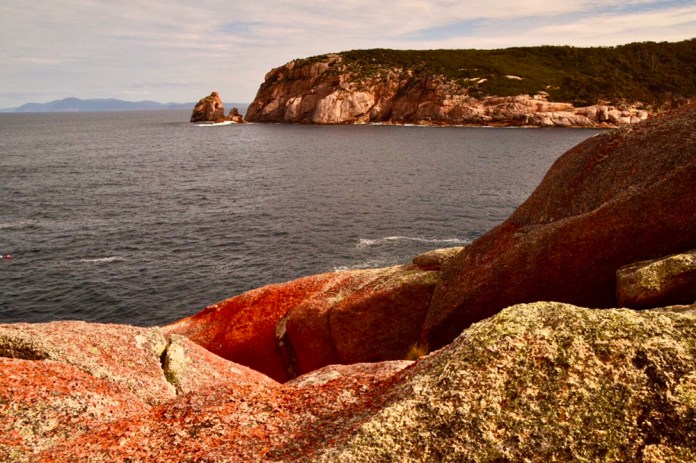
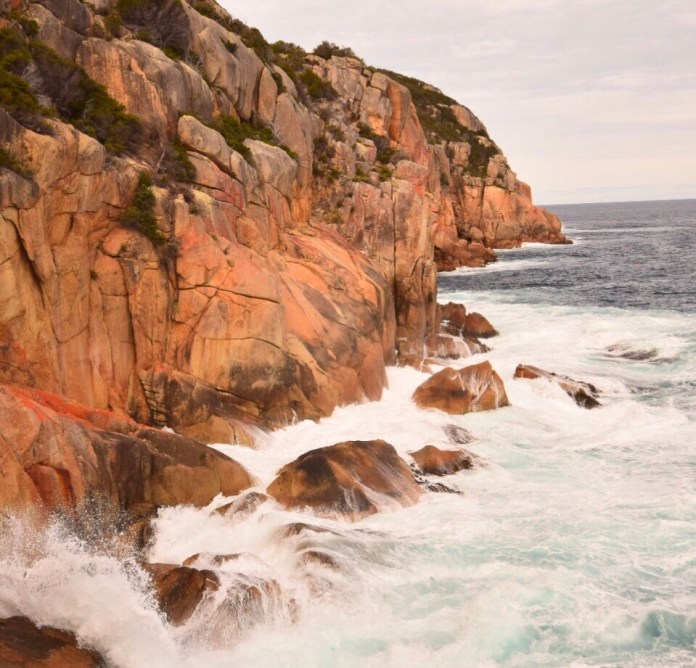

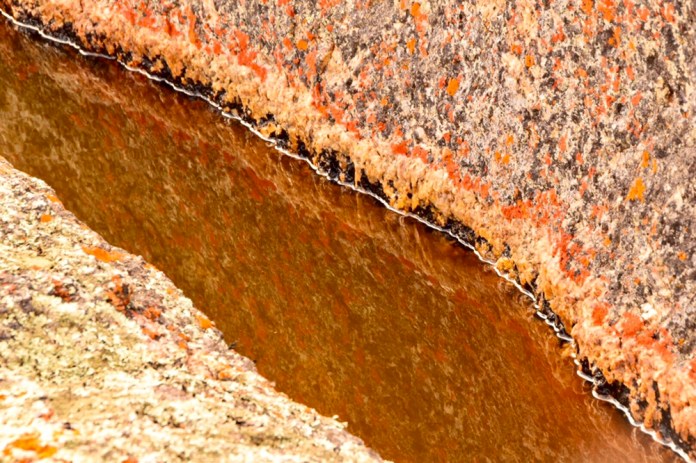
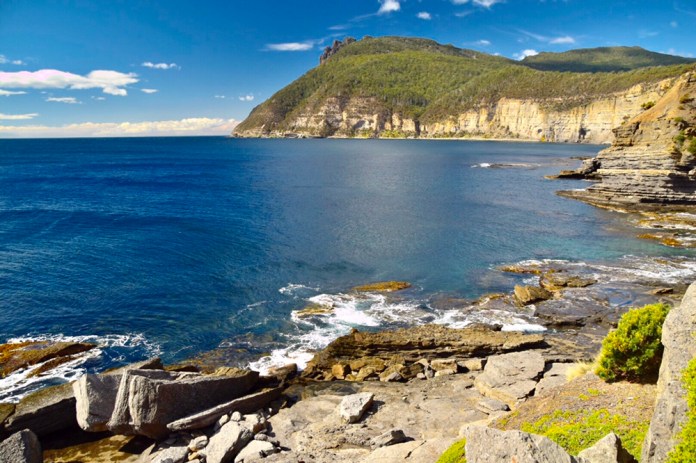
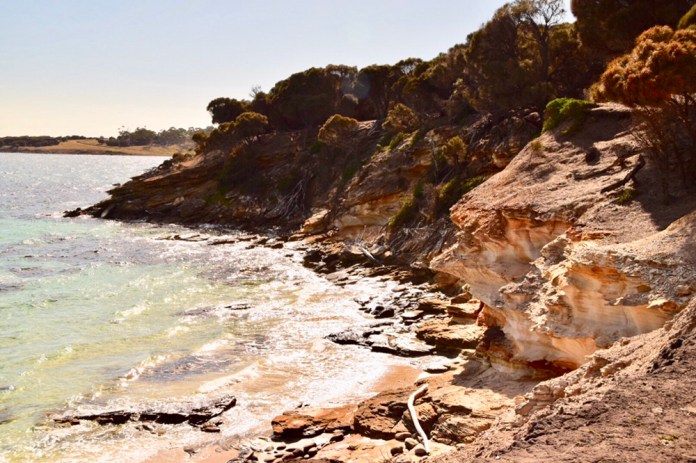
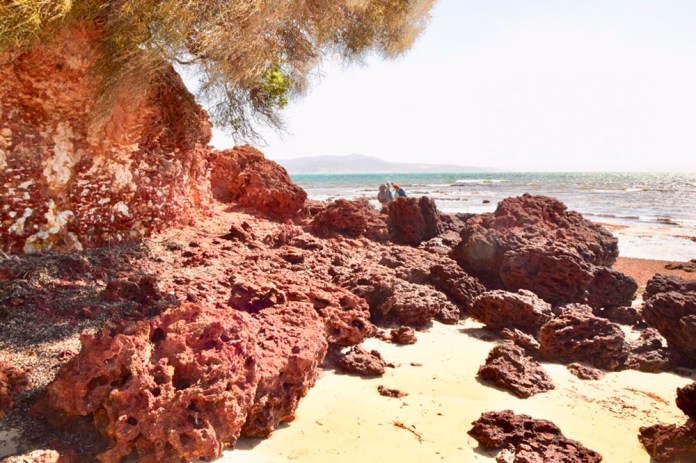
 The afternoon options for walks were either Robys Farm or Haunted Bay. John and Moya went with Jai to the abandoned farm. I went with Ella and the others to Haunted Bay. It’s name comes from the eerie echoes of penguins as heard by the whalers who were once based there. The walk goes steadily upwards, through forests of banksia, gum trees, and bracken. Then there is a reasonably steep descent to the rocky shoreline of the bay. Here you can see the southern tip of Maria Island. Even in this gentle swell, the waves crashed over the rocks. It would very spectacular in a southern storm! The rock is orange and red, it’s the only area of basalt on Maria Island. It’s very reminiscent of Wilson’s Prom, and Freycinet. Most of the rest of the island is either well cropped lawn ( courtesy of the three thousand wombats), forest or mountains made up of dolerite. Dolerite is the tough scaffold of most of Tasmania, and Maria Island is no different.
We spent forty five minutes there, sitting on a shelf of rock, and taking lots of photographs. The waves transforming into sheets of white as they struck and flooded over the rocks. I can only imagine how impressive it would appear in a big sea.
We walked back to camp. It was time for showers or a swim. I elected to have a shower while there was still daylight. I tidied up my tent, placing the sleeping bag liner in place. At five, we assembled on the wooden patio, happily relaxing on chairs while Jai and Ella brought out a wonderful selection of cheeses, pickled onions, quince paste and some local reds and white. The Bream Creek Sauvignon blanc was my favourite. As we chatted about the day amongst ourselves, our guides assembled dinner. There is a long wooden table, three lit tea candles providing illumination. I can’t remember all the meals but I think we started with a bruschetta, then a meat dish and desert of Berry and cream. By the time we had finished our superb meal, it was time for bed. It was quite cool now, but I soon fell asleep. The wattle birds calling in the night air.
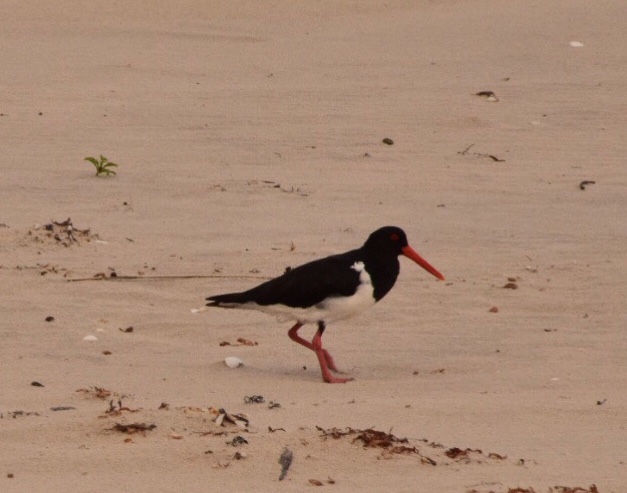
In the morning, no rush, a breakfast of cereals then an egg based hot meal with rolled salmon. Some of us decided to explore the Ocean Beach, and took our packs down and set them in the white sand. I watched with fascination the crowds of hooded plovers, these tiny white seabirds were darting around some oystercatchers who were unperturbed by their antics.
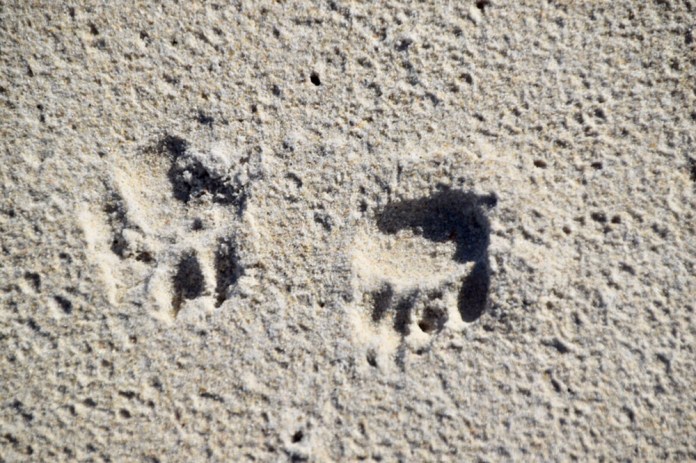
We all came across at different points, so had to assemble again and again. We crossed the isthmus but before we did. Ella pointed down to the sand and there were tracks. One step, then two footprints side by side, then one step. Pudgy little footprints typical of the Tasmanian devil. Maria Island is one major refuge for these wonderful marsupials. They cruise the beachs. I could see the track heading straight along the beach as as far as I could see.
We stopped on the isthmus, amongst the silver banksias, and rolling dunes, where it flattened out. Here was the location for one of the best known middens or living areas, created and used by many generations of Aboriginal people. In summer, it was too dry to stay here. However in winter, a large fresh water lagoon provided reliable water and then they could seriously settle in and party. On the western, more sheltered beach, were mussels, and shell fish. A short swim, took you to water filled with scallops and anchovies. It was the women and not the men who did the fishing. They would coat their bodies in ochre and seal fat to protect them from the cold water, and provide camouflage. They would swim out to collect the abundant sea food. On the eastern, ocean side, the water teemed with whales, fish and seals. The women would swim the two or three kilometres to the shelves where seals basked, climb stealthily from the water, club the seal, and then swim it back, all the time keeping an eye out for sharks. The men hunted the small game on the island and mined ochre from a single, significant deposit on the eastern tip of the northern section of Maria Island. Scientists estimate that about forty to fifty people would canoe across from Oyster Bay, and setup camp for winter. They did this every year until whalers stopped them in the 1840s.
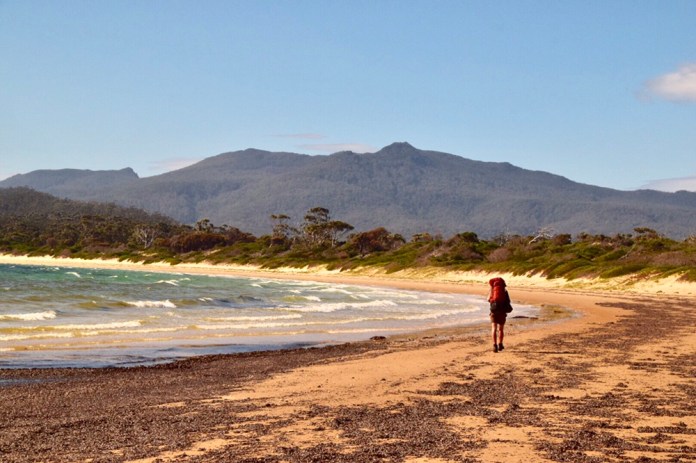
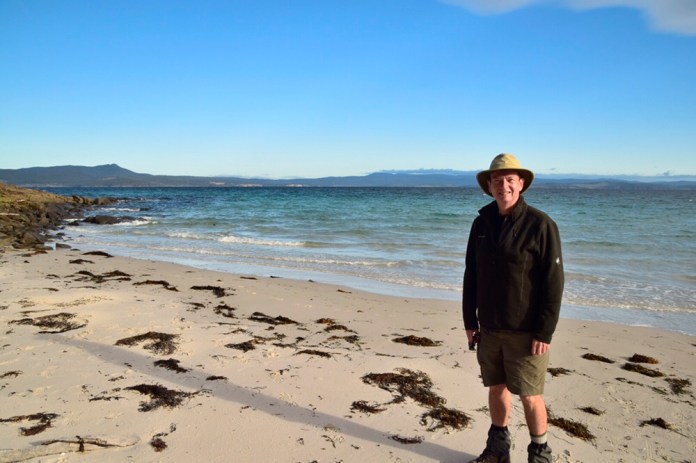
We skirted this significant cultural area before walking down to Chinamen beach. It’s called that because in the 1880s, Chinese divers collected abalone to sell in the Melbourne fish markets. Eventually, tariffs between states, made the business uneconomic but the name persists. We walked along* this beautiful beach, gentle wavelets petering out upon wide sandbanks, while groups of Black swans sauntered along. They were enjoying the warm, sunny day as much as us.
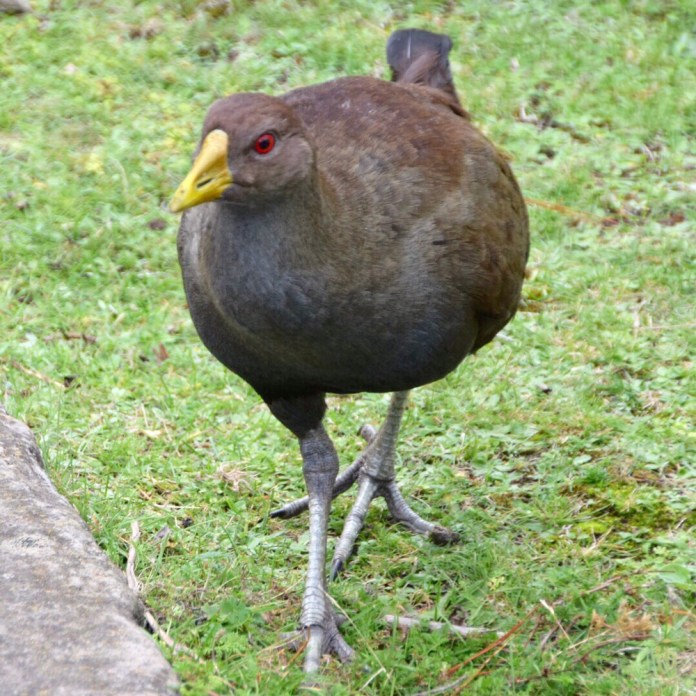

 We stopped at French farm. Robey and French were the two main farms with sheep and cattle, they stayed were occupied until the 1950s. It was a lonely existence for the Robeys but the French family had lots of children, who got up to many sorts of mischief. There was a substantial stand of wheat awaiting harvest. One of the junior boys was worried about the mice who he believed would eat all of it. So with the aid of a slightly older sibling they decided to exterminate the mice of French farm. They poured kerosene down the mouse tunnels, it took ages to fill. Then they lit it. The ground lifted under their feet with the chthonic ignition, then burning, crazed mice ran in panic upwards and out of their tunnels, their flaming bodies setting alight the wheat as they tried to escape the inferno created by the young French boys.
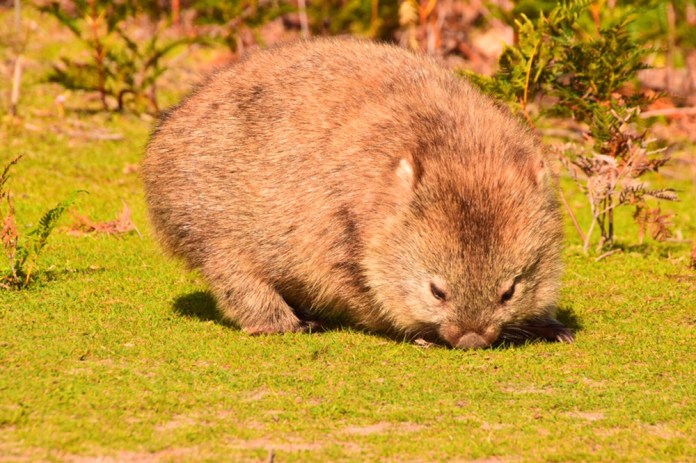
Today, we sat by the outhouse, inside it’s not all that interesting. While I was in the loo a tiger snake travelled near the group. Wombats were totally uninterested in the snake and us. The wombats here are a cross breed between the pale, almost blond original wombats and imports from the mainland. So some are blond, “ surfie” wombats while other resemble very fat quolls only with dark not white smudges in their fur. They mow the grass. All three thousand of them!
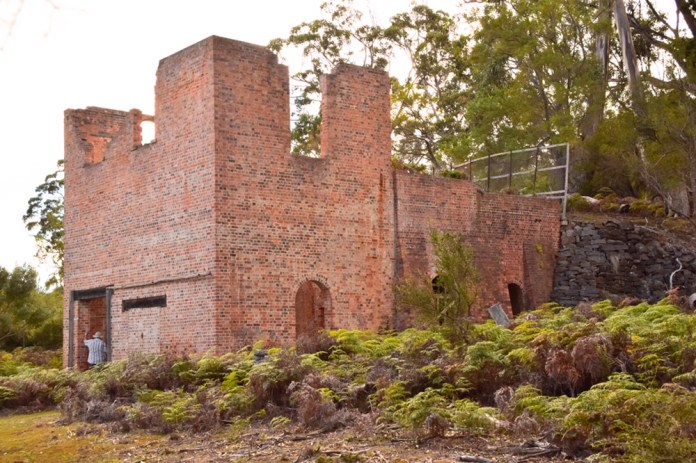
We walked on from their uphill, and inland to the Probation buildings. It was very windy as we walked up and above the beach, to a long brick structure. We sheltered on the eastern side, enjoying our lunches. Jai told us about this penal building which was made up of numerous cells. The least pleasant at one end and the most pleasant at the other. Privileges for these convicts increased as well. It was only used for a few years due to the unforeseen high costs of running this establishment. It was envisaged, the convicts would grow their own food but their skills in agriculture were pretty poor and barely applicable to the conditions on Maria Island. It was not a success!
We then travelled east along La Suer point or Long Point. We joined our third beach for the day. We skirted the remnants of old whaling piers. Their timbers eroded into beautifully carved spears jutting out of and not into the sand. A large clay pit was stained by red minerals, creating impressive ochre pit. The rock is called laterite and creates a striking point of land, richly red rock climbing out of the sand beneath the shady coastal casuarinas.
Now, we were only a short stroll from White Gums camp. We crossed another headland with yet another beautiful beach made even more attractive by the bronze tonings on the rocks and the lapping water created by the sun sitting low in the sky.
On this walk, John had decided to take on the five swim challenge. He bravely donned bathers at each beach and swam every beach. Tougher than me. I went for one swim, and I took ages to get my tummy below the water line.
The campsite is nestled under, you guessed it, white gums. Pretty much the same layout as Casuarina camp, and again, a splendid presentation of pre dinner snacks and then the meal itself. All first class. Over the table, conversation flowed fast and touched on all sorts of subjects reflecting the diverse interests and life experiences of the guests. Another early night. In the morning, I found my Apple, it was notched by little teeth. I had been woken briefly by a steel mug hitting the timber floor of the hut. It must have been disturbed by my little visitor.
Day three, was the walk to Darlington. Jai had already worded us up about the three options. He held up a map stuck to a board, and showed us these options. Campbell and Anna decided to walk to Mt Maria. They quickly turned off from the main track and headed uphill for what was the hardest option. The rest of us walked along the road to Darlington, visiting a convict quarry. This limestone was used for building both here and Hobart. It’s still a striking view after all these years.
We visited another old farm house. The walls made of old shipping crates, old fruit boxes and the like. Old newspapers were glued on to provide insulation and perhaps reading matter. The rooms were empty, and only the old brick fireplaces reminded me of how they had once been homes.
We visited Painted Cliffs. The route down was a bit steep for me as I was carry8 g a big camera. It dangled awkwardly in front of me if I descended steeply. Cameras are great for recording events and scenery but can be a walking hazard as well. The rocky shelf’s and cliffs I could reach easily are still very beautiful so I was not disappointed.
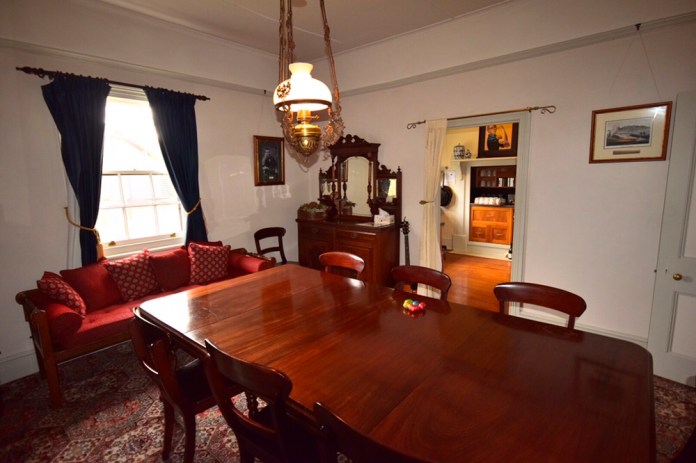
Increasing numbers of cyclists and walkers, some enthusiastic, some reluctantly in tow, and all coming from Darlington. They all passed us as we approached the township. We passed on isolated house where a lady had managed the telegraph for many years in the 1940s. She would have enjoyed the view of Darlington Harbour. We walked past massive old trees first planed in the convict era. Then walked the short distance to the Bernacci house. This is not the original residence of Diego Bernacci, which is now a ruin on the hill above Darlington. Nonetheless, our accommodation is a finely restored and comfortable residence that exudes, gentlemanly relaxed living of the late nineteenth century. Opulent sofas, old maps of Tasmania, even some old convict manacles can be studied in their glass case on the piano. In a few words, A very nice place to stay.
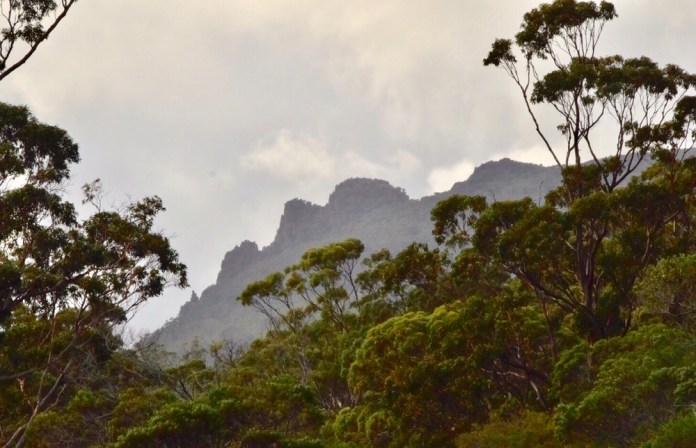
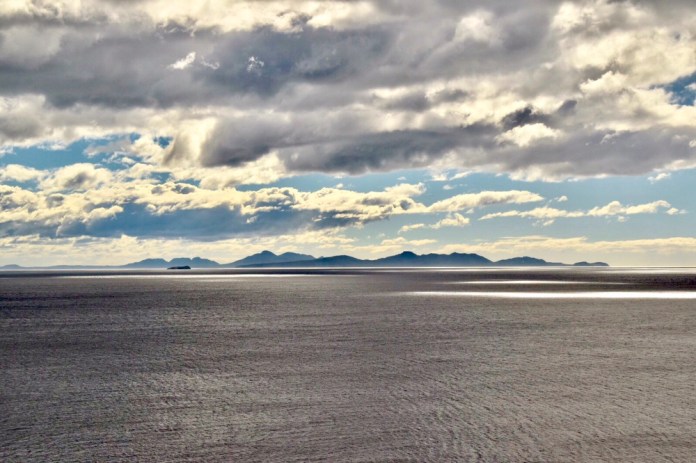
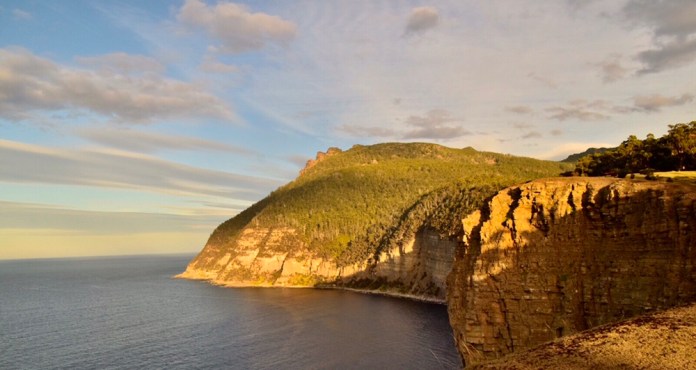
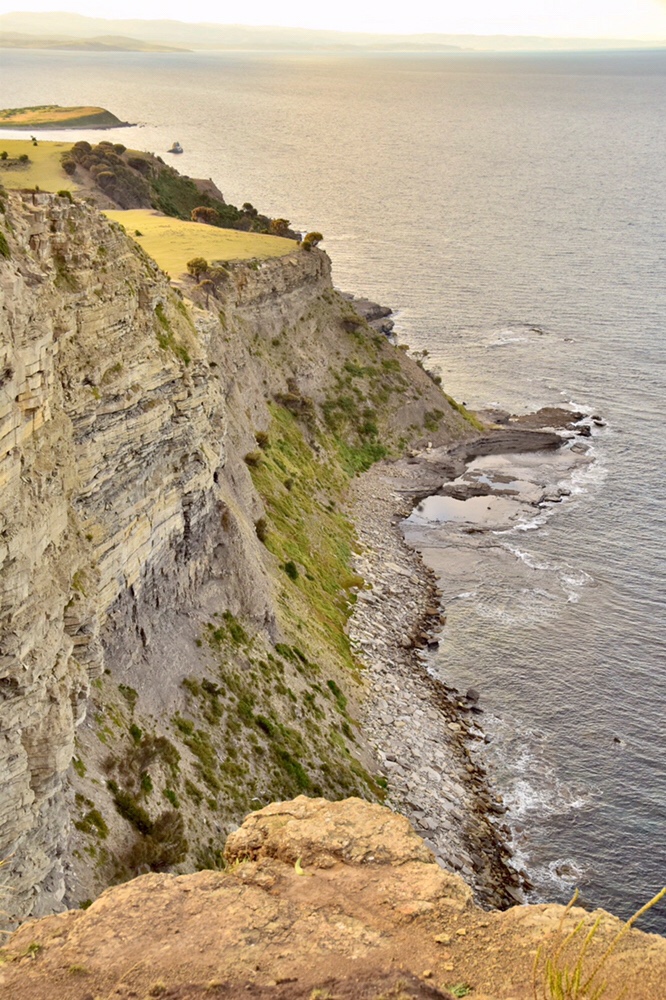
After lunch, four of us decided to walk to Bishop and Clerk. It was still early enough to reach the peak comfortably before dark. The selling point for me of this option as opposed to Mt Maria, were the liberal number of views. Most of the Mt Maria walk is in forest but this walk has views in abundance. This was certainly the case. We had many opportunities to study the limestone cliffs as well the dolerite peaks that make up Bishop and Clerk. Looking south I could see, over the grey sheen of the ocean, Freycinet and Schouten Island, and there to the left, were the Hazards, their notched contours unmistakeable.
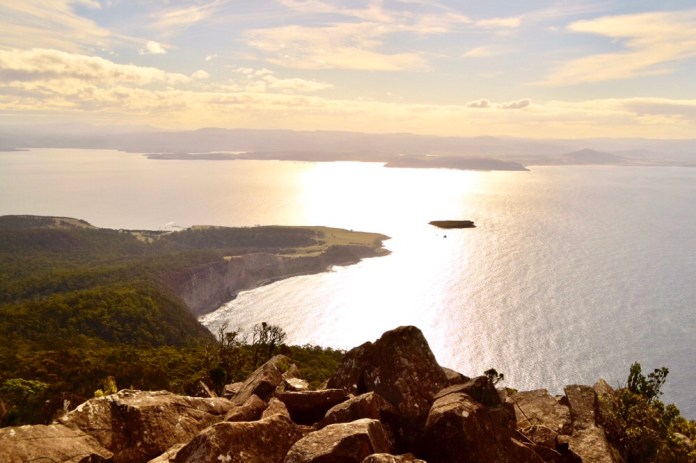
The track is about twenty meters from the cliff. Wombats munch contentedly. The surf can be heard crashing at the cliff base. We entered forest, then climbed up wards quite gently until coming to a scree field. The Hobart Walking club has scored a track which zig zags up this scree. They have put in some more solid footings but the track is not easy. It’s about four hundred meters and it’s steep. Then the track winds it way onto much bigger boulders. The plants typical of alpine tasmania such as mountain plum pine now take over from the banksias lower down. I got to within twenty meters of the top when I decided that was high enough for me. Too much vertical! Any way I took the opportunity to enjoy the view. High up on my eeyrie, I could see the light of the setting sun shimmering in a wide band on the water, the blue dusky shape of mainland hills and coast, the northern point of Maria Island and il de nord, a small island just off the tip of Maria Island. It was a very beautiful and peaceful view despite the prospect of a descent down scree, which didn’t turn out to be all that bad. It’s always quicker going down, which suited me. The light was softening as we walked back. We passed a few walkers going up, carrying torches, hopefully reliable ones.
We all met together at Bernacci house to shower and clean up for dinner. Yet another wonderful meal, but now in a grand dining room. A magnificent walnut dining table. The main was seared salmon, yummy. I slept very well.
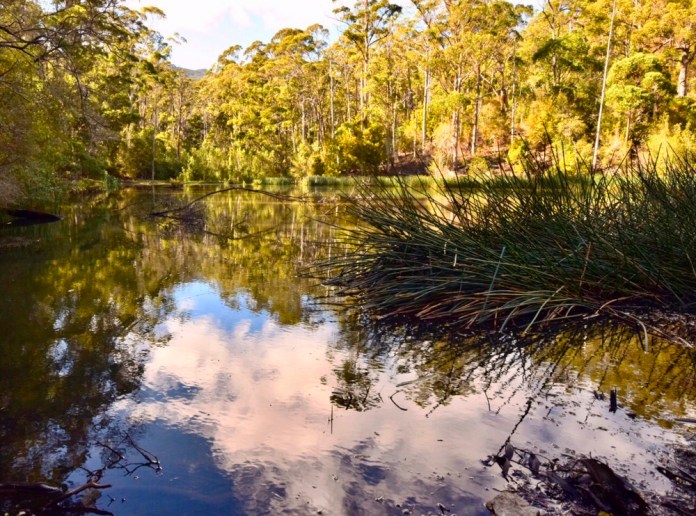
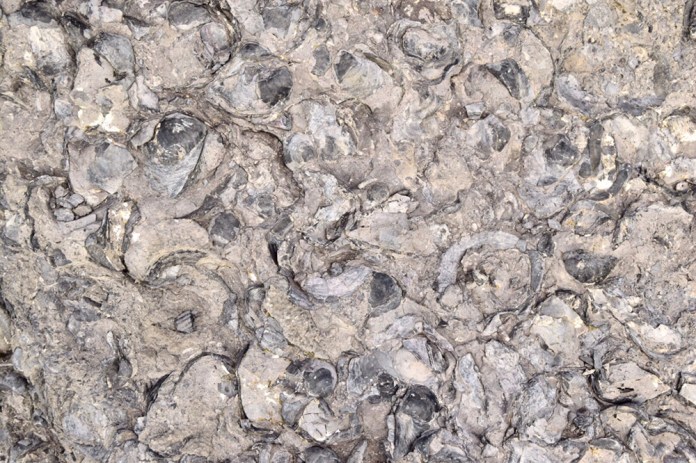
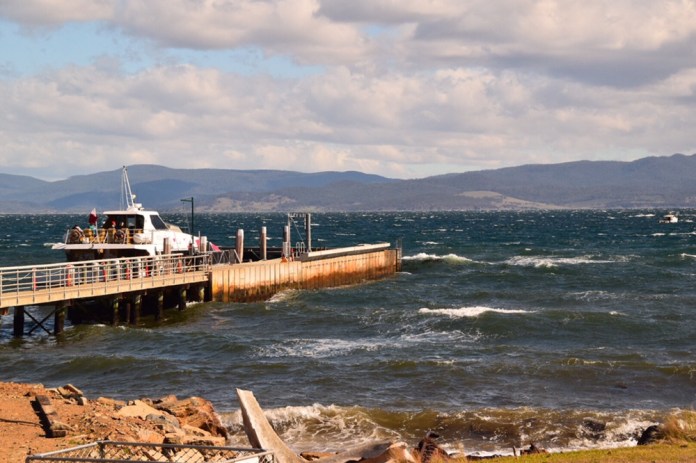
In the morning, I woke early and took off for an hour before breakfast to take a few photos around Darlington before breakfast. There is a campground below the house, many other restored buildings are there to visit including the coffee palace, which is now an interactive museum, laid out as a dining house. After breakfast, Laura, Philip, Campbell, Anna and I walked to the convict built reservoir. Mature gum trees, and mixed forest surrounds the track. The reservoir is still, clean collection of water. We continued to the fossil cliffs. These cliffs are filled with sea shell fossils, about 290 million years old. We explored this wonderful area before carrying on back for lunch. We had bubbly and fresh rolls before heading back across the water to Triabunna. It was a great deal rougher going back but no problems.
 It has been a super trip. Great people, food, views, walking and accommodation. It wins every way. I’m looking forward of doing more of this style of walking.
 brucebarker2016