
Conclusion to four weeks of Central Australia
I have not been writing weekly for the last three weeks of my stay here in Central Australia. After the excitement of battling storms and flying through thunder clouds, the rest of the stay seemed a little hum drum. None the less every day here in the Centre is a learning experience. So I will write about some of the people and events I have been able to witness.
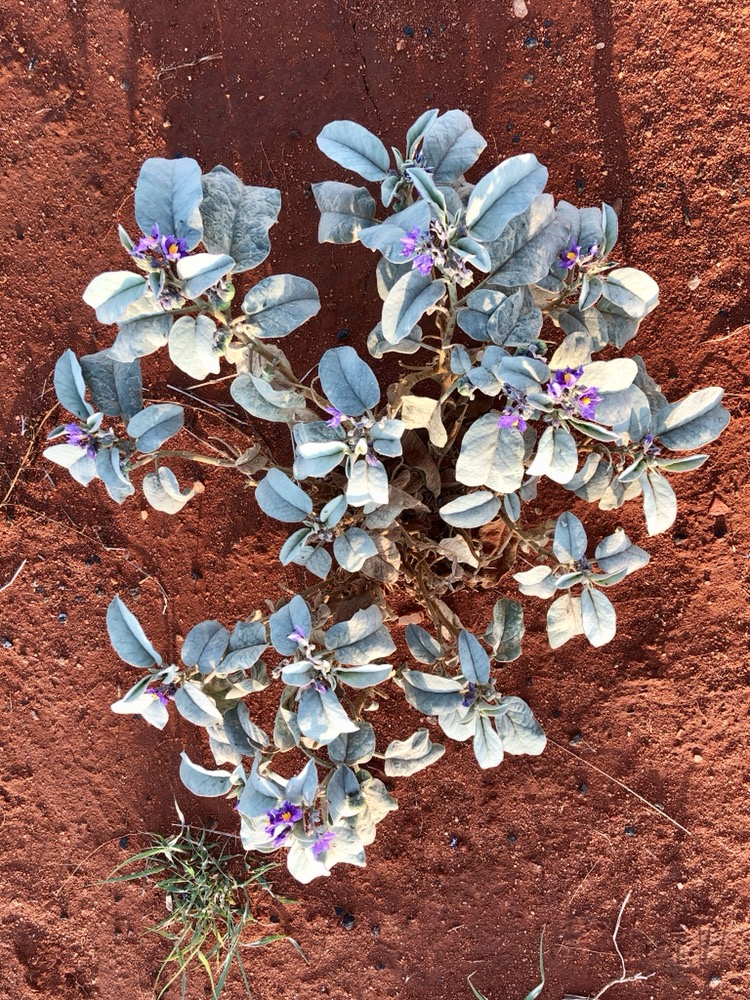
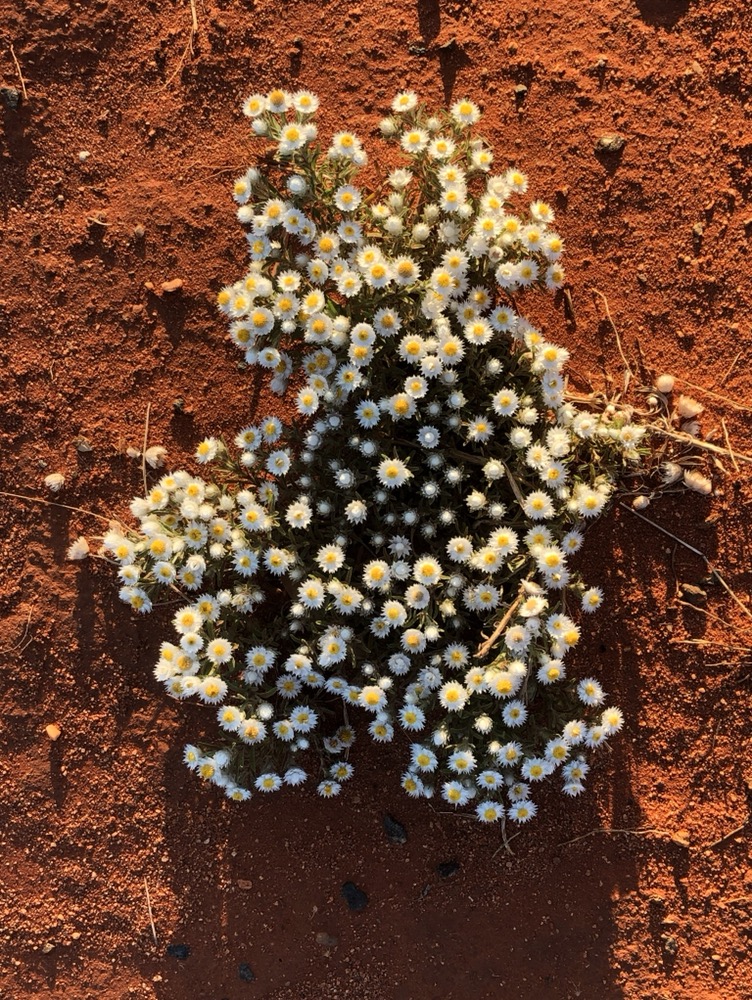
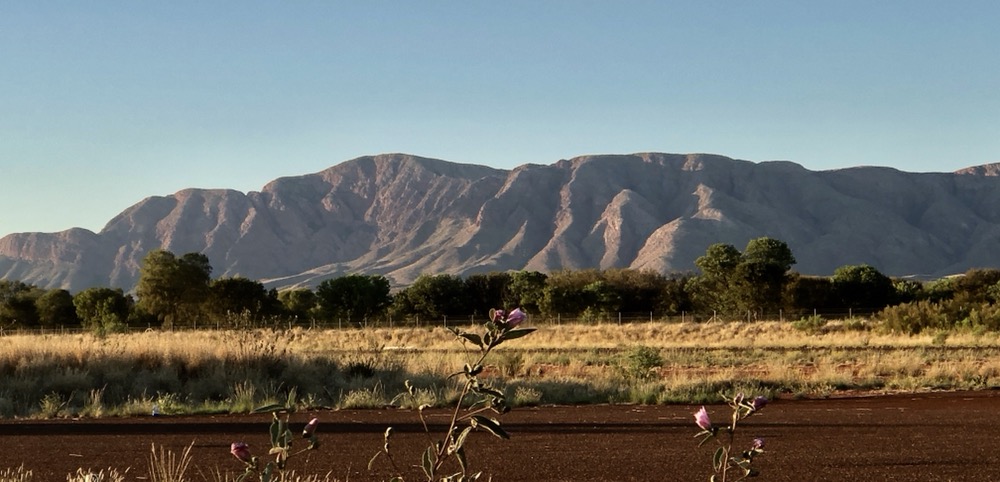
I met some medical students at Yuendemu. The three girls have spent three weeks here. Yuendemu is 293 kilometres from Alice Springs. There are some hills nearby which offer a challenging steep walk as well as scenic drives and any exploration of Red Rocks about five kilometres away. It’s a rough, overgrown track along a sandy surface which crosses some steeply banked, now dry stream beds. They have spent their time seeing patients, travelling out into community with the child health nurse, getting involved in the immunisation program for meningococcal W. And learning a lot about indigenous health and life.
During these three weeks, they were still able to participate in lectures and tutorials via Telehealth from ANU in Canberra. It’s delightful to see such enthusiasm in my future, fresh medical colleagues. I had the opportunity to speak with two of them as I was the chauffeur on the drive back to Alice Springs. The challenges of study and work for our younger doctors are just the beginning, setting up life long relationships, making a family, staying in touch with parents and siblings, deciding on a career path, are all substantial decisions. Delaying a family, sacrificing a career, being separated from personal support, are all issues for any young professional, whether or not they are medical. For the previous generations of graduates, many females decided to do General practice because of its greater flexibility compared to many of the specialities. Its certainly possible to be a mother and be a specialist, but it’s not easy, and a lot of thought needs to go into how her family is going to be raised. The father may be the main contact parent. I don’t have any problem with that. I have met many people who were raised more by Dad than Mum, and they turned out fine. I’m glad thats all behind me now and I can just enjoy being a grandparent and a doctor too. Best of both worlds!
During our time in Yuendemu, the female Staff and students were confined to the clinic or their flats because of men’s business. This is the time each year, sometime between October and early December when boys are circumcised after an initiation into manhood. This is a very, very special time. However, it’s not conducted the same way each year. In particular, the prohibitions for women blundering into a ceremony were pretty serious this year. If any local Aboriginal women got a clue “travelling men” were nearby and coming along the road, they would rush into the house dragging in the female student and child health nurse. They would huddle away from any windows, fearful of an inadvertent peep of the men. “Travelling men” is the term for the boys and men who travel through the community between sacred, ceremonial areas often with ochre painted on their torsos and bodies. The clinic was very quiet, as women were too frightened to come in. Even the clinic reception staff, dropped down under their desks when any men went past the clinic windows.
Does this sort of thing happen during Women’s Business ceremonies, well, no, it doesn’t? Aboriginal society is still overwhelming patriarchal, and women don’t have the power men do. We have met young , especially more educated, women who avoid marriage and long term relationships because of the realistic belief they will be victims of domestic violence from their partners or their family.
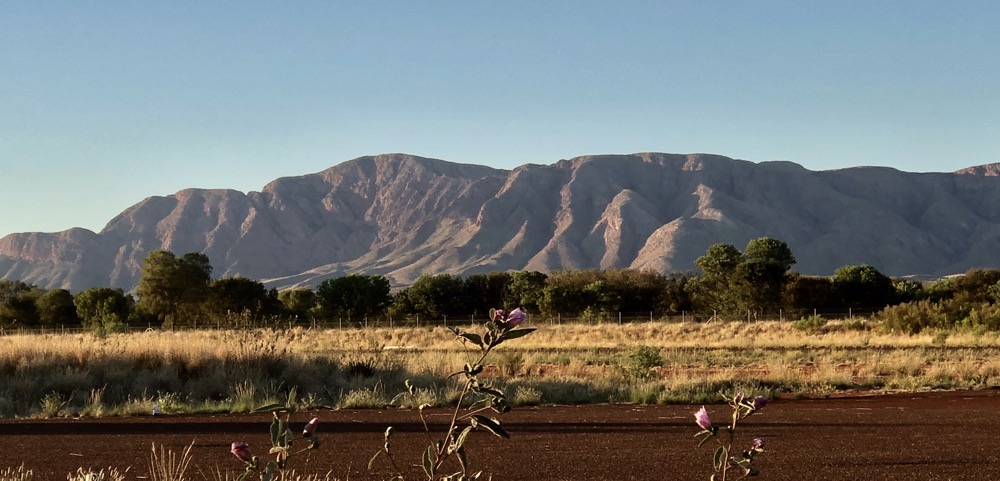
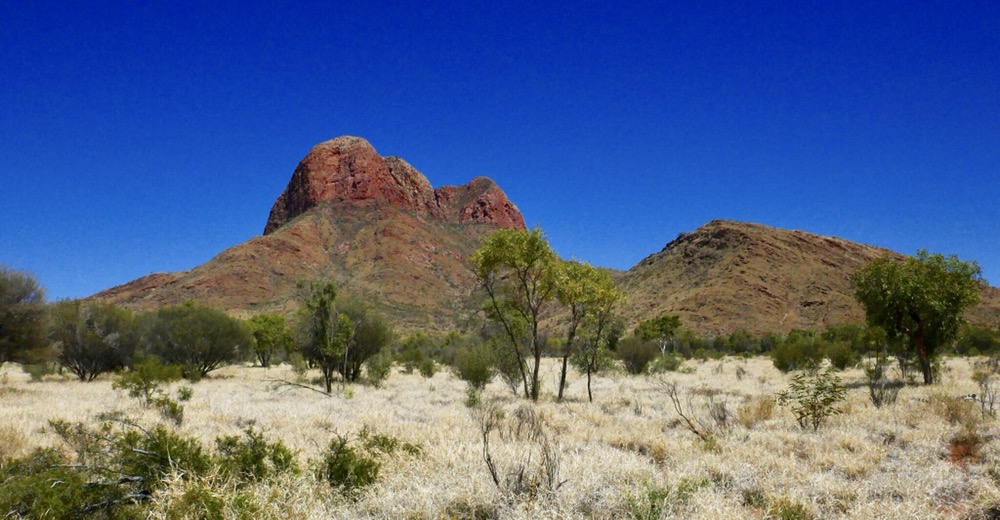
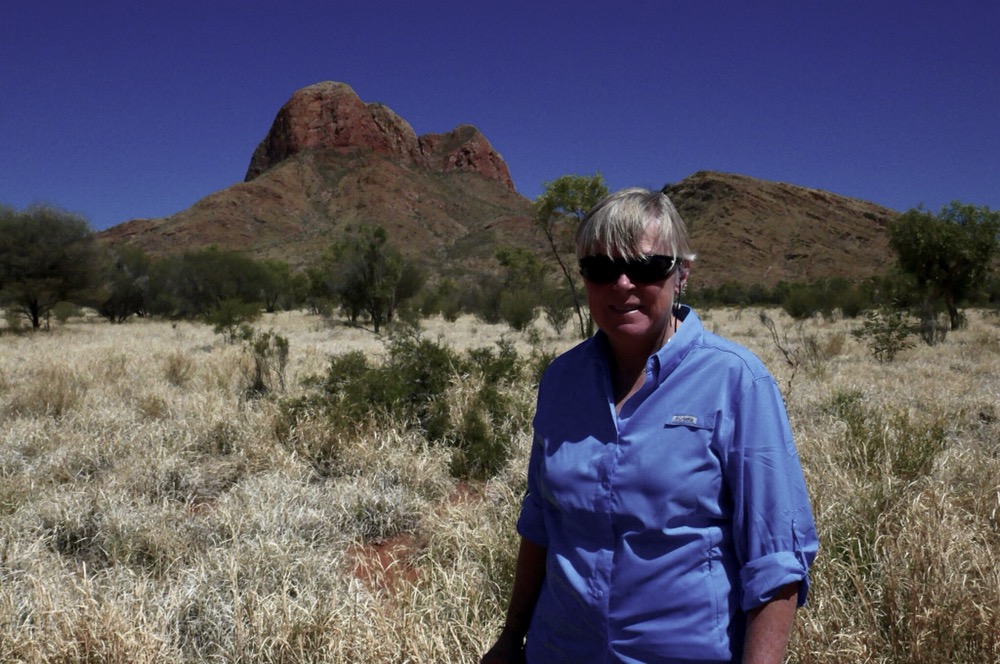
Jennifer and I did spend one week together, at Papunya. This is a magical place, with splendid mountains and ranges around and approaching it. The lightly forested arid country gives way to abruptly rising hills and mountains, many with vertical cliff faces of a striking red orange. The drive to Papunya is unquestionably, the prettiest in central Australia. On a Wednesday, we both finished at five o’clock, and took a chance the gallery there would still be open. Fortunately! It was! We entered through the wire fence. Under the trees and to the right, four Aboriginal ladies were chatting and painting, sitting on their large, rectangular green mats, hovering over their canvases, carefully dabbing dots of acrylic or performing assured, straight or curved lines, following their chalk markings on their material. They called out greetings to us, and waved us to the door. Joan, the Manager and her little son, were still there and let Jennifer and I have a look around. The main area was now clear, all of the painters who had been working inside that day had already packed up and walked along the dusty roads, to their homes in Papunya. Their unfinished paintings, were stacked up leaning on the walls. Other completed canvases, had been detached from their wooden frames, and rolled up and stored, in the recesses of a large table. The visitors gallery was small, but abundantly furnished with fine paintings. Some were on the wall, while many more were in piles we could sort through. Nothing caught our eye. However, as we wandered out, we saw a gorgeous work, red and gold, reminiscent of Chinese storms and dragons. It was actually a Water Dreaming. The theme of the terrible storm, with the land and rivers inundated, the sky erupting with thunder and lightning the colour of white gold with piles of hail covering the mountains and trees, is a powerful theme and a common one in Papunya art. We spoke to Joan, the manager, and as we walked and chatted, we saw another painting, it was red and grey and black and where the first painting we admired was swirling colours, this was almost severe in its internal architecture, repeated lines, rectangles, and bold, uncompromising colours. It was a statement of a very confident artist. The painting was unfinished but still visually arresting. The next day, we decided to buy at least these two. The finished painting and the unfinished one, which could be sent later when finally completed. The following lunchtime, we spoke briefly to Jacky the painter, and we agreed to come back later and collect the works we could and settle the accounts. Over the next five hours, Jacky worked non stop to compete the work. It was everything we hoped it would be. Her theme was the same event, the same water Dreaming, but she tackled the event in a completely different way. We bought a third unfinished painting as a gift. We were lucky to have an opportunity to buy it, as it was destined to be part of a gallery commission in Sydney. This gallery regularly has major gallery sales, in London, and Berlin. This gallery in Papunya is a powerhouse of what is arguably the finest Aboriginal Art in Central Australia.
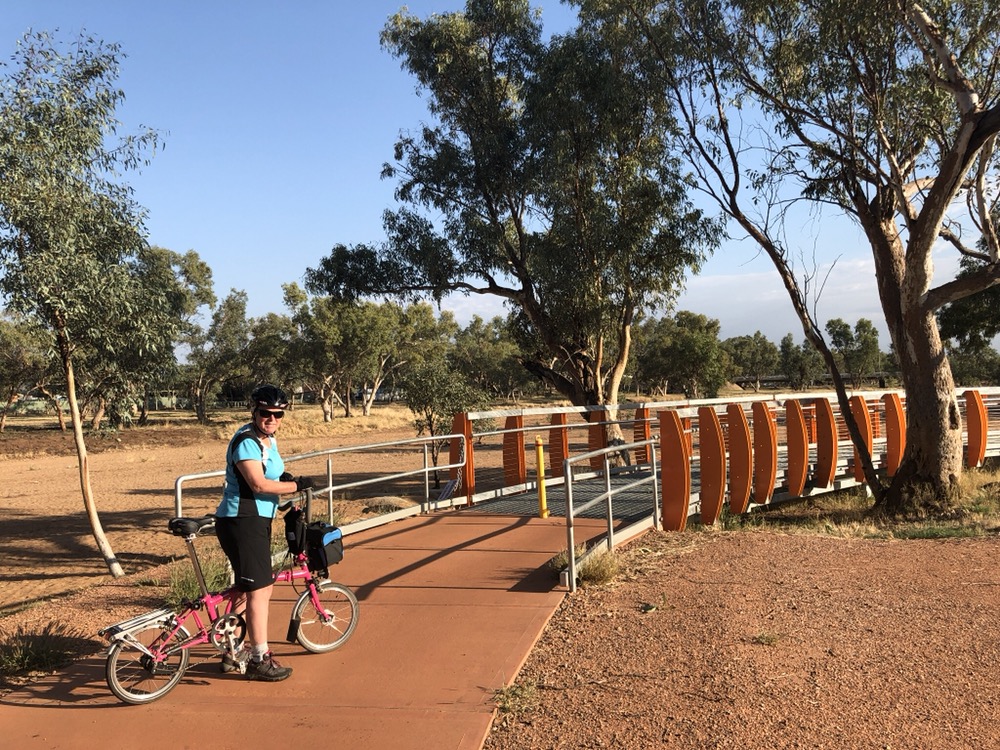
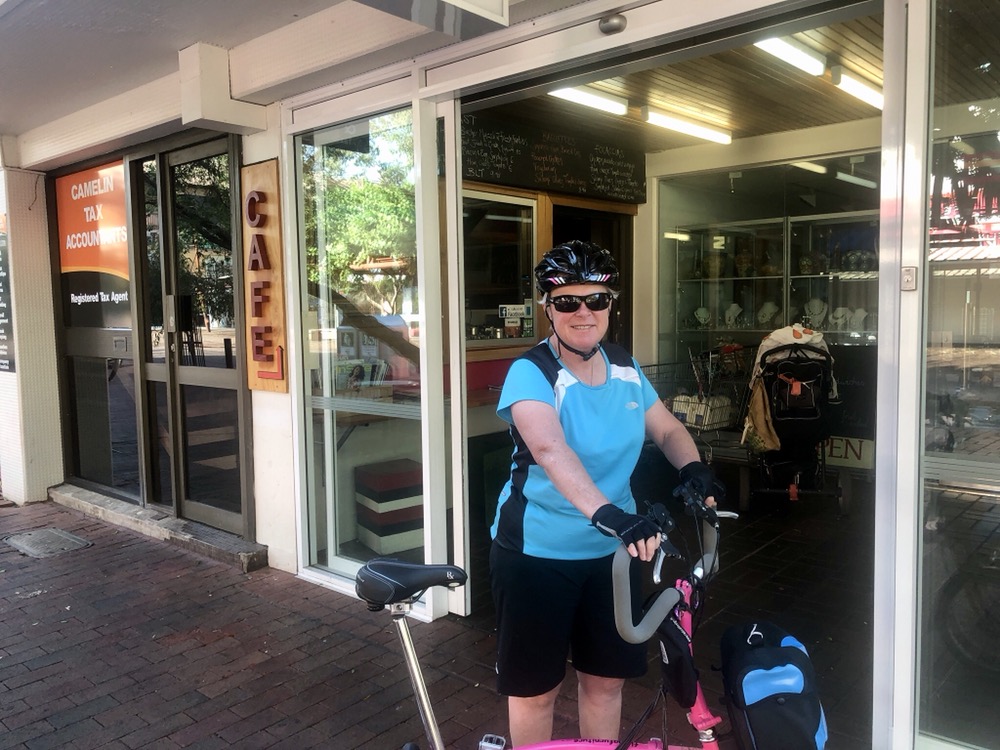
Jennifer and I had weekends together as well we our week in Papunya. It’s getting hot in Alice Springs, high thirties. Even walking around is pretty exhausting. The local Aboriginal kids are still running around playing, and standing on the hot concrete and bitumin of the roads. We would get up at 5:30 am and go for a cycle ( Jen) and run (Bruce) around the Todd River. It was about 18 degrees early in the mornings and very pleasant, moving slowly under the River gums, or admiring the Gillen range. We would stop for Coffee at Red Sands, and have a macchiato each at Robs wonderful cafe. Then a short 10 minutes jog back to the apartment. On Friday nights, we would walk or drive to Montes. Now, not all their cooking is worth bothering with but there’s a 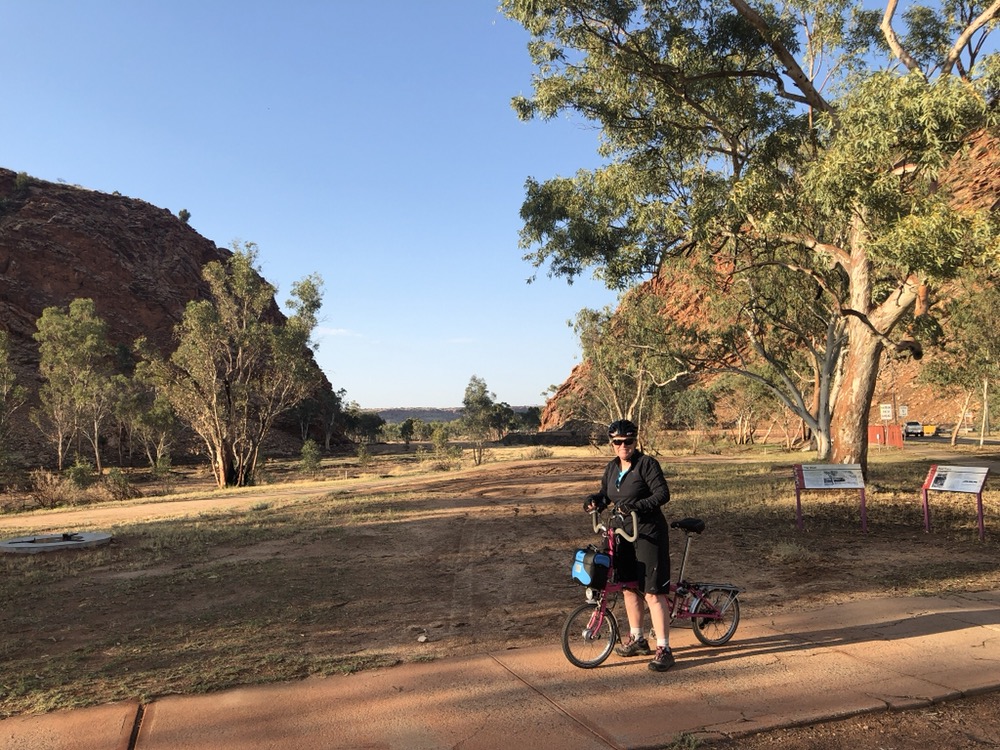
 few stunners, we would recommend any of the chicken parmiganas, the barramundi, any of the wines, and the Nutella brûlée for desert. Their pizzas are good too. What we really enjoy about the venue, is it’s relaxed, slightly hippy atmosphere, where anybody in Alice can chill out for an evening. Most of the seating and tables are exposed to the elements with only that gorgeous Central Australian sky above you. We usually sit under cover, with the circus and rodeo posters and banners on the opposite wall. Interesting place, and not to be missed on any trip to Alice.
After our run, there is the obligatory shopping for weekend and next weeks supplies, and then, we would spend the rest of the day takin* it easy. Jennifer reading a mystery and me with enjoying a science fiction on Netflix or playing guitar with my music stand on the lounges dining table. Ooch, that first six weeks of a new piece, it it’s unavoidable if you want to progress in musical competence.
As always, the high point of the four weeks has been the wonderful Aboriginal patients I have had the privilege of helping care for and the association with the incredibly competent and hard working Aboriginal health workers and White nursing staff. It inspires me to read and think about how we as a white population , who aggressively occupied this land, foster so many of the health and social problems we are so concerned about now. To give an example, it’s a general observation that most indigenous children are pretty wild, and undisciplined. It’s easy to ascribe this to a careless attitude about the kids however, one factor in the genesis of this issue is concern about children being taken from parents. If a child is punished or disciplined, particularly physically, the fear of a parent is that Child Protection will take the child away from them. Aboriginal mothers really fear the prospect of losing their kids to welfare if they actually discipline their children. This is one reason why families are so mobile, trying to escape any radars in a clinic about their care.
STIs and especially Syphilis, were brought into the Aboriginal community by white men. Again, these are our diseases inflicted on a society without the means to cope with or understand them. The attitude to marital and extra marital sex is often pretty casual, and it’s only compounded by heavy alcohol use by some ( a minority) Aboriginals of both genders. Early adult pregnancy is very common. The current Syphilis outbreak is not yet under control, due to difficulties in detecting, treating and following up cases and their contacts. In a clinic, we will be notified that a certain patient is coming to the community and has tested positive for Syphilis. But locating them is very difficult. In fact more often than not, they changed their travel plans and have gone somewhere else or they are still in Alice. There is a lack of complete and easily accessible information between all relevant health providers. There is an attempt to connect us more electronically but a patient can opt not to participate in permitting universal access to their records. The system is also clunky and slow and it takes time and effort to find significant information even when you do have access even to this limited information base. Bottom line, It’s difficult and I think some hard decisions need to be made about the use and abuse of medical information if we are going to tackle these health problems.
What we have done and what we do, still has an enormous and seriously underestimated impact on the health and social problems in Aboriginal Society,
 brucebarker2016