
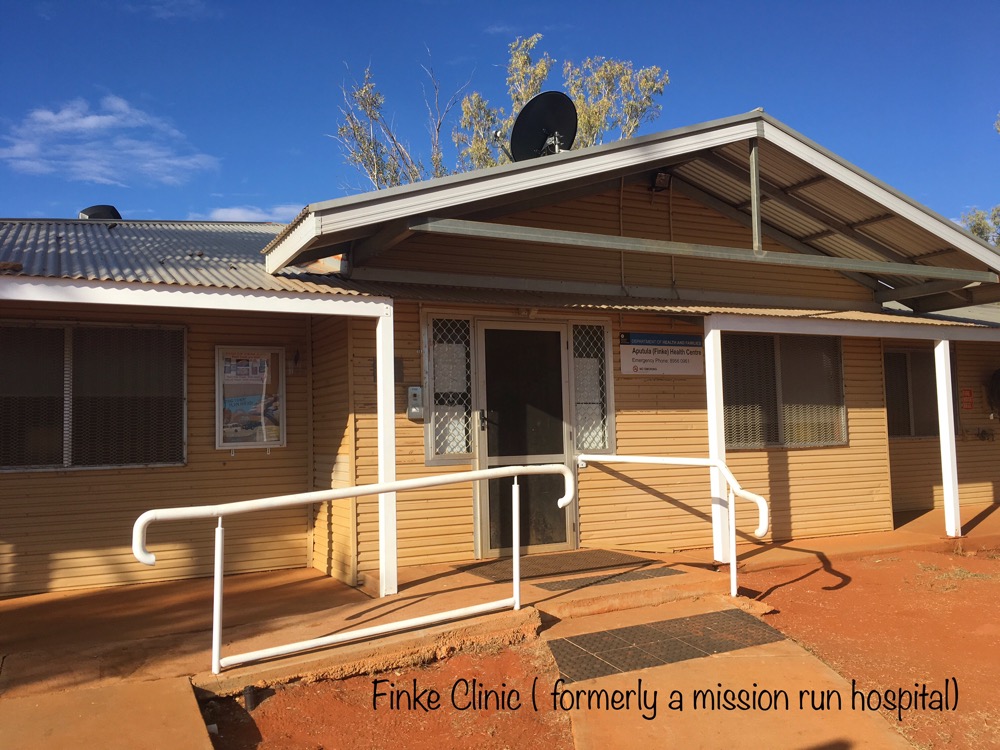
It’s 3:40 pm on Thursday afternoon and I’m sitting in the RFDS turboprop as it starts its propellor. We are on the way back to Alice Springs after a stint at Finke. Jennifer drove to Papunya, arguably the capital of the modern aboriginal art movement. We have kept in touch each evening by phone as there is no mobile cover or internet here at Finke. I’m looking forward to seeing her photographs of Haasts Bluff which is on the way.
Finke was originally built to service the construction and later imagined as a base for the ongoing repairs required for the original Ghan Railway. It fulfilled its function and grew, acquiring churches, police station, post office, a hotel, and many houses for the workers and travellers. Many of these buildings are still here but used but not for their initial purpose. Darren is a white fella who runs the local store and is absolutely passionate about Finke, it’s people, history and possibilities. He accompanied Lana ( nurse manager at Finke) and I into the old Hotel. After opening the front door we walked past the old serving rooms and bars, into the large hall at the back of the building. On display are many of the local artists works. Its planned that this will be an art gallery, a dedicated space but a commercial one where tourists and art lovers can buy local creations.
I have had the great good fortune to meet many of these artists in my short stay in Finke. Kevin makes wire sculptures, he firmly weaves and twists, wire, into horse and rider, then clothes and paints them. These are tremendously realistic sculptures. I met a lady, who makes tiny coolamon. You would know the coolamon is the food and carry all wooden bowl, aboriginal women carry when gathering bush food, filling them with witches grubs, bush tomatos, and other yummy foods. Her tiny coolamon are beautifully engraved with hot wire, she creates complex designs by burning them into the curved wooden surface.
Many local painters are also represented, one particularly fine young female artist, who has two delightful young children, produces paintings of bold, confident design and rich, “ in your face” colours. She has he own version of the “ seven sisters story “ which I’d like to see if I have the opportunity to come back.
Many of the paintings are full of story. Stories of movement through the land, of encounters with dreamtime and bush creatures and of the relationships between tribes. Stories of forbidden love and the consequences of going against law.The Aboriginal people who now live in Finke were not the first inhabitants of the town. However, they lived in the lands far and all around Finke but as time went by, they moved into the houses here, and now the local Aboriginal corporation owns the town. The Aboriginal corporation aims to fully realise the potential of this settlement.
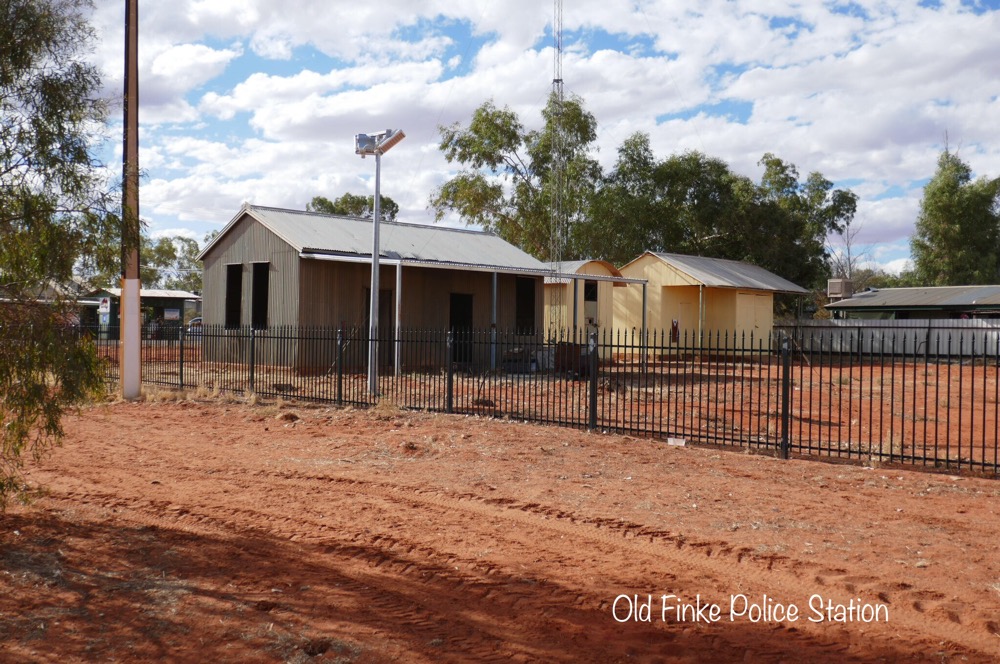
The hotel will become an Art Gallery and a place where artists can actually work, making it a living breathing art space. The police station and post office will be restored and be reborn into new uses. There is a plan to create a museum about the Ghan. The building of it, its maintenance , and its many characters both black and white who worked on the line. Legends about the two floods in 1973 and 1974 that put paid to having the Ghan in its then location, and then getting the line moved eastwards. The floods washed away the railway bridge over the Finke River….. not once, but twice! Darren told us that there is a ton of memorabilia, old photographs and loads of stories that should and could be housed for tourists to look at and experience. This will provide job opportunities and a chance for white and black fellas to be together.
The Finke River is the oldest river in the world and there are plans to make one of the restored buildings into a natural history museum devoted to this awesome waterway. Jennifer has seen it in full flood while I could only imagine what it might be like as I drove over it’s now dusty river bed. It would be a hundred meters across. A few hardy tall river gums are spaced it, gnarled and twisted by loss of branches in previous floods.
There are serious moves afoot to build a a camping and accomodation area outside the town because as the town itself is “dry” alcohol cannot be served or consumed here. There will be a lot to do for any future visitor. One activity mooted is to walk out in the bush with the old ladies, as they gather bush tucker. I met a wonderful young woman who has turned her health around big time. She decided to live and play and eat, Aboriginal style. She spends her weekends walking in the bush with her mums, hunting for bush foods and meats, camping out in the desert with them, sharing stories and time together. There are enough older ones doing this sort of thing here that the prospects for strong transmission of culture to younger one will occur. I was impressed with the health of many people I saw, slim and strong and exuding warmth and confidence.
I have thoroughly enjoyed my week at Finke. I have met some terrific Aboriginal people who are also artists and strongly cultural. A truly cheeky sense of humour. I renewed a friendship with Lana and Ross with whom I’d previously worked at Laramba. It’s always a pleasure to work with them. Nicole is an agency nurse who is moving north to work long term with her partner a German man called Nikko. He loves the bush and the desert as much as she does. There are some very competent and friendly Aboriginal guys working at Finke Clinic, including Stanley and Rodney. A great team!
My only concern with realising tourism here is the threat to everyone’s ( including locals) safety from unrestrained dogs. They can move freely around and even a long stick won’t discourage them. I had real problems walking even a tiny distance from the clinic but felt very safe walking kilometres in the early predawn along the roads directly out of town. Tourism will require some changes be made to the freedoms the locals now have. Look, Finke is a great place to visit in a car but the danger from dogs mean I could never live there long term. Walking around is the way to meet and talk to people and it would be a shame if it cannot happen with confidence about ones personal safety.

 brucebarker2016