
It’s Monday night and I’m sitting in my camping chair at the Outback Caravan Park, in Tennant Creek. We began our drive yesterday morning, travelling from Alice Springs to Devils Marbles. It’s 398 kilometres of the Stuart Highway. I took us about five hours including a stop at Ti Tree for lunch. A fine sunny day for driving.
Devils Marbles is one of the highlights of the Stuart Highway. Jennifer and I have visited this park before but it was always a rush, this time we could explore and take photographs at the two best times with no need to scuttle back to work and before it got too dark to drive safely. We walked on the many trails amongst the rock formations. The setting sun sets the rocks red aglow, the grass is backlit as it swirls in the wind, and the gums provide dabs of green and white through the landscape. Devils Marbles are the eroded superficial remains of a much deeper granite massif that arose under an immense layer of more ancient sedimentary rock, sea floor rock, then as the softer surface rock was eroded away the tougher granite remained. But this granite had already been altered, cracked, and split and when it arose into the light of day, these cracks filled with mud and water, splitting the rocks into the weathered Marbles we see today.
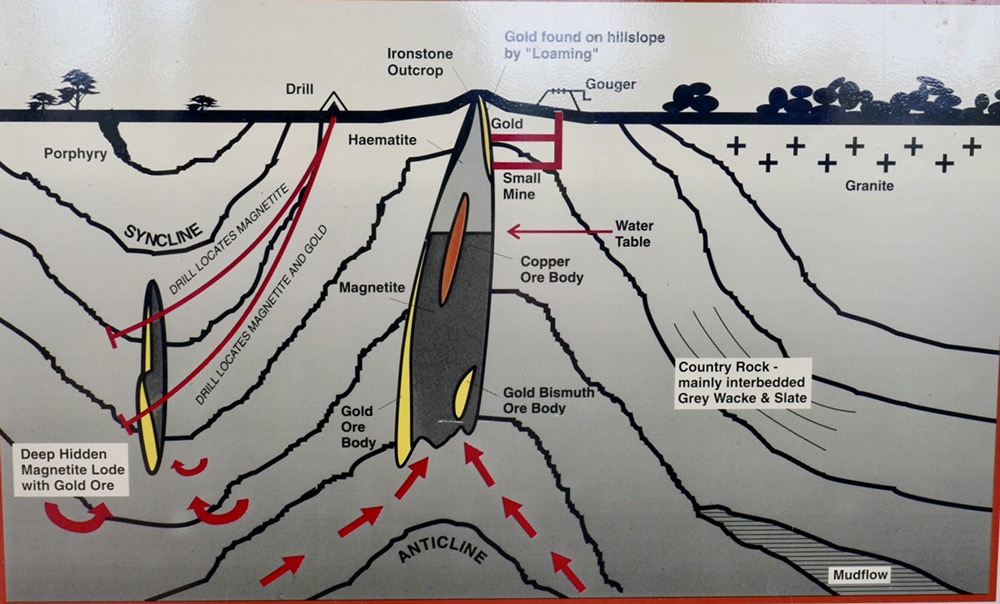
We arrived back at our campsite just as it was becoming dark and cooling down. Overnight it’s very cold so it’s great to be able to rug up in our comfortable camper trailer, under a generous doona. We awoke at seven am, and walked another trail amongst the Marbles and again, were busy taking lots of photographs. We left at 10 am and drove 100 kilometres to Tennant creek. This had very little open on a Monday holiday but the Battery Mine was open. This is a retired mine and processing facility for the gold found in Tennant creek. Beginning in 1926, Tennant creek has been a reliable producer of gold. In all by 1996, 130 tonnes of gold had been recovered. As well as 270,000 tonnes of copper. What makes this area so unique is that unlike Victoria, and most other gold rushes , the gold is in ironstone and not quartz. Quartz is relatively easy to separate from its contained gold, it’s much softer and the gold is often in chunks or nuggets. In Tennant creek, the gold is in fine fragments, too small to even in see most circumstances. Lumps of ironstone, need to be crushed into dust to gather the gold inside it. The ironstone located beneath the water table is generally richer , it’s called magnetite. And you guessed it, it’s strongly magnetic as well. The denser the ironstone, the more magnetic the ironstone then the more gold will be in it. So remote sensing can be used today to locate more gold bearing deposits.
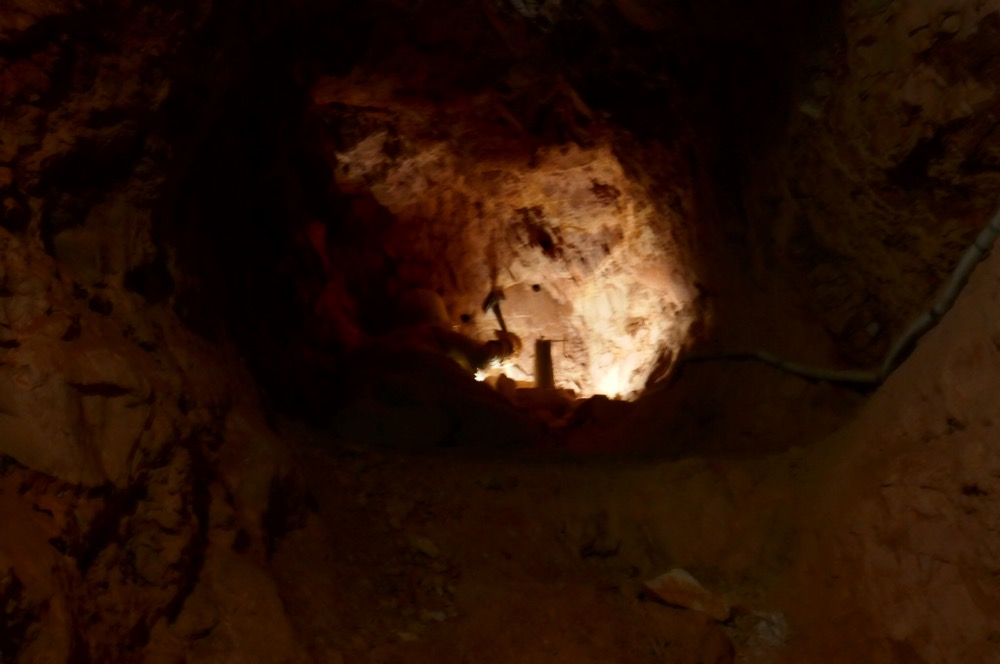
In the early days, mining businesses were small concerns, one or two blokes, both worked a mine in truly appalling conditions. One man would be lowered down a mine shaft in a bucket, using one leg, to push off the mine shaft wall, then at the bottom use a pick to break off fragments of ironstone. The actual shaft went down through mudstone, as no one can go directly through the ironstone deposit. You have to shimmy up to it and chip off the bit in front of you. It was hot and incredibly dusty. The town grew but it was mostly men. The isolation and lack of female company, made life pretty dangerous at times. Was it worth it? For those men who worked the mines, most did little more than pay their way, but some did do well eventually becoming truly big mining companies but overall the capital and size needed to make a go of this sort of mining, ensured it was the big players, the ones who arrived in the 1950’s which made the really big money and still do.
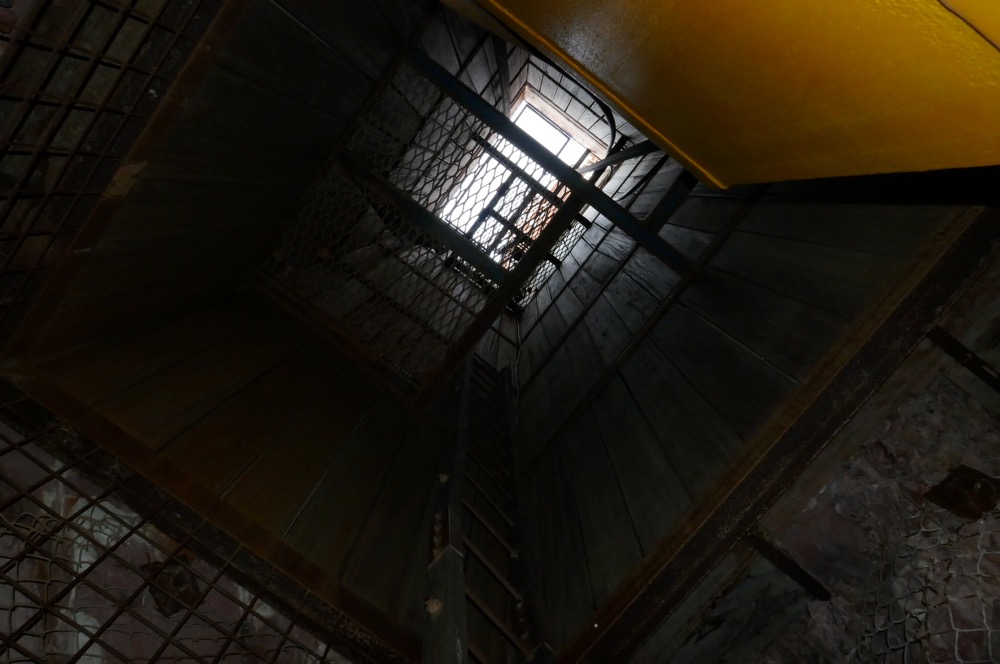
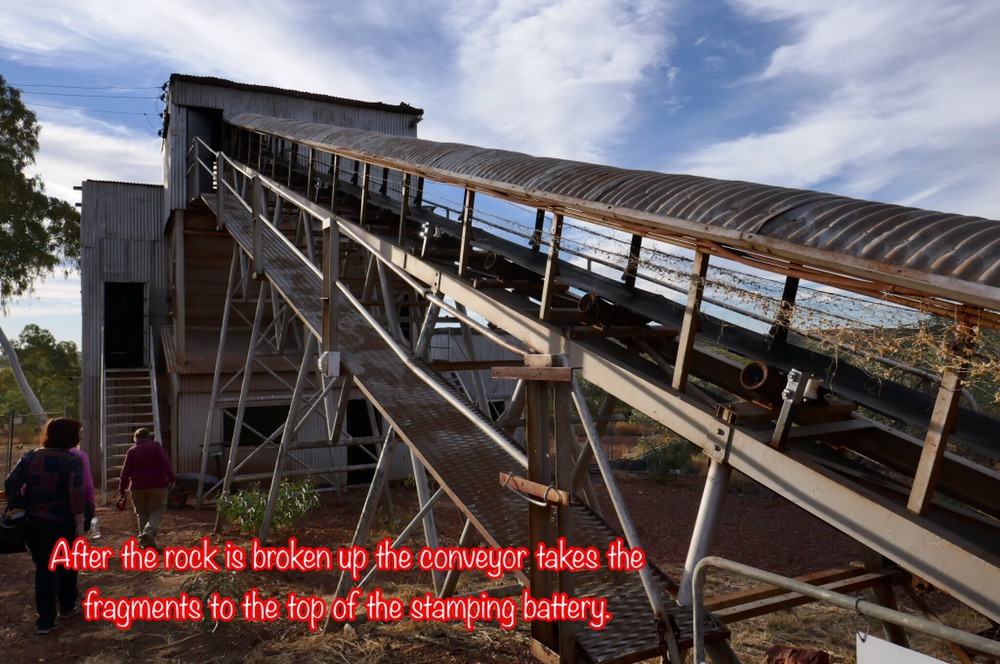
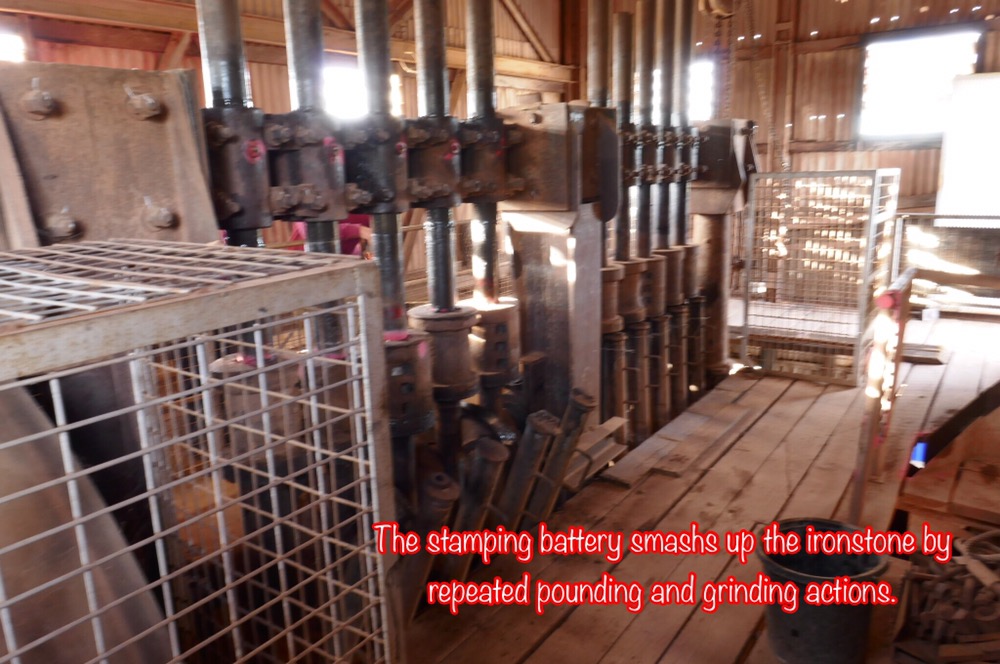
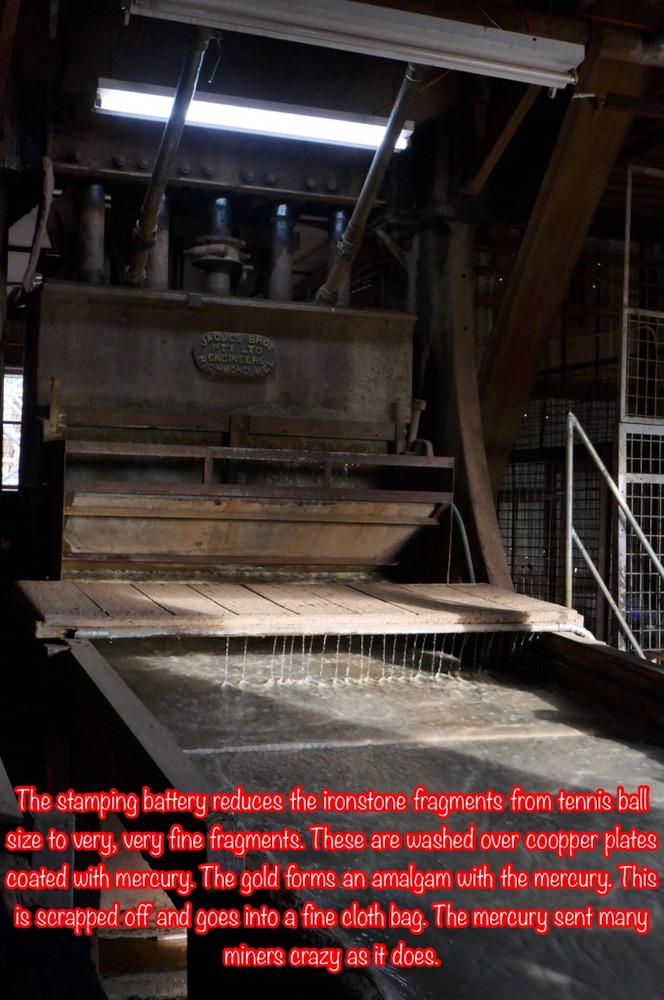
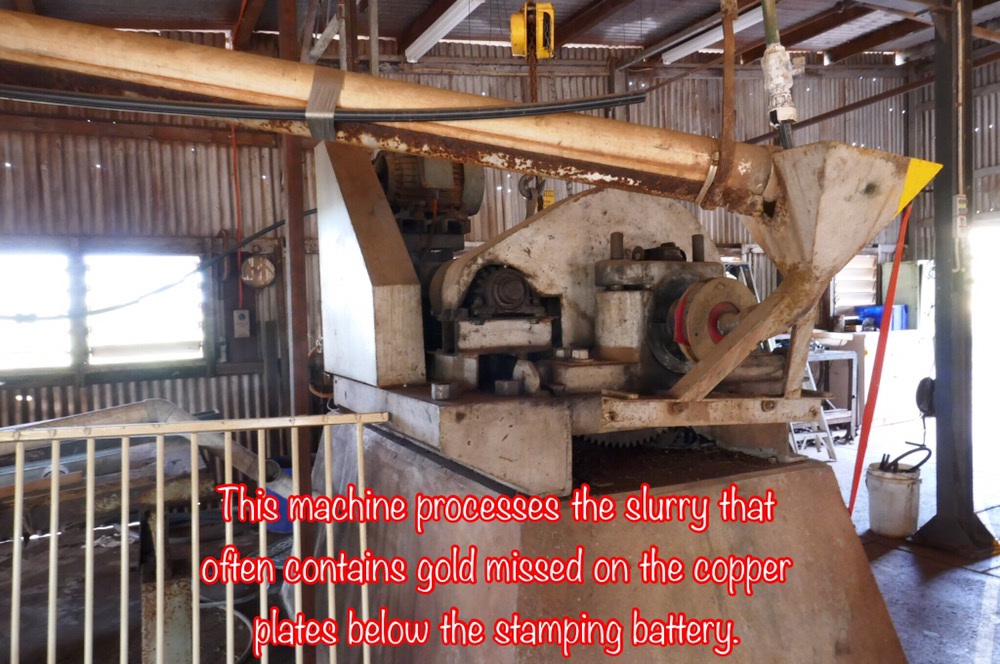
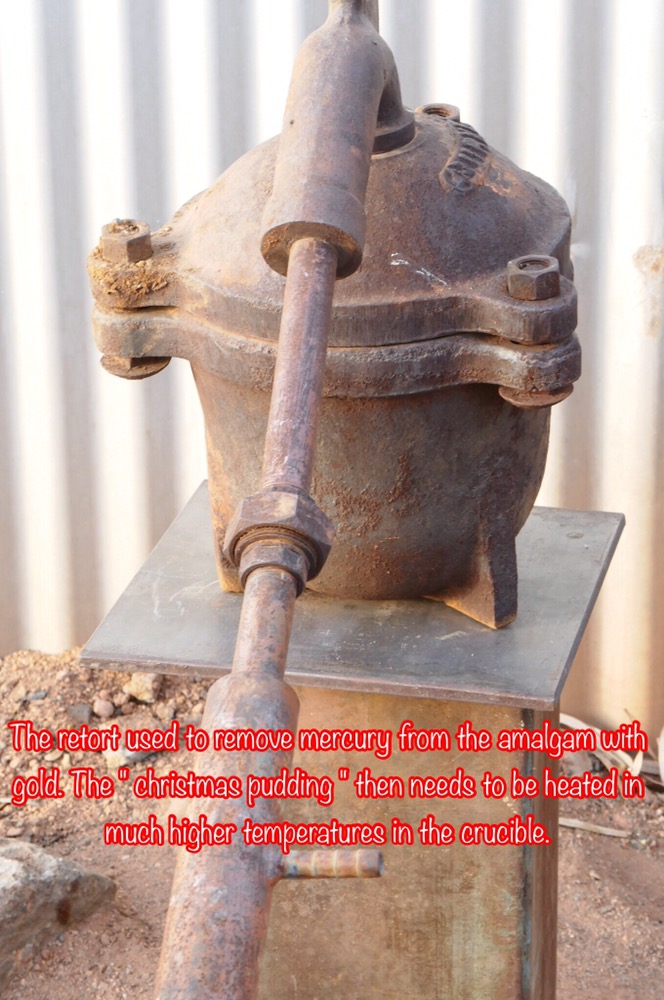
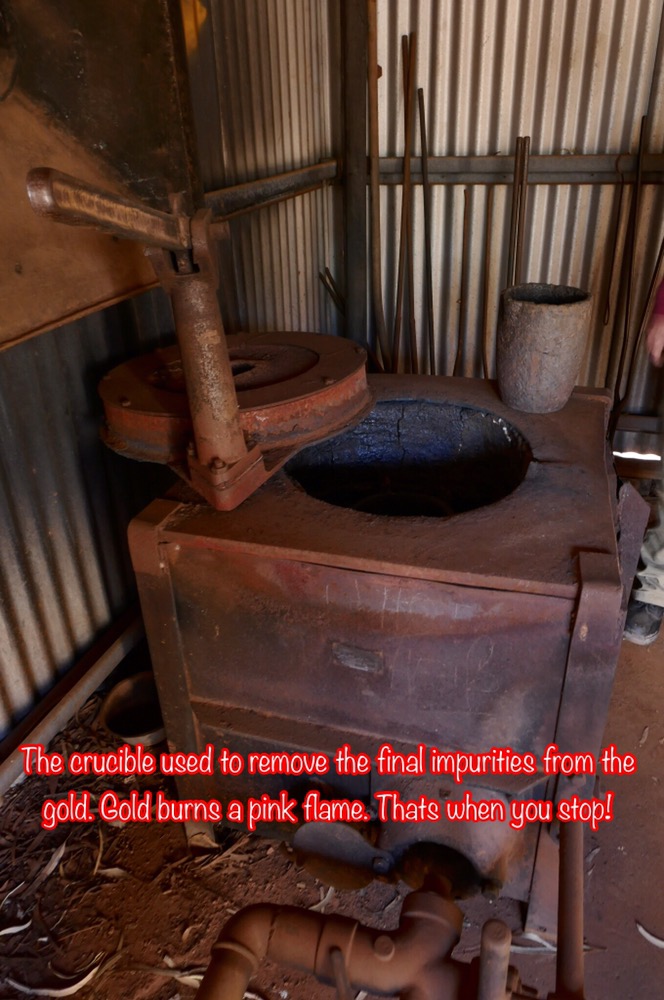
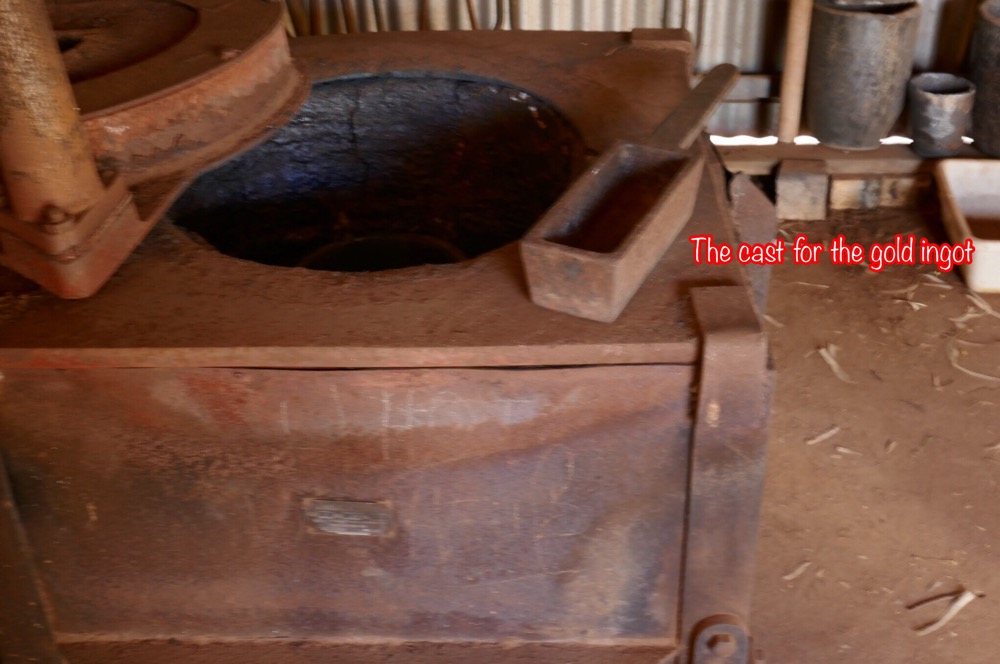
We did two tours. The first tour was through a “mine” built deliberately by Normanby Mines to be used for tourism. They had the expertise to make it as realistic as possible. Along the mine, the guide, showed us examples of mining, form the very early days, to the much more mechanised mining on the 1950s and 1960’s. We were shown the drills, the explosives, the crib room where the men sheltered during blasting, the Beethoven box used by the “powder monkey” to set off the explosives. We saw the mine shaft and the ladder ready and waiting to provide an exit for flooding in the mine. Huge pumps at the base of the mine kept the water out, but as the mine was a kilometre below the water table, a failed pump lead to rapid flooding. The second tour was of the stamping battery. This facility ground up to mined ironstone into a fine dust, you could then use mercury to bind the gold. The amalgam so formed had to be heated in a retort to seperate it from the gold, then the gold had to be heated to fen higher temperatures in a crucible to remove final impurities. A whole years work for a miner in the early days, would produce one or at Most two ingots of gold. An ingot was worth 50,000 dollars, that was a for a year, of 16 hour days, in hot, dusty, noisy and dangerous conditions.
Afterwards, we drove back to our campsite to relax before dinner. It’s getting cold now. I can hear the cars and trucks on the highway, but only faintly. And that will be us too, as we compete our trip to Elliott tomorrow.
 brucebarker2016