India, Travel

Day 16 India Trip full day in Jaipur

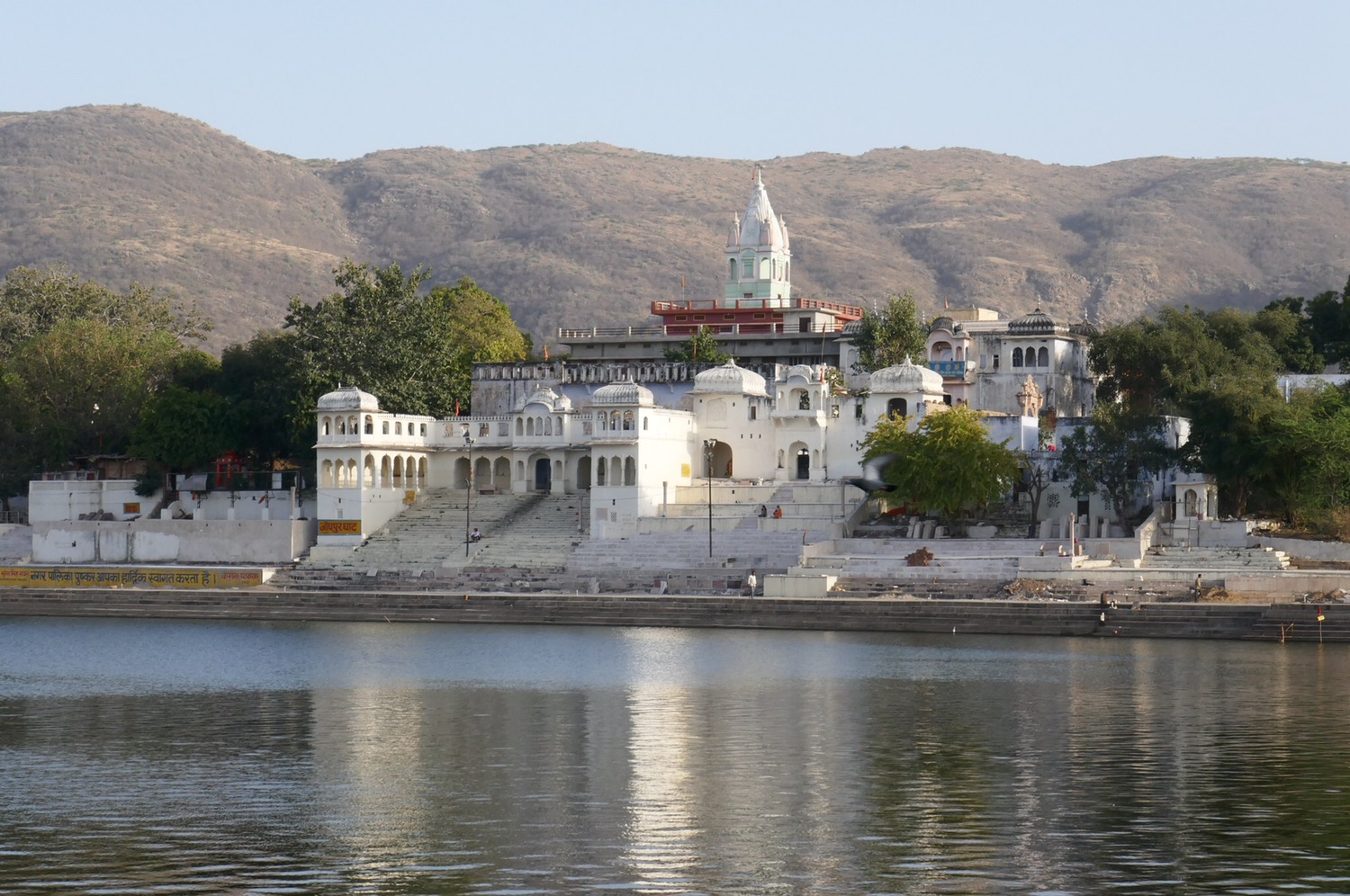
I am sitting with Jennifer on the rooftop lounge of our hotel in Jaipur. It’s delightful. It is a boutique hotel with internal staircase, whitewashed walls, neat rooms. We are far enough off the main drag to be quiet at night which is terrific. Its called Utsav Niwas.

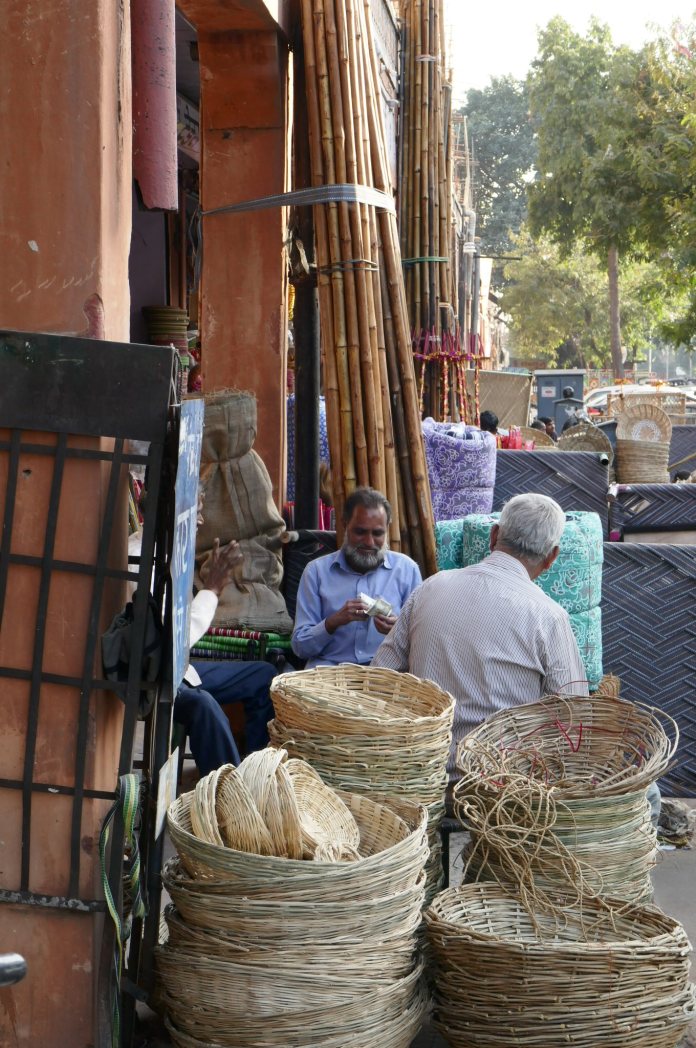
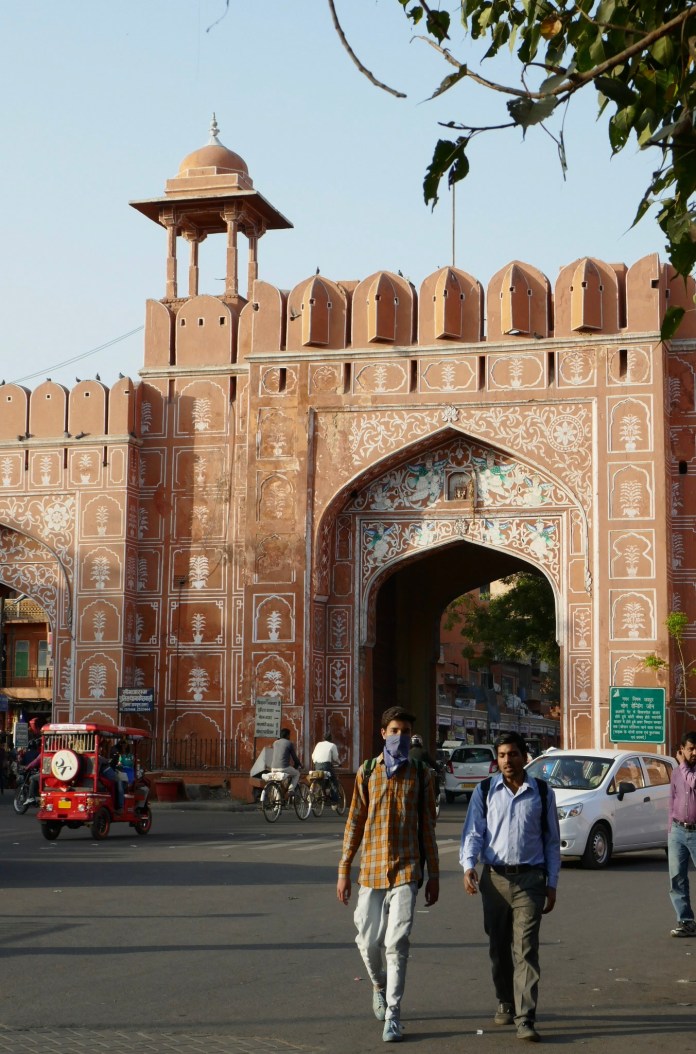
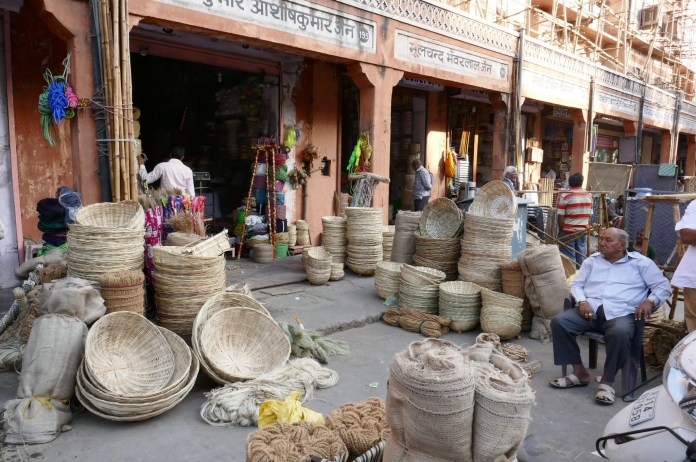
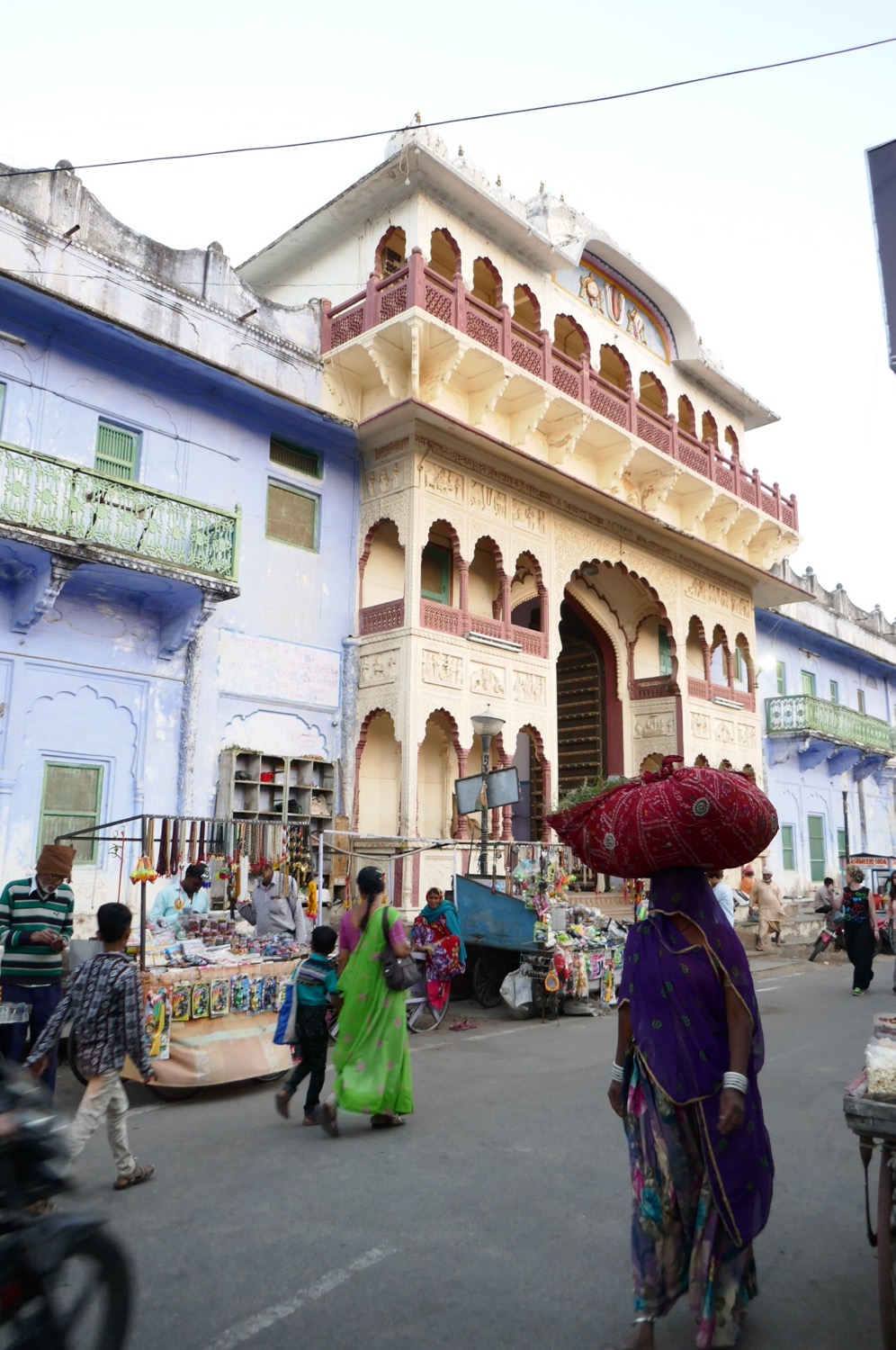
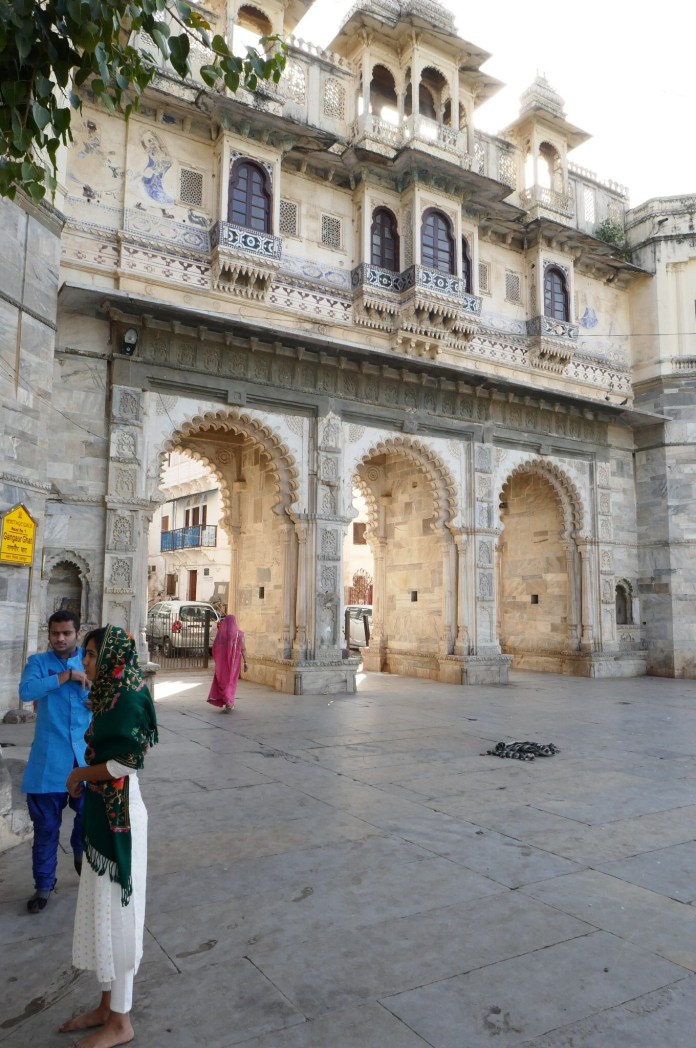
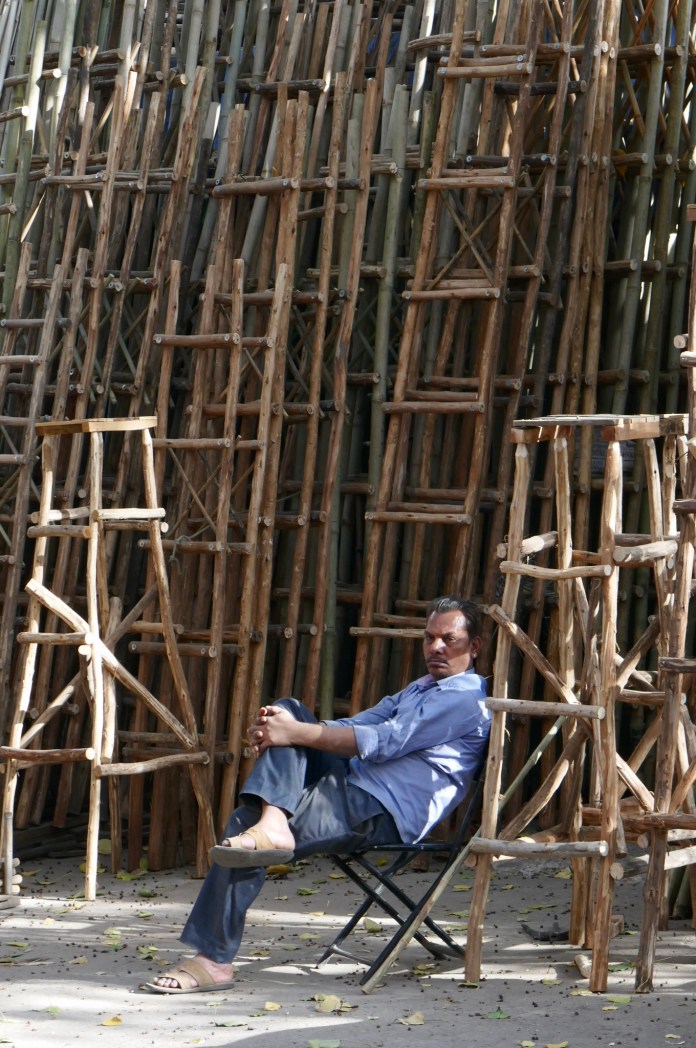
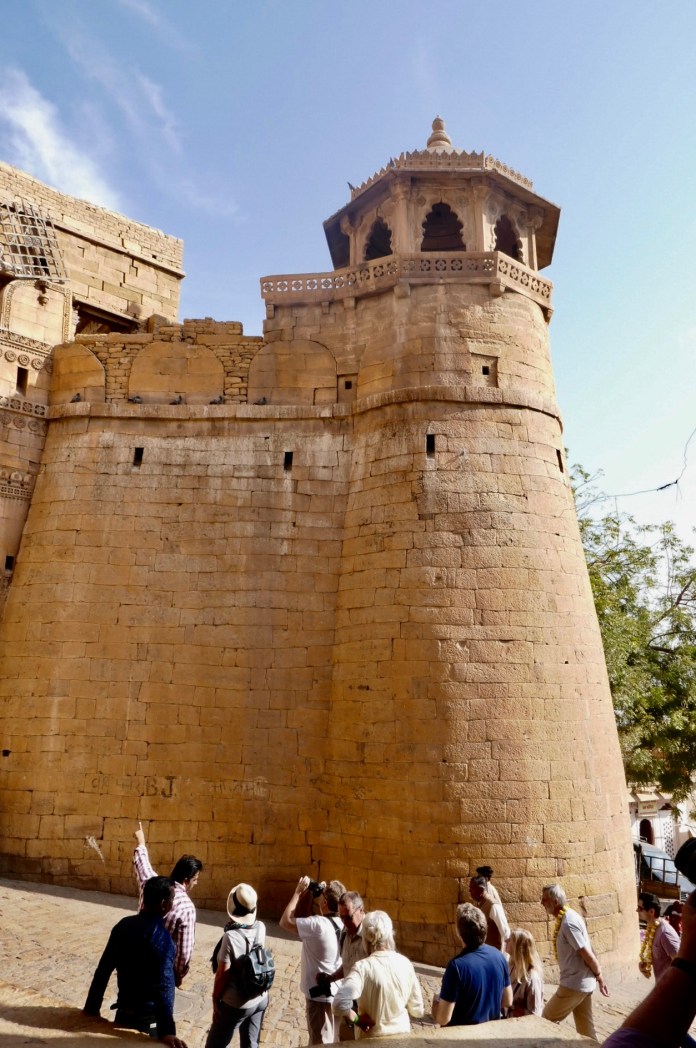
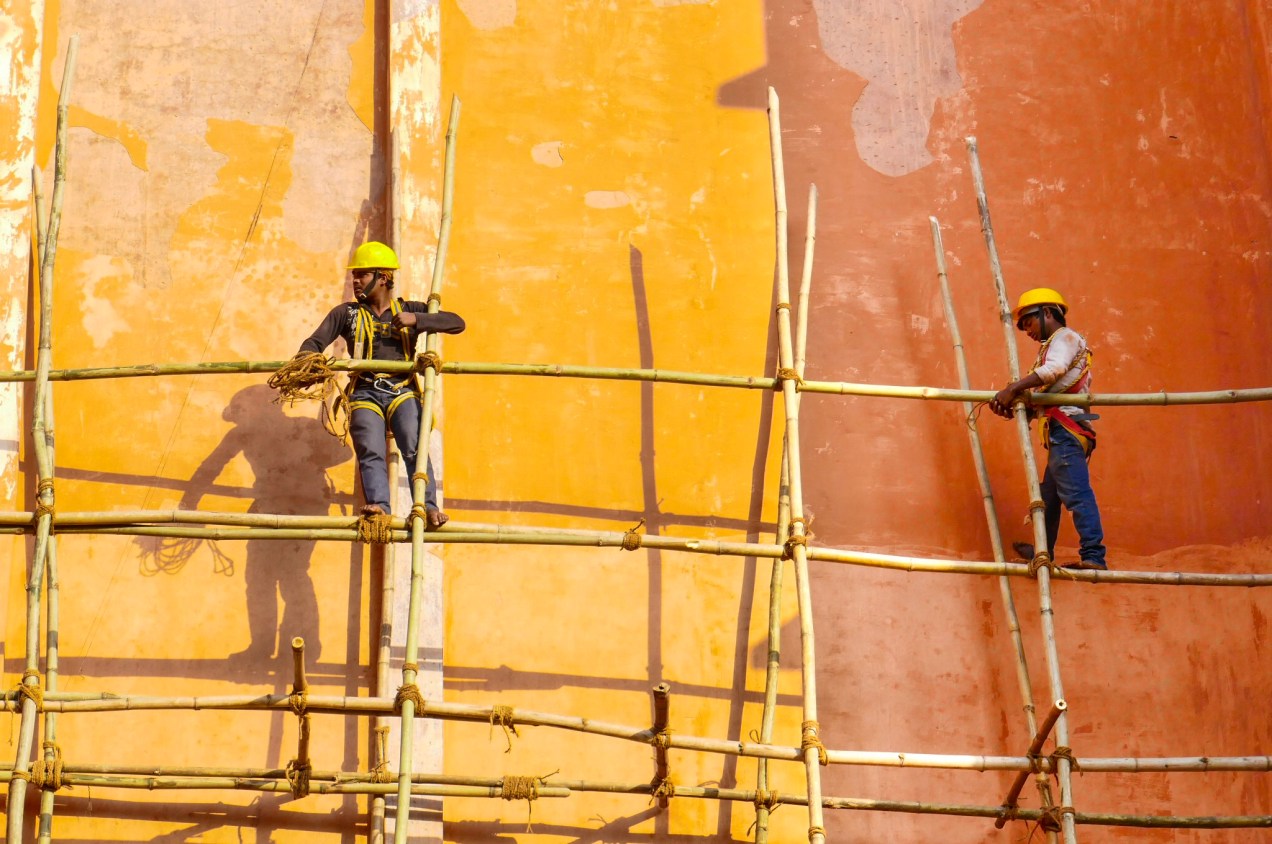
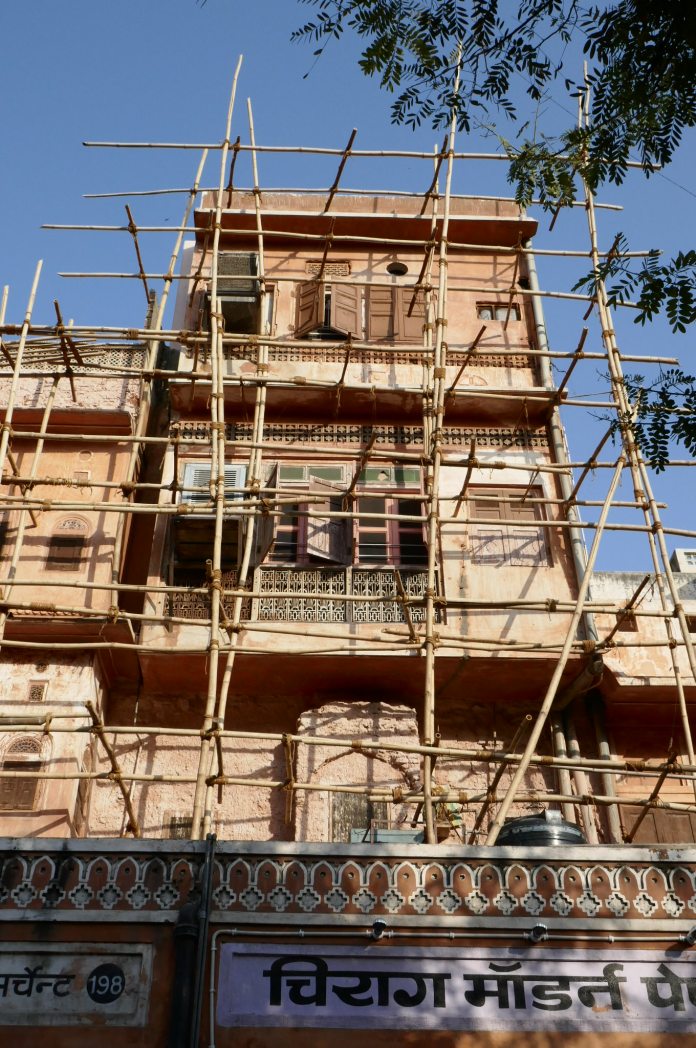
On arriving in Jaipur yesterday, all the oldies had naps while the younger ones went out to paint the town red. Actually it is already pink. The pink city is the name of the old part of Jaipur. It was all painted pink ( more of a washed out orange now) in 1868 for the visit of Prince Edward. Everyone liked it so much or at least the Maharajah did, that it has been kept that way ever since. After our naps, we went into this area for a walk around. Each shop has a small footprint, small shopfront but often spills out onto the street so pedestrians have to negotiate their produce; from steel bed frames, chairs, toys, agricultural supplies, bamboo and food. Everything an Indian householder would need us catered for. A man sat on the footpath, with all his tools lined up, until a motor scooter was driven in next to him, for him to repair. There were no electronic devices, just spanners, hammers and twisty things mechanics use. The area is all being restored and there are bamboo frames afront houses on which workers run about in bare feet. The architecture and the overall lay out of the pink city was laid out in the 1700s as the main population area about 14 km away called Amber, suffered a lack of water. The then new settlement of Jaipur had lots of water. The Maharajah built not only the city, but a city palace, a lake palace and an astronomy park.

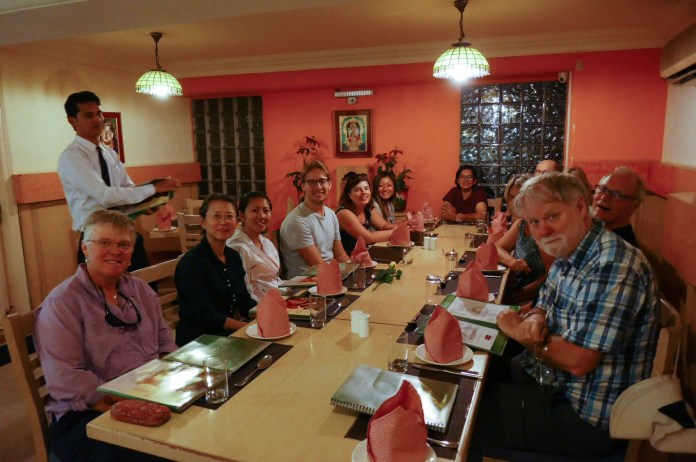
We had a delightful meal of dosa and crepe, the dosa was full of potato, and the crepe was mixed vegetables, yummy , we then returned by tuk tuk and an early night at least for some of us. Some of the young ones played cards and drank too much!

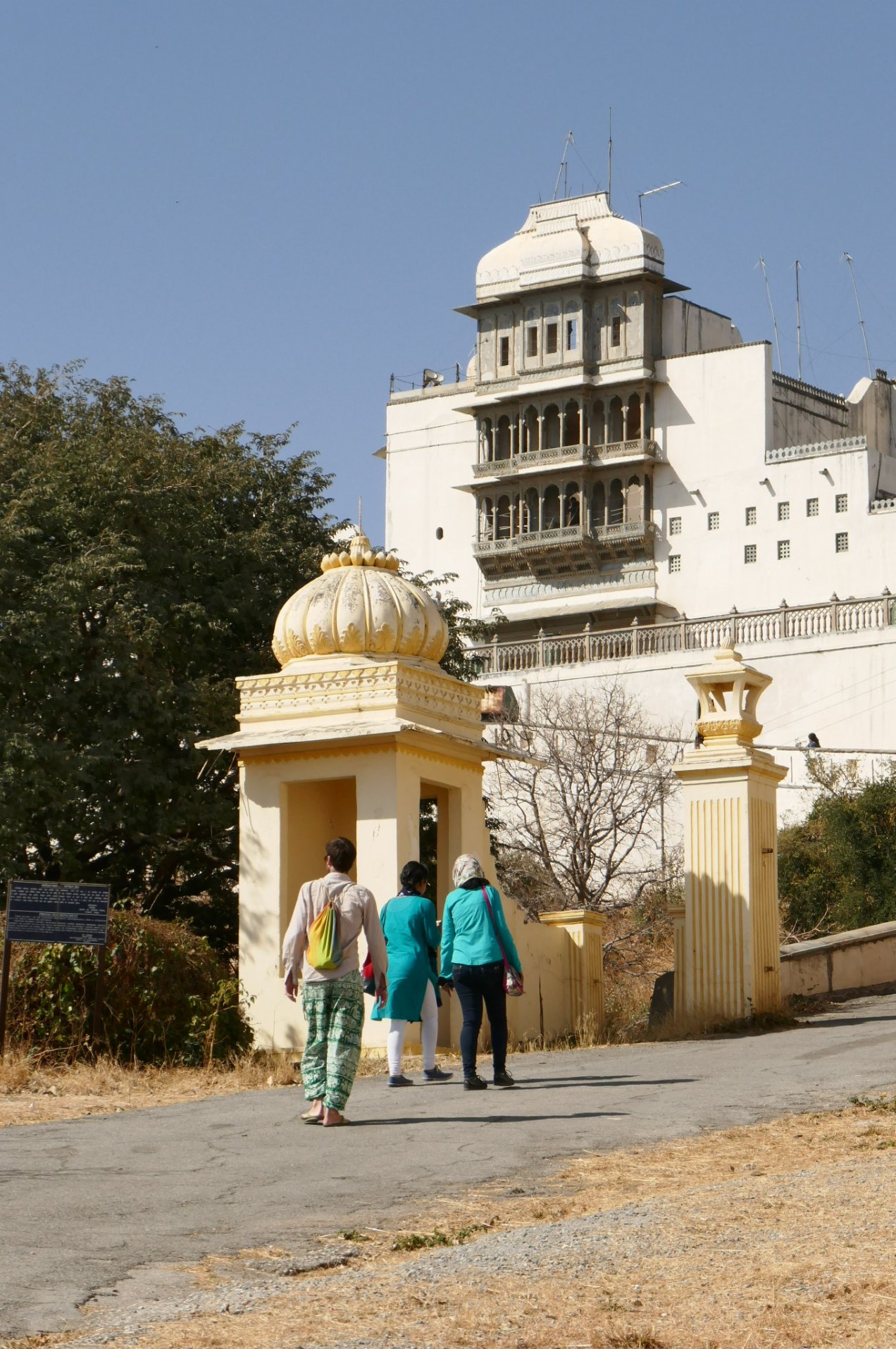
Today we took a minibus which Api organised for us, to the Amber fort. Built in the 16th century it was the military and political centre for a Hindu officer of Akbar. Even though Akbar was Muslim, he still recognised that this man was a brilliant and loyal officer. His descendants ruled this area until partition. The palace and fort are magnificent. The yellow, amber sandstone contrasts with the lake and Persian gardens below, and with the rugged mountains that surround it. Below the castle sits the ancient city of Amber. It is a mostly a living town still. However, there are some ruins with some old buildings broken and worn away. The walkway is crowded by elephants carrying tourists up to the first and main courtyard of the castle. The elephants are painted with designs on bum and head, and have a large triangular patterned cloth on their foreheads and draping down toward their trunks. A howdah carries two or three tourists and the driver sits astride the elephant’s neck.

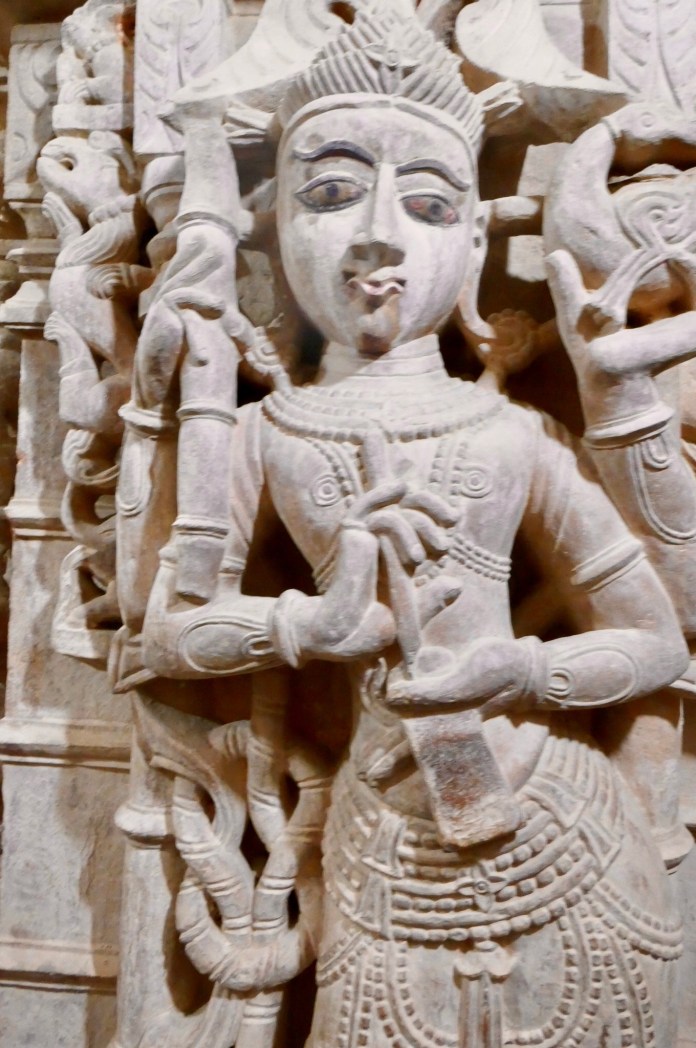
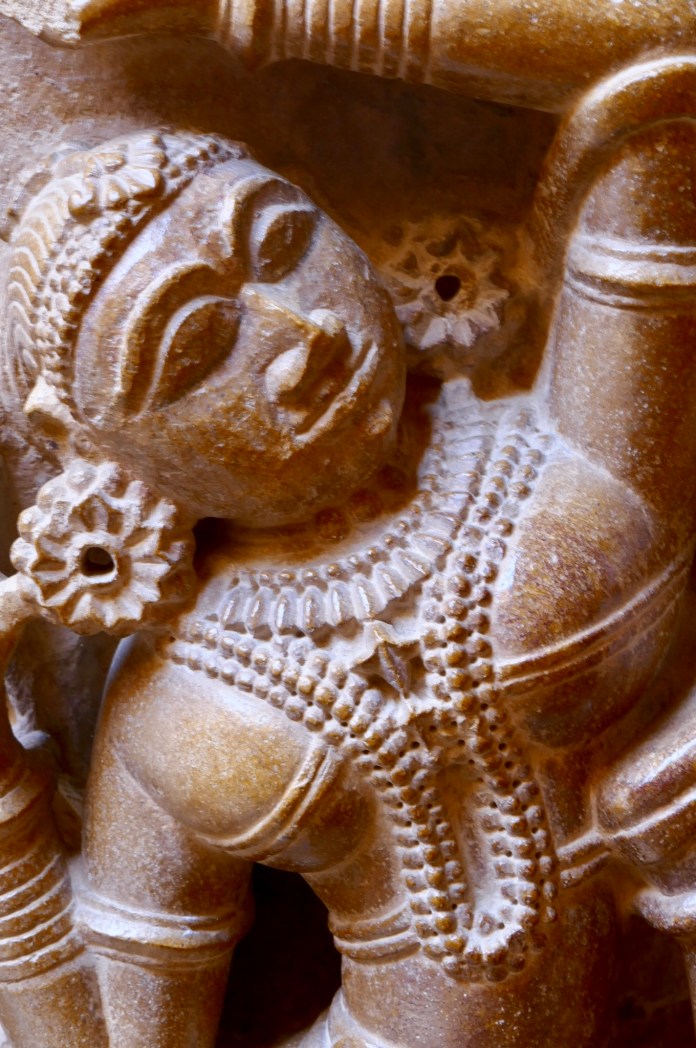
We hired a guide who spoke with a thick accent, and I missed a lot of what he said but he did show us through the labyrinth of the castle interiors and exteriors. The highlights were the hall of silver mirrors – this area was used in winter as its design promoted heat retention, while on the other side were rooms with multiple cement screens along which water splashed down, cooling the rooms in summer. We saw wonderful views of the surrounding countryside and hills, as well as the imposing Fort Jaigarh, this older, less salubrious building sits above the more luxurious Amber fort and which was a place of refuge if the lower fort should fail. We visited the temple of the Maharajah. You are not permitted to take photos so a description will have to suffice. The room is white, the interior light diminished, every white surface, the fluted, tapering pillars and the walls are embossed with a white flower, a repeating design. On one wall is a painting of Shiva and the other Lakshmi. The alter is behind another wall. Either side of it’s entrance, on the wall, are massive sculpted green leaves, and a bunch of bananas on both right and left side, on the low table in front of the idol, are large silver pieces, one of a large rearing horse. The idol has a tiny head, with a red cloth from neck to floor obscuring any body or limbs, and around the neck a front are garland after garland of flowers, yellow, white and orange. A spectacle of veneration and vivacity.
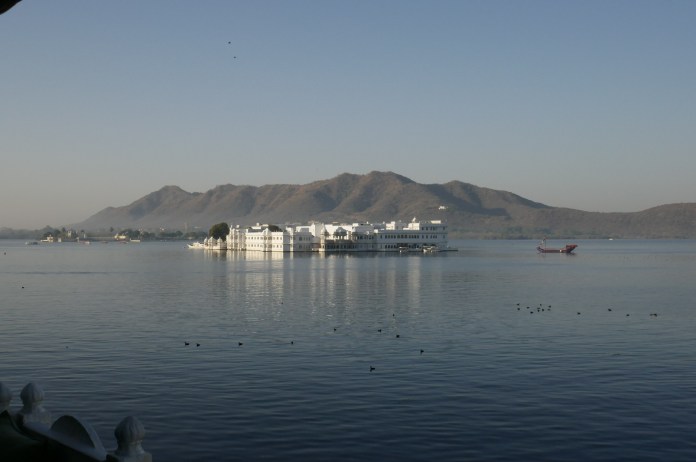
The bus collected us at the bottom of the castle walkway, we put up with aggressive touts on the way, even I got aggressive when they would not stop hassling. The bus driver had waited the two hours we spent at the castle, waiting near the fort. We stopped to view the lake palace on the way back. We went to LMB for lunch, this is a famous hotel and restaurant in Jaipur. We had a truly super lunch. I had vegetarian sheesh kebab and Jennifer had lababdar paneer, both of which are beautiful meals. We had banana lassis.
Afterwards the driver dropped us off near the City Palace. All the oldies had already decided to visit the Observatory built in the early 17 th century. It is principally a solar observatory for getting accurate time. There is a device for establishing sidereal time and several devices for solar time. The large solar device is accurate to within two seconds. The observatory complex is called Jantar Mantar. A guide showed us around and indicated how they all worked. He showed us the observatories for night sky used to study and record the movement and position of stars and constellations. Wonderful.

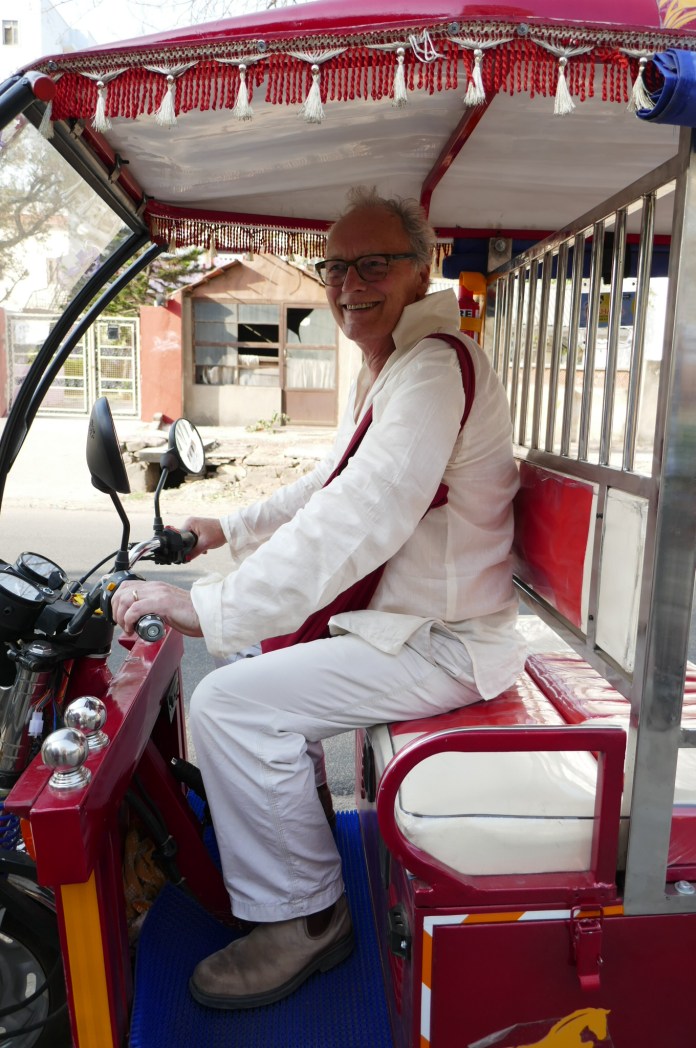
But after all this we, we were all too tired to go to the city palace museum and spend another two hours looking and learning. We hired a tuk tuk, the driver was a bit lost, so we did a very circuitous journey around the city as he repeatedly asked people where our hotel was. I had given him a card with the address on it, but it took a while to find another driver who was confident about where it was.
Since arriving back, I have enjoyed a Tuborg beer, and a lime soda. The young ones are going out to see a Bollywood film with no subtitles. I think a nice meal at the hotel, preferably with meat, and an early night would go down very well.IMG_2550IMG_2554IMG_2538IMG_2556IMG_2544IMG_2555IMG_2573
Standard
India, Travel

Day 15 bus to Jaipur

Last night several of us took up the invitation to have another home cooked meal. It was wonderful, the sky our roof, a low wooden table with a simple white cotton table cloth and some small glasses. There were bottles of water for each of us and a large bottle of chilled coke. We got up to meet our hostess, and check out her kitchen. Her daughter and she were dressed in brightly coloured saris and were busy making chapattis; forming a small piece of the dough into a small ball, then flattening it with a wooden rolling pin, a quick brush with vegetable oil on both sides then into the chapatti pan. It is sitting on a burning gas jet, once it’s sufficiently cooked, it’s tipped out then tossed the not the actual flames when it inflates like a balloon. Then into a shiny steel bowl with the other already prepared chapattis.

We resumed our seats and soon the pokhoras arrived; they are much smaller than in Australian settings, these were filled with green ( spring) onions. There was a mint dipping sauce as well. The mains arrived, the man of the house carried the cooking pot and spooned the dish inside. These dishes included; cabbage, potato and peas, sweet tomato, cauliflower, a spicy tomato chutney, a tiny succulent eggplant and a small bowl of dhal. There were also chapattis and puris. Each serve was small, but altogether it was a good size meal. For dessert, a bowl of kheer, a warm rice pudding flavoured with spices and cardamoms, and a more liquid presentation than what we would have at home.
Right now we are sitting in the bus to Jaipur after being ported from Pushkar by car this morning. I did not have a good impression of our last transit at Ajmer, but today as we descended from the pass in the Snake Mountains, the view was inspiring. The mountain range beyond the lake at Ajmer, was lit through with the dazzling sunlight of the Indian morning. Beneath them, the lake was all a silver sheen, mist hovering over the water obscuring the gap between sky and water. Pelicans rested on wooden poles lashed together to form rickety structures near the lake shore. A few powerboats rested in the water, motionless, near the island not far from the lake edge. It’s natural green colours contrasting with the broken gravel and motorbikes on the lake shore.
At the bus depot, Api gave us the option of paying an extra 100 rupees for the more luxurious bus to Jaipur. It is still a two hours trip but the expected heat of the later day makes air conditioning an excessively seductive option. 100 rupees appeared as if conjured from the air!

All the land is dry here, the temples, buildings and walls are sun bleached, washed out colours. Any wall painting even of a god, which bears substantial direct daylight is damaged with parts lost as irregular portions of cement shed in the heat. The trees here are desert trees, but here at least they have foliage. In the Thar and to the north, the trees had stunted lifeless branches fixed in unnatural poses. There are settlements along this highway, with large gates, splendid ostentatious constructions often more impressive then the hotels fifty meters behind them. The ground is a light dusky brown, with no vegetation at all, then we reach a farm, and it is bursting with growing millet from wall to wall of the enclosed area.

I am tempted to give a few impressions of India. Any ideas I express are not backed up with years of living and working in India. If you have the opportunity to talk with such a person, please give their opinions more weight than mine.
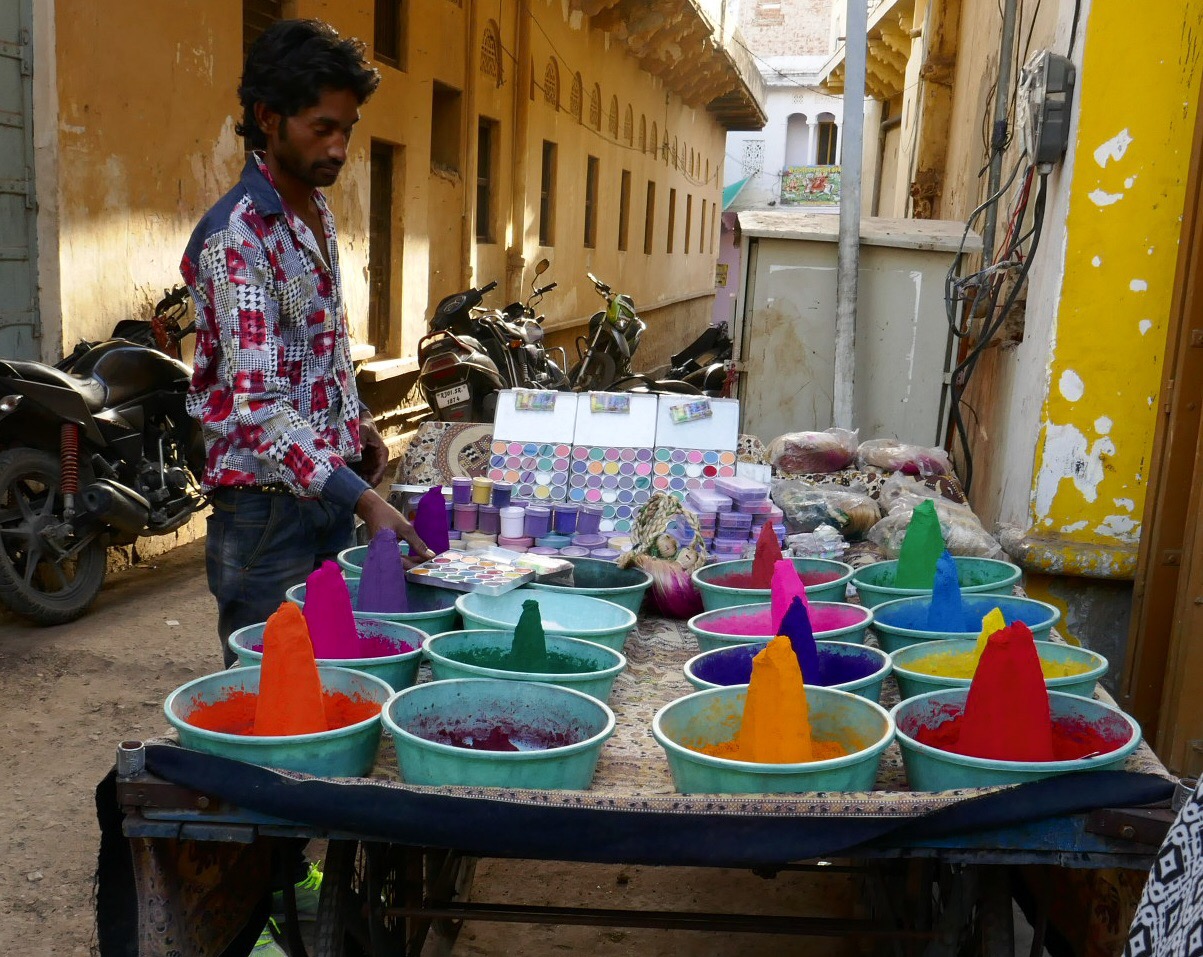
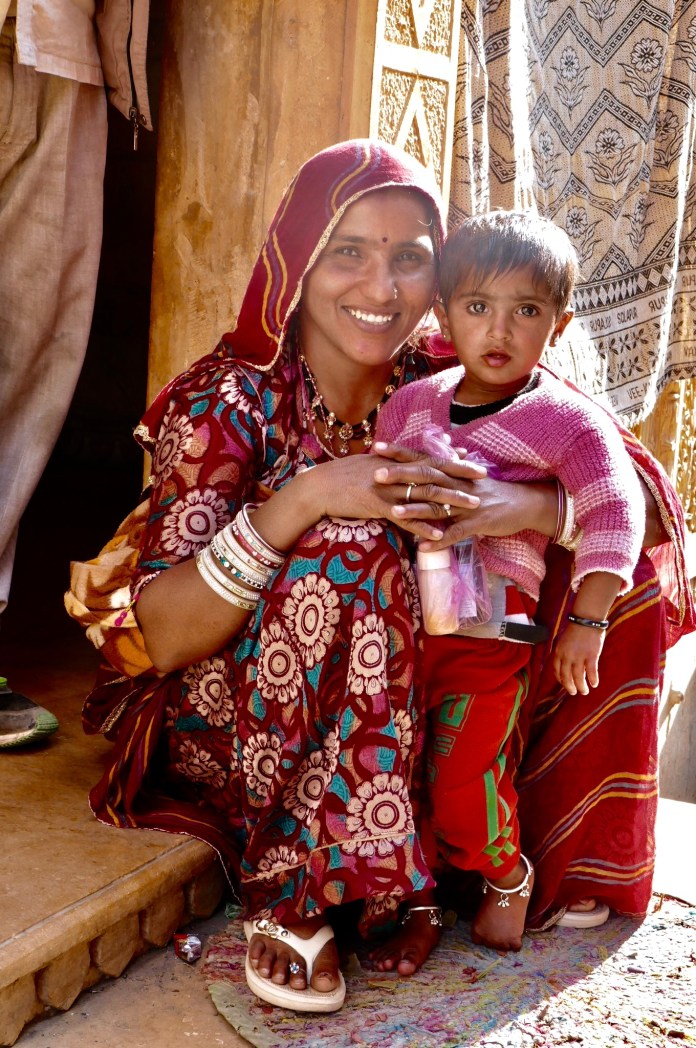
Friendliness, Jennifer and I have had the privilege to meet and talk with some wonderful people; the young bride in her blue sari at temple Shivatri, the Hindu teacher in the gondola, the beautiful mother in the alleys of Jaisalmer, the wheeler, dealer philosopher of cloth and life also in Jaisalmer, the young vendor in Pushkar, the helpful taxi drivers and others I am already forgetting in this whirlwind through India. Colour; this is the nation of vivid colour, from the red and orange daub on the foreheads, the glitteringly bright saris worn by even the poorest of women, the rich hues of the great forts, the gaudy, mirror light on tourist tat in the markets, the smoothly textured cream of the Jodhpur lassi, and the reds and blues and vermillion of the gods portrayed in their uncomfortable poses almost anywhere. Litter; Rajasthan varies from some litter to appalling levels of litter. It is mostly plastic, wrappings of boxes, food bags, bottles as well as scattered papers. We saw camels, grazing in an empty allotment not far from our hotel in Pushkar; these are used for camel safaris. Did I say empty, yes it was empty of any permanent building but it was far from empty, the thin animals wadded through ankle deep litter. Pushkar is definitely the worst for litter, even worse than Ajmer. The cleanest place was Jaisalmer by far. Scamming: Indians need to make a living and cannot always afford to be choosy about how to do it. Our scammers wear business suits, sit in large buildings and don’t pay tax. I think they do more damage to the average person in Australia than these petty scoundrels do to a tourist in India. It’s sensible to take security seriously, if for no other reason, than if you lose something it won’t come walking back to you.
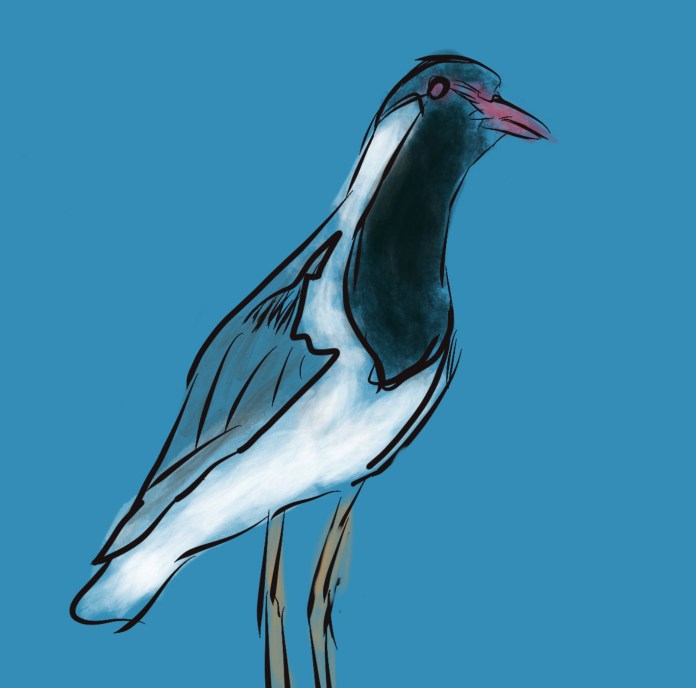
Animals: camels are individualistic, tough creatures who pace out the desert sands and rocky grounds with a studied elegance; birds with black heads but re- orange band around their eyes scamper and sing along wall tops; cows, actually street cows, litter the streets, as feared for their inflicting of random injuries as they are venerated as the sacred animal of India. Architecture: the ancient stone works of forts, the delicate mesh work of windows, the crenelated Islamic inspired arches, and the utterly dilapidated top stories above the bustling markets and all of them hypnotically fascinating. Construction: everywhere you go, people are building things, hotels, roads, but then they stop, leaving it half built/ half demolished, it’s not clear which. Maybe the money or credit runs out or something better came along for the tradesmen, I don’t know.
That is enough impressions for now.

I am going to enjoy the bus ride and my banana.
“/////////IMG_2532

Standard
India, Travel

Day 14 full day in Pushkar

It’s 2 pm, it’s warm outside, and I have been editing photos on the iPad. I’m using adobe lightroom and I’m pleased with its utility and precision. The biggest problems doing photography in India are haze from the air pollution and desert dust, and the second is the contrast between light and dark, a sunny street scene with dark shops and vendors. I have found Lightroom very helpful for these issues.

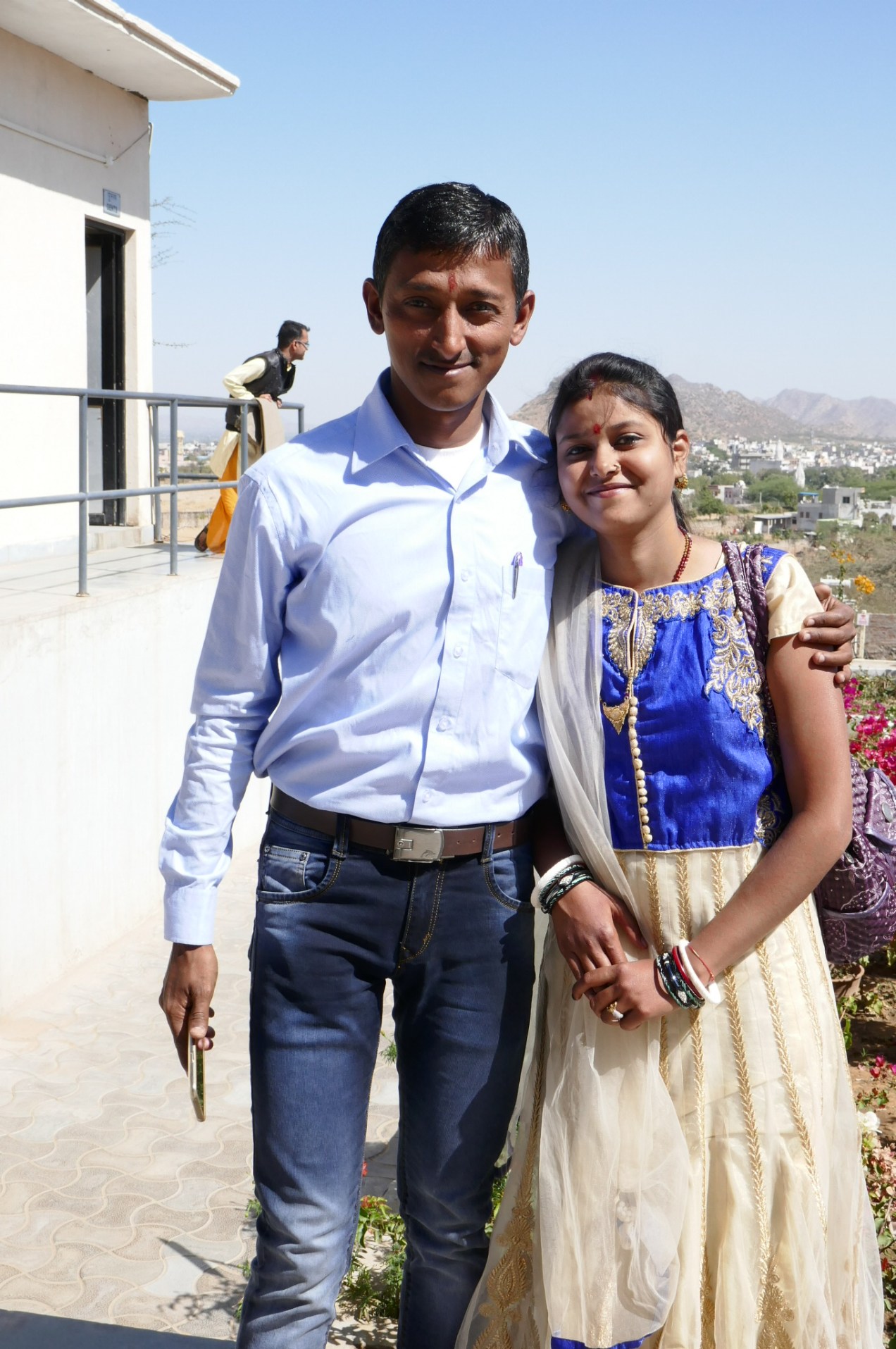
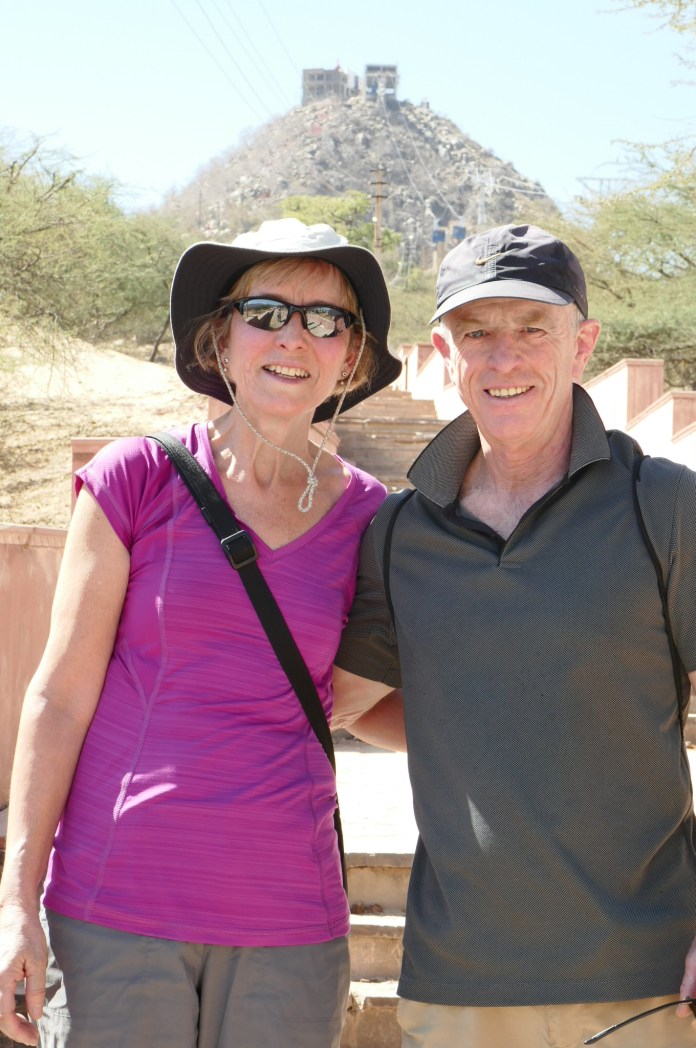
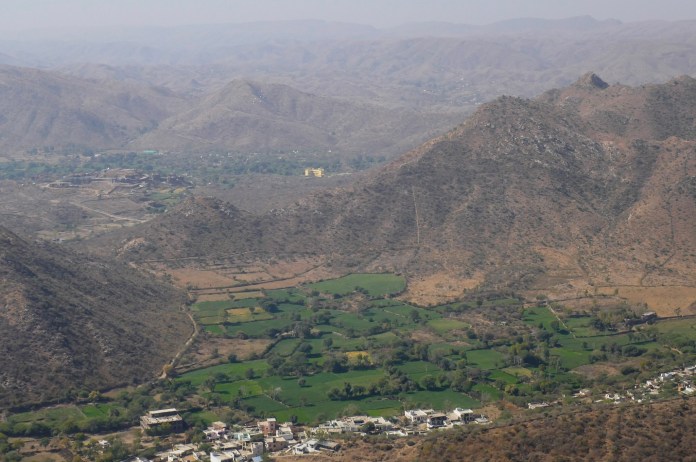
This morning we joined up with George and Grace, a charming Canadian couple, to visit Savitry temple. This temple is atop one of the hills in Pushkar. There are other temples on some of the other hills as well. Their white paintwork clearly visible against the blue of the sky or the dusky browns and greens of the hills. It is about 700steps up and I started off with good intentions, but having a cough and a sensible wife, I went up in the gondola instead. The views on top are terrific, with views of the surrounding rocky dry hills, the green of the farms below, the city and lake of Pushkar. All the grime and litter of the city and its outskirts is invisible from here. The actual temple sculptures are pretty ho hum, but there is a large secure viewing area that provides amply opportunity for sight seeing and selfies. Jennifer befriended a young couple and they swapped photos. A beautiful young woman with her handsome husband. She was wearing a medium blue sari with silver embroidery, very nice. Her mother and younger brother joined in for the photo shoot as well!!!
When we were waiting for the descending gondola, we met a holy man who was doing his monthly visit to the temple with some of his students. He quickly discovered we were Australians and Jennifer and he talked about cricket. He laughed and laughed about the recent win by the Australians, and spoke admiringly of Steve Smith. We asked about Hinduism as it seems so complex. He said its simple, always choose the righteous path. How do you choose this path, love everyone and care for everyone. The rest is details. Api later told us about her family deity and a saint she admired. There are two temples in her parents house, one to the family god and the other us dedicated to this saint.

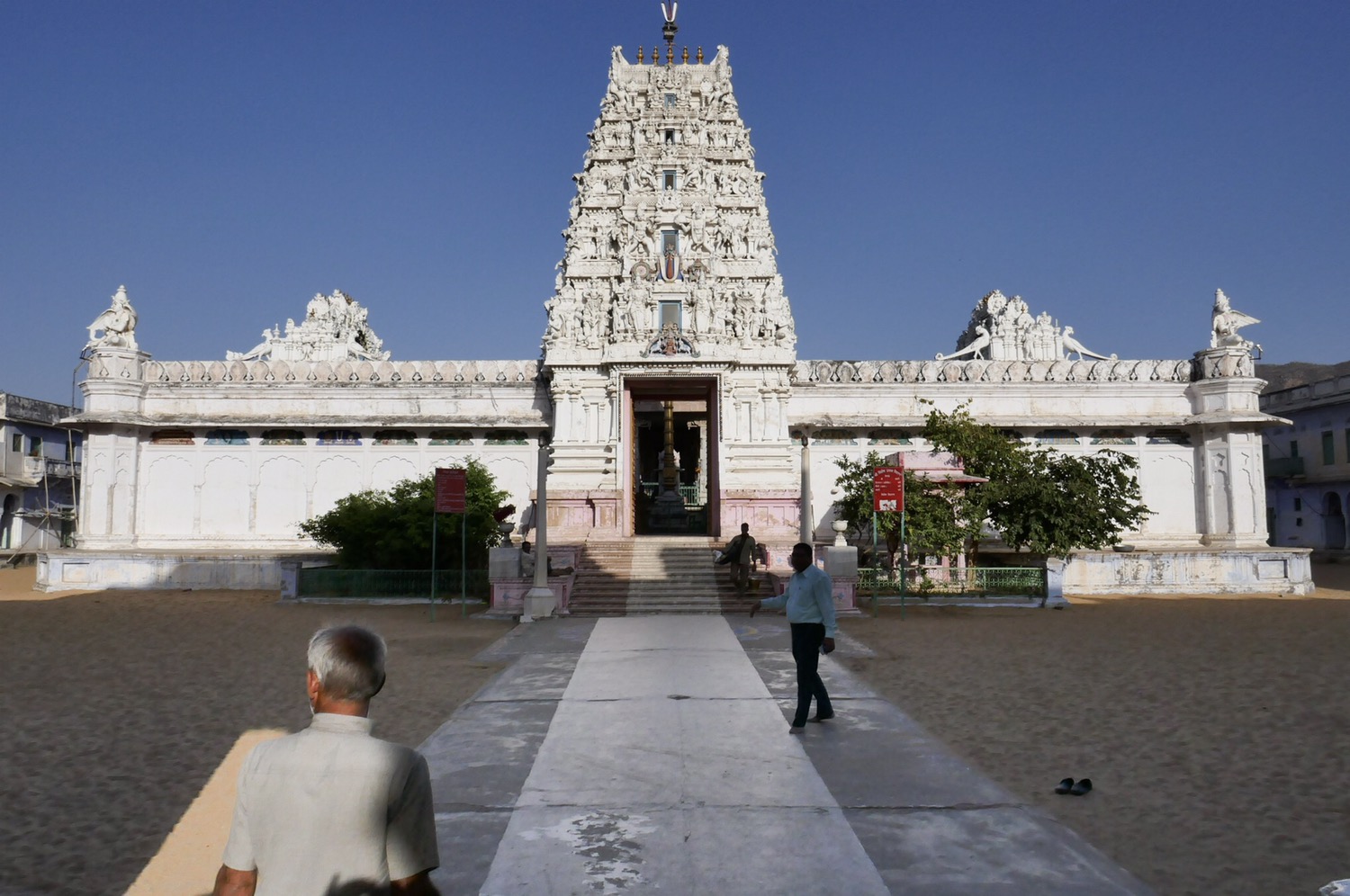
We walked back through the markets, past Brahma temple in the middle of town, past all the litter, and back to the hotel for lunch. We bought some loose fitting harem pants for Isla on the way. They are cute!IMG_2460IMG_2466IMG_2478IMG_2482IMG_2475IMG_2531

Standard
India, Travel

Day 13 India Trip a half day in Pushkar

Just completed a wonderful meal at the restaurant of our hotel. It’s the the Hotel New- Park and it is only a kilometre walk to the ghats and main market of Pushkar.
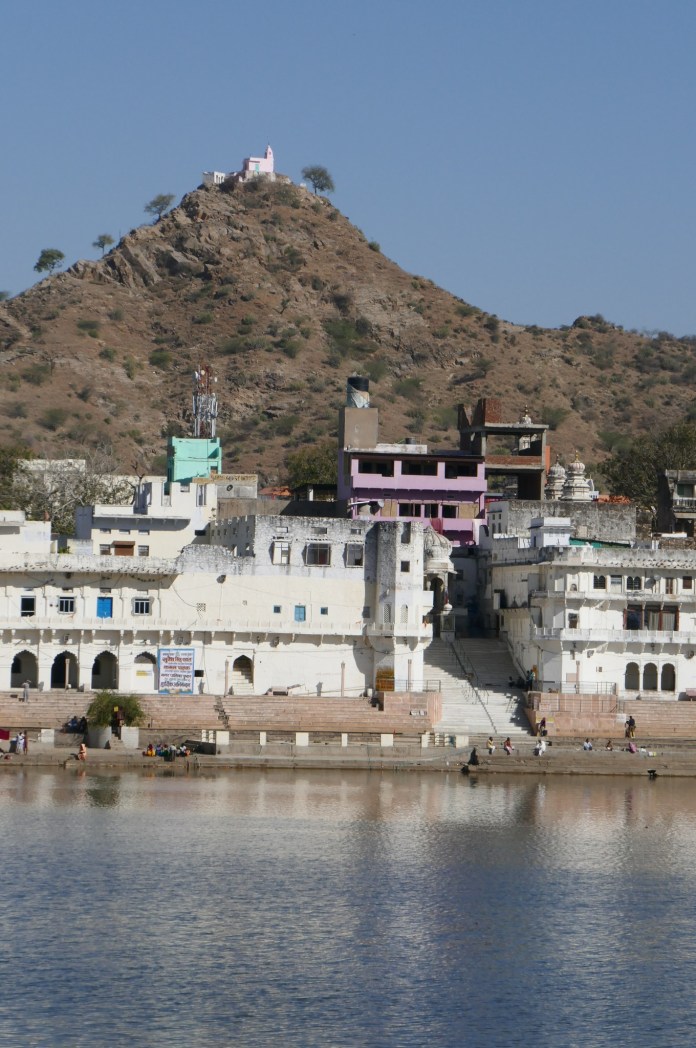
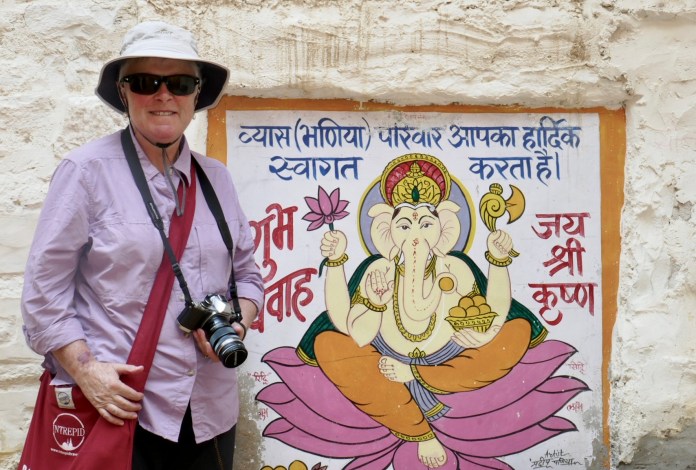
Pushkar is in the top four of the devotee list of most holy Hindu cities or places in India. Hinduism is interesting as a religion as it is so confined to the land of India. It’s heroes, stories, sages, sacred writings ( Vedas and Upanishads) and holy places, mean it is very difficult to be a fully participating Hindu away from mother India. Hinduism is in the very substance of what it means to be Indian for a Hindu. I’m sure the millions of Muslims who still call India their home may disagree but I cannot see how they can deny that Islam is an international faith; It is at home anywhere. Pushkar has a large square lake at its heart, around which are some fourteen ghats, where acolytes can make offerings, seek blessings and beseech the gods for favours. They can perform ritual bathing or simply sit on the steps lost in meditation in this peaceful place. Outside the ghats, there is a busy, noisy market selling all the normal tourist tat. I don’t see Indians wearing many of the clothes, the loose patterned cotton pants, the coarse vegetable dye shirts or wearing dreadlocks as worn by many of the Caucasians. It is a time warp, where the 1960s persists for some tourists and spiritual seekers; hippy culture and beliefs warping into today’s india transmuted into a model of business. Very few Indians I have met, are willing to sacrifice family and or career to lead the holy life of renunciation and prayer. Most Indians worship their favourite deities such as Shiva, Ganesh, Lakshmi, Rana on a rotating basis over the week. There are thousands of gods to choose from. There are many festivals to celebrate different gods. Now, there are many Shiva festivals in India, typically they are loud noisy affairs, with drums, music, singing and colourfully wrapped elephants; lots of people having fun. 
There are temples in each home, any business, and off the streets. There are religious paintings on the walls or on windows, of architraves. Hinduism is alive and well but it is changing; the rising independence and aspirations of young women. This causes angst in parents who themselves were in arranged marriages and have trouble understanding these changes in their daughters. The increasing flexibility of opportunities despite caste. Previously untouchables ( Harijans or Dalits) could never get a desirable government job but now are allotted into reserved positions just for them. This social evolution in India causes strain in Indian society, but most Indians have the good grace to accept these changes are for the best. 
On the way here this morning, another vehicle swiped the back of the vehicle taking us from Ajmer to Pushkar. What a fuss! He was clearly in the wrong, several witnesses saw it happen, but in India, no one ever accepts they were wrong. The solution in all cases, is that costs get split fifty fifty and everyone moves on. At the edge of Pushkar is a road block where every driver is asked about alcohol in the car. It is a long established tradition in Pushkar that neither meat nor alcohol are permitted to be brought in or consumed in the city. 
Pushkar is surrounded by steep hills, that create an early sunset as sunlight is occluded by these same hills. There are temples built high up on some of these hills with fine views for the hiker or gondola passenger. 700 steps up, which is a bit much on a warm day! We will avail ourselves of the gondola tomorrow.

The lake is very beautiful, but it is surrounded by steps or buildings on all its shore. It is no match for the much vaster Lake Pichola with its tree lined fringes. But the beauty of this lake is in its spiritual significance;in particular, Ghandi’s ashes are somewhere in this lake.
 Even in the late afternoon when we visited, there are are people at the lake, they are nearly all well dressed Indians, clean suits or jeans for the men and modern saris for the women. They are sitting, some are talking, a few are doing a brief prayer hands pressed together and bowed forwards, or just gazing over this very special place. Some just have their feet in the water as if not certain how committed they want to be. The only Hindu holy men were scam artists who want to bless a tourist for money. I’m sure that there are truly holy men and women who visit, just not when we were there today. 

Standard
India, Travel

Day 12 final day in Udiapur

I’ve got a cold, lying in bed snuffling and sneezing, while Jennifer sits in the lobby down stairs. I feel better for a rest but a quiet afternoon is on the agenda.

Last night we all went to the Charcoal Bar Restaurant which is only a short walk from the hotel. The rest of the group had just seen a dance and juggling troop and were very impressed with the show. The restaurant is four floors up from street level and the last level of the spiral staircase has only a hand support on in side. I made a mental note to myself, minimal alcohol tonight. The views from the rooftop were excellent. The nearby Hindu temple was lit up in a silvery light, the palace was illuminated bright creamy orange and fireworks lit up the eastern sky with a loud bang. Jennifer and I sat at one end of the table and we both opted for lamb kebabs. This was the right decision! Yummy! Ray who was sitting beside us both, said it was the best lamb he had ever had, and we would not disagree with him. The owner is the twin brother of the chef who took the groups cooking class earlier that day. I had strawberry waffles for desert.

We negotiated the stairs with caution to emerge onto the still busy, narrow street below. Ray and I visited a sitar player who showed us the instrument. It is a devilish musical device, with large wooden pegs to tune the steel strings, and multiple frets which are all airborne above the neck. He also demonstrated a drum and some of the unusual sounds they make in Indian music. Very interesting indeed but I am not in any way tempted to learn the sitar! I will admire it from afar like Nicole Kidman.
In the morning, we had arranged to catch up with Ray and all have breakfast together. We went to the Rainbow Restaurant again, tempted by it’s superb views of Lake Pichola. The reflections of ghats, temples and hotels all shimmered magically on the water, the sky was clear and deepest blue. This has to be the best breakfast venue ever! I had superb poached eggs and the queerest bacon, it was chopped up and cooked to death, odd. Jennifer had a beautiful omelette. Ray was a little disappointed as his pancakes were more like pikelets. Washed down with Chai of course.
After breakfast, we descended the narrow stairwell, and went back to the hotel. We met Anthony, he is French speaking Canadian and he wanted to come with us on our walk this morning. In particular we wanted to go to the Monsoon Palace that hovers above Udaipur like a star in the evening sky. You cannot go in till 10 am so we walked around the lakes, and photographed the scenery and people. There are people everywhere, mostly just busy with living; enjoying the morning, washing themselves in the lake as they stood off a ghat, setting up their shops and of course walking and driving through the city streets.

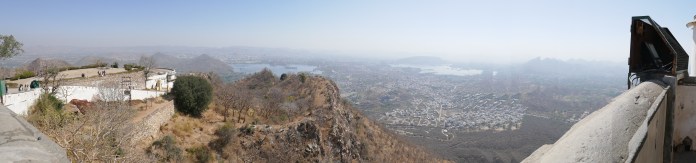
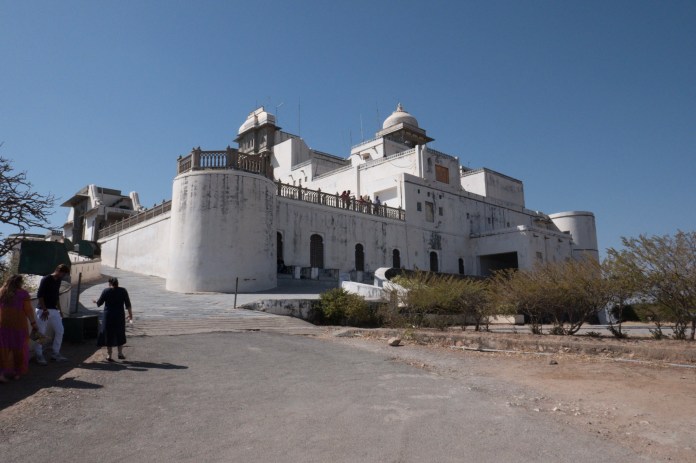
We hired a tuk tuk to the gate of the road that ascends steeply to the palace. Anthony negotiated a good price! The palace is in a beautiful location with superb views over the hills and lakes of Udaipur. It is not in a great condition but would be very suitable for restoration. It would have been a glorious and comfortable building in its heyday in the late 19th and 20th centuries, with numerous internal water features to cool the air inside. We came back into town and walked along some of the streets nearer the big hotels. We enjoyed Chai from a seller and settled down to some people watching on a concrete bench opposite the shop, and people watching is always fun in India. Ray and Anthony left us near our hotel, and so we had a light lunch at Rainbow Restaurant. By now, I felt pretty crappy and Jennifer put me to bed in our hotel room.

And tomorrow, we are off to the holy city of Pushkar!P1050929P1050936P1050938IMG_2353IMG_2319IMG_2329IMG_2315

Standard
India, Travel

Day 11 India Trip City Palace Udiapur

It is early evening in Udaipur and I’m sitting in our hotel room. Most of the group gave gone off to see a dance troop performing traditional dancing. Ray, Jennifer and I went out for drinks instead. This hotel is on the waterfront and has beautiful views of Lake Pichola. It was sunset and just like the previous night, there is a brief golden glow in the water and the sky, an almost metallic sheen replaces the dusky blue green, converting a magical scene into one that is truly spectacular. We enjoyed kingfisher beers and chatted about home.

We woke up late this morning, and had breakfast on the roof of the hotel. The views of the lake, buildings ( including the Oberon Hotel ) and the ranges of mountains are terrific. On one of the hills is the Monsoon Palace where the Maharana would retreat during bad weather, and look over his raj. It is said to be in poor condition but the views are outstanding, so we hope to visit there tomorrow.
Jennifer went to her cooking class which went till after 2 o’clock, and she enjoyed it very much. She learned about making Indian breads, Chai, Khadai paneer ( cottage cheese cooked in an Indian wok or khadai), malai kofta ( potato balls), and biryani rice. Then they all ate the meals they had all cooked together.
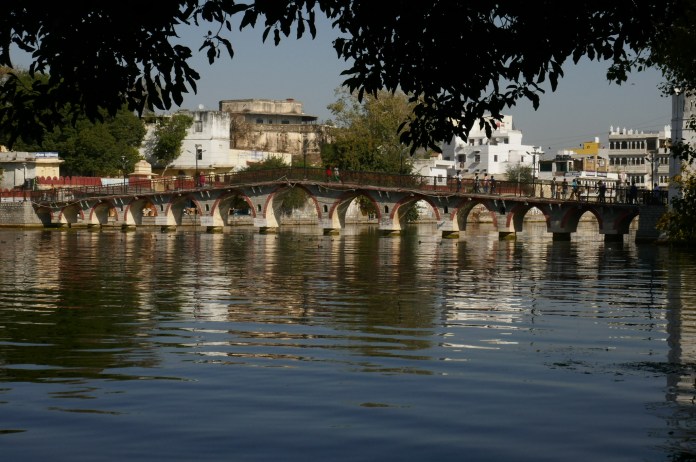
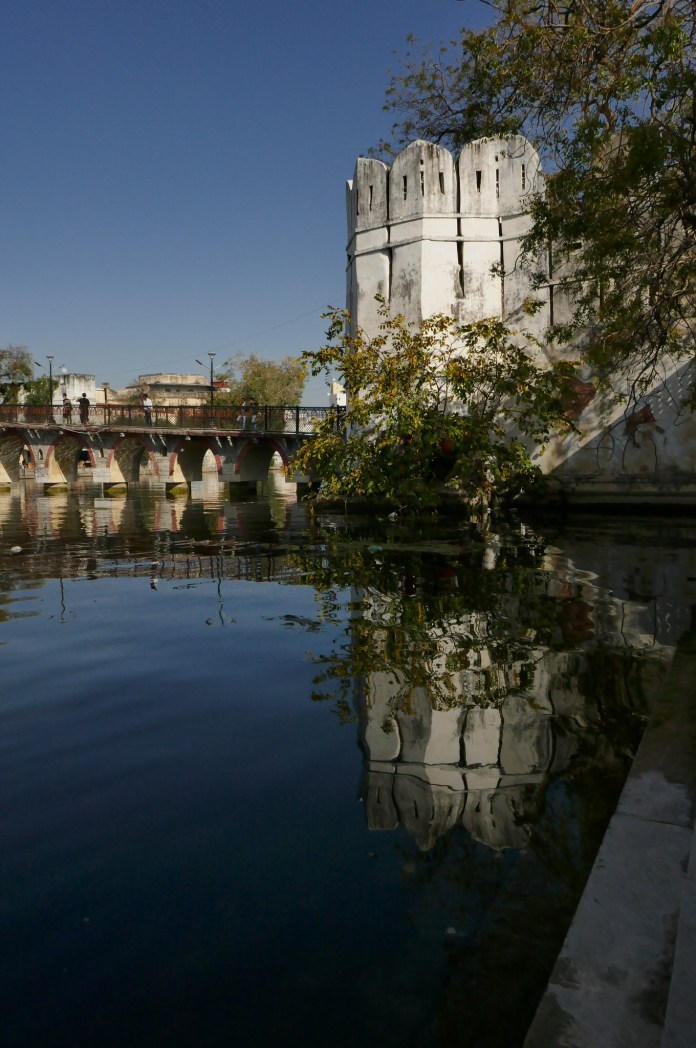
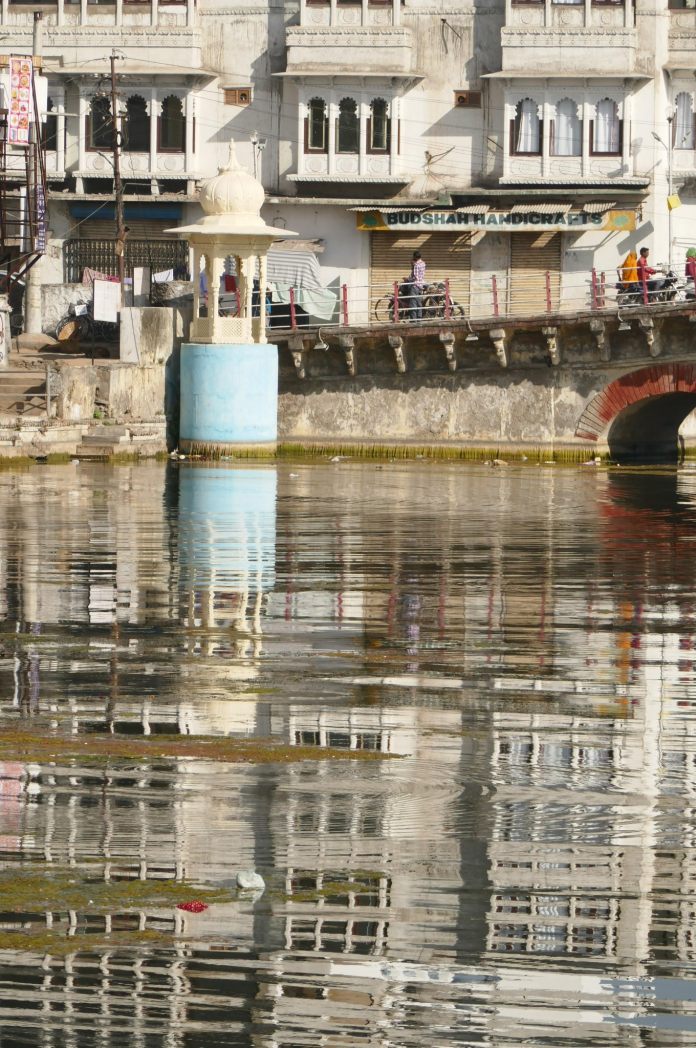
I went for a walk around the nearer lakes of Udaipur, getting quite lost, but eventually I found my way back. Udaipur has some stunning spots where architecture and water combine beautifully such as most of the ghats or gates around the city. They lead to bridges of the lake itself. I saw people washing clothes in large steel bowls. Others walking down onto the water to wash themselves in the lake water, repeatedly splashing the water over their heads and upper bodies. There are also side by side with these areas, rundown, shabby buildings bloated with products for the tourist trade, drains open, broken concrete and narrow paths.

I returned for a rest at the hotel, then bumped my head on the blessed door frame. It’s shaped to resemble mogul arches, that would be spectacular at 3 meters but are plain dangerous at 1.5 meters. After two days of dodging them, I banged my head and had to stem the bleeding with a towel. All okay. Scalp wounds always bleed profusely but as I’m not on aspirin and I maintained the pressure for thirty minutes, there are no problems
After recovering, Jennifer and I went to City Palace, commenced in 1568 and was the capital of the province of Mewar. This is the the Palace of the maharana and his wife, when they are based in the city. There is another in the lake and another high up in the hills behind Udaipur. This Palace is in two joined parts, one for the maharajah and one for his wife. They are connected by a single corridor. There are low lintels, low doors everywhere so I had to be very careful! Both palaces are incredible, lavish architecture and internal decorations, a superb collection of ancient sculptures, and some very peaceful area and plazas to while away the hours. You enter via the eight marble sculpted arches of Tripolia Gate.There are paintings of tiger hunts, of battles, of personal conflict, suits of armour, weapons galore, and many vantage points on the tour to enjoy views of Udaipur. It is the largest Palace in Rajasthan and though it was built piecemeal, it has achieved a striking uniformity in its design. It looks as if there was one builder but this is not the case.

It is a splendid way to spend two and a half hours.IMG_2237IMG_2246IMG_2268IMG_2325IMG_2332IMG_2333IMG_2342IMG_2349

Standard
India, Travel

Day 10 India trip Bus to Udiapur

Another early start today, all up at 4:45 am, shower and dress, then outside to the villa courtyard. Tuk Tuks to the bus station then off to Udiapur.. The bus is modern, our big bags are all under and not on top of the bus, and the seats are very comfortable. We quickly left urban Jodhpur and have been travelling through countryside. It’s dry and dusty. We have passed through some villages, the houses are narrow and made of brick, often with a roller door out the front. We pass small shops with glassed shelves full of the many sweet snacks the Indians love such as Nutella flavoured chips! Other treats in plastic bags hang in chains from the ceiling till only a narrow space is free for dealing with the vendor behind the counter. Bottles of water are at his feet or crammed into shelves behind him. I say him as I have not seen any female vendors until,today in fact!

I will take up the story later today.
IMG_2200IMG_2203IMG_2211IMG_2213////////

We are staying at Udai Niwas Hotel in Udaipur. We arrived at lunchtime. After checking in everybody, we met for lunch on the rooftop of the hotel. The sky is hazy but the views in all directions are terrific. Below us are the houses of Old Udaipur, there is a large temple in one direction, and looking north are the foothills of the Himalayas sweeping down to the Great Lake of Udaipur. On its banks are Hotels, temples and ghats on the city side and forest on its northern and western limits. The call to prayer comes from the nearby mosque as we sip lime sodas, beers or coffees. We had vegetable and paneer pokhoras which were delicious. Some of the younger members of the group had full on meals of curry, rice and chapattis.
The streets here in Udaipur are not as crowded as Delhi or Jodhpur, but busy enough. There are plenty of shops with goods to tempt the tourist rupee. There is artwork, that Mughal style painting in the same style we saw in Delhi; leatherwork, bags and belts of all sizes, clothing of a relaxed, somewhat hippy design which I have little doubt will not be colour fast when washed and there are 24 hour a suit tailors but their products look unbelievably garish, with purple and blue fabrics you’d only want to be seen dead in. There is an excellent spice and tea shop. There is a small but well stocked bookshop where I bought a paperback coffee table book about Rajasthan. I noticed ( Jennifer didn’t!) that one whole wall in the shop was devoted to translations and manuals on the Kama Sutra; I approximate roughly one in five of the books in the store! Amazing. There were lots of good novels to purchase, however, though tempted, I must admit I am simply too tired in the evenings to read much at all.

When taking a photo I felt something flutter into my left eye, there is lots of ash and dust in the town air. Jennifer flushed it out for me back at the hotel. We purchased some eye drops from a pharmacist but when I went to use them, the seal was not intact. So I opted for our trusty bottled water; no problems. Poor Jen, knocked a bottle of water off a vendors counter and if fell down and into the drain below the shop front. I was not going to fish it out, so we paid her the twenty rupees it cost. The vendor must have been rattled because that is way too low a price for tourists.

Tonight we are going to the Lake for a sunset cruises, so more details will follow below.
“////////

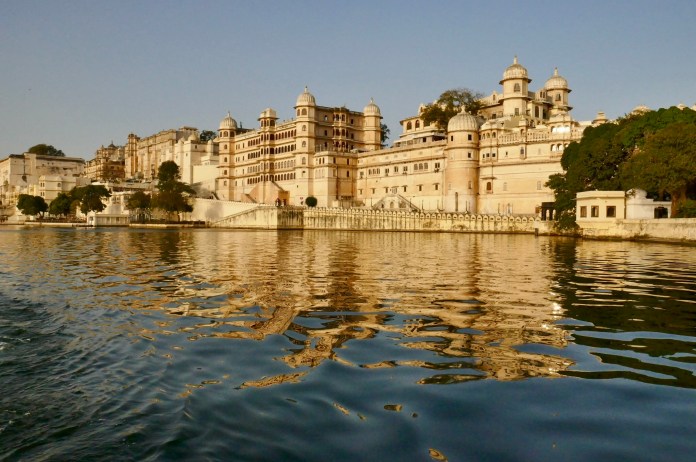
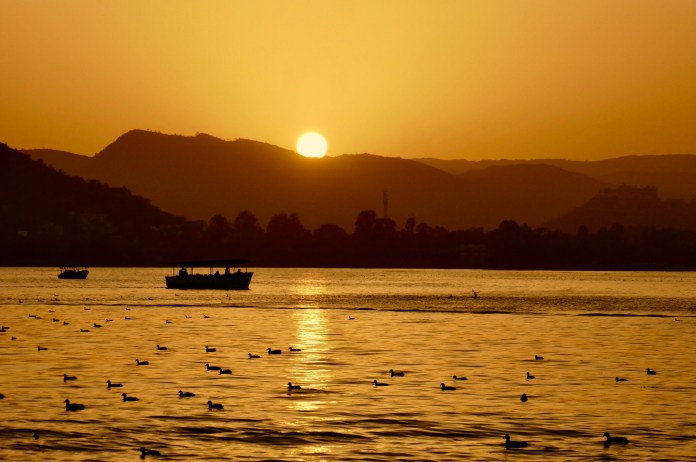
The evening cruise is simply wonderful. The boat is a flat bottomed barge that provides a perfect platform for photography. It is certainly not crowded and everyone can easily take the photos they want. We leave the mooring and travel to the City Palace, now a museum but still an impressive piece of architecture. Then past one of the many built up islands. Other boars motor around, coots in their hundreds bob and sup in the water of the lake as the sun quickly sets. I took some photos to show off the range after range appearance to the north. All the hills are silhouettes, one falling behind the next.

After returning to shore, we met Api for dinner, we shared a large table, some delicious Sula Sauvignon Blanc, a delightful chicken marg, a desert bean dish and a lentil curry as well. At our end of the table we talked about whiskeys as there was a brandy on the liquor list, called Honey Bee. Ray ordered a glass, not bad at all. But Jen and I proudly stood up for Spey whisky and Cognac as representing vastly better beverages. After dinner we braved the traffic yet again. Jennifer and some of the others are doing a cooking class. I am not sure what I will do, but I will think of something. A visit to City Palace is on the agenda for when Jennifer finishes her class.
Standard
India, Travel

Day 9 a day in Jodhpur

Jennifer, Grace, George, Ray and I are sitting in the courtyard of the Jagat Villas where we have been staying. We are sipping piping hot Marsala Chai. It is cool now, a slight breeze, abundant shade and birds are singing happily in the trees above us. The sky has been cleared of air pollution by the breeze and has been revealed as a magnificent blue, not even a cloud is present.
It has been a very interesting day. After breakfast we were taken on a tour of a village and some craft workshops 25km outside of Jodhpur. The children are all at school today, so only older adults are working or standing around the dusty courts of the farms. The lady of the house made chappatis for us to sample. They grow the millet on their farm. She grinds it all manually, on a heavy, compact mill, it spins around almost effortlessly but grinding enough millet for a meal still takes half an hour! And the job has only just begun! In their courtyard were two large flat plates on which wheat and lentils were air drying out in the sunlight. She added water to the ground up millet, expertly pressed it into flat chappatis, and placed each one of them onto a pan sitting on a small fire. In a minute or so, they were cooked. We asked about their life and as we drove around the area, we saw women walking with masses of firewood bundled up then balanced on their heads, other women were digging as a group on new agricultural ground, and we saw men walking along the narrow road in their white shirts, dhotis, and coloured turbans. As we hung out the back of the mathindra 4WD , there were ladies in flowing saris and kids nestled on motor bikes who waved at us and shouted “hello, hello”.

Then suddenly we would stop, there in the scrub to one side were wild antelope. These graceful troops watched us, then turned back bending their necks down to enjoy the spare grass and then with a casual disinterest to their watchers on the road, they trotted away and out of sight.

We visited Lake Gada, and then some craft workshops: a potter, and a weaver. I bought a few ceramics.

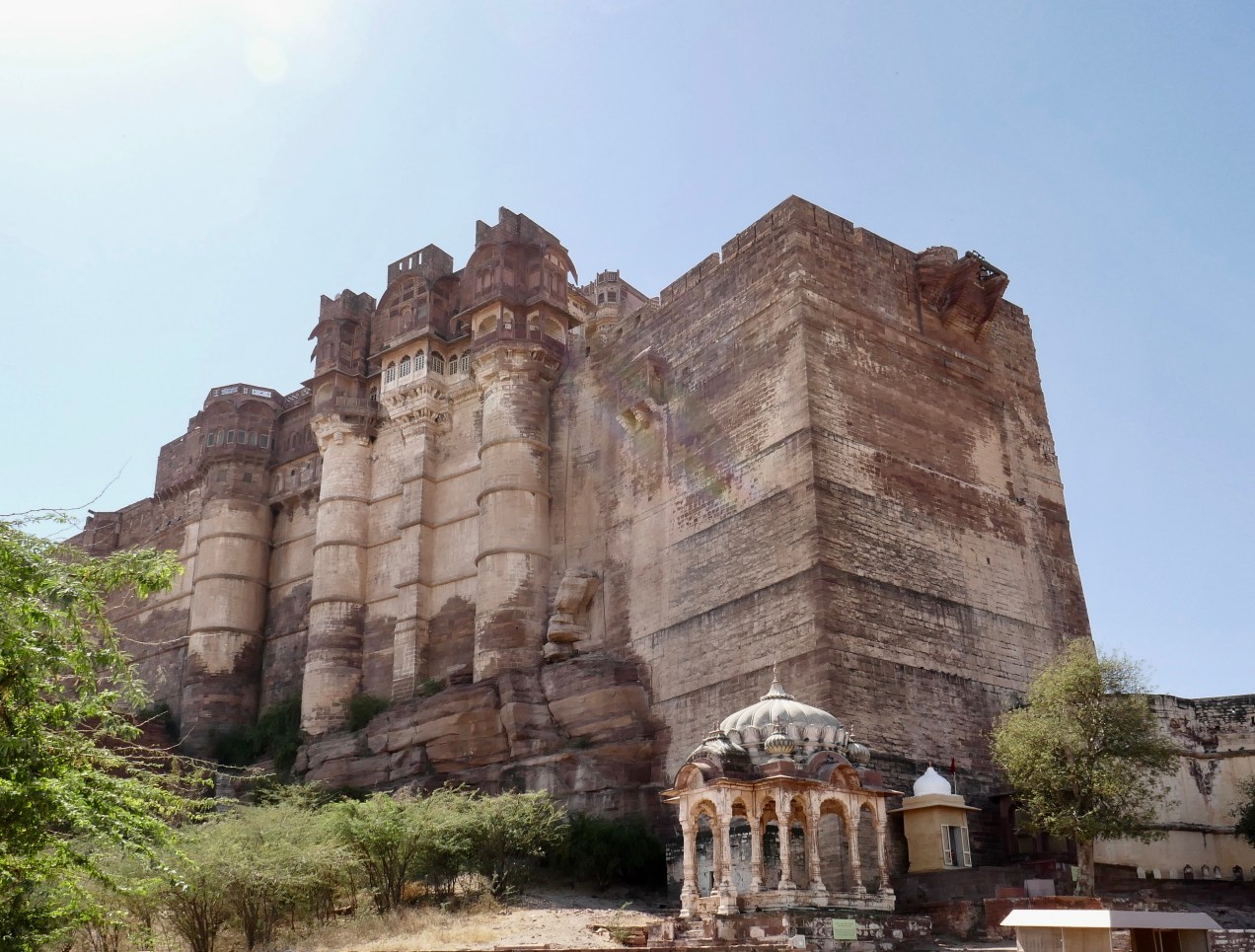
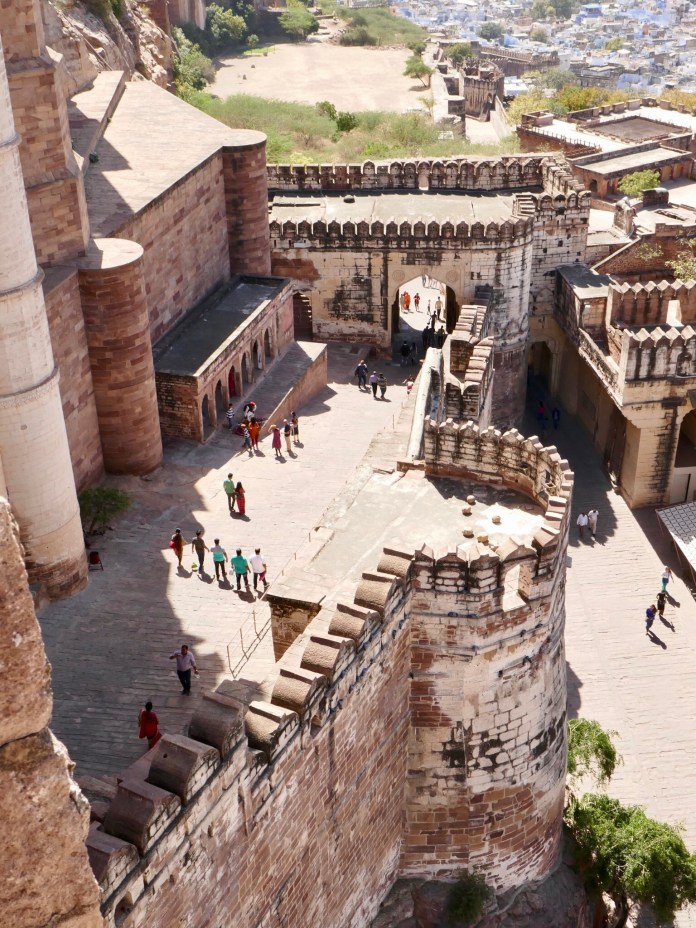
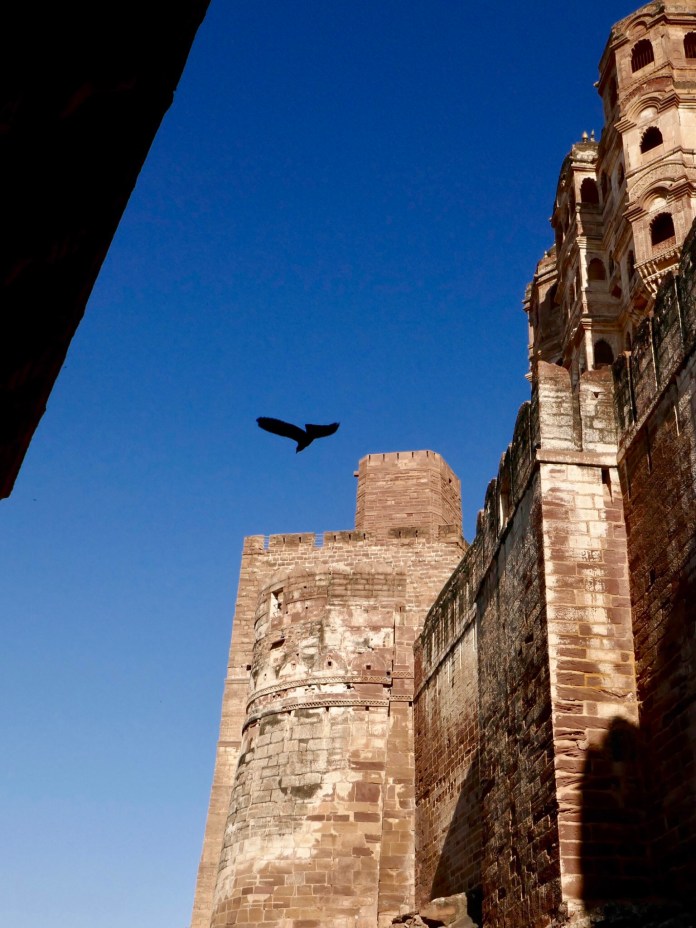
We were driven back to Jodhpur, and dropped off at the entry gate for the fort – Mehrangarh Fort. It is a massive fort, with tall walls and bastions, still armed with cannon. These cannon look out over the city of Jodhpur. The walkways are wide, the slopes and approaches to negotiate are all gentle, and high above us are the ornately carved balconies and wall faces of the palace within the fort. We explored the museums of the fort, highlights for us included; a sword inscribed as belonging to Emperor Akbar , it is an evil, curved scimitar with an inlaid pommel of precious stone. The handgrip is surprisingly small but none the less, this sword is a beautiful piece of art and engineering. It underlines the fact that 16th century Mughals knew the business of war very well indeed. There are palanquins, howdah, matchlocks, fine metalwork and much more to see. A palanquin is a carriage for court women but it’s not on wheels but instead it’s carried by four men. A howdah is a carriage as well of a sort, but it lies atop an elephant. One of these howdah was a gift from Shah Jahan to the maharajah of that time. There were samples of coins minted under the reigns of all the Mughal emperors, they are in excellent condition and inscribed in flowing Arabic calligraphy, indeed they are works of art in their own right. There were coins of the maharajahs with small biographies beside each coin.

We walked around the streets of the fort, admiring the striking fusion of palace architecture above with ruthlessly practical military architecture below. At the main gate, there are the imprints of cannonballs striking the stonework in the early 19th century.
We exited the fort, and negotiated the price for our trip back to the villas. It can get heated during the negotiation, but once it’s settled, everyone is all smiles. No ill will at all, as he drove along singing the praises of the Australian cricket team.P1040991P1050047IMG_2176IMG_2177IMG_2178IMG_2179

Standard
India, Travel

Day 8 India trip Jodhpur by train!!

I am sitting in bed in room 24 at the hotel in Jodhpur. Yes it is the same spelling as the funny trousers which were developed right here for polo. It has been a long, tiring but also terrific day.

Our alarm on the iPhone woke us up at 4.45 am! I had been having pleasant dreams about the previous evening. We had all been invited to have a meal cooked by a local family in Jaisalmer. The head of the house took a shine to me, and told me all about his wedding 24 years ago. He plopped his photo albums on the bed, and we went threw them. There was no mistaking his enormous pride in his still very beautiful wife, and his capable daughters. His was an arranged marriage and like many, a perfectly happy one. His daughters are not likely to accept the same arrangement. Which he admits he is having trouble accepting. It is quite a process arranging a marriage, the head women of the family get together, an astrologer calculates the odds of a successful marriage, and considerations of caste are necessary. A women can go up a caste, a man never. Even love marriages are typically in the same caste. His wife and daughters cooked a magnificent meal, and afterwards offered to do henna art for anyone. Some of the younger ones in our group have had a go. It was a wonderful, warm, friendly evening and I imagine this outing will be one of the trips highlights.

I was rudely interrupted from these reveries, first by the alarm then by a cold shower, water is a commodity in short supply everywhere in Rajasthan, then a final pack, then down the stairs to meet in the lobby. When we were all there, we walked en masse down along the streets, descending through the now quiet gates of the fort, to prebooked taxis. We caught the train at Jasailmer station for Jodhpur. It is a six hour trip, we read, listened to music and so one, and the time passed quickly and enjoyably. My eyes would often wander from my iPad and out the window at the scrub and dry plains of Rajasthan, the acacias typically solitary, and stunted from the grey sand. Some of us played card games. At Jodhpur, we were whisked away to the hotel. The plan was to go to the fort at Jodhpur. However, it was really too late by the time we arrived at the gate so we visited the bazaar instead. Bursting with life, crowded, fast, and rich in cultures both Hindu and Muslim. The women in splendid colourful saris and the men wearing white or grey shirts and whizzing around on white motor scooters. The younger men, had bright shirts and expensive haircuts and used motorbikes instead. After looking at these colourful vendors, dodging the tuk tucks and motor bikes ( one came awful close, awful fast !)and taking some photos of the magnificent old clock in the centre of Sirdar square, many of us had a saffron Lhassi at a cafe nestled in one of the entrance gates to the square, a cafe which is justifiably famous for its product. Yummy! Motorbikes will travel at 50km per hour in these narrow, crowded streets. One sped by me as I was about to step forwards. Luckily though I had looked already, I looked again and as I did I felt the whoosh of too close a passage. For the first time I felt unsafe, my veneer of invulnerability fell away instantly. Such experiences are an unfortunate necessity whenever and wherever you travel.
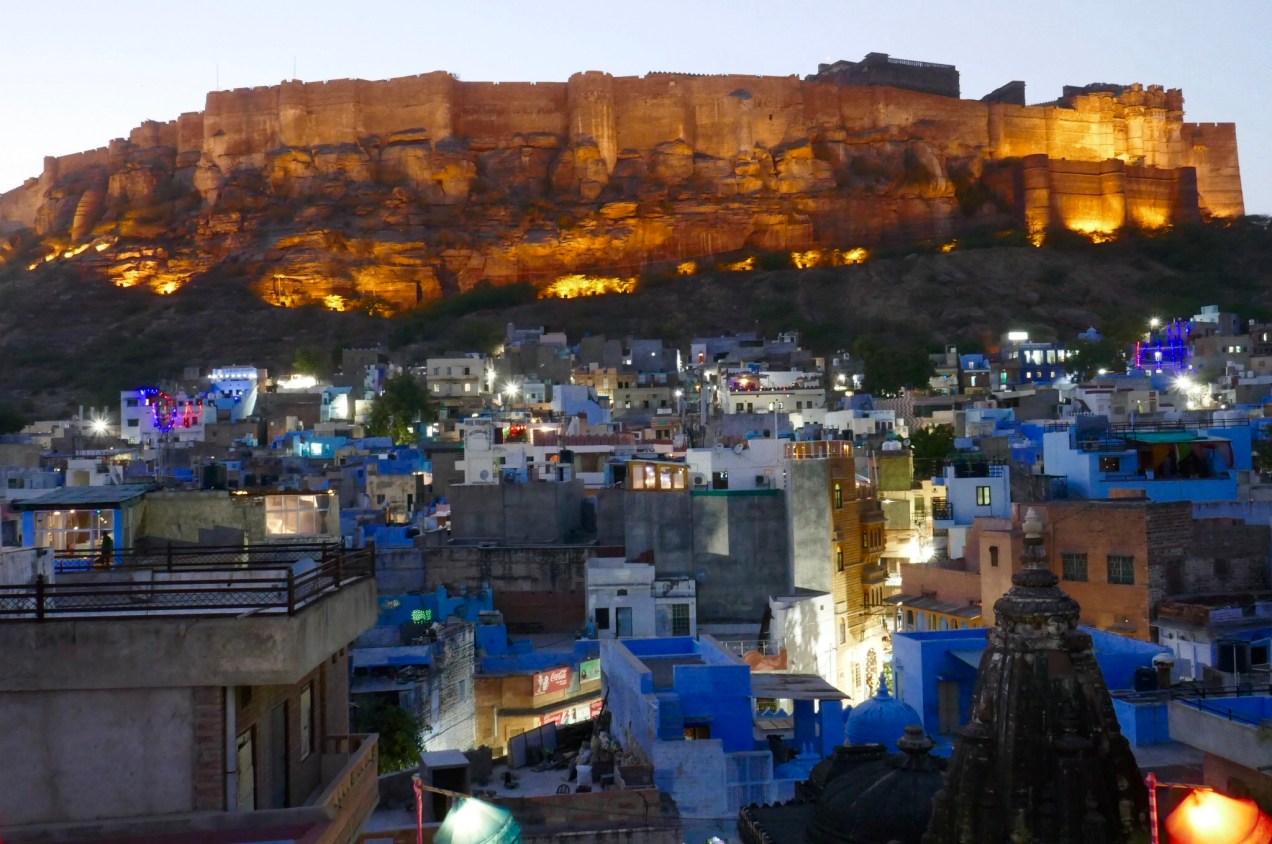
We had a short walk, then met Api and the rest of the group to go to dinner. The ” the curry’s rooftop restaurant” is situated on the main drag ( mokrana mallaha) near the Hotel Roos. After entering we climbed three floors, then went outside to climb yet another flight of now external stairs to the rooftop. Sure it is a lot of climbing, but what a view and what a meal. Jennifer and I ordered three meals to share with Api and Ray. A chicken dish. A desert bean dish. A lentil dish. All of them excellent. We also ordered a bottle of wine, Sula from Maharashtra. Very nice. Wine ,unlike food, is at Australian prices. As we waited for dinner to be served, we watched the sunset drifting down behind the fort. The massive tall battlements ring a massive monolith of the same stone. When it was dark enough, floodlights placed around the city lit up the walls and bastions. In the foreground are the blue houses, many houses in old Jodhpur and especially those of Brahmans are painted bright blue. The scene resembles a scene of blue tinged buildings on the Aegean islands. After dinner we climbed aboard tuk Tuks for the journey back to the hotel.IMG_2163IMG_2166IMG_2154IMG_2158IMG_2165IMG_2152

Standard
India, Travel

Day 7 India trip Jaisalmer the Amber fort

IMG_2127IMG_2130IMG_2131IMG_2136IMG_2138IMG_2139Jennifer and I are sitting in chairs at the rooftop bar at Deepak Hotel. We are in room 10, and it’s a sharp climb on the stairs to the dining rooftop area. We have just ordered a pot of Marsala Chai. Today is a free day, to do as we wish. After breakfast, we spent the next two hours just walking around the fort and township adjacent to the fort. The streets were built according to a narrow template, to frustrate invaders but particularly to provide more shade in the summer and abate the awful winds. We climbed to some high points today and indeed the wind is very strong out of the protection of the buildings.

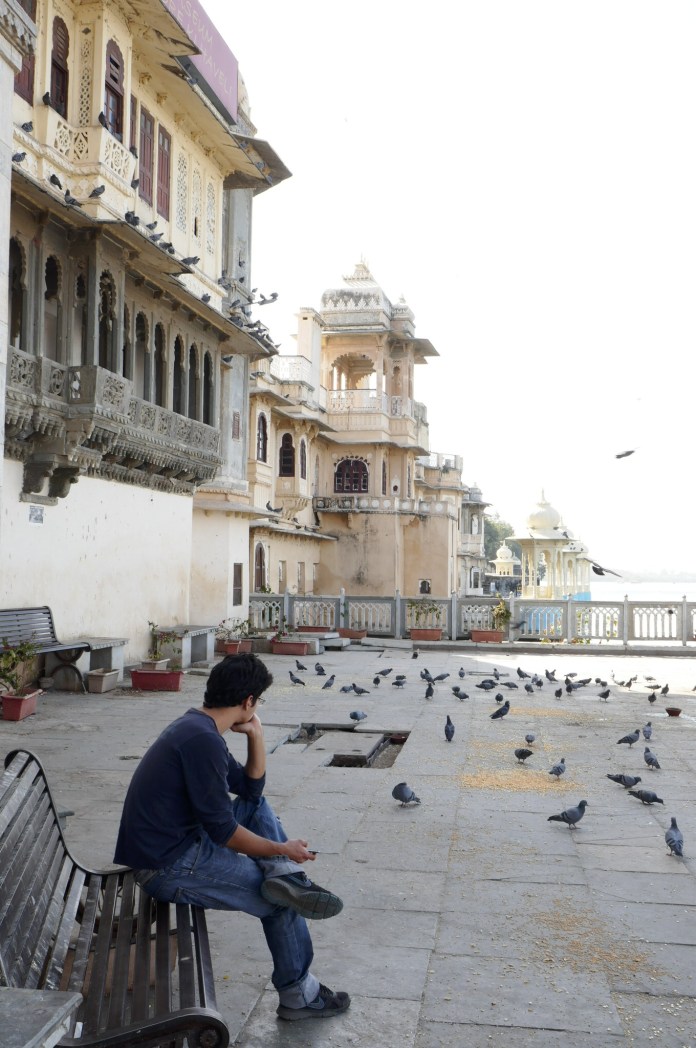
The buildings in the fort are at least two stories, their steps and staircases are steeply set sandstone blocks, touts lie or sit outside shops trying to get our attention, women in saris sweep streets and push barrows of litter while other women talk to their husbands standing in the shadows of the doorways.
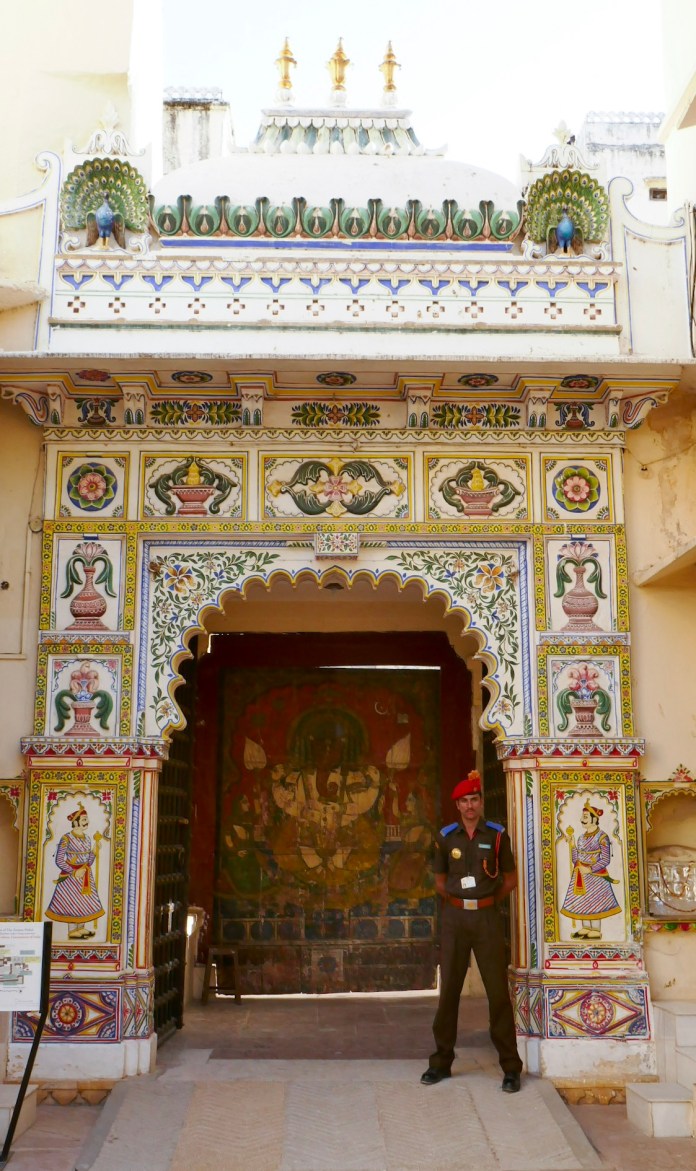
The buildings have ornate balconies, there is incredibly fine and detailed stone carving on nearly every wall and feature, and the overall yellow colour of the stone is variegated by gold and brown tones. There are motorbikes parked on every street, small shops with the interiors in cool darkness, their vendors studying news papers. Gaily clad children at knee height, run along the streets, calling out “hello, hello” as they speed by. Tourists stop and gaze at the architecture, or look at the carvings or paintings on display tables outside the shops, only to jump forwards when a motor scooter or tuk tuk needs the road, beeping crazily as they skitter along the streets.
We walked back to the Hotel, to meet our other group members for a mass raid on the Jain temples. From 11 am, all the temples are open and available to walk through for 200 rupees. There are five temples, and temples within temples. Steep steps, bob the head to avoid striking out on the low lintels typical of many buildings here in Jaisalmer, and enter the small temple interior. The supporting pillars are magnificently and lavishly carved sandstone, with stories and characters from the shared Jain and Hindu tradition. There are apsaras, kings, priests, monks, gods, and the Jain pantheon, and many others all portrayed alive in stone. You see more of them by walking the square stone corridors , the stone is grey to brown to red, the textures vary from glistening smoothness to an almost rough surface, and in all cases they are executed with precision and a very clear artistic direction, each an initial artwork. These temples were not built by amateurs but by professional artists with the support of time and money from the Jain community. These temples display not just a profound and richly populated religion but also the financial clout of its believers. Jains were and are consummate traders and businessman of necessity as their beliefs tenets excluded them from many other careers.

Afterwards we returned to the cooperative where we bought the two scarves yesterday, to check out another scarf. Thankfully, the owner was more than happy to package up the stuff we wanted to send back to Oz, and post it on the next day. Api vouches for him and that’s good enough for me. We spent an hour there, for many Indians selling and buying is as much an opportunity to philosophise as make money.
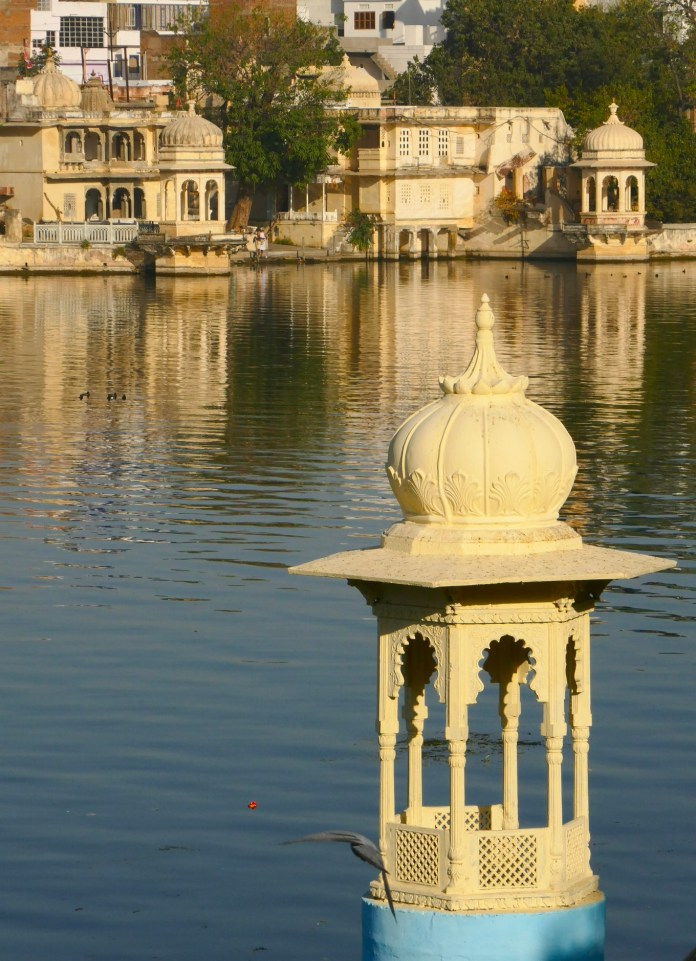
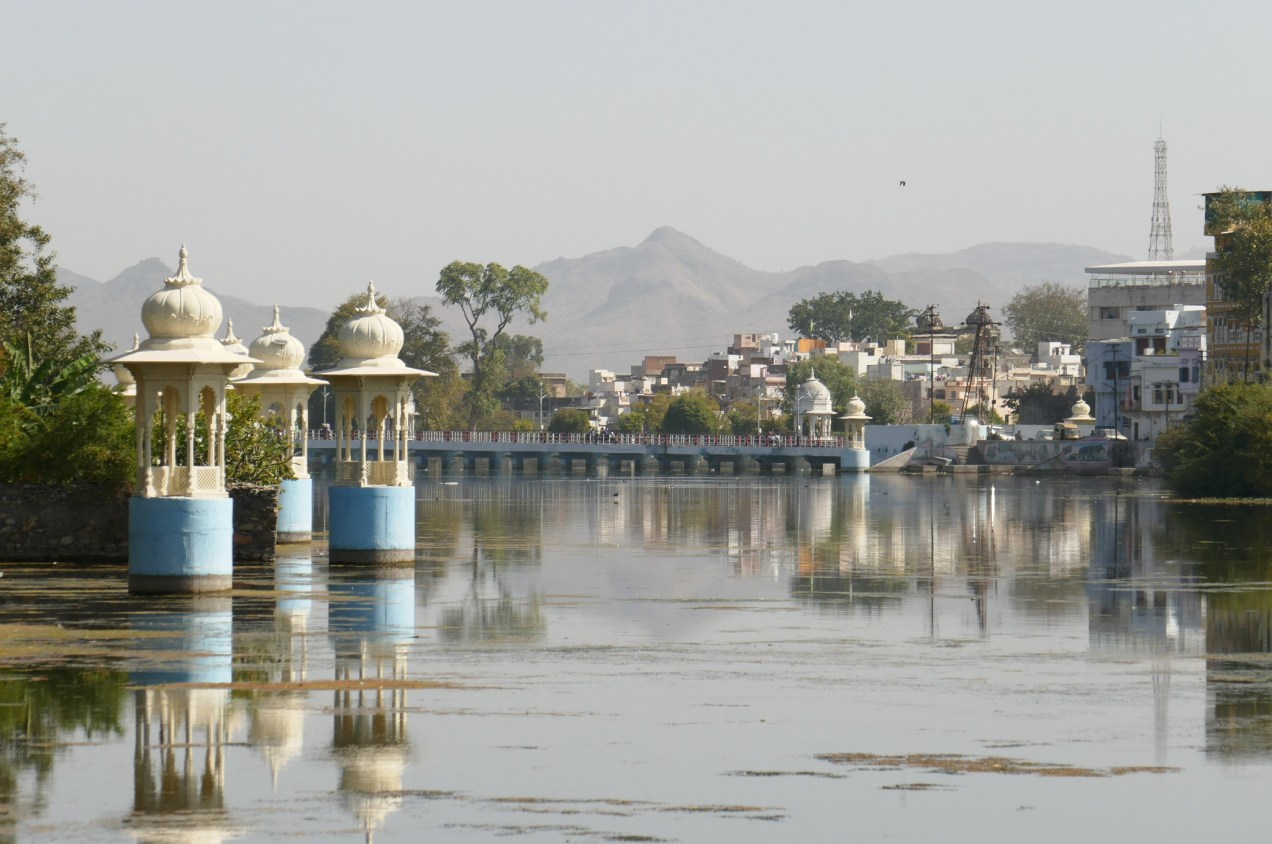
We walked through the town, to Gaidar lake. The lake buildings were built in 1356. There is a splendid ghat, a gatehouse with steps all the way to the water. There are four seperate pavilions in the lake, these are all stone structures and provide a destination for the many boaters, rowing haphazardly on this beautiful lake. We met Nan and her mother Jiang, on the verandah under a banyan tree, then walked with them around the north end of the Lake before turning back to return to he fort. We stopped on the way to buy some supplies for tomorrow’s breakfast and lunch. The vendor was very busy, with so many customers waiting to buy, we thought we were in for a wait but the vendor asked us what we wanted. The other customers thought it was terribly funny when we protested and said we would wait. In our take away are dhal pakora, a vegetable and currie pakora and a samosa for each of us ( 180 rupees all up). We bought some fresh fruit at the market nestled against the fort wall, and so were at last, well and truly provisioned for the trip to Jodhpur.

Standard