
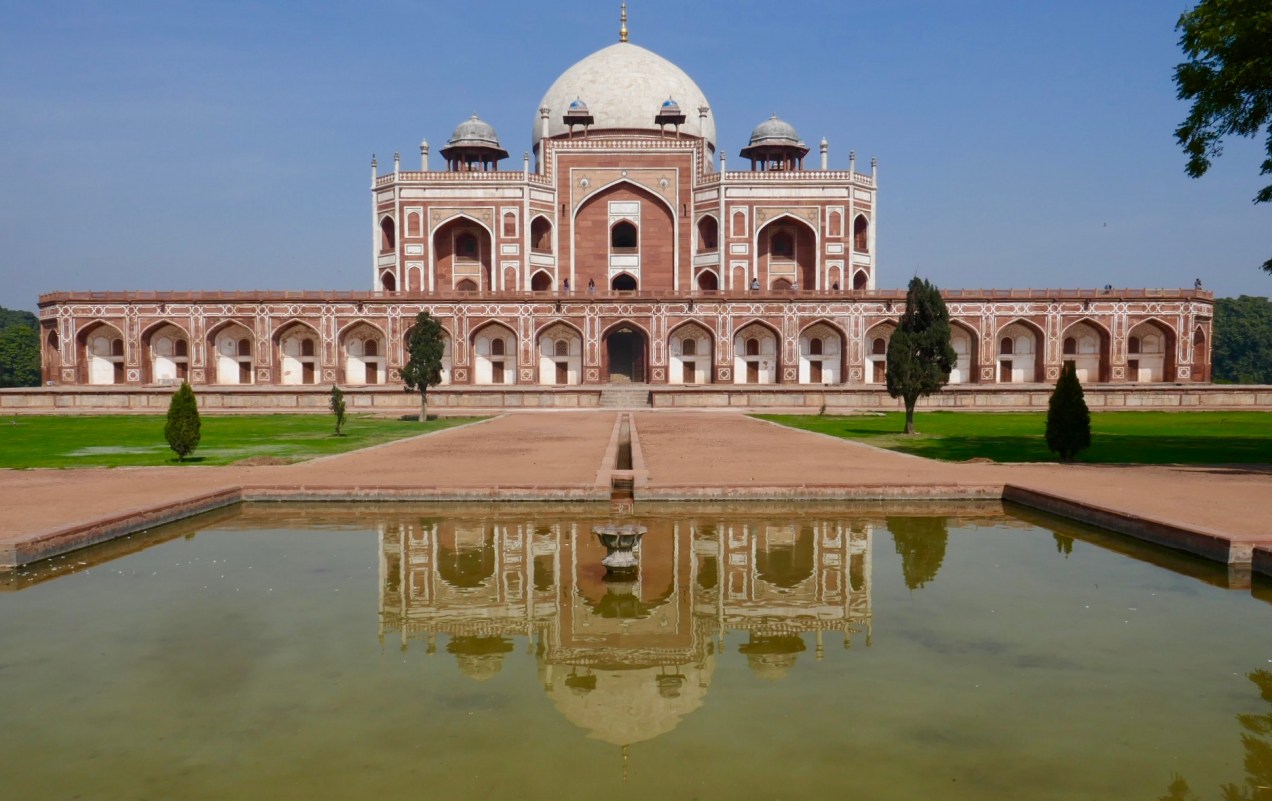
Today there is no organised guide or tour but thankfully we have our own a short list of sights in our Delhi bucket list. Jennifer and I spent yesterday at the Red Fort, so we decided to visit the major outstanding relic of Shah Jahan’s grandfather the hopelessly bumbling , Humayun, who stumbled through the early to mid sixteenth centuries, losing a kingdom then winning it back by virtue of last man standing, and his spectacular final demise that was so appropriate.
His wife was a totally different cut from him, the power behind, in front of and both sides, of the throne. Yet at his death it was she who commissioned a tomb, that combines most of the Mughal ideas about what constitutes paradise in this life and the next. The Mughals loved water features, and there are four kilometres of water paths and features in the tomb grounds: they loved symmetry in the natural world especially in their gardens, and so there are acres of cultivated gardens with magnificent trees and arbours all around the tomb: and they loved proportion and magnificence in their monumental and military architecture, and the tomb of Humayun exhibits these features at a level of taste and sophistication that is only exceeded by the Taj Mahal, the love, memorial offering of Shah Jahan to his adored wife, Mumtaz.
Built in the mid sixteenth century, the tomb and its grounds were neglected over the following centuries and it fell into a very sorry state. In the last few years, there has been a resurgence of interest in the historicity of India, and in Delhi, this inspired a massive investment in reconditioning monuments. The chief beneficiary has been Humayun’s tomb. The restoration work still continues in many areas, on many of the other tombs, walls and gate buildings that share the grounds of the tomb. However, the crown jewel of this area, the main tomb itself has been superbly and lovingly restored to its former glory. Cheap restorations that used modern materials like steel and concrete have been removed and replaced with the material and techniques which the original builders using lime cement and stone.
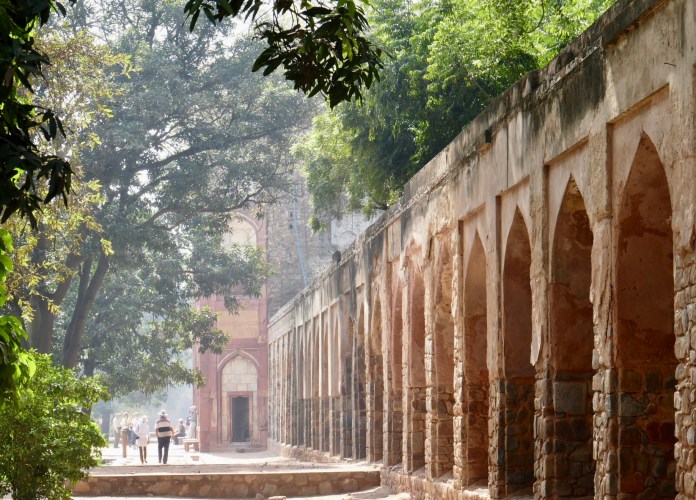
You enter through two successive gates, these are three storey buildings that provide access through the walls. The walls are tall, strongly made, and would be as suitable in a fort as in protecting a mausoleum. The walls featured repeating Mughal arches, and are very attractive in their own right. After descending the steps of the second gate, you first see the tomb complex. The light from this direction was not flattering, the glare washing away the rich reds, oranges. On the roof is a vast cupola, and at its apex, a spire of pure gold. Minarets crowd the corners. The entire building is raised up, as an enormous plinth, so you have to ascend a steep staircase, then in front of you is the monument itself.
There is only one entry to the main rooms, so we walked around the building enjoying the fine views of the gardens and the four gates, named according to the cardinal directions. Long narrow pools, mostly filled with water, softly cascade into larger rectangular pools with a single fountain in each. Walking beside these pools feels cool and refreshing, just like those TV Adds for almost anything. However in this case, it’s true, the air seems cooler, the heart less troubled.
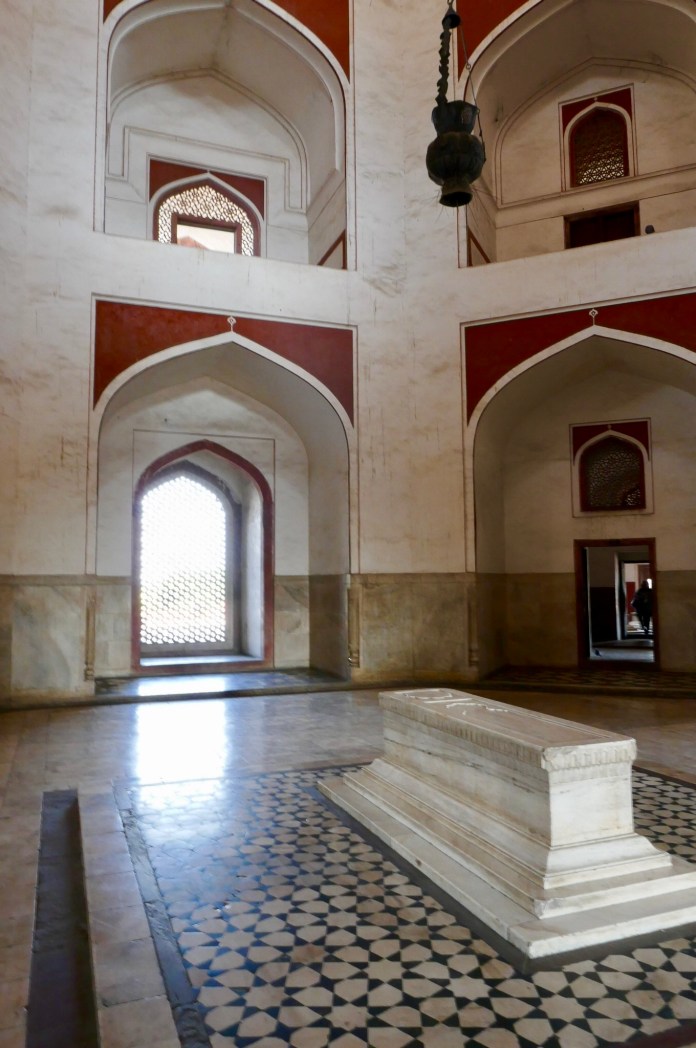
Inside the building are several rooms, tall interiors, with patterned metal grates for windows, one above the other, diffusing gentle light onto the coffins, for not only Humayun is buried here but many other Mughals rest here as well. Humayun has pride of place, but the peripheral rooms are all occupied.
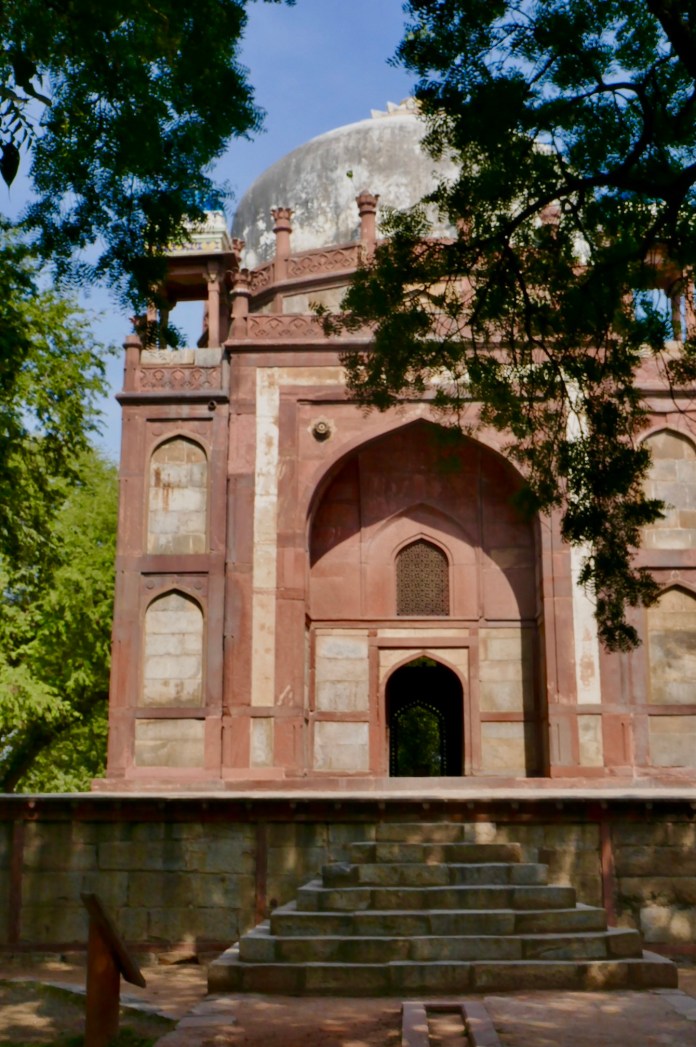
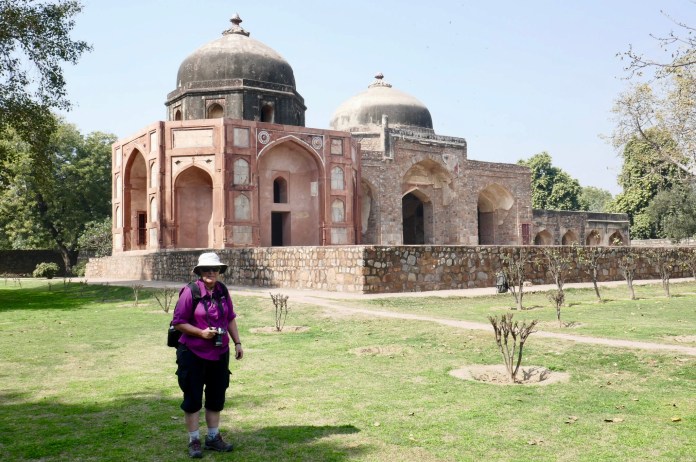
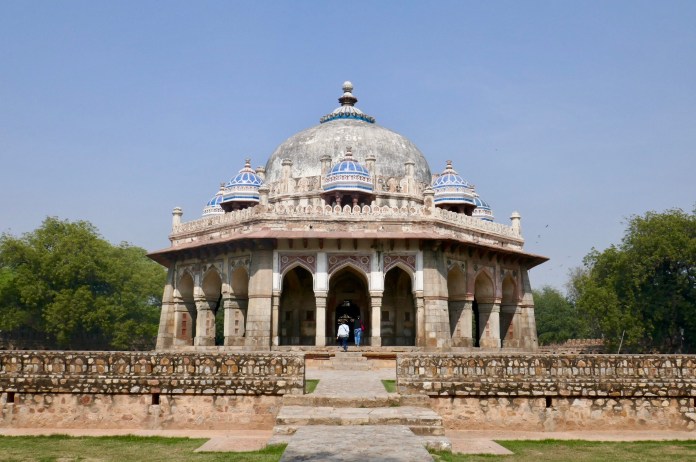
Outside the main building are other mausoleums, including the “Berber”, a tomb for an officer of Sher Sur , as well as many other simpler affairs with tombs even resting beneath trees. There is an ancient mosque still awaiting restoration, and some true ruins, their original function and inspirations long faded away.
Sher Sur was an Afghan adventurer who toppled Humayun from his kingship, and was the first of five of his family who ruled the extents of the Mughal empire for about thirty years, until as happens in every royal family, the brains and drive just dribbled away. Humayun was given back the throne, after perching in Persia for most of that time. He rather enjoyed his time away developing a love of astronomy, in which discipline he was considered more than competent. He died only a few years after returning to rule the empire, stumbling down a flight stairs at his library. It was said he stumbled out of life as he had stumbled his way through it.
On the way to the Monument, Jennifer and I hired an overcycle ( motorised ) rickshaw. The driver gave us a bullshit story about the grounds to the tomb opening at 11 am, we knew they opened at dawn but we were both fascinated about where this was going to go. He suggested going to a bazaar. Actually it was an emporium, a very slick affair it was too. However, they had some genuinely beautiful rugs, so we bought on for 35,000 rupees which is about $680 A. It will ( we hope) be sent as agreed to our home in West Launceston.
After this we were driven to the carpark at the tomb complex. We had already agreed on the price but there is always some argy bargy, so he got a little more! Smiles all round!
After our walk around the tomb complex, we hired another rickshaw driver, and again agreed on the price, but he took us to yet another emporium, ” on the way”. Funny, but our bums were just glued to our seats, and we chanted ” we want to go our hotel, we want to go to our hotel”. Hare Krishnas would have been impressed. Anyway he relented and off we went, only a short hop as per distance but with much car tooting, ambulance sirens whaling while utterly immobile, and brakes screeching, as cars and other vehicles tumbled around the roads. We reached our hotel and as we paid him, I complimented his singing voice as despite all the rigours of the drive he had been happily singing away with not a care in the world.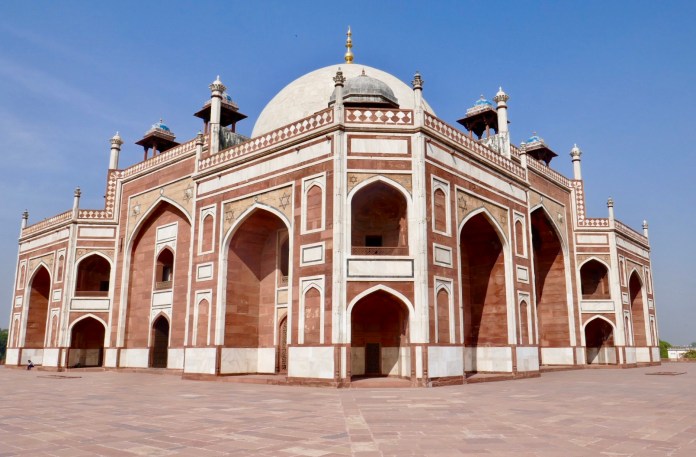

 brucebarker2016